27/04/2012

Magnum Forma

Magnum Forma

Fondazione Forma per la Fotografia, a foundation hosted inside a former and completely renovated historical tram depot in the Ticinese district, is without any doubts one of the most important places dedicated to photography in Milan. This art space – focusing on three main themes: History of photography, Masters of photography and Masters of fashion photography and portraits – combines educational purposes with the aim of furthering people’s comprehension of photography through the exhibitions, which shows the works of the leading authors from the past to the present.
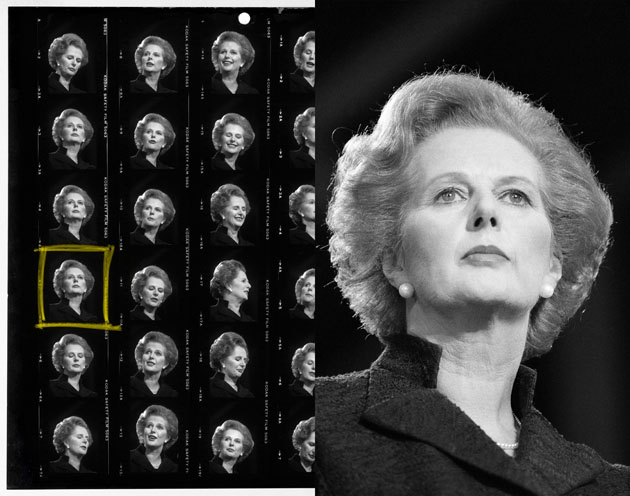
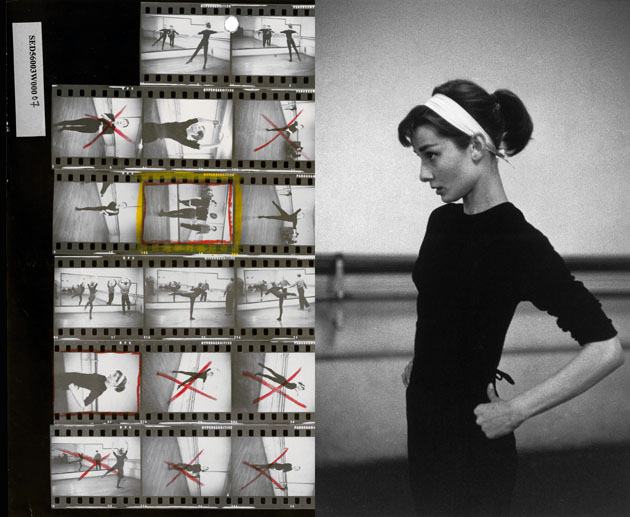
Magnum. La scelta della foto (Magnum. The choice of the picture) is a selection of contact sheets displayed along with the final images chosen for the print. The project prints are coming from Magnum Photo, the glorious agency characterized by the freedom of its members shooting according to their ideas and initiative. They are presented as a crucial tool of analysis and an irreplaceable teaching method; a way of laying bare the photographers, providing people the opportunity to see the gap between the act of shooting and the results of the camera shutter timing. As many great artists admit, looking at the contact sheets of other photographers allows us to understand better their working methods; their way of thinking and capturing the moment. Through the selection of these fascinating objects with notes and signs made by the artists while choosing the finals, the exhibition shows the ‘documentaristic’ power of images able to go beyond the reportage.
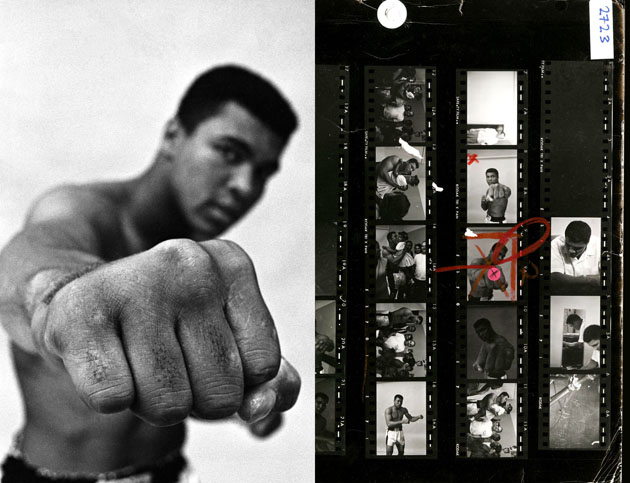
From the contact sheets by Ferdinando Scianna, which remind his first encounter with fashion photography – depicting the magnetic model Marpessa for a young duo of Italian fashion designers destined for a great future. It was 1987 and the designers were Dolce & Gabbana –, to the hypnotic portraits of the “Iron Lady” Margaret Thatcher and Muhammad Ali by Peter Marlow and Thomas Hoepker, the show let us running down the memory of historical periods, with their atmosphere and icons.

The exhibition will run until June 17 along with the solo shows by the Magnum photographer Alex Webb (b. 1952, San Francisco) and the young Italian photographer Massimo Berruti (b. 1979, Rome), member of the French agency VU’.
Monica Lombardi

27/04/2012

Bas Princen at the Architectural Association

Bas Princen at the Architectural Association

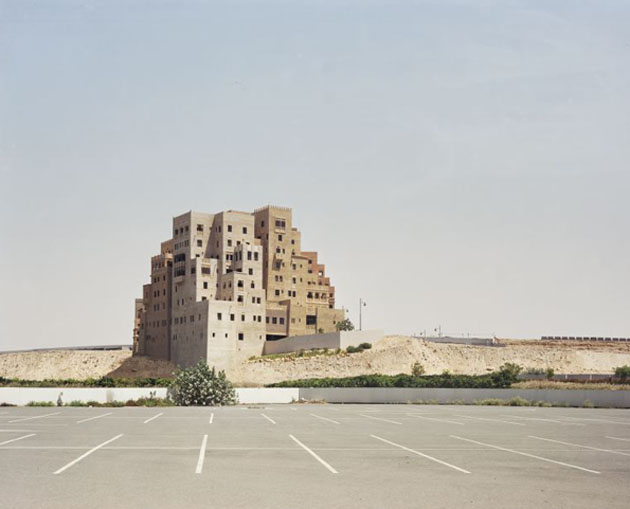
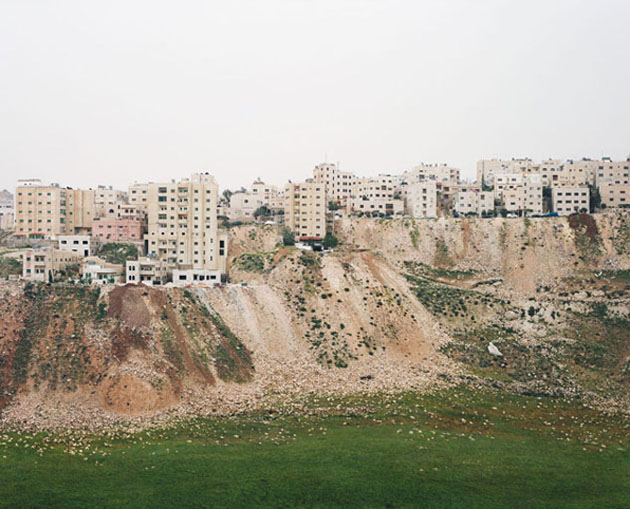
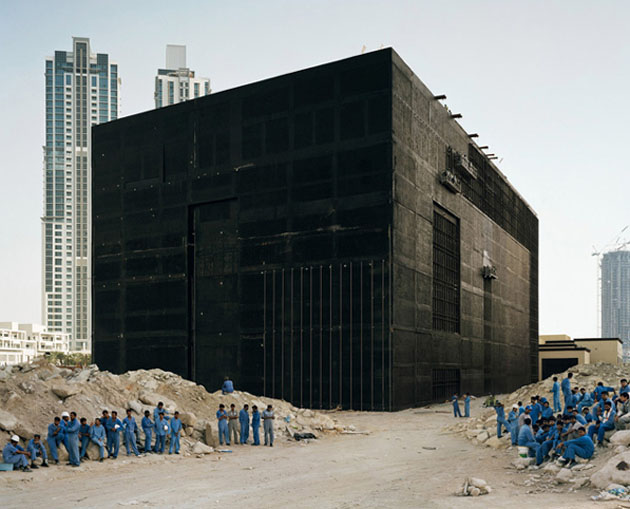
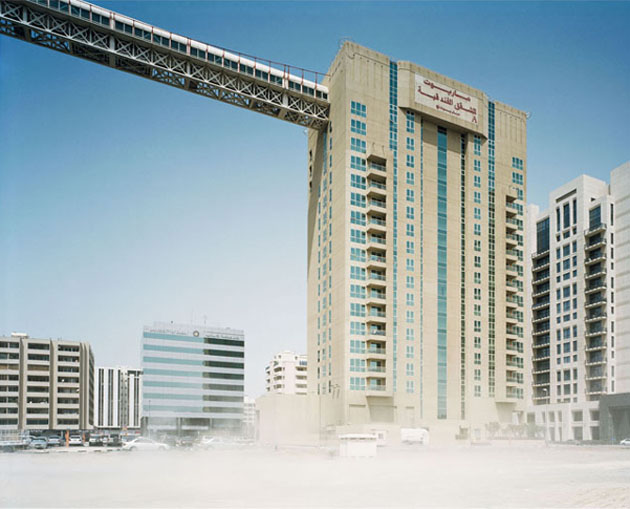
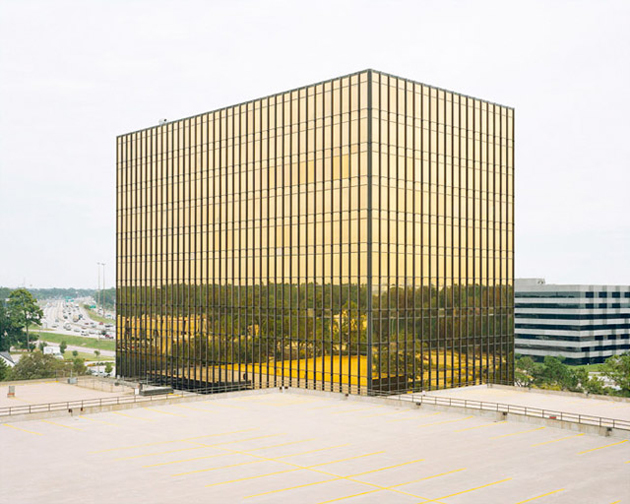
This Wednesday, renowned Dutch photographer Bas Princen gave a stirring lecture at London’s Architectural Association, in which he discussed technique, the informal maquettes he uses for visual study and the strange informal relationship growing cities in the developing have to the landscapes they quickly overtake. The image that has perhaps come to embody his work is an iconic shot of a squat office tower in Texas, its garish mirrored gold façade somehow serving to make it entirely invisible within its innocuous American surroundings, and it is in this tenuous play of landscape against/among/without/within the built environment that the magic of Princen’s photos lies.


Unlike most photographers, whose subject focus comes perhaps through long processes of elimination, Princen was first trained as an architect and so has a keen sense for the built environment. That he shoots architecture was written in the stars, it seems. It’s been said that his sweeping, dramatic photographs slice through buildings and somehow omnipotently display and expose them from within. He chalks this up to the all-knowing eyes of the camera and admitted that he often discovers new things about a place he’s been through his images. And also unlike other, perhaps more romantic photographers, he doesn’t place much importance on an interesting story behind a bland image, saying instead that what is most important in a good image is that it be capable in itself of telling a powerful story.

The dramatic interplay of landscape and architecture (both formal and informal) in Princen’s work has culminated in book called Reservoirs which eloquently, forcefully highlights an uncomfortable and tenuous relationship of the built with the natural. From massive public works projects in the desert outside Los Angeles to Chinese landscapes being subsumed by buildings, these images beg massive questions about 21st century urbanism and make reference the terrifying majesty of architecture itself.


Interestingly, although his exhibited images have always been on shot on large format film with stationary view cameras, he has recently made a shift to high-end digital. The choice, he imagines, could change his work tangibly and will almost certainly result in more abstract images. And although we’re never really keen on an artist’s abandonment of analog (and many, including Cindy Sherman, have made sweeping total shifts in the past couple of years), we’re nonetheless interested in seeing his work pushed towards new frontiers.

Princen’s exhibition opens tonight, Friday 27 April, starting at 6:30pm in London’s Bedford Square and will run until the 26th of May.

Tag Christof – Images courtesy Van Kranendonk Gallery and Architectural Association

26/04/2012

Tie-Dye Tribal by PetrouMan

Tie-Dye Tribal by PetrouMan

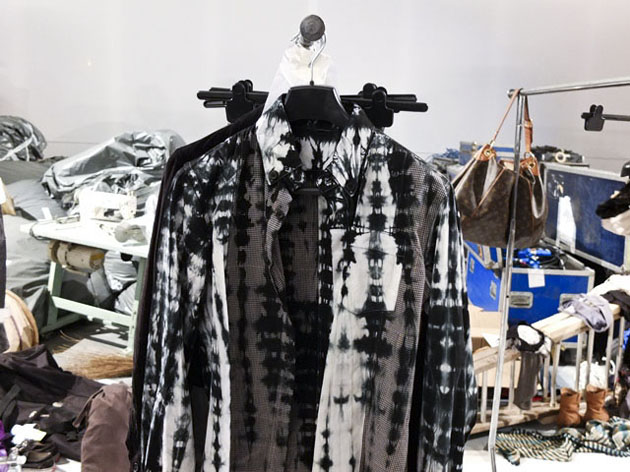
A few seasons ago, Nicolas Petrou caused quite a stir during a New York fashion week with his avant garde runway performance featuring checker headed nomad boys, but Petrou isn’t a newly-born fashion star. Quite the opposite, the Cypriot designer who graduated from St. Martins back in 1993 has for many years worked for various brands including his own women’s line Petrou, before creating the new high end men’s wear line back in 2009.

“PetrouMan is all about wearable clothes. Yet, at the same time, I always feel the need to present them in more artistic ways. Considering the destruction that surrounds us all, it’s nice to be able to present a fashion collection by escaping to a more abstract and not so conventional place.”

After some years of runway shows in New York, supported by PR powerhouse Kelly Cutrone, Petrou decided to move his presentation to southern latitudes. The Nigerian city of Laos has since 2011 been the host for the Arise Magazine Fashion Week, and during the last edition, the Petrou circus was invited, and the collection was coincidentally, or strategically enough – African inspired.


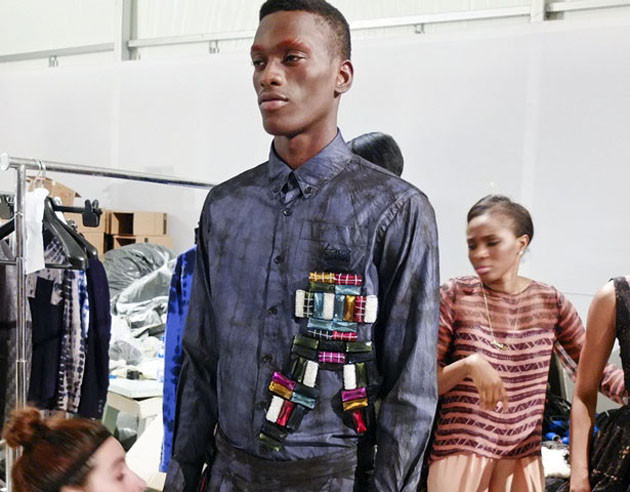
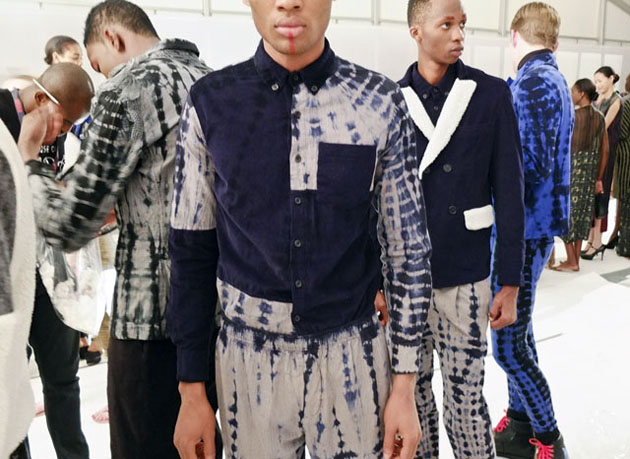
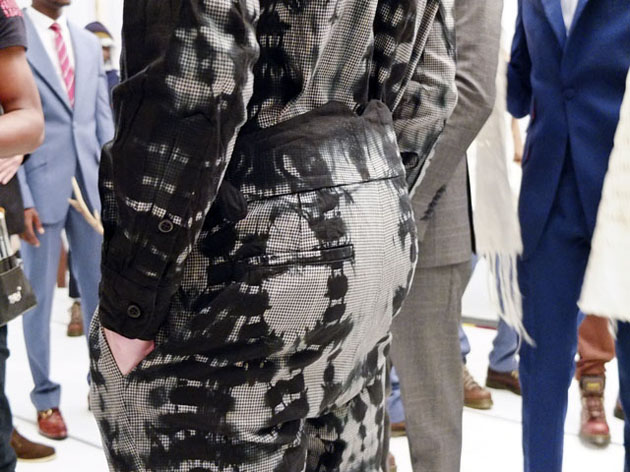
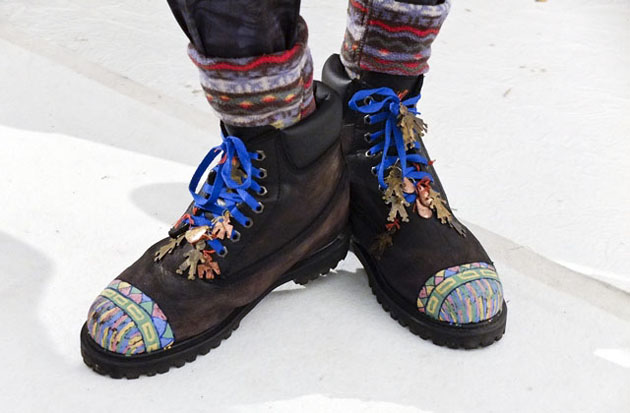
The presentation was a low key installation in comparison to the usual Petrou standard, but perhaps not when it comes to colours, or more specifically speaking – patterns; the collection was heavily tainted by tie-dye patterns in blue and grey nuances. The silhouette for the fall and winter was of a slim, relaxed, and highly wearable kind, except for an intermission by a low-necked number with an accentuated waistline. On a more interesting note, the greater part of the collection had advanced detailing such as appliqued braided tulle on the shoulders. Multi coloured mosaic-looking pieces had been sewn on to on blazers and shirts, which somewhat resembled the flags of the African continent, and the shoes made for a nice Do It Yourself-moment with its hand painted tribal markings and skulls.

“My objective is to sell of course. I create fashion for people to wear, so I need to make the work wearable if I want to continue creating. But I always like to have some editorial pieces that are more out there because those are the pieces that attract attention”, Petrou acknowledges.


Petsy von Köhler – Images courtesy of One Nigerian Boy 

26/04/2012

Dick Clark: 1929–2012

Dick Clark: 1929–2012

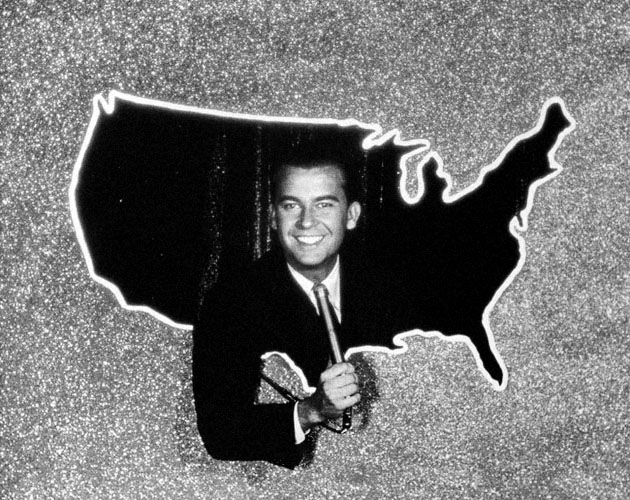
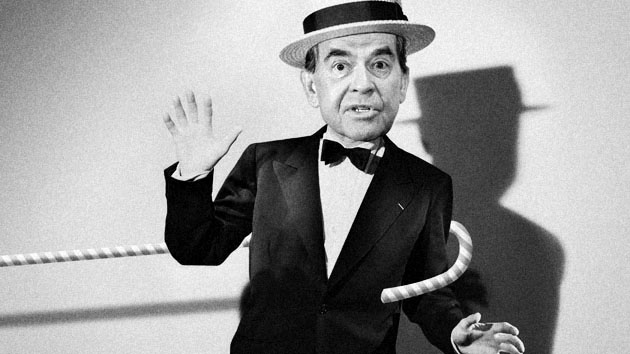
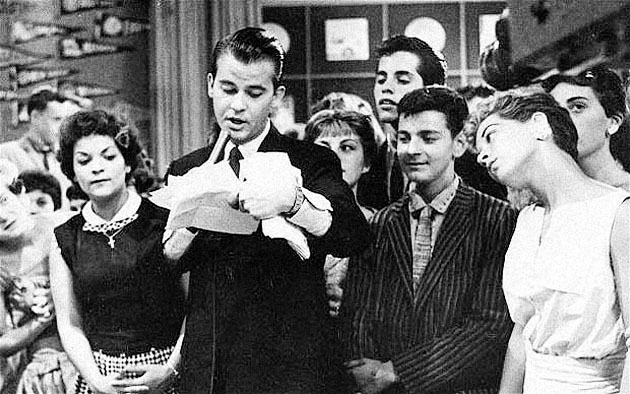
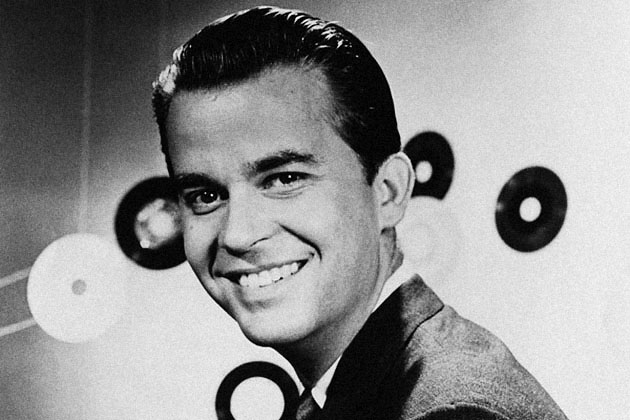
America’s Oldest Teenager is dead. Dick Clark—both the man and the brand—played a large role in defining American popular culture over the past half century. His star had steadily been fading since he suffered a stroke in the early 2000s, but few were on Clark’s level, and his fingerprints retain a tight grip on American media. American Bandstand, the show he turned into a national sensation, ran from 1957 until the late 80s and was the longest-running music show in American history. He cast a long shadow in the television and music industries; there’d be no American Idol, no Punk’d or Ryan Seacrest without him. I hate to say this, but there might not even be a Snooki.

Clark never courted controversy or sensationalism, and instead fashioned himself as something like the friendly neighbor next door: innocent, wholesome and familiar as vanilla ice-cream. He was an astute salesman, not a cultural icon. I don’t think he was ever a teenager. “If he had a public personality,” the NY Times wrote in their obituary, “it was the genial but sexually non-threatening affability of an efficient executive determined to get the job done and to get rich doing it.” He embodied the simple values of middle-class America, calming millions of nervous parents for thirty minutes each night. You could leave your kid alone with good ol’ Dick. He bottled up youth, shook out the blemishes, and sold it back to us wholesale.


He did get rich doing it. Very rich. Dick Clark Productions, the company he built on the shoulders of American Bandstand, would quickly expand into movies, game shows, award shows, comedy specials, talk shows, children’s programming, and reality programming, accumulating over 7,500 hours of programming in the process. In addition to Dick Clark’s New Year’s Rockin’ Eve, which started in 1974 and is currently hosted by—I can’t believe I’m saying this—Ryan Seacrest, and “$10,000 Pyramid,” a popular game show that competed with Jeopardy! and The Price Is Right and helped lay the groundwork for future game shows like Who Wants to Be a Millionaire?.

Clark was never shy about making money, and like any good producer, his influence was hard to miss even when you couldn’t see him. “My greatest asset in life,” he once quipped, “was I never lost touch with hot dogs, hamburgers, going to the fair and hanging out at the mall.” No, he didn’t. The wholesome values he pushed have become antiquated and kitsch, but a good deal of the hubbub surrounding his death owes a lot to the fact that Dick never lost touch with American viewers; most of the broadcasting platforms he established remain as bankable as they were in his heyday.

Just ask, well, you know his name.

Lane Koivu

25/04/2012

The First Note On The Horn – Tokyo Burning

The First Note On The Horn – Tokyo Burning

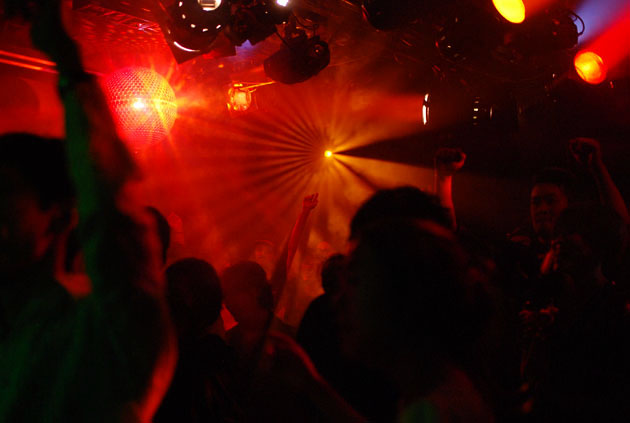
At Eleven, formerly known as Yellow, the pioneering and revered night club in the heart of Tokyo, the squared box in the second basement was already trembling in a blast.

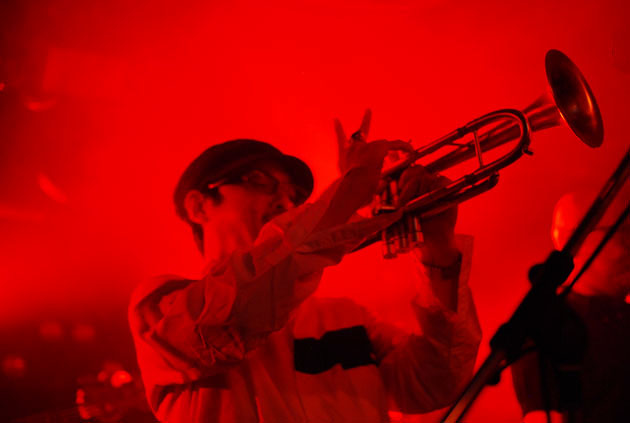
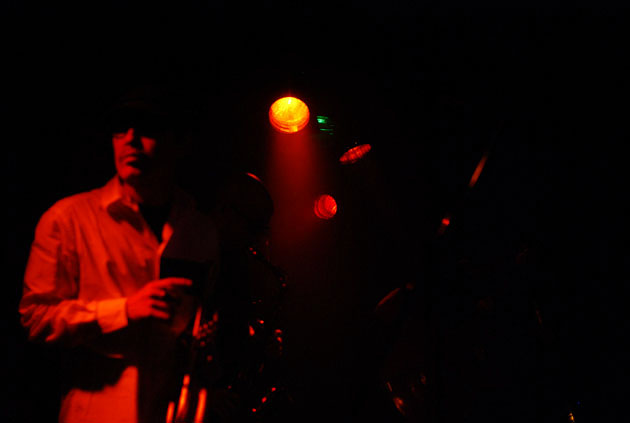
Around midnight, when the Sly Mongoose appeared on the stage, we heard the rumble of distant thunder, then the first note on the horn boosted the fervor of the audience. You would easily get caught by this Sly Mongoose, a Japanese instrumental group with an intriguing mix of percussive and electric eccentric groove. Listen to one of their tracks Snakes and Ladder for example, which became international DJs’ favourite in 2006 and arose a vogue worldwide.

We heard our ears pop from the roar, the audience was roaring for more. At the backstage we met Kuni the trumpetist. With his lady horn Monette, he spoke with a warm smile on his face. “After the March 11th 2011, it’s true, some moved out of Tokyo, some moved out of the music scene, some moved out of their lives themselves… Simply, what I can say now is, I’m thankful to be able to play and see those people gathering again, here, right now.”

This night, Kuni was back to his old club, where he once had blazed a trail in developing a fusion of DJ and musical instruments in the late 90s, leading a legendary DnB party Earth People. Born and raised in the very center of Tokyo, the little boy was fascinated by the first visit show of The Commodores in early 70s, at his home, stimulated by the pervasive aroma of indian incense arranged by his mother with her arms loaded down with bracelets.

“Jazz seeping through an Altec, Soul Train on TV… My father himself was a singer and a trumpeter too, always with a pipe in his mouth. He allowed me to play his horn once in a while. I would say, my home atmosphere was rather unique, definitely not a typical Japanese one.”

He experienced his own first horn at his age of 12, which was the year 1982 when Art Blakey & The Jazz Messengers came to Tokyo. It was really natural for him to step in the world of music. Yet when he received the scholarship to enter the Barklee College of Music with a great enthusiasm to further his study, one question emerged as a major preoccupation in his mind: What does it mean to do Jazz as a Japanese?

One August night in New York in 1988, he was there to explore the dreamt local music scene before entering his college. Wynton Marsalis was on the stage at Alice Tully Hall, Lincoln Center for Performing Arts. “That night, after the show, I went to see Wynton at the backstage, just like in Tokyo. He welcomed me and said, ‘Bring your horn and just stop by.’ He handed me a note with his home address and phone number.” Then he smiled softly, “Wynton was there one day when I called him. So, I went to see him. At the time when I left his house, a hint was dropped to that question smoldering in my mind…” (…to be continued)

Ai Mitsuda

24/04/2012

Kristina Gill: Egg and Bacon Roll

Kristina Gill: Egg and Bacon Roll

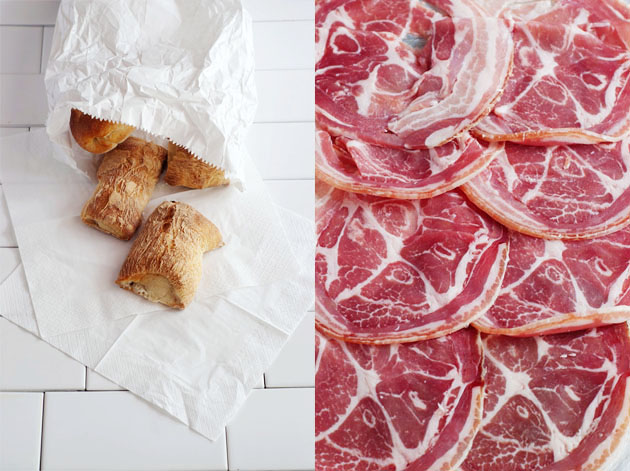
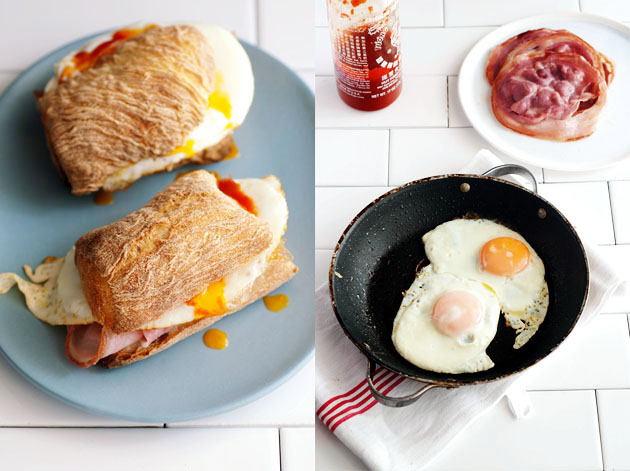
This is my greatest take away from the last two weeks I spent in Australia for work. Of course there was fantastic Vietnamese food, great Thai, beautiful carrot cake from Bourke Street Bakery, and filling flat whites, but nothing left an impression this time quite like the egg and bacon roll. I didn’t remember how good bacon was because I never eat it for health reasons.

But on Good Friday when I sat down to breakfast with friends, and one of them was eating a sandwich that he couldn’t put down, the juices running through his fingers, I said, “I’ll have one of those too!” The eggs were fried with the yolk still a bit runny so that when you pressed the sandwich together, it ran and filled the crumb of the bread and mixed with the roast tomato chutney to make a moist sandwich with the right dose of saltiness from the soft but crispy bacon. The bread was soft inside but crusty outside. It was perfect. At home I made mine with sriracha and ketchup. Still amazing. Now I’ve reached my quota for the next 3 years though.

Kristina Gill

24/04/2012

Guest Interview n° 40: KALDA

Guest Interview n° 40: KALDA

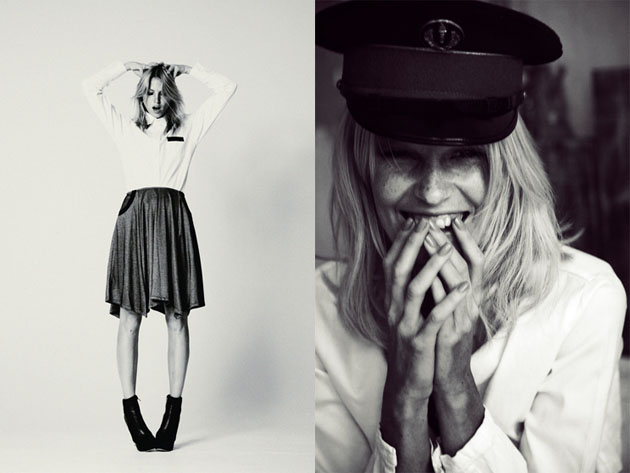
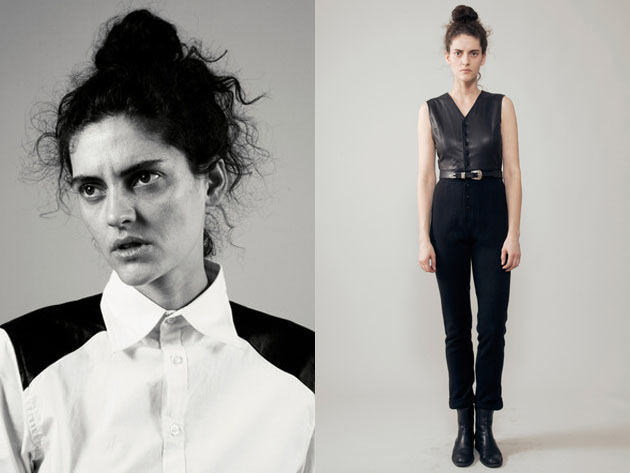
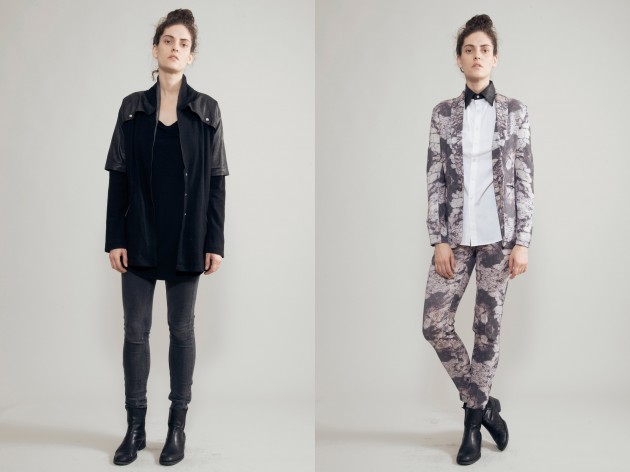
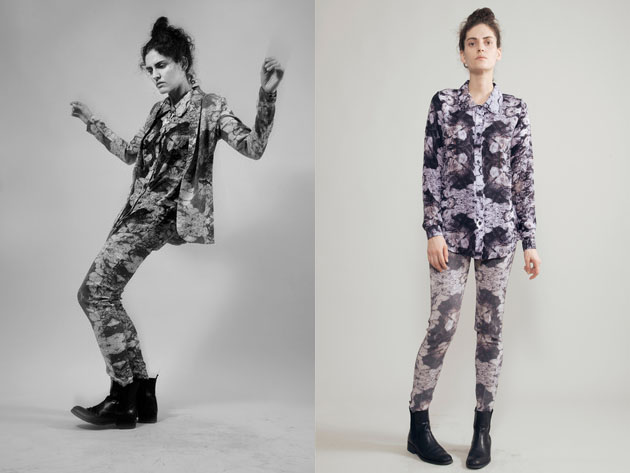
Undemanding but slightly seductive. The garments by London based brand KALDA are fashioned with a lot of realism while combining contrasting elements to bring out an individual touch. KALDA is the creation of sisters Katrin Alda and Rebekka Rafnsdottir, originate from Iceland. The Blogazine caught up with Katrin, who is also the one heading the design, to talk about the inspiration, the style, and London Fashion Week.

KALDA started out as a few pieces project to sell in your concept store, Einvera, back in Reykjavík. Was the objective with the store to be a first step for the brand?
No, not really, the whole thing kind of just happened, almost accidentally, but in the best possible way. I had known for some time that I wanted to have my own brand but it was not done in a strategic way. The shop first started in the basement of our home and then evolved to what it is today.

AW12 is your third full collection. How has the aesthetics of the garments evolved over time?
For me personally AW12 is the collection where it all came together and made sense. I think the aesthetics are pretty much the same, especially for the stranger’s eye, but something changed with me personally in this collection.

KALDA is a lot about contrasts and opposites, in the same time as the style is very free and easy going. How is the creating process looking?
The creative process is very intuitive, some base idea comes along and that will be the starting point; normally it is about fabrics. I love the idea of combining different aspects in every single garment. The objective is always to create something realistic and individual.

For your SS12 campaign you worked with the Swedish model Caroline Winberg. Do you wish to keep a Scandinavian touch to the brand?
No, not consciously at least. We had gotten to know Caroline through a friend and as she is one of the hottest women I’ve seen, we had to ask her to work with us!

Your campaigns are a mix of laid back, chic and rock n’ roll. Is this how you would describe the attitude of the brand?
Yes, we create the images to give our costumers an idea of what we are about. We are lucky to work with photographer Silja Magg on our shoots and she really understands the brand identity.

You started out in Reykjavík but have along the road relocated to London. What elements of inspiration have you taken with you from Iceland?
I think growing up there has definitely shaped my aesthetics in ways I am not really aware of. Rebekka and I grew up in a town of 300 people and spent all day every day outside in the nature. Also our team comes mostly from Iceland and they are a great source of inspiration. We just appointed a new Creative Director, Regina Rourke, who is an Icelandic artist so we are very happy with our roots!

Your collection is sold through the iconic London store, Liberty. Do you have any other favourite stores in London, or back in Reykjavík?
I have always thought of Liberty as my favourite store, even more after they picked us up and I’ve gotten to know the way they run their business. Otherwise Natalie Massenet is someone who I think is a great inspiration for young professionals due to her self-believe attitude; Net-A-Porter is one of the best in the business.

From a business point of view it must be easier to be in the midst of it, in an acknowledged fashion city, than on a somewhat isolated island. Was this your main reason for moving the company?
I studied in London and got to know the fashion industry quite well while living here. I think London offers one of the best support systems for young designers in the world and I always knew I wanted to be a part of that. It is very important for me to surround myself with the best to push myself further.

And the plans for the future… What is the next step for KALDA? London Fashion Week perhaps?
Yes, loads of plans! We are just setting up our studio in London now and getting more people involved, which is very joyful! We are also planning an event for LFW in September, which we are all very excited for.

Lisa Olsson Hjerpe – Image courtesy of KALDA  

23/04/2012

Waffles for a Design Hangover

Waffles for a Design Hangover

Deep breath. Salone 2012 is over, and now Milan can go back to her usual beguiling, mysterious, grey self. It’s been a massive overdose of design shot straight to the veins, louder and more brashly than the years before, as marketing continues to merge wholesale with what was once an unrestricted orgy of ideas. Parties and plastic, kitchens and corporate sponsors. So, the stark lull that usually follows design’s biggest event here – a time at which Milan seems like a ghost town in comparison – is the perfect time to reflect upon the state of design behind the flash and fashion that inevitably has massive implications for both the built and natural environments. Did any instant classics emerge this time out? What does Milan mean nowadays? And, can we be hopeful for the near-future of design?

Our design editor, Rujana Rebernjak, waded through every last inch of the city over the course of the week and was almost universally disappointed. The lo-fi events at the Fabbrica del Vapore were a breath of fresh air, led by Alessandro Mendini’s Milano si autoproduce, and were a welcomed escape from the buzzing commercialism of the fiera and Zona Tortona. But overall, these events were conspicuous in their infrequency, and in their being relegated to a ghetto in a far corner of the city. This was reinforced by the myriad exhibitions by Europe’s top design schools, which led us (but certainly not only us) to question the sorry state of Italian design education. Standout schools from Switzerland, Scandinavia, the UK and elsewhere are producing far and away better designers, and while the great majority of these objects are still produced in Italy’s world-class factories, it has never been clearer that the country is lightyears away from its golden years of frequent lightning bolts of genius. Where are today’s Olivetti Valentine, Lancia Stratos or Fiat Panda, Castiglioni’s gorgeous utilitarianism and off-the-wall genius in the style of the Memphis Collective?

But beyond Italy’s malaise, it seems a dismay at the throwaway, fast fashion zeitgeist of the modern furniture industry we ranted about in last week’s editorial were spot on. Among the more contrarian designers at this year’s event, there was tangible sense of dissatisfaction at the status quo, and several projects made snarky reference to the system they seem to feel trapped within.

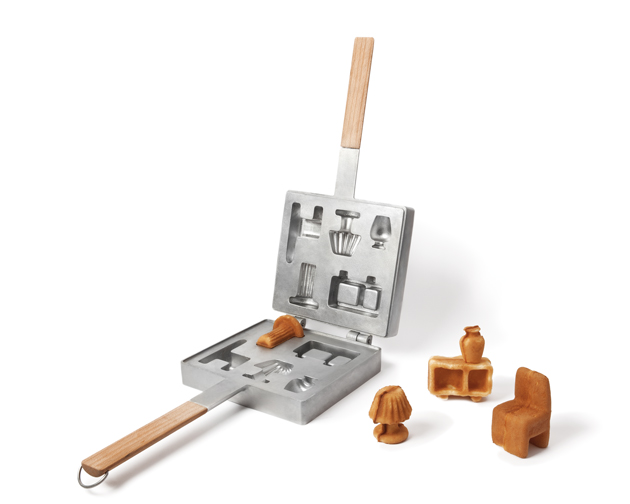
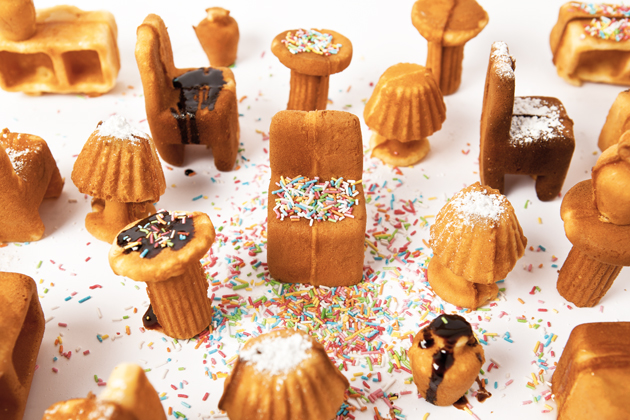
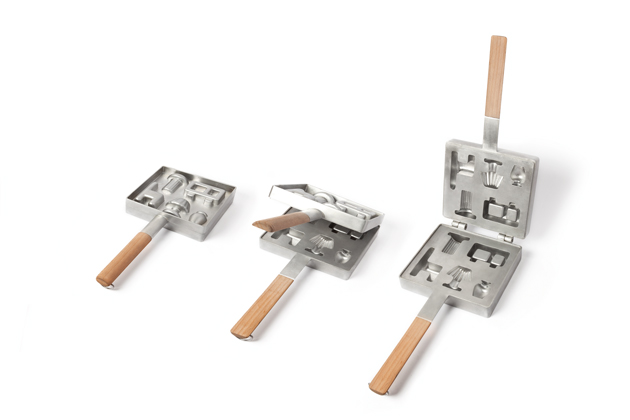
At Ventura Runway in Lambrate, we found a tasty tongue-in-cheek project whose commentary probably best captured the discontent , “Sapore dei Mobili” by a Japanese/Portuguese partnership of Ryosuke Fukusada and Rui Pereira. Billed “furniture tasting,” the project is essentially a clever waffle iron that allows its users to crank out (yummy) furniture in series (your own little countertop fabbrica). The designers say that “in this way, when the user gets full of his furniture, he just eats it.” No waste. No guilt. And then he can “start all over again using a different recipe.” That’s certainly some mass production we can deal with. Chocolate! Cinnamon! Berry furniture! With frosting! Or sprinkles!

In any case, the impetus of the Sapore dei Mobili project is part of a wider discourse on design that seems at last to be catching on. It’s one thing for jaded consumers to feel both overwhelmed by the frenetic pace and underwhelmed at the lack of innovation, but designers themselves are even rebelling against their system. Milan has two more years to make a massive impression on the design world before Expo 2015 will force in onto the global stage outside the insular universes of fashion and design. It’s doubtful that those without an emotional connection to the city’s design legacy will be quite as forgiving as every year’s crop of design tourists are. And frankly, this year’s Salone just didn’t do it. Now it’s hangover time. Eat your waffle furniture with tons of butter and syrup, and perhaps next year Salone will have come to its senses.

Tag Christof

23/04/2012

Welcome to Monkeytown

Welcome to Monkeytown

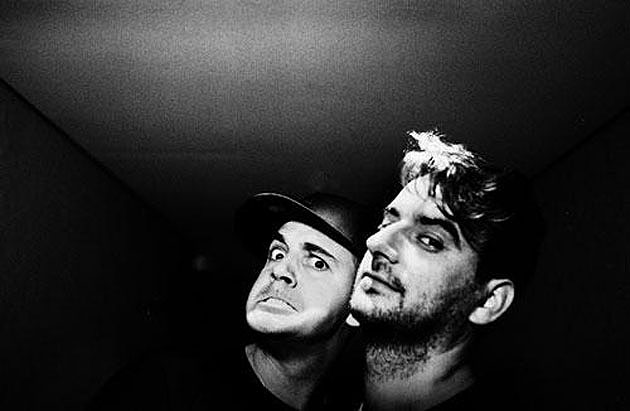
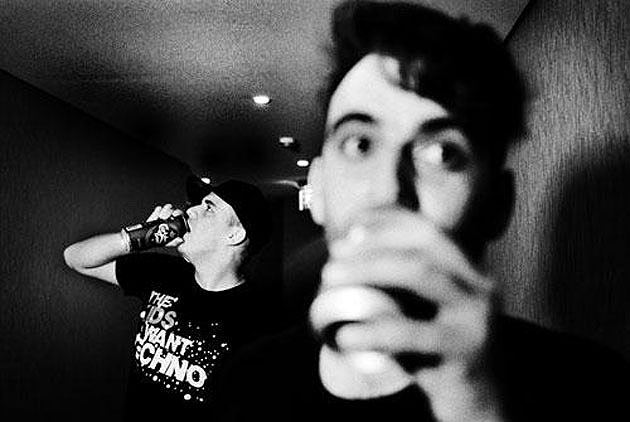
Modeselektor are a band that formed soon after the fall of the Berlin Wall, and their musical arc over the past decade has been appropriately thundering, celebratory and without borders, seamlessly incorporating elements of IDM, hip-hop, jazz, dub, and pop. Their genre is at best haphazard; no one knows what to call it, everybody moves to it. Their tunes work equally just as well with a bag of kabenzis as they do with a hit of MDMA or acid, and often both will do.

Gernot Bronsert and Sebastian Szary started out as DJs, evolved into a production team, and in the process ended up becoming full on songwriters. Sometimes they sound like two scientists breaking new territory, other times like two kids breaking into their parent’s weed stash, but their compass always points to the dance floor. None other than Thom Yorke has appeared on two of the duo’s last three albums and seems to be their biggest fan.


They’re more of a musician’s musician over in America, a DJ’s DJ, but the Americans in attendance at either of their two New York shows last week (one at the Music Hall of Williamsburg, one at Webster Hall) didn’t seem to mind the outside world’s lack of interest. “Yes!” was all anyone could seem to say over tracks from Happy Birthday! and Hello Mom!. This is because Modeselektor sound better live: Unlike many of their producer/musician/DJ counterparts, Bronsert and Szary prefer the stage to the studio, and their tunes take on a new dimension when heard in real life. It’s like a DJ set, only they’re DJing their own stuff. James Murphy, are you listening?

Technical, bottom-heavy, calculated with every gesture; even their name comes from a machine function on the Roland RE-201 space echo analog delay effects unit. One can imagine these two sitting in the corner of the discothèque arms crossed sipping on a pint of vodka lime, nodding slowly under the flurry of lights. But considering they called their last album Monkeytown we can assume they don’t take themselves too seriously. The same goes for their music. “I wanna make you sweat―bass bass drum! Hyper! Hyper!” one song boasts. “We put some energy into this place―I want to ask you something: are you ready?”

Lane Koivu

22/04/2012

Salone 2012 – Fabbrica del Vapore

Salone 2012 – Fabbrica del Vapore

After six days of hard work, we can say we have searched almost every inch of the city in order to soak in all the good (and bad) this year’s Salone del Mobile had to offer. We have seen Zona Tortona, Triennale, Lambrate, Spazio Rossana Orlandi, Brera Design District, State University, so one of the last things to see around Milan was Fabbrica del Vapore.

Cited by Stefano Boeri as the only venue that truly offered examples of independent and spontaneous creativity, Fabbrica del Vapore offered three interesting exhibitions.

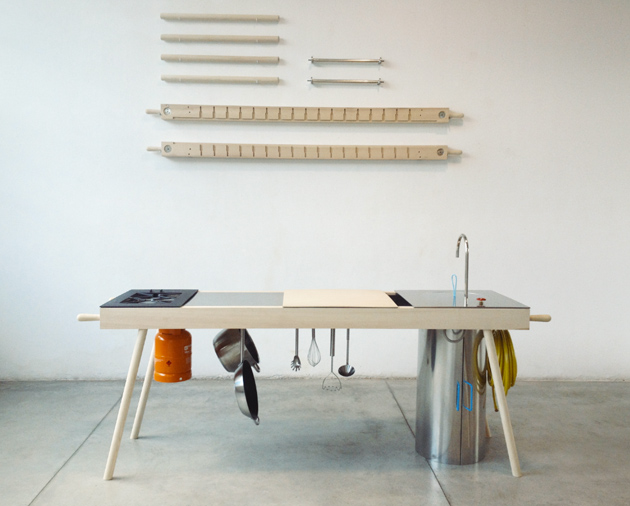
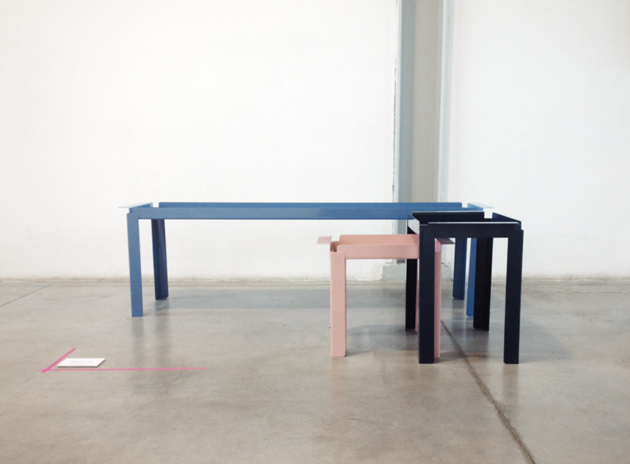
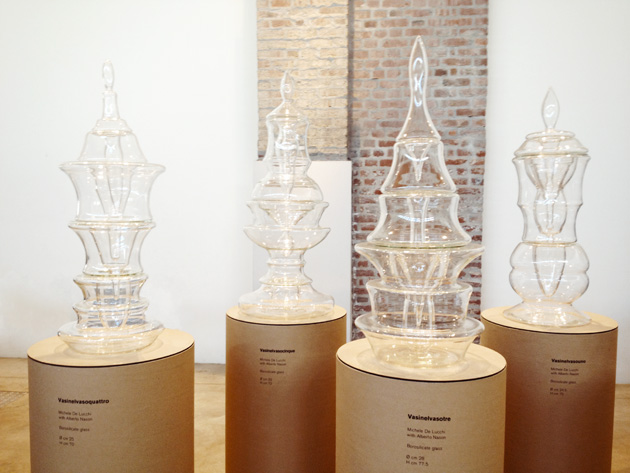
The first exhibition that was on everyone’s lips is Milano si autoproduce. Promoted by the grand master of italian design Alessandro Mendini, Milano si autoproduce reunites a long list of designers that are both craftsmen, businessmen, gallery managers and creatives. The goal of the exhibition is to develop a new model for contemporary design where anyone can see their projects produced and set on the market. Even though this concept isn’t new, it was interesting to see the amount of auto-producers in Milan. We weren’t completely able to understand the connections between all the pieces in the show, which left us pondering. You could see projects by some of the design superstars like Michele De Lucchi with his Produzione Privata set side by side with a collection of jewelry, which made you question the criteria of the selection.

The second exhibition worth seeing was the second edition of Uncovered exhibition. Entitled Qualities, the exhibition showed the work of Line Depping and Jakob Jorgensen, Elisa Honkanen, Peter Johansen, Elia Mangia and Simone Simonelli. The question that this exhibition tried to answer was ‘ what does quality design mean?’. Whether it is related to its duration, affordance, functionality, sustainability or emotional quality was a problem that these designers tried to answer with their projects.

The third show that made us smile is Low Cost Design created by Daniele Pario Perra. Conceived as an on-going show, Low Cost Design presented a series of interpretations of our daily objects seen from a different perspective.

Our design insight tour unfortunately ends here. Even though we are almost out of strength, we would have liked to show you everything that was happening around Milan in these days. Now we can only wait for the next edition of the Salone del Mobile.

Rujana Rebernjak