01/08/2013

A Curious World of Things in Achille Castiglioni Studio

Entering the apartment of an inspiring personality is always a bit of excitement, with all the expectations. 
What could happen when you enter the studio of someone like Achille Castiglioni – a genius of the Italian design?

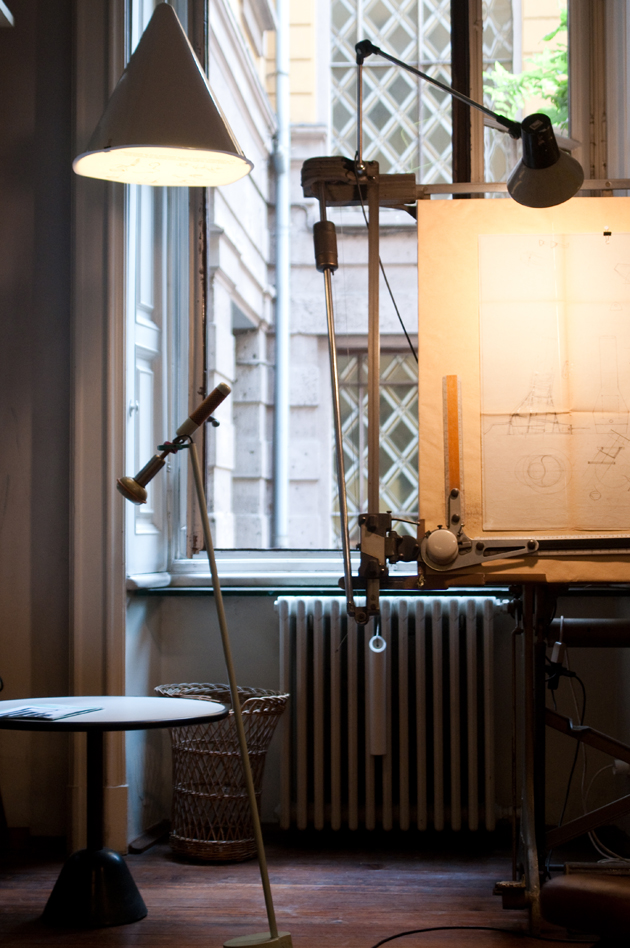
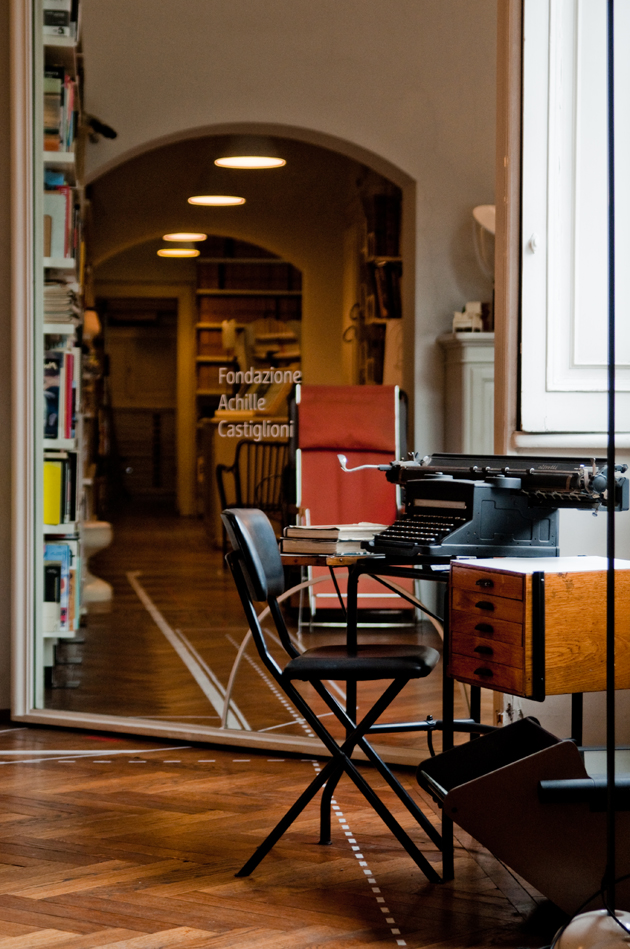
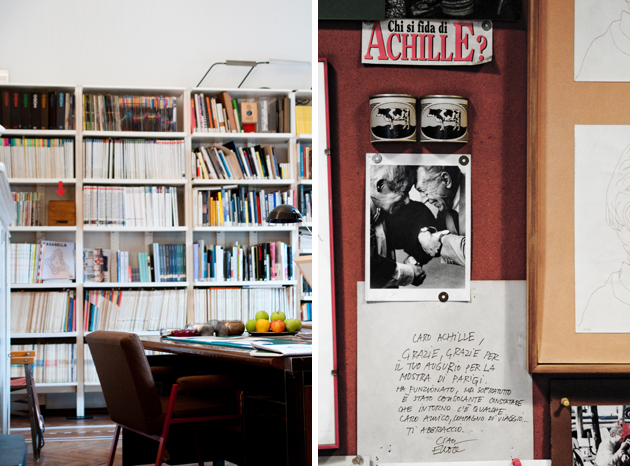
The apartment space and studio in the center of Milan, where Castiglioni worked, hosts nowadays a studio-museum of his name. Back in the days the location was smartly chosen because of the ability to quickly join the highway. In the times without Internet and emails this was the way to reach the clients – the main furniture companies on the periphery of Milan.
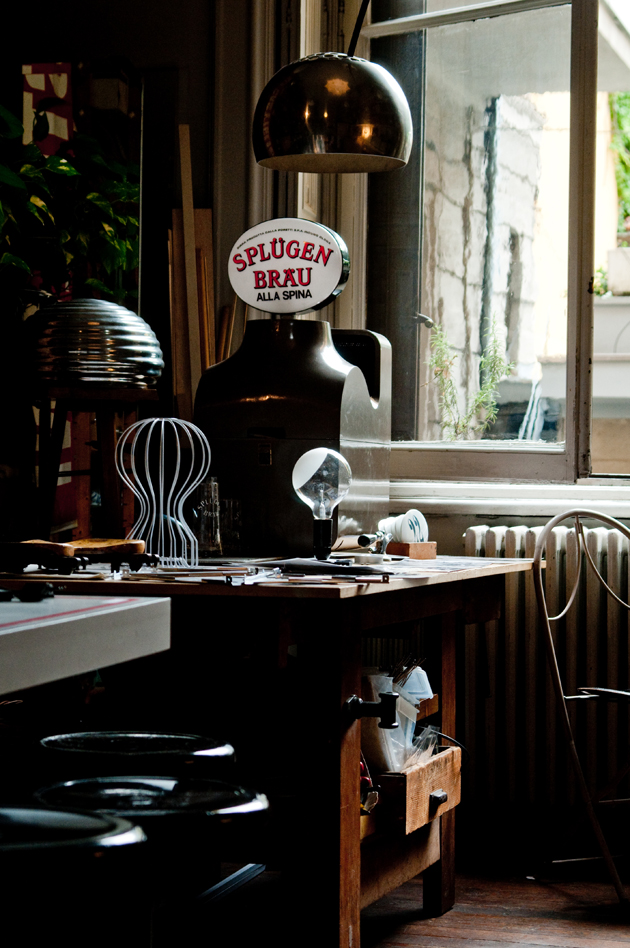
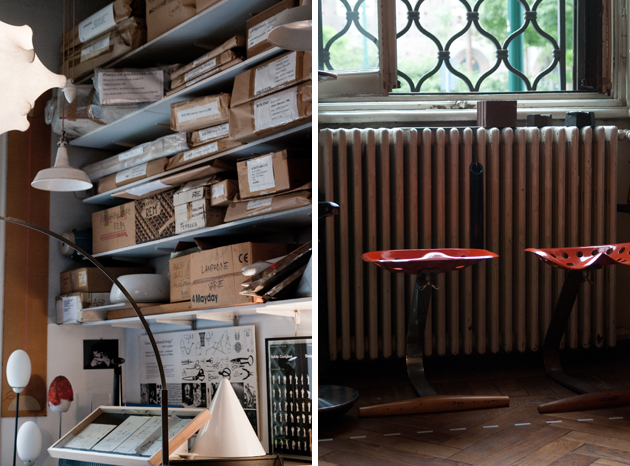
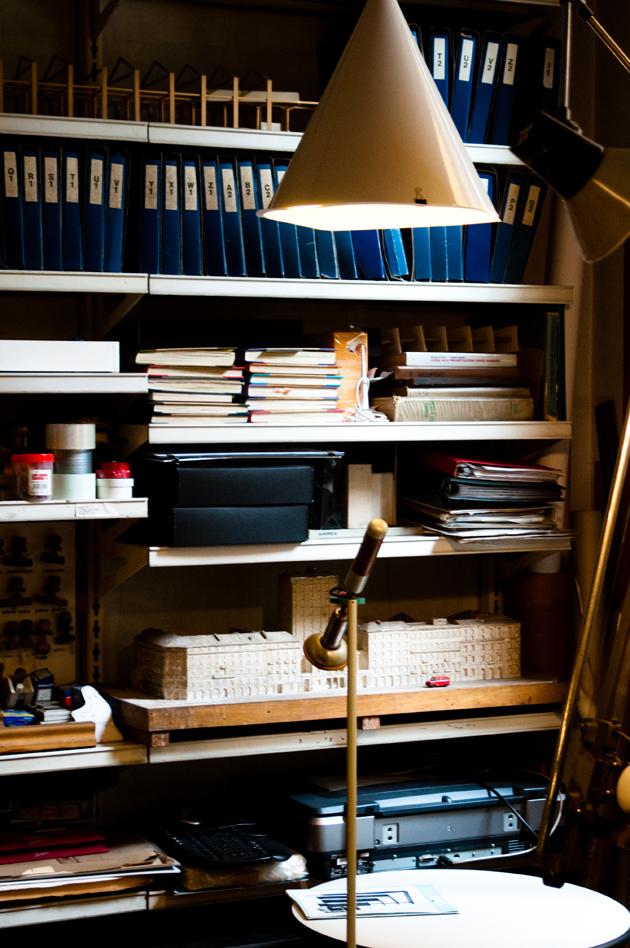
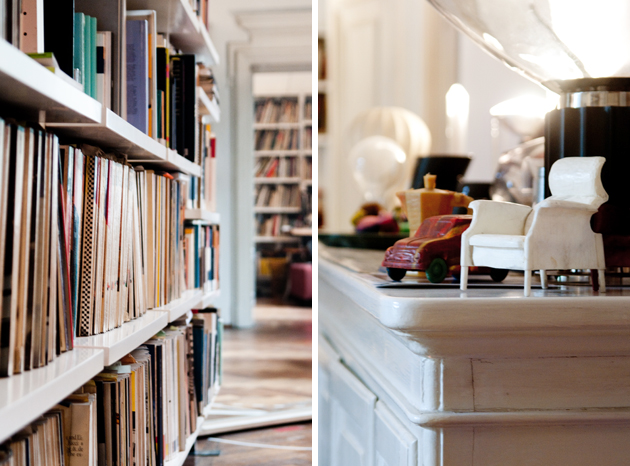
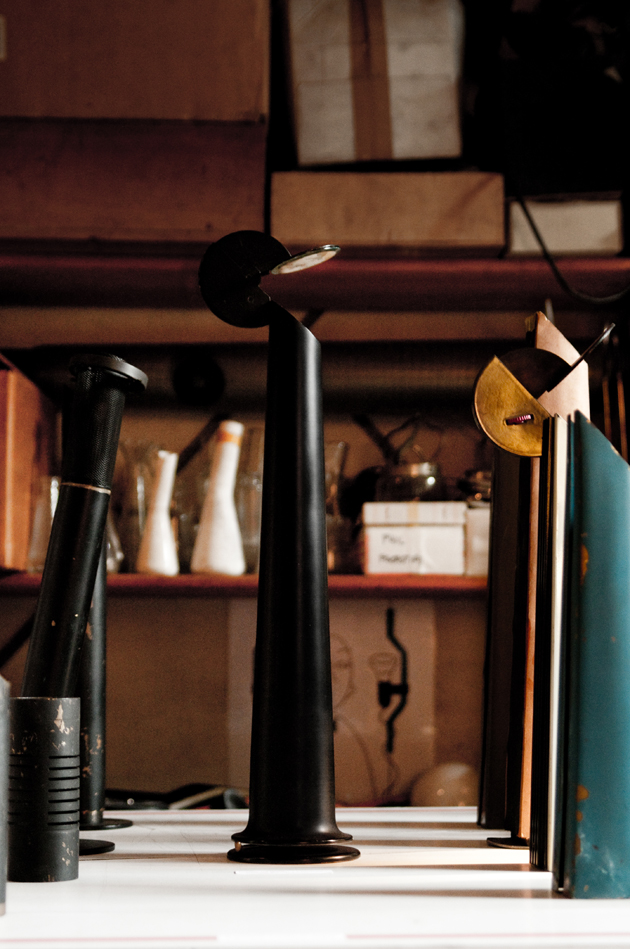
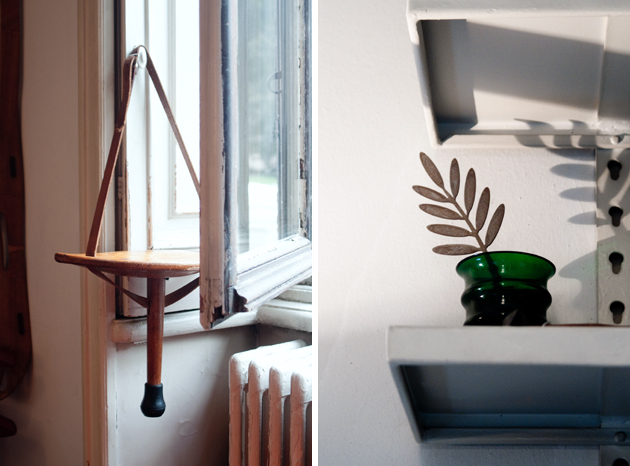
It’s a magical world of objects, models and prototypes, books, magazines, sketches and boxes, filled with all kinds of materials, research and work – the space is filled with thousands of curious things. To remember what exactly is in which box, is almost impossible. But not for Antonella Gornati, working there for more than twenty years. “In her head she has the real database of the content of each box,” jokes the daughter of the designer, Giovanna Castiglioni. As we move through the space, a story behind each object is told by either the daughter or the wife – Irma Castiglioni.
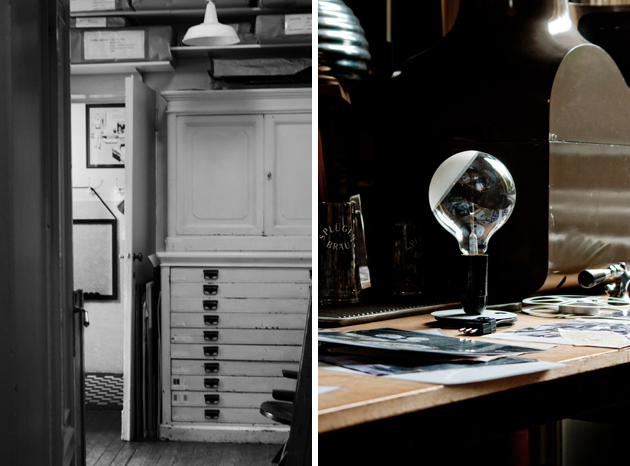
The word for furniture in Italian is mobile. Somehow it feels like there might be something even etymological in the idea that furniture has to be moved once in a while. In fact, in order to give it a new life from time to time, almost each piece by Castiglioni is thought to be easily transportable either with tiny wheels or other comfortable ways. The aim of the studio-museum is also to give as much of the attention for the contemporary designers. That’s why once in a while different boxes are being opened by a young designer who helps to originally curate the exposition of the objects, so the space is constantly changing and keeping the conversation alive between the past and the present. “In this way we share the way of thinking, working and teaching of Achille Castiglioni,” his daughter explains. “My father would, like Mary Poppins, arrive to teach in the university with two luggage bags full of curious everyday objects. He was always telling to his design students: If you are not curious, forget about it!”


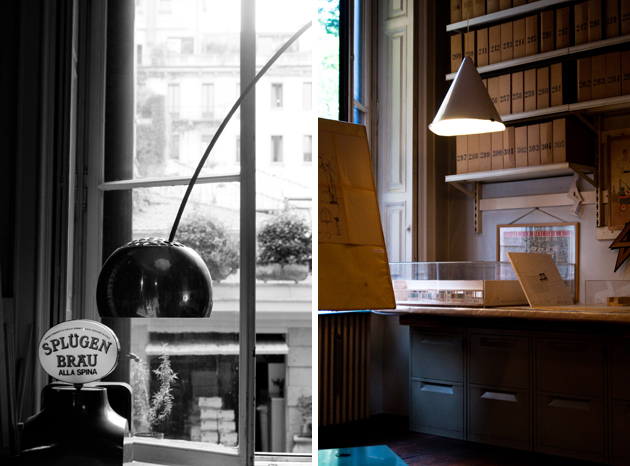
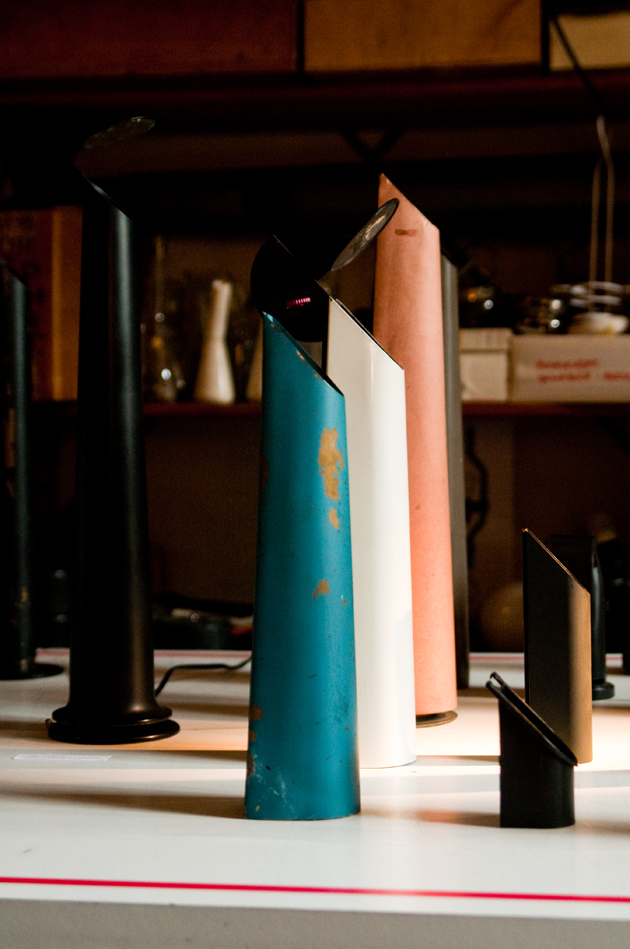
At the moment in the studio-museum of A.Castiglioni the attention is given to the famous lamp Gibigiana. All the models, sketches and prototypes are shown until the 10th of August. This exhibition is curated by a young designer Marco Marzini.

Agota Lukytė 
01/08/2013

Fashionable Protection

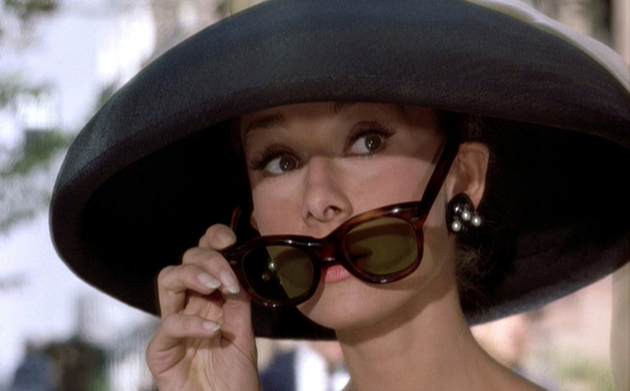
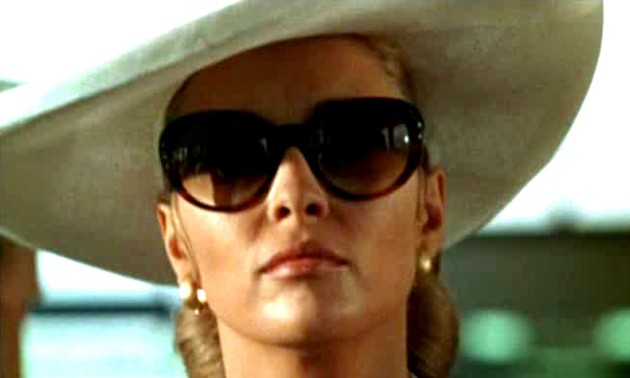
Sunglasses are a crucial piece of any summer outfit, a style item, but during these hot sunny months they also function as an important shield to protect our eyes from the rays of the sun. In this luminous warfare, polarized sunglasses are a top accessory, but have you ever thought of where they came from? What do polarized lenses actually mean?
Polarized sunglasses were first introduced in 1936 by Edwin H. Land, founder of the Polaroid Corporation. He, together with the brand Ray Ban, designed the aviator-style sunglasses especially with war pilots in mind, as a part of their uniform. Sunglasses were given a shape to equip the pilot with optimal shade from the sun, important since all the previous designs let the sunlight in when pilots looked down at the instrument panel. In 1937 – a year after the initial introduction – the polarized Ray Ban aviators became available for the public as well.


The Polaroid filter makes the sunglasses an effective shield against harmful rays and light glare. The light passes through the lens in a single plane eliminating the rays of glare from the light rays. Common sunglasses lets light pass through in many planes and can’t minimize the glare effect on the eye. The polarization can be applied to the lens in three different ways. It is cheapest to have a film of polarized filtering applied to the outer coating of the lens. The filter can also be put between the layers of the lens. The newest and consequently most expensive way is to combine the filter with the lens material: a result achieved by adding filter to lens while this is still in liquid form, thus generating the highest visual quality.

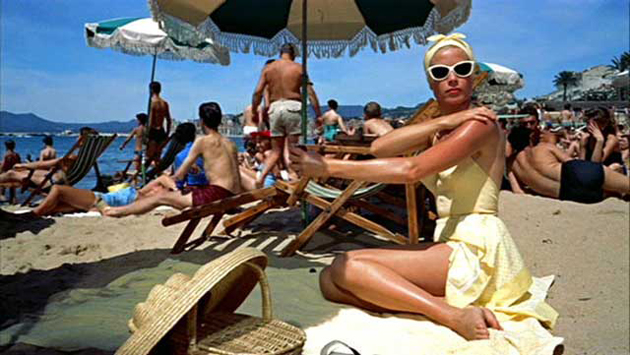
The protection from the sun has been the inspiration of many fashionable items through time. Women in ancient times hid seductively behind a fan or a dipped parasol, modern women – and men – discovered the chic allure in wearing sunglasses also off the utility in war, at the beach.


Victoria Edman 
31/07/2013

Horror at work

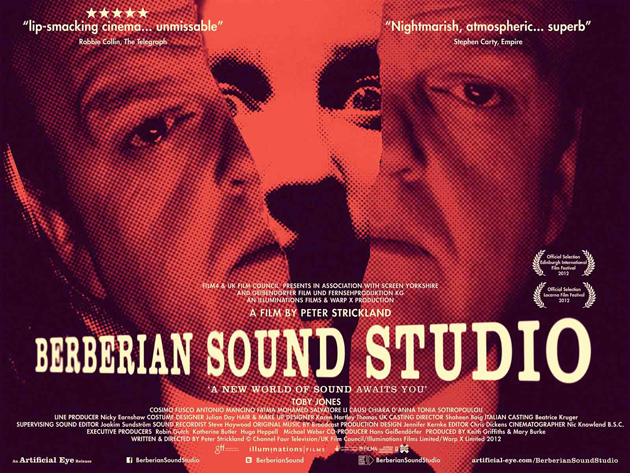
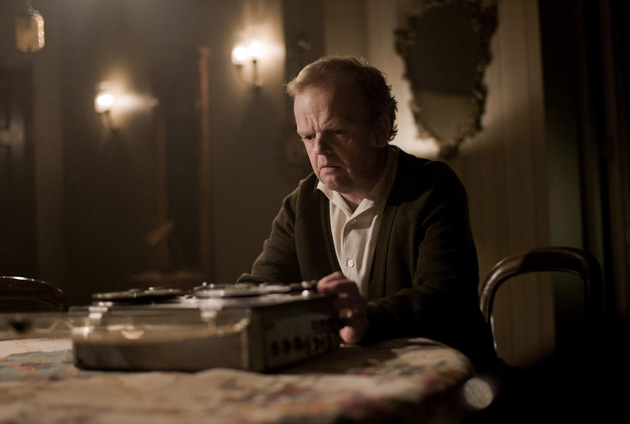
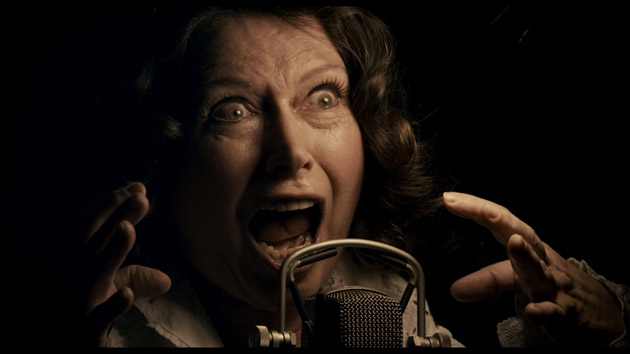
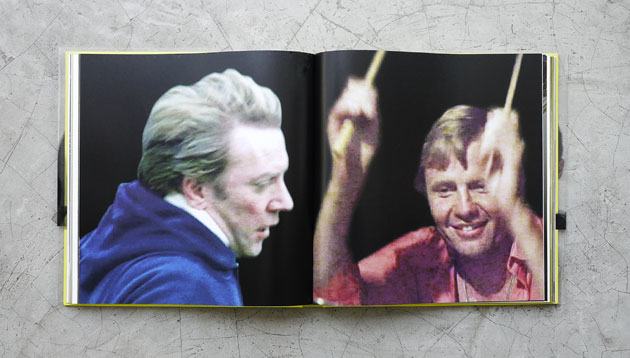
Berberian Sound Studio, Peter Strickland’s second feature film, is a behind-the-scenes tale of a middle-aged sheepish English sound engineer named Gilderoy (also the name of an awkwardly flamboyant character in the Harry Potter universe) invited to the Continent to work on an Italian giallo exploitation/slasher horror flick. The production delights in the gruesome torture of witches in every conceivable manner (red hot poker vagina insertion is one of many) for which our reluctant protagonist has the responsibility of producing the appropriate sound effects.


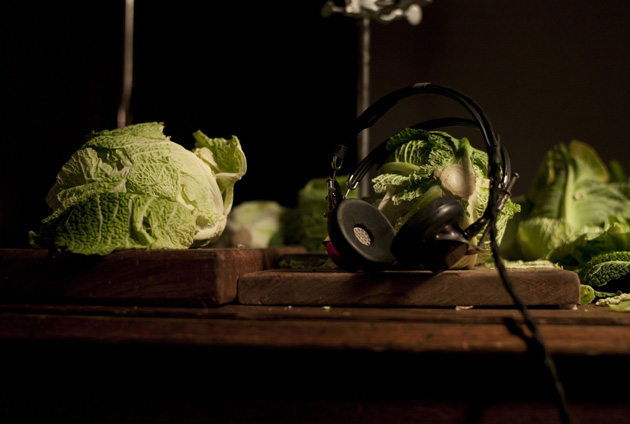
Strickland’s clever twist is that he never actually shows us any of these scenes, we only hear them. Watermelons are hacked open, cabbages are stabbed and sprouts are torn out of radishes. As our imagination is stimulated to conjure these horrific scenes we are reminded of the integral and often underappreciated role of sound in cinema but also in everyday life.

However, sound is only but one of many of Berberian Sound Studio’s accomplishments. The characters, story, dialogue and atmosphere, are all meticulously woven together with great care, sensitivity and sophistication. We sympathize with Gilderoy’s homesickness as he reads his dear mother’s letters, reporting on the chiffchaffs nesting near their home. We struggle with him to summon the courage to demand reimbursement for his flight ticket, a curious subplot that builds up tension towards the film’s erratic climax. And it’s difficult to forget Gilderoy’s studio partner, the uncompromisingly macho chiseled Francesco, or the mesmerizingly beautiful bitchy Greek secretary, Elena. Though awkward, his power play with these characters is surprisingly watchable and even peculiarly sexy (in a master/slave sort of way), capturing a psychological tension that’s as complex as it is subtle. The culture clash motif (a stereotypically ‘civilized’ quiet uptight English man pitted against the loud expressive ‘barbaric’ Southern Europeans) is here merely an excuse for rich character exploration.

“These things happen, this is history, and a film director must be true,” says Santini, the production’s suave director, in one scene where he justifies the violence in his film. Strickland does the same, only he does it by capturing the far more interesting subtle power dynamics and ‘horrific’ tensions of the working environment, and he does so with sonic precision.


Peter Eramian 
30/07/2013

In Between Naivety and Amazement

Apocalyptic or integrated? The conflicting attitudes that characterized the appearance of mass culture and, later on, of the Internet, are still popular in evaluating the reach of what design experts are keen to consider as the next industrial revolution: personal fabrication. In other words, the chance into producing our personal belongings ourselves thanks to a 3D printer, a laser cut and a 3D scanner.


According to the enthusiasts, these tools will soon transform us into contemporary demiurges – or simply “makers”, as Chris Anderson suggests – offering us the chance to fully control both design and manufacturing in a process that goes backwards from bits to atoms, that is to say from a 3D file to a three-dimensional object. The sceptics, on the contrary, are reluctant to diminish professional designers’ talent to imagine and create new objects according to their visions and knowledge.

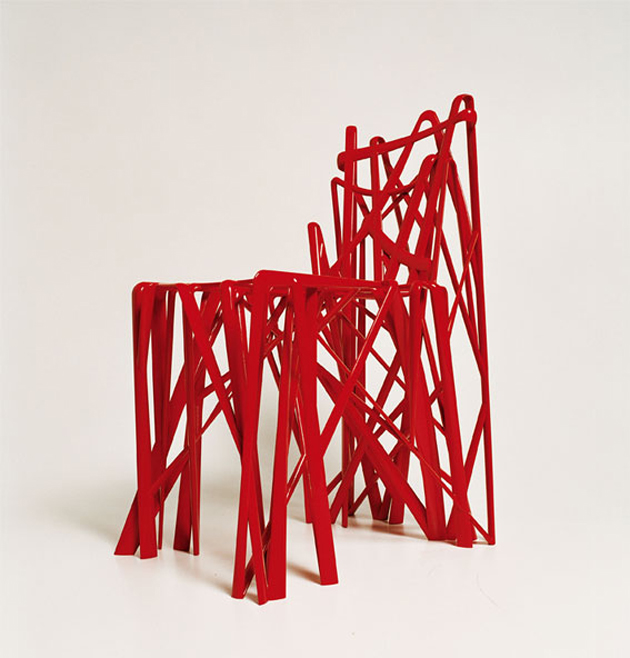
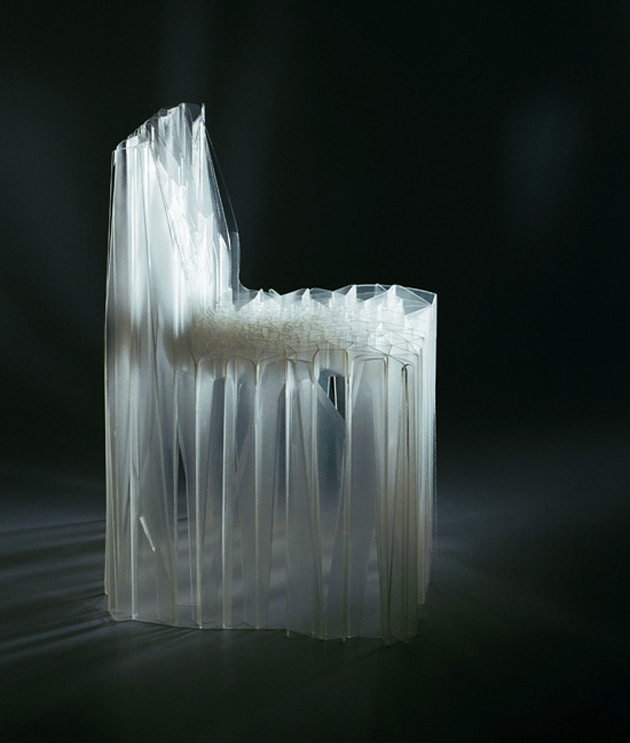
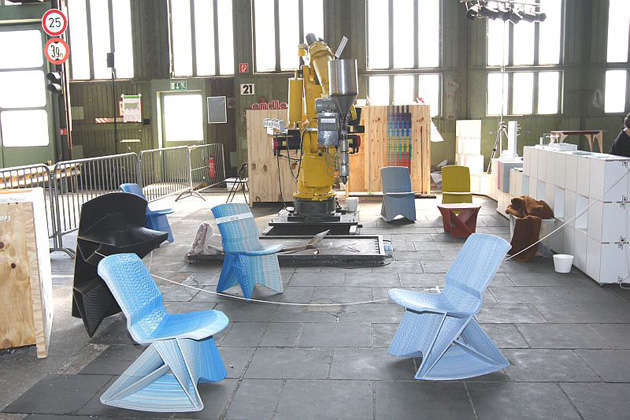
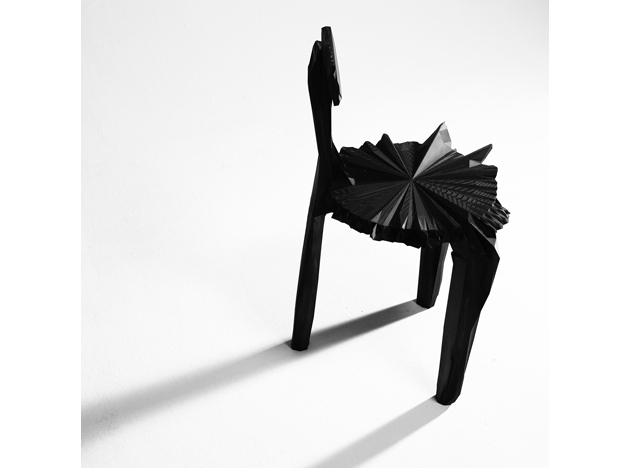
In any case, the opportunities opened by personal fabrication are indeed real, but easy to be misunderstood at these early stages of technology development. Let’s think about the launch of the first 3D printed furniture: when Patrick Jouin presented his Solid collection in 2006, his futuristic interpretation of organic aesthetics impressed the design community, but very few professionals were stunned by the use of 3D-layering for objects on the scale of a chair. The same happened to Endless chair by Dutch designer Dirk Vander Kooij, which was first displayed in 2011 at the Eindhoven Design Academy showcase during the Salone del Mobile days. People got excited by the real-time processing of this seat, which was realized though a print head mounted on a robot arm. Nevertheless, they lost the perception of what its innovation represented: not only a DIY application of a numerical control machine, but a first step into the world of mass customization.

Thus, if we don’t get surprised by the widespread inability to give a proper weight to innovation – design history is full of naïve misunderstandings -, at the same time we should not be astonished that we ignore whether personal fabrication will allow us to fully customize the way our homes look like or, on the contrary, it will be an opportunity to print too many worthless gadgets. What we know for sure, however, is that the biggest revolution is not going to involve the way we imagine, draw or use our furniture, but the way we market them along the whole supply chain. We already got familiar to purchasing our furniture online, and we shall soon get used to buy a 3D file (or download it from an open-content platform) and then print it in a next door Fab Lab. Does it sound apocalyptic? It could, if not only showrooms risk to get obsolete, but also wholesalers risk to become unemployed.

Giulia Zappa 
29/07/2013

Candice Breitz | More Real Than Real

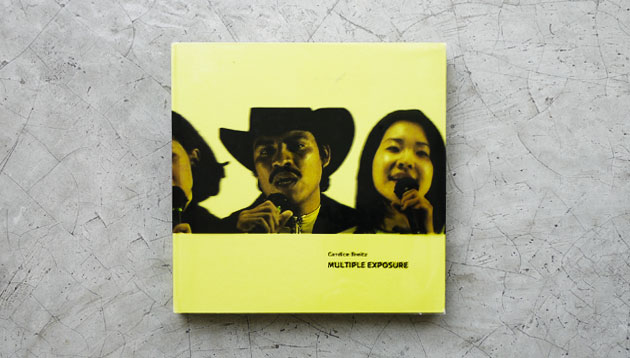
Candice Breitz (b. 1972, Johannesburg) is an artist, who dedicated most of her artistic research to examine and demonstrate the impact and influences of mass media on the contemporary society. Exploiting fragments of images and video taken from the global entertainment industry – she “steals” icons from the media culture, from Hollywood to Bollywood and Nollywood films, passing through television and pop music –, Breitz reveals the cognitive machinery and the psycho-sociological implications of the popular consumer culture. Taking familiar elements out of their context, distorting and re-combining them into isolated situations, the artist creates puzzling portraits that allow us to observe the representations of the identities of human beings and their instability, taking the right distance from them.

Through the use of simulacra and without expressing any direct stances, the works by Candice Breitz turn contemporary communication iconography comprehensible and accessible, giving the audience the basis of a critical point of view to reflect on how we perceive ourselves. 
Using photography and video the artist re-creates a hyper-real universe dominated by astute parallels with our “real” world; a universe where lyrics are reduced to nonsense syllables that represent the infantilization and involution of the mass entertainment as in the Babel Series (1999), or where movies are trapped into fragments of their performances that completely unsettle the narration of the original films, as in Soliloquy Trilogy (2001): Soliloquy (Clint), Soliloquy (Jack), Soliloquy (Sharon) – the three movies tackled by Breitz are Dirty Harry with Clint Eastwood, The Witches of Eastwick with Jack Nicholson and Basic Instinct with Sharon Stone –, which compares the star’s appeal with the force of storytelling.

Mother + Father(2005) is a video installation composed of two parts, one dedicated to the “mothers” featuring Faye Dunaway, Susan Sarandon, Meryl Streep, Diane Keaton, Julia Roberts and Shirley MacLaine, and the other one to the “fathers” with Tony Danza, Dustin Hoffman, Harvey Keitel, Steve Martin, Donald Sutherland, Jon Voight. Deleting the context of the movies and cutting different shots of them, the artist put on show the representation of parents according to feelings and rules imposed by the screen. Among the artistic, somehow sociological, experiments by Candice Breitz there is another trilogy, The Woods (2012) that included The Audition, The Rehearsal and The Interview shot in Los Angeles, Mumbai and Lagos. These works come from the idea of observing children struggling with the movie world, underling their differences and analogies with adults, and returning to the issue of the interview as a way to create a portrait as close as possible to the real nature of the interviewed person, or at least to the particular mask worn in that specific moment by him/her. 
Candice Breitz is one of the numerous artists (all women) exhibited in different locations in Arezzo for the project Icastica 2013. If you end up there during the summer, don’t forget to have a look around.

Monica Lombardi 
28/07/2013

Sunday Breakfast by Love For Breakfast

There are days where happiness lies not only in the small things. Go big!

Alessia Bossi from Love For Breakfast 
26/07/2013

Wild at Heart

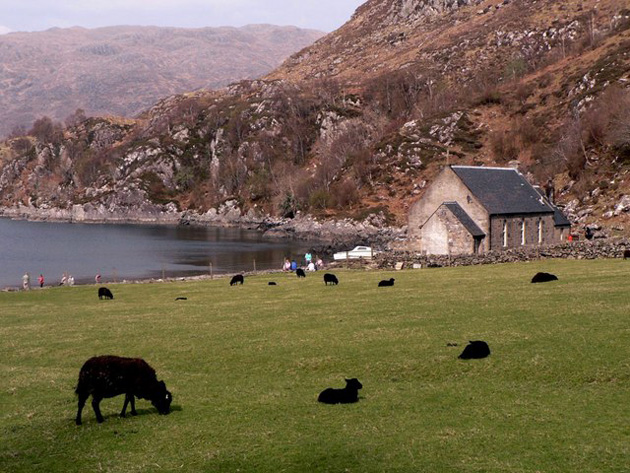
You don’t need to venture to the Scottish Highlands to find something stunning. The Scottish Borders, a collection of fairy-harbouring groves, dry stone walls, stately homes, impossible sunsets and crumbled Neolithic stone huts, is a particularly magical pocket of the world.

It does feel like something that’s fallen from a fantasy novel. The only change this landscape has witnessed in the last few decades has been locals realising they can set sail on St Mary’s Loch (which proves that not all great bodies of water are restricted to Scotland’s north). To prove the fantasy point, if the weather gods and electrically charged solar particles are on your side you may even catch a glimpse of the Northern Lights. But I wouldn’t hold your breath. A mecca for bike enthusiasts, hills walkers and foodies alike, this region will have you writing poetry, reaching for the water colours and brushing up on your British history. Which is absolutely everywhere. Even the roads, which were shepherd tracks made car (well, cart) worthy by French prisoners, come with a story.


On the literature front the Yarrow Valley, filled with signs warning you to watch out for ‘slow young lambs’, was made famous by Wordsworth while Sir Walter Scott used to stomp these grounds and exchange notes on poetry on life with local farmer James Hogg.

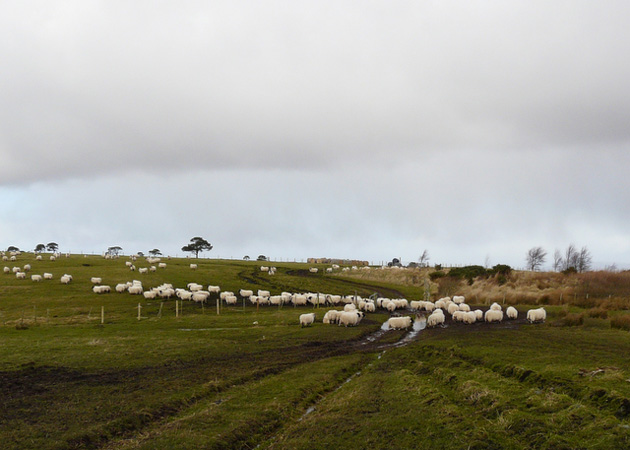
Then there’s the more dramatic history, after all, the Scottish Borders were the original wild west of the United Kingdom. The region’s Ettrick Forest was the hiding place of William Wallace while the infamous Reivers treated the entire region as their personal playground – their towers are still dotted amongst the tree line. Known to cross into England and take what they wanted, Reivers roamed these hills for close to 500 years, and are responsible for the term bereavement – which gives you a sense of what they were up to. Hard to imagine an area currently filled with gravity defying sheep, shaggy cows and deer could be so turbulent!


Nowadays the region is deliciously civilized and filled with local treasures, such as Eddleston’s The Horseshoe Inn. Frequented by Scotts after a foodie break and a comfy bed, this opulently inviting (not-so-out-of-the-way) hideaway is dedicated to keeping things small, friendly and elegantly quaint. Start up a conversation with any of the staff and you’re sure to expand your mind, whether you’re keen to learn more about the intricacies of Scottish gin or national history. The real stand out here is the food, which sums up what this area is all about: boldness, beauty and local flair. Suppliers deliver right to the door and are as local as they come with ingredients hailing from the organic Peelham farm at Foulden, Dryhope Estate in the Yarrow Valley and the Ettrick Valley Smokehouse. Essentially, game hails from the surrounding hills, Salmon is from the Tweed and honey comes from just down the road. An evening here is enough to justify a journey north.

Blissful, beautiful and seemingly forgotten by time, this land of history and contradictions remains delightfully wild at heart.


Liz Schaffer – Images Sylvia Duckworth, Richard Webb, Alastair G, Brian Holsclaw, Stuart Meek 
25/07/2013

European Fashion Schools: Central Saint Martins

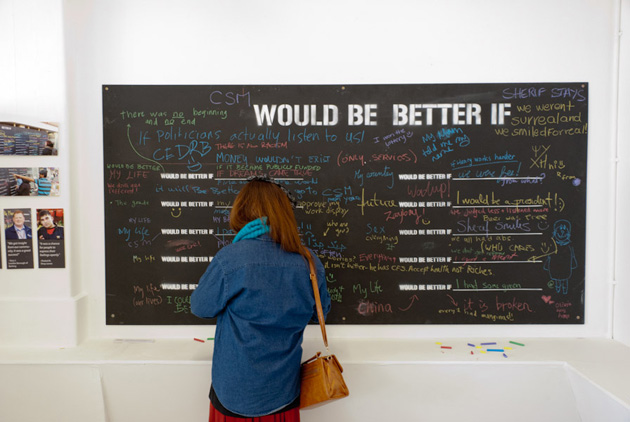
We’re back in London and back at the University of Arts, but this time we’re heading into the world of Central Saint Martins. CSM, the initials breathe talent and creativity, they breathe design, fame and innovation. The Blogazine has previously looked at its talents and the work executed by its students, but more than heavy names on its list of graduates, is Central Saint Martins the answer to the question asked by themselves too: What’s the point of art school?


The question is interesting, when coming from an art school itself. Central Saint Martins brought up the discussion in a moment when art and design education have been facing a hard time, and by that CSM communicates that the need to deliver a clear answer to what art, fashion or design education actually brings to the students, society and industry, is greater than ever. They highlight the point that fashion – or art – education is becoming more exclusive but less diverse. So how does a school like Central Saint Martins, famous for not being only exclusive and of high quality, but a school that graduates talent, after talent, after talent, create a diversity different from the competitors?


At Central Saint Martins everything is gathered under one roof: art, product and industrial design, drama and performance, fashion, textile and jewelry design, graphic communication and all the other courses on all levels that fit into the culture of CSM. According to the school itself, their approach to art and education is curious and may result in a challenging, but never dull, journey. Without saying that boundaries were made to be broken, in the world of Central Saint Martins they were at least made to be explored. The courses at the school, located in the midst of London’s bursting creative scene, have a strong connection to the actual practice of the industry. The approach of the teachers, which often seems to take colour on the students, is forward-looking and always on the edge, bringing the school to be one of the ones always standing in the forefront of the discussion.

Like for any school that seems to be able to produce great talent, it’s hard to pinpoint how, what, and why they succeed. Maybe it’s the approach, maybe it’s the experience, maybe, and most probably, it’s the combination of a certain structure and vision created by the school. An approach that dares to ask if art school is necessary, an approach that encourages people to be brave and to do what they love.

Lisa Olsson Hjerpe – Image courtesy of Central Saint Martins 
24/07/2013

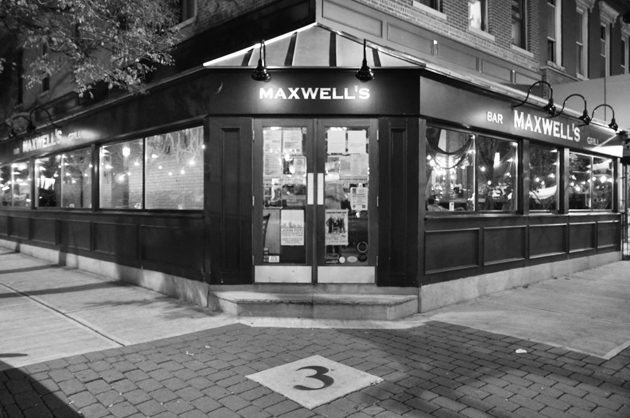
Maxwell’s: 1978–2013

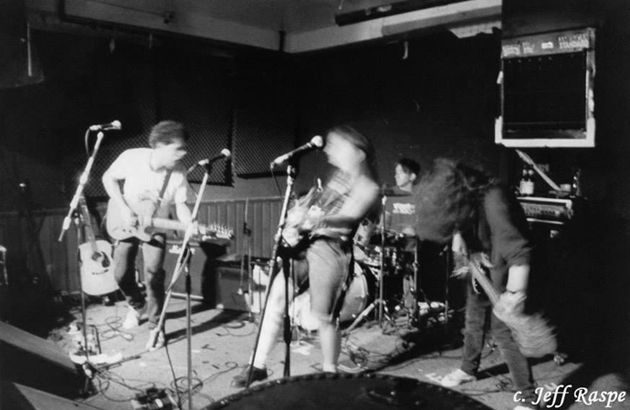
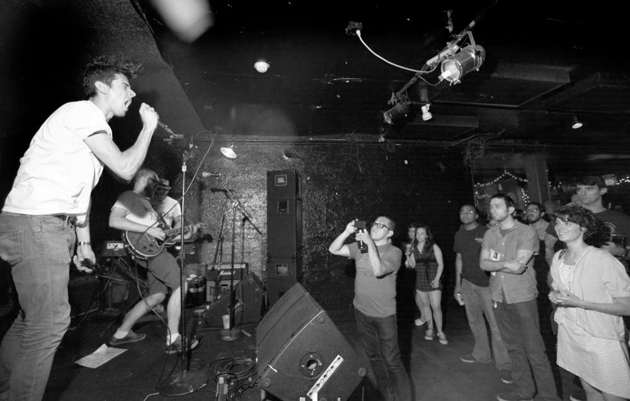
Following in the footsteps of the legendary New York City venues it rivaled — CBGB, Max’s Kansas City Maxwell’s will close for good on July 31st, capping an incredible 35-year run. The Hoboken, New Jersey landmark is leaving on its own terms, having had enough with Hoboken’s rising condos and over-saturated frat culture. “If you think of Willie Mays playing outfield for the New York Mets,” booker/co-owner Todd Abramson recently told the NY Times, “I didn’t want us to wind up like that.”


Founded in 1978 by Steve Fallon when Hoboken was a still run-down shipping town best remembered for being the birthplace of Frank Sinatra, Maxwell’s created a tiny alternative scene that would flourish over the next few decades. On July 31st, the first two bands to play Maxwell’s — by The Bongos and ‘a’, the band featuring Bar/None founder Glenn Morrow — will grace the stage on last time. In between bands big (REM, Nirvana, The Smashing Pumpkins), small (The Stations, The New Marines) and somewhere in between (Hüsker Dü, Pavement) have stopped by. Many acts continued to return even as their careers outgrew the venue’s 200-seat capacity. The Replacements nearly burned the place down when 400 people showed up to one of their shows in 1986. Yo La Tengo had a tradition of playing for eight consecutive nights every Hanukkah. The Feelies played regularly.

“Steve treated bands well,” Yo La Tengo’s Ira Kaplan told Vulture. “That shouldn’t be a revolutionary practice, but it was.”

Others stopped by: comedians, actors, writers. A few years back I saw Eugene Mirman open for Handsome Furs; he spent most of the evening chatting with the front row and handing out handmade business cards with crude one-liners written on them. I felt like I was in my living room and the drinks were cheaper than a bodega tallboy on the other side of the river. At Maxwell’s anything went. There aren’t many places like that left in New York City. After this week there won’t be any left in Hoboken.

Lane Koivu 
23/07/2013

Hats – A Personality of Their Own

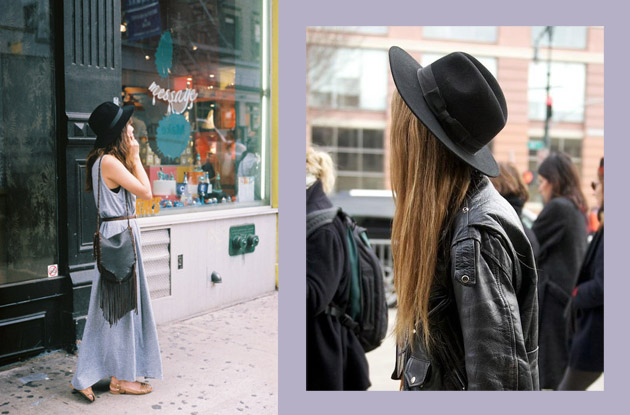
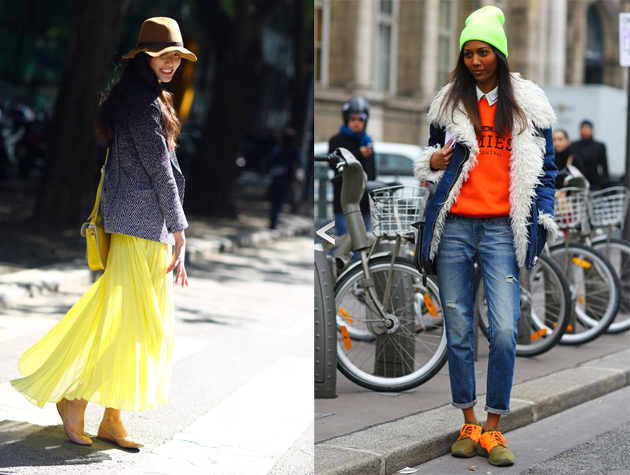
There’s something about a hat. It’s a mysterious item which has a personality of its’ own; happy to be worn or simply proud to hang on a hat stand. The type of hat you choose to wear sends out many signals, the wearer wanting to portray a certain image. But what is fun and quirky with a hat is that you can twist the predictable and create a paradoxical image, creating a unique stylish twist to an outfit.


History has shown us that hats were a way of expressing social status. Not only status, but also rank or religion could be recognized by a hat, and there is also the protective and practical element in it. Sunshine or rain, a hat can be a nifty best friend.

The big 90s trend which has taken a big comeback over the last few seasons has brought back the baseball cap, worn not only amongst the young sporty generation but established now as a staple item in any fashionista’s accessories wardrobe. The fedora hat is an easy piece to add as an extra touch to any outfit. The beanie is a fun detail, dressing down an outfit, giving a hint of street style to even the chicest of dressers.

The latest catwalk shows for SS14 resort have shown scarves being a key styling item which wrapped up in a number of ways create a relaxed and hip mood at Fendi and Roksanda Ilincic. A summer straw garden hat sets the scene at Acne Studios which gives this directional line a recognizable and familiar look. At Phillip Lim, his cut out top asymmetrical straw hats added an instant modern avant-garde approach to summer dressing.


Tamsin Cook