20/06/2013

PITTI 84: Trends, Talents and Turkey

We’re at the beginning of the third day of Pitti Uomo: a lot has been seen, with a few main events yet keeping us on our toes. New talents have been elected and celebrated in the fifth edition of Who Is On Next, the first notions for the SS14 trends and tendencies are given and the first, second and maybe third round of browsing for brands and interesting collections are done. Following the words of Pitti 84’s fashion diary writer – Angelo Flaccavento – Pitti Uomo is a melting pot. Standing under the Florentine sun, we would say the word melting has a double meaning.

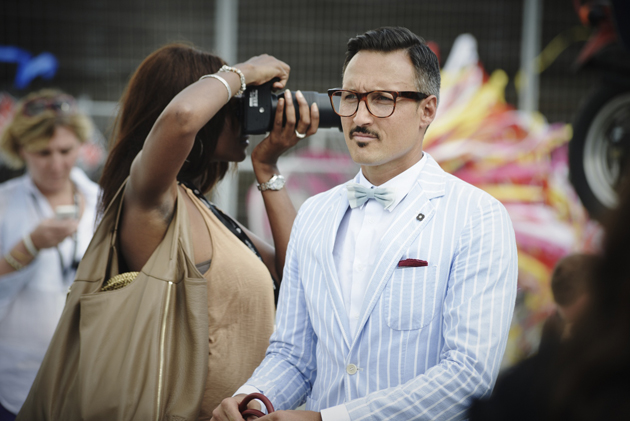
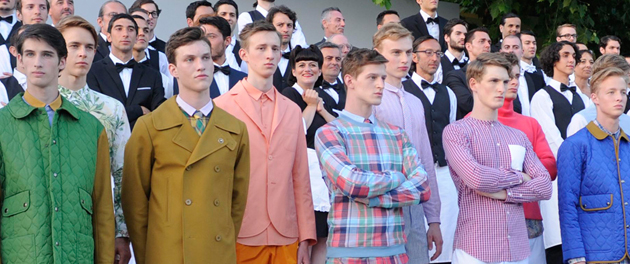
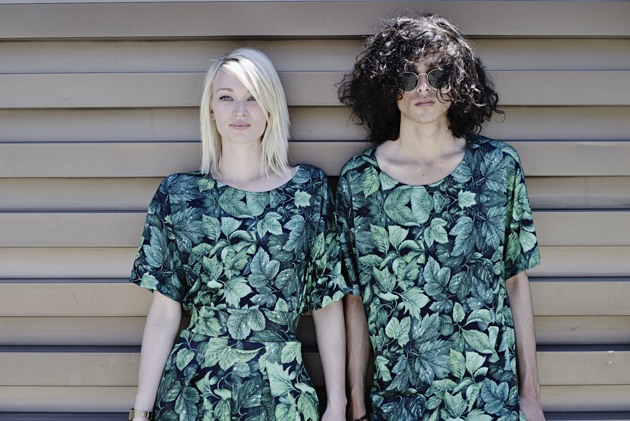
Despite the brightest of sun rays the gentlemen at Pitti manage to stay well-dressed and polished. The dress code goes from bright colours and prints to tailored suits, further to just the simplest of super-easy outfits. A few strict shirt-wearers might have let the policy collapse for something a bit more leisure, pants have been replaced by the comfort of shorts, while others keep the tie knot tight. The choice of rigs aside, SS14 offers a few bold statements, essential wardrobe choices in excellent materials and Spring given in prints and contrasting colours. Attention to detail and small adjustments that can make a piece your own are well describing expressions. The contemporary man will find his very essentials as well as what he wants: luxury travel pieces answering to the needs of functionality, lightweight sportswear brought back to the city and new prints to bright up the neatest of outfits: the latest being the bandwagon that no one seems to have missed.

The cultural influences are coming from east: with Turkey as the Guest Nation of both Pitti Uomo & Pitti W, Turkish designers will give their take on cultural clothing nicely packaged in a contemporary concept. The “Gentlemen of Istanbul: 7 Gentlemen from 7 designers from the city on 7 hills” blends deeprooted culture with modern designs from a country that today is becoming an important player in the area of fashion research.
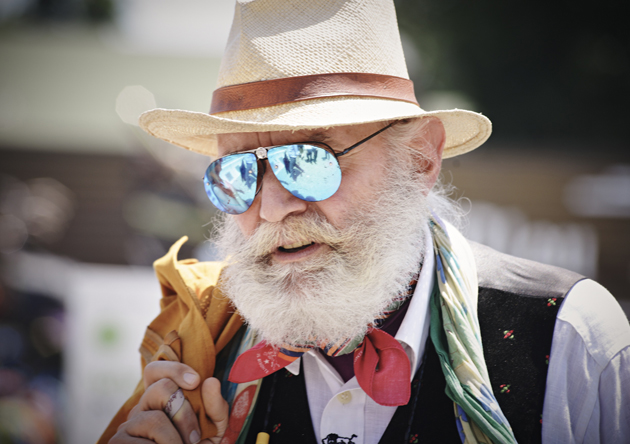
The two(!) winners of Who Is On Next are also – even though not Turkish – two brands who know about tradition and roots. During the awards on Monday it became clear that the judging panel hadn’t been able to make a clear cut, and the fifth edition of the competition ended in a tie: the hats by Super Duper Hats and the shoes by Casamadre went out as winners together. “They are two brands that share the ability of knowing how to combine memory and tradition with new and contemporary details, in tune with the market’s most sophisticated demands” was the words of the jury.

Despite the colourful audience, the hot weather and the many guests making the streetstyle photographers, fashion bloggers and fashion enthusiasts crowding up at the main entrance, there’s a certain calm at La Fortezza da Basso: casual meetings and moments to breathe before we’re heading to Milan.


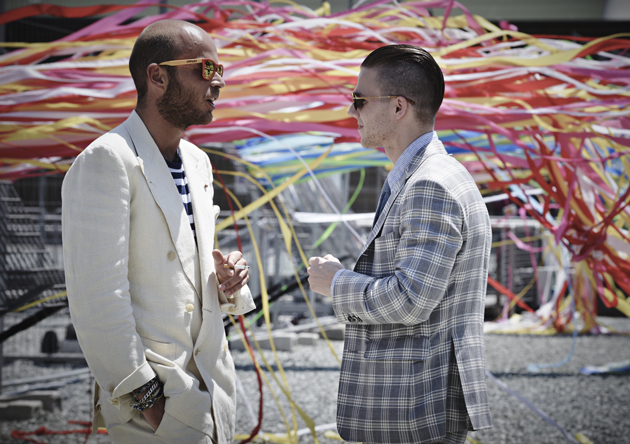
Lisa Olsson Hjerpe – Image courtesy of Pitti Immagine 
19/06/2013

Sou Fujimoto’s Serpentine Pavilion

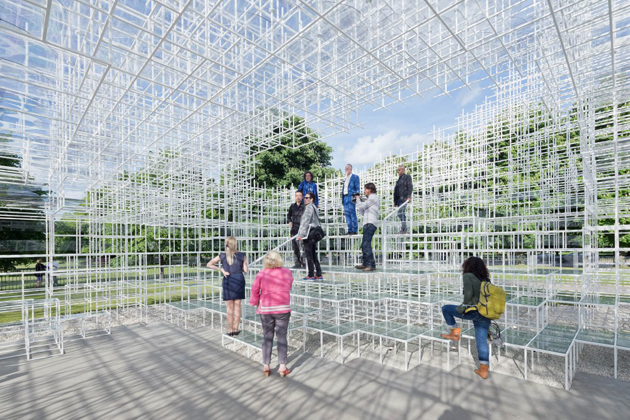
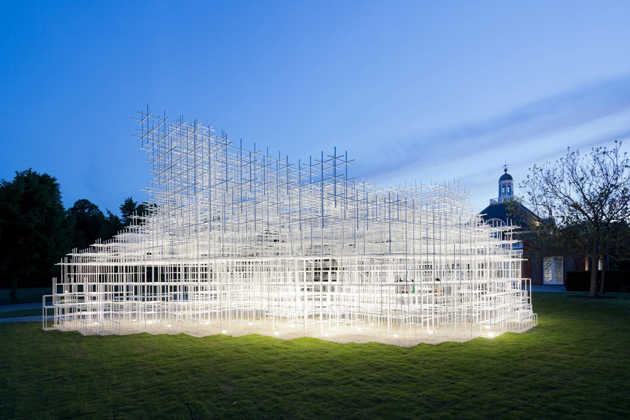
If design and architecture are bound to comply to a precise function, it is somewhat difficult to judge any Serpentine Pavilion. Conceived as a platform for architectural experimentation offered to widely known international architects who haven’t yet had the chance to build in Britain, the project, besides offering the setting for Hans Ulrich Obrist’s marathons and a pricey café, appears to be utterly useless. Nevertheless, much can be said about this year’s project, designed by Japanese architect Sou Foujimoto, who, unlike his 12 predecessors (among whom we can count Herzog and de Meuron, Zaha Hadid, Peter Zumthor, Alvaro Siza, Sanaa or Jean Nouvel), hasn’t yet reached the starchitect status.

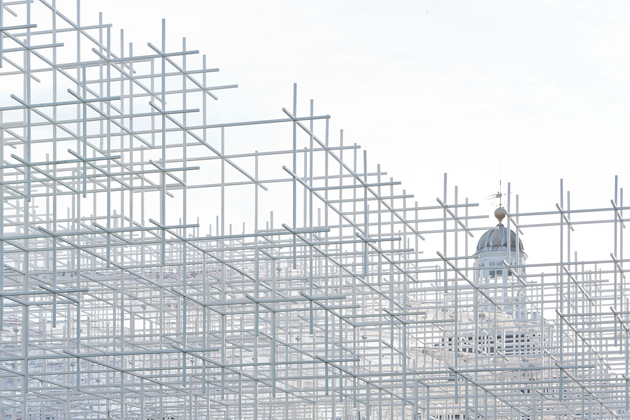
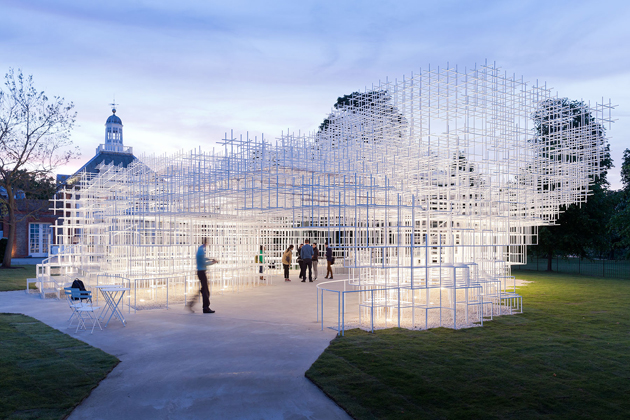
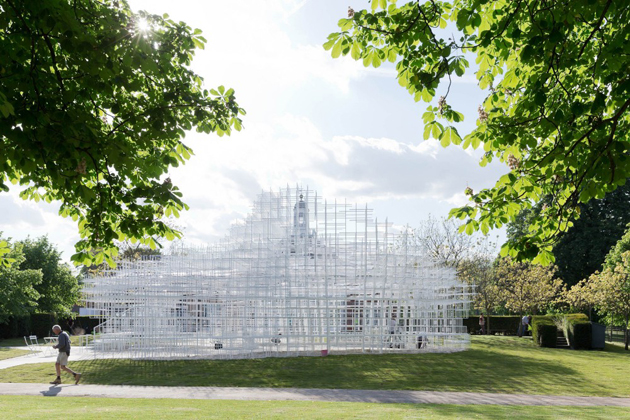
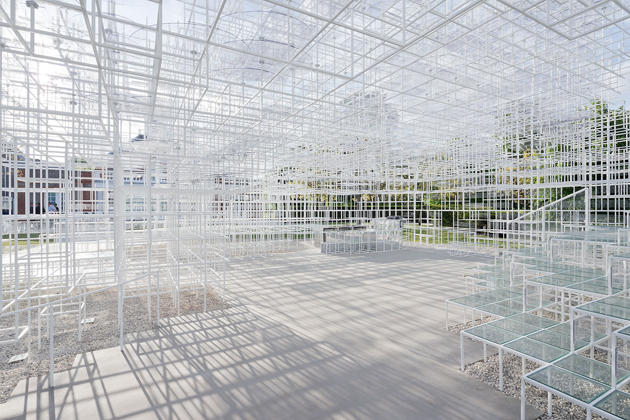
Maybe precisely this fact allowed Fujimoto to build a pavilion that, even if not presenting a critique or an alternative to the apparent meaninglessness of the project, at least offers a fresh insight on the relationship between people and their surroundings, the natural and the artificial. Fujimoto’s pavilion is made of delicate white steel poles forming a grid, which at the same time appears geometrically rigid and organically fluid, scientific and natural, structured and malleable. In fact, more than building a precisely delimited structure, the Japanese architect has designed a system that translates in an architectural landscape, blending with the surroundings in a delicate synthesis.


Sou Fujimoto explains his intentions: “Within the pastoral context of Kensington Gardens, I envisage the vivid greenery of the surrounding plant life woven together with a constructed geometry. A new form of environment will be created, where the natural and the man-made merge; not solely architectural nor solely natural, but a unique meeting of the two. It will form a semi-transparent, irregular ring, simultaneously protecting visitors from the elements while allowing them to remain part of the landscape.”

Even though, like its author when speaking about his work, this project politely bypasses questions about the social role of architecture and objects, nevertheless remaining one of the most charming pavilions that London’s citizens and their architecture-hungry guests might enjoy.


Rujana Rebernjak 
19/06/2013

Color Me Impressed: The Replacements Are Back

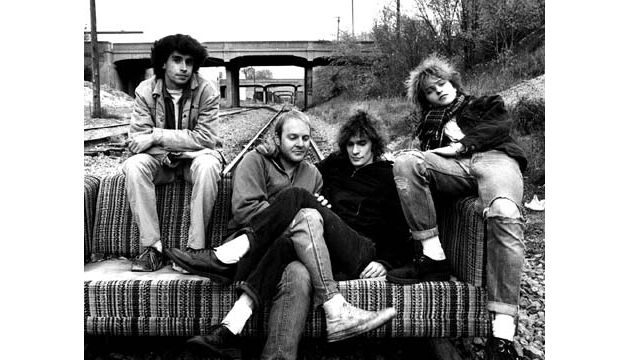
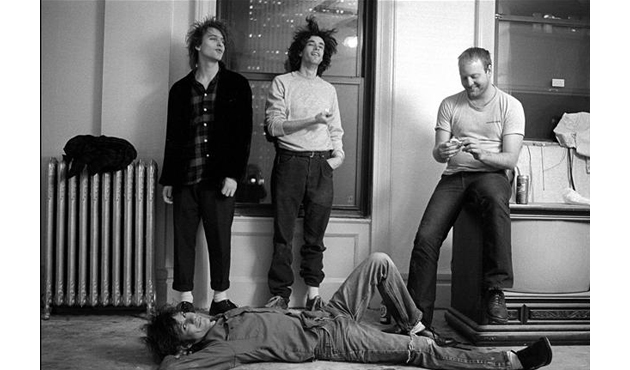
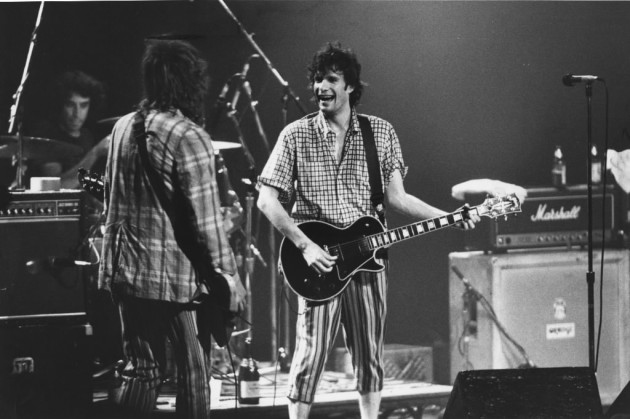
Part of the charm of The Replacements is that much of their genius strikes listeners as unintentional, almost as if they’re discovering their own potential right along with you. That, and they always seemed to be having more fun. When news broke last week that The ‘Mats would be playing their first shows in 22 years this summer at Riot Fests in Toronto, Chicago and Denver, I started to laugh. I’m sure they did too.

Given their reputation as rowdy drunks who couldn’t even follow their own directions, what’s most surprising is that The Replacements actually managed to do anything, let alone emerge as one of the most influential American underground bands of the last half century. Paul Westerberg nearly single-handedly redefined the term idiot savant the second he strapped on a guitar. 1984’s “Let It Be” is by far their best album, far removed from the sloppy hardcore beginnings of “Sorry Ma”, “Forgot To Take Out The Trash” (a genius album in its own right, but even better when looked at retrospectively from the context of the rest of their catalog) and a million steps ahead of their previous effort, 1983’s “Hootenanny”. “Let It Be” found The Replacements incorporating elements of Americana, folk, and heart-on-sleeve balladry to play off of their familiar drunken shenanigans. When they strike genius on tracks like “I Will Dare”, “Answering Machine”, and “Androgynous”, it can feel as if they did it by accident, especially when nestled next to tracks like “Gary’s Got A Boner” and “Black Diamond”.

“Tim” (1985) and “Pleased To Meet Me” (1987) are both brilliant albums that could’ve/should’ve landed the band in the big leagues, but The Replacements were always better than anyone when it came to sabotaging their own career. Violations ranged from refusing to make a watchable video for their radio-friendly singles (“Bastards of Young”, “Can’t Hardly Wait”) to showing up drunk, in overalls, to play on SNL. Their shows increasingly frustrated and confounded viewers; most of the time they played terrible covers of songs by T Rex, The Rolling Stones, and Lead Belly. R.E.M. kicked them off of a tour after discovering that the band had drank all of their liquor. And on and on.


After “Tim” things began to really fall apart. By 1987 Bob Stinson was out, apparently for (of all things) out-drinking and drugging the rest of the band. (He died in 1995.) As Westerberg increasingly sought more mainstream appeal (unintentionally paving the way for 90s alt bands like Goo Goo Dolls and Fuel in the process, not to mention his own solo career) the rest of the band balked. The band’s attempt at mainstream play later in their career can be painful to listen to. “All Shook Down”, their last album, is by all accounts a Westerberg solo album, and is vanilla compared to what came before it. Don’t expect to hear many of those songs on this tour.

Sure, there’s room for worry: They’re likely reuniting because they need the money; Tommy Stinson has now been in Guns ‘N Roses longer than The Replacements ever existed; Bob is dead, no one even knows if Chris Mars is on board. But fuck it: how can you not root for The Replacements? For those of us who were barely out of diapers the first time they called it quits, this is something of a second coming.

Lane Koivu 
18/06/2013

PITTI 84: With Menswear In Focus

It’s the end of June and The Blogazine, together with about 30 000 other visitors, is back in Florence to sweat under a luxuriating sun: it’s time for a week of fashion and events, old friends and new acquaintances during Pitti Uomo 84 and Pitti W 12.

Last night was the end to luxury e-commerce giant Luisa Via Roma’s fashion bloggers party, Firenze 4 Ever: a beautiful dinner around the Fontana dell’Isola followed by an all-night outdoor party in the Boboli gardens of Florence. It might have been only a few tired souls who woke up early this morning, but for the ones of us who just arrived last night for this week’s main event, Pitti Uomo and Pitti W, last night’s party was a great welcome to the sizzling city.


Pitti Uomo is the annual starting point (well, this year beaten to the punch by London Collections ) to an entire month dedicated to the world of menswear. With nearly 1050 brands present (not counting the female fashion brands also exhibiting) and the before-mentioned 30 000 visitors, Pitti is one of the largest buyers’ fairs for male fashion. Even with the purpose of buying in focus, Pitti is an occasion for us visitors to take part in amazing events, discover new brands, meet new people and finally meet the people we only met ‘digitally’ before. For the nearly 18 000 people coming from abroad, it’s also the occasion to get their annual dosage of Italian summer and Tuscan flavors.


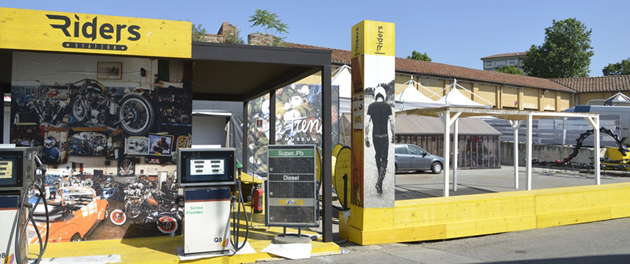
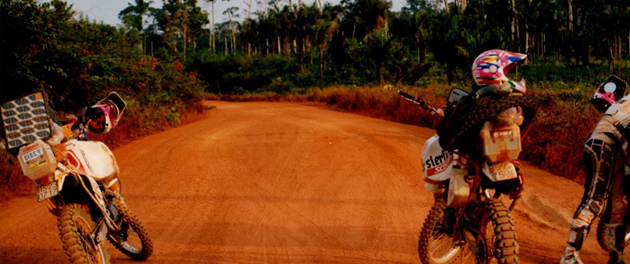
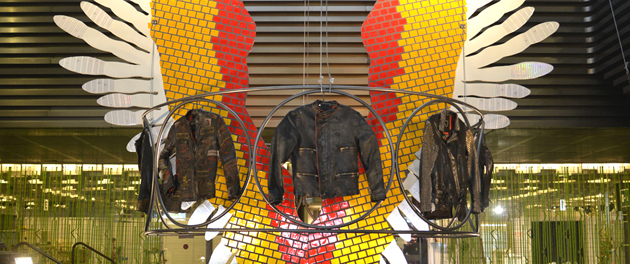
New for the season is that the ladies moved in with the lads: instead of being split in two different locations, Pitti W has been moved to la Fortezza, conveniently marking its land with a sky full of pink umbrellas. The main court at Fortezza da Basso is though reserved for what this year is called Vroom Pitti Vroom – the theme for Pitti Uomo 84. The fair is dedicated to the passion for two wheels and a rider’s feeling of freedom. The motorcycle and biker lifestyle will be spoken about through styles, clothing and accessories during special events planned throughout the week. Talking about events, the Pitti calendar leaves no one disappointed: the special presentations of kolor and Damir Doma, the Onitsuka Tiger show for Andrea Pompilio and all the temporary events included in the Alternative Set calendar, to mention a few. Outside or inside the Fortezza, the Pitti people’s calendars sure are full and the week has just merely commenced – vroom is probably the right word for the week!

Lisa Olsson Hjerpe – Image courtesy of Pitti Immagine 
18/06/2013

Multiple Facets of Limited Edition Design

Our times seem to go through a paradox: whatever looks “limited” has never been so hype. If, on one side, the design community seems to lose its faith for the universal ambitions of serial mass production, on the other it endorses niche consumption as a loyal expression of its fragmented taste. In this scenario, smallest enterprises are those who gain the greatest advantages, at least in terms of visibility. Differently to big furniture corporations, which are refrained by their organizational routines, small firms are ready to transform flexibility – a primary effect of the supply chain impossibility to absorb new design jobs – into a new creative attitude.

Nevertheless, we should not be mistaken about the eclectic identity that limited edition design has shown in the last decade. Its complex phenomenology, in fact, puts together different players that prove to have little in common: design galleries trading expensive XX and XXI century furniture with the most sophisticated collectors (the insight behind Design Miami’s success), little maisons d’éditions, makers involved in 3D printing, as well as young designers choosing self-production as a chance to combine personal research with a new form of intellectual bread and butter capitalism.

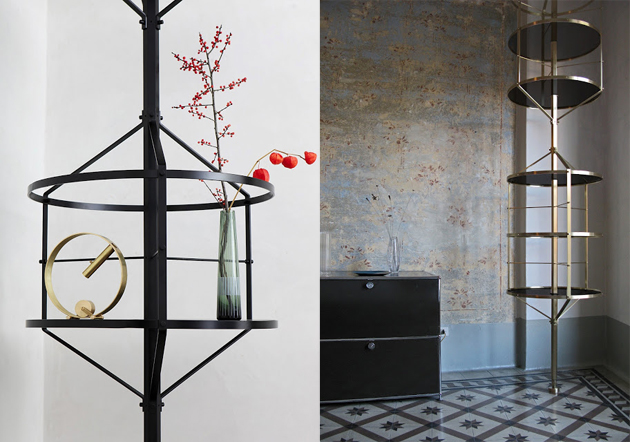
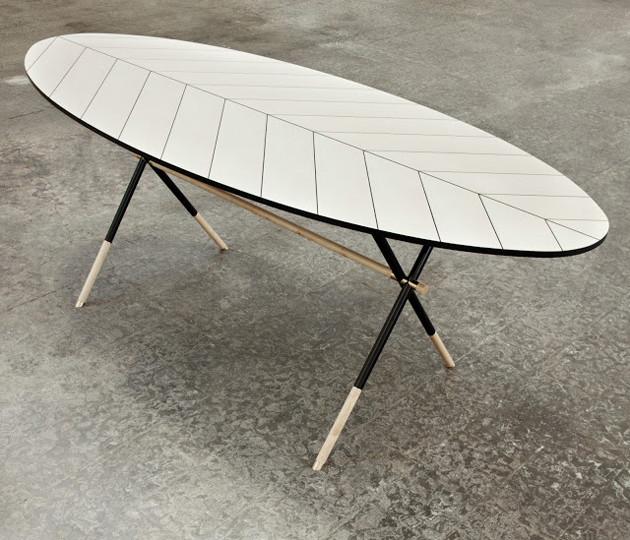
In addition to that, there is also a new avantgarde that highlights the links between design and craftsmanship. That’s the case of Pietro Russo, set designer converted to industrial, long-run collaborator of Pietro Lissoni and now freelance designer devoted to custom-made furniture. His talent in old manufacturing techniques and his passion for precious woods and metals are clear in his pieces like Piuma table, Voliera shelving, or Otto lamp. His work doesn’t begin with a sketch on a piece of paper, but instead is the result of an established professional assignment and is developed as a dialogue with a specific space, mainly a private house under refurbishment. Thus, his approach develops along the legacy of one of the biggest Maestros of modernist Italian design, Gio Ponti, guardian of the value of handicrafts who used to curate with an obsessive care the furniture design of his Milanese homes (Casa Laporte, the house in via Brin and later Casa Dezza), and who, at the same time, would have never designed any piece of furniture without an established commitment.


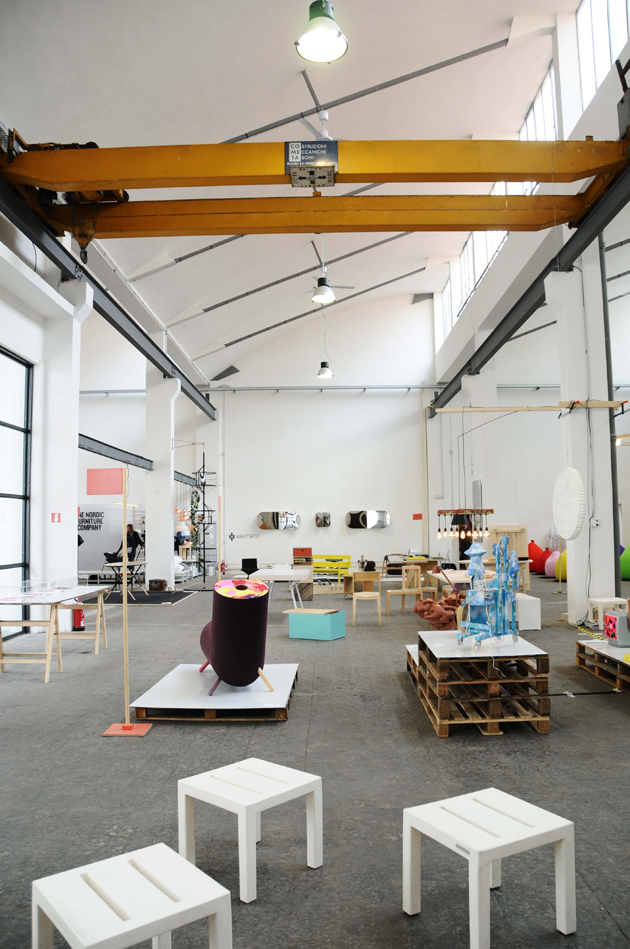
At the last Salone del Mobile, Pietro Russo showed his work in a collective exhibition that was paradigmatic to understand the development of limited edition type of production in contemporary design. The exhibition, entitled Juice, was curated by Cristina Morozzi, Michela Pellizzari and Federica Sala, and gathered together small design companies devoted to “limited” excellence: young editors (like Secondome Gallery, Colé), new web-based brands (One Nordic), and self-promoted design authors (like Form Us With Love or Massimiliano Adami). Its goal was to suggest us that these blurring boundaries are an unmistakable symptom of the vitality. And that innovation may be driven by the cross pollination of these different attitudes.

Giulia Zappa 
17/06/2013

The States of Matter According To Nicola Martini

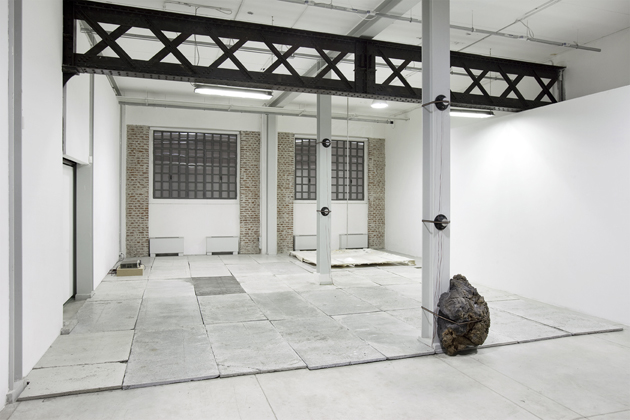
Nicola Martini (Florence, 1984) is undoubtedly an intriguing artist. What he usually does, his artistic approach, is set midway between craftsmanship and a distinctive scientific process where different materials (concrete, bitumen, bones, wax, resin, acids…) and their ways of reacting become key elements of his language. Martini’s investigation exploits the numerous potentialities offered by the matter to go beyond the concept of sculpture and installation.

Somehow invading the field of chemistry and through the method of the experimental sciences, he creates his works exploring the limits of the substances he is working with, transforming their states. In a kind of endless research in order to discover what happens to something in particular conditions, the artist puts himself to the test of the unexpected, experiencing a creative and performative art process that combines foreseen and contingent.


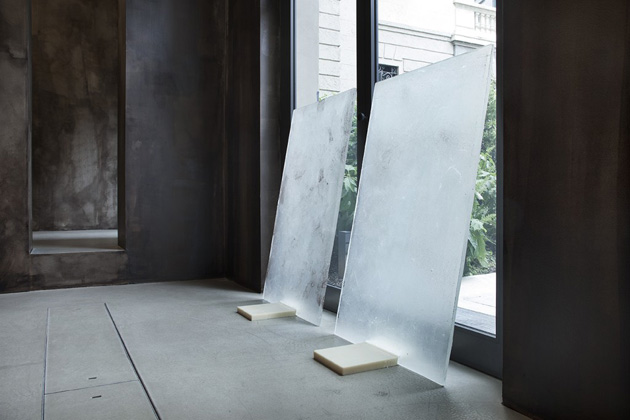
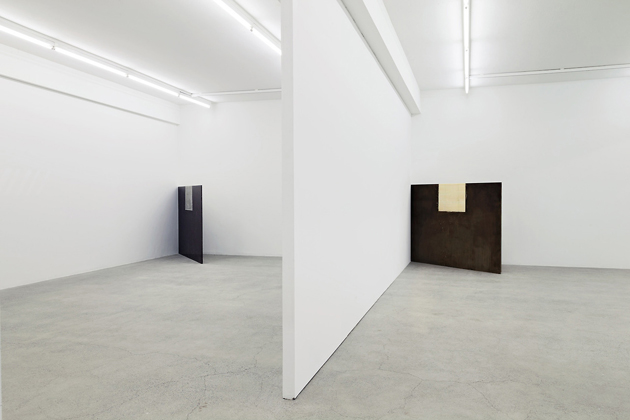
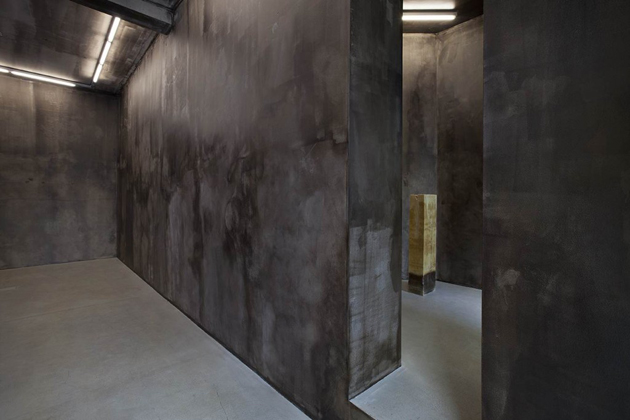
For his first show at kaufmann repetto entitled Sippe – German word that stands for tribe -, Nicola Martini chose to paint the walls and the ceiling of the gallery with bitumen of Judea, which is a photosensitive texture, used here to react to the light coming from the huge windows, but also to let out previous signs, as eraser and nails marks (as a sort of reconstruction of the “life” of the walls). Other sculptures – fusions of colophony with microcrystalline wax, and glass with quartz sand – are arranged to interact with the ever-changing space, acting as filters between light and bitumen.


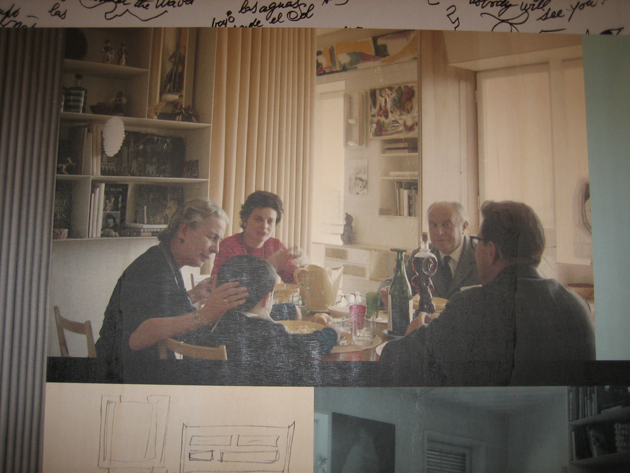
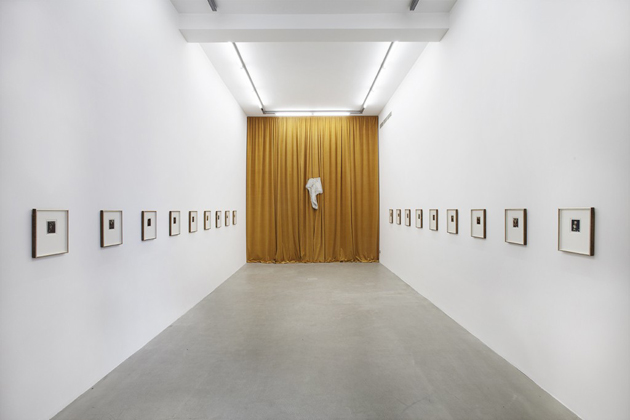
A gallery of portraits by the eminent architect, designer, photographer, motor racing and aeronautical pilot Carlo Mollino (Turin, 1905-1973) accompanied Nicola Martini’s show.

After the ‘fireworks’ of the openings days of the Biennale and the weekend devoted to the main international art fair – see Art Basel in Basel -, here’s our suggestion for all of you who are staying in Milan for a while. 
The exhibition will run until August 2nd, 2013.

Monica Lombardi 
16/06/2013

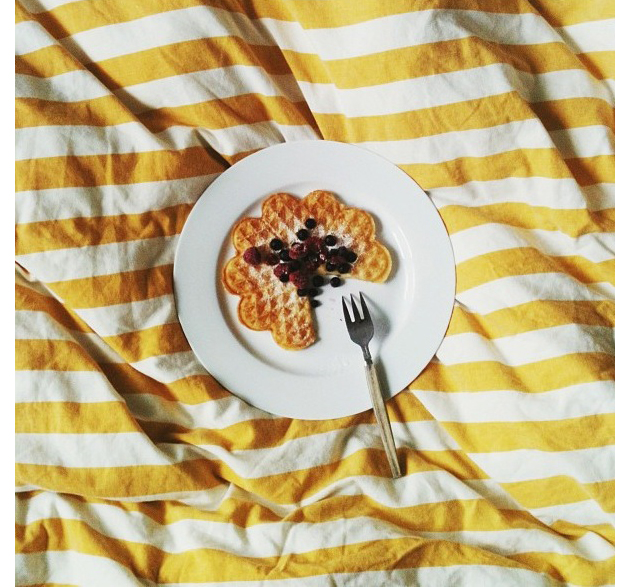
Sunday Breakfast by Love For Breakfast

Sun inside that warms. Light outside warms up this late springtime day.

Alessia Bossi from Love For Breakfast 
14/06/2013

The Suburbs

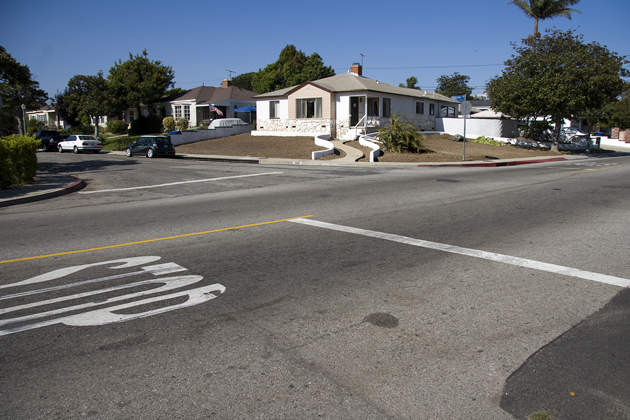
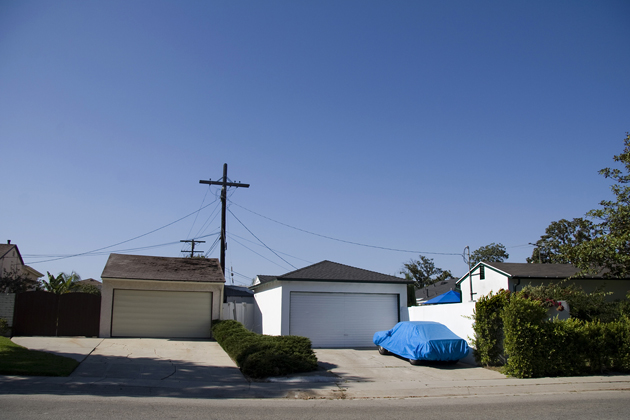
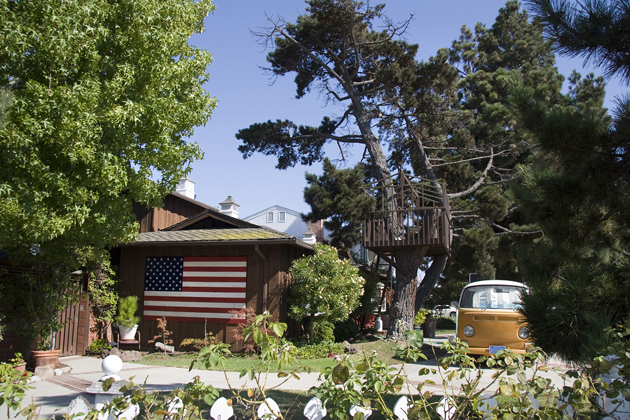
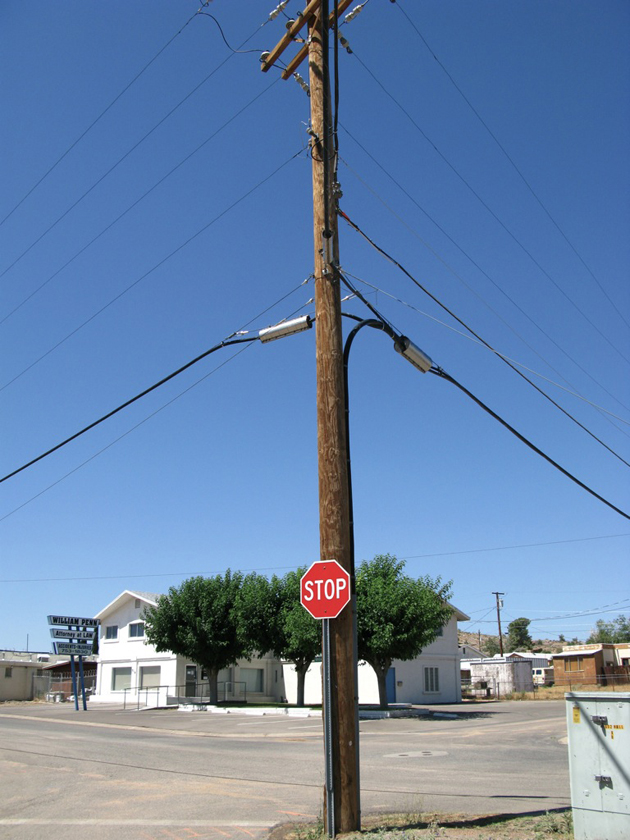
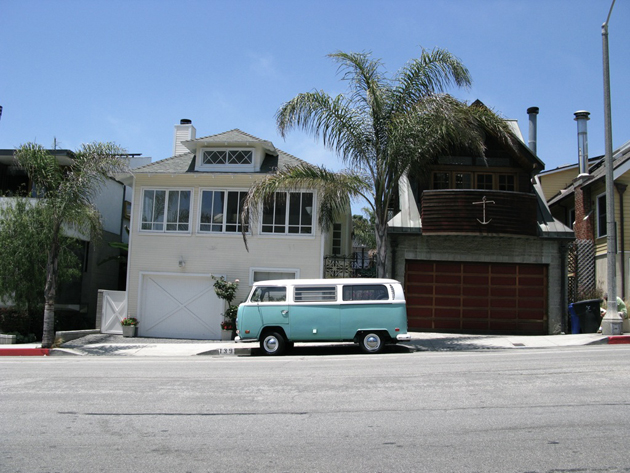
Whether you’re keen on about American suburbs or not, keep in mind the name Westchester. If you some day end up in California, remember to visit it, because this anonymous neighborhood of the South Bay Region of Los Angeles County is the emblem of an entire country, of its culture and the way of life of its people. It will be enough to spend just one afternoon there – perhaps a nice, sunny afternoon in mid August – to have the impression of being sucked in your home TV, in an episode of Desperate Housewives or on the set of The Truman Show.


A 1989 Los Angeles Times article described Westchester as a “raw suburb, created willy-nilly in the 1940s”. Official numbers about the population of the area are updated 13 years ago but, judging in person, you could swear that not much has changed from that time: a small neighborhood of 40 thousand people – especially rich with the elderly and war veterans (that Wikipedia defines as “better educated compared to the greater city’s citizens”) – who live in small, wooden houses with well-groomed lawns and the stars and stripes flag in show. The houses are painted pure white and they stand out perfectly against the electric blue sky, a colour met only in California, so vivid that it fills your stomach with expectations. Before you even realize, it turns into sadness, because under such a sky beautiful things could happen, but instead you find yourself watching the Mexicans mow the lawns and delivery boys unload cases of beer to bars. Beverly Hills and Hollywood are just a half-hour car ride away, but it seems like light years from Westchester.


Considering that the viewpoints of people who lived there can surely give a better idea of the place compared to a mere visitor’s opinion, here is a memory found on the site of LA Times left by a veteran named Louis: “Grew up in Westchester from 1951 until I left for the Marine Corps in 1966. Parents stayed until they passed in 1998/2000. Loved it but the area outgrew itself. Went to Visitation and then to Westchester HS. Ron Dutton from Orville Wright Jr HS (Teacher) and I are still corresponding. What a life!”

Now, as a final test, do this: write “Westchester, Los Angeles” on Google Maps and see a street view. How could you disagree with him?


Antonio Leggieri 
13/06/2013

Dressed To Be Shot

Fashion bloggers, street style photographers – the phenomenon, hype, trend or just evolution of the fashion system: the subject isn’t foreign to The Blogazine. In Garage Magazine‘s short film “Take My Picture” the clinch between fashion editors and fashion bloggers is apparent, as well as the hysteria around the street style photographers’ darlings and stars-to-be.

When did the photographers start to outnumber the ‘objects’ to be shot? Has the extreme number of fashion/street/style/photography blogs not only created a possibility to be seen, but a need to be seen? Is everyone dressing up to be shot?

Bill Cunningham said “the best fashion show is definitely on the street – always has been, and always will be”. Then of course, Cunningham did street style photography before it even was an expression. No matter what one’s opinion might be about the statement, the truth is that the streets outside the show venues are as much of a fashion parade as the runway itself. The number of photographers and fashion bloggers trying to snap a picture of another blogger, model, it-girl, it-boy or fashion editor seems ridiculous, but who is to judge what also is an affordable alternative to an advertising campaign for young designers?

It’s a sure thing that all our digital tools have democratized fashion and created opportunities for brand publicity in a way that never was an option before. Even designers with a low, or no, budget can find ways of showing off their collections during the hottest periods of fashion weeks. The question is – does the situation, in the film compared to French warfare, create monsters, turning the glamour of fashion into a reality show? And does the great ones – fashion blogs as well as actually talented photographers – disappear in the crowd of peacocks and amateurs?

Lisa Olsson Hjerpe 
12/06/2013

Noah Baumbach’s Evolving Perspective

Noah Baumbach is terrified of failure. He likes to make movies that explore the psyches of confused and over-educated people who don’t have any idea of what to make of their lives, and thus often end up making a mess. His debut film, 1995’s Kicking And Screaming, detailed four young men who had just graduated from college and refused, at least in their minds, to enter into the adult world. The Squid and the Whale gave us an adolescent’s perspective on what it’s like to see your well-to-do family unravel right before your eyes. The film was based almost entirely on Baumbach’s own childhood, raised in Brooklyn by two aspiring writers. His last film, 2010’s Greenberg, dealt with a failed musician in his mid-40s who has let his life pass him by. His life had turned him into a bitter coward who was all but unbearable to those around him.

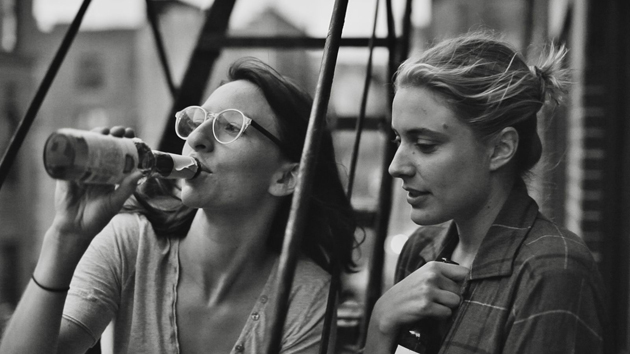
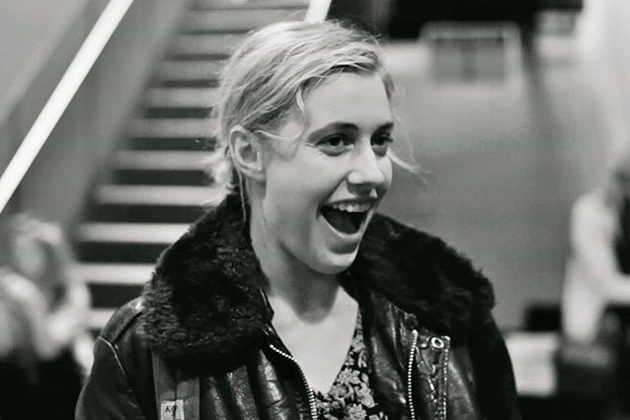
His new film explores similar themes from the other side of the fence. Frances Ha documents the wanderings of an attractive 27-year-old dancer who has trouble connecting to the world outside of her head. Shot beautifully in black and white, the movie is a throwback in style and substance to the New York Woody Allen defined in Manhattan and Annie Hall. It’s something of a lover letter to youth and indecision, which is to say that it values character over plot. Frances’ (played by Greta Gerwig, who also co-wrote the script with Baumbach) struggles are entirely unexceptional. Her friend moves out, she needs an apartment, she’s broke, she’s not really doing what she knows she should be doing, etc.

Frances’ non-life-threatening mental gymnastics are easily relatable to anyone who’s ever felt cheated by the dissolutions of youth or the promises of higher education. But unlike the characters of Greenberg or The Squid and the Whale, Gerwig’s character doesn’t let life’s grim realities sour her worldview and turn her bitter and cold. Maybe there’s a sequel for that down the road. For now she seems ready to approach adulthood cautiously, one step at a time, without losing her identity in the process. It may seem like a small victory, but it’s a victory nonetheless.


Lane Koivu