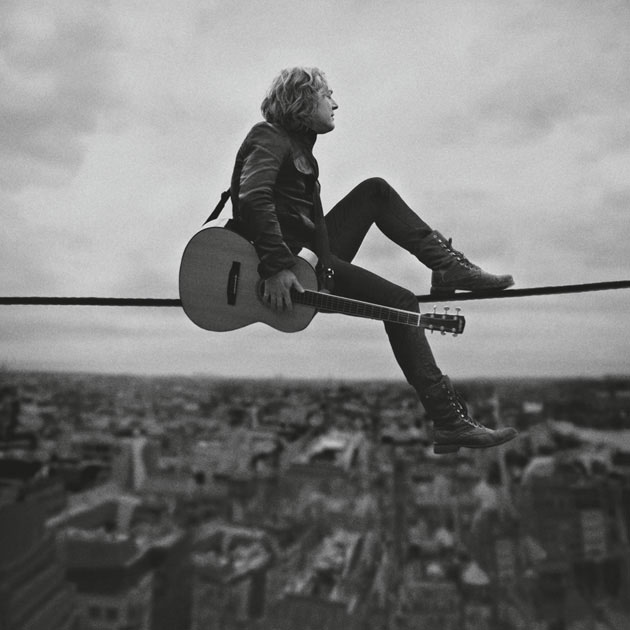
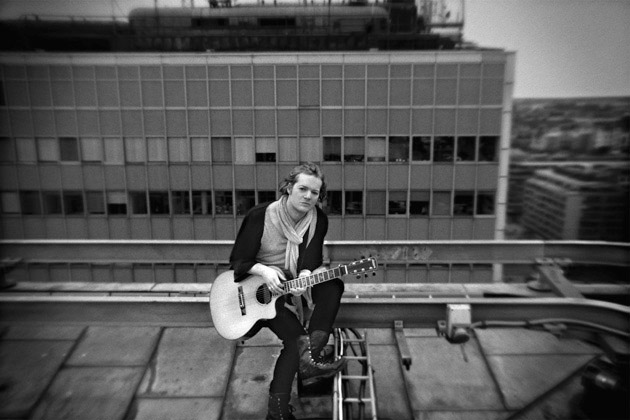
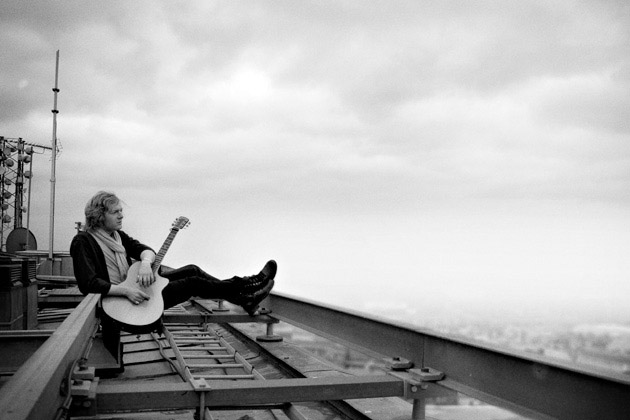
Despite the raw winter weather in Scandinavia, the soulful compositions by Stockholm based guitar player Jimmy Wahlsteen make you feel anything but cold. With his sights zeroed in on acoustic, he delivers evocative and innovative tracks that make us – normally lovers of lyrics – forget that there aren’t any, and soaks us up in the sound!
We caught up with Jimmy at the beginning of the new year to talk about his second album All Time High, the recording process, his relationship to fashion and also found out he has his sights set on a Grammy…
First of all; Happy New Year! Any New Year resolutions? Happy New Year to you too! My only new year resolution is to get back in shape. I haven’t had any time to go to the gym continuously for a while now and I really miss the old me when I see myself in the mirror.
You recently released your second album. Have you done anything differently this time around? This time I had every song finished before I started recording. I wanted to try everything live before I went into the recording process so I could choose the songs that got the best response from my listeners.
I also moved my studio to my country house where I did most of the acoustic guitar recordings. I then finalized the songs with some new co-producers back in Stockholm. I used the same mixing and mastering people as I did on 181st songs (Jimmy’s first album, editors note) though. It sounds just like I wanted it.
You’re using a playing style called hybrid picking, which means you’re using both a plectrum and fingers in the same time. What does it do for your sound?
The hybrid picking technique enables a very fluid way of playing. It effects my sound in terms of song writing and allows me to bring in some of the rock elements that influenced me a lot when I started playing guitar. It’s not really a deliberate choice to play the way I do. It’s just how I always did it and what brings out the best of my abilities.
Do you ever find it challenging to create music that captures the listener without any lyrics?
Song writing is always challenging and I take it extremely seriously. I wouldn’t say it’s more difficult because it’s instrumental, though. It’s always the matter of catching the listeners ear and do what you do best. If I would have been a lyricist I probably wouldn’t have bothered writing instrumental music. I just focus on what I do best.
You’re one of Sweden’s most booked guitarists and been appearing both on television and on tour with international artists. What’s the biggest difference in touring as an instrumental artist as opposed to with a band?
The differences are quite huge I would say. Being alone on stage is much more demanding and I find it very inspiring. I got to a point in my career where I stopped practicing and played it safe when I toured with artists. Now I practice for hours before every solo show and it has had a very positive effect on the work I do as a session player as well. To communicate directly with the audience is a wonderful experience but it’s also challenging and I realize the enormous press the artists I used to tour with have been under. I’m enjoying music and performing more than ever.
Your ultimate, dream gig?
I always set up new goals. It’s very important to keep developing as a musician. I think I reached my dream gig in November 2011 when I performed before a sold out La Cigale in Paris. Now I need to come up with a new goal. The Grammy Awards perhaps…
When do you feel the most inspired? Can you sit down and decide “today I’m gonna write a song” or is your creative process a bit more erratic?
I’d say it’s pretty random. In hotel rooms I usually manage to combine time and inspiration so that’s where most of my ideas pop up. Very few of the riffs I write makes it to the actual recording session but once I come up with stuff I really like I tend to sit with it for hours just to get it perfect.
You have a YouTube channel (which been awarded the “Most viewed award” by YouTube back in 2009!), a Twitter account and a Facebook page. What are your thoughts on the current social media trend?
I really appreciate that all artists today get the opportunity to be heard. Money isn’t all that counts when it comes to marketing nowadays. It’s more about being devoted to your sound and to be creative enough to attract listeners. YouTube has played a huge role in getting me where I am today.
You’re from Stockholm, the home of many prominent, contemporary designers. How is your relation to fashion?
Stockholm is a good place for shopping if you don’t look at the prices. I used to be pretty thorough about what brands I wore but at the moment I find it more fun to find stuff here and there on the few shopping rounds I do. I try to keep an eye open for cool things to wear and lately it’s been a lot of cardigans and scarfs.
Which was the first song you ever learned to play? Is there any song from your younger years that helped shape your style today?
First song I learned really well on an acoustic was the classic “Streets of London”. One song that really shaped my way of composing is “Feelin’ Groovy” by Simon & Garfunkel. Everything Paul Simon does is just great.
Thank you for your time, Jimmy!
It’s been a pleasure.
Lisa Olsson Hjerpe – Image courtesy of Jimmy Wahlsteen & Candyrat Records
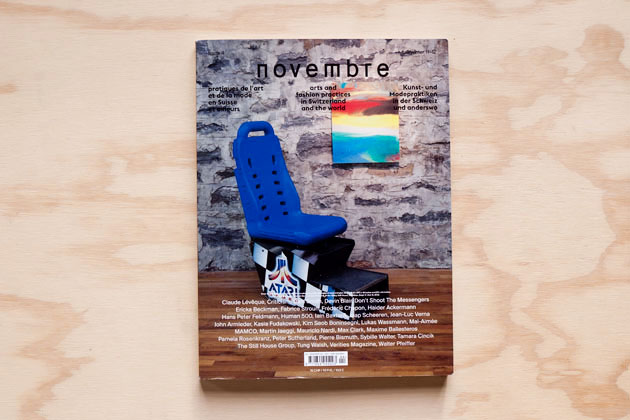
If you ask the founders of the fabulous Swiss-based magazine dedicated to fashion and contemporary art: ‘Why Novembre?’, they will probably answer you that it is a non-title: “a title that looks like it means something, but does not”. Actually, as readers, we would say that for us it means a lot. It is synonymous of creativity, forward-looking and quality of contents – texts, which worth to be read and eclectic images that strike, together with a fresh and contemporary lay out.
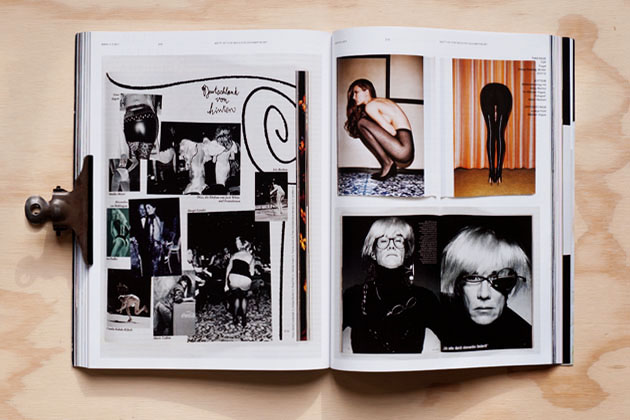
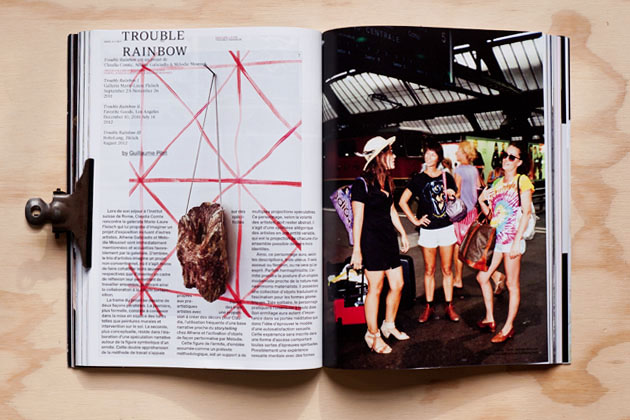
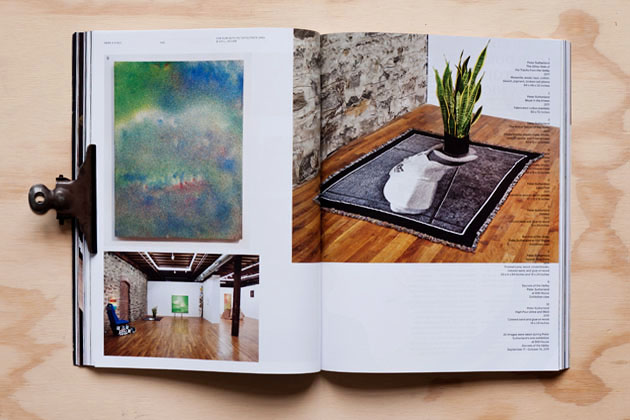
The fourth issue of Novembre is out and now officially distributed worldwide. Written by polyglot, bi-national editors in trilingual version (French, German, English) for globalized people, the magazine, published twice a year, proving itself as an international source of inspiration. The list of contributors is excellent as in the previous issues and doesn’t let the readers down. Special guests, such as Fabrice Stroun, the recently made director of the Kunsthalle Bern board and Haider Ackermann, one of the greatest demanded designers of the fashion system, along with the conceptual artist Hans Peter Feldman and the Swiss performance artist, painter, sculptor, critic, and curator John Armleder, enrich the pages of the magazine with their visions. Last but not least, the versatile contemporary artist Peter Sutherland’s cover, featuring work from his show “Secrets of the Valley”.
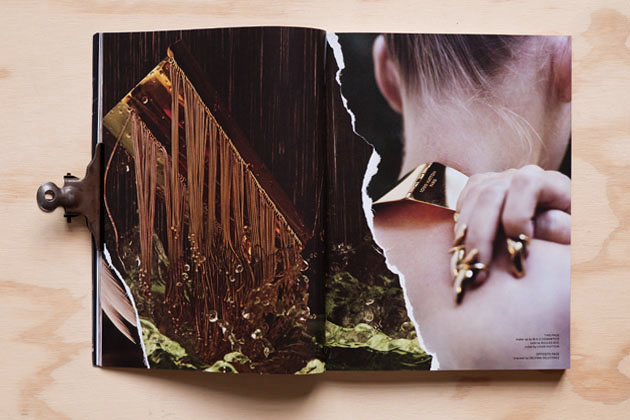
Once more 2DM’s talents have the pleasure to collaborate with this unique publication. The photo sections of the last issue this time hosts the shoots by Tung Walsh, accompanied by the stylist Tamara Cincik, and the ones by Bruna Kazinoti. Don’t miss it!
Monica Lombardi – with special thanks to Maxime Beuchi – images courtesy of 2DM / Management
Eva Howitz and Frieder Weissbach are the inventive and intriguing fashion designers, who founded – together with their manager, Marcus Pester – Howitzweissbach, the young German label established in Leipzig.
Both the Howitzweissbach creative thinkers are strongly convinced of the importance of being able to go behind the garments, following all the production steps and grasping their ‘soul’. There is always a story, a concept behind their collections. Howitz and Weissbach’s unconventional and unique approach comes from a mix of regional traditions – all the products are realised in the Saxony area – and takes its inspiration mainly from art. Howitzweissbach pieces of clothing are based on quality and paid attention to details like the choice of patterns and fabrics or the use of French sewing, to give suits a pure and clean look, inside and out.
The brand doesn’t follow the trends and keeps aside the fashion industry to create its own style, recognizable thanks to an artistic and unusual taste, which communicates the founders’ values. The designers’ love for fashion and proximity to their audience made them feel the need of building up a second, affordable line named Freund (Friend), which “is not for everybody, it’s especially for friends”. Joining the online project Make your mess – the first experimental move of Howitzweissbach Freund online shop – people can buy a plain white piece and take part in a performance during which it will be splashed with colours. The result will be a one-of-a-kind item that reminds the works by the German contemporary artist Katharina Grosse, one of the members of the ‘Howitzweissbach own cosmos’.
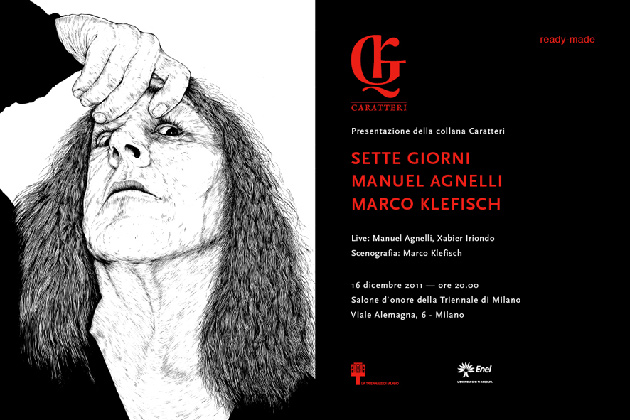
Manuel Agnelli (leader of Afterhours) and the illustrator Marco Klefisch are the protagonists of the first book of the series called Caratteri, published by the editorial studio Ready-Made, which will be presented this evening at the Triennale in Milan. The project thought as way to create dialogue among creative people with different backgrounds – Music and visual Arts – starts with a volume came out from two years of informal meetings among the two contemporary artists. Entitled Sette Giorni (Seven days), as the days of the week, it refers to the main time unit of measurement of the human beings’ lives.
This series of books is based on the ambitious idea of combining modern and more traditional printing methods – texts are laid out and printed using digital technology, while the illustrations are produced following to traditional techniques (press, etching, silkscreen, woodcut). Sette Giorni (Seven days) is a unique issue, which creates a connection between the run off Manuel Agnelli’s texts and the more rational and raisonne 7 etchings by Marco Klefisch (one per day). Marco’s work reflects his point of view and interprets Manuel’s thoughts in a non-literal way in a sort of brainstorming, which conveys in a prestigious and totally innovative way of perceiving artist books.
The presentation at the Triennale in Milan (December 16, 8pm) will be accompanied by an installation by Marco Klefisch that recalls the illustration made for the book and a performance by Manuel Agnelli and Xabier Iriondo (vocals and guitar of Afterhours).
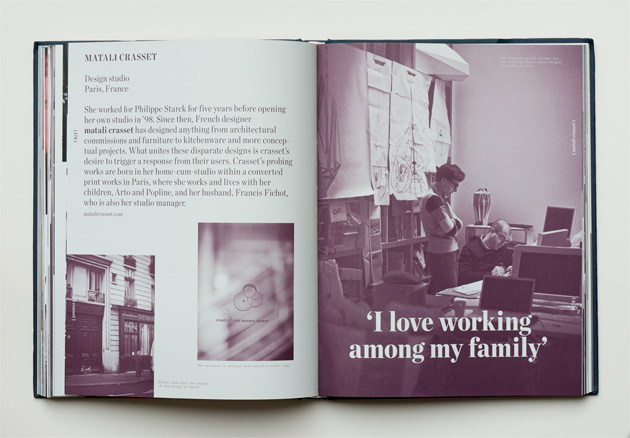
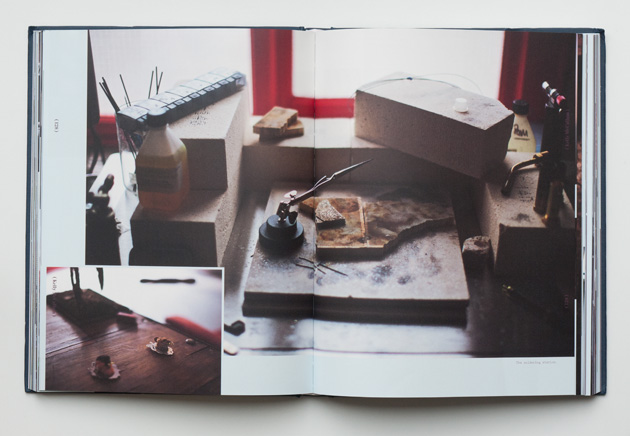
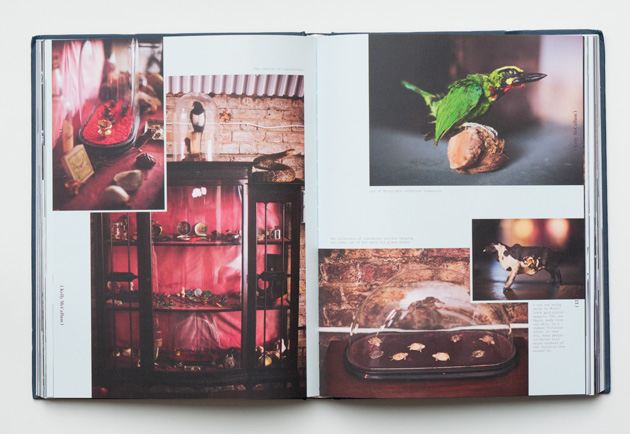
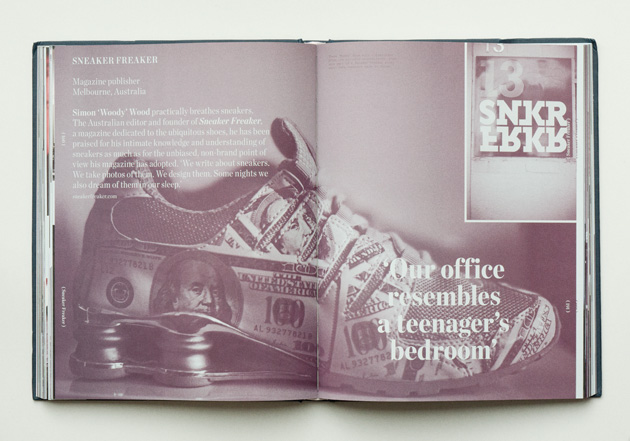
Does space influence the way people work? This is the issue behind Paul Barbera’s project that documented, through images and interviews, creative working spaces all around the world. With Where They Create, the Australian photographer – who started taking pictures of interiors almost by accident: “it’s the thing I do without thinking” – changed his voyeurism into a sort of anthropological research. Looking for absurd and hidden things, Barbera entered 32 studios of international creative people – artists, AD, architects, designers, stylists, editorials – and captured all the details of their personal stories and artistic processes.
From Wallpaperand Fantastic Man studios to Matali Crasset design space, Olaf Breuning’s atelier or fashion house Acne (and many more), the Australian photographer peeked into different places with their peculiarities: organised, chaotic or dominated by a chaotic order, empty or with people working, sober or recalling a teenage bedroom.
Barbera’s curiosity, naturalness and good eye for interiors, together with his ability to transmit emotions and warmth make this project unique. Creatives need to transform their offices into intimate spaces (like a home), and to keep his/her own things close to be able to create. Other could work anywhere, travelling with the bare essentials as does Paul. But everybody, even if for a while, leaves personal traces, aspects that don’t pass unnoticed… if you are able to catch them.
Initially thought only as a blog, Where They Create turned into a book thanks to the interest of Frame Publishers.
Presented in NY on September 2011, this sort of diary will be presented in Italy, for the first time, at DesignLibrary(via Savona, 11 Milano) on December 14, from 6 to 10pm.
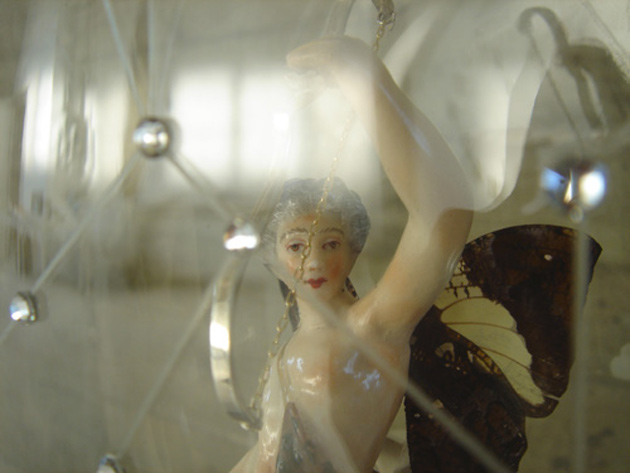
Bouke de Vries had an extended stay in Milan recently while he exhibited in a solo show, Signs (Metamorphsis) at the always on the vanguard Maria Gloria Gallery. De Vries is an artist polymath, his career shifting across mediums and his work always remaining devoid of compromise. His trajectory has taken him from restoration of art to the spotlight of the pop culture art scene, commercial art, jewelry (he released a line in collaboration with Anoushka earlier this year) and on to political activism. His most memorable works are perhaps those which openly criticize chairman Mao Zedong, and . His pieces look like otherworldly pastiches of a hedonistic, ethereal dreamscape, and they showcase flaw to great effect.
“In this flawed world, perfection seems to be an attainable goal… But not-quite-perfection is often easily dismissed and discarded…”
For the occasion of his stay, 2DM’s Matteo Cherubino filmed and interviewed the artist among the eerie, surreal backdrop of his recent sculptural work: surreal cross sections and self-contained worlds of a parallel universe. Or a Cherubs. Butteflies. Cigarettes. Dramatically combined with porcelain. In conversation, the artist reveals inner working of the artist’s mind, his depth of perception, and his extraordinary and unbound working process.
De Vries also presented together with Gloria Maria Gallery at this year’s MiArt, showed at Artissima this year, and often exhibits at his home gallery, London’s Vegas Gallery.
Tag Christof – special thanks to Bouke de Vires & Gloria Maria Gallery
Sam Green is a San Francisco-based documentary filmmaker best known as the man behind The Weather Underground, a widely acclaimed documentary that chronicled the rise, fall, and aftermath of the controversial and highly influential 1970s American anti-war group of the same name. Released in the aftermath of 9/11, the honest portrait resonated with the widespread sentiment of the time, and Green’s film eventually earned him an Academy Award nomination for Best Documentary Feature in 2004.
Through his films Green often displays a fascination with individual characters testing their hard-pressed ideals against inconceivable realities. His 1997 feature-length debut, The Rainbow Man/John 3:16, detailed the downfall of Rollen Stewart, a man who became a nationally known figure in the 1970s simply by appearing in front of cameras at sporting events wearing a rainbow-colored wig. Stewart’s obsession with fame and companionship eventually leads him spiraling into radical religion and isolation, and, in the end, jail. Green’s most recent full-length, Utopia in Four Movements, was a live performance film that used four off-kilter stories from the 20th century to examine the state of hope and optimism and, more importantly, what becomes of it once it meets reality.
We recently spoke with Green, who also teaches part time at the University of San Francisco and the San Francisco Art Institute, about The Universal Language, his new short film chronicling the origins of Esperanto and the surprisingly vibrant worldwide culture that continues to speak it today.
The Weather Underground Documentary by Sam Green
Hello, Sam. Can you hear me okay? Yeah, I can hear you ok. How are you?
Good. I want to thank you for doing the interview. Sorry to catch you on your way out the door this morning. No, no, no it’s fine. I’m shooting a little film about fog in San Francisco, and what it means is I have to be ready to shoot at any time, and this morning the fog rolled in really thick and I had to go out and do it.
You’re shooting a film about fog? Yeah. It sounds like a short about the weather—the quintessential boring subject, but…I don’t know if you’ve been to San Francisco, but there’s amazing fog here—that’s sort of one of the things that’s at the heart of San Francisco’s identity. You know, fog and foghorns—a truly beautiful phenomenon. It’s just a short film about that.
I’ve been threw there a handful of times. I grew up in the Pacific Northwest, on the Kitsap Peninsula, and used to travel through San Francisco as a kid. Tell me about your new film, The Universal Language. What was your initial inspiration? I always sort of knew about Esperanto, and I imagined this idea of a universal language, how everybody speaking the same language would somehow bring about peace. I always thought it was something that was created in the 1950s, kind of a science fiction thing. And then a couple years ago I came across something about Esperanto that said it had been created by a guy in the late 1800s—a Polish guy. And I was really surprised because I didn’t know it was that old of a thing. So then I was curious and I started to read about Esperanto, and I really like the combination of the story and idealism. It’s such a good idea.
But it’s a good idea running up against the reality of a culture. You know, it’s hard to get people to learn the new language, so in some ways it’s a bad idea. And I’ve always sort of liked that sort of intersection or collision between idealism and the constraints of who we are. Also, I liked it because it’s hard to be hopeful these days. And somehow Esperanto—I mean even the very name means ‘one who hopes’—is all about hope, and I like that. That’s what got me going on the project.
This practical approach to bridging long-standing cultural gaps. Yeah, it’s a cool idea. If only it could work.
Exactly. Esperanto people say it does work. There is this pretty vibrant movement of people who speak it. There’s people whose families have spoken it for several generations. Native speakers. For them it does work. They’re not waiting for some utopian movement where everybody learns it. They use it and they communicate with people from all over the world. From their perspective it works.
Was that something that surprised you when you started to get into the production of the film? Did you think the community would be larger, or more miniscule, than it actually was? Yeah, I was surprised, and I think that most people I described the project to are surprised that there still are a lot of people who speak Esperanto. Every summer there’s a World Esperanto Congress and it happens in a different city each year. One was in Florence, Italy, and I once went to one in Yokohama, Japan. Lots of Esperanto speakers from all over the world show up. Because for them the real heart of the experience is talking to other people. There’d be like 3,000 people there from all over the world, which completely surprised me. I was surprised that there still is this movement, but they think it works.
Why do you think that is? Because they’re not framing in terms of having a political agenda? I think there’s two parts to this. One is that speaking the language allows you to talk to people from other countries and other cultures. But I think deep down they do have a political agenda that the world could be more peaceful, that people communicating is good, and allows you to see other people as human beings. It’s political in a subtle way. I think all of them deep down do it out of some idealism. It sort of comes out of a political impulse.
You previously dealt with Esperanto as a movement in your previous film, Utopia. I’m assuming the short film grew out of that. That was more about the idea of utopia—looking at Esperanto as this utopian phenomena. The Universal Language is more of a portrait of the language and the people who speak it. Not necessarily about utopia.
I’m interested in learning about the reasons you chose the examples you did for Utopia. Can you elaborate on that a bit? I wanted to make a film about why we today don’t think a lot about the future. We don’t’ have a lot of imagination about the future or dreams about the future. I think today people feel like the future is kind of just be a worse version of the present. So I was trying to make a movie that sort of mulled that over, but I didn’t want to make a movie that was like a boring PBS documentary where you interview an expert or anything like that. I wanted to do something more poetic, something that elicited more of an emotional response. I had this idea of doing different stories that all evoked the idea of utopia in one way or another, some more directly than others. The part about Esperanto is pretty clearly this utopian project: it sort of works, sort of doesn’t. Then there’s another section about the world’s largest shopping mall. That’s sort of like a capitalist utopia where we all shop and consume all we want. That’s a different kind of utopia—all of these things I hoped fit together in a weird way. The sum of their parts create this set of ideas and feelings about utopia and the utopian impulse. So they’re all something that I just really liked. I come across things and I feel them. I read something about it, or I get a little smitten with the subject. That’s what usually leads to me making a movie about something.
You said in an interview a few years back that you were actively trying to make a more positive movie. Was the utopia project your attempt at giving a positive spin on situations that might be largely perceived as tragic, or at the very least failures? That’s a good question. I sometimes feel as if I make the same movie over and over again. I think everybody who makes movies or writes books, in some ways you’re doing the same thing over and over again. A lot of the movies I’ve made have been about people with big dreams that somehow—things don’t turn out the way they want them to, necessarily. And so I’ve always been trying to do something different to make a movie about total success. Like, ‘God, I have to make a movie about P. Diddy.’ Or ‘I gotta make a movie about Justin Bieber.’
(Laughter) I don’t know if Justin Beiber’s story is going to turn out so well. He may only have a couple of years left. I know, that’s the thing! But it’s got that richness that failure has. It’s sort of even just a joke with myself. Like, ‘god dammit. I have to stop making these failure movies and make a movie that’s about absolute, total success.’ I’m still working on that one.
But like you said, your films are kind of drawn to marginal events and characters involved in them who went for broke. Your first big film was about the rainbow man. There was a preacher I saw years after that happened—I don’t know if this was in your film or not—who saw what the rainbow man did as a huge success. It reminded me of the worldview you present in your films, of finding a glimmer of hope among these ruins. It’s funny; there’s different ways of seeing it. I’m sure there’s some people, or he maybe, may think of it as success. Who knows. Also with a group like the Weather Underground, that’s a complicated thing, and some people say, ‘God, they were total failures.’ But it’s complicated and you never know. The world works in this way of sort of ripples. You never know what the reverberations will be. Something that could be a failure might inspire somebody in vigor to do something else that turns out to be a big success. You can never say 100% ‘That was a failure, that was a success,’ because over time things change. The Weather Underground was certainly a complex thing. In some ways it was a failure, but in some ways just as a project, or a gesture, it was a success. I mean it certainly has inspired people, and that movie resonated with people in a complicated way.
I saw that film while a student at Western Washington University. When you were making that film in the late 90s, did you imagine it ever reaching such a broad audience? Not really. I started it in the late 90s, and the late 90s were such a light time if you look back. The most heavy duty thing that was in the media was Chandra Levy, or the impeachment. At that point the Weather Underground’s story was noteworthy in how radically different it was from the tenor of the times. Like, ‘Oh man, that ancient chapter in history when people were actually protesting something?’ Sure, there was like Seattle [the WTO riots] and stuff, but for the most part it was just a kind of light time. With 9/11 it obviously changed that. I was editing right when 9/11 happened. It changed the context of the movie. You always see something in a context and you connect it to what’s going on in the world at that moment. So it forced me to change in small ways the movie I was making. It also changed how people saw it. It made it much more overtly relevant, and in that sense it got a much wider audience than I had originally thought it would.
In what ways did the film move away from your original intentions? There were some funny, sort or humorous things we had in the movie before 9/11 happened. And afterwards there was much less room to joke. For example, the Weather Underground had this song book. They would take pop songs and change the words and sing them. And they’re really mean: they made up funny, mean songs. Because they were like psyching themselves up to do this shit; they had a little bit of a twisted sensibility. So they’d make up these funny, mean songs, and before 9/11 I had included some of these songs in the rough edit. They were just funny, and sort of ironic, mean humor. Afterwards you couldn’t joke like that. I mean, it was such a serious topic, that to joke was not cool. So that stuff came out.
So what are your plans for The Universal Language? I just finished it and I sort of started off by saying, ‘I want to make a movie that can be distributed all over the world.’ Or, ‘I want to make a movie I can show in Africa.’ I’ve got to make it so that people can understand it. Esperanto speakers everywhere can understand it, but I started to get it translated into other languages, and people in the Esperanto world helped me out. Somebody said, ‘I’ll help you translate this,’ and he sent out a message to all Esperanto speakers. Then these people started translating it. So I got it translated into 19 different languages and I made a DVD with all of these subtitles tracks on it. It’s 19—the world’s record for most languages translated in the DVD. So I’m starting to distribute that, and I think it’s a cool moment in filmmaking where you can really get a movie out really widely—through the internet, through social media. Also, you can download and stream from your own website. Which, in some ways for filmmakers is like the holy grail, because we’ve always had to go through a distribution fee, or TV, or all of these gatekeepers. Again, it’s this weird moment where technology has made it so that you can really powerfully distribute things. I’m gearing up to make a big push to get this film out to all over the world, which I’m excited about. It’s an experiment for me to see what’s possible these days, in terms of distribution. Some filmmakers finish a movie and say, ‘I don’t want to have anything to do with this, I’m on to the next film.’ And I’m somebody who really cares about distribution and getting something out there. I enjoy working on that. I like making films that I also like promoting them and getting them out in the world. So I’m going to spend a little time and energy doing that while I’m starting some new stuff.
That kind of goes against what you did for your last project, where you seemed more concerned about engaging the audience in a very specific way. It almost seemed as if you were wary of the internet and the nonchalant way it allows people to engage with media. What were your intentions with Utopia, where you literally had to show up to the theatre to experience the film, Vs The Universal Language, where you’re trying to get it distributed as widely as possible? That’s a great question. My response would be that different projects lend themselves to different forms of distribution. With Utopia, to me that was a serious film about a serious subject. Who we our today, our relationship with the future—hope, idealism, stuff like that. Those were heavy topics and required some thought, so I wanted to make something and create a form that would hopefully really maximize the attention that people would give to that. For that project live form actually seemed fitting—the only way could see it would be in a context that would hopefully get you to think about it. A theatre is perfect for that because you leave all of your normal day-to-day shit at the door and lose yourself in this theatrical experience. In some ways that’s the best form for living that experience. But with The Universal Language I’m much more interested in a lot of people seeing the movie. So a much more fitting form of distribution is having DVDs all over the place, downloads, and streaming—these very immediate ways people can see it, you know. I’m not judgmental about distribution; I feel like different kinds of films lend themselves to different kinds of distribution.
In a previous interview you said, “As a filmmaker you’re going to have to accept the fact that somebody might be watching your movie while checking their email,” or something along those lines. But you’re also acutely aware of how the internet has leveled the mainstream media’s influence and become a great regulator of resources, where people get to naturally vote what they watch. How do you balance these two opposing forces? Well, the internet is such a complex phenomenon. There’s a lot that’s good to it, and a lot that in my opinion is not. But I am not a Luddite. I am critical of it in some ways, but anytime I go onto Wikipedia, or YouTube, or Flickr—those are such fantastic things. I do so much research on Flickr and YouTube. I love them. Those are powerful, powerful, powerful things and nothing like that has ever existed. At the same time there is a lot that I’m critical of. Like the fact that people are watching things in a much more disposable way. There’s so many movies now, and you just watch things with a lot less patience, with a lot less attention. It’s inevitable. I did this thing a couple of years ago when digital music was becoming new and a friend of mine had a drive with 5,000 songs on it, and I copied them all. And I was so excited to learn about all of these bands I’d heard about but never listened to, and I found myself going through the drive, and I’d give each song five seconds. I’d play it for five seconds, and if I didn’t like it I’d throw it away. And I realized, ‘Damn, when there’s so much out there, you can approach it with less patience.’ It’s so great to be able to get music easily, but at the same time there’s a downside to that, which is that we pay less attention, and we’re less patient. Having to pay attention is important. I’m not gonna say that it’s all good, or it’s all bad.
I’ve found similarities with that. With my job I end up reviewing a lot of albums, and obviously you can get anything for free these days. I find that, at least for me, if I don’t pay for an album, I don’t enjoy it as much. It’s true! And I think that’s a super-important idea, and that’s definitely something I’d keep in mind. That if people don’t pay even a little for something it’s pretty meaningless at this point.
I also wanted to ask: As a teacher, do you think people—and especially our younger generation—these days are more pessimistic, or at least more influenced by negatives, than previous generations? I don’t know. I mean, I’m older myself, so it’s a little hard for me to talk about younger people. But I think the world is a lot scarier than it has been, and is a lot scarier on a lot of fronts: Environmentally, politically, and economically. My heart goes out to young people who are just getting out in the world now, because it’s a tough time. It’s hard to be idealistic when you’re worried about how you can afford not to live at your parents house. So, it’s touch. You’ve got to take care of basic things first, like how you’re gonna live, how you’re gonna support yourself. Then you can move on to other things like making the world a better place and all that. I think people will have very immediate concerns maybe 10 or 20 years ago people didn’t have. That’s a burden. That’s tough. But you deal with the world you get. When you come of age in your early 20s at a certain moment, that’s your moment. You’ve gotta deal with it.
I admire younger people, and I have a lot of hope for younger people. It’s a crazy time right now, and out of that some good things are gonna come. Young people are gonna have to figure their way out of this, and they’re probably not gonna have older templates, or older ways of thinking about the world. They’re gonna have to come up with their own stuff, and that’s great. I think it’s gonna happen and I’m excited about it. Even though it will be something that will probably surprise older people like myself.
You studied with Marlon Briggs in college, and your name is often mentioned alongside his. How did he influence your work and worldview? He was great. I don’t know if you know his stuff, but I went to journalism school and there were a lot of people who wanted to be news people—a pretty straight-laced environment. And Marlon Briggs was great because he had actually gone to that school—the UC Berkeley Journalism School—and he did stuff that was really intellectually rigorous, but he also had a real experimental and artistic sensibility. His work was smart, but it also was poetic, which is rare. Oftentimes stuff that’s smart is dry, and if something’s poetic it’s a little bit dumb or vacuous. He was able to combine those two, and that made a big impression on me. I’ve always tried to combine those two impulses myself. He was a great and a legend, so I’m not putting myself on the same level with him. I just aspire to do what he did.
I went to school, and then decided I had to get a job, so I went to LA and got a job doing TV news—I worked for a news magazine show. I did that for a little while, and it was really stupid. After that I decided, ‘Forget this, I’m just going to do documentary stuff.’ So I then got back into the documentary world. Briggs had passed away by then, but he’s always been an inspiration for me.
What drew you to documentary filmmaking? When I was a kid I was really into the world, just hearing about the world. I got into Bigfoot when I was a kid—I was really into Bigfoot for a couple years. I was just kind of a nerdy guy in terms of that type of stuff. But I also was into art and drawing and stuff like that, and so after a while as an adult I realized that this was the way to combine those two things. Do art, but also be engaged with the world. I also went to art school when I first went to college, but it felt so cut off from the world. Journalism was a way to engage with the world, and documentary film became a way to do both at the same time.
I’ve noticed that you’re drawn to that unique tension between idealism and absurdity—I’m thinking of the short film you did on Meredith Hunter [lot 63, grave c]. It approached his story from an angle that was very interesting, one where you spend a lot of time looking through the lens of the grave keeper. You flipped this major cultural event—something that’s become a catalyst for the end of the idealism of the 60s, and focused instead on the victim, and it ended up being about how he didn’t end up getting a gravestone, which seems completely absurd. That came out of being curious. I just went with a friend out to see what I could learn about that guy. We went to that cemetery, and I had that exact experience, where we talked to the cemetery guy and he said, ‘Let me show you where the guy is buried, you’ll never find it,’ and walked out there. It was a long walk, and on the way I just chatted with him about death, and his job—this weird job—and so we finally got to the place, and he said, ‘Here it is,’ and it was this unmarked grave, and it had a big impact on me. I don’t know, something about that moment, and the idea that this guy is in this unmarked grave kind of lingered with me. So the film became an expression of that. We went back and filmed the exact same thing—the guy walking me out there. I was curious about who this guy was, but in some ways it was also about some bigger idea about death and the way people sort of fade into oblivion and never look back.
Tell me about this new fog documentary since we’re on it. It’s just something I’ve been working on with my friend Andy Black, and we’re doing it together. He’s a great cinematographer and I’ve worked with him on Weather Underground and all the films I’ve done. We’ve been doing it for a couple of years—I mentioned that fog in San Francisco is really spectacular, and also we’re interviewing people who just have interesting connections to fog. In San Francisco there’s these foghorns, these iconic foghorns, and we interviewed the guy at the Golden Gate Bride who turns them on and off. He’s a really funny fellow, and it’s just this weird thing, like ‘Somebody actually turns these on and off.’ It’s a pretty big project, and I thought it actually would be an easy project. It’s super-hard to do filming because you never know when it’s gonna happen or where. It’s been about four days of sunshine with no fog at all, which has been a little heartbreaking. So, suddenly there’s a lot of fog and we’re running out of somebody’s house to just shoot out of her window.
So it’s a fun, weird challenging project. The thing I like about fog is that it’s both visually pretty stunning, but then also deep in some ways. People have very profound feelings about the fog, and at night the fog and the foghorns are this real sort of poetic, existential phenomenon. It’s a cool project, and hopefully we’re gonna finish shooting in the next week or so, and then start putting it together. I think it’ll be like a half-hour long piece that’ll be done next year.
Sam Green.
Just one last thing: when will The Universal Language be released? In about two or three weeks. It’s starting to have screenings here and there. There’s a screening in Berlin later this month. I’m doing one this weekend in San Francisco. It’s not gonna have a six city rollout or anything like that, but it’s definitely getting out there.
Interview Lane Koivu – Images from The Weather Underground film and Sam Green.
Over the last few months we have seen some really cool work from the talented Carolina Melis, but don’t expect her to be taking a break from the artistic spotlight anytime soon. The latest feather in the 2DM starlet’s hat is a recent illustration in Vogue Japan. With her art adding just the right amount of oomph to the usually mundane rubrice section, Carolina uniquely reinterprets magazine art direction and page layouts. Aptly she has done so in Vogue Japan; who, ever since its inception has always marched to the beat of its own drum. For a real glimpse of visual joy in true Carolina Melis style a quick glimpse at the Vogue Japan website shows her illustrations in motion.
With illustrations that leave you feeling pure tranquil joy it’s no wonder that Swedish super-brand IKEA has selected illustrations from her for their new batch of post cards. Currently in distribution in Sweden and slowly making its way to IKEA around the world, it wont be long before we have our very own.
From global super brand to fashion power house, all seem to be cashing in on the Carolina magic. The artist sports a cute piece of animation on a website of the Italian fashion mogul Prada. Stepping away from her usual nature themed psychedelic style of animation Carolina shows a side of her art sure to get you hooked on the fragrance it promotes; Prada Candy.
A few days back we celebrated the all new L’Officiel, well now the world of mens wear magazines have another rebirth to rejoice. Revamped with luxurious vigor Hercules Magazine furthers a new Universal agenda. Taking on a new form and shape the magazine moves away from it’s former larger format and strives to be more of a collector’s piece, “for in this new global world there is little place for the disposable”.
Owing to its new universal agenda the first revamped issue “Old new world- The Istanbul Affair”, is a perfect blend of timeless men’s fashion, stimulating fashion stories and an enthralling romance with the city of Istanbul.
Among the list of talented men and women responsible for the magazine`s sharp avatar are 2DM’s very own photographers Nacho Alegre and Tung Walsh. Opening the magazine is a gorgeous editorial called “Its not where you go , its what you wear” shot by Nacho Alegre. Styled by Senior Fashion Editor Laura Alcalde, the story highlights the elegant versatility of the over coat and it`s première label Emporio Armani. A few flips down Nacho knocks another one outta the park with a series of breathe taking still lives. Reminiscent of an era of travel long before todays limited baggage allowance, it featuring some of the best made luggage from the house of Loewe.
Tung Walsh collaborates with Fashion Editor Laura Alcalde to inject some youthful swag into the magazine in a beautiful editorial called “Face to Face with Elegance”. The magazine also features interesting interviews like Band of Outsiders creator Scott Sternsberg and fashion powerhouse Carine Roitfeld.
With this first Old New issue safely collected, we can`t wait to get our hands on the ones to come.
You may have noticed L’Officiel Hommes Italia has a newfound swagger and joie de vivre in its latest issue. If you haven’t yet, you absolutely must take a closer look. Credit goes to the magazine’s newly appointed creative director, 2DM’s multitalented Pablo Arroyo. With his very first issue on newsstands now, powerhouse Pablo is certainly making waves. Imbued with his own unique take on fashion he gives the magazine a refreshingly young outlook that is much needed across the board in mens publication in in Italy.
In true Pablo Arroyo style, he thanks his skeptics for the motivation to push further. If this issue is an outcome of skeptical motivation we all could sure use some more skepticism.
With an array of mesmerizing shots of the charismatic Andre Van Noord by Tomo Brejc and a rather funky editorial featuring actor Melvin Poupaud and styled by the very talented Tom Guinness (the new fashion director of the magazines French edition) the issue taps into all ends of the fashion spectrum. The issue also invites a whole host of new collaborating photographers and stylists, key to its bold new look. Fresh to join the ranks at L’Officiel are talents such as photographers Stefania Paparelli and Andre Saraiva and stylists Jamie Stewart.
Still maintaining a classic L’Officiel look and feel, the editorials manage be edgy and transportive at the same time. A real feat, oftentimes even a struggle for classic menswear.
With this being just the beginning, we are dying to to see what lies ahead. Kudos to you Pablo!