27/02/2012

Deconstructing The Thing
Deconstructing The Thing

The Thing Quarterly is, in the words of the founders, a periodical in the form of an object. The object is typically functional and designed by celebrities and people otherwise notable in their line of work. Contributors in the past have included writer Jonathan Lethem, media artist Anne Walsh, and experimental geographer Trevor Paglen. They make things like military mugs, blank books with shoelaces sewn into them, and flags embedded with instructions on how to fold a flag.

It’s called art, and it’s brilliant.

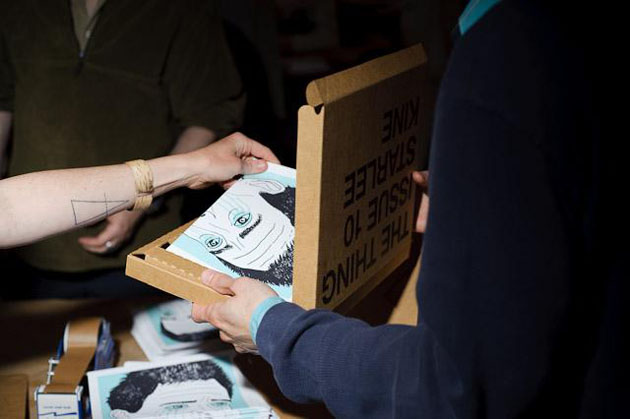
It works like this: You pay them money ($65 an issue, or $200 a year), and at the dawn of each season you’ll receive a Dominos-shaped cardboard box with the contributors name stamped boldly in Helvetica. It’s clean and would look nice on top of a coffee table. It’s also minimal, as much as an offshoot of the absurd humor of Marcel Duchamp as it is with the craft aesthetic of something like Ready-Made, a crafty monthly rag that tells its readers how to build their own living spaces without having to go to Ikea. But where Ready-Made tells you how to build things, The Thing has celebrities build things, and you pay money to have their objects sent to you. The thing is, you don’t know what they’re going to put in the box until it arrives. One publication described what they do as part MacGuffin, and part… something else. The MacGuffin is the only part I can remember now that I’m thinking it over.

But it’s what’s inside that counts, right?
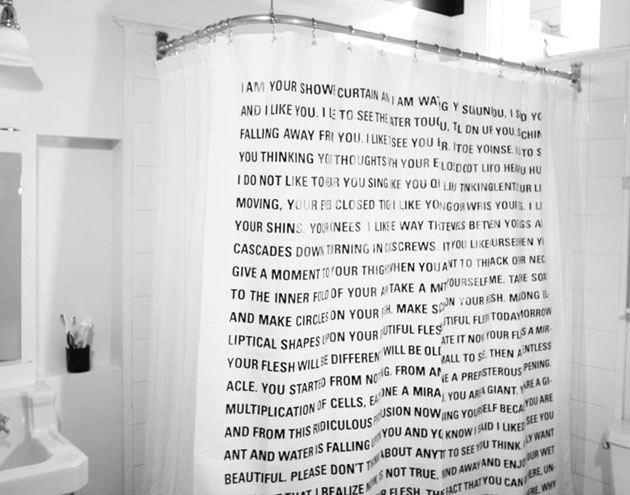

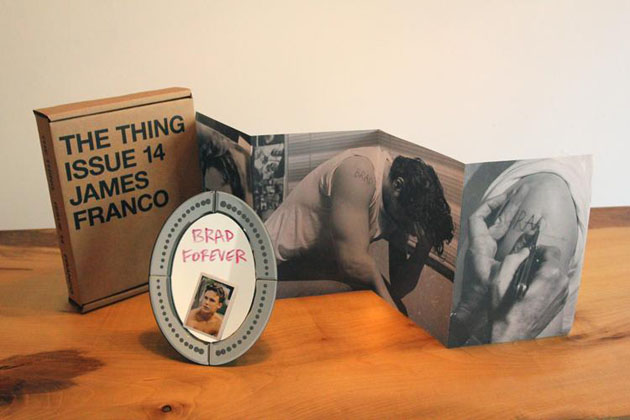
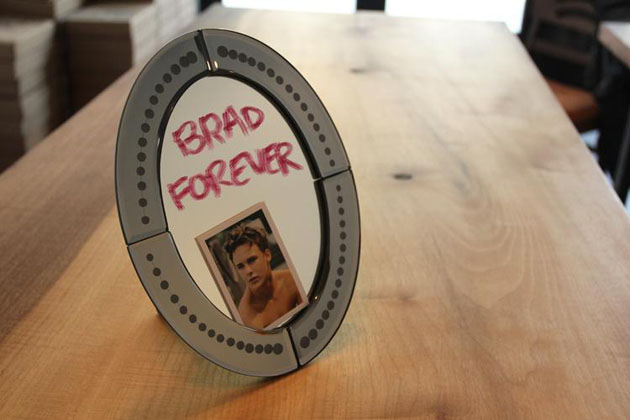
It depends on who’s putting what inside, and why. The most recent issue is an original Dave Eggers short story printed on a shower curtain. From the perspective of a shower curtain, too. If you’re a die-hard shower curtain fan, you can’t live without it. But James Franco’s tribute to Brad Renfro is downright ridiculous, arriving complete with lipstick, mirror, and a photo book of Franco getting “Brad” carved into his shoulder. If you want a piece of glass that has the words (written by Franco himself) “Brad Forever” smeared on glass in front of a neatly-tucked pocket photo of Renfro, Issue 14 is for you. It’s tacky, vain, and wildly pretentious even for a project where pretentious and indulgence are entry requirements.

But The Thing is heady like that. The people who produce it, visual artists Jonn Herschend and Will Rogan, promote the project as a surprise of sorts, something fun, like finding an object you weren’t looking for in the leftover bin at the local thrift store. Maybe a wolf t-shirt, maybe a set of hand-made wine glasses with a message inscribed on the bottom, maybe a Brad Renfro knife or something. Brad forever.

Wait, that knife exists and costs $650? These guys are full of surprises!
At least it seems like the contributors are having quite the time. Who wouldn’t want to, like Starlee Kine did in Issue 10 (sold out), write a short story about an onion on a cutting board designed for cutting onions? Or silk-screen a post-it-note on a functional shade says, “If this shade is down I’m begging your forgiveness on bended knee with tears streaming down my face,” like Miranda July did in the inaugural issue? This, too, is sold out, though I can’t imagine those words having the same kick the second time the shade is drawn.

But like Duchamp’s urinals, it’s the idea of The Thing is more important than what’s inside the box. And the objects sometimes are surprising, at least in the degree of incompetence they assume of their subscribers. But hey, it’s not like you’re forced to buy into this thing. I mean, if you’re the type of person who thinks it’s cool to spend $65 on a Dave Eggers shower curtain, I’m certainly not going to stop you.
Lane Koivu – Images courtesy of The Thing & Lenny Gonzalez

24/02/2012

Matter Magazine

Matter Magazine

Almost two years have passed since Enrico Grigoletti interviewed Mr. Olu Michael Odukoya for The Blogazine. Once more the enlightened founder of Kilimanjaro – the critically-acclaimed cult magazine which has been established for eight years, winning a D&AD award in 2006 – is again back to us to draw our attention to his brand new magazine: a modern bi-annual journal titled Matter. Dedicated to a readership interested in the way that new technology affects culture, lifestyle, fashion, and the arts. Matter is a publication targeted to stylish and contemporary men and designed to be read by women as well. The reader of Matter is a flexible person able to understand the potentials and the possibilities offered by the new frontiers of technology; usually a man who lives the present, constantly looking towards the future of an ever-changing and increasingly sophisticated world.

Sharing the same curatorial and design values of its sister publication Kilimanjaro, Matter is the first editorial experimentation that covers different issues concerning style and conceptual art, analyzing them through the lens of modern technology. As said by the project’s mastermind Olu Michael Odukoya “Matter’s content is fairly even split between the creative disciplines, with technology being the unifying thread.”

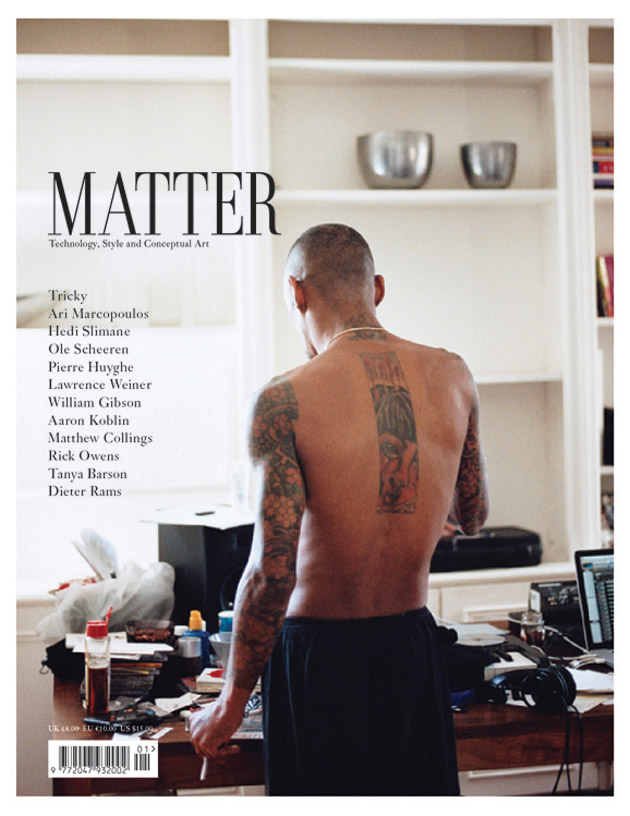
The cover of the first issue of Matter is dedicated to the English Trip-Hop musician, producer and actor Tricky. Interviews featuring digital media artists such as Aaron Koblin and Pierre Huyghe enrich this first number of the magazine along with a discussion with the art critic Matthew Collings about art on the Internet and a photo portfolio of the conceptual artist Lawrence Weiner by Ari Marcopoulos.

Monica Lombardi – Images courtesy of Matter Magazine

24/02/2012

Guest Interview n° 36: Christine Onorati

Guest Interview n° 36: Christine Onorati

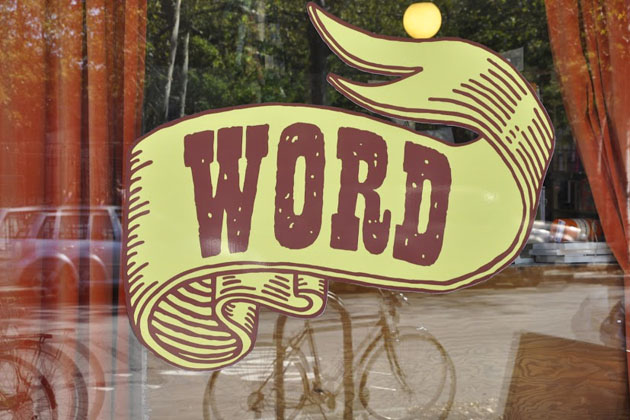
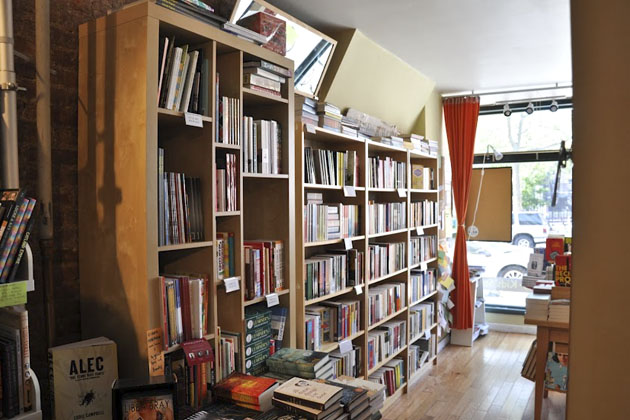
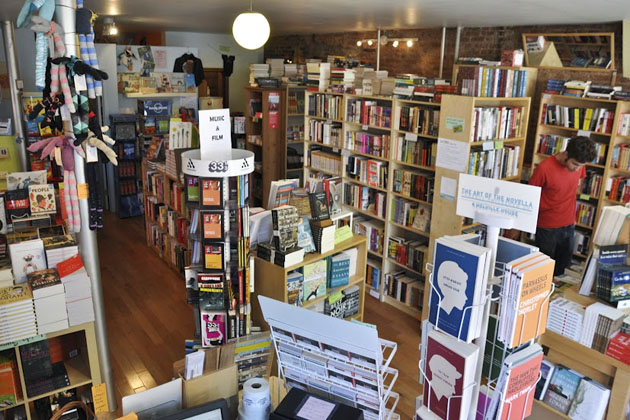
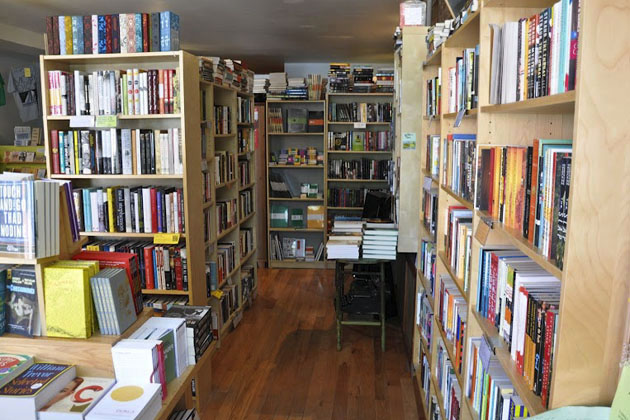
Independent bookstores are few and far between these days, with online retailers like eBay and Amazon selling canonized works directly to your doorstep for a fraction of the price. So what makes them tick, and how do they manage to stick around? We sat down with Christine Onorati, the founder of WORD, the immensely popular and influential cultural epicenter in Greenpoint, to find out why. We discussed the increasingly diverse role independent retailers have to play in an era when your favorite magazine, op-ed, or piece of literature is just a click away.

WORD opened in March of 2007. How did it begin?

I had a bookstore before in Long Island. I closed it and I moved here. It was a little bit smaller used book store called the BOUNDRY bookshop. But the real reason is because we live here. We love it here. My husband and I moved to the neighborhood in 2006, and we moved the store here in 2007. It didn’t come out of nowhere. We had a store, but we just wanted to move it to Brooklyn, where people actually like bookstores. [Laughs]

WORD is nearly as much of a venue as it is a bookshop, and hosts a variety of events atypical for a bookstore. You don’t have all that many traditional readings. How do you go about booking events?
[We] brainstorm what we think will be a good event. Our philosophy is that there are so many events happening at any given time in New York City that we always try to make them be a little special. Maybe it’s a conversation, maybe it’s a party, maybe it’s the author being interviewed by somebody interesting. We try to stay away from straightforward, single authors standing on stage and reading fiction.

How do you manage to stay viable with online retailers, such as Amazon, that offer books at a fraction of the price? 

That’s a good thought―that we do stay viable. [Laughs] It’s hard. We always say we don’t look at Amazon as our competition because we can’t compete with Amazon. They sell books cheaper than what we buy them for. I hate bashing Amazon too much, but they don’t care about books. They use books to get people onto their website to buy other things. Because they sell them as loss leaders, they don’t have any interest in the world of books, so if people are just looking at price, it’s very hard. Books are sold everywhere, and people can get books very easily in many different places. It’s not enough to just have a place where you put books on the shelf―you really have to be a place where you want people to feel a part of it, more of a community of people who like the same stuff.

And WORD curbs to their tastes a little bit more.

Yeah, and it takes a while to build that relationship. We’ve been here for five years and we’ve been doing a pretty good job. We want to be a place where the neighborhood wants to come and feel comfortable. We never judge people. We’re happy to order anything. That’s the difference―people want to come here and be part of something. They want to really be part of it. And we want to make people feel very included in the store, as opposed to just ordering something online.

In addition to a successful bookstore, WORD has over the years become a popular community center for people with common interests and desires, literary and otherwise. Was this always your intention?

Like I said, you can buy books anywhere, so I really feel like if a neighborhood can’t support a bookstore it really can’t exist. I don’t really look too much for people from a million different towns to come and support us. It ultimately has to be a Greenpoint store. This is where we are, and I think we’ve found a place where people like us. I think we have to be a reflection of the community. The customers are a part of the store, they can come here and ask for anything they need, get their gifts here. I never want to be a kind of book store that makes people feel like they’re not cool enough to shop here.

What are your plans for the future?

To keep doing what we’re doing. I have no idea what the future of bookstores will be. It’s really bleak. All I know is that we are growing slowly every year, people like buying books here. I don’t really see a future where people are going to stop wanting books, but some people say that’s the case, and if that’s the case, I guess we won’t be around forever. I just don’t ever see books dying here. People like books too much to give them up.

Lane Koivu – Images courtesy of Christine Onorati

23/02/2012

4 Questions To – Andrea Pompilio

4 Questions To – Andrea Pompilio

We met Andrea Pompilio, the forward-looking fashion designer who – after having worked for Prada, YSL and Calvin Klein – founded his new independent line called “A”. We asked four well-chosen questions to this one of the most creative talents of the Italian fashion panorama, who is able to mix traditional textiles, style and tailoring along with “crazy” colours and shapes.

With an open and friendly chat, we entered the vibrant world of Pompilio, which came forward first during the designer’s childhood: “When I was very very young my grandmother had a couple of boutiques in Pesaro and I used to spend most of my time there, playing among clothes and fabrics with my cousins. I loved that, and since I was 8 years old it was clear for me that I wanted to be a fashion designer”.

Interview Monica Lombardi – Video Renzo O. Angelillo

22/02/2012

The Editorial: Nine to Five. No Way.

The Editorial: Nine to Five. No Way.

Like every twentysomething hammering away at a chance for success, I’m stretched tight tight tight like spandex over a bulging body. I wake up early, shove something down that only distantly resembles food, hop on my bicycle (exercise and transport!), and get straight to the hive. I work across three countries in four languages at what feels like millions of jobs with billions of roles. Coffee breaks are for extra meetings and evening pints are for networking. And there are events to be seen at and podcasts to keep up with and blogs and magazines that simply must be read and messages, texts, tweets, and that oh-so-endless flow of email. I’ll get around to answering that… tomorrow? Meh. Maybe next week.

Like the 1980 Dolly Parton movie, 9 to 5 is a quaint and distant anachronism; a relic from a prehistoric time of olive green typewriters and polyester suits and indoor smoking. Sing it with me (because you know you know the song): ”Working nine to five. What a way to make a living! Barely get-ting by. It’s all taking and no giving…” Oh, if only you knew, Dolly. You guys had it good.


And for those of us insane enough to work in the context of “creativity” in the traditional sense –and most of you, dear readers, do exactly that– that oh-so-stifling routine seems just a tad… unjust? Counterintuitive? There is no more surefire way to stifle and generally make something less-enjoyable than by turning it into regimented work. There are cranky clients and heavy workloads and difficult coworkers. Money? Not so much. Even parties are work. Tedious work. And did I tweet today? Is my portfolio up-to-date? And all that email! Maybe next week.

But I’m supposed to be a creative, damnit! In pre-adult responsibility days, I could glue and draw and destroy and build and paint and cut and photograph and write at will. Now, if I’m lucky I have the wherewithal to read a book before bed, I can usually make it through a chapter before falling asleep on top of it. So, when in the hell can I create? Certainly not the next time those dear, dear clients asks for something “really creative.”


But take heart! You can find inspirational escapes somehow. In those nooks and crannies of your daily grind, somewhere between the tweets and the tedium, you can rediscover that once-upon-a-time passion. New passion. The best among you even turn the tedium into inspiration.

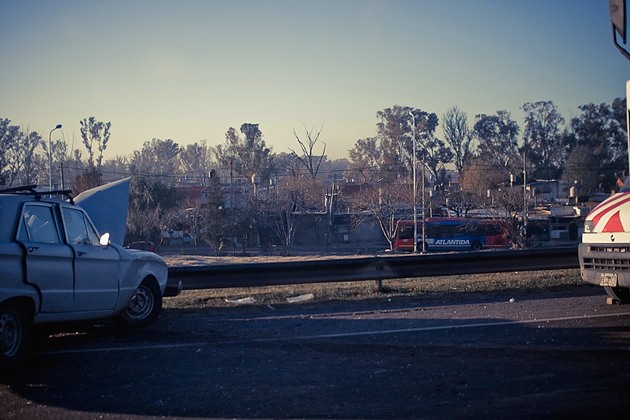
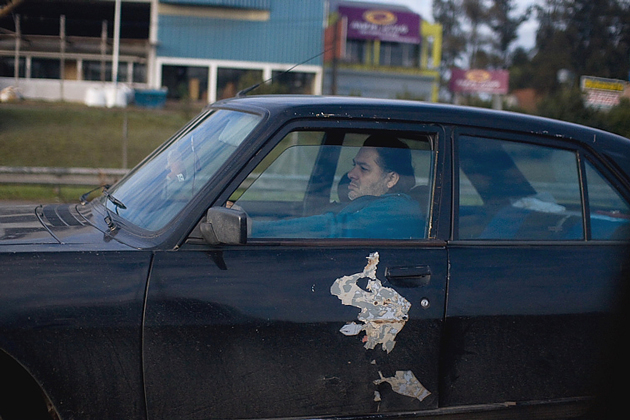
Diego Giménez’ magical photographs of drivers in their cars on his workaday commute in Argentina are a gorgeous lesson in exactly that. He managed to turn his doldrums into an arrestingly beautiful slice of humanity. Now that’s creativity in the post 9 to 5 world.

Tag Christof – Images courtesy of Diego Gimenez

22/02/2012

Provisional Space By Roma Publications

Provisional Space By Roma Publications

When William Morris established Kelmscott Press in the 1850s he couldn’t have known what it would cause around the year 2000.

The expression ‘independent publishing’ wasn’t of a common use in the period when one of the most significant revivals in the history of printing was getting a foothold. Morris fought viciously against industrial production of books in order to protect the dignity of the printed letter as conveyor of human thought and knowledge. Looking at it nowadays we might judge Morris a snob, as mass book production led to a significant cultural revolution. Without judging Morris any further, we must agree that his teaching has raised quite a numerous population of illuminated graphic designers in the present. In more than one hundred years of aggressive development, designers have passed through many phases, and as history is always cyclical, here we are again.

Today’s print revival movement is called ‘independent publishing houses’ and the phenomena has reached such a wast output that probably any of you reading this can name at least two. As much as one can appreciate the effort and beauty of making things by hand, not all of these independent publishing houses really manage to produce something that goes beyond a few xeroxed zines.


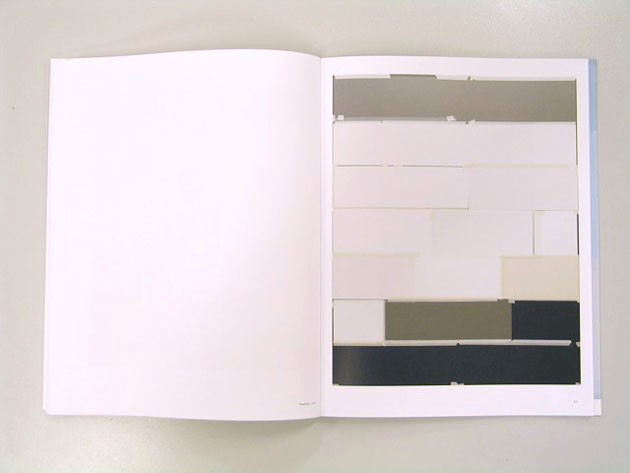
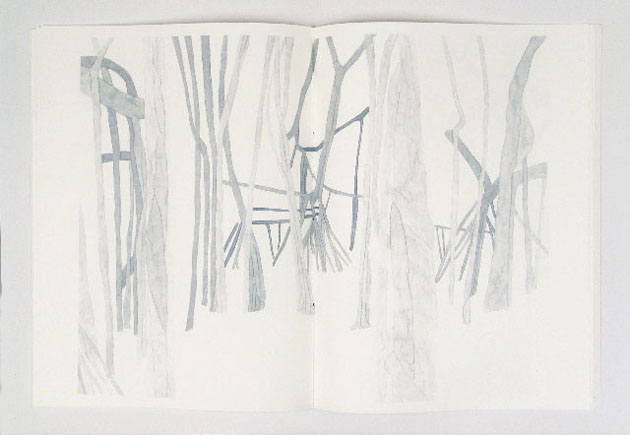
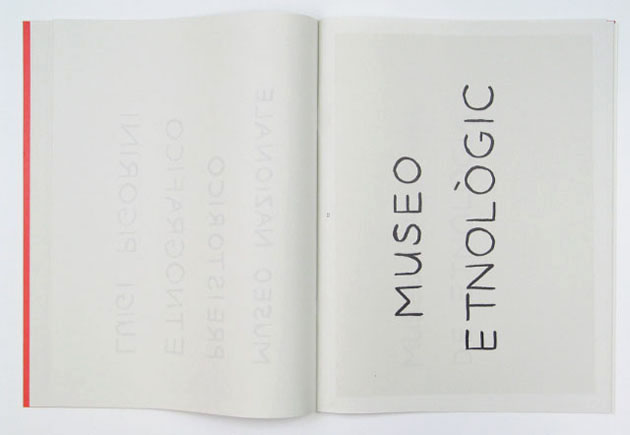
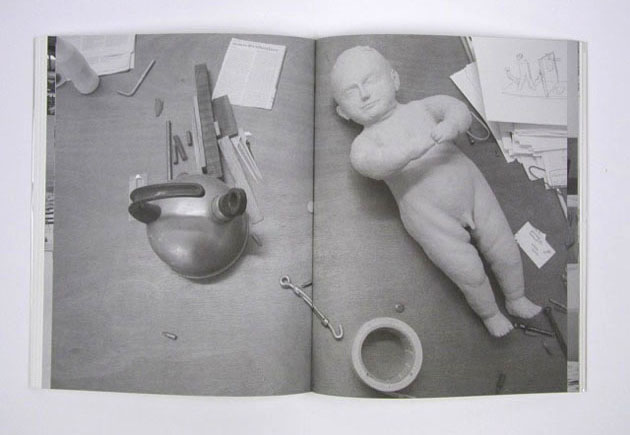
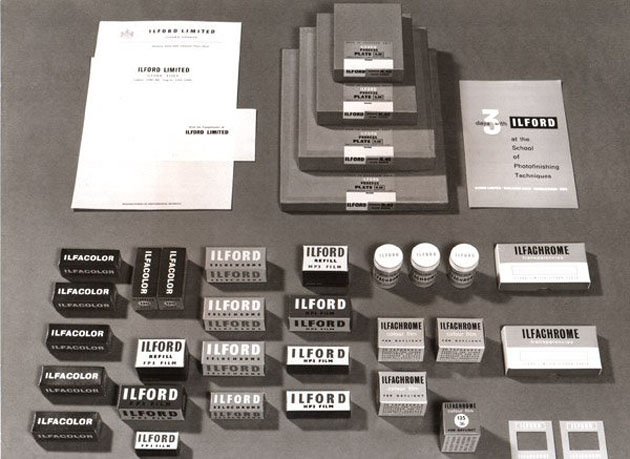
Actually there are only a few that have started producing mature books, both as physical objects and as type of content. One of those publishing houses is “Roma Publications”, founded by Mark Manders and Roger Willems in 1998 and based in Amsterdam. In almost fifteen years of though work the publishers have produced a huge amount of books neither of which is to be disregarded. The bases of their success certainly lies in the strict collaboration between the artist and the publisher through a ‘content-specific’ method. This is why their editions vary from 2 to 150000 and can take the form of a flyer as well as an exclusive artists’ book.

To celebrate the earned success Roma Publications has gathered its niche of precious authors in an exhibition called ‘Provisional Space’. If you’re around Paris, be sure to pop by Castillo/Corrales until the 7th of April, to see this truly morrisian heritage.


Rujana Rebenjak – Images courtesy of Roma Publications

21/02/2012

The Art of Learning to Love What You Hate

The Art of Learning to Love What You Hate

Today, Tuesday February 21st noted writer Starlee Kine will tell you how to turn your personal obsessions―be it petty Facebook stalking, Phil Collins, or an unhealthy fascination with dirty laundry―into stories other people can relate to. And if you’re anything like Kine, you may even be able to make a little money off of talking about your weird habits. “How to Capture the Cultural Zeitgeist” takes place today Tuesday, February 21st at The School of Visual Arts and focuses in on the nature of obsession, and how to churn those impulses into (potential) cultural artifacts.

In addition to writing, Starlee is also a radio producer and pop culture critic. When not chronicling her clinical hatred for AMC’s The Walking Dead for New York Magazine‘s Vulture blog, Kine regularly contributes to This American Life and CBC Radio’s WireTap. She is currently working on her first self-help book, titled It IS Your Fault, and along with illustrator Alex Jones created the Post-It Note Reading Series.

Like most ideas, her cultural musings seem born out of anger generated while watching television. As she says in a recent interview with Time Out NY: “The idea started because I’d been writing recaps of The Walking Dead, the TV show with the zombies. I write those recaps because I was really obsessed with hating the show. I would watch it and live-tweet my anger toward it. When the second season started, I wrote to New York Magazine and said, ‘I actually need a place to put all this.’”

The most interesting thing about these hilarious, anti-Walking Dead rants are the amount of comments her posts draw―typically from people who hate what Kine has to say. “I had been warned that if I didn’t like the show, die-hard fans were going to get mad,” she said in the same interview. “I thought I was going to hate their comments. What’s interesting is how important the comments become to you, even if they’re bad.”

Meet Starlee Kine: “How to Capture the Cultural Zeitgeist”, School of Visual Arts, February 21st, 6pm.

Lane Koivu – The image courtesy of Behance Team

21/02/2012

Kristina Gill: Oatmeal

Kristina Gill: Oatmeal

Today we welcome The Blogazine’s newest columnist, photographer and food stylist Kristina Gill. Based in Rome and a native of Nashville in Tennessee, Kristina is the editor of In The Kitchen on Grace Bonney’s must-read megablog DesignSponge, and will be bringing her cozy, welcoming style for taste to our pages. She’s a master of beauty in the everyday and explores the world through the true-to-sight 35mm lens of her camera. Hello, Kristina! Let’s eat! 

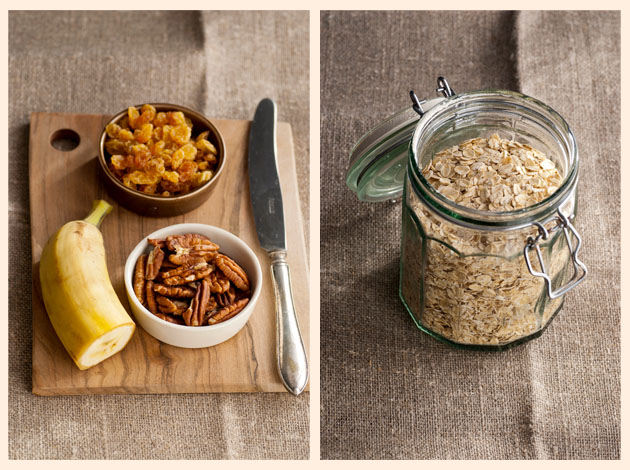
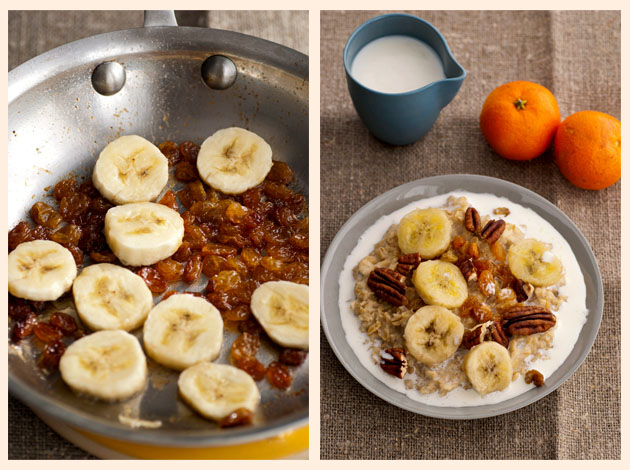
“Oatmeal is one of the staples in my cupboard.  I love it for breakfast, especially when it is cold out.  Usually I add a couple of tablespoons of finely ground flaxseed meal and a bit of butter when I want to add richness.  This winter, though, I did something I never do, and I ordered a bowl of oatmeal in a restaurant.  It was served with hot buttered currants, bananas, and walnuts.  Who knew it could taste so good?  Now, when I want an extra special weekend treat and something that will carry me through to late afternoon, I make my oatmeal with golden raisins and bananas heated in a bit of butter, pecans, and a splash of cream.”

Introduction Tag Christof – Text and Images Kristina Gill

20/02/2012

How To Pack For F/W

How To Pack For F/W

The hoopla and fanfare of the fashion weeks is just about to kick off the frenzy for another new season. As a special treat to mark the occasion, online editor of French fashion bible Purple, Paula Goldstein, is joining The Blogazine crew to share some inside views from the world of fashion. First up, she shares some primo trade secrets for packing smartly for the streets, runway sidelines and shindigs in style.

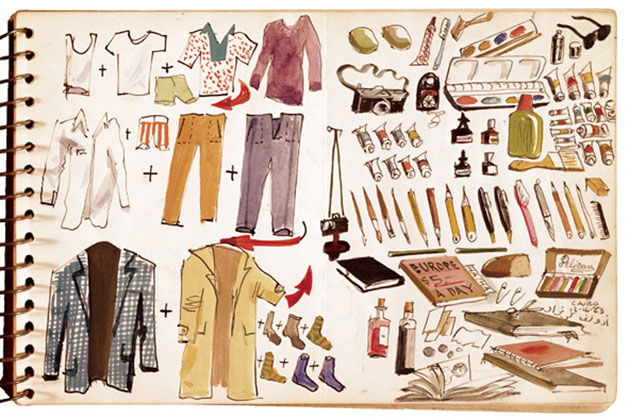
F/W’s twice-a-year traveling circus means for those working in it a time of excitement, lack of sleep, lack of food and lack of time to do and see it all. And it’s almost upon us once again. Packing for a month of being photographed and looked at, partying and being judged on chicness whilst hungover is a stressful process, and has many pitfalls. I decided to ask some friends of mine who are experts in it – and impart a little of my own advice too – on how to pack for F/W’s. Which of course rings true also to any traveling situation, just with slightly more dramatic extremes.

My number one tip, “never pack drunk,” should always be taken seriously, or you will surely live to regret it. I once packed for a trip with one of my best friends, and we may have accidentally drunk two bottles of wine, dressed up in everything I owned, tried to fit ourselves into the suitcase like contortionists, and had an impromptu photo-shoot. This was truly wonderful until I arrived in Paris for 5 nights on a freezing February morning to discover I had packed 4 bikinis, gold Ashish wedges I have never been able to walk in, a feather boa and a purple felt hat. And not much else.

My darling friend, a successful model Ben Grimes imparts her packing advice: “I’ve found that the best method of packing for fashion week is to pack 3 bags. One for NY, one for Milan and one for Paris. I don’t pack a bag for London as the bulk of my clothes are there. I also pack a pair of flats for each pair of heels, and make sure I have comfort clothes for when I’m not on show. Also, always scour your hotel room for missing shoes; every season I come back with an incomplete pair after repacking in a rush!“

Photographer and ex-model Candice Lake shares her tips: “After 13 years of virtually living out of a suitcase, I am still a horrendous packer! I pack too much and only ever wear half of the pieces I pack. I have however come up with a few fail safe ways to avoid the excess baggage costs:

1) Buy yourself mini tubes and bottles for pretty much every cosmetic product you use. There is no point on lugging your one litre value pack shampoo across the world. I get my favourite brand to send me all my favourite products in mini sizes and I always ask the hairdresser for mini sized shampoos. This cuts down the weight and the space in your luggage… leaving more room for clothes.

2)Plan your outfits. This is something I never do. I am actually flying to NY for the fashion week tomorrow and I haven’t yet packed or planned any outfits. This is silly, as I will inevitably take 7 pairs of shoes, of which I will only wear 3, and way too many coats and inappropriate dresses. I’d say to plan your outfits around your key pieces and don’t get tempted to pack every dress you own.

3) Always wear something incredibly warm on the plane. I never leave to the airport without my cashmere wrap and my Givenchy leather/alpaca jacket, which is so warm and comfortable, I could wear it to bed.

4) Never forget to take power converters.

Another friend who knows well the importance of packing, is Kerry McKenna, Charlotte Olympia’s right hand girl. She explains how there’s a shoe for every occasion in her collection: “For me fashion week kicks of with a flight to NY. A pair of flats act as my comfortable airport shoes. For long NY days of shows and sales appointments I wear my most comfortable classic high heels, so I opt for my sexy red satin Charlotte Olympia Paloma’s. Back in London I usually choose comfortable boots to save my feet for the fashion shows and the general running around. “

Paula Goldstein – Images courtesy of Adolf Conrad & ThingsOrganizedNeatly.tumblr.com

16/02/2012

A Silent Choir

A Silent Choir

Everybody knows that matter is made of particles and these particles can be split in many other micro-particles going to smaller and smaller. But what people very often omit to consider is the importance of lack, the emptiness, which is among all the molecules and is a part of every inanimate object or a living being. Emptiness is not only a formal concept, but also a generating element that creates balance. “There is no sound without silence, there is no silence without sound”, says Jacopo Mazzonelli (b. 1983, Trento), who recently opened his solo show entitled Coro (Choir), curated by Marco Tagliafierro.

The young Italian artist -with a musical education and a keen interest in alchemy- plays with full and empty spaces, pause and action, sound and silence.

In Petit (2011) Mazzonelli, using two plumb lines hanging from the ceiling and the pedals of an old tricycle running on a neon tube, recreates the suggestion and tension of the morning of the 7th of August 1974, the day in which Philippe Petit walked a tightrope between the Twin Towers.

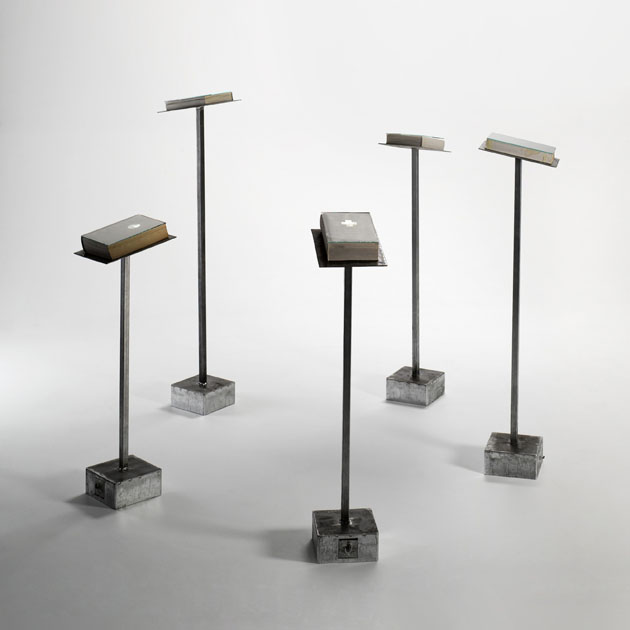
No sounds can be heard from the mouths trapped in geometrical shapes cut on the covers of the five volumes of Coro (2011). Each shape and each mouth – which cry, laugh, scream or declare – belong to a character: circle/crying baby, cross/Martin Luther King, triangle/Marilyn Monroe, square/Adolf Hitler, pentagon/John Fitzgerald Kennedy. The tomes, resting on five iron lecterns, are carved from inside and they treasure small screens that project video fragments of the characters.

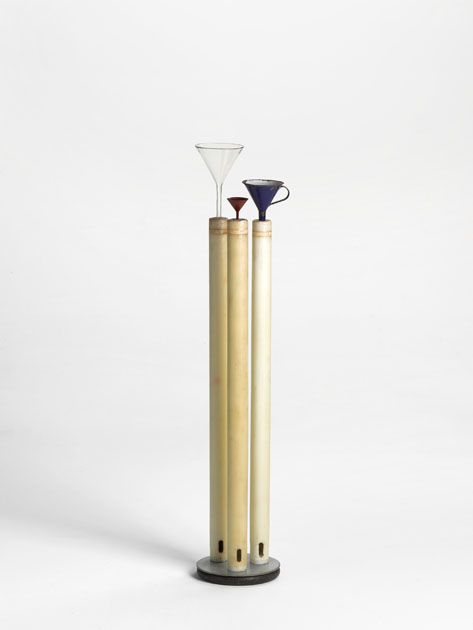
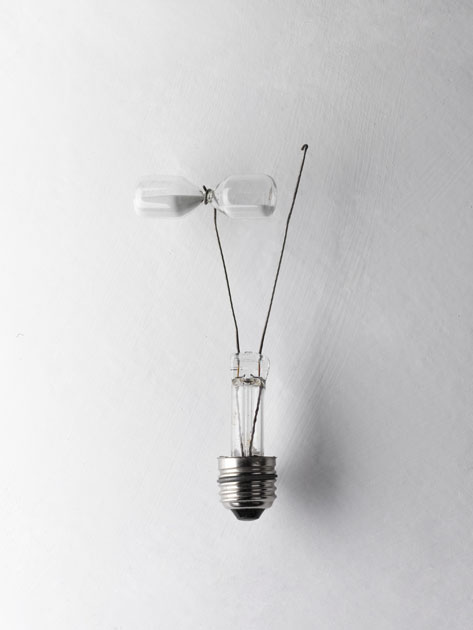
In Limbo (2011), in which an hourglass seems to be resting, hanging horizontally on the remains of a broken light bulb, the artist suspended a stream of time, creating a feeling of calmness accompanied by a latent and unexplainable tension. Just before closing, the exhibition path Inner (2011) catches my attention. By putting funnels on large candles (bought from an old rectory) Mazzonelli turns them into the pipes of an organ, which seems to be about to let the sound out.

Minimalism permeates all the exhibited works, but the minimalism of this young artist is not just a matter of aesthetics. All the installations are not only well defined works arranged in a clear (and sometimes ‘cold’) manner. They are the results of pondered thoughts along with a solid knowledge… not so common in the young – and even in the ‘not so young’ – artists.

The exhibition will run until March 16 at Federico Bianchi Contemporary Art in Milan.

Monica Lombardi – Images courtesy of Jacopo Mazzonelli & Federico Bianchi Contemporary Art