02/05/2013

Countdown to Fotografia Europea 2013

The 8th edition of Fotografia Europea, the yearly international event devoted to photography, is about to start; the countdown has reached its end and Reggio Emilia is ready to welcome Italian and foreign visitors for the long opening weekend from 3rd to 6th of May 2013. 
As each year, the festival hosts numerous qualified workshops and encounters with artists and professionals in the field, who will be asked to talk about the main theme: To Change. Photography and Responsibility, divided in four sub-issues: surprise, faith, estrangement, vision.

Among the people invited to exchange their point of views we count the writers Tiziano Scarpa and Dževad Karahasan, the biologist Yael Lubin and the artist Tomàs Saraceno. 
With a multidirectional approach, Fotografia Europea presents a wide range of photo exhibitions scattered around the beautiful, historical, and sometimes unknown, locations offered by the city. 
Palazzo Magnani proposes the show entitled Murder is my business with pictures by Weegee – pen name of Arthur Fellig – one of the most famous photo reporters of the ‘40s in New York; At Chiostri di San Pietro you’ll be spoilt for choice: from Anders Petersen’s reportage of the earthquake that hit the area in 2012 (exhibition curated by Studio Blanco in collaboration with Slamjam) to David Stewart’s Stuff that focuses on the eccentricity of people, and to Andrea Galvani’s Higgs Ocean, curated by Marinella Paderni, which reflects on the natural energy transfer with the artist’s typical poetic approach.


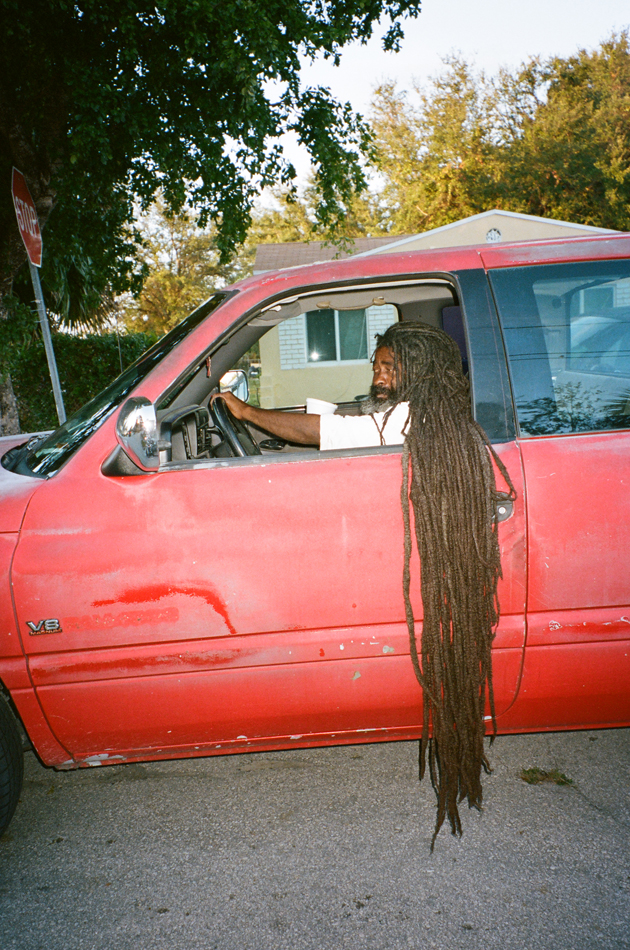
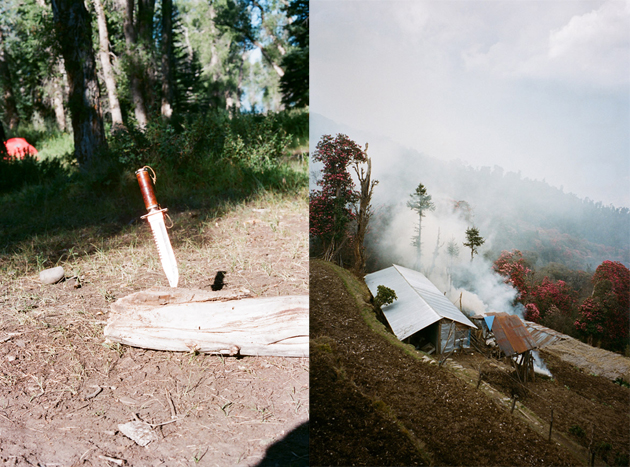
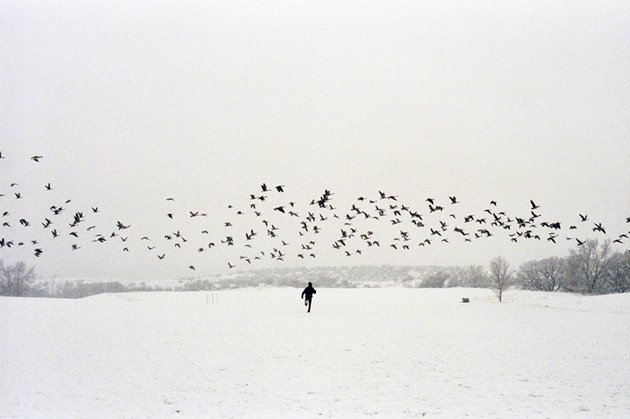
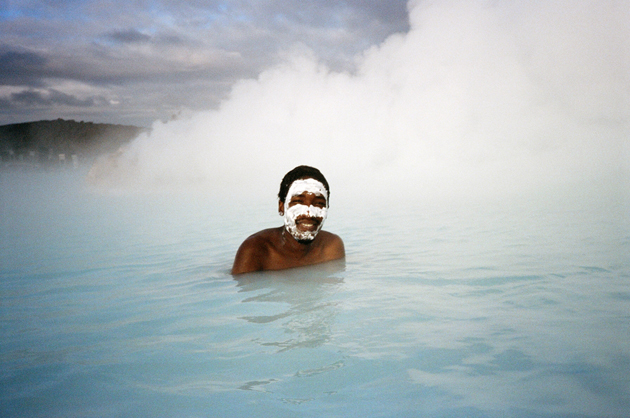
The list is too long and could go on and on, but we cannot avoid closing this overview talking about the first Italian solo show by Peter Sutherland (b. 1976, Ann Arbor, Michigan), entitled Too Young To Care, coming from the collaboration between WONDER ROOM and Studio Blanco, which will be hosted by Spallanzani’s Collection (Musei Civici, Via Spallanzani 1, in the city centre). The American photographer will present a series of unreleased images and archive works that retrace a both intimate and evocative artistic path.

“I have been taking pictures since about 2002.” Sutherland told us. “Around this time my father passed away and photography was a place to focus my energy to, and avoid thinking about that part of me that was lost. I wanted to photograph everything I knew as a child. I did this over the following few years, and it became the backbone for everything else I would do. I have never wanted to control situations or carry a heavy camera, I just want to enjoy what I’m doing and get some poetic images along the journey. I want to go out and explore. I have always been interested in youth cultures because they give kids a chance to express themselves. I grew up skating and snowboarding, and learned so much at a young age from taking part – I was born at a good time, when I started skateboarding, no one had done a “kick flip” yet… -, but things are different today, everything is global and it’s all about the Internet and digital sharing of information.

He explained us how he liked the change: “It inspired me to evolve creatively, making films, installations and then back to photography. I take cellphone photos, do all the social media stuff and appreciate the way it is changing and speeding up trends and the way images behave/exist in the world in general. As for responsibility, we are reconsidering what that is. Once I was listening to John Baldessari being interviewed in an old episode of Art21. He was saying that he doesn’t think images should be owned. He thinks that would be like owning words and wouldn’t make sense. I think I agree with him: if you are uploading images, you are sharing them and you loose control over what happens to them.

I am very interested in things that happen because of photos, not who owns them. In 2006 I took a photo of a deer drinking out of a storm drain in the city. This photo became the cover of a Korean magazine, four years later a beautiful girl wrote to me on Facebook and told me she really liked this picture, she was living in Nepal. In 2010 I visited Nepal, 3 years later we were married in Kathmandu. Keep shooting photos, you never know!”

The exhibition will run until June 16, 2013.

Monica Lombardi – Images Peter Sutherland 
02/05/2013

European Fashion Schools: Polimoda

A while ago we spoke about the phenomenon of fashion schools. What is it all about? In what lies the allure and why do people cross country borders to attend them? First out in our series about European fashion schools is the famed Italian school Polimoda. The Blogazine had the pleasure of speaking with the school’s dean Linda Loppa about education, the business, social media and the advantages of being located in the heart of Tuscany.

A centre of excellence always in close relation to the business world – since 1986, Polimoda International Institute of Fashion Design & Marketing has been internationally renowned for its high-quality professional training and lately also for its beautiful location at the Villa Favard in Florence. Design, patternmaking, marketing or communication, undergrads, postgrads, masters, orientation or specialisation courses: they offer it all. With 55% of the 1200 attendees, the Polimoda student body also confirms the statement of eager fashion enthusiasts going across frontiers to attend a special, chosen, fashion program. The positive adjectives around a renowned school are many, especially with front faces carrying names such as Ferruccio Ferragamo and Mrs. Loppa herself, but why should one choose Florence and Polimoda?

“Many students come from big modern cities with shopping malls and arcades and yet here, they find a creative tranquility where they are able to reflect on their future careers and find inspiration!” Linda Loppa mentions heritage from moments such as the Renaissance and the uniqueness of the small historic city as impacts on the way one thinks and works. “Obviously we cannot forget Italian brands such as Gucci, Pucci & Ferragamo that represent the dream and signature of Italian fashion, and Florence that offers a beautiful and stimulating environment, but the main reason to come here really is the high quality of education. Our communication, messages, website and business languages are all modems that positively project brand strategy.”

The Blogazine also spoke with a student from the Fashion Marketing & Communication program about being a student at Polimoda. “I had heard a lot of positive things about the school, and after researching other Universities in Milan, I decided that Polimoda is the best in my field. It’s not only a University but also a career centre and a brand – their brand image is impeccable. When I say I’m a Polimoda student, people are impressed.” The student mentions that her education has helped her narrow down her choices of interest for her future career and says that some courses might be more useful than others, but that her program in the end feels relevant to what a profession in the industry will require. “They want us to succeed, because when we do, Polimoda does too. However, it is a two-way street: as students we can boost the school image as well as we can ruin it. They are very careful in which students they present to external companies for internships.”

Besides a long list of completions, Mrs. Loppa grew up in Antwerp, another city well known for forming fashion excellence. About how the city might affect her management at Polimoda she says that her mature strategies aren’t so much dependant on one city’s influence as it is because of all her previous experiences together. “I have been in fashion a long time and worked in many different aspects of the industry: from retail to education, worldwide distribution and also museum management and curating. What I learned from all this wonderful experience I felt, and still feel, can be easily translated to Polimoda, through my directorship.” Looking at the more academic programs, Linda Loppa means that the importance of an education directed specifically towards fashion lies in the complexity of the business: having a lot of tools isn’t enough to communicate fashion, it also takes a lot of skills, research and understanding of this specific business. “The fashion business is more complex than 10 years ago. Branding, communication, design, production, distribution and store management have to be well balanced for the end consumer. That’s why when studying one of these facets, it still has to be seen in a broader context.”

As for almost any industry of today, the expressions of new media, digital PR and social media are everyday encounters, and no matter what position you aim for, the social sphere has added another aspect to the pace of the fashion industry. “Well, if you work in the fashion business, this speed is not unusual. Therefore we are used to work and think ahead. Thanks to the Internet we are updated on every change that happens in the world and as a consequence our faculty challenges the students to work in the business of tomorrow, not the business of today”, says Loppa when discussing the matter. What regards following a path in fashion she finishes by saying: “A good fashion school should offer its students the technique to develop a personal opinion based on knowledge, and an open mind-set and intuition will help develop an interesting career.”

At Polimoda you find an international and modern direction and maybe it is somewhere in the clash between historical buildings and modern technology that the charm of the school, as well as the fashion industry, lies.

Lisa Olsson Hjerpe 
01/05/2013

Dear Diary – David Sedaris Returns

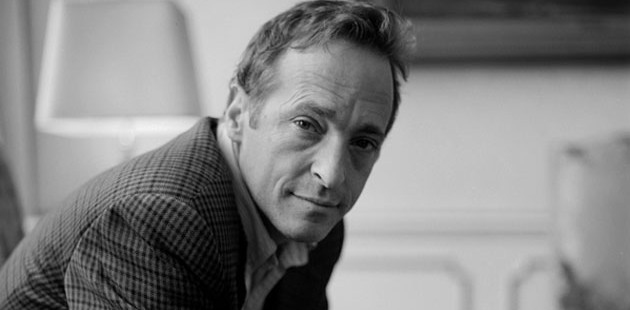
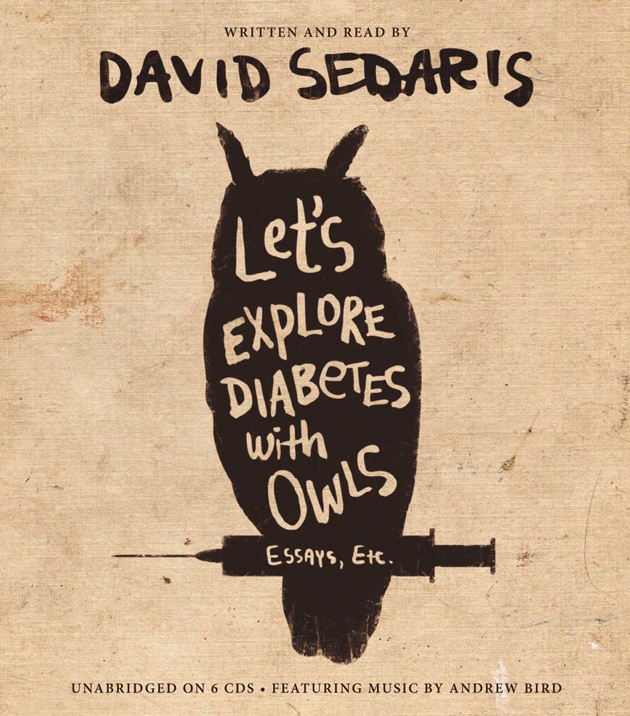
At 56, David Sedaris still keeps a regular diary. “It’s how I start the day,” he recently told Fresh Air’s Terry Gross. “By writing about the day before.” He’s kept one since 1977 and only misses one or two days a year. Most of his essays and stories come out of it. More than 130 volumes of his diary entries are tucked away and will remain private (at least in his lifetime, wink wink). Talking to NPR about his new book, Let’s Talk Diabetes With Owls, he recounts the story of a seven year-old who once asked him: What’s the point of writing things in your diary?

“That’s a question I’ve asked myself everyday since September 5th, 1977,” he said. “It’s not that I think my life is important, or that future generations might care to know that on June 6th, 2009 a woman with a deaf, drug-addicted mother-in-law taught me how to say I need you stop being an asshole in sign language.”

It’s a question that keeps him going. Sedaris has been a lot of things: an art-school dropout, a meth-head alcoholic, a Manhattan nanny, a closeted gay teenager in rural North Carolina, and, most recently, a volunteer trash collector in West Sussex. But he’s best known for his witty observations about the absurdities of everyday life. No other writer today can touch his sought-after mix of self-deprecation, intuition and resolve. His books, which include Naked and Me Talk Pretty One Day, have sold nearly ten million copies since he was first discovered by Ira Glass in Chicago in the early 90s. His readings sell out in minutes. Let’s Talk Diabetes With Owls, his first new collection of non-fiction in five years, won’t make it any easier to get a ticket.

There’s certain topics Sedaris won’t touch, sex and politics among them. Even in his journals, he said, he refers to having sex as “getting romantic”. It’s interesting coming from a guy who has no trouble writing about smoking meth in an abandoned warehouse and making a chair out of pubic hair. “There’s the ‘you’ that you present to the world, and then of course there’s the real one,” he told Gross. For all of his assumed unveiling, Sedaris likes to keep most things to himself. “People say to me, ‘Oh, you’ve exposed everything about you’— no I haven’t. I just give that illusion.”

Lane Koivu 
30/04/2013

My Little Pony Burgers – Fast Food With a Twist

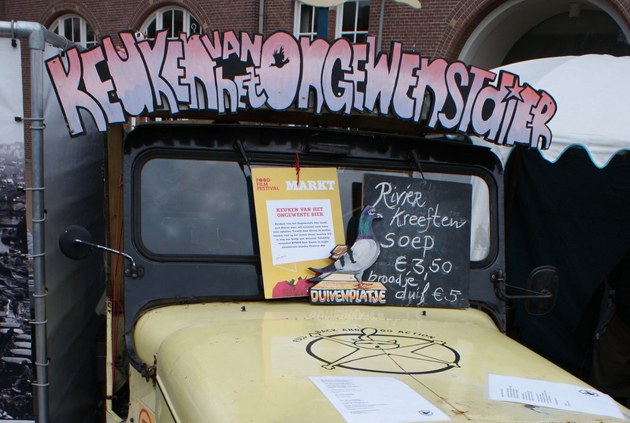
Last month the third annual Food Film Festival took place; a three day festival aiming to gain and share knowledge on a more sustainable food system. Part of the festival was a food court with trucks of street food with a twist, such as ‘De Keuken van het Ongewenste Dier’ (The Kitchen of the Unwanted Animal, TKUA).

Starting out as an art project, TKUA questions the eating habits of today’s consumer, that are a bit odd to say the least: most people eat meat that comes from factory farms, but look the other way when they have to face the origin of their cheap burgers. At the same time animals that are being put down for other reasons, but that are perfectly edible and often of better quality, are being discarded of since apparently they are not good enough for us.

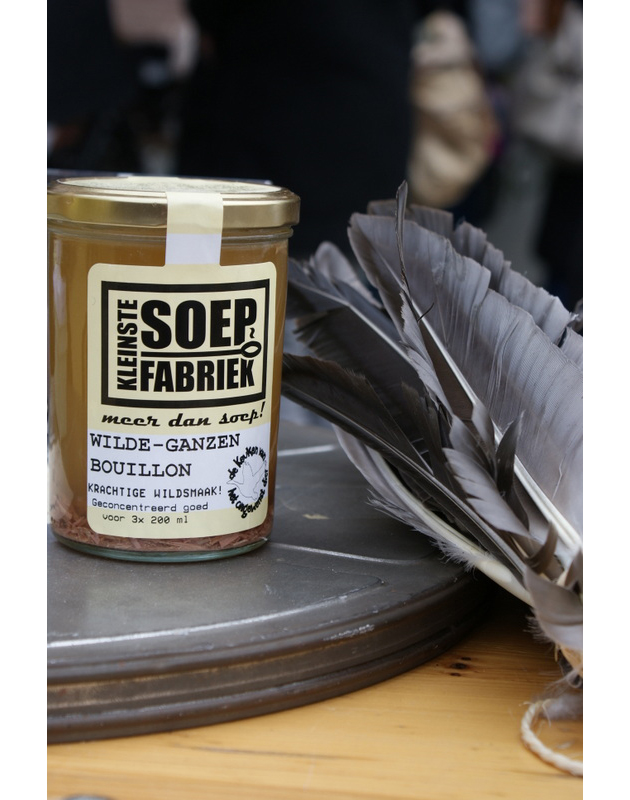
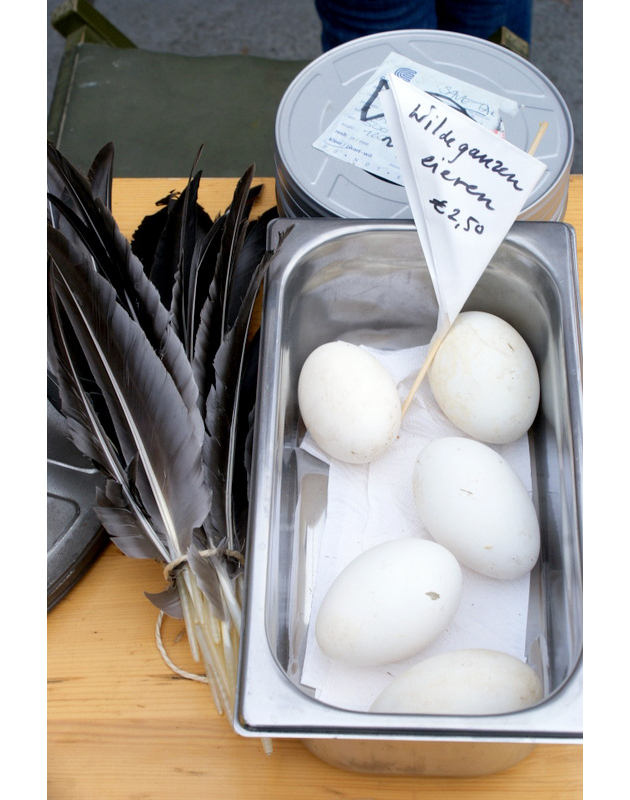
These unwanted animals are turned into tasty fast food by TKUA. From invasive species such as crayfish, Japanese oysters and muskrats that threaten local ecosystems to the infamous ‘Schiphol geese’, which circle Holland’s biggest airport and get shot on a daily basis to prevent serious accidents. TKUA turns them into soup, croquettes, and uses their big eggs for omelets. Other animals used are rabbits, pigeons, and deer. But probably the most controversial are their ‘My Little Pony burgers’ made from retired race horse and pony meat.

After the horse meat scandal in Europe, these became even more current. The clever name really sums up the Dutch (and probably European) sentiment towards eating horsemeat: it’s ‘sad’ or ‘wrong’ since it’s considered a noble animal. Yet Dutch horses, as well as the other animals aforementioned, have generally lived a much better life than animals from factory farms. They have received the best food and care, and their meat lacks those nasty hormones and antibiotics. Your typical meat from the grocery store came from an animal that had been treated poorly, lived in a contained space, probably saw little to no daylight, got forcefed and injected with several medications.

So the real question is: would you rather have that horse discarded of and taken to destruction (after which it will be ground up and served to other animals), or taken to the butcher after which it will be turned into a hearty meal by loving hands?

Anneloes Bakker 
30/04/2013

New Fashion Photography

Fashion photography has changed a lot in the last decades of the 21st century, not only for the arrival of the digital approach, but also in deep for the revolutionary role of media and the appearance of new, previously un-explored avenues of thought.


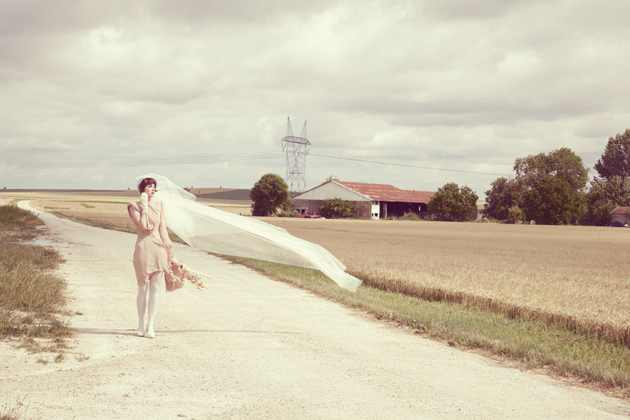
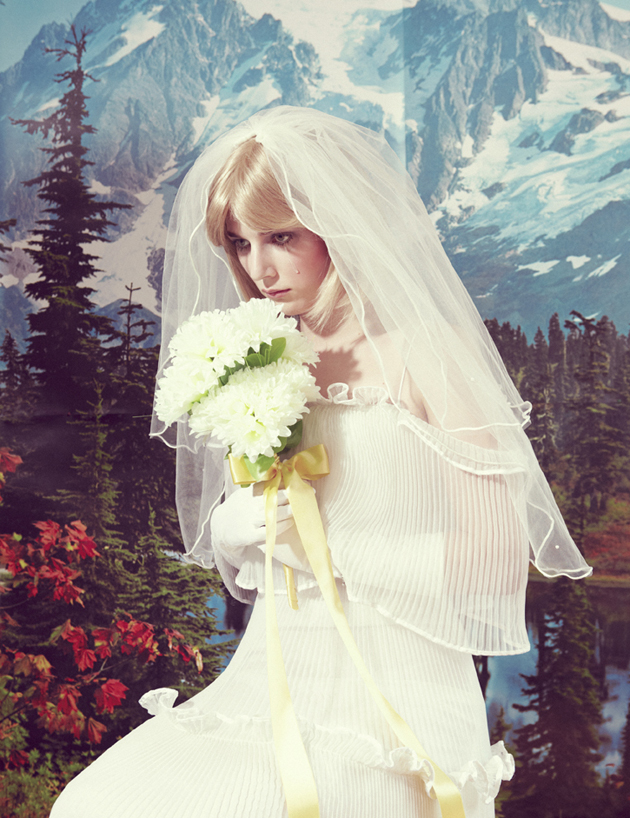
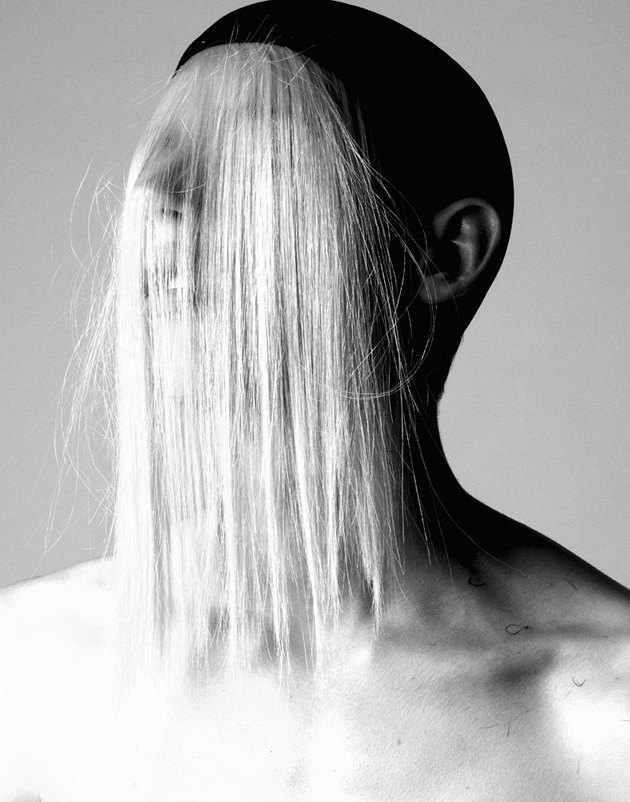
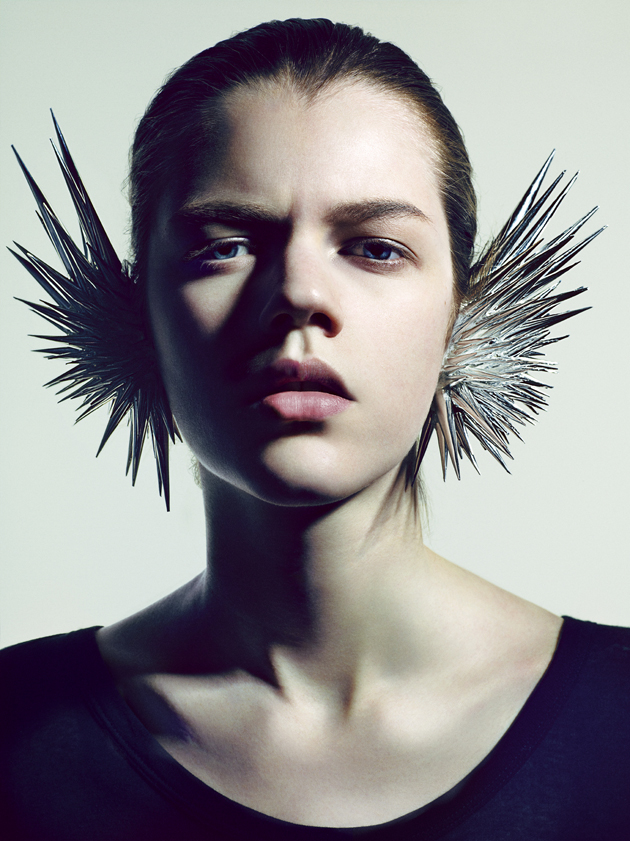
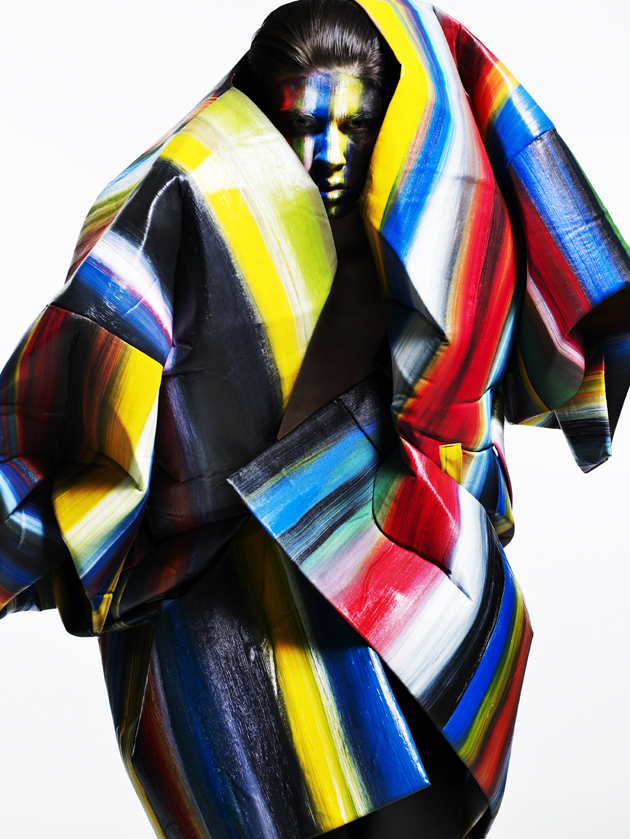
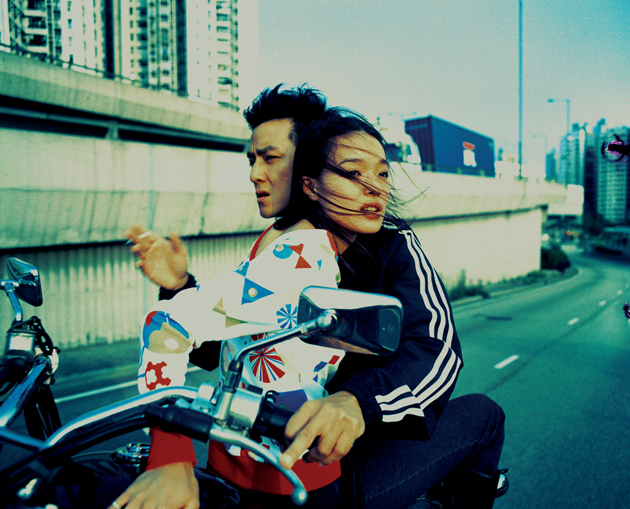
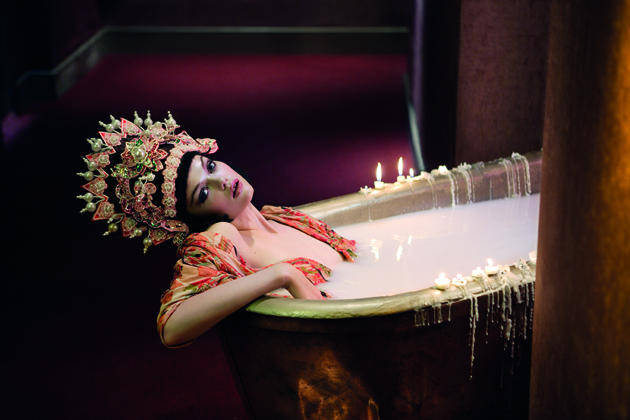
Prestel Publishing decided to release a book for celebrating all those new fashion photographers who are making a mark in our times. So, New Fashion Photography has been launched; a 224-page hardcover volume that shows, pages by pages, the images of 30 artists such as Nick Knight, Tim Richardson, Rankin and Miles Aldrige, together with a younger generation like Kourtney Roy and Daniele & Iango. The book’s not only about breath-taking photos, but also exclusive interviews combined with commentary.


The publication got a cover picture by LaRoache Brothers, and it has been edited by Paul Sloman, an art director from the fashion book trade, who has curated in the past volumes like Isabella Blow, Isabel Toledo and Gothic: Dark Glamour. Tim Blanks, well-known contributing editor for Style.com, wrote the introduction and several celebrities make their appearance among the pages of one of the most iconic fashion tome out this year, from Lana Del Rey, Iris Strubegger to Carolyn Murphy, they all have been portrayed through new talents’ lens.


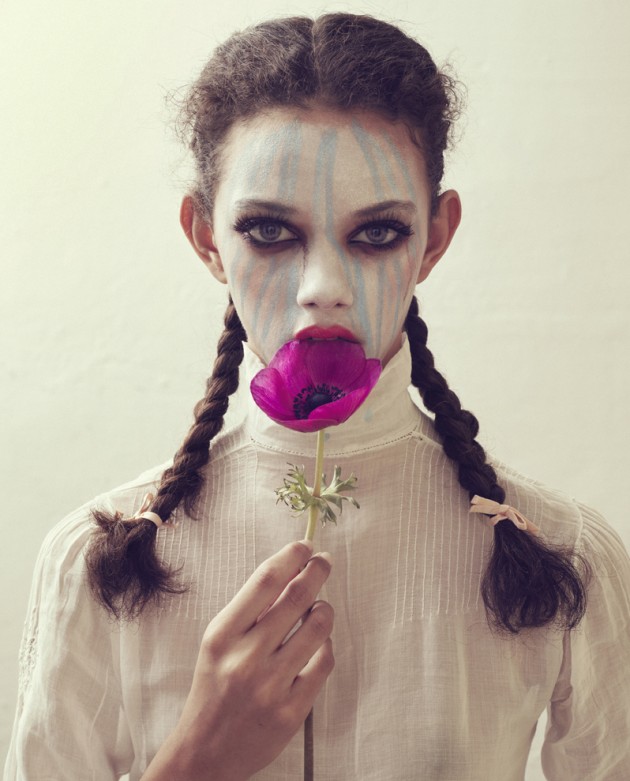
New Fashion Photography has been presenting at Contributed, an art gallery in Berlin. All the pictures included in the text are part of an exhibit that will last until May 18th 2013, the best images will be available as limited edition fine art prints.

Francesca Crippa 
29/04/2013

Guest Interview n°47: Studio Blanco

The Blogazine met Sara and Valerio Tamagnini – the founders of Studio Blanco – to discover their personal recipe to deal with art and creative direction of commercial, editorial and cultural projects, linking together freshness and unconventionality, along with an international network of creative minds.
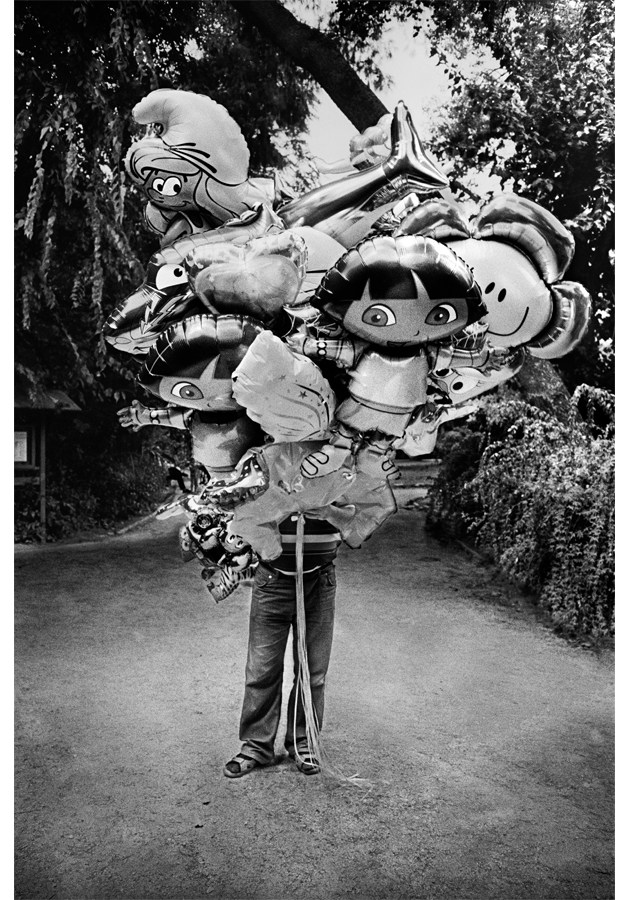
Creative crossroads and artistic bonds, along with an extremely professional and distinctive approach are just some keywords of your activity. What led you to form a team and which are the common and different aspects of your personalities?
The studio began in a very simple and natural way. We basically felt the need to start doing something by our own – at that time I was mainly a promoter of events and club-nights while Sara was a freelance graphic designer. We decided to split a small space (around 30 sqm) and to try start doing something together: I used to do parties and consultancies for entertainment brands, so sometimes I needed also some graphics and I involved Sara – that’s how it started. Then step by step we had the chance to start developing real projects together: the first years were very hard as we used to work from 10 to 10 trying to mix commercial assignments (for the money) and cultural projects (for the soul or at least the pleasure). This was not a marketing thing but more the way we intended (and still intend) our work.

In your statement you underline your choice “to be placed on the margin – both geographically and mentally”. What does it mean for you from a professional and personal point of view?
Our studio is in Reggio Emilia, which is a small town in the North of Italy between Milan and Bologne, so we are not in the centre of anything: our area is more about doing than appearing or talking and we’re in the middle of the “Pianura Padana”, so everything’s flat, quiet and there’s always a sense of nostalgia – the one that Luigi Ghirri magically stole to his images.

So we are on a margin (as we are not in Milan or Rome) of a margin (Italy is not really the centre of the world), but at the same time we like the fact that Reggio Emilia is very well-located, so you can easily move to Milan, Bologne, Mantova, Verona, Florence (…) and it’s stimulating. Ok, to be honest with you, we are not in love with our town, but growing here helped us to understand the basic needs and sometimes after the Milan – Paris – New York and the “arty farty” circuit, the back to basic of our town – the fog, the ordinary life, the local food, the friends – is a great way to come back to reality.
And then, as Godard said “the margin holds together the page” which means that you can look to the text and the contents on the main area but without the border you can’t have the whole page. We like the approach in which the details are important as the most direct things. And we also like to be one step back, behind the curtains, not in the front row.
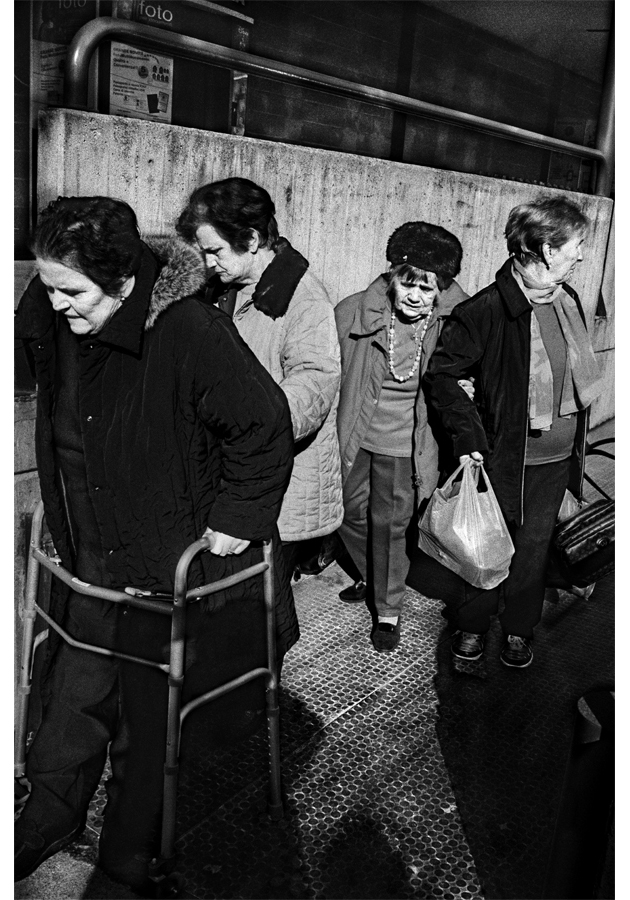
Have you ever considered of moving to another place anywhere in the world?
Yearly! But in the end we remain here so it must say something. Anyway, staying here is a struggle sometimes because we felt the need for more pressure, life and energy as you may have in a big town. But then again, being here means that you don’t lose your time in too many PRs or events and you focus your time on doing a good work, on developing a new project – and this is really important for us.

You established your studio in 2005, so it’s now your 8th birthday. If you would make a recap of your experiences until now, which are the main events/projects that influenced your professional growth?
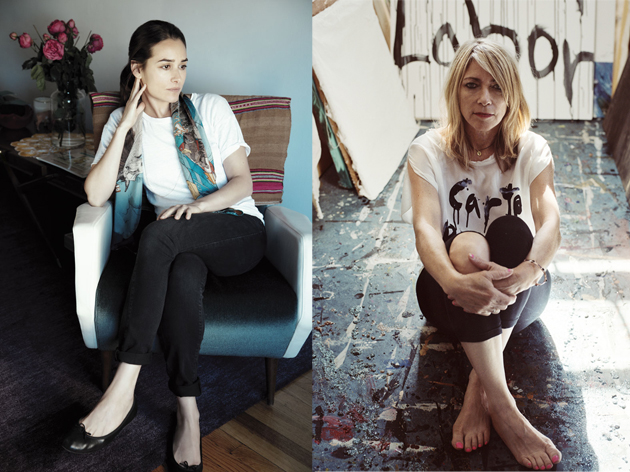
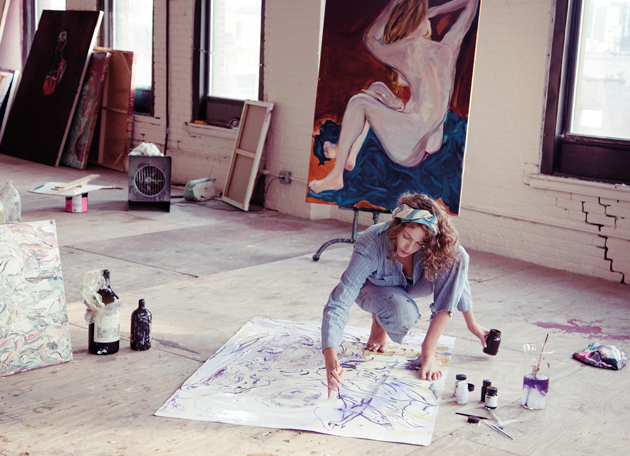
I would say that the Carte Blanche capsule collection project for Sportmax is a good example of a small indie project born in 2008 that now has arrived at its fifth edition and it’s very well considered. Carte Blanche started as a collaboration with Christophe Brunnquell (former art director of Purple magazine) and then – year after year – we involved a lot of interesting personalities such as Kim Gordon, Lola Schnabel and Ambra Medda. It’s also really interesting because we are giving “carte blanche” to the artist in his/her collaboration for the project, but we also received a “carte blanche” from the brand as we curate the project from A to Z – from the identity to the selection of the personalities and so on. We grew up with Sportmax and this is a collaboration that make both of us proud of.

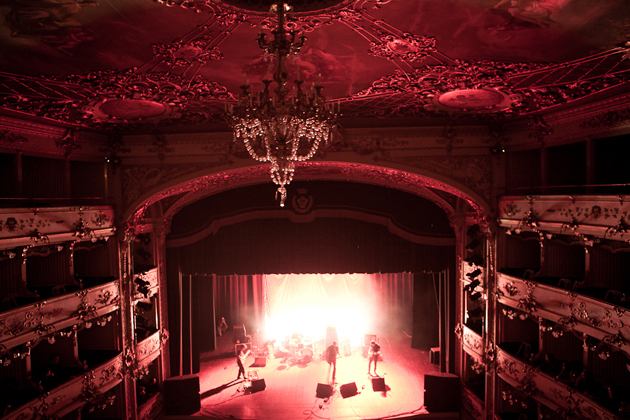
Then there are a lot of other projects we remember with pleasure: Control+C in Carpi (MO), a musical-based festival we art directed with Corrado Nuccini for 5 or 6 editions and in which we involved musicians such as Broadcast, Prefuse 73, Plaid, Nathan Fake, Apparat, Junior Boys, Sylvain Chauveau, Swod, Hauschka, Dustin O’Halloran, Johann Johannsson, Josephine Foster, The Field and many others.

And then the first italian exhibitions of Mark Borthwick or Christophe Brunnquell, the Recession editorial project in which we asked 35 international artists to interpret the recession theme through words, images, artworks and music with participants such as Richard Kern, Ed Templeton and Ari Marcopoulos.
Is there any creative person – old master or contemporary artist that you’d still love to work with?
Luigi Ghirri, Daido Moriyama and the Provoke members, Max Richter, Ennio Morricone, Ed Ruscha… But the list could go on and on and on.

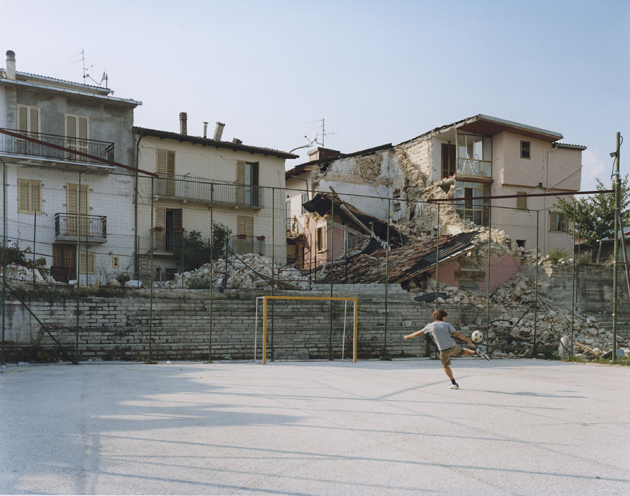
You’ll soon be at “Fotografia Europea” (Ed. Note: the yearly international event devoted to photography held in Reggio Emilia) presenting TO BELONG, the project  - arranged with the Swedish photographer Anders Petersen, in collaboration with SlamJam – which is strictly connected to your home town and the earthquake that hit the area in 2012. Could you tell us something about the exhibition?
The earthquake of the last year really hit very hard our region. It was not only about the dead people, the damaged buildings and all the other scary things you can associate to each earthquake. It was also about the sense of impotence, the ordinary life as a gift and not as something that you can take for granted. Me and Sara had our first baby last May and for me it was strange to think about how life and death are very close to each other.

Anyway, we decided we had to do something, but we wanted to help in our own way, with our language, not trying to organize another benefit event or something that could sound like a fake. We wanted to do a project about the memory and saw this beautiful book called “Un Paese” by Paul Strand and Cesare Zavattini about the small town of Luzzara – near Reggio Emilia. The book was done in the fifties and then celebrated again with other photographers such as Ghirri and Stephen Shore. We thought of doing something similar starting from the earthquake and trying to shoot people and places from the hit area, involving someone that was not italian, that we appreciated and that had a special sensibility in portraying people in trouble: Anders Petersen.

I’m copying here parts of the beautiful text that our friend Cosimo Bizzarri wrote about the project – which is far better than all my words:

“On May 20th, 2012, at 4:03:52, a crack opened in the earth’s crust under a village near Modena called Finale Emilia, where for more than a thousand years the territory of Emilia has ended and the rest has begun. It lasted for twenty seconds. Then the streets quickly filled with men and women in their pajamas, scared to death. All but seven, who would never come out.

Over two months, 2,300 aftershocks left almost thirty people dead and a society in shock. Cars were smashed by the debris of the buildings under which they had been parked. Jackals stole uniforms from rescue teams in order to pillage the evacuated houses. Those who had been evacuated screamed at the other jackals: the TV crews. Palaces without facades, whose furniture could be seen from the street. Castles and bells towers torn down without dignity with dynamite. Everywhere, barriers and dust.

A people that wakes every morning on a broken land can have only one goal left: pull it together. So week after week, doctors went back to heal their patients, factory workers to cast their girders, cheese makers to sell their cheese and builders to erect houses.

Studio Blanco contributed with what they do best: a visual story to join together Emilia’s faces and places, as if to ward off the possibility that the crumbling of the land could be followed by the crumbling of the people who lived on it. To tell this story, they invited Swedish photographer Anders Petersen, a man who has nothing to do with these places, but who has made raw and moving reportages about vulnerability for more than forty years. Over eight days in November 2012, Studio Blanco brought Petersen to toll roads and museums, riversides and devastated squares, letting him photograph wherever, whomever, however he liked, with the idea that only an outsider could find and capture the spirit that keeps these lands together.

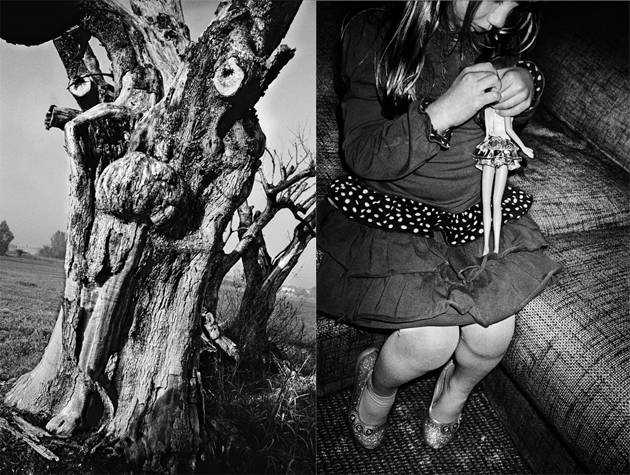
A young contortionist, a knotty tree trunk, two elderly people dancing in a ballroom. One year after the earthquake, Petersen’s photos create a small poem about Emilia, which sews up that deep crack and returns this land, whole, to the humanity that has always belonged here.”
Monica Lombardi – Images courtesy of Studio Blanco, Anders Petersen, Sportmax, Estelle Hanania, Carlotta Manaigo, Matteo Serri, Ari Marcopoulos 
28/04/2013

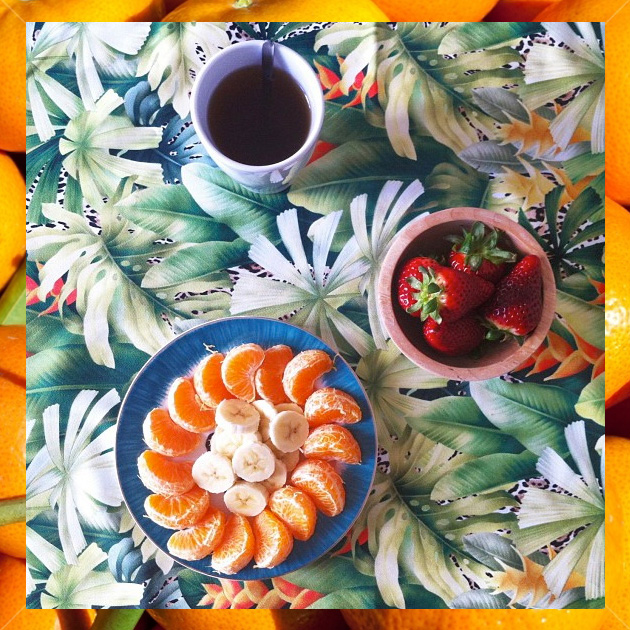
Sunday Breakfast by Love For Breakfast

If the tropical atmosphere doesn’t come to you, bring it into your house. Sometimes happiness is in the little things.

Alessia Bossi from Love For Breakfast 
26/04/2013

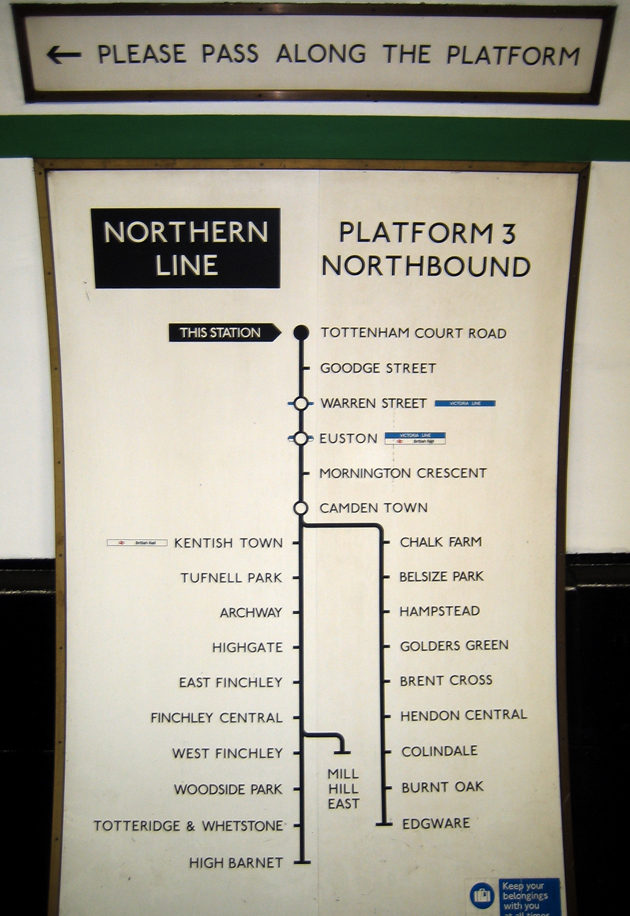
On the Northen Line

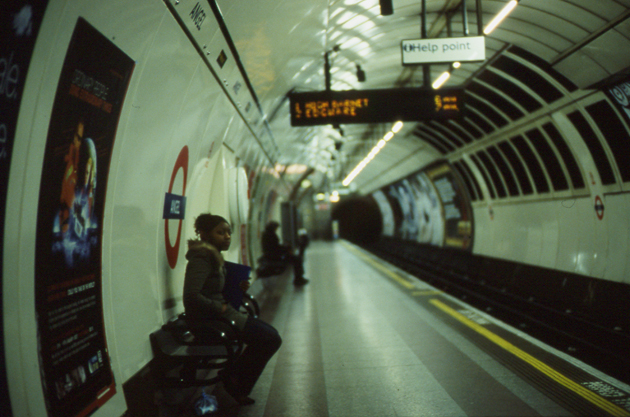
“It’s morning time on the Northern Line”. Sometimes a phrase in a song is enough to give you an idea of a place, of its look, even of its smell. If it’s true that every journey has its soundtrack, Jamie T’s “Alicia Quays” is the perfect song if you want to land on the silent chaos of London for six minutes, represented the best by the Tube as its most descriptive scenery. Jamie who? I’m talking about Jamie Treays, stage named Jamie T, one of the roughest diamonds that the underground London has given birth in the last decade: sort of a crazy, brilliant minstrel of London’s working class, especially the one of the East End zone, where people talk with cockney accent and the use of words like “chav” and “scally” is even more frequent than the use of common conjunctions and verbs.


50 stations, the most of them subterranean, 36 miles of rails and tunnels: Northern Line, otherwise known as the “Black”, for the color on the metro maps, transports 252 million people every year. Ex “Misery Line” – as it was named in the 80’s and the 90’s because of the awful conditions of the rails and stations – today, in spite of its name, is the most extended line of the Tube down south of Tamigi, and the line that reaches the most Southern station of the Tube, Morden. From here to the Northern border, High Barnet, the Black slashes an entire city underground, stopping even on the famous (in good as in bad) stops of Camden Town and King’s Cross. Works starting on 2015, the line will be extended until Battersee, in South West London.


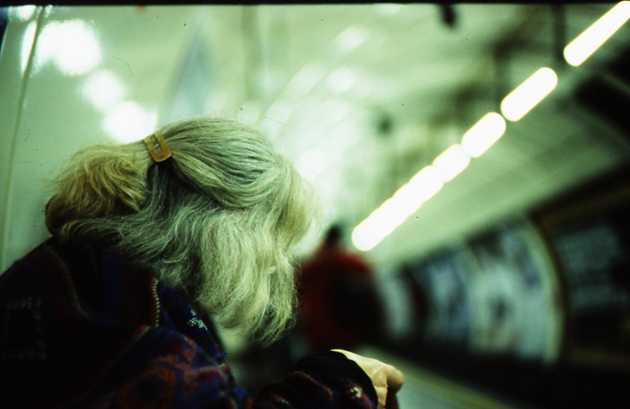
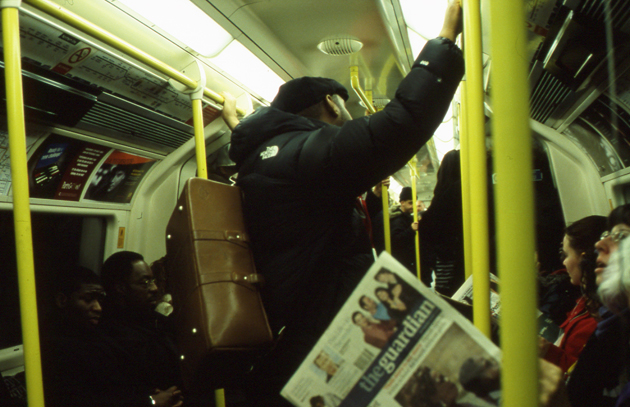
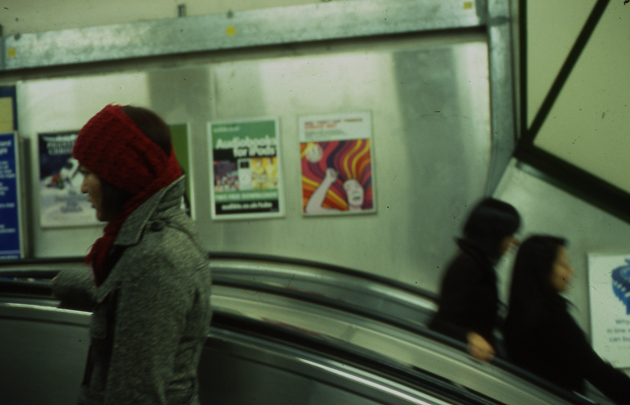
Northern Line tells stories about the lives of workers and businessmen, of the aged and the young, of happiness and solitude. While Jamie T sings about it (dedicating a whole song by the same name), journalist William Leith writes about it in his book “A Northern Line Minute” like following: “People never tell you to have a pleasant journey in the underground, just as people will say ‘enjoy your meal’, but never ‘enjoy your cigarette’ if you’re a smoker”. And this instead, is a slightly poetic article, dedicated to the escalators of Angel stop, along the Black. These stories confirm that even, maybe above all, in a dark, subterranean and lonely place (in spite of the thousands of people who use it everyday), one can find out urban poetry from human souls. Just there, where people stare at the ground without talking to anyone and, maybe more often than they’d care to admit, they find themselves thinking “What am I in my own dear eyes?” (Jamie T, Alicia Quays)

Antonio Leggieri – Photos Daniel J. Wolpert & Paul Downey 
25/04/2013

Daring to Be Baring

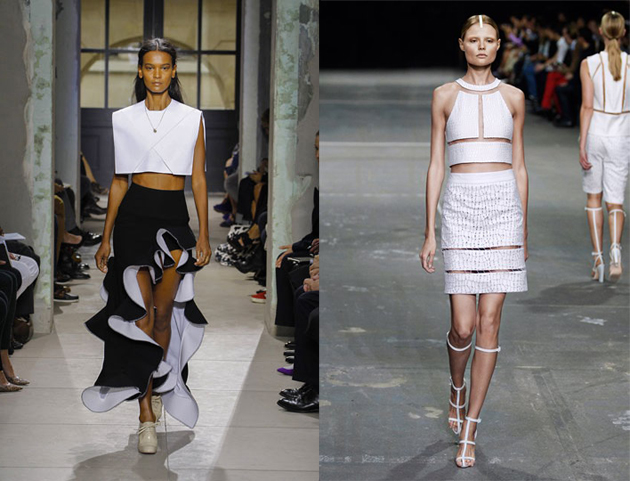
Introduced to the fashion scene for the first time during the 40s the crop top went from conservatively tailored to comfortably sexy when it peaked in popularity during the 70s and 80s thanks to Flashdance and Madonna. Finding a new, more preppy crowd in the 90s through the film Clueless the crop top became an essential before leaving the scene, until today.

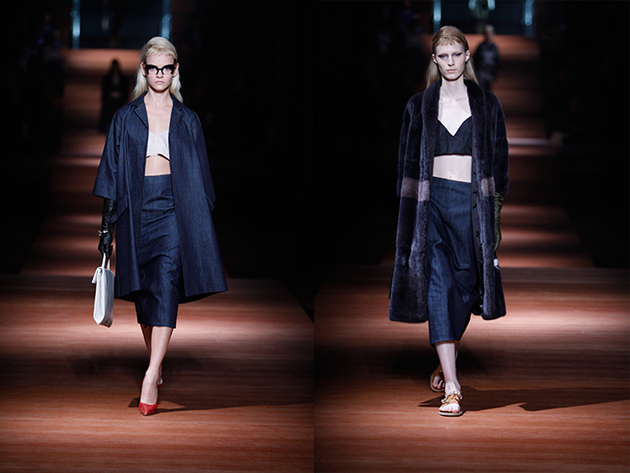
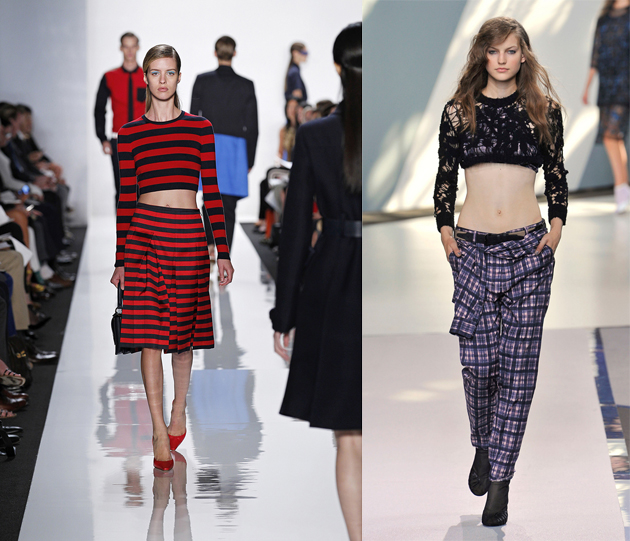
The current cropped creations are far more versatile than the baring ones in the last years of the 1900s, although interesting enough, some of the designers of today seem to get their inspiration from the last years of the past millenium. Michael Kors for example introduced a long sleeved crop top that combined sophistication and sport. Miu Miu designed a slinky black as well as white deep v-neck crop top steering the mind to boudoir lingerie and creating a simplistic yet sexy attire. Once again underwear is outerwear.

The crop top for 2013 is being presented in a wide range, in addition to the sporty elegance and boudoir lingerie there is bollywood exoticism at Marchesa and grunge crochet at 3.1 Phillip Lim. However the most common feature is minimalism; a simple color in a geometrical cut but in luxurious material. At Balenciaga, crop tops had been produced in boxy cuts that loosely hung on the body in again a simplistic manner. Geometrical shapes could also be spotted at Alexander Wang who used the illusion of cut-outs to set his crop top apart.

In a way the circle of the crop top has been completed by the 21st century versions. It started its journey being tailored and in combination with high-waist, which in the end is similar to the fashioning of the crop top today. However the usage of the top has become more fine-tuned, using more exclusive materials that escort the item to the walk-in closet of a modern fashion icon.

Victoria Edman 
24/04/2013

Making a Statement

Wearing shirts with slogans or other prints seem to have become popular on the street as well as on the catwalk. It is however not the first time that slogans have left the world of advertising, becoming part of our apparel.

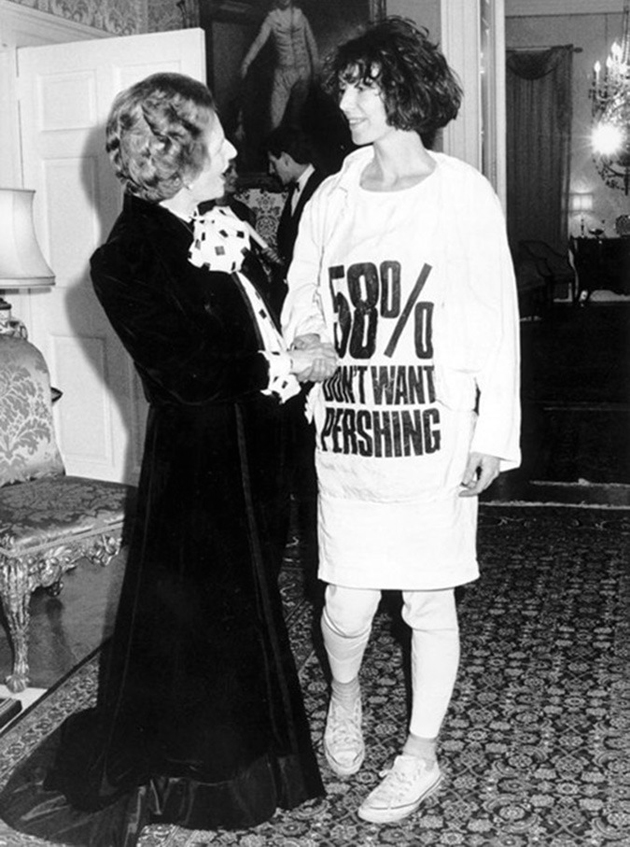
The graphic shirts first saw the light in the 1960s in a shop on London’s Kings Road set up by Tommy Roberts and Trevor Myles. The prints were of Disney images including pictures of Donald Duck and Mickey Mouse. In the 1970s Vivienne Westwood and her partner Malcolm McLaren produced T-shirts with political messages to sell in their notorious shop. The most popular design was a swastika and an inverted crucifix under the word “Destroy”, which was named as “the ultimate punk-rock T-shirt” by McLaren. During the 1980s, slogan shirts with political messages continued their popularity before losing their impact in the 1990s.

In 2006 Henry Holland made a series of slogan shirts with inspiration from the world of fashion branded with provocative messages such as “Do Me Daily Christopher Bailey” or “Cause Me Pain Hedi Slimane” They were modelled by his friend Agyness Deyn and stores like Topshop quickly made copy-cat editions re-introducing the slogan shirt to the mainstream fashion scene.

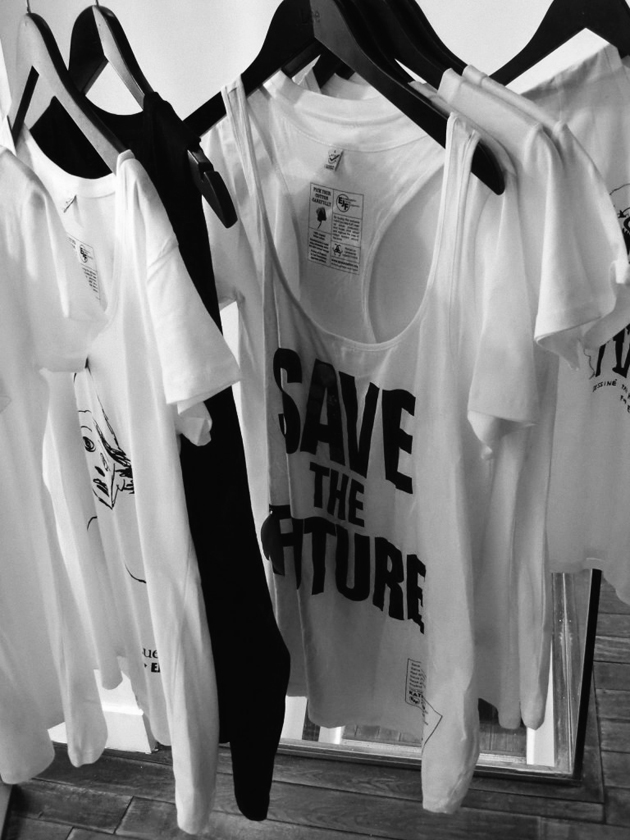
A shirt with a slogan functions as a way for people to convey their thoughts, opinions and even personality to the world on all kind of questions. The slogan shirt is a way of expressing a viewpoint without saying a word and in a society where fashion obtain so much media attention a simple shirt can make a statement and reach over a million people around the world. Something that will separate one man from another making him into an individual and not a follower.

Victoria Edman – tops on a hanger by thegreeneyeoffashion.com