05/06/2013

Ariel Pink’s Teenage Symphonies

Ariel Pink has never been easy to digest. Viewed by critics and fans alike as a scuzzed-out L.A. drug zombie, his music can come off as confusing, charged full of pop hooks, nonsensical lyrics, unexplainable instrumental wanderings and spoken-word interruptions, and a fair dose of 60s folk-pop references. Many of his songs would fare well alongside The Byrds and Donovan on am radio, while others are so bizarre and nonsensical that they make The Butthole Surfers seem as chart-friendly as The Everly Brothers.
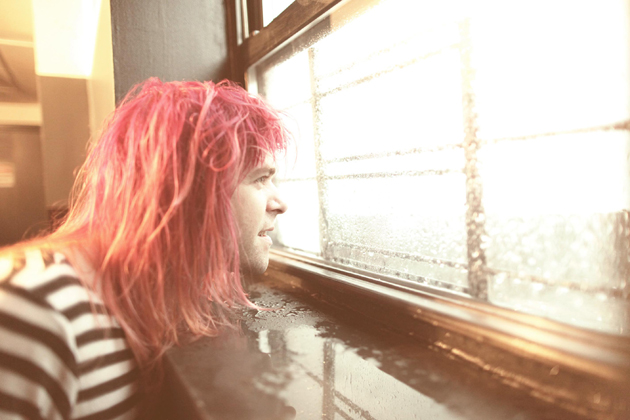
It’s hard to know where to put him in the pop lexicon, but like all successful songwriters, his appeal lies in his ability to forge new ground while keeping one foot firmly rooted in traditionalism. Ever since landing a record deal with Animal Collective’s startup label Paw Tracks in 2003 he’s been on a steady upswing, releasing select work from his back catalog before moving to 4AD and blowing up with 2010’s artistic and critical breakthrough Before Today. That record cemented Pink’s reputation as the idiot savant of lo-fi bedroom pop, something like the 21st Century’s answer to Brian Wilson: an erratic pop craftsman in his early 30s writing near-perfect songs about people in their early 20s for people in their teens romanticize and obsess over.

“Round and Round”, the lead single from Before Today, has become the “Good Vibrations” for the twenty-something crowd. Former Girls’ frontman Christopher Owens called him our generation’s greatest songwriter, and the critics are on board. Pink himself said that the song was a mashup of three separate tracks he had written over a decade-long period, a process that would serve you well to keep in mind when listening to his music. On his latest, 2012’s Mature Themes, tracks change direction without warning (“Is This The Best Spot?”), lyrics make absolutely no sense, at least on a front-brain level (“Kinski Assassin”, “Farewell American Primitive”), while perfect pop nuggets fly out of nowhere (“Mature Themes”, “Baby”, “If Only In My Dreams”. His live shows are notoriously unpredictable. It can get confusing, but that’s part of the fun. Either way, what he’s doing is hard to put down and walk away from. More often than not, you ask yourself, is Ariel Pink an idiot or a genius? His entire career seems to be casually answering your question with a question: can’t it be both?

Ariel Pink plays Irving Plaza in New York on June 6th.

Lane Koivu 
04/06/2013

The Book Affair at Venice Art Biennale

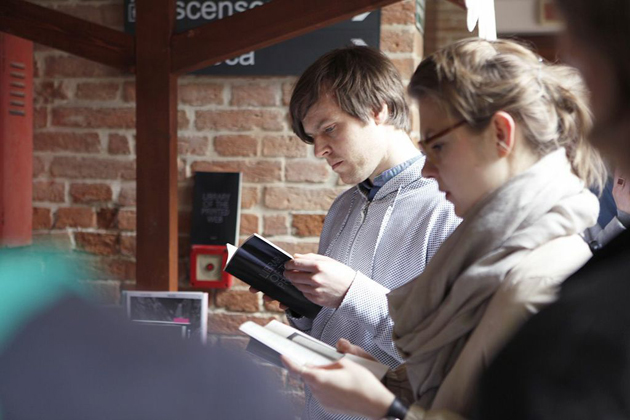
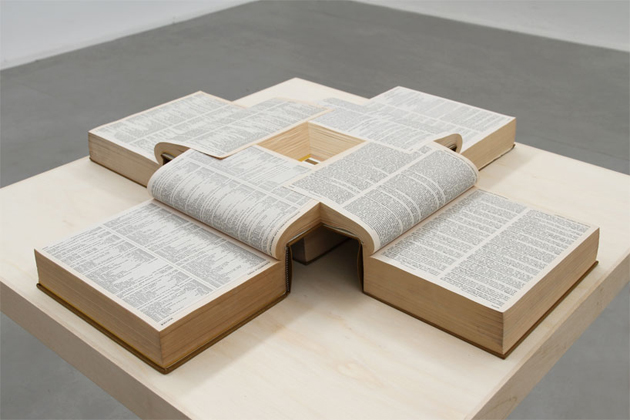
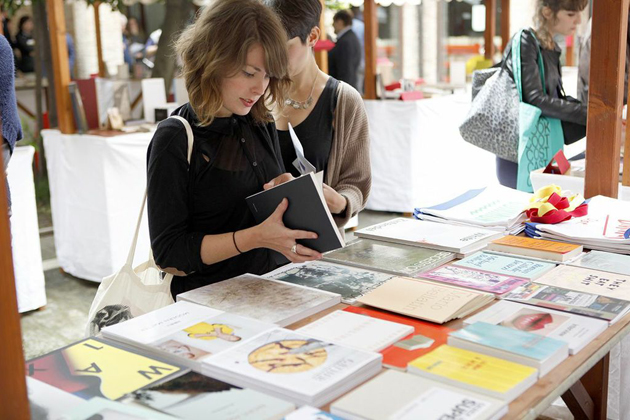
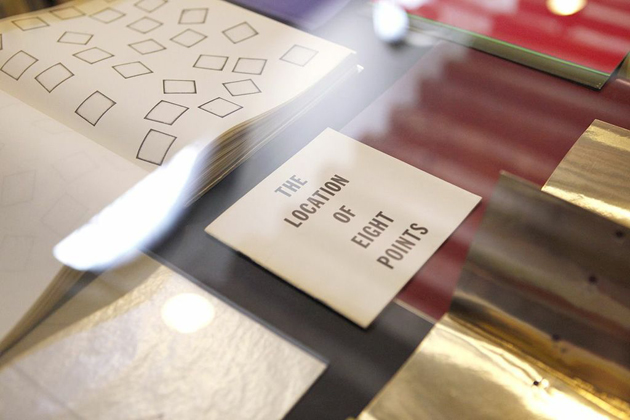
Even though for quite some time now we are being told that books are dead, a shy but particularly passionate niche of producers tries to demonstrate the mainstream media that they are wrong. In fact, if you are even a tiny bit into design and art, you must have noted the resurgence of particularly well-produced magazine and books, printed matter and ephemera, together with the incredible growth of exhibitions and fairs exploring the phenomenon. It is in this particular context that The Book Affair, an event curated by a small Venetian publishing house – Automatic Books – was born.

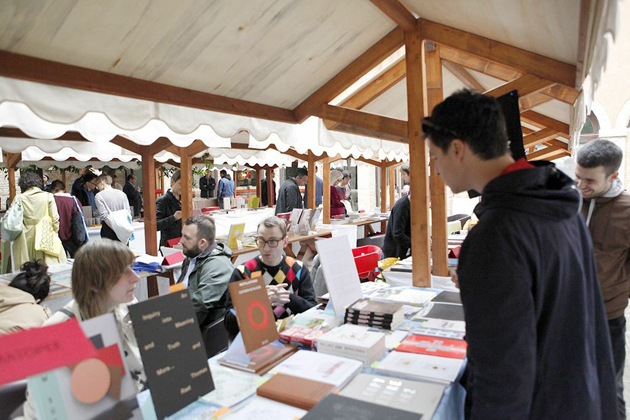
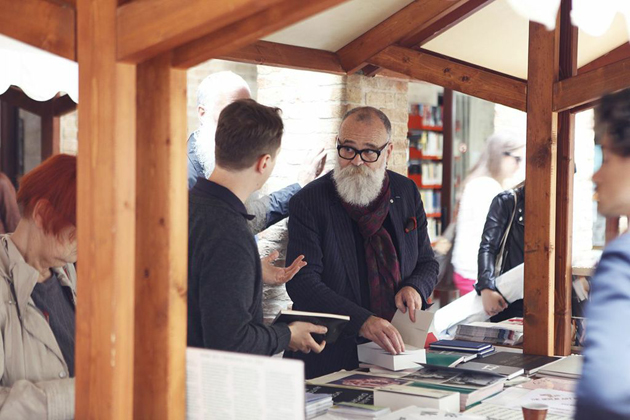
Organized in the occasion of the 55th Venice Art Biennial, The Book Affair was founded with the idea of creating a platform for exchange and discussion about the contemporary production of artists’ books, situated in an intersection of disciplines — namely the visual arts, literary arts and/or critical design. A highly stimulating and fertile environment offered by one of the most significant art events in the world, La Biennale di Venezia, has allowed The Book Affair to propose a unique space of inquiry complemented by interdisciplinary practice, collaboration or coproduction. In fact, the event brought together numerous contemporary independent art and design publishers, graphic designers and artists, collectors and curators to confront their work and thoughts.


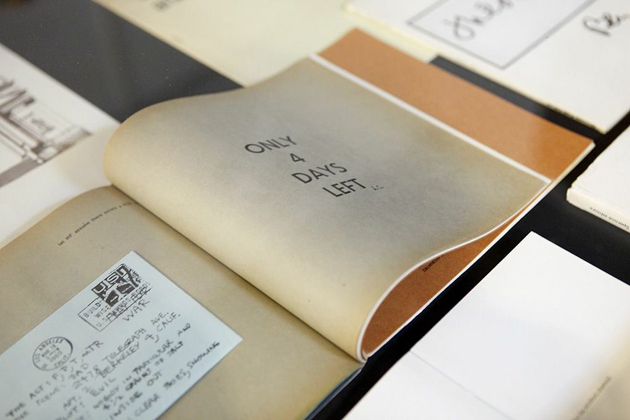
Thus, visitors were able to observe the history of art through the book media, in an exhibition curated by Giorgio Maffei, participate in conferences held by Dexter Sinister and David Horvitz, actively discuss contemporary publishing with Joshua Simon, Paul Soulellis or the founders of San Rocco magazine, check new books published by Valiz, Roma Publications, Rollo Press or Onomatopee, as well as simply enjoy the beautiful location of San Lorenzo library, proving the skeptics that books will probably never go out of style.


Rujana Rebernjak 
04/06/2013

Inner Body Design: Design In a Capsule

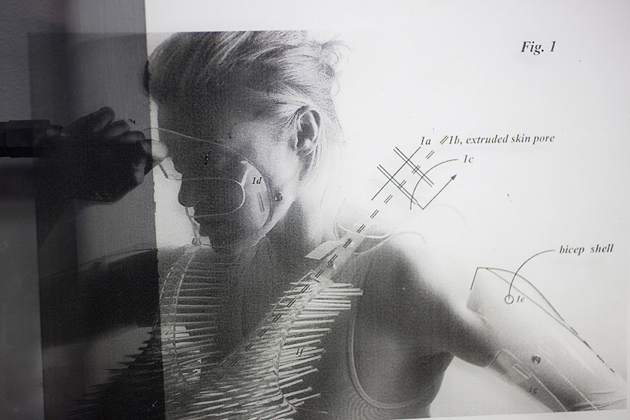
In different cities, apart from one another, yet almost simultaneously, different designers have left our tangible, materialistic, outside world for what it is. They have started to develop ideas and to design products for our inside, our inner body. And once these products are ready to be produced and utilized, we would have to swallow them to ‘activate’ the purchased product.

Dutch designer Daan Roosegaarde – artist/ innovator/engineer – is “obsessed to customize the world around us” and in many ways he has accomplished to materialize the rather inconceivable ideas he has in his brain, mostly by using technology. Right now he is working on a project that goes – at least for many of us – beyond our common sense and more towards a sci-fi scenario: a pill that makes us glow, shine and luminous. Within a year from now Roosegaarde expects his project to be finalized and then, once we absorb the pill, light will shine through the skin of our hands (“let’s start with the hands”, Roosegaarde suggests). In order to create his “luminous pills” Roosegaarde looked closely at the animal world, at a jellyfish for example, and how to hack nature’s techniques.

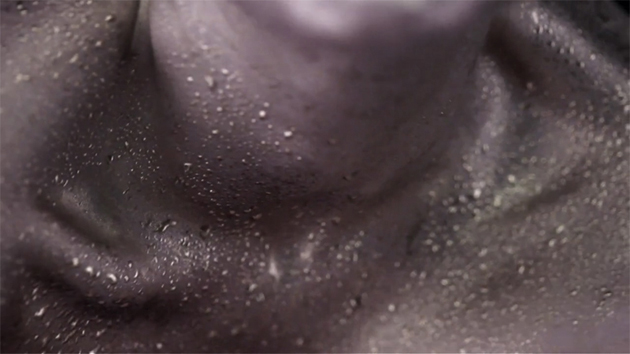
Another project that shows striking similarities but that builds on the body’s own enzymes is the project “Swallowable Parfum” of Australian body-architect Lucy McRae. Together with synthetic biologist Sheref Mansy, McRae is developing a capsule that contains “synthesized fragrant lipid molecules that mimic the structure of normal fat molecules naturally found in the body”. Without going into the biological details, this means that after we eat the capsule our body will emit a unique fragrance through the skin’s surface when we perspire.


These two projects are still in their research phase, but going a few years back in time, 2009 – 2011 to be exact, you will find another project (a drinkable yogurt this time) that has to go through our body to perform its function. British designers James King and Alexandra Daisy Grinsberg developed in close collaboration with undergraduates from the Cambridge University in London the E-chromi project: the idea of a drink laced with bacteria, which “react with the enzymes, proteins and other chemicals present in our gastrointestinal tract and turn into different colours for different diseases”, where after our stool and a colour swatch provide us with an easy health check.

Merging their creative fascinating ideas with biology and technology brings these designers to an unusual working area: our inner body. This is normally something we regard as only belonging in the hands of doctors, dentists and biologists. Without a doubt soon there will occur more inner body design projects and laboratories that challenge the idea that our human bodies are a platform for technology and that we can (re)program it to what we desire, need or want to avoid in the future.

Lisanne Fransen – Images Lucy McRae, Tobias Titz 
03/06/2013

The 55th Venice Biennale | The Pavilions Part. 1

After the bellyful of art offered by The Encyclopedic Palace, the next step is making a plan and selecting a personal path not to get lost – and tired out, especially if you have only few time and you keep dragging a hard parties’ night weight around – in the numerous projects proposed by the international pavilions. At the Arsenale a stop at the Italian pavilion is essential. The first thought goes to the drastic reshape achieved by the curator Bartolomeo Pietromarchi who selected, in clear juxtaposition with the mare magnum of the previous edition guided by Sgarbi, only fourteen artists whose works are set up dividing them according to seven couples: Luigi Ghirri and Luca Vitone, Francesco Arena and Fabio Mauri, Piero Golia and Sislej Xhafa, Flavio Favelli and Marcello Maloberti, Francesca Grilli and Massimo Bartolini, Giulio Paolini and Marco Tirelli, Gianfranco Baruchello and Elisabetta Benassi.


The pictures by the returned-to-life Luigi Ghirri opens the “Journey through Italy” and are exhibited along with the rhubarb notes of the olfactory (sometimes sickly) installation by Luca Vitone that spreads around the rooms. The following conceptual combinations see Arena and Mauri “deal with unresolved gaps in history through the filter of the body and performance”, while referring to culture and pop-folk traditions, Favelli displays a huge cupola made of sheet metal, wood glass, neon and a series of decalcomanias on vintage plates. The installation is positioned just in front of the numerous wood-tables sustained by students, who stand around an impressive marble block, looking up and down in silence, building an unstable balance for Maloberti’s performance, this time less playful than usual (maybe he felt the psychological load of the Biennial). Giulio Paolini closed the show, dialoguing with Marco Tirelli on the theme of art as a joining link between illusion and reality. Thanks to a special project introduced by the curator in February 2013, all the exhibited works have been supported through a gathering of funds.


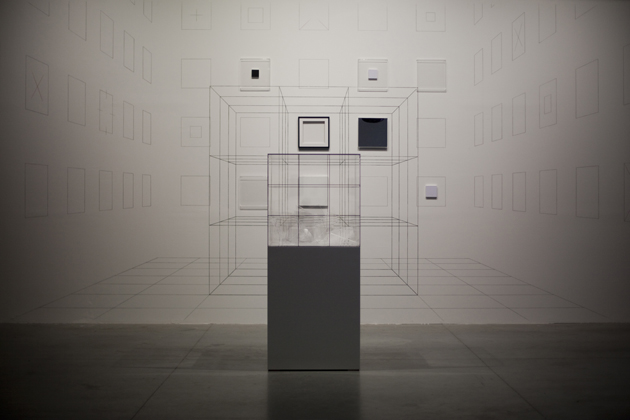
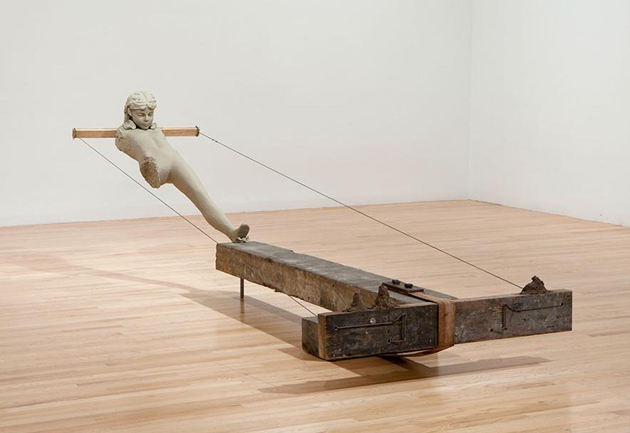
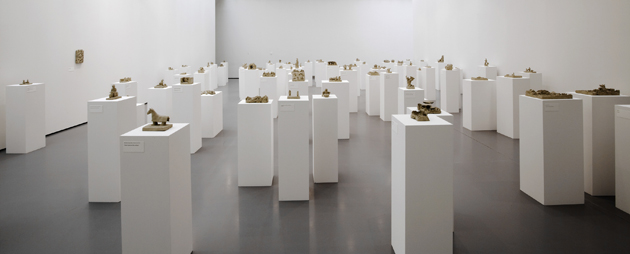
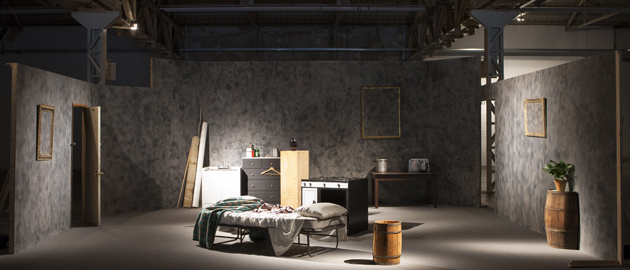
Moving to the Giardini, we stop off at Dutch pavilion where Mark Manders presents his project entitled Room with Broken Sentence, which consists of installations, sculptures, offset print on paper and architectural interventions that create an enigmatic impact through the use of different media: epoxy and painted bronze look like clay and brass reminds of wood. Germany and France, for the first time in the history of Venice Biennale, swap the pavilion and decide not to display national artists. France devotes its space to Anri Sala, Franco-Albanian artist living in Berlin, who takes inspiration from the Concerto in D for the Left Hand composed by Maurice Ravel in 1930, while Germany hosts the works by Ai WeiWei from China, Dayanita Singh from India, Santu Mofokeng, South Africa and, finally, the German Romuald Karmakar.

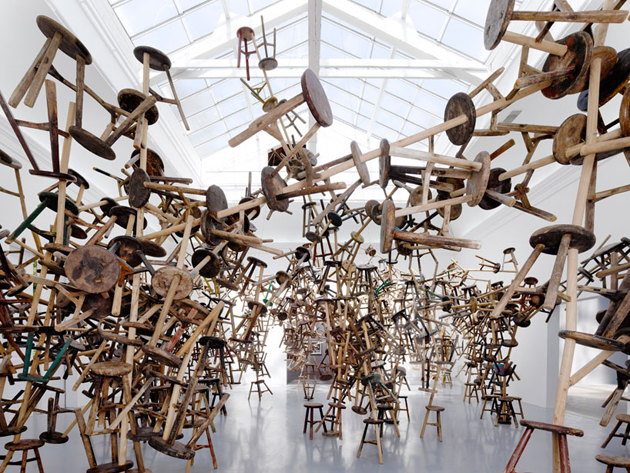
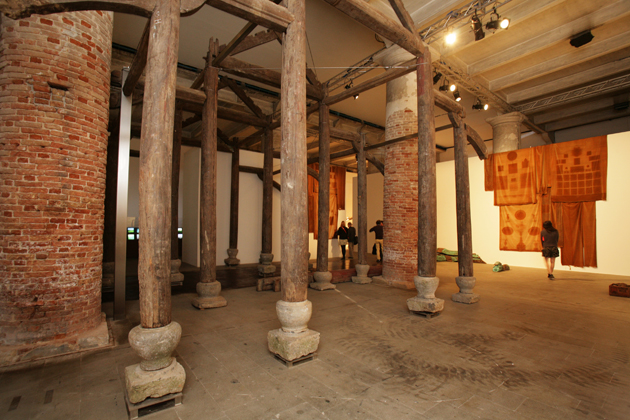
The Chinese artist, one of the most influential persons of contemporary art, creates a striking installation consisting of 886 wooden stools made by craftsmen that symbolizes WeiWei’s culture and stands for “the individual and its relation to an overarching and excessive system in a postmodern world developing at lightning speed.”


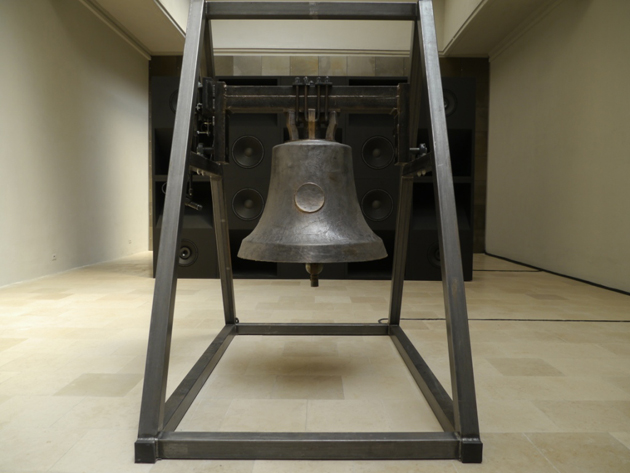
It is worth to visit United States’ pavilion made by Sarah Sze, who develops experimental site-specific installations, which collects myriads of different objects in an obsessive order, a sort of complex work stations that analyze the dichotomy between the difficulty of finding a stability in the world and its constant research. While getting to the touchy and symbolic Greek pavilion by Stefanos Tsivopoulos that reflects on different social classes and different ways of relating to money, we hear the bells ringing in the closer Polish show during the performance by Konrad Smolenski.

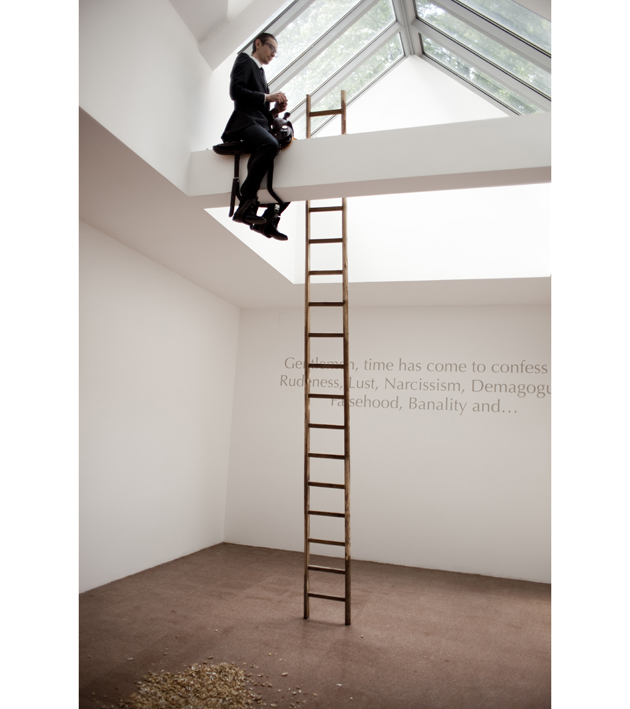
The path is still long and there would be many more things to talk about, but we decided to close this piece with the great project by Russia, where Vadim Zakharov displays Danaë, an installation that put up the worst human feelings: from anger to envy, from greed to hate and selfishness. Here a man astride from the ceiling throws peanuts peels careless of people below, and a prie-dieu is disposed in the centre of the room, to not to look up to God, but to direct the views to a dispositive that activates a rain of gold coins, and drive them down to a pile of money. Its disarming simplicity and direct approach turn it in one of the best pavilions of the whole Biennial.

Monica Lombardi 
03/06/2013

The 55th Venice Biennale 2013 | The Encyclopedic Palace

There were high expectations for the 55th edition of the Venice Art Biennial. And this was not only because it is still one of the most important main art events worldwide, but also and above all, because this year the rudder is in the hands of the artstar Massimiliano Gioni, the youngest curator ever called to guide the Biennial. The Encyclopedic Palace is the name chosen to identify the exhibition, which takes inspiration from the building – the scale model is placed at the beginning of the path – projected by Marino Auriti (1891-1980) to contain the utopian digest of the universal knowledge. According to the curator’s point of view, art, in all its forms, is not just for entertainment, but represents a way to understand the world. Thus this show, through its anthropological approach, reflects on the creative boosts of the last two centuries to set people’s imagination free.


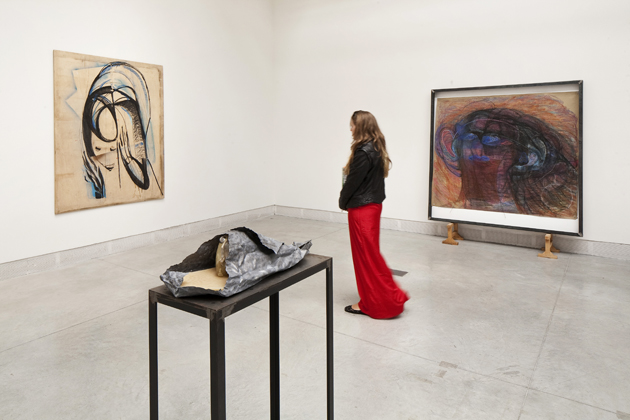
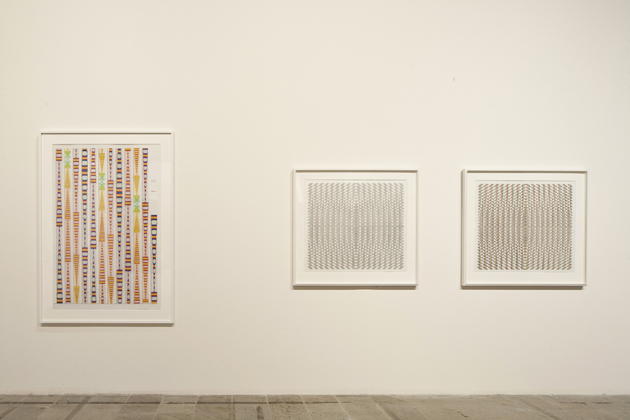
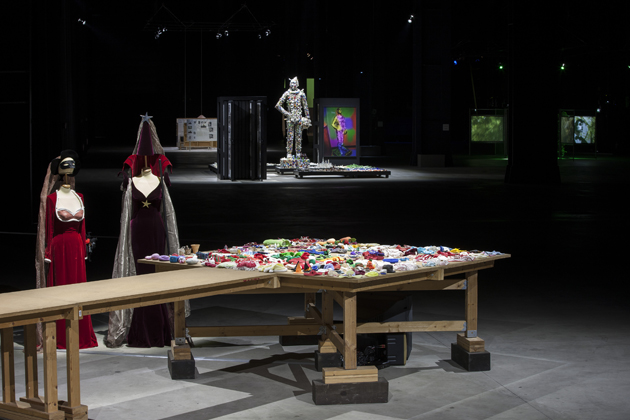
Articulated between the “Giardini” and the “Arsenale” this exhibition is a sort of Cabinet de Curiosités, which combines the work of different past and present artists – 150 from 37 countries -, whose interest was/is related to the role of images in sharing and structuring the knowledge. From the displayed pieces we chose the striking video devoted to robotic surgery entitled Da Vinci by Yuri Ancarani (b. 1972, Ravenna, Italy), the room split between the masters Bruce Nauman and Dieter Roth, and the one celebrating the Golden Lionesses Maria Lassnig and Marisa Merz, the works by the new generation of young bigs such as Ed Atkins (b. 1982, Oxford, UK), Neïl Beloufa (b. 1985, Paris, france), Camille Henrot (1978, Paris, France) – Silver Lion for the best promising artist 2013 -, the shocking videos about the teen-aged neurosis by Ryan Trecartin (b. 1981, Webster, texas), the timeless sculptures by the Japanese Shinichi Sawada and the ones by the Swiss duo Peter Fischli and David Weiss, the impressive reconstruction of a Vietnamese church by Danh Vo (b.1975, Vietnam), and the showcase containing the delicate and poetic work by Ivorian artist Frédéric Bruly Bouabré (b. 1923, Zéprégueé), even if the list is undoubtedly lacking numerous of the other names that would deserve to be mentioned.


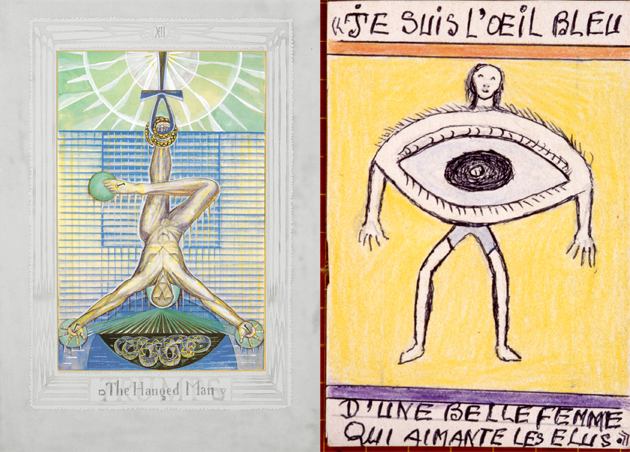
Mixing painting, photography, installation, sculpture and video along with writing, architecture, psychology, magic and spirituality, Mr. Gioni, who never misses a shot, in a clever and proficient way, put together a show that looks at the history of image all-round, from a collective and individual perspective. So, among the guests of his ‘palace’, even the unconscious and the occultism find their place with the Red Book by C. G. Jung and the tarots by Aleister Crowley and Frieda Harris.


The 55th International Art Exhibition of La Biennale di Venezia will run until 24th November 2013.

Monica Lombardi 
02/06/2013

Sunday Breakfast by Love For Breakfast

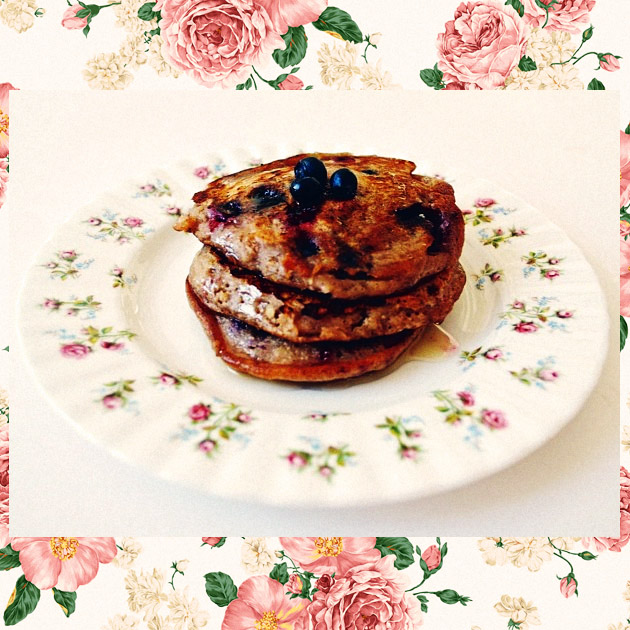
The deep blue of blueberries reminds me of the color of the sky just after the sunset, when the night is close. Does it mean that I would love to keep yesterday’s memories with me?

Alessia Bossi from Love For Breakfast 
31/05/2013

The (Re)downfall of Empires

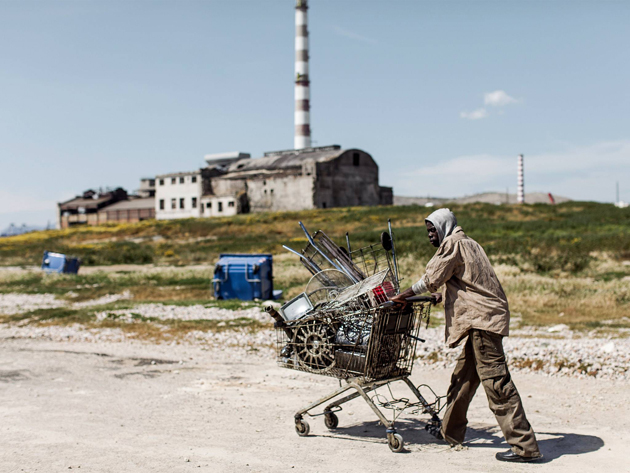
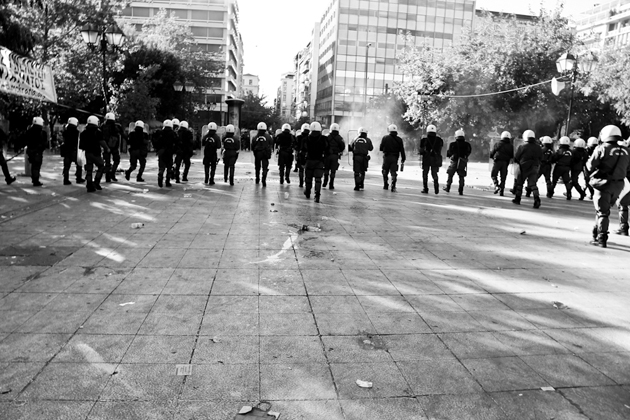
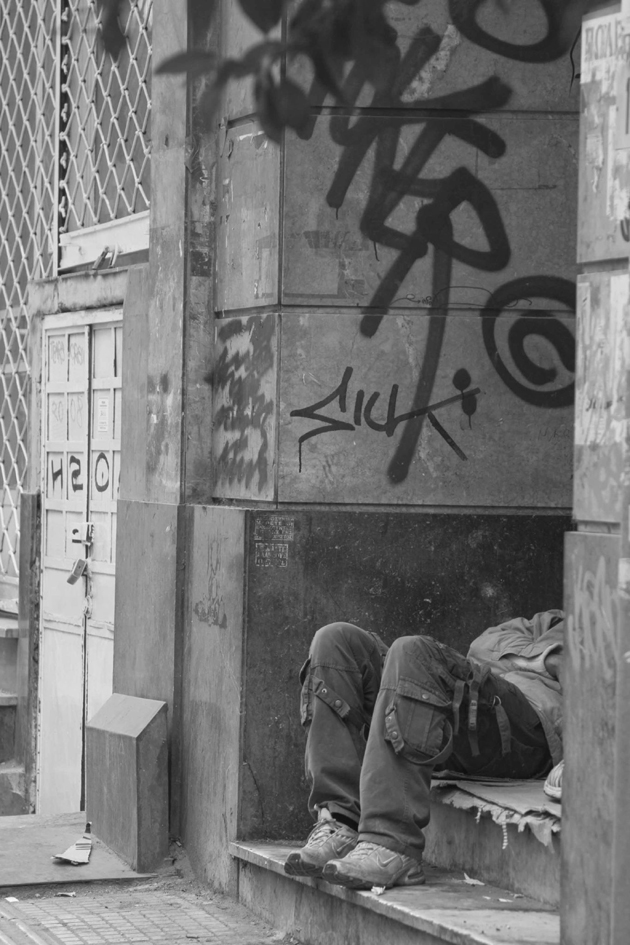
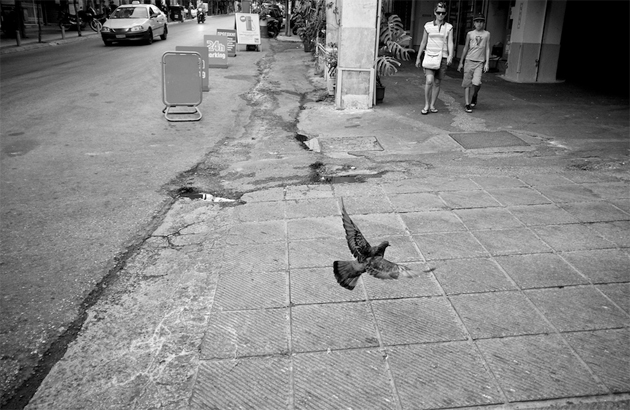
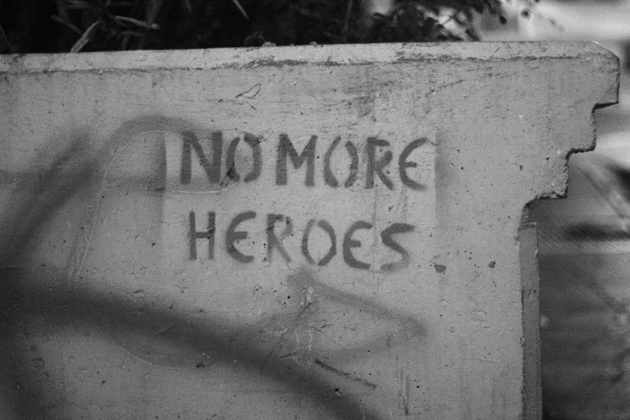
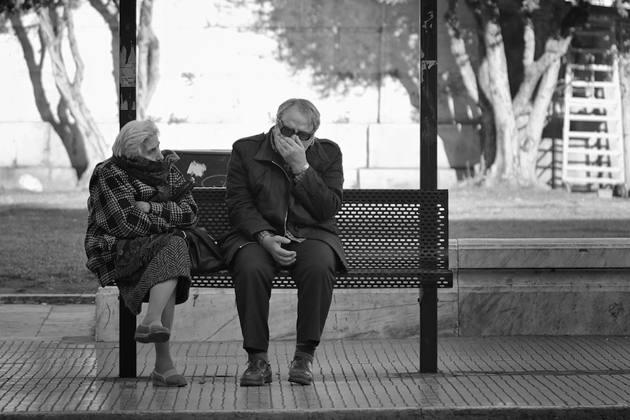
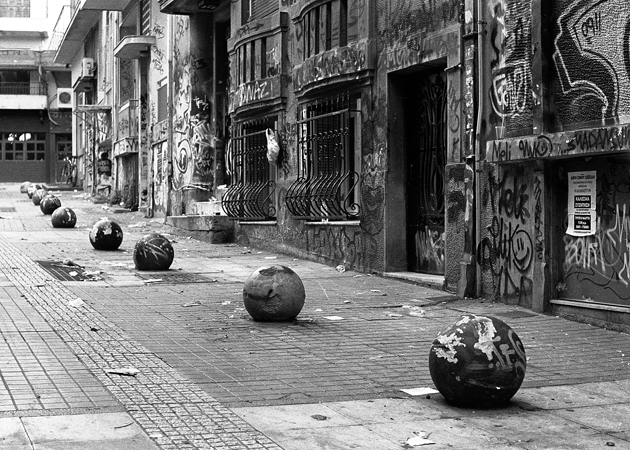
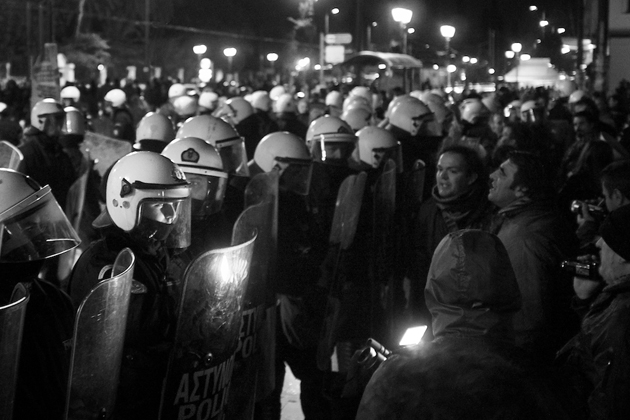
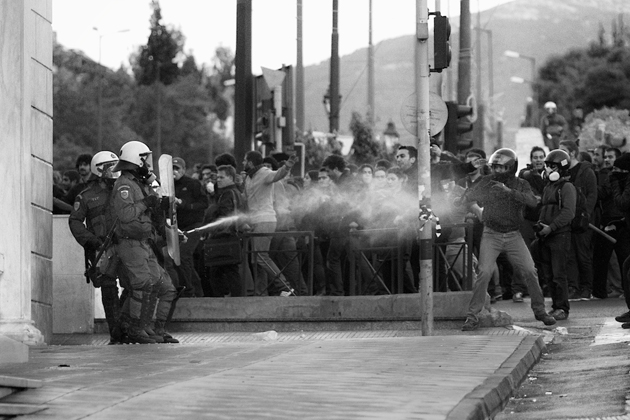
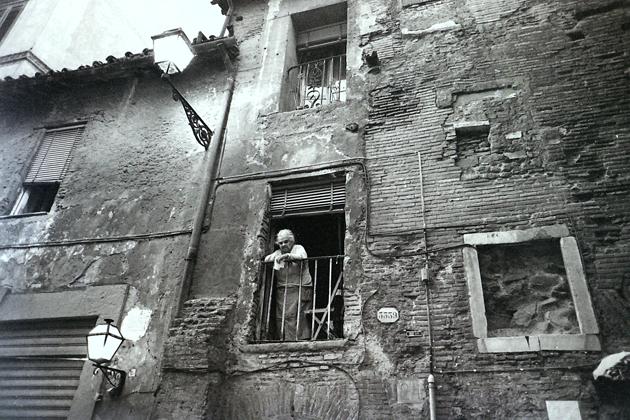
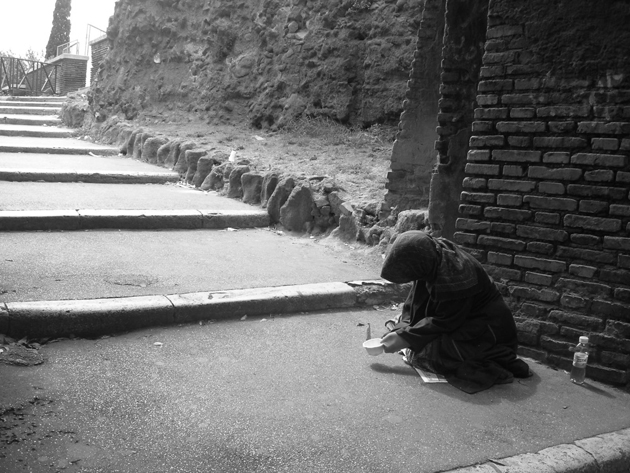
There are some moments in everyone’s life in which words don’t count. In these moments you realize that explaining a concept out loud or writing it down don’t work; even trying, you notice soon that the names and adjectives coming out from your mouth can’t really describe what you have in your head. The photos shot in Athens during the last three years, published on world-wide media, can cause this effect. Increasing protests, ever increasing number of poor people and the syringes scattered on the streets of Exarchia – the rebellious district of the most important Greek University – leave you speechless. The tourist attraction beloved by millions of people has turned into a dangerous destination that’s more likely to be avoided. Athens is collapsing: photos of temples kissed by the sun, golden sunsets and beautiful shores are getting pulled next to ones of violent clashes between civilians and the army force, and the ones of junkies injecting themselves with battery liquids.


Also Rome is having hard times. The Capital is always going to remain one of the most fascinating cities in the world: Colosseum, St. Peter’s Church and Vatican Museums are there to prove this. It would be madness to advise against a vacation in Rome, even if it is more and more assuming the aspect of a dirty, tired and old city. There are shabby neighborhoods, such as Garbatella and Trastevere, and there are even real favelas in the heart of the city, next to Parioli, one of the most chicest zones. Even slightly more plentiful rain is sufficient to block the sewers and inundate the streets with leaves and sewage. But you won’t find, unlike what happens in Athens, much more increasing poverty or rebellions. The Roman – and the Italian in general – ruins are of an invisible kind, the result of decades of corrupted politics and inactivity of institutions. Rome is the emblem of a beautiful country that now appears without faith for a better future.


Who would have guessed that two cities of that size, history and potential would have ended up in this kind of situation? In 2011, according to a study published by Eurostat, Athens and Rome have been the very last in line of the European cities in investments in culture and education. As a sort of poetic justice, the two cities that were the cradle of Western culture find themselves no longer worthy of a new world that is evolving quickly. Their infrastructures are old and inefficient. Most of their inhabitants are afflicted and discouraged, especially after the crisis that affected the whole Europe since 2008, Italy and Greece in particular. And now, while the powerful watch incapable what happens on the streets, Rome and Athens slowly die. In the past, they fell and rose up again. Will they be able to do it again?


Antonio Leggieri – Images Galinos Paparounis, Dimitris Papazimouris, Mehran Khalili, Francois “Mister Pink”, “Giorgos”, Armando Moreschi, “MIchelle” 
31/05/2013

Mike Kelley – Eternity Is A Long Time

It’s a sure thing: from a certain point of Mike Kelley‘s (1945-2012) career it hasn’t been any more possible to explain social or aesthetic American phenomena without referring to his view. 
Few figures like the one of Kelley have been able to embody and reflect that multitude of signs and visions, which are the sediment of the American culture made of remains, interstitial spaces, vernacular aptitudes and secret traces apparently impossible to map.
 Who overlooks his work, even only superficially, knows the cult allure surrounding his figure and his ability to surf on different languages that connect different artists crosswise, from masters as Paul Thek and David Askevold to the companions of the road as John Miller, Tony Oursler and Paul McCarty, to the indie rock music of Sonic Youth and the noise of Morton Subotnick or the Destroy All Monsters. Here’s why Mike Kelley keeps on being the most influential role model for young artists, who learn the assemblage practice more from his Memory Ware than from the Schwitters Merzbau.


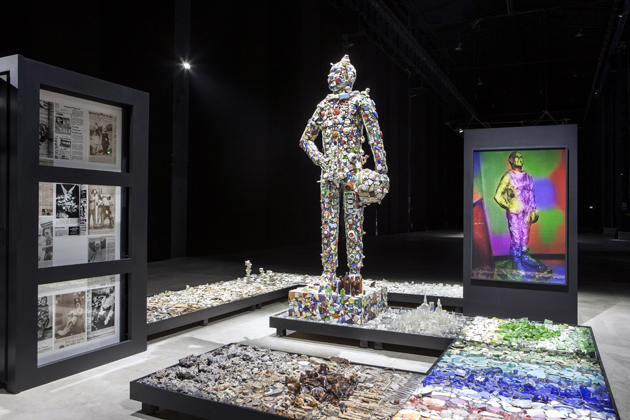
Eternity Is A Long Time is a great exhibition thought specifically for Hangar Bicocca and curated by Emi Fontana and Andrea Lissoni, which celebrates, after one year since his passing, the absolute centrality of the artist on the contemporary art scene. There are macro-themes that go through his whole production as the continuous evocation of adolescence, the contrast between education and coercion, the intrusion from fiction to reality, the relationship between artistic and popular culture, the blue and black sense of humor mixed to the vaudeville and that gloomy tone that seems to brush each work.


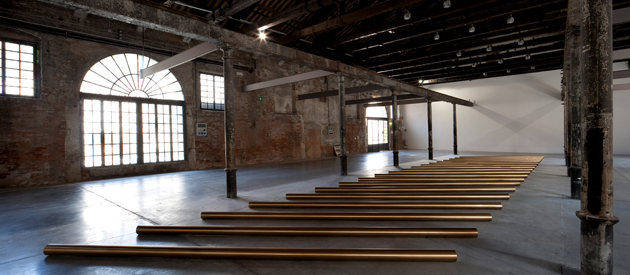
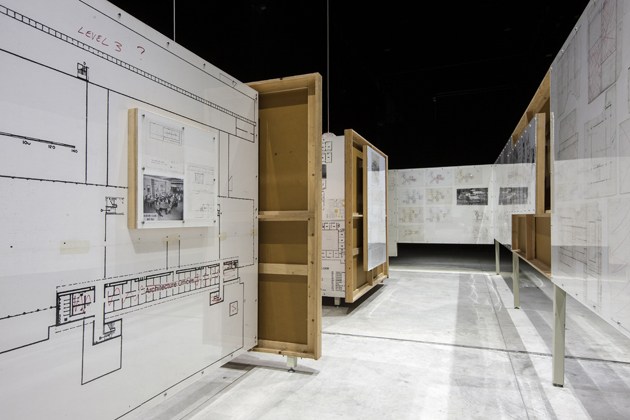
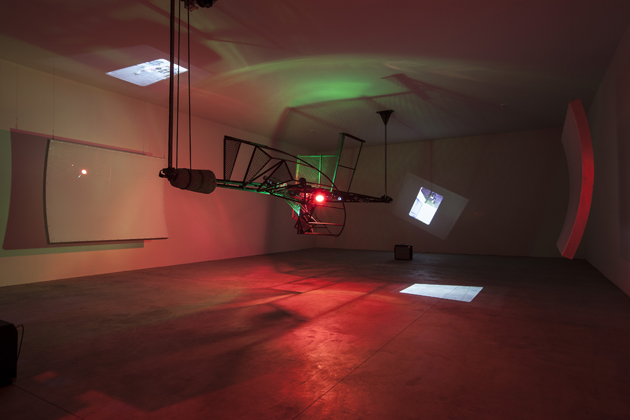
The exceptionality of this show is not only due to the symbolic value of the ten selected works, but to the idea of conceiving the space as a body. A place has never been more appropriate for paying tribute to a such complex personality as the one of Mike Kelley: the huge spaces of Hangar host, in a darkness full of expectancy and evocations, ten carefully chosen works, decisive to sketch out his poetic. And it’s not rare to bump into “grottoes” “caves” “shrines” that, unconsciously or not, allude to openings, body cavities, sphincters, which confer to this particular solo show the complexity and physicality of a living body, where sex, eschatology, but also reflection and memory coexist. Pulsating “organs” that release a force – that’s sometimes dark, some other times vital and subversive – which tells us about a presence much more than an absence.

The exhibition will run until 8th September, 2013

Riccardo Conti, Editor’s thanks to Monica Lombardi – All Mike Kelley works © Estate of Mike Kelley. Courtesy Fondazione HangarBicocca. Installation views photographed by Agostino Osio 
30/05/2013

New Talents of 2013 | Beckmans

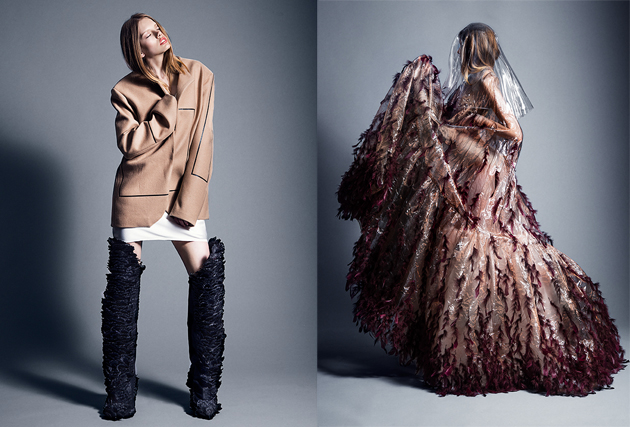
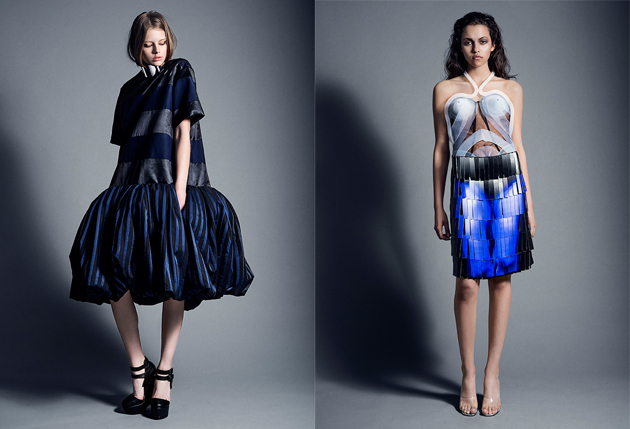
Beckmans College of Design opens the month of the final shows of the most important European fashion schools. On the 20th May at Berns (Stockholm), twelve BA students showed their collections, which were then showcased for a week at the last floor of their school at Brahegatan 10 – Stockholm. The variety of students’ works testified how Beckmans does not spasmodically aim to create a common-branded identity but let students’ minds and hands develop through a maieutical dialogue during their three years of education. The aim is to develop “their own clear personal and inquisitive perspectives”, says the departing director Tom Hedqvist.


This method generated very different fashion reflections that move from the role and nature of contemporary aesthetics, to introspective speculations, passing through commentaries on the technicality of fashion design. 
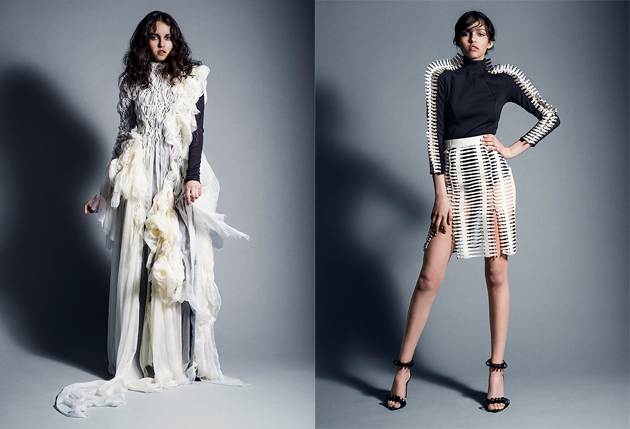
Among all these creations, it is possible to admire the architectural geometries by Lisa Laurell Amandonico who works on minimalistic and classical shapes sewn together by a sort of white spinal bones connections, or Alina Brane’s impressive “Dreamward” where plastic and feathers are constructing dream-like enclosures. To be notice also the collections by Per Gotesson, Emmy Andersson and Lamija Suljevic. The first formulates an experimental discourse on shapes and materials through the construction of a contemporary pirate, while the second mixes extraordinary accessories with clean cuts that, to some extent, resemble the work of Ann Sofie Back. Impressive were also the work by Slijevic who created hand-weaved gold ribbon armors and hand-folded hats made of PVC sequins and clear rhinestones.

Indeed, Beckmans’ students show how schools are not only places of individual sufferance and struggle but also incubators where critical creativities are formed, shaped and developed. Discipline and creativity walk hand in hand in fashion design and they are crucial skills especially in the attempt to enter the fashion field in these hard days for the market. However, to use the words of the departing director Tom Hedqvist: “Tough times can, at best, bring about the formulation of constructive ideas. At best”.

Marco Pecorari 
30/05/2013

The Rules of Double Denim

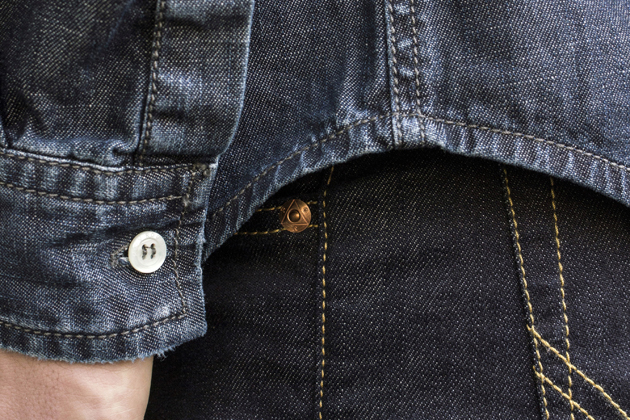
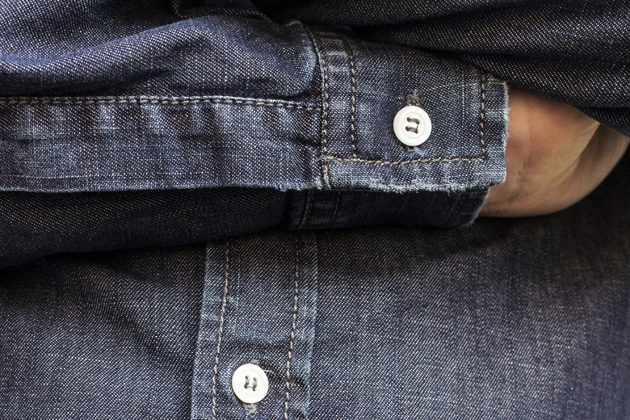
At The Blogazine there is a certain fondness for all things denim, in all its shapes, sizes, shades and splendor. Without getting into too much of denim history – a subject that would deserve more than one article and probably would keep any denim connoisseur tangled up in debates and devoted discussions, we had a look at the latest double denim looks to hit the streets.

It’s by no means a new trend – you only need to take a look back to the early work wear to see how these head-to-toe denim suits haven’t changed essentially. Functionality, style and attitude are what make this iconic fabric move through the decades, painlessly adapting and sitting happily next to any other item of apparel. So how about when it’s teamed together with a fellow piece of denim – denim on denim?

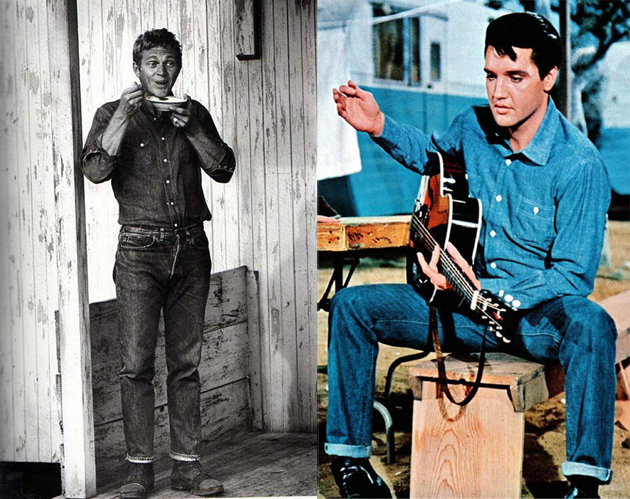
There’s a few denim style icons who really do deserve a mention when talking of double denim: Elvis, Steve McQueen, Debbie Harry and of course the denim icon James Dean are but a few who all wore it well through history.

Leaping forward to 2013 one could question how relevant these looks are today and how different shades of denim could be worn in the best way together? Lately, double denim rules seem to be topping the list of style advice in fashion magazines: mix dark denim shades with light, don’t wear the same wash together, mix slim and loose silhouettes, and it goes on. Looking at it from another angle, we believe it is more about the wearers’ personal style and attitude than about applying strict rules to an outfit.


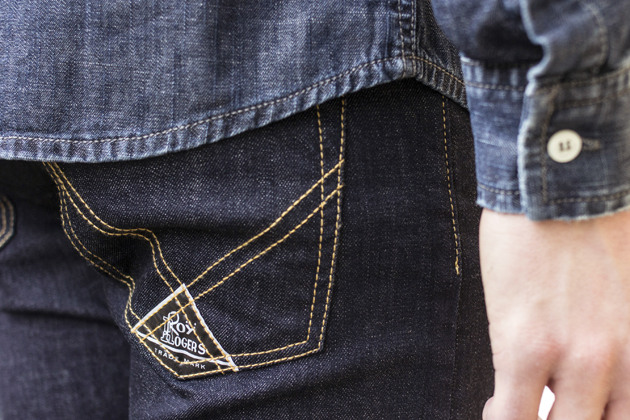
Modern references can be found in the looks of brands such as Roy Roger’s, the historical denim brand produced in Tuscany since the early 50’s. The brand mixes shades, shapes and washes as much as they use different weights and structures in fabrics – denim on denim comes naturally to a brand used to match its favourite material to infinity.

Sometimes we have to forget about finding the right washes or worn-out looks to match but also about daring to stay off and go back to the mono-coloured pieces to bring out the best in both and let them shine on their own, but together. It’s time to look at the history and get inspired by the icons, to play with the mix of modernity and authenticity and to put your personality into it – then, there are no rules!

Tamsin Cook