27/05/2011

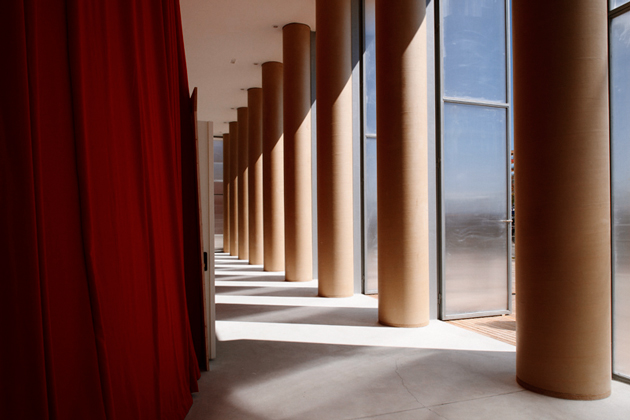
L’Aquila Paper Concert Hall / Shigeru Ban

.

L’Aquila Paper Concert Hall / Shigeru Ban

It’s been just over two years since the disastrous earthquake that destroyed major parts of L’Aquila. The city continues to rebuild, but a tenuous political situation combined with the sheer scope of the damage have so far made it difficult for a complete renaissance. But with continued attention from around the world and a fresh slate to start from, things are looking bright for the city’s future. And on the cultural front, L’Aquila has one more impressive new structure to add to its renewal.

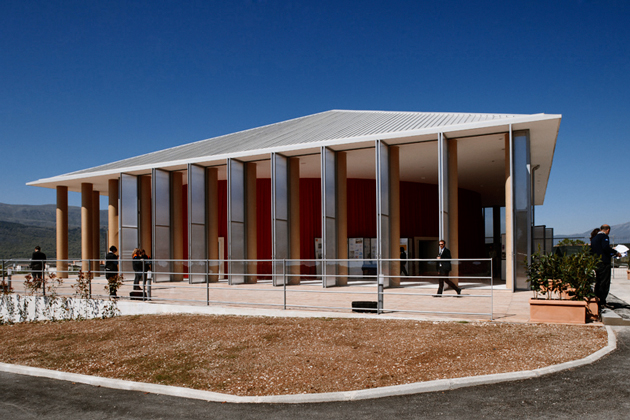
The concert hall is a project of Japanese starchitect Shigeru Ban, whose ingenious paper projects have filled orders for the likes of Hermès and proven a brilliant solution to problems of temporary architecture. All are easily recyclable and cost-effective thanks to their relatively pedestrian and simple materials. Ban’s recent partition structures for the crowded shelters where thousands of earthquake victims in Japan continue to live have proven a success, and his work is a model for the transitional architecture often required in the aftermath of natural disasters.

Like Ban’s other projects of this type, the concert hall is structured around reinforced paper columns – cardboard, essentially. This one in particular is a sort of 21st century homage to the Romans, with its rectangular outer elevation and pitched roof looking vaguely like a marble columned monument. Within the outer structure there is a central, elliptical space with pretty spectacular acoustics (especially considering the walls are paper), with more than 200 seats. The structure can even be torn down and reconstructed elsewhere.


As a gesture from one earthquake-battered nation to another, the structure is a powerful symbol of solidarity and a new ray of hope for L’Aquila.

Tag Christof – Images courtesy Shigeru Ban

25/05/2011

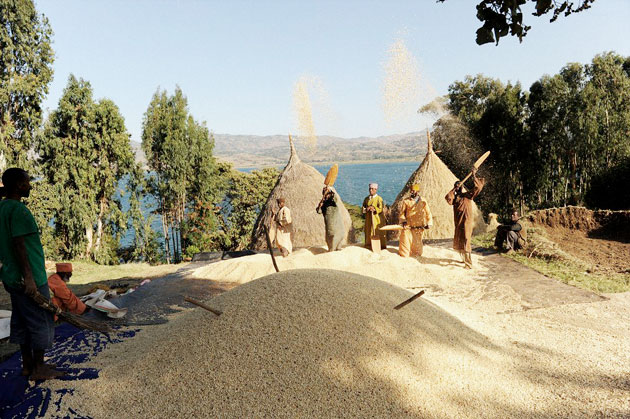
Essen: Ethiopian Teff / Injera & Sega Wot

.

Essen: Ethiopian Teff / Injera & Sega Wot

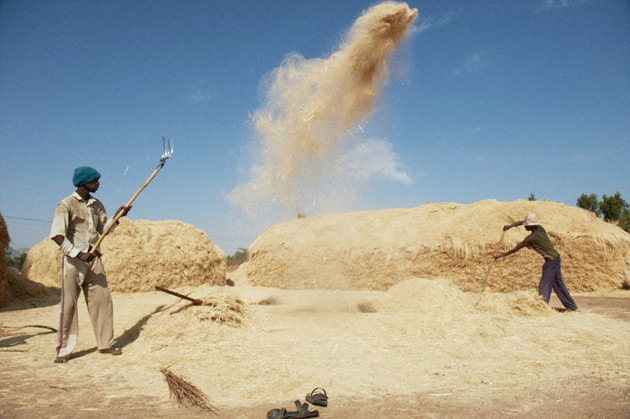
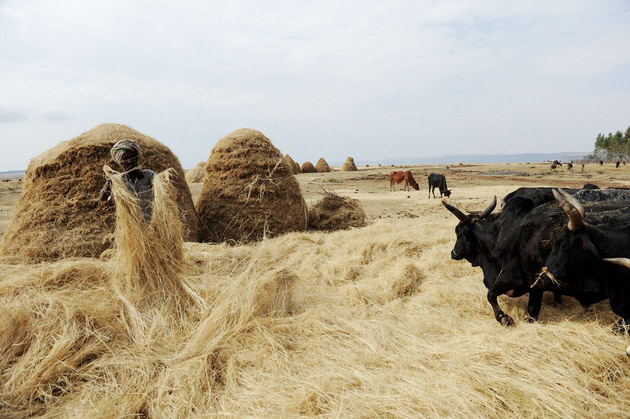
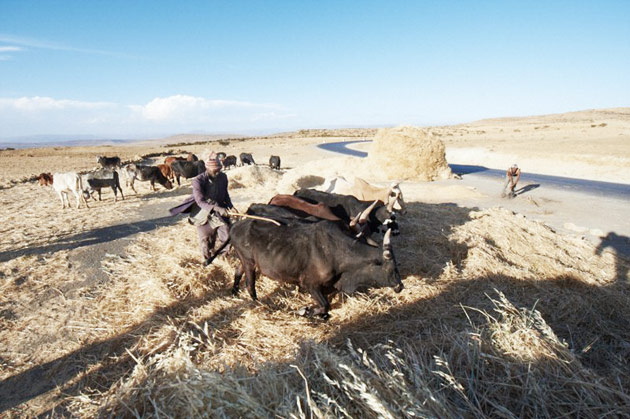
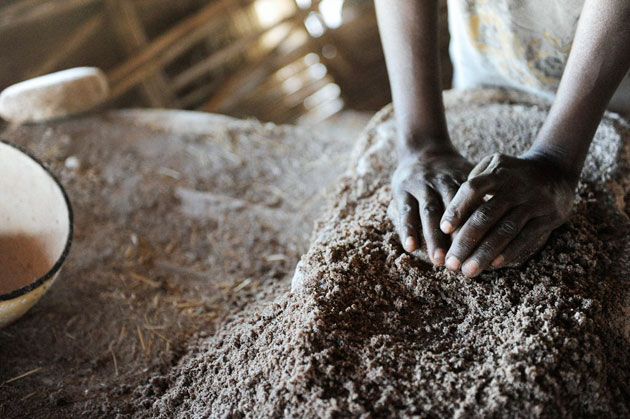
This is the second The Blogazine & Essen collaborations with photographer Vittore Buzzi, whose travels have taken him to the very farthest corners of the globe in search of adventure, exotic food and beautiful imagery.

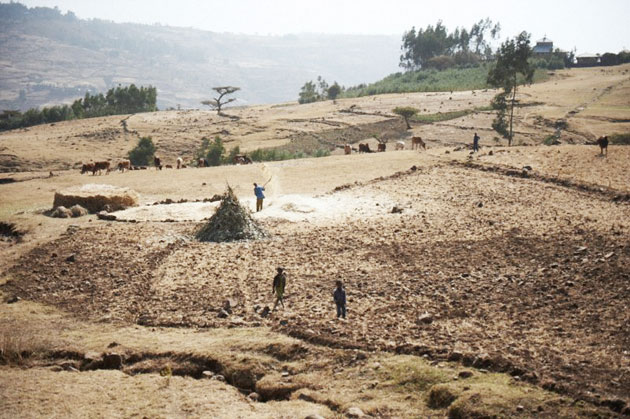
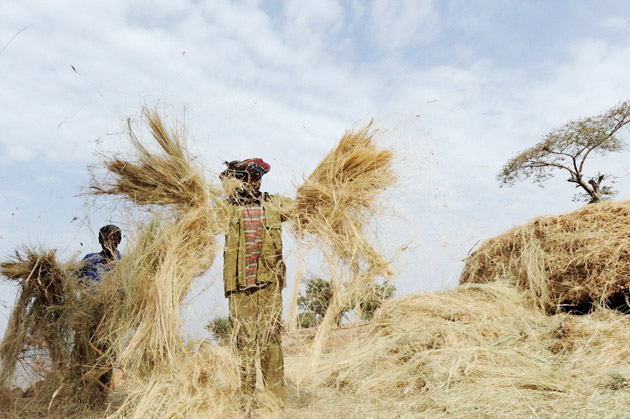
Teff is an a grain native to the Horn of Africa. Adaptable and resistant even to the most difficult territorial and climactic conditions, it is as important as it is mistreated. “Orphan” is the adjective with which it often comes accompanied, as it hasn’t received much investment interest as agricultural systems are modernised.

But despite a lack of drive towards possible intensive cultivation, teff has for centuries on end been the bedrock of the bread of Ethiopia: injera. This thanks to the crop’s incredible robustness – all its takes is a handful of seeds to plant an entire field! And this very bread is key to the celebrated dish zighini, a meat dish with rich sauces whose only rule is that it must be eaten without silverware.


Only in the past few years has the phenomenon of land grabbing taken hold in China and India – “I pay you for the land, I reap its fruits” – and teff has consequently experienced a huge surge. Nonetheless, this comes at the expense of Ethiopian agriculture, as foreign pockets are lined while the situation of those within the country only worsen.

Beyond its inimitable flavour (spongy and acidic), teff has one very important characteristic: it is entirely gluten-free. (Check out Essen’s very cool infographic on coeliac disease.)

In an unprecedented historic period, where one in every 100 people has a gluten allergy and half of all sufferers go undiagnosed, intensive teff production could have a positive effect on the diets of those who are forced to take gluten-free “vacations.”

A second, but certainly no less important consideration, is that teff production could help to reduce the plight of Ethiopia, a country burdened with an economic system that can only politely be described as inauspicious (read: a disaster).

So, while we consider these particular dynamics together – which remain thoroughly outside the conscience of most occidental consumers – we present to you a tasty Ethiopian recipe for dedicated to all the gluten-free of the world (and pretty delicious even for gluten eaters)!

Recipe: Sega Wot

This is a variation that can be prepared at home. Unfortunately, following the original recipe without local Ethiopian utensils is very difficult and doesn’t guarantee success. The modifications here will get you very close to the real thing, however, and it remains gluten-free! Feeds four.

Ingredients:
1 packet beer yeast
120cl hot water
1/2cl honey
600 g finely ground teff flour
Baking soda
1 onion
2 cloves garlic
20 grammes butter
40 grammes berbere sauce
40 grammes of cubed pork
500 grammes peeled tomatoes
salt

Injera Preparation

Dissolve the yeast in a mug of hot water. Wait 10 minutes until it starts to foam, and then add the remaining water and flour. Mix well and cover. Let it rest at room temperature for 24 hours. Mix the batter well and add a bit of baking soda.

Heat up a large nonstick pan at medium heat. Pour the batter into the pan forming a spiral in such a way that the bottom of the pan becomes completely covered by the batter. Cover and cook for a minute. The bread must not be toasted; it should only slightly increase in thickness Injera is normally only cooked on one side – its top must be moist and covered completely with tiny perforations (eyes). Let cool on a serving plate, and place the others on top as they are cooked.

Sega Wot Preparation

Sauté the chopped onion with the crushed garlic. After five minutes add 1 tablespoon of butter and 3 tablespoons of berbere sauce, 1 glass of water and a generous dash of salt. Reduce the mixture gently, then add the peeled tomatoes and as it cooks, add another glass of water. Continue to simmer for 15 minutes, then add the cubed pork. Let cook for an hour, or until the meat is cooked an the sauce is thick. Serve over the injera.

Reportage Vittore Buzzi – Text and Recipe Christina Zaga – Translation Tag Christof

23/05/2011

The Editorial: Fix It Up

.

The Editorial: Fix It Up

DIY has swept the world. Etsy has become a sprawling platform for thousands of micro creative endeavours. This weekend’s premier Maker Faire event in California’s Bay Area united thousands of do-it-yourself enthusiasts and set the blogosphere and Twitter on fire. And although the thrift shoppe/junk store has fallen out of favour as the prime shopping destination of the voracious hipster (as “hipster” is now merely another easily marketed-to ethnographic group), it is certainly fair to assume that we’ve made significant cultural inroads with this mass-revival of handicraft. But no matter how trendy DIY becomes, we remain a society of wasteful, wasteful children.

Let’s be honest: even the most staunch advocate of DIY lives in a world that is filled primarily with mass-produced objects. Furniture. Appliances. Electronics. Knicknacks. And certainly, we must! Most objects owe their existence in the first place, to the economies of scale and technical precision that is only possible through mass production. But, despite our best efforts, the “planned obsolescence” pioneered by the likes of designers Raymond Loewy and Brooks Stevens’ (and perfected in our generation by Steve Jobs and Jonathan Ives) will remain a major motor of the built economy for the foreseeable future. Simply, mass production isn’t the enemy – rather, it’s our reckless consumption of mass-produced things that is dangerous and unsustainable.

And, indeed, we throw some very nice things away. Our reflex to buy almost always seems to override any logical desire to repair. When something breaks – or starts to look less than perfect – we simply throw it away and replace it. That old espresso maker with a broken handle? Trash. The nice wooden table that would look stylish with a sand down and a new coat of varnish? Rubbish. The lamp that could use a new shade? Garbage. Instead of spending any time getting our hands a bit greasy (and brushing up our dexterity), we toss and re-buy.

While our society’s general propensity for buying cheap junk is part of the problem (throwing out objects designed to have short lives is inevitable), we tend to throw out nice things anytime they become démodé, too. Think of the countless classic rangefinders and Polaroids to be found for a few euros in any suburban junk shoppe that require only a thorough cleaning, a new battery and a roll of film. The beautifully-patterned old clothes waiting to be sewn into something new. The old books with lovely, lost typefaces.

Buying from “curated” vintage shops is concomitant recycling. But a real relationship with your objects – and a real, active contribution to sustainability – requires more than buying and consuming. And the deeper relationship you earn by maintaing older objects is therapeutic. You impose yourself upon them. They become personalised. And a mass object is transformed into a one-of-a-kind.


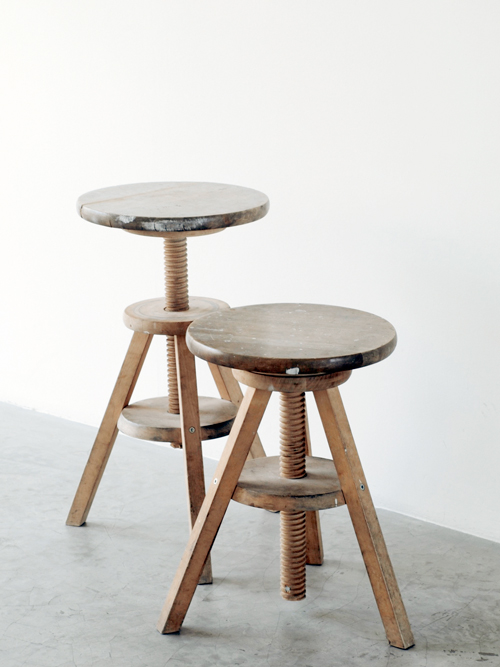
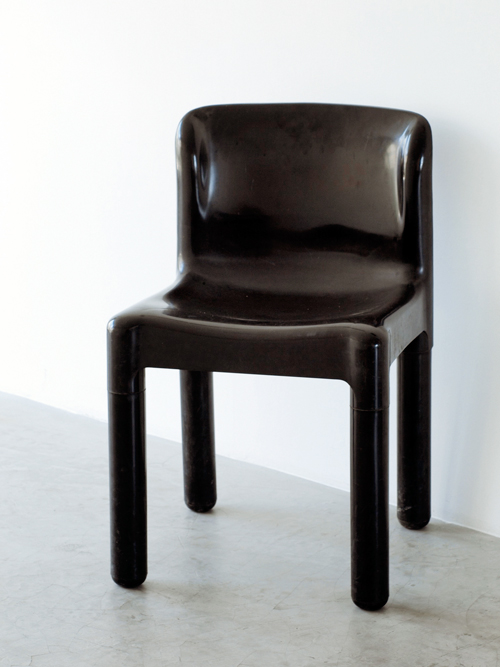
Our studio – a thoroughly modern, minimal place – is filled primarily with old, found and worked-over treasures: A recovered couch for guests, now painted pristine white. Several early 20th century Thonet chairs. Versatile height-adjustable found wooden stools and a sturdy old multipurpose table. A gorgeous MiM office chair from the line’s original 1960s Made in Italy range (MiM was back then a close relative of Fazioli grand pianos). An entire set of first-run 1974 Kartell 4875 chairs designed by Carlo Bartoli. Our most recent “acquisition,” is a circa 1995 drum scanner (complete with the requisite slightly yellow computer plastic of the era) whose superfluous quality kills that of expensive, much-newer flatbed scanners. Everything but the scanner was found – not searched for – after being thrown away by someone else.

Some of these objects could very well be museum pieces. But we use them, day in and day out because their inherent value is far from used up. And their inherent beauty, we feel, increases with age. Now, this isn’t an appeal for dumpster diving, nor is it a self-righteous lecture about recycling. But disposability is simply out of hand. This is broader than DIY: it’s foolish to think we can escape our manufactured world, so we must instead take steps towards truly engaging with it.

Tag Christof

23/05/2011

Kilimanjaro 12 / Thinking Of Collective

.

Kilimanjaro 12 / Thinking Of Collective

The twelfth issue of one of our very favourite cult magazines Kilimanjaro has hit newsstands. We’ve previously called it the “indefinable, iconoclastic and always original art/culture/fashion/film publication,” and this newest issue carries on its lovely tradition of true editorial experimentation. We loved the odd tabloid format of their last issue – and just about a year later, as magazines themselves increasingly become an endangered and ever more transitory species, the same observation about Kilimanjaro’s inventiveness rings true even now: “Filtered through the sensationalism, disposability… and the bigotry of this most hyperbolic and transitory of mediums, the serious discourse and creativity of this issue’s contents are amplified…”

This time out called “Thinking Of Collective,” the magazine comes in clever “ten of clubs” boxed set and takes on an a multilayered, onion-like form, with various supplements and features together making up the issue’s structure. And in terms of fashion, it’s stepped up quite a bit, featuring exclusive content from Yves Saint Laurent and, fittingly, gold foil throughout. And, there’s a new supplement called Kiliman, which contains twenty-five gorgeous pages of high-end mens fashion including pieces from YSL and Yamamoto. All this on tasty peach newsprint.


We’ve talked with the project’s mastermind Olu Michael Odukoya several times about past issues, including a 2010 interview, and remain impressed by his projects. And since we’re name dropping, this issue includes appearances from musician Damo Suzuki, Roman Signer, Martin Creed, Hauser & Wirth, Elad Lassry, and a full-colour supplement from Heinz Peter Knes.

Tag Christof – Images courtesy Kilimanjaro

20/05/2011

Pabellón de México / Biennale di Venezia

.

Pabellón de México / Biennale di Venezia

The 54th edition of the Biennale di Venezia d’Arte is just around the corner. As we slowly and not-so-surely lurch out of global recession, the Biennale’s importance for gauging the art world’s temperature has never been more important. A prime selection of world-class artists will be featured, including our good friend and Wonder-Room alumnus, sculptor Salvatore Cuschera. In addition, look for treats in the worlds of graphic design and publishing, especially from Automatic Books – the brainchild of our pals Tankboys and 2DM’s Elena Xausa – who is hosting an event at the Biennale as well (more on that as the event gets closer).

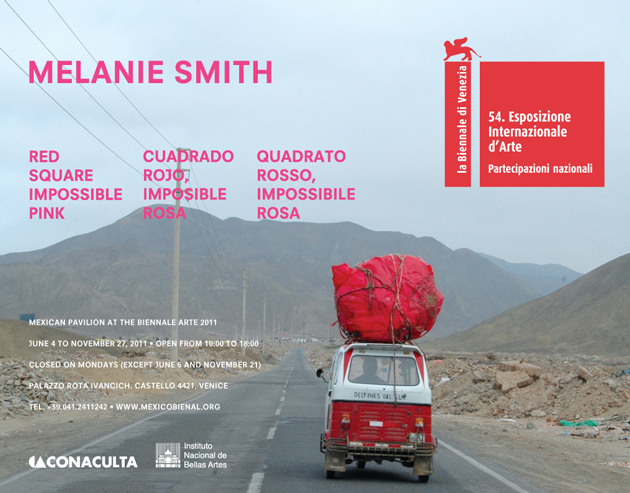
We’ve gotten word that the Mexico Pavilion is shaping up to be something exceptional. Featuring the artist Melanie Smith, who is British but has lived and worked in Ciudad de México for over two decades, and curated by José Luis Barrios, the exhibition is billed Cuadrado Rojo, Imposible Rosa (Red Square, Impossible Pink).

“Red Square Impossible Pink is an exploration on the frame as the aesthetic and political limit of representation in art. In Melanie Smith’s work the pictorial question on the frame as a limit has driven large part of her artistic research. By questioning the aesthetic and artistic practices of modernity — particularly the relationship between abstraction and utopia in Suprematism — this project works on the displacements and variations this utopia has produced in Latin American geo-esthetical emplacements. Thus, Smith tackles the issue of the transformation of utopias as artistic projections into heterotopias as productions of social and political experience in Latin America.”

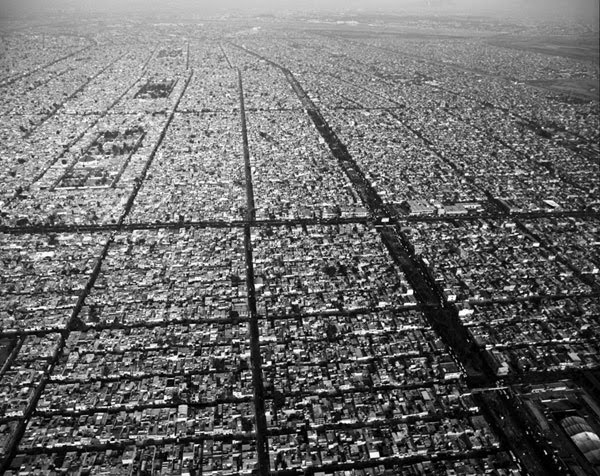
Despite its nebulous description, it will include a major portion of Melanie Smith’s paintings, installation and video works. Her “expanded vision of modernity,” which is undoubtedly informed by her position as both British and adopted Mexican. Her works have generally concentrated on Mexico City itself – its vast size, its massive and diverse population, its decay.

Mexico itself has become an absolute cultural hotbed in the past few decades, with a skyrocketing artistic and geopolitical importance. Its central position between the rest of Latin America, the United States and Spanish Europe will make it even more economically and cultural pivotal in the coming decades. The exhibition should also prove an interesting corollary to our recent editorial about American hipster culture in Mexico.

Much more to come from us about the Biennale in the days ahead. Find the Pabellón de México at Palazzo Rota Ivancich – opening vernissage June 2 at 18:00, and running from June 4 until November 27th.

Tag Christof – Image courtesy Pabellón de Mexico

18/05/2011

Terence Malick / The Tree of Life

.

Terence Malick / The Tree of Life

Terence Malick’s new film, The Tree of Life has caused plenty of media buzz over the past several weeks. In a career spanning four decades, this is only the fifth film he has directed, so the anticipation has understandably been massive.

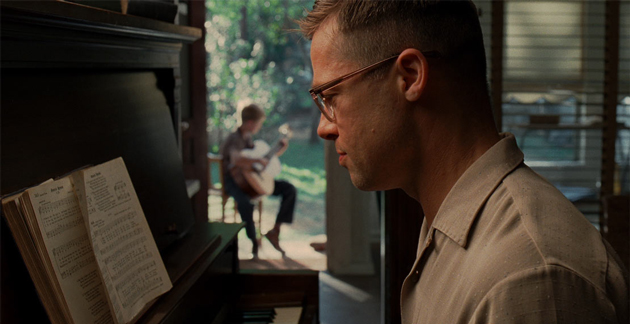
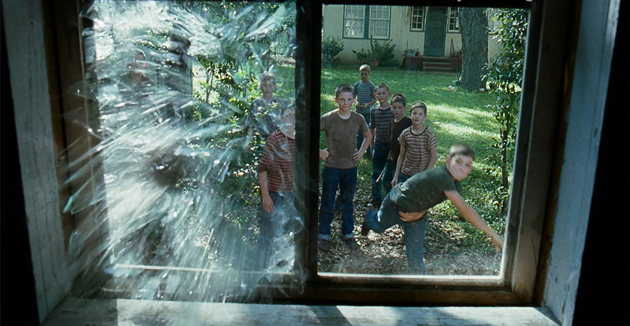
With hardly any buzz around his directorial work since 1998’s “The Thin Red Line”, this film – which is the only film he’s both written and directed besides 1973’s “Badlands” – was almost sure to be a revelation. But beyond its star-studded cast, epic story and the hype, the cinematography is sublime. Full stop. Cinematographer Emmanuel Lubezki – who was also behind the gorgeous photography in Burn After Reading, Y Tu Mamá Tambien, Like Water for Chocolate and several others – certainly had his work cut out for him, and despite differences in opinion among critics, the film is sure to be a feast for the eyes.


So since photography is at the heart of what we do, we just couldn’t help but share and spread our affection and anticipation for the film. Now that it’s been dissected and pored over by the critics at Cannes, all there is left to do is wait for Italian release on May 27th. We’re already queuing…

From the Bureau – Images courtesy Fox Searchlight Pictures & twowaysthroughlife.com

18/05/2011

Essen: Delhi Chicken / Mysore Pack

.

Essen: Delhi Chicken / Mysore Pack
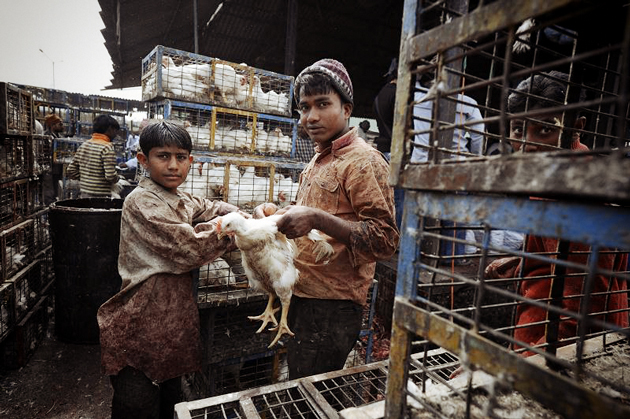
India is an infinite tapestry of overlapping cultures and opposing traditions, miraculously held together by inclusive policy and a long history. In the sprawling metropolis of Delhi alone, at least eleven languages are commonly spoken. Modernisation is widening the already massive gap between rich and poor, and international fashion, music and art is pouring into Indian culture at increasing speed. It comes as no surprise that India’s food culture is equally as diverse, both in terms of the dishes themselves, as well as the religious and social customs that go into each cuisine’s preparation.
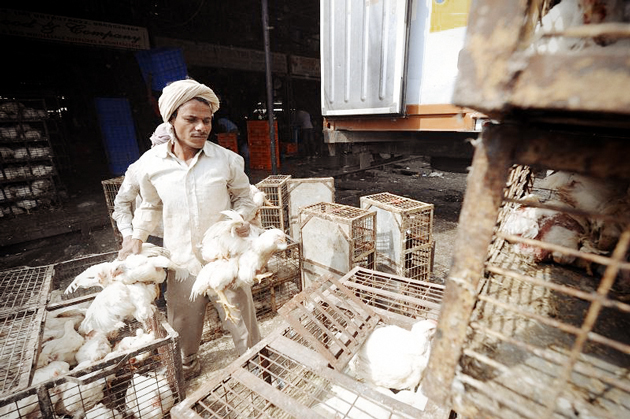

Sikh diets differ markedly from those of hindus or buddhists, and all can differ markedly even within the groups. Islam openly encourages vegetarianism, but for muslim carnivores Koran law requires that the meat they eat be slaughtered as humanely as possible. Factory farming is out of the question. India’s vast muslim population, therefore, requires an alternative.

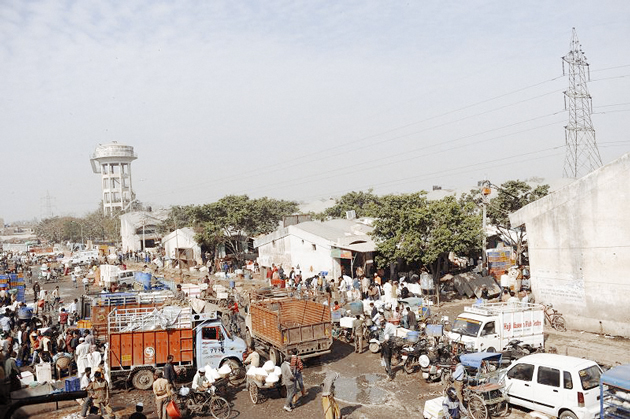
Somewhere deep inside the pulsating Delhi metropolis, hidden in plain sight adjacent to a massive food market, chickens are slaughtered in accordance to Koran tradition. This is a sophisticated operation despite its apparent lack of machinery, with upwards of two billion chickens passing through every year.
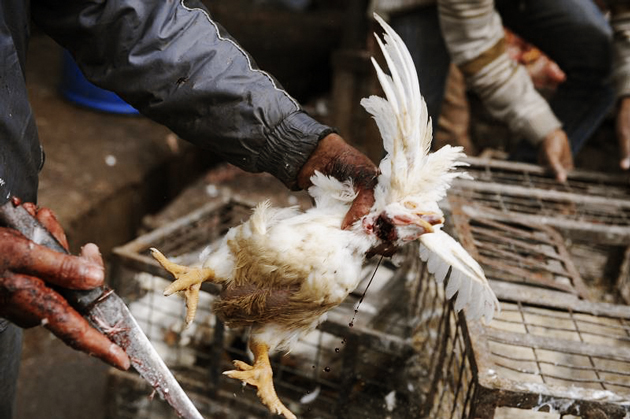
Italian photographer Vittore Buzzi managed the difficult feat of capturing these heroic scenes. Blood. Overpowering smells. His recounting of the story is both disorienting and revealing: this food preparation for a modern society, even when regulated by a religious law that forbids cruelty, is a gory, dirty affair. This type of work is livelihood for many and chicken is an excellent source of protein for millions, but the violence inherent in the process is something we usually don’t give much thought to.

“The inner section of the market pulsates. Millions of terrorised chickens stare at you from cages, and the bitter odour of their excrements mixes with the sickly sweet smell of blood.”

While they may be unsettling, Vittore’s images provocatively raise the awkward issue of our tenuous relationship with food. Muslim or otherwise, most food crusaders today tirelessly advocate a more intimate relationship with everything we eat. But there is undoubtedly an awkward disconnect between informed consumerism and honest acknowledgement of our food’s origins: knowing where your vegetables come from is one thing. Coming to terms with where your meat comes from is much more difficult.
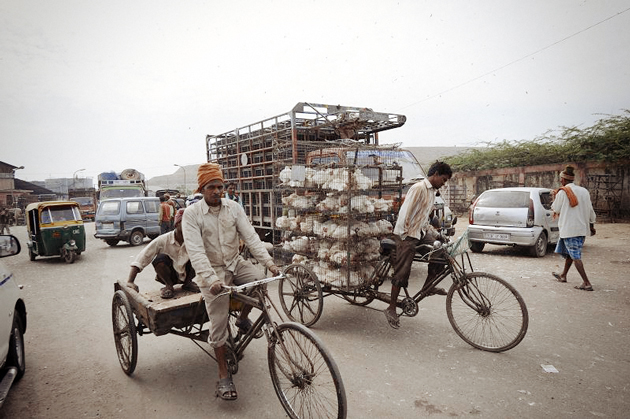
“In Europe it isn’t quite so easy to take these kinds of photographs… We seem to act as if the animals we eat grew on trees and didn’t have to be killed to be eaten. We distance ourselves from reality to sanitise our existence: cellophane and already cleaned chickens…”

In honour of the chickens, today we bring you a conspicuously meatless Indian treat from the canon of 19th century royal gastronomy.

Mysore Pack

The dish was prepared for the first time by Kaakasura Madappa, one of the chief Mahatmas of the royal court. The chefs of the kingdom were required to prepare sweets everyday for the court. One day, Madappa invented Mysore Pack by accidentally mixing besan (gram flour) with butter. It was loved by the royals, and subsequently by the common people.

The Maddappa family kept the secret of its preparation for years, until the grandchildren of Madappa opened a kiosk in Ashoka called Sweet Guru. Today, the fourth generation of the family runs the business and Mysore Pack has become part of Indian gastronomic patrimony.

Watch out – this is a recipe that can get quite sticky!

200 grammes besan (gram flour)
400 grammes sugar
200 grammes ghee
300 ml water

In a saucepan, heat the sugar in the water until when almost at boil, it attains a pastelike consistency. Slowly add the flour, mixing constantly making sure to avoid lumpiness. Once everything is well mixed, add the heated ghee and continue to mix.


Cook until the mixture becomes frothy and the ghee begins to separate. Pour evenly onto a plate coated in ghee. When it solidifies, cut into pieces and serve.
Visit Essen for more fantastic insight into the world of food.

Photos Vittore Buzzi – Text Tag Christof – Recipe Christina Zaga
17/05/2011

2DM / Hero 5 & Simon Nessman

.

2DM / Hero 5 & Simon Nessman

We previously shared Bruna Kazinoti and Ana Murillas’ fantastic editorial on Malthé Madsen for the most recent issue of eye-candy-fest Hero.

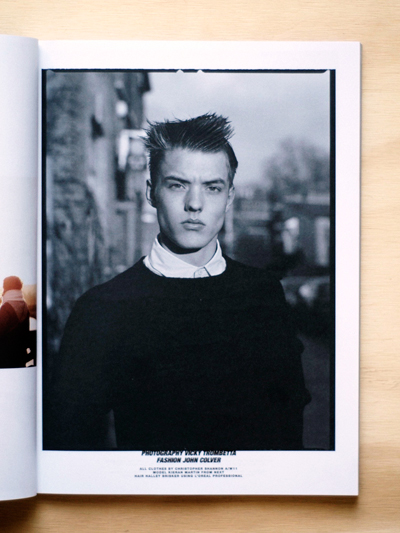
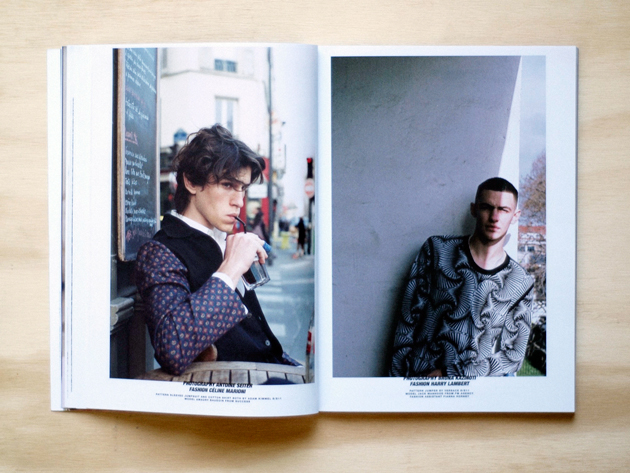
Now that we’ve finally gotten our hands on the entire issue, we’re glad to share quite a bit more about the issue, including more excellent work from the 2DM universe. This month marks the start of a new section in the magazine, billed REFS – a reference of contemporary fashion. It’s to be a digest of the best models, photographers, stylists and hottest brands.

For the new section, Vicky Trombetta shot Kieran Martin in Christopher Shannon and styled by John Colver. Céline Marioni styled Amuary Baudoin in for photographer Antoine Seiter. And in case you hadn’t gotten enough Bruna Kazinoti last time around, she also shot Jack Manhood in Versace and styled by Harry Lambert.

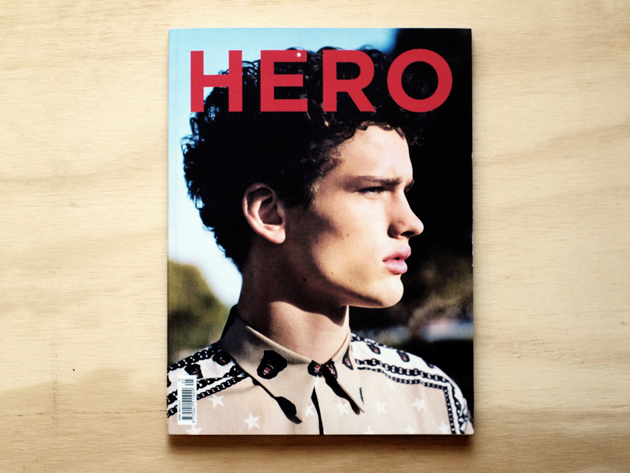
This month’s cover features curly-haired god Simon Nessman, and inside you’ll find an 18 page feature on the Canadian model extraordinaire by Fabien Kruszelnicki and styled by Stevie Westgarth.

Hero’s hot, as usual.

From the Bureau – Thanks to Juan Alvarado

17/05/2011

Mr. Chair / Vin & Mong

.

Mr. Chair / Vin & Mong

Salone Satellite is usually the antidote to the Salone del Mobile’s corporate main event, providing a glimpse at the work of future design greats before it is placed under the pressures of industry and commercialisation. As usual, there were several bright spots, from the impressive Superfarm project to surreal furniture laser-carved from solid blocks of marble, as well as a host of projects dedicated to sustainability and handcraft. But chairs are the lifeblood of Salone, and in this year’s cautious environment our favourite came from Korean design duo Vin & Mong, and just a few weeks after the event, we’re happy to report that the chair will almost certainly see production.

While Fabio Novembre’s surreal inside-a-face “Nemo Chair” for Driade caused quite a stir and Kartell’s huge plastic lineup is the best its been in ages, there was no big-named showstopper this year. No paradigm-challenging design exercises like Vitra’s “Chairless” to wow the crowds.

Vin & Mong’s muscly black chair, however, stopped us in our tracks. Billed Mr. Chair (and not to be confused with Mies Van der Rohe’s iconic MR Chair), it isn’t exactly subtle, but was one of the very few pieces we saw this year to combine generous measures of practicality and genuine imagination, as well as a sense of humour.

The designers’ take on the chair: “During our research of chairs, we found that armchairs and men have a lot in common, Men have arms, skin, and muscles and comparatively, armchairs have arms, leather and cushion. Mr. Chair shows the commonalities with a dignified wit.”

At once a sturdy armchair rendered in buttery soft leather and something to cuddle up with, we appreciate Mr. Chair for its sense of fun – something design has been sorely lacking in these recessionary times. It even captures a fair bit of the late 1970s zeitgeist that’s going around (especially if you hang a gold chain around its “neck”), and definitely provides better photo opportunities than Novembre’s creepy swivelling face.

Tag Christof – Images courtesy Vin & Mong

16/05/2011

The Editorial: Election Day / Everyday

.

The Editorial: Election Day / Everyday

There’s something about elections that inflames our sense of urgency. They bring concerns we let lie beneath the surface to the forefront, and we temporarily become activists. We engage in heated discussion. We evaluate our conditions, our place in our countries and cities, our values. Today, Milan is voting. Several candidates with drastically different agendas are vying for the future of this first-class world city, which has over the past two decades lost much of its lustre. Milan is, at the very least, ready for a renewal.

There have been drastic shifts in our way of life over the past several years, driven by an infinitely more dynamic generation and consumption of information. Much of this information is misguided, and clear voices have been subsumed by a general raucous. Advertising and marketing is slipped ever more sneakily into our daily routines. Cycles have sped up, trends live and die at lightening speed, and overarching cultural trends – i.e. the “decades” of the twentieth century – have in just a few years become unequivocally a thing of the past. In the midst of this, we face a major crisis of values. Our problems are no longer generational; they are systemic, huge and transcend age and geography.

But despite these apparently monumental changes, the real material issues we’ve faced for years remain. Problems of sustainability are accelerating. Food crises deepen. Current policy is neither adequate nor forward thinking enough to address the myriad socioeconomic, cultural and design problems we face. And if we were under-informed before the advent of blogs and Twitter (and slave to the whims of newspaper editors and TV anchormen), we now run the risk of being dangerously misinformed. All discourse, no matter how absurd, misguided or hateful, is now privy to its own platform. Sifting through the noise has therefore never been more imperative – politics, environment, everything depends on it.

So, where does your information come from? And by extension… what about your food? Your energy?

These questions address issues central to our happiness, our future, our health and even our continued existence. Their answers are values around which our generation must rally. We must remain informed (and that means much more than just spreading messages by social media), and learn to diligently curate and edit the information we consume in order to remain well-informed.

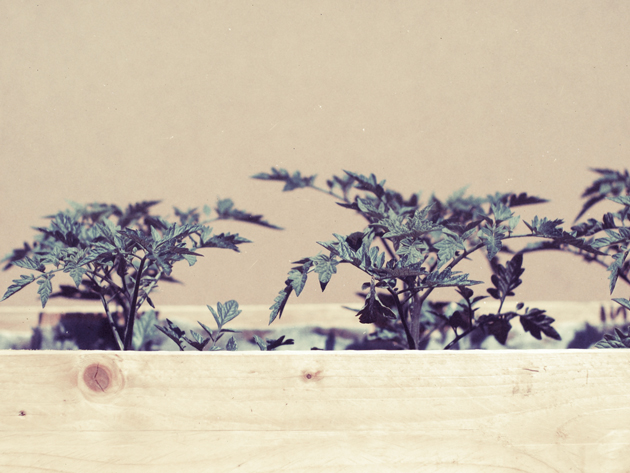
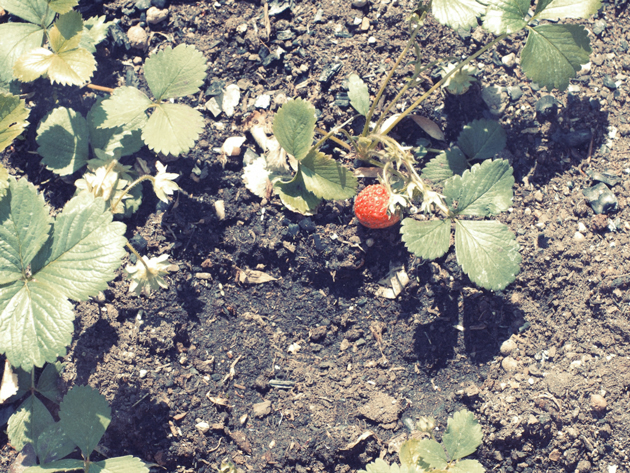
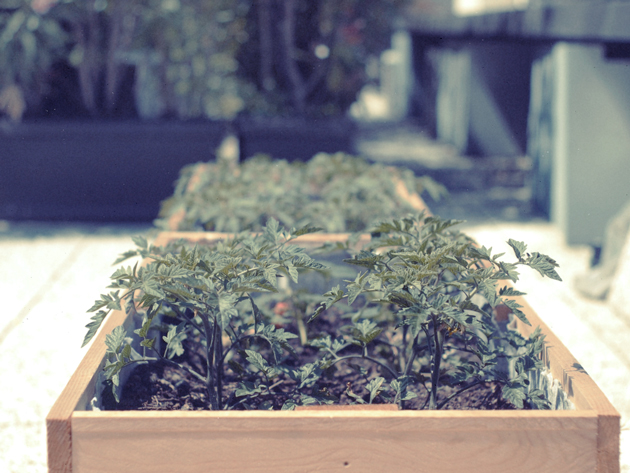
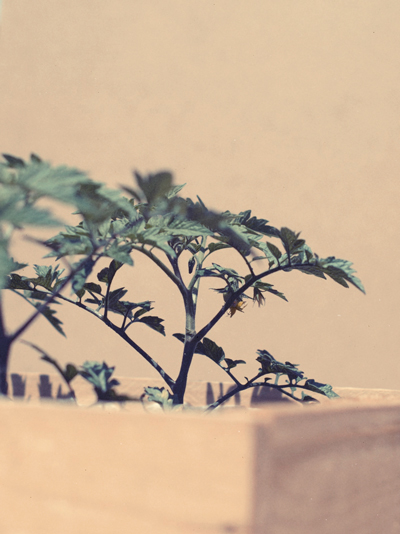
We must take a more active part in our food’s genesis, and at the very least understand where it comes from. From the simple mechanics of growing a few greens, we can better conceive of the massive shortcomings inherent in pure supermarket consumption, and then make smarter choices concerning the foods we will inevitably purchase. It takes neither an epic effort nor a huge plot of land to grow a sizable portion of the vegetables you would otherwise buy at a shoppe. Not to mention, maintaining a garden is spiritually (and gastronomically) quite rewarding.

If only a third of the citizenry with the financial means to do so would install solar panels in their homes, the impact on consumption over time would be monumental. A perceptual shift – by taking part in making energy – also would force us to understand that the electricity from the sockets we plug into everyday are not endless fountains of an intangible X that allows our objects to function.

And in much the same way, our politics must well-considered, honest and hands-on. Today is election day. Get out and vote if you’re able (and live in Milan). In addition to a recharged hope for a new era in the city, we hope for a brighter new era for everyone. Wherever on the planet you may find yourself, channel the energy and hope inherent in this day (and any election day) into these matters of substance everyday. Left, right or centre, they’re truly what matters.

Tag Christof