10/05/2012

Vidal Sassoon 1928 – 2012

Vidal Sassoon 1928 – 2012

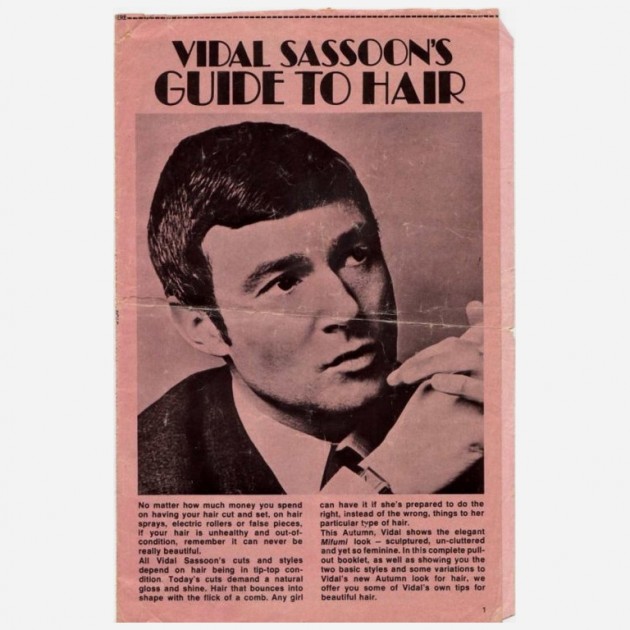
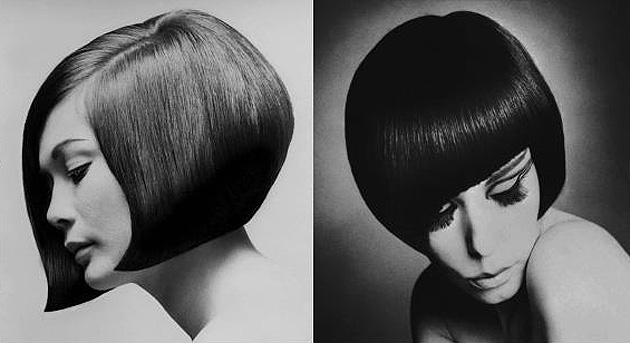
Yesterday the world received the news that the man who revolutionized the way women’s hair was cut, Vidal Sassoon, had passed away. Famous for the classic bob and his five point cut, he has been liberating the women of the 60’s with his ‘wash and wear’ style. He has been called the Chanel of Hair, a rock star, an artist and a craftsman who “changed the world with a pair of scissors.”

The London born hairdresser’s fame started the day he made a cut for Nancy Kwan. The iconic bob, which was captured in a portrait by Terrence Donovan and broadcasted to the world through Vogue, was the starting point that led everyday women, models and film stars to his salon on Bond Street. Like any good ‘couturier’, Sassoon was not afraid of taking risks, experimenting and customizing his cuts to best fit his models’ features. “My idea was to cut shape into the hair, to use it like fabric and take away everything that was superfluous”, he said in an interview with the Los Angeles Times in 1993.

The industry normally refers to fashion designers as artists who helped define our style history and way of life, but we dare to claim that Vidal Sassoon could be included in that group of names. He helped define the 60’s Britain, and saved the women who were going back to work, from dryers, curlers and hours at the beauty salons.

2010, “Vidal Sassoon: The Movie” was released and was a part of the Offical Selection of Tribeca Film Festival. A film documenting and celebrating the life and the legacy of the man who created the styles of icons like Mary Quant and Mia Farrow, and who according to American Vogue’s creative editor Grace Coddington “revolutionized just not hair, but fashion.”

Lisa Olsson Hjerpe

10/05/2012

Alfabeta2, A Place For Cultural Intervention

Alfabeta2, A Place For Cultural Intervention

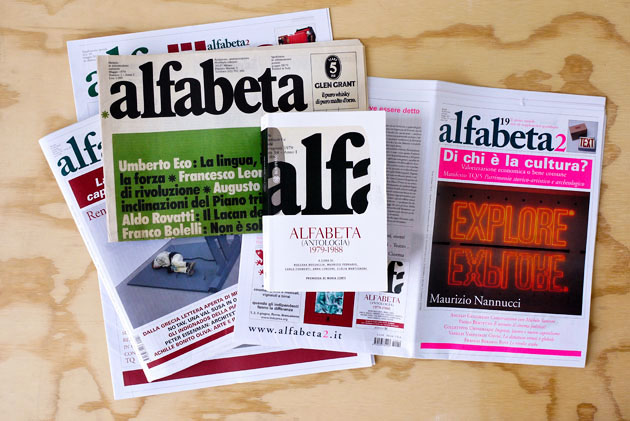
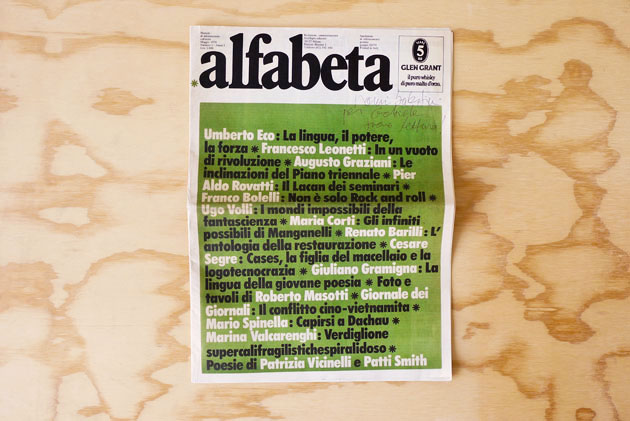
What is Alfabeta2 and why we have chosen to talk about it? To answer this question we must jump back to the end of 70’s and, to be more precise, cast our mind back to the time (from 1979 to 1988) when a monthly magazine entitled Alfabeta was issued. The periodical, conceived by the Italian poet and writer Nanni Balestrini with the collaboration of important intellectuals – among which the well known semiologist, philosopher and writer Umberto Eco – was one of the most interesting and unique editorial experiments of that period and a centre for cultural and political discussion in Italy. People with different backgrounds could find there a place to dialogue and exchange ideas about books, other magazines, exhibitions, theatre and cinema, reporting news and cultural events.


Contributors of the likes of Gillo Dorfles, Lea Vergine, Achille Bonito Oliva, Stefano Zecchi, Ugo Volli, Renato Barilli – perhaps for some of you these names don’t mean anything, but they are part of our cultural heritage – enlivened Alfabeta with long and complex articles and reviews, which conveyed the main current issues while entertaining the audience. Well, after more than twenty years from its closure, the magazine got unexpectedly back to the newsstands almost a year ago and today represents a singular and unusual publication; something that ‘communically-speaking’ seems to be totally out of our time.


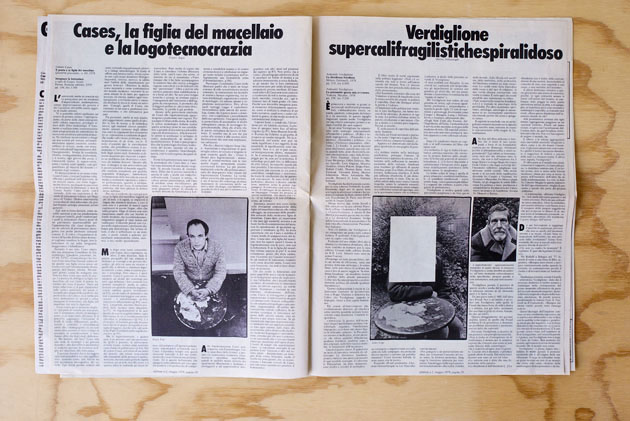
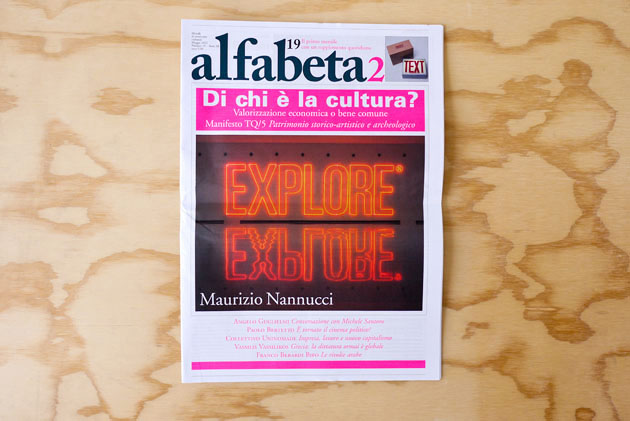
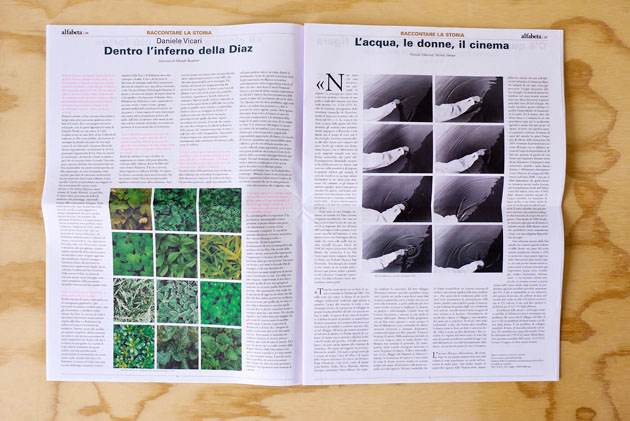
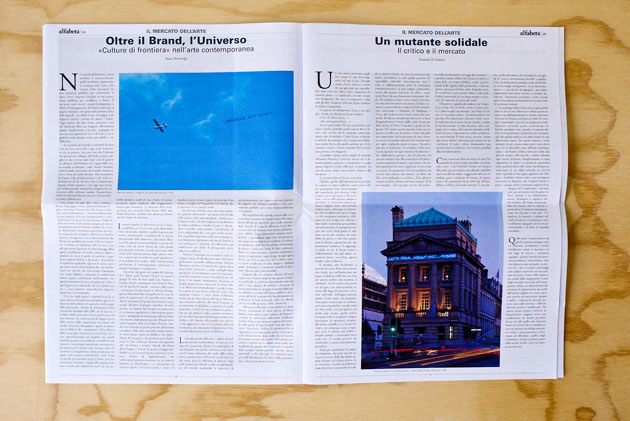
Even if the new issue has opened to the changes introduced by the Internet and the new technologies – the website is constantly updated and documents and videos are spread through the main social networks – the contents are far away from the reading proposals in vogue today, where the ‘like’ option as a critical approach dominates. The texts are long and written in a refined language and the images are few and strictly connected to a single artist chosen month by month like Jan Fabre, Giuseppe Penone, Emilio Insgrò, Michelangelo Pistoletto or Fabio Mauri.

Somebody could think that this magazine seems a bit boring, pretentious, somehow too difficult to understand, and certainly not comparable with lifestyle magazines to flip through. Looking at the pictures, some others could say that intellectuals don’t exist anymore and this kind of language is outdated. Alfabeta2 required concentration, reading keys and an effort to delve into the issues that usually our nihilistic hedonism solves with a simple sentence: ‘I try not to think about it’.

We are not nostalgic and doubtlessly we aren’t short on lightness, but since we are not just ‘profiles’, we always pick up ours ears and think that enriching our cultural background and knowing what happens around us is a way of using time, which never goes out of fashion. The May issue is now on the newsstands with a provocative question: ‘who owns the culture?’… What you think?

Monica Lombardi

09/05/2012

The First Note On The Horn – Ichigo-Ichie

The First Note On The Horn – Ichigo-Ichie

Welcome to the second part of The First Note On The Horn series from the sizzling music scene of Tokyo. Ai Mitsuda takes us to the backstage with Kuni, the talented trumpetist of Sly Mongoose. Read the first part of the story Tokyo Burning here and the second part The Misty Urban Rain here
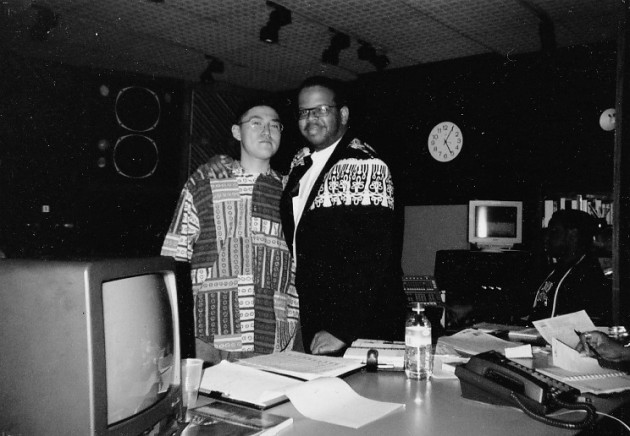
Ichigo-Ichie is a Japanese old saying derived from Zen Buddhism, which literary means One time, one encounter; Cherish this very moment, for the same stream will never cross again, may the encounter be fulfilled with the wholehearted gratitude, for it will never happen the same again.

“A vast amount of human energy and soul has lost in a moment.”

Kuni recalled the 3.11 disaster in Japan. “I’ve always believed in Ichigo-Ichie, but that day was an intense moment to realize it. Maybe we meet again and spend more time together, but maybe not, this time could be really the last time.” Kuni told that he has a lot to be thankful for in his life, and meeting different people is the most important one of them all.
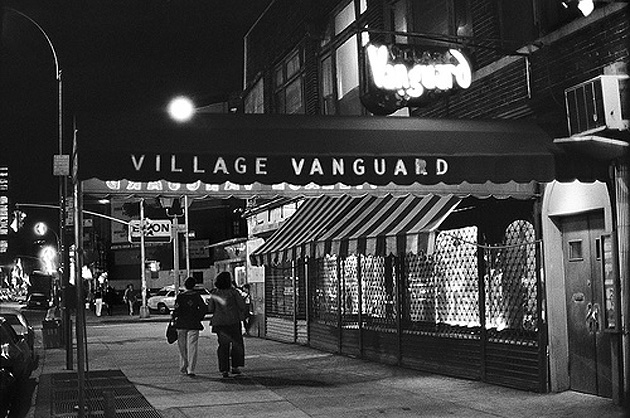
For him, Terence Blanchard has always been a wonderful source of inspiration and a precious presence as a person. To begin his new life in New York after graduation, Kuni went to see Terence Blanchard Quintet at Village Vanguard one night.

“How you gonna survive?” Terence had asked him. “Well, I’ve just arrived in the city, I don’t know yet…” He couldn’t provide a better answer.

Two weeks later, when Kuni came back home, his roommate handed him a phone slip. “Do you know a lady, named Robin?” “Of course,” Kuni had answered. “Robin, she is the manager of Terence!” What a beautiful surprise it had been, a warm welcome to join Terence’s team as his assistant. “I was deeply moved, surprised and got a little nervous to be honest, you know.” Kuni continued, “Everyone knows how hard time Terence would spend to evolve into a new stage of creation, I deeply respect Terence as an artist, most important thing is, I learned so much about life itself while being with him. I remember, once we were at The Manhattan Center recording a film score, Terence was making sure that he saw various kind of nationalities in the ensemble. He’s always mindful about these things, always open to listen to people. He makes his statements simple and direct but you can feel his warm and profound heart right there. His music really reflects his way of being, I just love the way his harmony goes.”

‘Be Who You Are’ : it was a simple but a strong message from Terence. Since the question of doing Jazz as a Japanese started smoldering in his mind, consciously or unconsciously, Kuni has been on the road. “Before being a Japanese, I am Kuni myself. It’s quite simple but important for me. I was brought up in circumstances where Jazz was very close. I had a warm and close feeling about its culture, and it was quite natural for me to step into it. But first, there’s Jazz as a cultural heritage and I wanted to learn and pay full respect to its history as much as possible. In general, I have always believed in the trees standing on their roots, leaves are not just accessories.”

“Now, I feel like doing simply music, through my one and only eyes.”

And it seems it doesn’t have to be categorized into one specific genre of music. In Kuni’s gorgeous nomadic piece called nebula (from the album of Sly Mongoose, Mystic Daddy, 2009), as the first note on the horn echoes, every instrument starts playing with its different meter, some goes in three-four, some in two-four, some in five-four, shaping an unformed cloud of dust, diffusing haunting refrain in the air, moment after moment.

Why not getting lost in this floating cloud for a while.

Ai Mitsuda – Image 1 with Terence Blanchard, at The Manhattan Center, New York City, 1994; 3 his trumpet is his own ‘voice’, courtesy of Kuni.
09/05/2012

The Editorial: C’est Maintenant?

The Editorial: C’est Maintenant?

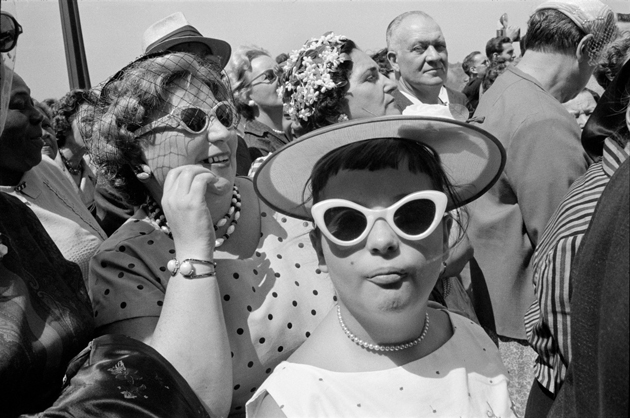
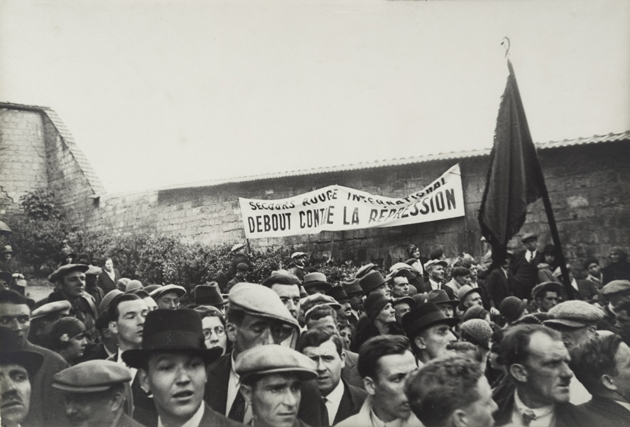
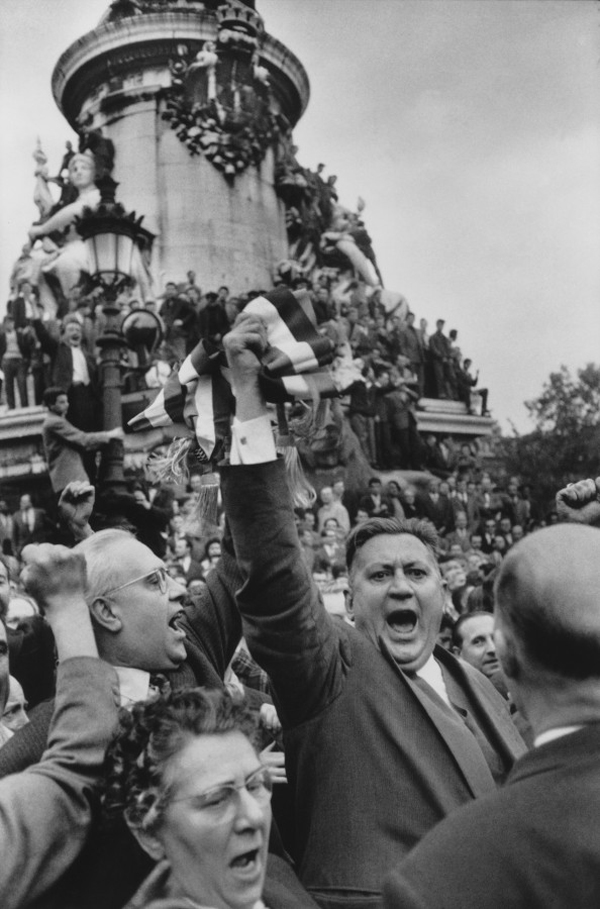
As I flew into Place de La Bastille this weekend on a clunky Velib’, the entire square burst into jubilant cheers. Red flares. French and African and Latin American flags waved happily. The leftist candidate had won! And it always feels pretty great when the candidate who stands up unabashedly for the little guy wins. Plus Monsieur Hollande is a welcome change from the eminently smug, snarky Sarkozy and looks like a wholesome, kindly grandad.

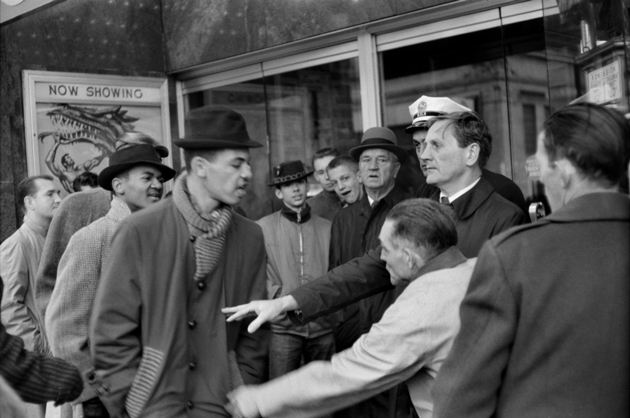
As the odd political pundit and Socialist party member shuffled on and off stage, each giving short speeches about the momentous victory, familiar refrains were oft repeated with slight variations: “Banks will no longer order, they will obey!” “We’ll show Europe that exit from the crisis will come through growth, not austerity!” But as the night’s planned entertainment descended into a bewildering lineup of C and D grade non-sequiturs, parts of the crowd broke into feel-good chants of ”Sarkozy, en prison!” under Holland’s omnipresent slogan “C’est maintenant!” (“It’s now!”). And for at least one evening, France had found some swagger.


But surely enough, markets were down on Monday. A national leader can’t exactly rally against banks and expect them to rally around him. So, while a change of energy and a change of face was much needed, Europe this week is finding itself in a seriously precarious position. While Spain and Italy and even France itself face mounting problems of unemployment, increasing poverty and still uncontrolled levels of debt, one of Europe’s biggest economies will now be taking on (and advocating) even larger loads than before.

Political cartoonists and much of the blogosphere have been declaring the death of the love affair of economic restraint between Germany and France’s leaders, cutely dubbed “Merkozy” by many. So, what does the divorce mean for Europe? What kind of example does killing austerity set for Greece? Can the Euro survive it all?

France is already being crushed under the weight of its colossal bureaucracy. And as one of the two de facto titan stewards of Europe’s future, it also stands to be crushed by the weight of its own responsibility in the wider world. So here’s to you, Hollande: we like you, but you need all the luck you can get.

Tag Christof – Images courtesy of Henri Cartier-Bresson

08/05/2012

Kristina Gill: Carrot Cake

Kristina Gill: Carrot Cake

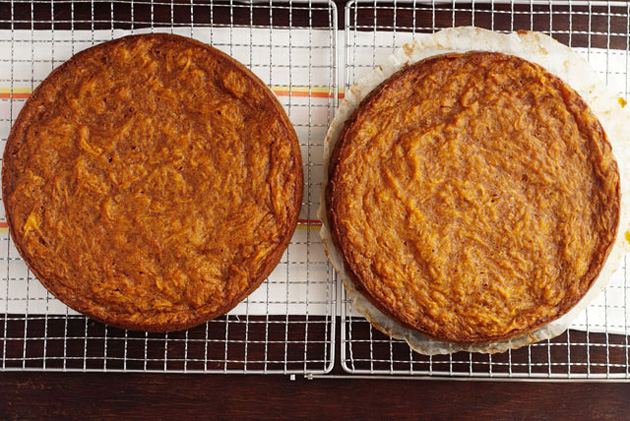
One of my favorite cakes is definitely the legendary carrot cake. Usually I love the crumb of cakes but not so much the icing. Carrot cake is one of the few cakes, maybe the only one, that I eat gladly with the icing. The cream cheese is a perfect complement to the cake, without adding too much sweetness. The perfect carrot cake to me has a moist crumb, with the right balance of cinnamon, nutmeg, and allspice. The addition of raisins and walnuts, sometimes pineapple, is ok but not necessary to make it good. These things do, however, trick people into thinking that carrot cake is “better” for you than other cakes. It’s not! But if it’s so good, who cares?

Kristina Gill

08/05/2012

General Ideas of Utilitarity by Bumsuk Choi

.

General Ideas of Utilitarity by Bumsuk Choi

While critics may claim that the only solid idea in menswear is updated classics, South Korean designer Bumsuk Choi has proved that the tailored or casual sportswear-universe isn’t just one-dimensional.

During the past seasons, South Korea has climbed the fashion ladder and proved its capability. In addition to designer German/Korean Siki Im, Bumsuk Choi is making a name for himself in the business with his brand General Idea, as he was the first person of Korean descent to present his collection during New York Fashion Week, and the youngest person ever to participate in Soul Fashion Week. Since the inception of General Idea in 2004, he has collaborated with a small team of experts to translate his visions and ideas into seasonal collections.

If sporty elements have become somewhat synonymous with South Korean aesthetics, the coming fall/winter isn’t an exception. Choi has dug deep into archived images of hockey players specifically during the 1968 Winter Olympic games, whose slick mid-century silhouette has been infused with General Idea’s modern take on utilitarian and athletic menswear. The result is a transformation of sportswear uniforms into everyday prêt-a-porter.

The main concept throughout the whole collection is the outdoor sportsman, and how he with carefully chosen garments can find protection from the elements of nature. Trousers with knee pad details, varsity jackets with toggle buttons and parkas with quilted fabric accents were all parts of the “After-Games”-themed collection which transcended a wide colour scale, from neutral olive green tones, to burgundy, beige, orange and dark blue nuances.

Other than creating wearable athletic gear with nifty detailing, Choi has also gone beyond clothing, to design a Formula 1 Race Car for Mild Seven’s Renault F1 Team in 2006, packaging and uniforms for Heineken, and an Absolut Vodka bottle. For Fall ‘09, he additionally made a capsule collection for Puma Black Station custom made to the Asian market

To resume his approach to General Idea, Choi claims, “There are a lot of different people in the world, depending on religion, culture, nation, ideas, etc. Therefore, a missing button on one person’s shirt can be my general idea since it is my own point of view. That’s why I named my own label ‘General Idea’ to show my unique style.”

Petsy von Köhler – Photo courtesy of General Idea

07/05/2012

Fischli & Weiss – the book-works

Fischli & Weiss – the book-works

Speaking from a strictly designer point of view, contemporary art can be quite intimidating. Having a background in applied arts, thus strictly related to objects of daily use, confront with the fine art world can make you feel quite unprepared or inferior. With some contemporary artists though, the perspective changes radically. This is the case with the work done by Swiss duo Peter Fischli and David Weiss.


The two artist have dedicated their career to developing projects that relate to the everyday, simple things and happenings, putting them in an artistic context, making it less intimidating. 
During their thirty year long career, which started with a casual encounter in the famous Kontiki Bar in Zurich, the duo has worked with a many different media such as photography, film, sculptures, media installations and art books. 
Starting with the reproduction of their first work named Wurstserie, a series of photos depicting daily situations made with ham, salami and pickles, printed as a HOW TO magazine, the duo has continued working with print media producing some of the most beautiful artists’ books ever.


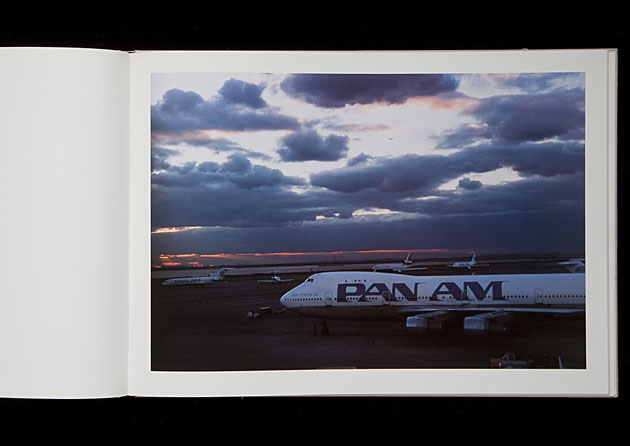
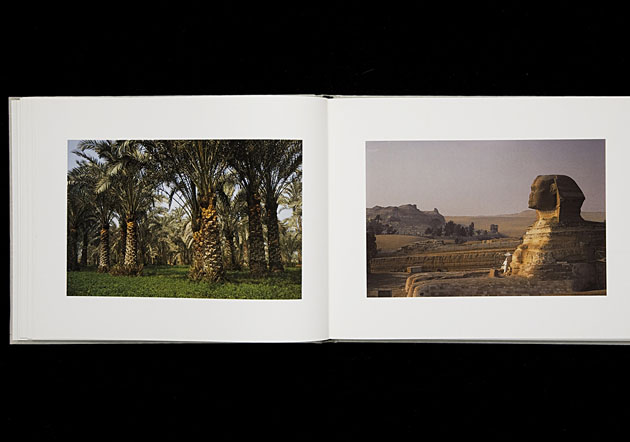
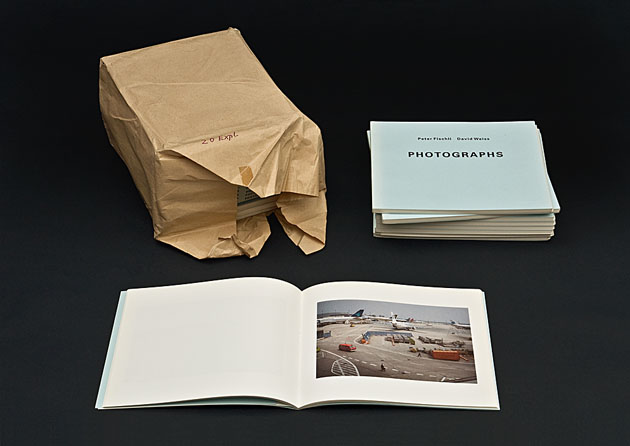
For example the book “Airports” published with Edition Patrick Frey, depicts an extensive number of airports thus confronting us with the emptiness of travelling, “when foreign places remain a mere promise, and wanderlust turns to indifference as distance’s reality is just a flashy exotic name, just another destination.” Also published with Edition Patrick Frey are the books “Bilder, Ansichten” exploring conventionally beautiful places and “Photographs”, a concise overview of their photographic work. 
These three books are exceptionally beautiful not only for the grandeur of their content but also for the masterly executed printing, thus making them real treasures. As it would be unfair not to name the other books produced by the prolific couple, here are a few others: Gärten published in 1998, Sichtbare Welt published by Walter König in 2000 and Findet Mich das Glück also published by Walter König in 2003. 
Hopefully these wonderful books will be loved and preserved in the future, as their author David Weiss passed away on the 27th of April 2012. He will be missed.

Rujana Rebernjak – Images courtesy of Edition Patrick Frey

07/05/2012

Yiqing Yin – A Young Couturier

.

Yiqing Yin – A Young Couturier

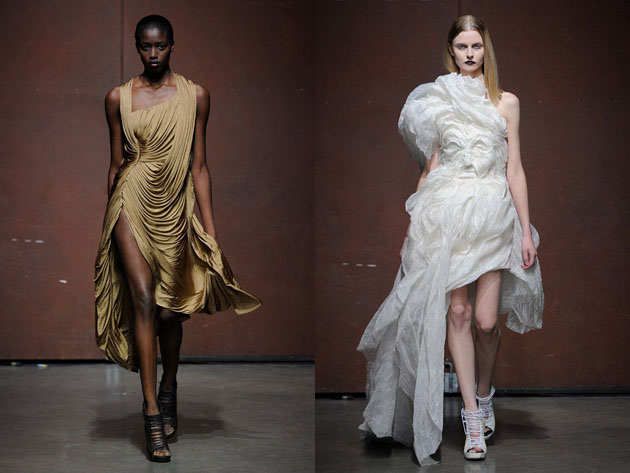
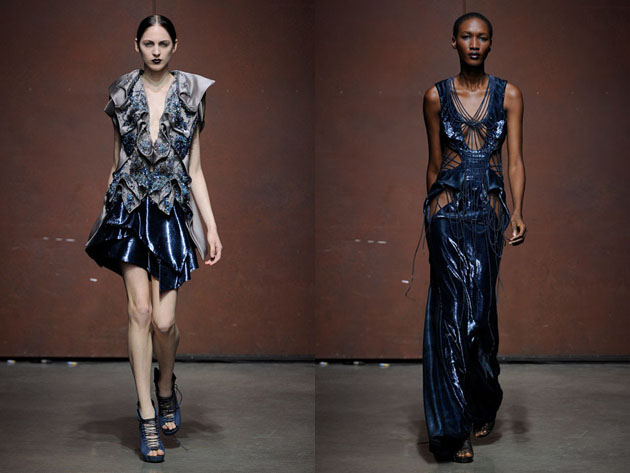
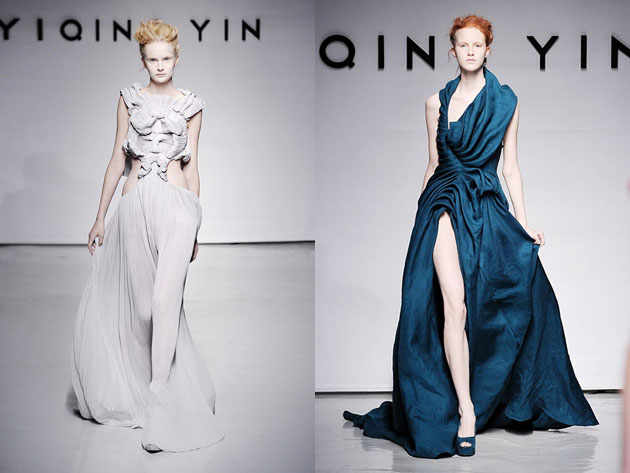
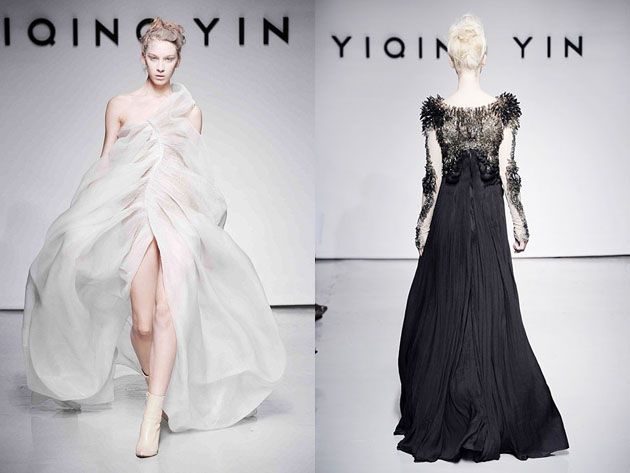
“Couture is about service, the salon, the vendeuse, the box, the way the clothes are wrapped and presented to the client.” These are Karl Lagerfelds words about the package of haute couture; made-to-measure garments in the most exquisite fabrics with the finest embroideries, details and workmanship. It’s the fine art of fashion and Paris is the guardian of it. On its own dates and aside from the hysteria during the ready-to-wear fashion weeks, the couture week presents the few designers and fashion houses that execute the criteria’s of The Chambre Syndicale de la Haute Couture. One of the selected designers is Chinese born, French based Yiqing Yin, who debuted her eponymous brand at the Hyères 2010 and was invited to present her first collection during the FW11/12 Haute Couture shows. SS12 followed and the designer presented her second collection of fluid materials, sweeping dresses and a treasured handwork that makes her measure up to be one of the brands helping to preserve Paris’ position as the World Capital of Fashion.


Yiqing Yin’s collection consists of simple colours, aerial garments and mixes what at a first glance may look like effortless dresses with pieces that make you want to go closer to study the meticulous cuts, embroideries and fine points that make the collection a whole. Haute couture often gets attention as the medium where fashion designers can realise themselves as artists. Even though it’s lovely to talk about haute couture as a form for the highest art of fashion, the two words that make the name are legally protected and a strictly controlled label only to be used by the fashion houses who have been granted ‘access’ by the French Ministry of Industry. Just like fine art, couture is a pricey story, and for the designer, a time consuming one. The designers of fashion houses often justify the costs by the promotional attention it brings to the brand. One would like to think that it’s all about the art, but at the end of the day, ‘the business of a business is business’; one of the reasons why the ready-to-wear industry today is the leading one. Though, young designers like Yiqing Yin, who still is all about the experiments and fully focused on the couture, reminds you that it’s the artistic minds and hours of skilled craftsmanship that are the foundation of haute couture. Because of its exploratory nature, it’s directional for fashion and the ‘heavy’ symbolic value of the art is often conveyed through the garments themselves as well as through the lavish shows.

Yiqing Yin is still young in the haute couture industry, but awarded with the Grand Prize of Creation by the City of Paris, and she’s one of the 8 young designers selected by French Vogue to receive the ANDAM “Premières Collections” prize in 2011, she already has the habit of exhibiting her art, and it’s yet to be seen if she will become one of the young couturiers to make a long-term name on the Chambre Syndicale’s desirable list of designers.

Lisa Olsson Hjerpe – Image courtesy of Shoji Fujii & Yiqing Yin

06/05/2012

Sunday Breakfast by Love For Breakfast

Sunday Breakfast by Love For Breakfast

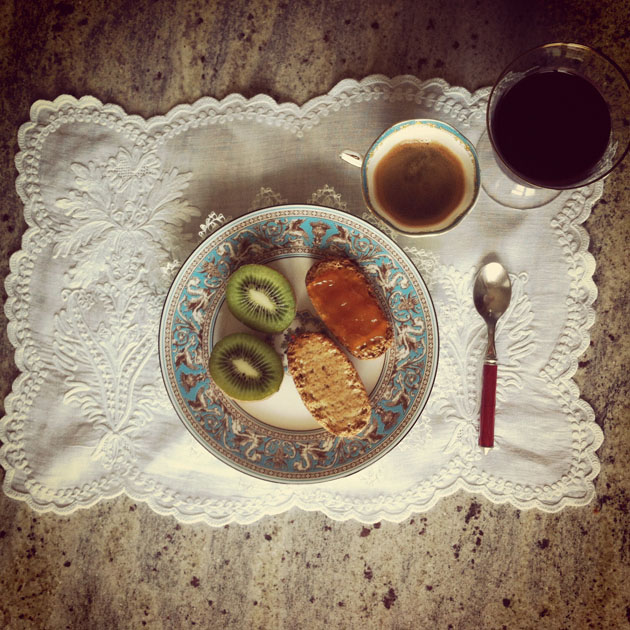
A classic flavor takes you back in time. Decorated pottery meets a choice of genuine crisp bread and jam enlivened by the freshness of a fruit. The blueberry color dyes the new day’s a different tone.

Alessia Bossi from Love For Breakfast

04/05/2012

Sean Frank – McQueen prêt-à-porter AW12

Sean Frank – McQueen prêt-à-porter AW12

2DM Blogazine is honored to present the new behind the scenes catwalk film by Sean Frank for Alexander McQueen A/W 2012 collection. For the third time the great Londoner filmmaker has been asked to show the intricacy, vibes and magic of the catwalk preparation of one of the most interesting brands worldwide.

More than 5 hours of shooting is perfectly edited in a 3-and-half minutes of video, which brings us directly into the Sarah Burton’s gorgeous creations. 34 looks that display the idea of a complex and ethereal woman, wearing weird silver visors and près-du-corps dresses, characterized by narrow waists and slim silhouettes. Volume and textures enhanced through the use of fretworked organza, white and fuchsia plum and goat fur that adorns the fabulous garments from shoulders to hems, up to the boots as a glamorous and unique trait d’union.


John Gosling’s crescendo music accompanies the narration giving us the right feeling of the hectic and, at the same time, charming atmosphere, letting us live an incredible experience.

See here the previous masterpieces from Sean Frank for Alexander McQueen: the Autumn Winter 2011 and Autumn Winter 12 haute couture videos.

Once again compliments to Sean Frank. Another beautiful piece!

From the Bureau – Images and video Alexander McQueen with special thanks to Sean Frank