20/06/2012

MeMO – Museums and Men’s Fashion

MeMO – Museums and Men’s Fashion

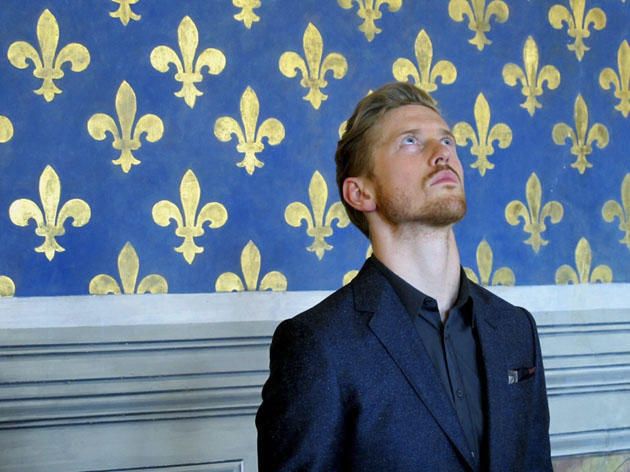
The discussion of what is art and what is fashion is a constantly on-going one. With an opening party and three following Notte Bianca‘s Mondadori presents MeMO – musei e moda uomo. The project aims at taking an inventive angle to the male fashion during Pitti Uomo 82 and is dedicated to merging art and fashion through twelve video collections placed in the five Civic Museums of Florence. “Fashion is art and art is fashionable”, says Angelo Sajeva (president and CEO of Mondadori Pubblicità).


The opening event was held at Palazzo Vecchio on Monday night, the day before the official opening of Pitti Immagine Uomo. From here onwards the five chosen spots will be open for the public to enjoy 19 – 21 of June, between 7PM and midnight each evening. The pieces are produced by video makers specialized in fashion, and will help the companies to create a story and an image outside of their normal habits.

“Art and fashion are generally the fruit of the same input: creativity!” continues Mr Sajeva.

The project adds to the art-fashion discussion and the invited opening crowd were able to take part in an astonishing event and in a great starting point for the upcoming week in Florence and Pitti.


The pieces can be seen at Fondazione Salvatore Romano, Capella Brancacci, Museo Stefano Bardini, Museo de Palazzo Vecchio (Sala d’Arme) and Museo di S. Maria Novella (Cappella degli Spagnoli).


Lisa Olsson Hjerpe 

20/06/2012

Pitti Uomo: Who Is On Next

Pitti Uomo: Who Is On Next

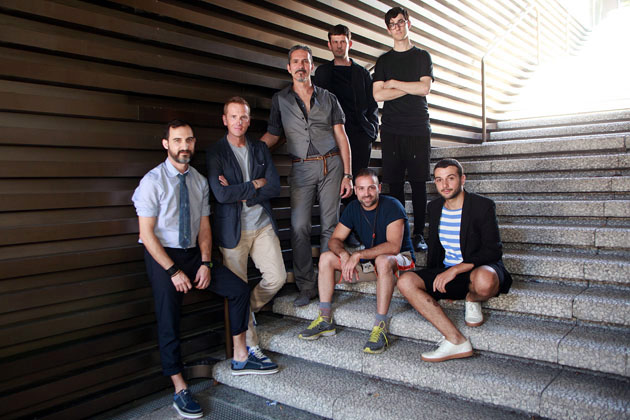
Pitti Uomo 82 has started, colouring the city of Florence with well-dressed people, fashion spirit and new talent. Some of that talent is presented in the project of Who Is On Next. Yesterday at 4:30PM the jury consisting of fourteen acknowledged fashion personalities, presented Swedish designer Erïk Bjerkesjö as the winner and new member of the now rather large Who Is On Next “family”.

“A lot of my inspiration comes from the austere and slightly barren nature of Gotland, where I’m originally from”, Bjerkesjö told The Blogazine after the prize ceremony.


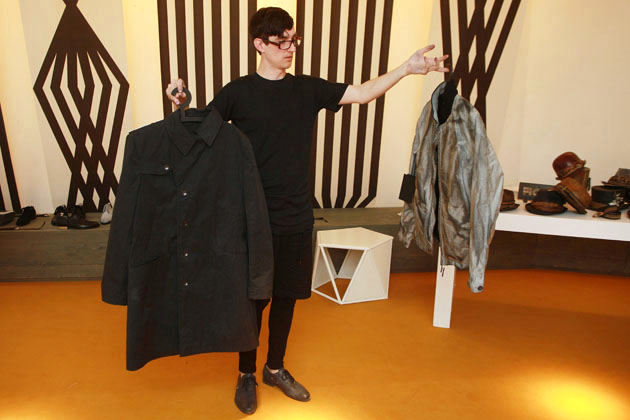
Erïk Bjerkesjö -who started out with a shoe line two years ago- has now extended his aesthetics to include men’s clothing. “The silhouette of the new clothing collection is inspired by the way the craftsmen are looking like while working. Craftsmanship and artistic work are where my passion lies, and I am grateful for the belief the jury has in me. Now I’m going to continue to focus on great production,” the talent told us.

The designer earned his master in Advanced Footwear and Accessories in Italy, and all his shoes are produced by craftsmen in Tuscany. Bjerkesjö is a young talent, mixing the skills of Italian artisans with his Scandinavian roots, turning them into a personal and innovative collection.

Who Is On Next, which is a project in cooperation between Pitti Immagine Uomo, Alta Roma and L’Uomo Vogue, is promoting new talents and helps them to build name for themselves on the international arena among top buyers and press. The project started eight years ago focusing on women’s fashion, but is since that has also developed a large prize in the menswear area as well. New for this year is the partnership with Yoox.com. The online store awarded Andrea Cammarosano with the prize for the most innovative collection, and the designer will have his S/S13 collection exclusively on sale on yoox.com.


Lisa Olsson Hjerpe – Image courtesy of pittimmagine.com 

20/06/2012

The Editorial: Vroom Vroom Kaboom

The Editorial: Vroom Vroom Kaboom

August is still a month away, but it is most certainly summer. Well, except maybe in Australia. But Italy is caldissimo, and the Pimms and sparkly orange spritz have suddenly reappeared right alongside cut-offs and other summer style abominations just in time for that yearly flesh and flab fest, the World Naked Bike Ride. Pedal pedal!

Yes, it’s all skin and sunshine for the next few months. And that means you’ll soon be on holiday. Last year we advocated adventure via staycation and choked at the thought of the millions of hermetically shut-in “resort” travellers , but in the spirit of what feels like more hopeful spin around the sun, this year we feel the exact opposite. Go. Far far far and wide. And since you’ll likely be leaving the realm of tubes and tramways, it’s well worth giving your mode of transport a long hard think.
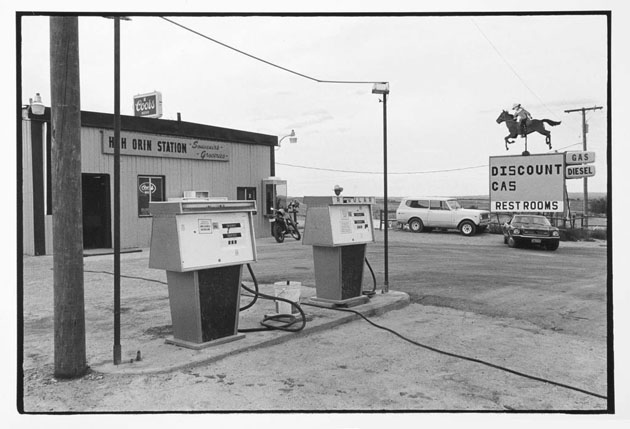
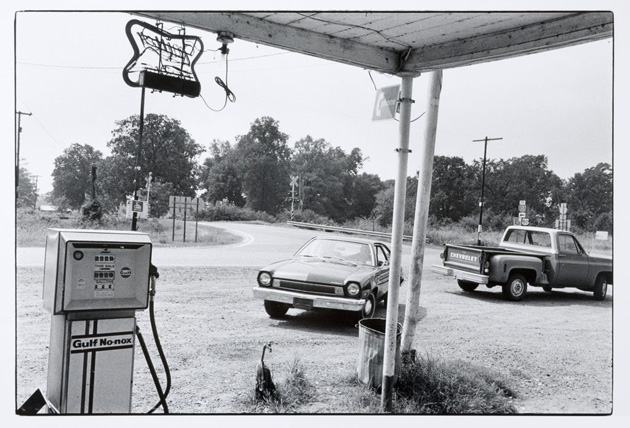
For many of us city folk, the car has become ultimately a summer splurge. An appliance only useful on that rare occasion on which urban transport and/or two wheels just can’t suffice. A hedonistic escape pod, and not as for millions of suburbanites (and urbanites, too), a semipermanent multi-ton extension of the body that must be parked, fed, maintained and insured gratuitously. Still, for all the trouble the car causes, its romance is undeniable. And so its place as both a cancer (congestion, pollution) and lifeblood (we’re basically stuck with it in the short term) of our environments is something even the Oyster-card class must consider carefully.

It somehow seems that this year is a turning point. As discourses in environmentalism and urbanism and technology and culture surrounding the car continue to collide, the car’s future looks poised to drastically change. Fisker and Tesla are on the brink of launching mainstream (and sexy) electric cars, and alternative energy car startups are mushrooming. Cities are pushing cars out to make way for bike schemes and lanes. And many governments are on the brink of mandating accident avoidance measures that will make autos generally less autonomous and also makes self-driving cars all but imminent. Will we miss the good old days?

A simple equivalency says yes: +Big Brother = –Freedom. And it’s always touchy to argue that less freedom and less choice will make us better off.
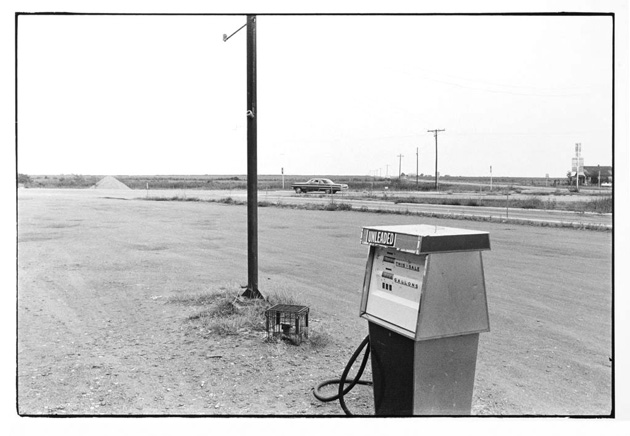
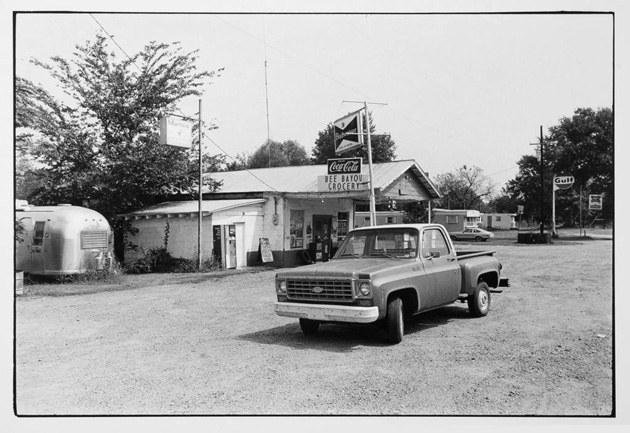
But as GM, VW, Toyota, FIAT and other auto giants look towards China, Russia and India for driving profits, the capitalist machine will once again beat a dead horse until profits run dry. Afterall, there are still a few billion people who don’t own one. And shareholders certainly won’t stand for that. But exploding Tata Nanos, greying skies and dwindling oil reserves mean that, sooner than later, the car as we know it must die.

Still, even the hardcore haters among us know that the car can’t just disappear altogether. So what’s the way forward? Marvels of engineering prowess like the Chevrolet Volt? (Its political power certainly suggests there is something to it that has sure pissed off some oil companies…) Sweeping policy changes that crush the automobile industry and reformat the built environment to be feet- and cycle-centric? Something somewhere in between? In any case, the road as Kerouac and Friedlander and Ruscha once lived it is gasping for its last breaths. It’s sad, conflicting and excellent to see it go. Let’s enjoy it while it lasts.

You’ll hear from me from behind the wheel in that most maligned and car crazy of super cities, Los Angeles, over the next several weeks. Happy summer!
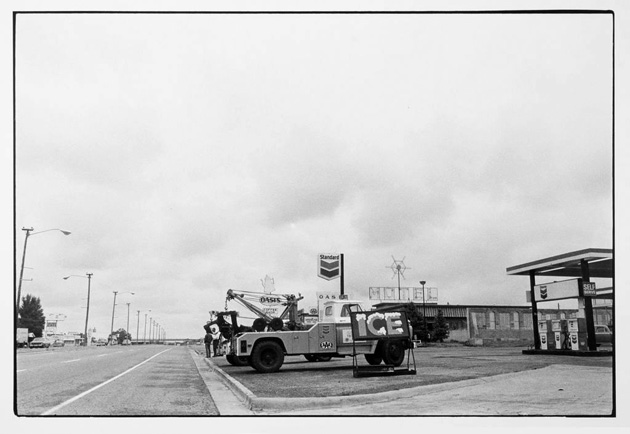
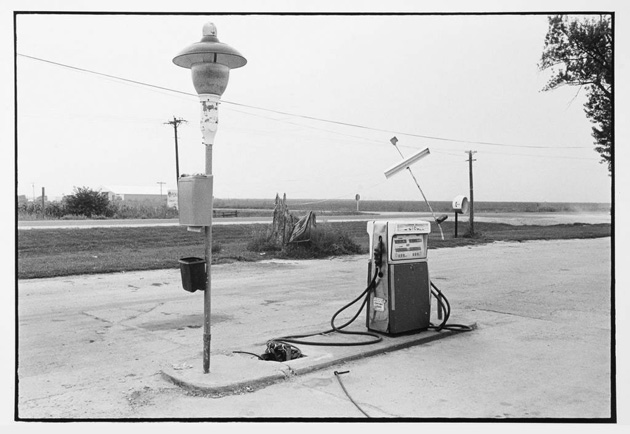
Tag Christof – Images David Freund
19/06/2012

Art Basel round 2 – Art Unlimited
Art Basel round 2 – Art Unlimited
Among the numerous sections that composed the format of the 43rd edition of one of the most important and high-level fairs all over the world, we chose to focus on Art Unlimited, a huge group show launched in 2000 and dedicated to super-size artworks. As each year, the fair basement hosted an exhibition displaying monumental works – video projections, large-scale installations, sculptures and performances – selected by the Art Basel Committee. Supported by their galleries, artists created site-specific projects, which seem to be thought for museum spaces without thinking about the rules of the market.

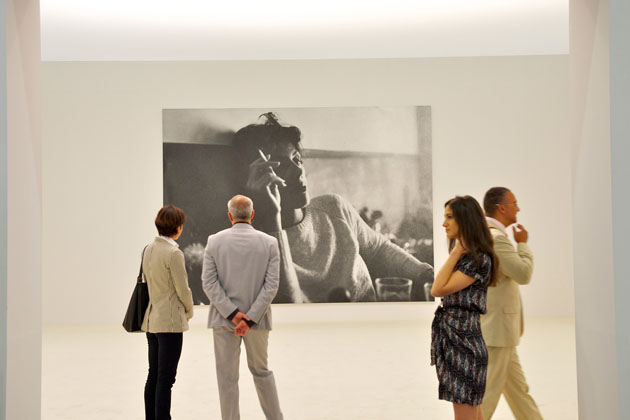
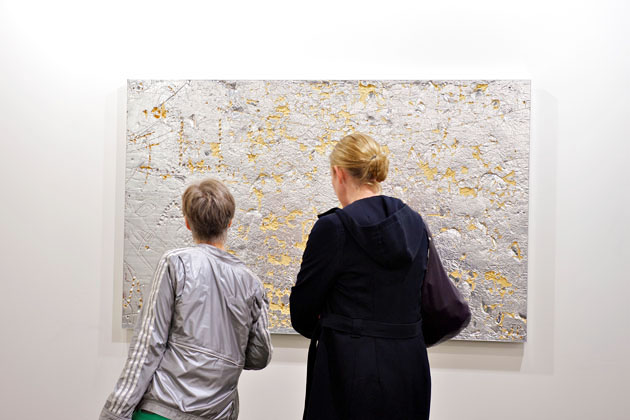
It’s hard not to be attracted by the photo-realist painting by Rudolf Stingel, and not only because of the big size (335.3×475.2 cm). The canvas, impressively similar to a photograph and hung in a suggestively empty room, depicting the New York dealer Paula Cooper smoking a cigarette in a charming and theatrical position.

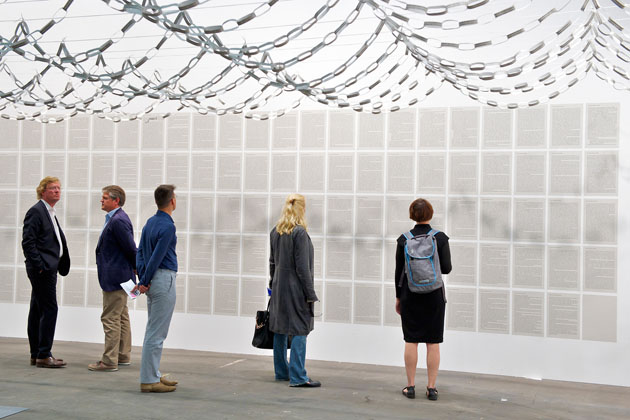
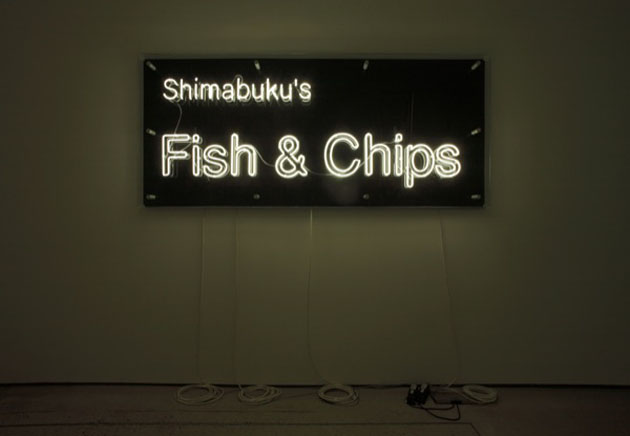
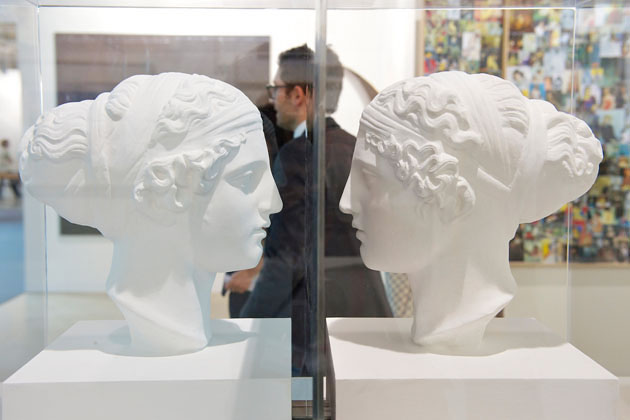
Another work capturing our attention was the installation entitled In Circles by Alicja Kwade, the Berlin based young Polish artist who explores by using different and often manipulated materials – metal plates, perforated metal, brass rings, euro coins, wood and glass panels, mirrors, neon tubes, bricks and so forth – the issues of authenticity and value of everyday life objects; while Shimabuku’s film, Shimabuku’s Fish & Chips, told the artist’s personal and ironic version of the English ever-present traditional food, showing the slow encounter of a potato swimming to meet a fish.


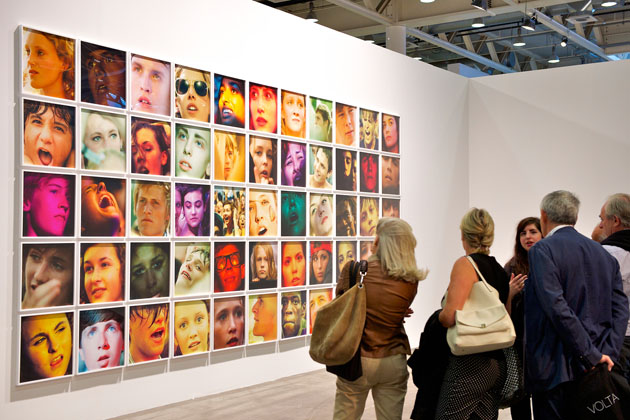
The photo-installation of 55 coloured pictures by Ryan McGinley closes the roundup of our selection. For this work, the American photographer – close to street artists, skateboarders and musicians – shot adoring and delighted fans during summer music festivals in United States and in Europe. In You and My Friends once again McGinley, was able to capture emotional moments of young people through intense close-ups, artificial colours and flaming lights.

Art Basel 2012 closed its door after 65.000 visitors and a very good (but not quantified) number of sales. The fair sustains its success thanks to the high quality of the galleries and works exhibited, and above all due to its ability to create unique cultural events that accompany and enrich its value year after another. We hope to see you there next year, or better yet, to see you in May 2013 for the first Honk Kong edition of Art Basel.


Monica Lombardi

19/06/2012

Art Basel -Vitra Design Museum

Art Basel -Vitra Design Museum

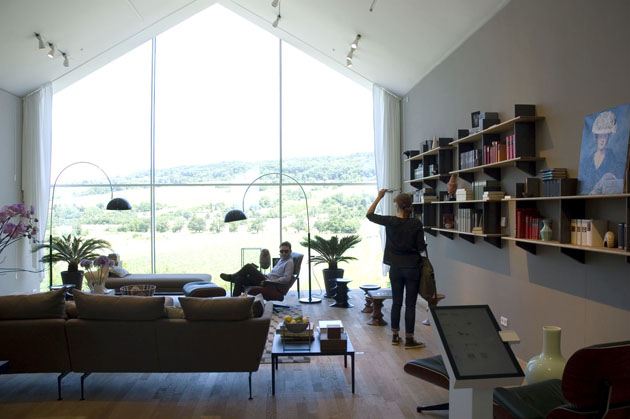
Having seen VitraHaus photographed so many times, you don’t expect to be surprised when visiting for the first time the Swiss-German complex. Actually, taking the first glance at the beautiful Herzog & de Meuron building and seeing the already design monument among the green in Weil am Rhein does come as a surprise. Although the superstar building is the first one you fall in love with, the whole complex situated at Charles Eames Str. n. 2 is pure poetry for design lovers.


Even though VitraHaus is the first attraction you wander in, it may come as a delusion for those expecting it to be the altar of design. If you imagine yourself entering VitraHaus and finding a design museum, expect to be slightly deluded. VitraHaus is simply an incredibly beautiful showroom of an incredibly innovative design manufacturer. Nothing more, nothing less. Although all the interiors are designed to the tiniest details (such as jars on the kitchen shelves or books on the coffee tables), it doesn’t offer a tour of the company’s history.

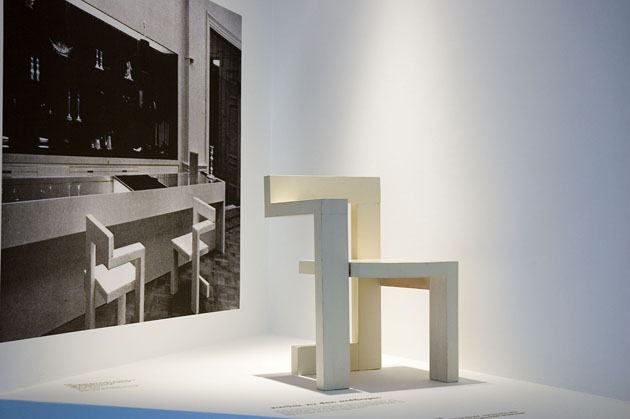
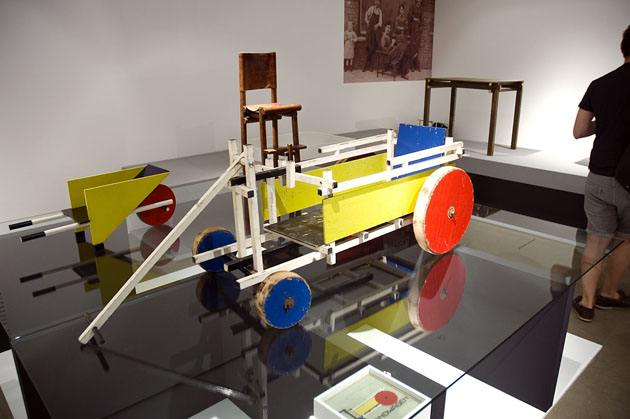
For these purpose, Vitra has built a Design Museum (designed by Frank Gehry) that periodically creates exhibitions, drawing significant amount of the material out of their archives. The exhibition currently on stage is a retrospective of Gerrit Rietveld’s work, entitled “Revolution of Space”. The Dutch master is being told through a series of objects, furniture, drawings and architecture, showing his relation to De Stijl movement as well as modernist design in general.


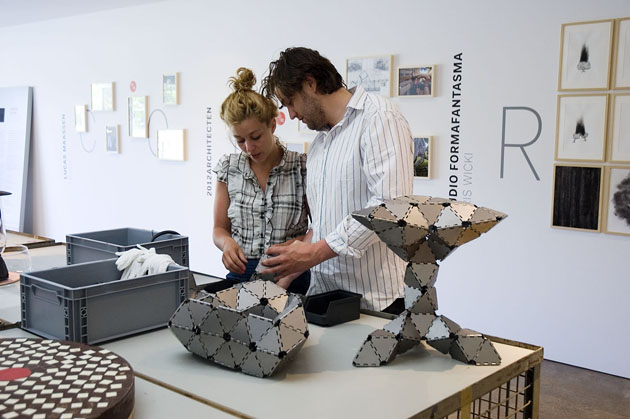
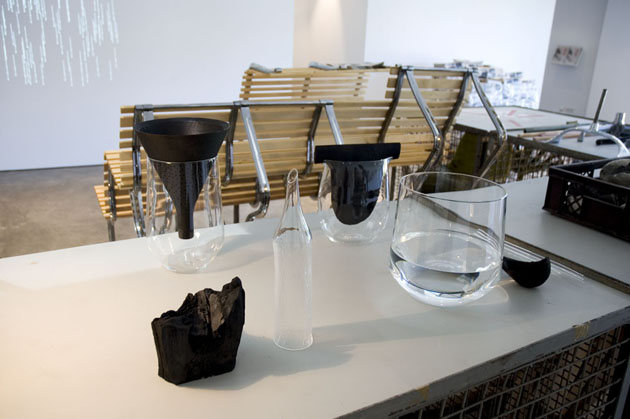
While the museum was paying the honours to the grand designer, the nearby gallery has gathered a number of contemporary designers working in The Netherlands. The show has been entitled Confrontations and displays the work produced in collaboration between designers and local Swiss industry and artisans. The designers invited are Lucas Maassen, 2012 Architecten, Studio Wieki Somers, Dirk Vander Kooij and the omnipresent Studio Formafantasma.

The aforementioned exhibitions weren’t the only thing on display at Vitra Campus. We must mention seeing a geodesic dome by Buckminster Fuller, a bus stop by Jasper Morrison, a fire station by Zaha Hadid, a petrol station by Jean Prouvé, an auditorium by Tadao Ando and production line buildings by Frank Gehry, Kazuyo Sejima/Sanaa, Alvaro Siza and Nicholas Grimshaw. A line-up that may just take us a while digesting.


Rujana Rebernjak

18/06/2012

Art Basel – Design Miami/Basel

Art Basel – Design Miami/Basel

Speaking about collectible design is almost a contradiction in terms. The idea of design we might have inherited from modernist ideology, differs significantly from the one seen at Design Miami/Basel. Even though the space offered by design galleries, a reality from complexities of industrial production, is surely an incredible platform for inquiry and experimentation, Design Miami/Basel doesn’t exactly leave you with your mouth open.

The line-up of this year’s fair was a mix between European and American galleries, extremely different in nature and attitude. The exhibitiors ranged from Gallerie Kreo, the ‘institution’ that raised to glory many of today’s most important designers, commercial giants such as Fendi or Italian jewels, like Milanese Nilufar, showing both modernist Italian furniture as well as pieces of contemporary designers, among whom the incredible Martino Gamper.
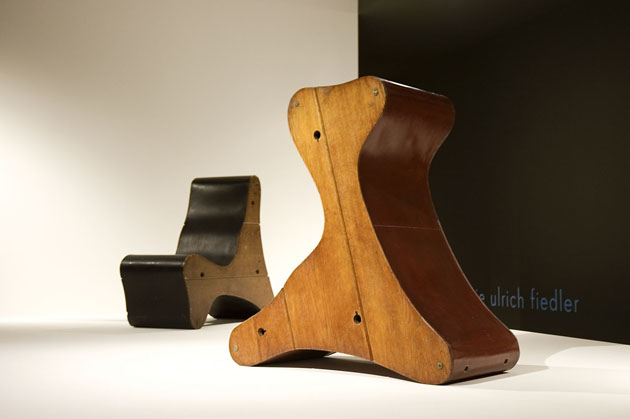
In a long list of exhibitors there were a few that stood out. The British Gallery Libby Sellers has shown a chess set project, insipired by a 1944 exhibition titled “The Imagery of Chess”. While Gallerie Kreo has dedicated its stand to lighting projects, one of the true highlights of the show was Galerie Ulrich Fiedler showing two Frederick Kiesler pieces designed for Peggy Guggenheim.

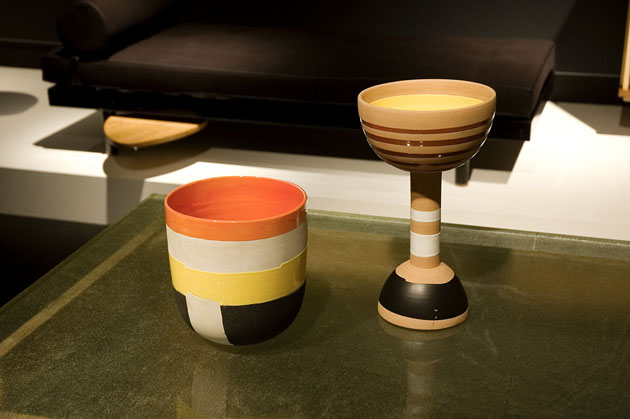
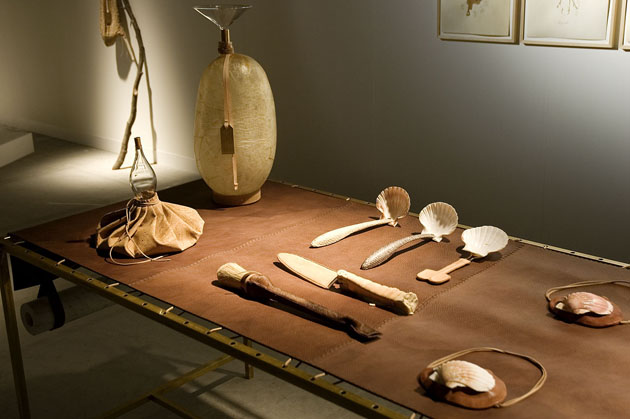
Among a very shy selection of contemporary pieces, two projects have to be mentioned. The first, and most obvious one, was Formafantasma’s performance Craftica, showcasing a collection of objects made with leather. The second one was Matali Crasset’s “Cutting” project exhibited by the Parisian Granville Gallery. “Cutting” is a collection of glass vases which take their shape from pieces of a tree personally chosen by the designer.

If collectible design, as much as a contradiction in terms, must also be an inevitable reality, maybe our culture might gain a bit more if the idea of design promoted by events like Design Miami/Basel would shift from a burgeois attitude towards the idea of design as a democratic place of research and critique.

Rujana Rebernjak 

18/06/2012

Art Basel Round One

Art Basel Round One

In the last few days Art Basel was maybe the only place in the world where people could have the impression of entering an affluent bubble, where the global economic crisis seems to be just a fake. As each year, 300 among the best art galleries from all over the world were selected and enlisted to take part in the so-called ‘Olympics of the art world’. As each year, flow of art lovers and professionals crowded and enlivened the Swiss city to see the new trends of contemporary art market, while for seller’s happiness, international collectors got there mainly to grab super expensive artworks and fulfil their wishing list. And – thinking critically without being argumentative – it’s hard not to think about the economic mantra frequently used during crisis to critic the free market system “the rich get richer and the poor get poorer”.

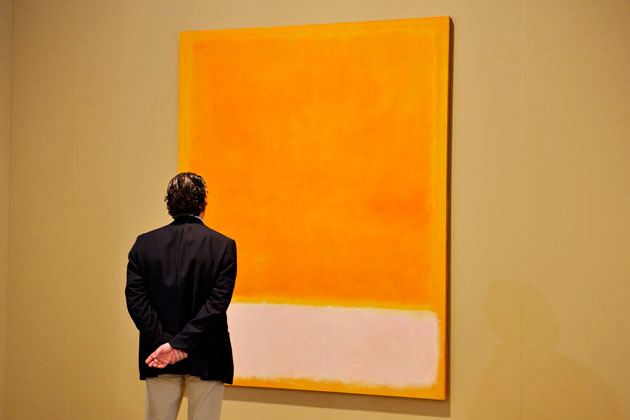
Strolling around the low ground of the fair, the one devoted to historical galleries, it’s easy to gape thanks to the high quality of the artworks exhibited. Mr. Gagosian, owner of the homonymous multinational gallery, presented an exhibition inside the booth with masterpieces by Picasso, Warhol and Damien Hirst, while other important (and perhaps less haughty) names of art market such as Werner, Lelong, Kartsen Greve, Marian Goodman, Sperone Westwater, Tucci Russo, Zwirner, Pace were at Art Basel in full splendour with works by Gerhard Richter, Jeff Koons, Cy Twombly, Lawrence Weiner and the Italians Giuseppe Penone, Pier Paolo Calzolari, Luciano Fabro and Alighiero Boetti (Arte Povera rocks!). Before going upstairs (HALL 2.1) we cannot avoid mentioning the striking orange-red-yellow piece by Rothko at Malborough for $78 million.


Once again, the first floor strictly dedicated to contemporary didn’t disappoint our expectations. Damien Hirst’s Stripper and Andreas Gursky’s five meters pictures Coocon II dominated at White Cube, while Ryan Gander and Neo Rauch were respectively the stars at Lisson Gallery and Eigen+Art’s booths. Chantal Crousel, Metro Pictures, Nagel and Marconi showed pieces by Anri Sala, Claire FontaineGallery Neu had intriguing works by the collective too – Robert Longo, Cindy Sherman, Martha Rosler, Will Benedict, Markus Schinwald and Rosa Barba – even if the best Barba’s work was at Carlier Gebauer gallery. The stand devoted to Ettore Spalletti (De Alvear) didn’t pass unnoticed as the small size shots by Luigi Ghirri at Massimo Minini gallery. Among the youngest galleries Zero, gb agency and Plan B stood out thanks to the interesting artists proposed: Giorgio Andreotta Calò, Neil Beloufa, Roman Ondák, Ryan Gander (the young artist more represented at the fair) and Navid Nuur.

The 43rd edition of Art Basel, once again reinforced the idea that dealing with high art is not for everybody, but fortunately everybody could approach and discover it as a cultural matter – not only financial – since owning art is not the only possible way of enjoying it.

See you tomorrow to find out the most cultural and ‘Unlimited’ section of Art Basel.

17/06/2012

Sunday Breakfast by Love For Breakfast

Sunday Breakfast by Love For Breakfast

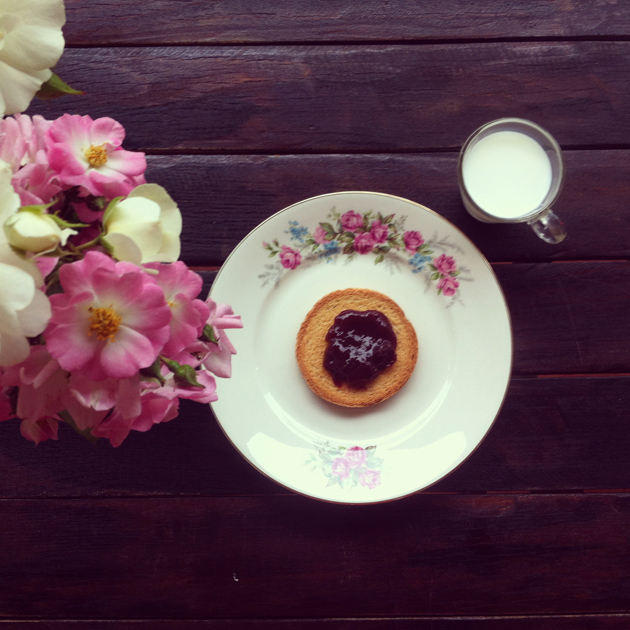
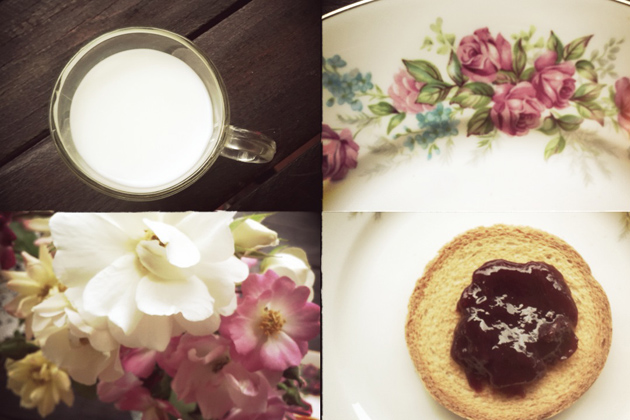
The scent of flowers inebriates the air while the jam creaks on a rusk. It’s all it takes to start the day smiling.

Alessia Bossi from Love For Breakfast

15/06/2012

Sustainable Fashion – An Impact For the Long Run

Sustainable Fashion – An Impact For the Long Run

Organic, ecologic, sustainable, fair trade, vintage, second hand, recycled, ethically produced – the list of words related to the environmental question in production as well as in fashion is long. The number of designers and brands taking environmental and social responsibility is growing, and organisations within the fashion industry are trying to start a movement of sustainability. Simultaneously, economical advisors like Jeremy Rifkin are asking the question: “Can we reach biosphere consciousness and global empathy in time to avert planetary collapse?”


Sustainable design refers to production made with the consideration of how the product will affect its surroundings, both environmentally and socially, throughout its life span. Sustainability or “eco fashion” has been, and still is, a trending topic in the industry. It’s a complex matter and although many companies are seeking ways to change their customs, it’s really a question of motives. Making the production more effective or using methods kinder to the environment might be driven by the will to make an impact in the long run, but in some cases one could also talk about trends, market demands or economical forces.


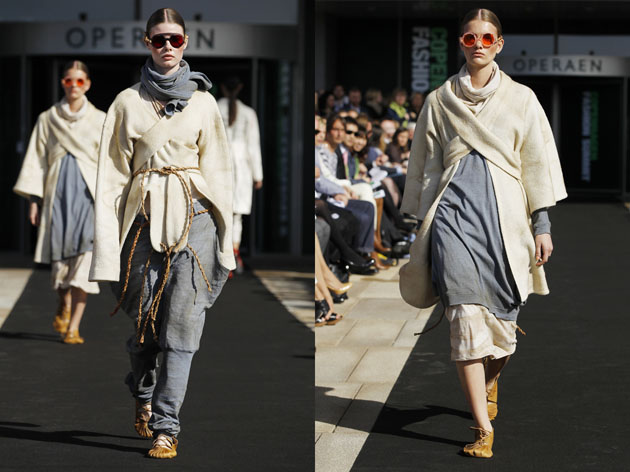
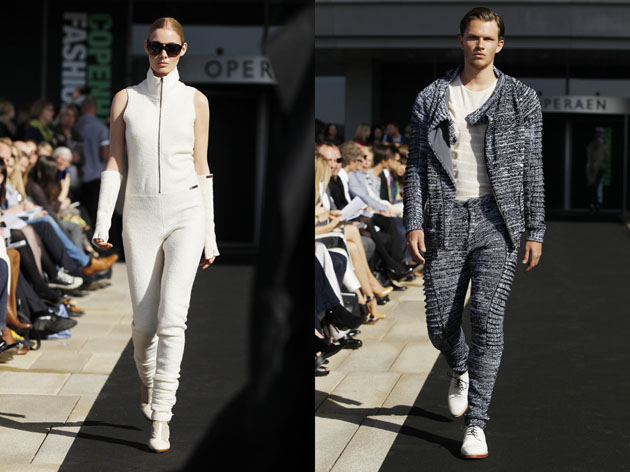
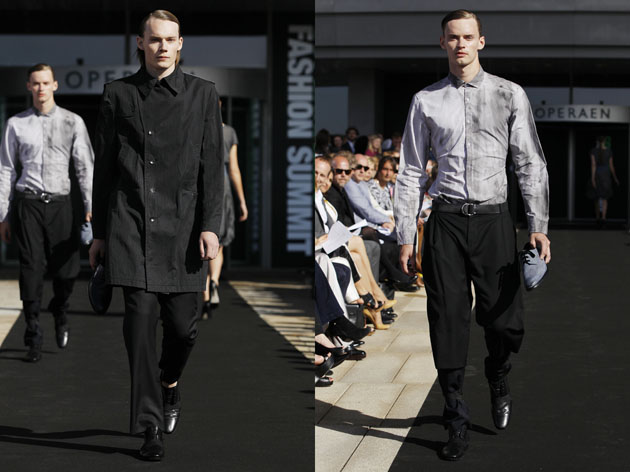
For a development that meets today’s needs without compromising future generations, the fashion industry needs to embrace the concept and fully integrate a sustainable thinking into the way the business is done. Inspiration is to be found from famous concepts and ongoing discussions; Jeremy Rifkin created the concept of the Third Industrial Revolution where business owners become an important part of the energy game. Cross-industry relationships are creating new possibilities, and increased productivity also helps to ease the climate changes. Copenhagen Fashion Summit and the project NICE Fashion gathered last month many key stakeholders to one of the largest fashion summits, with the goal to enhance the importance of creating a sustainable future in one of the most polluting industries.

The discussion about CSR, sustainability and eco fashion has reached the point where scattered voices have to become collective initiatives. The industry stands before the challenge to find smart ways in production, and to create a business system that consciously and effectively decreases the negative impact on the surroundings. Like Kirsten Brodde from Greenpeace International puts it, it is a question of turning “eco fashion into simply fashion”.

Lisa Olsson Hjerpe – Image courtesy of Copenhagen Fashion Summit

14/06/2012

The Antwerp Six – 33 Years Later

The Antwerp Six – 33 Years Later

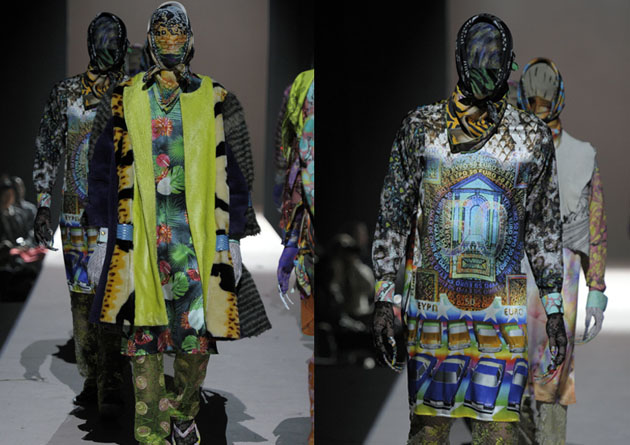
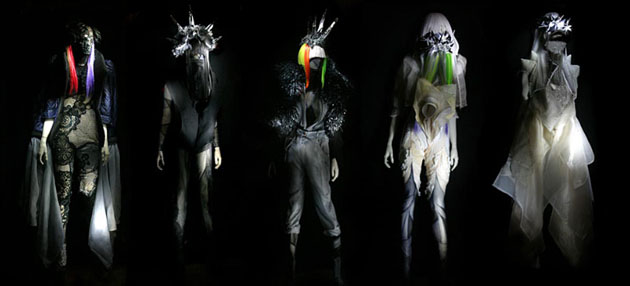
Last weekend a new breed of Antwerpian couturiers were presented as The Royal Academy of Fine Arts revealed the Graduate collections, 33 years after the birth of the infamous Antwerp Six.

In the year of 1988, Walter Van Beirendonck, Ann Demeulemeester, Dries van Noten, Dirk Van Saene, Dirk Bikkembergs and Marina Yee nailed Antwerp to the map as a fashion city. The group would eventually in the years of 80/81 graduate from the school, but in 88 they all squeezed together in a truck and headed for The London Fashion Fair where they presented their collections and marked a new era. Their aesthetics differences aside, the common ground was clearly the experimental silhouettes and conceptualism – no wonder Martin Margiela is often considered the 7th member of the family.


The international influence of the Antwerp Six is a complex and vast subject. However, while studying this years master’s students you soon realize that Van Noten, Margiela & Van Demeulemeester never really left the building.

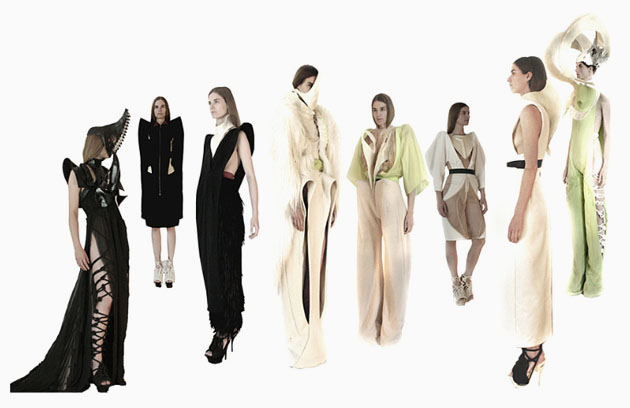
Manon Kündig has channelled Van Noten’s sense of layering as well as colouring and printing. Ray Benedict Pador introduced a contemporary gothic man in the spirit of Van Deulemeester – with a pinch of S/M-culture. Finally, So Takayama sang her louanges to Margiela, as she sent her mannequins down the runway in exaggerated paper-like silhouettes.


Belgian designer Alexandra Verschueren, who graduated from the very same school in 2009, has acknowledged the Antwerp Six’s influence on the school and Belgian fashion community, “I think it definitely influenced me in a way. It always felt kind of weird to have six such great designers, since Belgium is such a small country.”

For the past 30 years the country has been a noted fashion nation in their own right, with a heritage that will continue to grow with every new generation of designers, as they interpret the days gone by.

Petsy von Köhler