02/10/2012

New York Art Book Fair

New York Art Book Fair

It takes only a short stroll in the Internet to figure out that September and October are tightly packed with various book fairs around the globe. From Paris and London, to Brussels and New York, the art book market seems to grow like mushrooms after a long rain. Was it because of a dry summer with no events, it’s hard to judge, but the autumn/winter book publishing season definitely seems to be quite demanding. With all the love we nourish towards books and independent publishing, it’s difficult not being critical about the current state of the game.

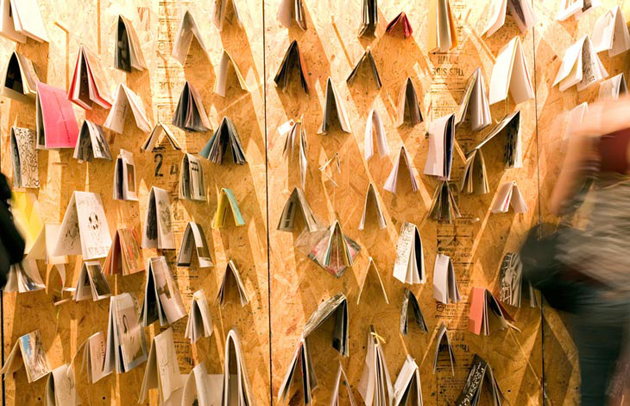
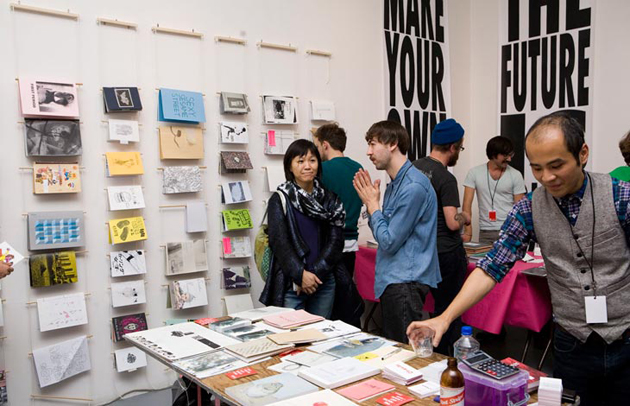
From being a shy events for a niche of book-lovers, the art book fairs have grown to become a major cultural happening. Even though sharing the ideas, developments, historical insights and beautiful craftsmanship that underpins book-making is surely a great thing, maybe a more critical approach should be taken towards the whole idea of the book fair and independent publishing. This is precisely why the New York Art Book Fair is to be admired.
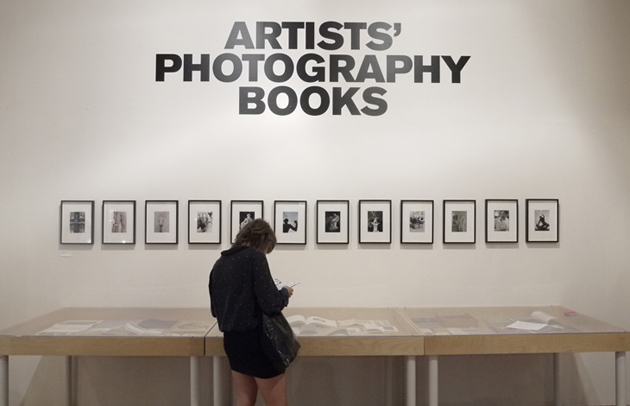
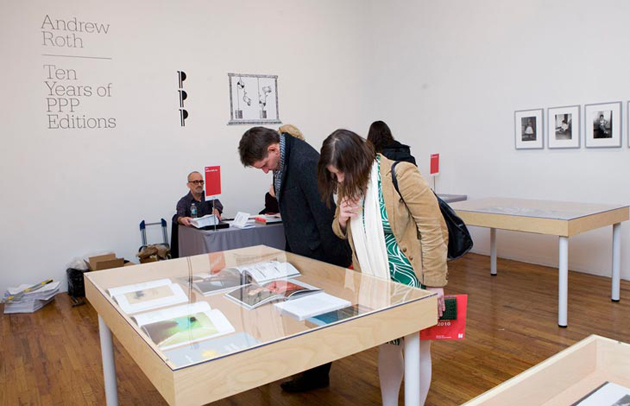
The ‘Queen of the fairs’, New York Art Book Fair is almost a historical event promoted by Printed Matter, a non-profit organization devoted to promotion and distribution of artists’ books and independent art publishing, founded back in the days by a group of acclaimed artists. Held from the 28th until the 30th of September, this year’s edition, as usual, was packed with events, exhibitions and talks, while allowing a long list of international publishers (precisely 283 of them) to exhibit their production. Among the events, the lucky visitors at MoMA PS1, could see three exhibitions of “individuals whose contributions have enriched the field of artists’ books”: “An Homage to Mike Kelley”, “In Memoriam: The Book Catalogs of Steven Leiber” and “In Memorium: the Publications of John McWhinnie”. If this wasn’t enough, the tireless visitors had the chance to participate in the Contemporary Artists’ Books Conference, a two day event focused on emerging practices and debates within art-book culture, with Lucy Lippard and Paul Chan as keynote speakers.

If the array of events offered by NY Art Book Fair didn’t quite fill-up the most passionate ones, don’t worry we will keep you posted on the next not-to-be-missed-but-not-that-incredible book fairs, which definitely still have a lot to learn from our beloved Long Island ‘queen’.

Rujana Rebernjak

01/10/2012

Chloé’s Kaleidoscopic Attitudes

Chloé’s Kaleidoscopic Attitudes

To celebrate its 60th birthday, La Maison Chloé presents an exhibition retracing the history of its passions. Chloé Attitudes is a path through memories, insights and inspirations of a brand able to give birth to iconic and influential styles. The show, which is now on view at the amazing space of Palais de Tokyo, features archive objects, never-published shots and drawings by renowned artists, along with sketches of selected pieces by Chloé’s creative roster, the nine top designers who glamorized the brand years by years: from the founder Gaby Aghion, through Gérard Pipart, Maxime de La Falaise, Karl Lagerfeld, Martine Sitbon, Stella McCartney, Phoebe Philo, Hannah MacGibbon, to the present Clare Waight Keller.


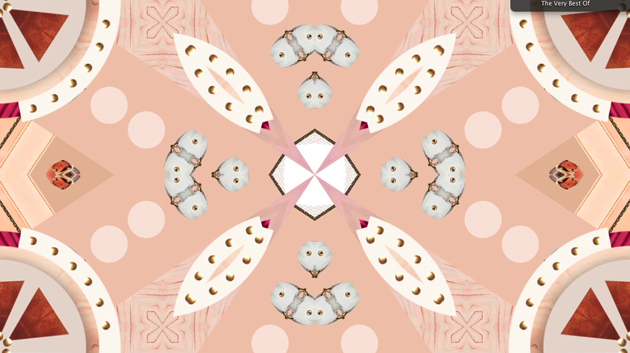
To accompany the tracking of attitudes displayed by the fashion house, 2DM’s talent Carolina Melis – an Italian illustrator and art director, based in London and with an international professional background that led her to invent moving pictures for major clients such as Prada, Vogue Japan, Sony, Barclays (just to mention a few) – was commissioned to design and direct an original animation spotlighting the unique colours and textiles, which have always characterize lady Chloé. To do this, once again, Carolina turned to a charming and hypnotic tool: the Kaleidoscope that gives theme and title to the film. Images that remind magnetic mandala, rotating geometric figures and coloured patterns pinpointing beautiful symmetric compositions – virtually – made of embroideries, crêpe de chine, cotton popeline, chiffon floating to the tune of Colleen’s sound track creating multiple reflections.

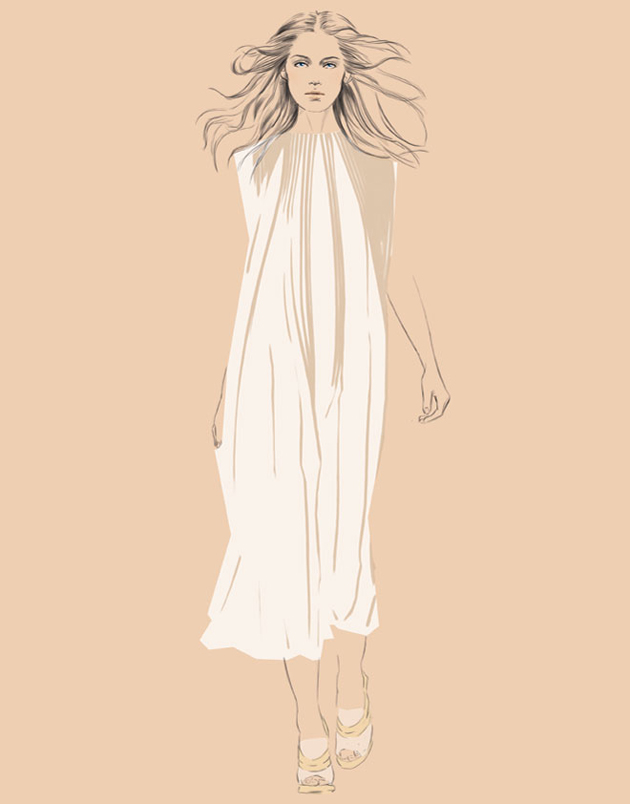
As a gift for all vintage lovers, the Maison will re-edit some emblematic items, which will be available in Chloé boutiques from February 2013. Among the artists who interpreted the key moments of Chloé’s flair we are proud to count Sandra Suy with her romantic and alluring illustrations such as the Top Ananas by Stella McCartney, the Violin by Karl Lagerfeld, or the virginal A-line blouse by Phoebe Philo.

Chloé Attitudes will run until 18th November 2012 at Palais de Tokyo, 13 av du Président Wilson, 16th. M° Iéna. If you turn up there, don’t miss it!

Monica Lombardi – Illustrations Carolina Melis & Sandra Suy

01/10/2012

Little Red Riding Hood Is The Wolf

Little Red Riding Hood Is The Wolf

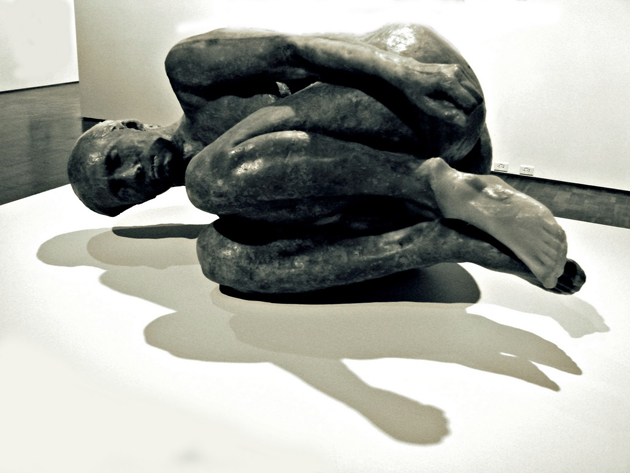
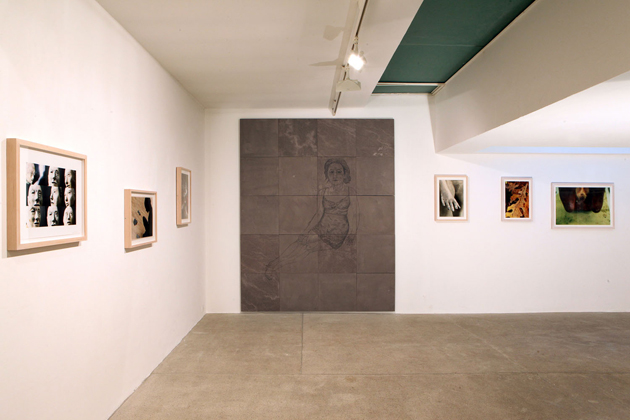
Kiki Smith (German-born in 1954, but a long-time New Yorker) has been investigating the relation between space and human bodies, psychology shaped by instincts and fantasies since 90’s.

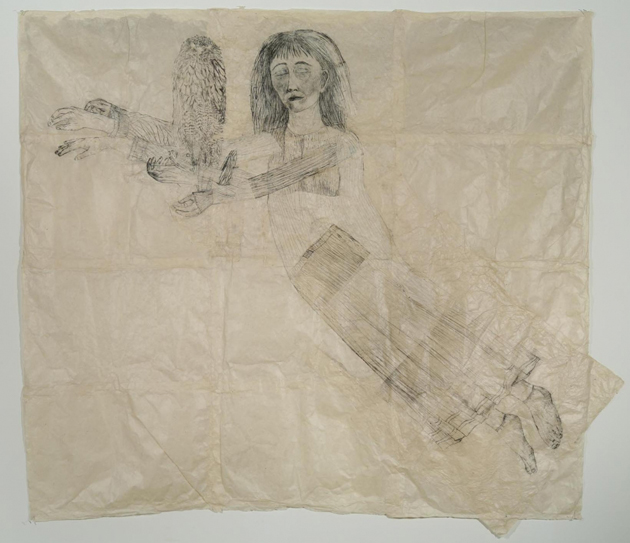
The works by Smith – mainly sculptures and drawings on paper with a sharp and direct mark – reflect her introspective and intimate concept of art, somehow seen as a post-traumatic experience and lived as a sort of exorcism. Showing female images – sometimes stained with blood, laid down on the floor, in a mystic ecstasy, or crawling and losing their entrails – the artist recalls mother and childish figures immersed in dreamlike atmospheres like fairytale characters, but not necessarily “positive”.


With evocative poetry, which gathers together ancestral and esoteric symbols: mythological creatures, owls and fawns that bring to mind the eternal interchange between brightness and darkness as in Persephone’s rise and descent from and to Hades, Kiki Smith shows the perishability of human bodies and their vulnerability. Using wax, chalk, china, bronze and dropping them on organs such as hearts, wombs, pelvises, and ribs, the artist seems to play an archaic and, at the same time, erotic and twisted ritual, expressing a strong and primary aptitude, which tends toward death. Fighting against patriarchy is a key factor that always rules her works, but while for Louise Bourgeois (25 December 1911 – 31 May 2010) this approach was focused on men’s destruction, Smith moves her attention to women’s diverse forms of mourning.


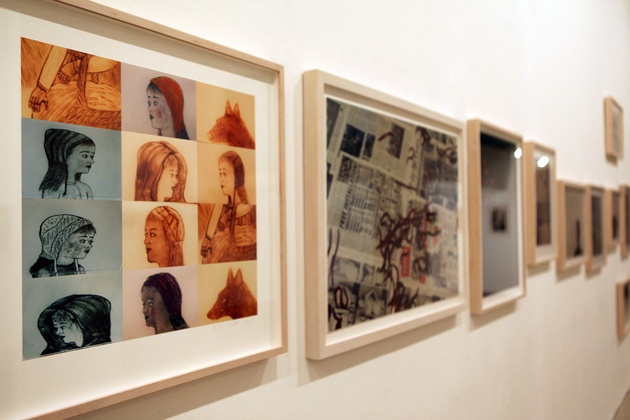
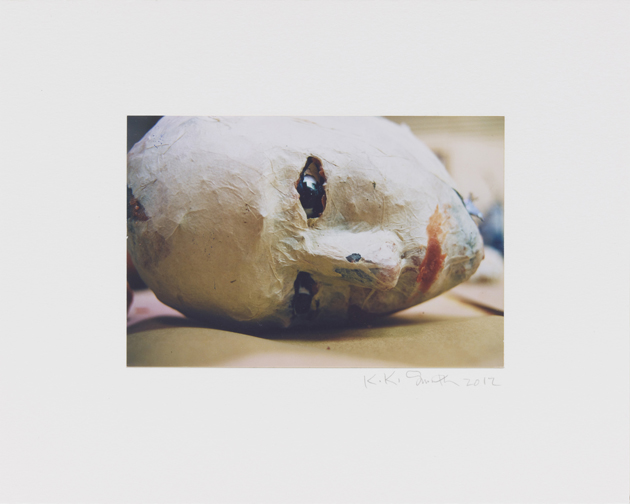
In By the Stream at Raffaella Cortese Gallery, the artist makes use of photography as a mean to retrace her hold dear subjects and imaginative worlds; once again living beings have been thrown into the nature of fabulous and timeless scenarios. Shooting details of her creations, Smith opens the door to numerous interpretations: a red cap hides one’s face, is this the image of a woman who fights the wolf, succumbs to it, or learns to live in symbiosis with it and, more in general, with the mother earth? She could be fragile, scared and abused, but also well aware of her nature, able to move between objective and unconscious reality, embodying the maiden, the mother and/or the Mistress of animals as an evolved archetype: a sort of contemporary Hecate.

Kiki Smith’s exhibition will run until 15th November 2012 along with the solo show by the Czech photographer Jitka Hanzlovà, hosted in the second space of the gallery.

Monica Lombardi – Many thanks to Raffaella Cortese Gallery.

30/09/2012

Sunday Breakfast by Love For Breakfast

Sunday Breakfast by Love For Breakfast

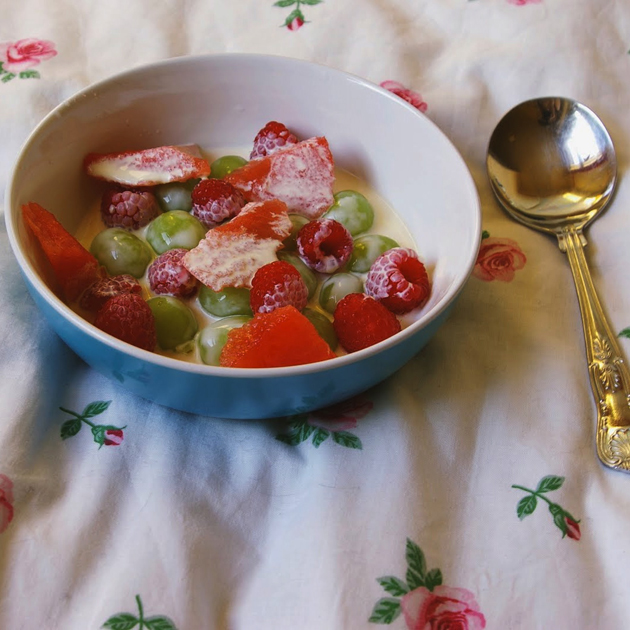
Enjoy the beauty of a simple and fresh breakfast while sitting on the bed with your eyes still clouded.

Alessia Bossi from Love For Breakfast

28/09/2012

Saorge – Where Time Stands Still

Saorge – Where Time Stands Still

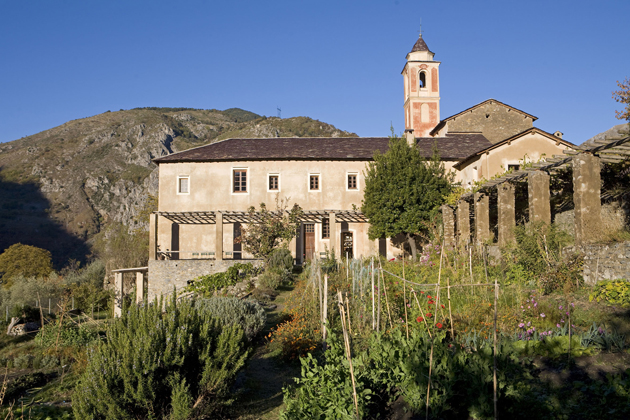
From silence to silence. What in the past was a Franciscan convent, has today turned into a residence for writers searching for inspiration. This monastery is a recommended destination for people who want to try the bittersweet taste of isolated places and loneliness. Built between 1633 and 1662, Saorge, with the 500 souls living in small houses clinging to the Maritime Alps, deep in the southern France, to the eyes of an addicted crowded destinations traveller this place comes first as a shock, then a discover.


It seems that this district is known as “the French Tibet”. Similarity doesn’t arise just from the matter of altitude – Saorge is situated barely 500 meters above the sea level – but also from the peaceful and contemplative atmosphere of the town and the monastery. It towers over the valley as Potala Palace does with Lhasa, the capital of the centre of the world.

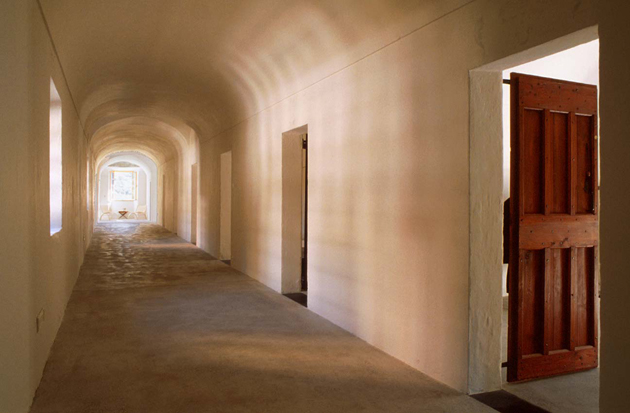
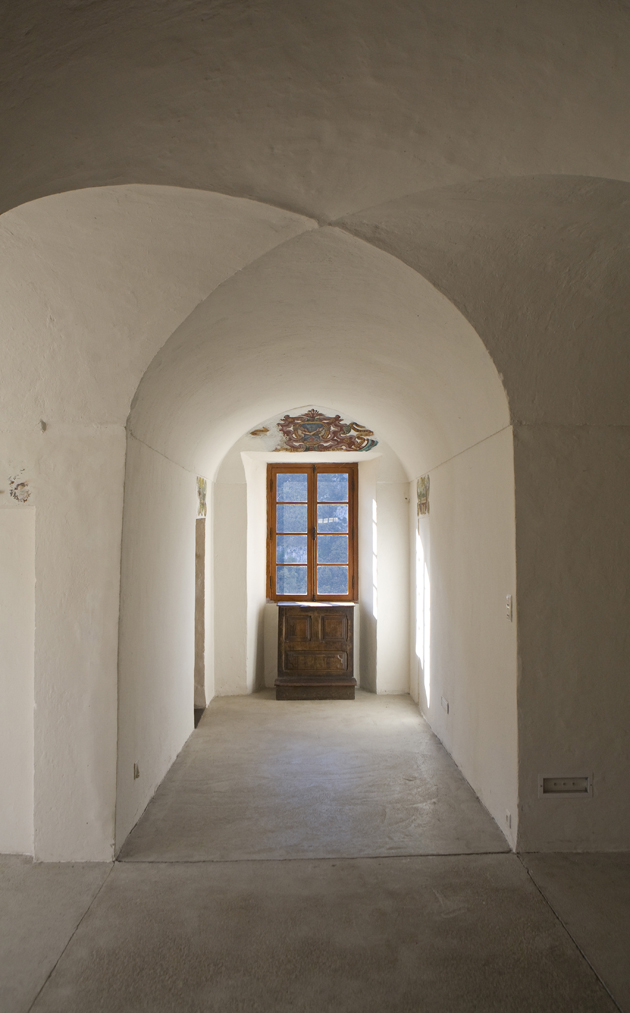
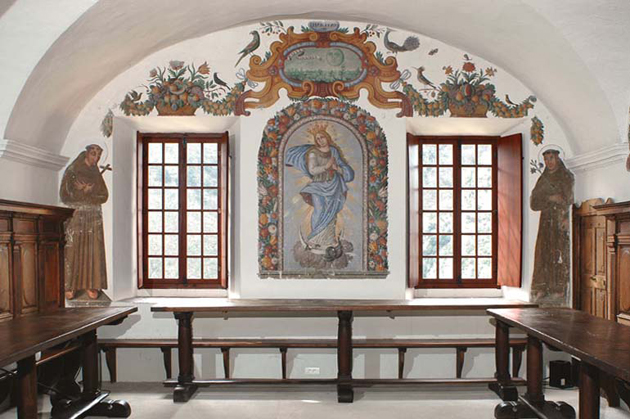
The interiors of the monastery are essential. Everything – from allegorical frescoes of refectory to the ancient Notre Dame des Miracles, the baroque church in which many religious functions were celebrated – evoke images of simple and laborious Franciscan kind of day.

When the friars left the convent in the 90′s – after almost four centuries from its edification, during which it has been used even as a hospice – , it accommodates writers, translators and composers searching for inspiration. Everybody here lives in the way of the friars: guests eat vegetables cultivated in the kitchen garden, sleep in cells furnished with the bare minimum – a bed, a wardrobe, a night table – and use common showers. Sometimes the inhabitants of Saorge go to the monastery to meet foreigners to discuss about culture, to join debates and public lectures. They speak softly, as if there were someone to keep asleep. This is the monastery of Saorge, a small hermitage in which peace and silence are preserved.

Antonio Leggieri

28/09/2012

TIM MAIA WAS THE MAN!

TIM MAIA WAS THE MAN!

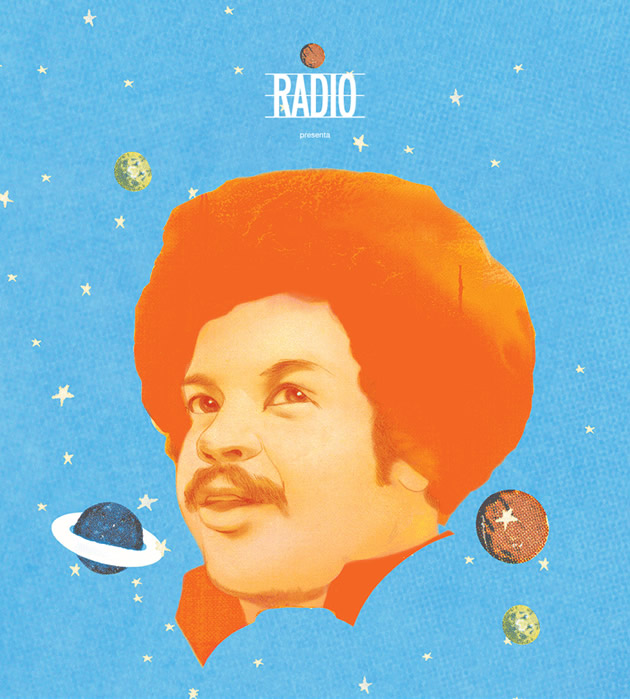
Going on with its independent and focused research activities, Radio – the concept designed and curated by the talented Marco Klefisch – comes back with another exciting project: the international party to celebrate the soul-rocker Tim Maia’s 70th birthday (28th Sept. 1942 – 15th March 1998). The event, which will be launched simultaneously in New York, San Francisco, Los Angeles, Portland, Washington DC, Chicago, London, Gothenburg, Melbourne, Lisbon and Milan, will also mark the release of Maia’s new record Nobody can live forever. The album is a collection of the most famous songs by the globally legendary Brazilian man, who became the king of the black-Brazilian music during the 70’s thanks to his talent to perform different genres in an unmistakable way. From soul to funk, from romantic sounds to psychedelic and pop music, Maia was able to invent a unique style that mixed together great positive energy along with his dark and self-destructive attitude – drug and alcohol abuse represents a revealing aspect of his dissolute, but still fascinating life.

Tim Maia’s birthday party, thanks to the collaboration of the music label Luaka Bop, is opening this evening at Radio space at via Pestalozzi 4, from 7 to 11pm, with the DJ Set by the calligrapher/designer and eclectic creative figure Luca Barcellona, Brazilian music lover and vinyl collector, and Tombun, the monthly point-of-reference-event by Mauro Simionato and Gigi ”Giandisco” De Rosa. Let’s Soul and Funk tonight!

Monica Lombardi

28/09/2012

A Pie in the Sky

A Pie in the Sky

The renowned Treviso Comic Book Festival is coming to its end, after a full program of initiatives, involving the very best of the cartoonists and illustrators, coming from all over the world to liven up the city. 
XYZ will close this tracking of exhibitions, workshops and talks with a group show by the illustrators Eleonora Marton and the 2DM’s talented Elena Xausa.

For A Pie in the Sky the space of the experimental gallery will be split in two, half part hosting fanzines and drawings on paper made by the former freelance artist, while the other one is devoted to 7 screen-printings by Xausa, limited editions with a circulation of 25 pieces each. Both the illustrators will present a bunch of works expressing their personal vision of everyday life’s source of inspirations: music and street culture communicated through a childlike and direct mark, with a cheerful, but never trivial approach. For all collectors and illustrator lovers, but also simply for those who want to take a piece of the show home, we remind you that Eleonora Marton’s fanzines and Elena Xausa’s screen-printing editions will be available to purchase directly at XYZ.

Floating faces eating LPs or animated smiling lifebuoys, sketches and wordplays will be on view and on sale at via Inferiore, 31, starting from Sunday 30th at 6pm with a Dj set/aperitif by King Of Bingo. The show will run until 7th OCtober.

Monica Lombardi

27/09/2012

Fashion Week Live

Fashion Week Live

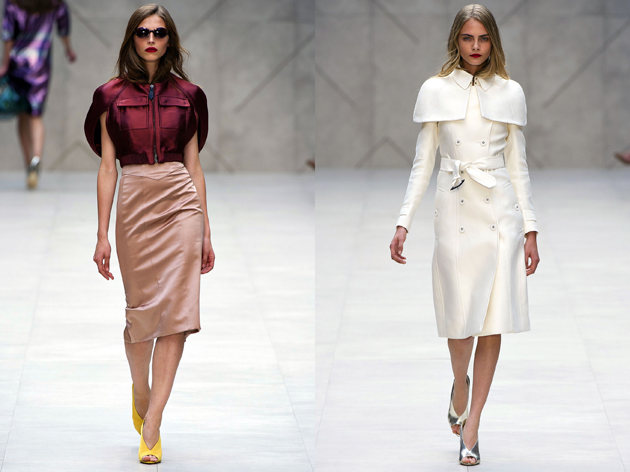
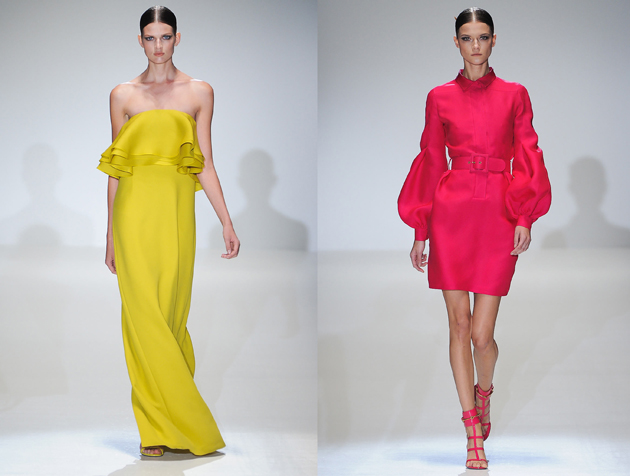
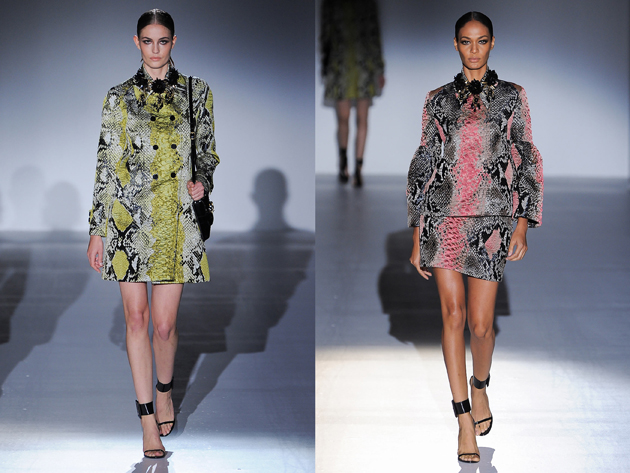
New York and London are well behind us, and Milano just hit the finishing line to hand over the baton to Paris. During these fashion weeks we’ve noticed that it has never been so easy to follow the runway, even without a front row ticket. That digital aspect – on not only fashion in general, but fashion week per se – has been an up-going trend for seasons, is a fact. Though, how far will this digitalization take the democratization of fashion?

Over the past seasons the number of live-streamed fashion shows has increased. Some brands distribute the work to external sites while others tie it closer to the brand and make the digital a part of their identity. Burberry is a great example of a brand that has been awarded and recognized for their digital communication, which has been given a lot of thought and place on the agenda. From an extensive social media presence to special projects like Art Of The Trench and Burberry Acoustics, the company has been sort of ‘pioneer’ on many levels. With live comments and both 3D and 2D shows, the brand has also been holding the torch when it comes to fashion week live streams.

Fashion is becoming more democratic, whether you in some areas are speaking of the aesthetics and in others of the access to it in the very same minute as the editors, buyers and bloggers on the front row. Over the last seasons we have seen cases where the audience in front of their laptop screens have been able to see the looks even few seconds before they hit the runway. The online audience often get a better and more detailed view, and their comments are broadcasted over the Internet long before the front row has even left the venue.

The discussion of live streaming and direct access for the “non-authorized” is interesting from many aspects. To engage and include the audience through digital platforms has been a natural step, and it’s now so wide-spread that it quite frankly does no longer feel as an option not to be considered. But if everyone ‘gains access’ to fashion week, where is the exclusivity? Or does a front row ticket, which gives one access to the full experience, today, become even more exclusive? Maybe it’s a question of preferences, but a sure thing is that the fashion week audience never has been as large, or wide, as it is today.

Lisa Olsson Hjerpe – Image courtesy of style.com

26/09/2012

The Editorial: Supercharger

The Editorial: Supercharger

Car = evil. Car = obsolete. Or at least that’s today’s binary, politically correct (and intellectually dishonest) line on the topic. Certainly, our planet’s health could benefit from having far fewer of them farting up epic loads of CO2 while stuck on perpetually constipated motorways. And it’s lovely to imagine a world where all good cities amount to pleasant amalgamations of walkable neighbourhoods with sunny dispositions. But from Moscow to Sydney to Rome to Brooklyn to Berlin and back again, short of starting from scratch (or drastically changing our ideas about where we may and may not travel) good luck tossing that sinful old contraption of transgression! You walk across South Side Chicago and let me know how that works out for you. Take your three children to school from the Stockholm suburbs on a bike. In the dead of winter. And you should probably just abandon that villa in Tuscany (or acquire a few horses), because you’re an asshole for not living in a walkable city centre. Views!? Trees!? Quiet!? You’re mad!

Ahem.

So, it’s pretty obvious, even to a dense city-dwelling smartphone-obsessed bicycle warrior, that the car is (and should be) here to stay. Much like the Internet, the car both shrank and radically enlarged the world, and it is only natural that successive innovations in the built environment were gleefully built with that miracle contraption in mind. Yes, we’re stuck within an environment that has been to a large degree built at car instead of human scale. But, consider the dramatic quality of life increase the automobile once brought! After all, hindsight is 20/20, and so on.

It was with great fanfare this week that Tesla unveiled its Supercharger charging station: a solar-powered quick charging dock of sorts that will extend the range of its already impressive electric cars, and they return electricity to the grid! In fact, they will contribute more energy in a year’s time than they will dispense to cars. Slam dunk. We’re listening.


Tesla are doing a masterful job of making electrics a provocative proposition, and they are doing well to show some leg in their boutique-style shops around the world. Up until Tesla (and the less well-conceived but still beautiful Fisker Karma), electrics have generally been ugly golf carts. Now they’re mostly Nissan Leafs (which are ugly golf carts with zen green paint and a nice user-interface). And since it remains quite possible that your electric might run on juice derived from coal, their claim to eco-fame is easily contested. Innovations like the Supercharger, masterfully, sexily executed by smart, connected companies like Tesla could shift that balance overnight.

So, instead of damning the car to the scrap heap altogether, it would serve us all a bit better to practice some honest pragmatism and instead carefully consider how the personal transportation itself should look in the not-too-distant future. Imagine the post-car car, if you will. And as much as I love her, the future isn’t my bike. It’s polyamorous. Beep beep, babe.

For a bit more to get excited about, watch Kevin Rose’s recent excellent Foundation interview with the very charismatic Musk.

Tag Christof

25/09/2012

Building Private Cities in Honduras

Building Private Cities in Honduras

Living in Europe, ‘the old lady’, we are surely often overwhelmed by the history every inch of our beloved cities may recount. We are used to seeing old blocks, narrow streets, churches and monuments all imbued with the past that has gradually shaped them, making them become what they are today, with all the consequent complexities it may carry. So it is no surprise that the Europeans can be quite shocked when seeing cities that spring out of nothing even in the USA, more so in other countries of the world, such as China, where the historical heritage seems of no importance. Thus, hearing that Honduras government has recently approved a master-plan for building three ‘private’ cities has been a complete shock.


The news, reported on several websites, states that Honduras “is set to host one of the world’s most radical neo-liberal economic experiments under a plan to build from scratch the rules, roads and rafters of a ‘charter city’ for foreign investors”. What is described as ‘Silicon Valley’ of Honduras, build with the initial 15million dollars worth of financial support coming from the USA, is supposed to enable a higher standard of living for Hondurans, by means of scientific research, for a country where organized crime and political instability touch extremely high levels. Even if the news may seem quite progressive, given the fact that the official statement proposes a solution for economic growth of the country, it may be a bit more complex than that.

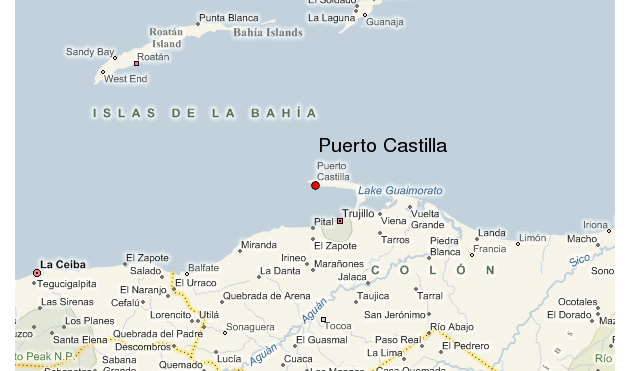
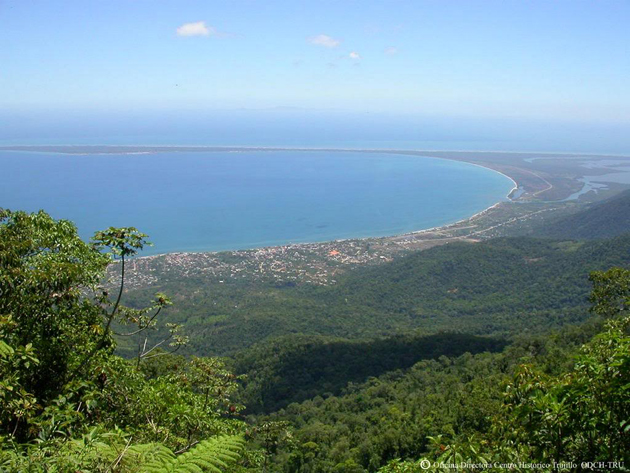
The cities, to be built near Puerto Castilla on the Caribbean coast, are to have their own police, government, laws and tax systems, a solution that may be leading more towards a ‘tax haven’ situation, than that of independent cities like Singapore, Dubai or Hong Kong, which are being discussed as an incredible model of trade and growth. What the opponents rightly fear is the creation of a “state within state”, a modern day enclave of inequality and injustice.

Rujana Rebernjak