Sunday Breakfast by Love For Breakfast
Between a layer of sweetness and one of reality I find the reasons to leave my bed. That ray of sunshine will be the destination I want to reach today.
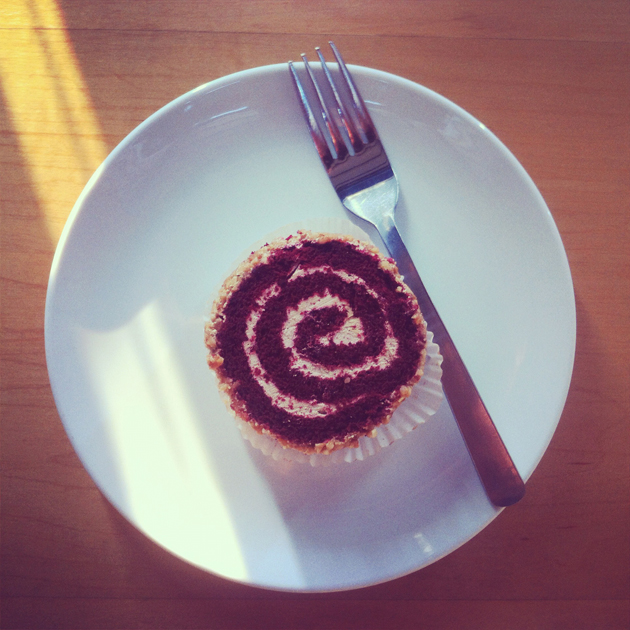
Sunday Breakfast by Love For Breakfast
Between a layer of sweetness and one of reality I find the reasons to leave my bed. That ray of sunshine will be the destination I want to reach today.
Time & Space
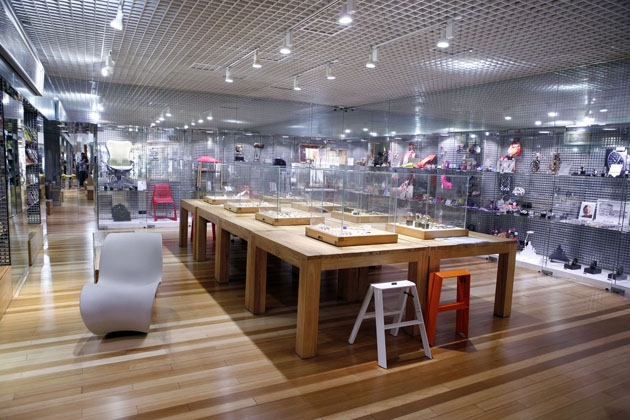
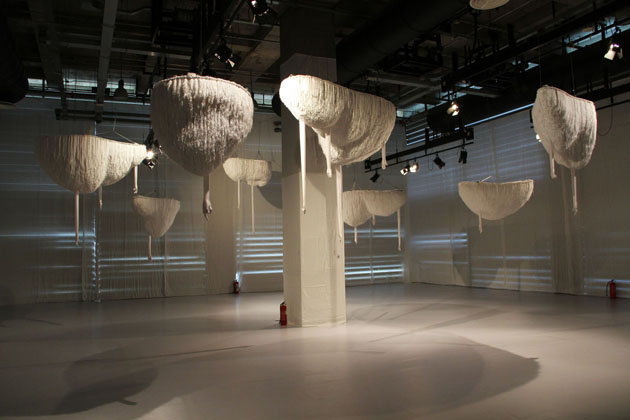
The ex-colony has colonised the coloniser! Well, not exactly. But the long and sordid history of the UK and Australia has certainly created a fascinating symbiosis between the two cultures, and a strong cultural osmosis from both sides. On Tuesday, Bargehouse opened a 15-artist exhibition, Time & Space, to showcase a cross-section of Australian artists, each of whom has completed a residency in London and many who continue to practice in the UK. The exhibition spans most conceivable medias and mixes artists of different generations to very good effect.
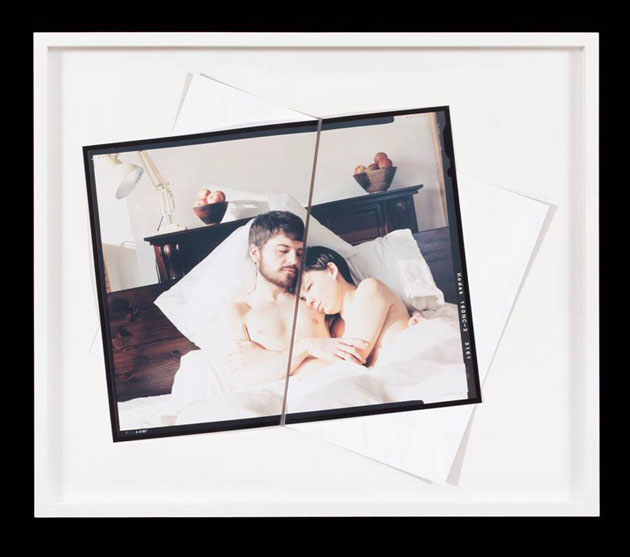
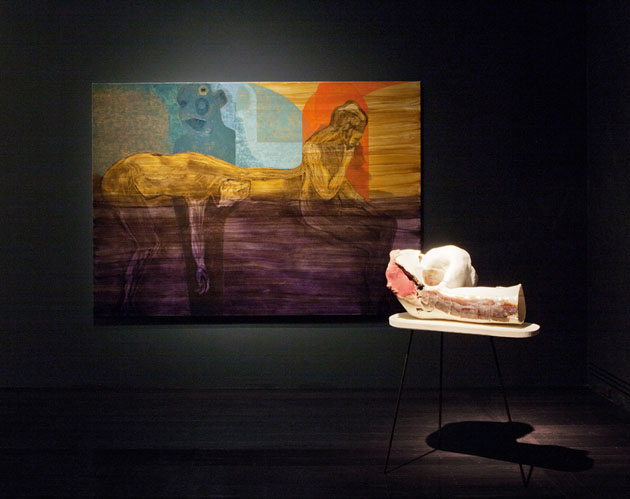
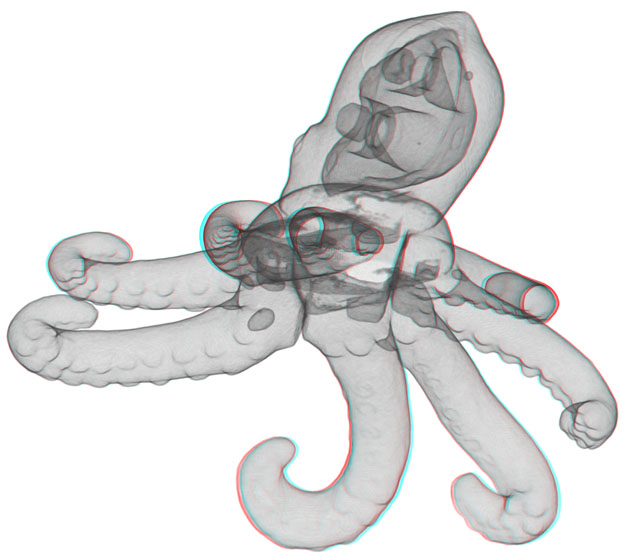
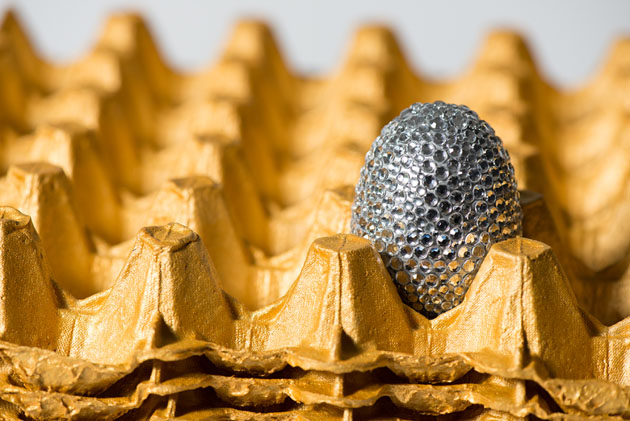
Included in the exhibition are Paul Knight’s intimate, erotic large-scale photographs, a participative painting by Tom Polo and ceramic sculptures by Michelle Ussher, a site-specific tribute to Bargehouse’s former use as factory by Lyndall Phelps and works by Daniel Crooks, Nicole Ellis, Patrick Hartigan, Jacki Middleton, Vanilla Netto and others. The overall effect is compelling, and one gets a sense of a very definite cultural signature that is at once uniquely Australian but clearly informed by British and European sensibilities.
The exhibition is currently running in the Bargehouse space on the South Bank, and is open until this November 11.
Tag ChristofLet It Rain
It’s the end of October with November on the march in. On the northern hemisphere that means the leaves turning yellow, dropping degrees and a few, or in worst-case scenario pretty many, rainy days. The season soundtrack goes from chirpy to melancholic and when those first raindrops hit the ground, half of the wardrobe is dismantled. That is unless you choose to embrace the autumn with its amazing colour palette, layers of clothes and don’t give a damn about the rain.

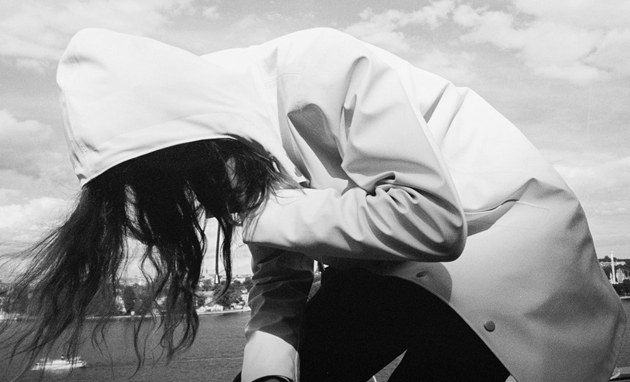
Someone who truly has embraced the rain is Alexander Stutterheim, founder and creative director of Stutterheim Raincoats. “I love the fall. Summer’s demands on amazing parties, relations, experiences, well; these expectations on everyone to really LIVE these few months of the year are pretty heavy for me. I don’t like the anticipation I guess. Besides, the light during fall is much more pleasurable and you can put on good-looking clothes”, he said when The Blogazine asked him about his relation to the season. The brand’s story has its starting point in the archipelago outside of Stockholm and its only focus is to keep their customers dry while staying stylish. “What we want to achieve is very clear; to make people feel pretty (and dry of course!) even if the weather is ugly. We want to show that life can become more bearable even if the surrounding conditions do everything in their power to accomplish the opposite.”
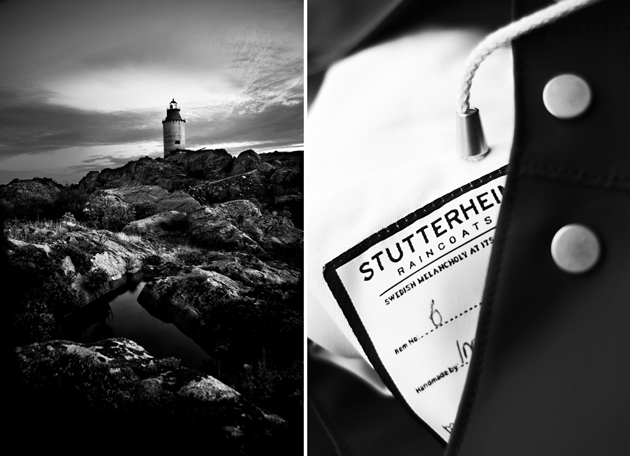

Scandinavia has understood the demand of making autumn prettier, dryer and more lovable. Their instinctive feel for superior quality is just another plus. Norwegian Rain, hailing from the rainiest city of Europe, has won several awards for their design excellence where the high-tech is hidden, and we can’t wait for the release of the Stutterheim matte black rain boots (which, according to our sources, soon will be in store).
Christopher Bailey, sitting at the helm of Burberry, is someone else who knows how to handle a cloudburst. Maybe it’s his British heritage that has accustomed him to the weather forces, but whatever the reason, looking back at his A/W12 runway show, he knows how to evoke more than one smile out of a pour down of rain.
So maybe we should stop complaining about the poor weather, put on a nice pair of rain boots, a stylish coat, fold up our umbrellas and head out to enjoy a day of good fun.
Lisa Olsson Hjerpe – Image courtesy of Stutterheim RaincoatsThe Editorial: I Vignelli / Design Is One
It’s difficult not to speak reverently about Massimo Vignelli. He’s one of the living greats and a reminder that Italy was once ground zero for good design. You know his work, even if you don’t know him. And every student of design, graphic or otherwise, (at about the same time he or she falls madly in love with the “rationality” of Helvetica) has fleetingly considered him an idol.
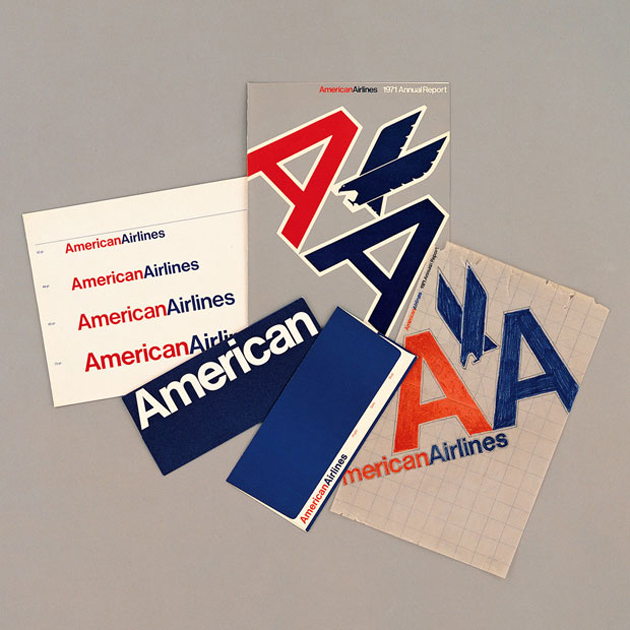
And while his design’s appropriateness for today is not so clear, it’s been sad to see it systematically begin to disappear from the common landscape. Most recently, his logo for department store JCPenney – pure nostalgia for tons of 80s and 90s kids – was recently jettisoned in favour of a bizarre reinterpretation of the American flag. American Airlines, for which he designed their once revolutionary identity, is bankrupt with many speculating that it will be eaten up by another company and disappear in short order. And the gorgeous 1960s and 1970s Vignelli designed and/or inspired signage still visible in Italy’s tube stations, streetcars, roads and public spaces is decaying, busted or covered by graffiti. Arrivederci once again, modernism.
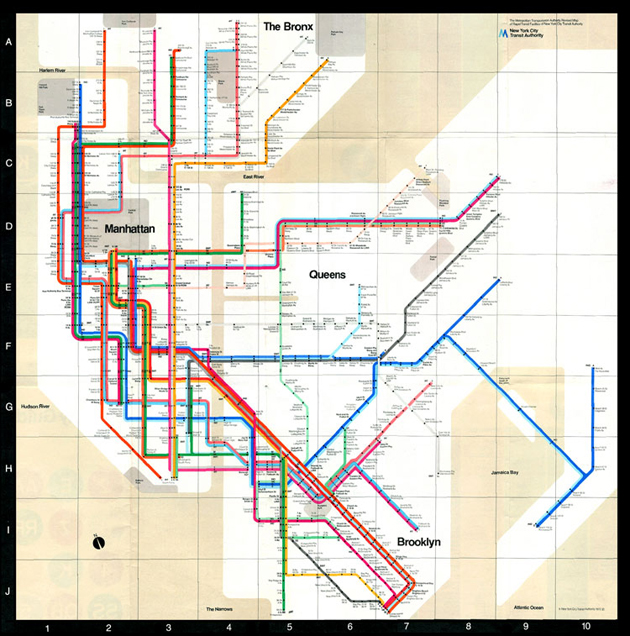
His NYC Subway map is long gone, and while it could have used some tweaks, it is in my opinion the only transit map in the world that ever approached the level of functional, iconic simplicity as Harry Beck’s London Tube map. (Those things must be hell to design: have you looked at the tiny Milan metro’s pitiful spaghetti pot?)
Although his designs were striking, beautiful and salient, they were almost always in the service of massive corporate clients. His works were thus stamped out by the millions and became synonymous with the unthinking, relentless profit mongering of late 20th century capitalism. Many, including a great many designers, are ecstatic to see it go. (Ironically enough, University of the Arts London – of which Central Saint Martins is a part – have rebranded under a new, Vignelli-inspired logo earlier this year. Everyone hates it.)
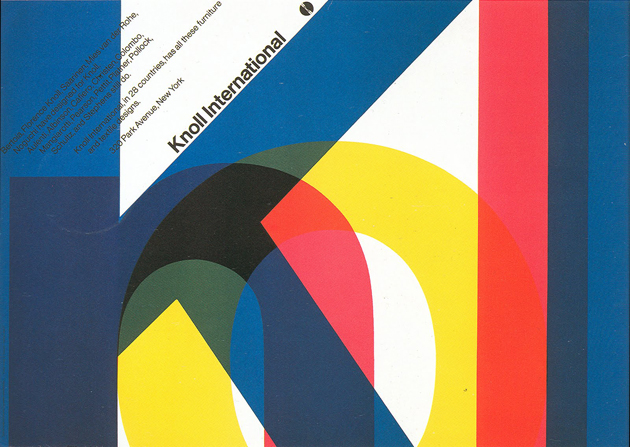
But as his ubiquity fades, Vignelli is gaining a new sort of cultural traction that he had always lacked. He’s spoken candidly about his work, most notably with Debbie Millman on her seminal show, Design Matters, and has revealed a great deal about his integrity as a designer. And a new film, which premiered just this week at the Architecture & Design Film Festival in New York aims to tell the lesser known personal story about Vignelli, his wife Lella and their extraordinary collaborative legacy. (It’s about time someone crafts a narrative to give the Eames’ some real design power couple competition!)
Love or hate his work, the man is a genius. He – together with Lella – has left a mark on modern society that we’re only beginning to understand.
Tag ChristofFrom A Non-Place To A Public Library
Every day we are confronted with the left-overs of our overly designed, but not always functional, corporate world. If you’re turning your eyes on the idea of reading another article against the big bad corporate guys, maybe at the end of these lines you’ll understand why, in cases like this one, it’s really hard not to be political. But let’s get to the point: what we are speaking about here, are the non-places built, and often abandoned soon after, by various corporations and short-sighted impresarios. Naturally, this scenario is usually staged in the USA, even though the rest of the world isn’t quite immune to the phenomenon.
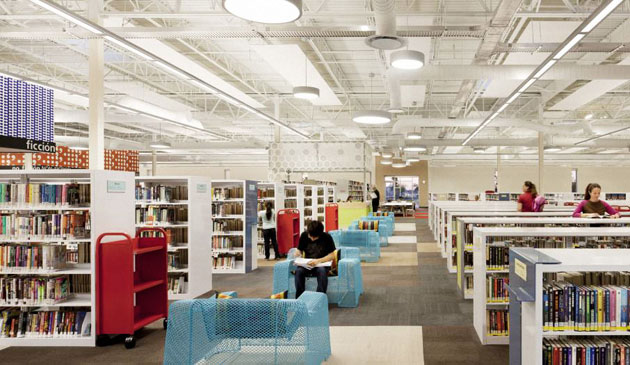
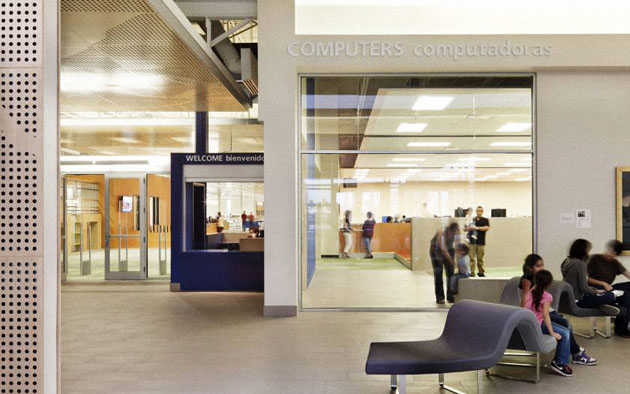
Fortunately, there are a few examples that show how these abandoned buildings, ghosts of our consumerist culture, can be given a completely new life. The latest project is a public library in McAllen, Texas, built in an ex-Walmart store. The forgotten warehouse, one of the 130 empty former Walmart stores available throughout United States, has been transformed by the architectural firm Meyer, Scherer & Rockcastle, an office specialized in designing libraries, in a beautiful public space.
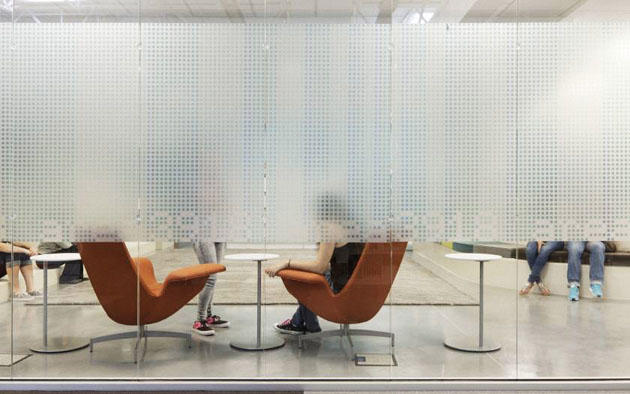
The architects have maintained the original outer shell, dividing the internal zones in a glass-enclosed space and adding rows and rows of bookshelves. The McAllen Public Library is claimed to be the largest single-story library in the country, since it’s two football fields large. To confirm the project’s excellence, McAllen Public Library has been awarded the 2012 Library Interior Design Competition prize. Even though design prizes don’t always guarantee the excellence of a project, in this case, the conversion from a vast warehouse to a perfectly functioning library was rightly awarded. But what is even more important than posh design judges’ opinion, is the feeling of local public, who has clearly expressed its preferences with new user registration rise in 23% within the first month of library’s opening.
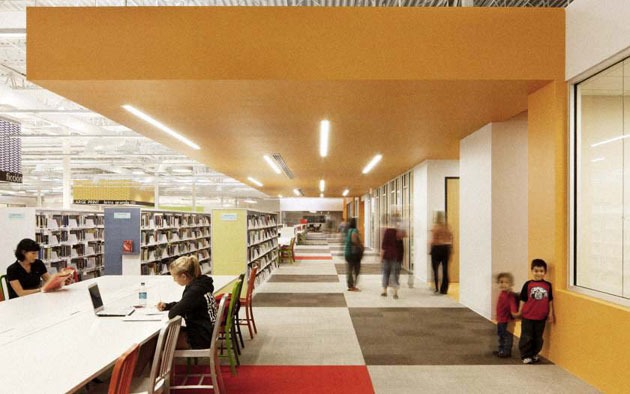
A Different Point of View
Usually I pick the show I will talk about on Monday art spot following the instinct, my previous knowledge or speaking with the other team guys, but this time things went in another way. I selected five exhibitions I’ve already seen still on view in Milan for a special guest and let her make the choice. My different point of view comes from below, even though it is just a matter of height. The ‘critic in bud’ is Sofia G. (5 years old). Midway between a surprise and a pleasant confirmation – she is too smart to stop in front of something that could challenge her imagination – she chose to visit the not-so-easy show by Michael E. Smith (b. 1977, Detroit) at Zero with two amazing ‘nannies’ Emanuela Torri and Luisa Lanza – both part of the fresh and ingenious DOREMILAB’s project: L’arte raccontata dai bambini (art told by children) – and gives us her impressions.
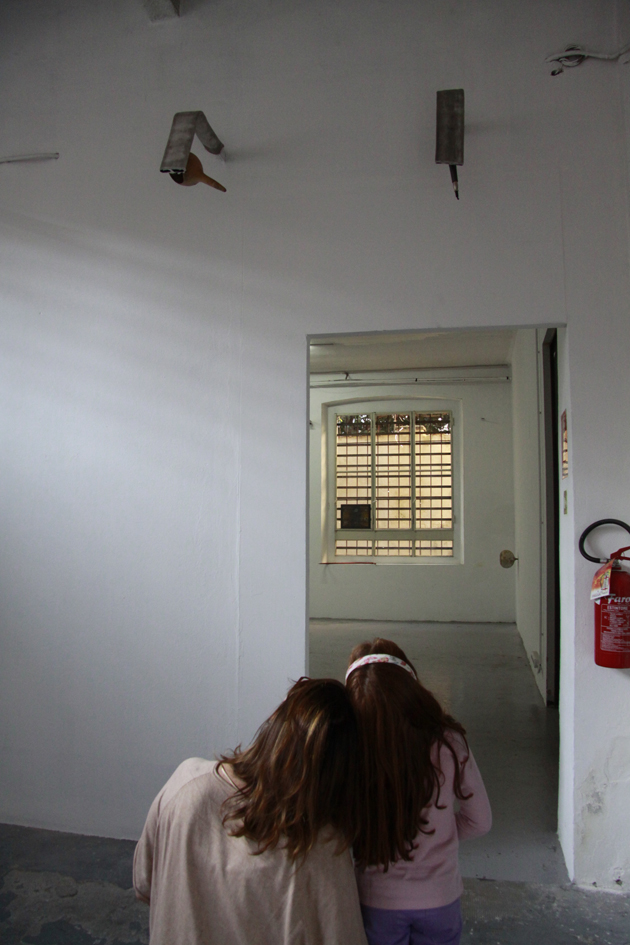
Looking at the images on the galleries’ website Sofia opted for something that would stir her curiosity: “there is any canvas that means that I will do a treasure hunt (…). If the painter paints canvases, M.S. is an artist who makes objects, and these objects are neither old nor new, because if they were old somebody would have thrown them away, and if they were new, they wouldn’t be here.”
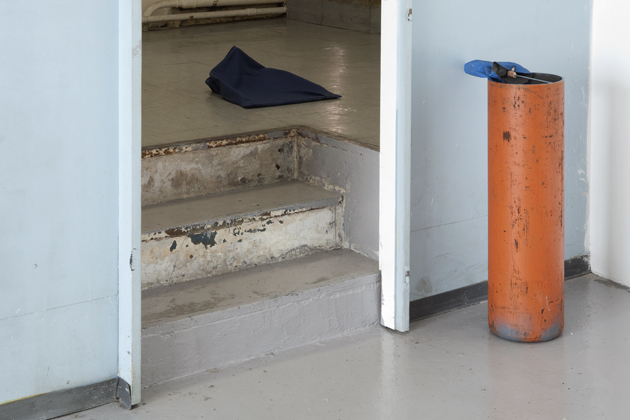
The exhibition path starts with Pillowcase (Untitled, 2012): “somebody must have forgot his/her blue blanket here; night is cold…” My mind goes to the artist’s research connected to the rests of a wasteful culture – our one – and his ability to make use of useless things to give them a new life. I’m reflecting upon Smith’s radical re-thinking of objects, a manipulation and a re-allocation that give them new structures and functions.
Another sculpture caught Sofia’s attention, it has to do with an orange metal cylinder with an antenna and a blue cap overboard; it is part of the previous work: “there is an umbrella stand but it is too high, it is not for children. The cap got jammed into an umbrella stick. Maybe the wind tore it. I wonder whose cap is that? The artist must love blue.”
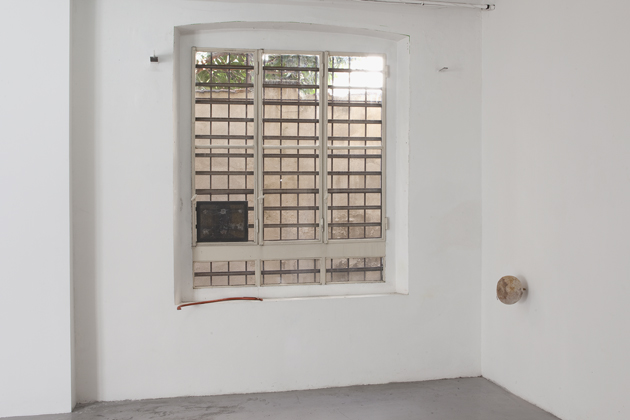
The visit goes on. A piece of red varnished metal on the windowsill with a framed see-through image hanging on the close window moves Sofia’s view: “there is a piece of a drying rack; it looks like an open fence, and above it, there is the picture of the ghosts; M.S. must have hung it there to see the ghosts, it looks like those papers you find in hospital to see if you have broken your bones.”
The works by Michael E. Smith are not figurative, nevertheless his creations – also thanks to his capacity of playing with materials – have such an evocative power, which gives to things new identifiable meanings albeit suggesting the sense of their temporarity and abandonment. “M.S. left a small potato stuck on the wall with a nail, which remains the same while the potato has grown. Look at it sideways, it reminds me a pumpkin or, maybe a pate… “
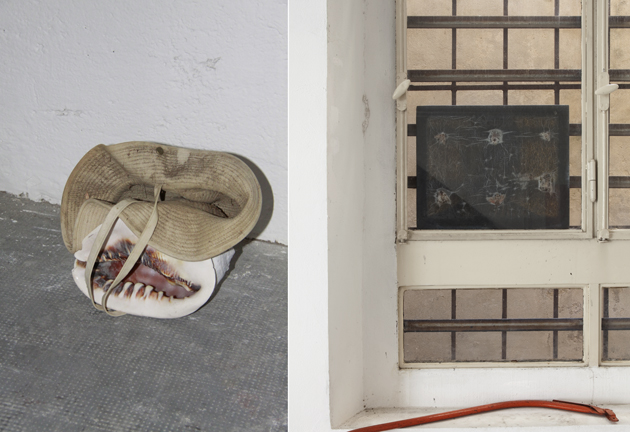
Curiosity is ruling the roost and replaces superstructures I usually turn to while reviewing an art show. Untitled, 2012 (shell, hat) “could be a mouth with the hat, both the objects have a hole” – they are disposed in the same way in a united pile – “and could be put on one’s head, they have the same folds.”
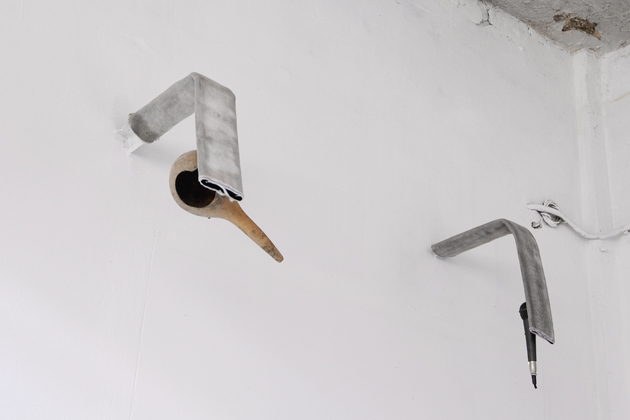
The installation in two parts made of an altered fridge door, a painting (wood and fabric) and a hinge “is a kind of springboard without water, like a skateboard jump,” while always according to Sofia’s free imaginative flow, coming out the ‘shell room’ and looking onto toward the ceiling “there are two shower tubes: one with a jug from which it could drop soil and the other one, with a microphone from which electricity could be sourced from. Soil + electric current = earthquake.”
The exhibition path is almost ended. A “tool with a fish face and a nest head, which would be turned into a lamp, putting a light bulb in it” (Untitled, 2012 – stuffed catfish, milling machine), and a “lengthen ball” – made of urethane foam and rubber – “able to move in circle and chose who will be its shooter.”
“I think that this show could be good both for boys and girls, but not younger than me.”
The Design Philosophy: Looking Back To Look Forward
Let’s take a look back to 2 weeks ago, here at The Blogazine we reported on some key trends from the SS13 runway shows. It got us thinking: where do designers get their inspiration from? What drives them to dive deep into previous decades of fashion trends? Or, on the contrary, leap into the future and use futuristic fantasy to create contemporary collections for next summer?
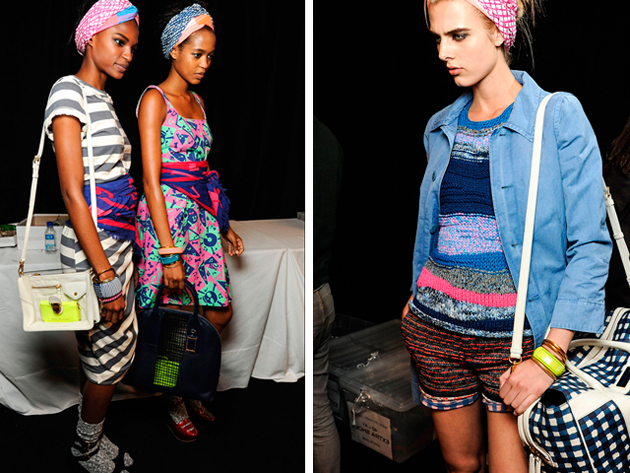

Every season there is a hype of an era or decade; “70s is back” or “30s glamour” for example. This season saw key trends emerging strongly from the 60s, 80s and 90s grunge and even a hint towards the early “noughties” period.
Of course fashion is influenced by many factors; economic changes, current affairs, music and youth culture amongst many, so fashion trends are subtly moving all the time. When it seems that everything is possible, designers are looking back to their own careers as a way of celebrating their own story and drawing inspiration from their own archives to strengthen their message.
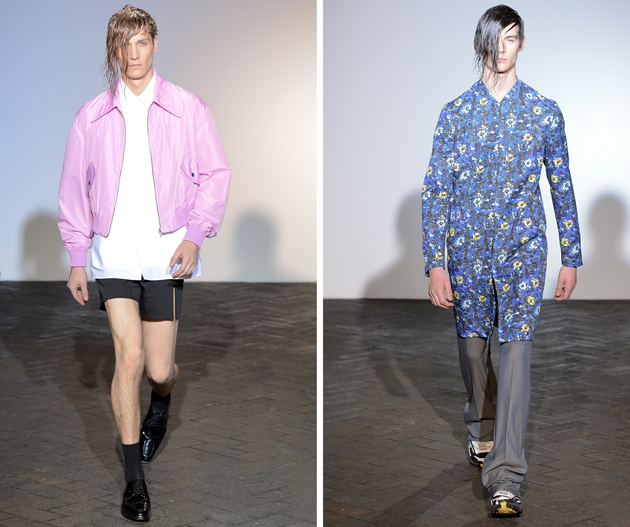
As an example, Raf Simons, recently appointed to Dior, looked back at his past 17 years as a starting point for his own menswear label. He looked at Nirvana and the grunge scene, claiming his aim was not to imitate that era but to take iconic elements from this period and re-work them to a contemporary look. Talking on his inspiration he says “There was a nostalgic feeling but also a futuristic feeling, in psychology but also in materialization”.
Marc Jacobs is known to only look back to look forward. His “Marc” by Marc Jacobs line pulled uplifting outfits from the early 80s and were re-worked to a modern fresh and fun collection.

A time perhaps when style and fashion are becoming less and less identifiable, the fascination with the past for designers seems to be a nostalgic pot to draw from, a kind of safety net to build on for the future. In any case, whatever your generation, these memorable style moments from the past will always make us smile, evoking memories and nostalgia of outfits we may have all worn and wouldn’t dream of wearing again, but as what goes around comes around, let’s see who opts for the 80s look next summer!

Autumn in Middle-Earth
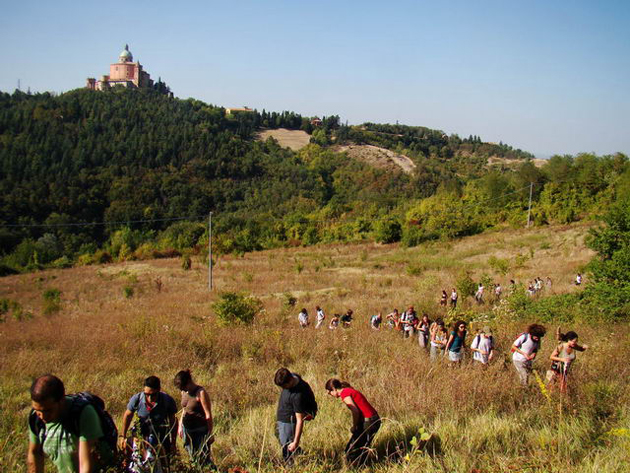
If you see its red roofs, Bologna seems like a burning city. If you want, you can imagine it as Middle-Earth: caught between the North and the South of Italy, eternally hung in the balance between rebellion and stillness, crossroads of diversities that menace its genetic indolence: but it’s exactly these diversities that create an everlasting equilibrium. Here you’ll find the oldest academic institution of the western world and beautiful arcaded streets. Near the secret gardens of middle class houses you’ll find crumbling hovels inhabited by several generations of students, as well as abandoned buildings chosen as a residence by gutter punks; the metropolitan vagabonds.
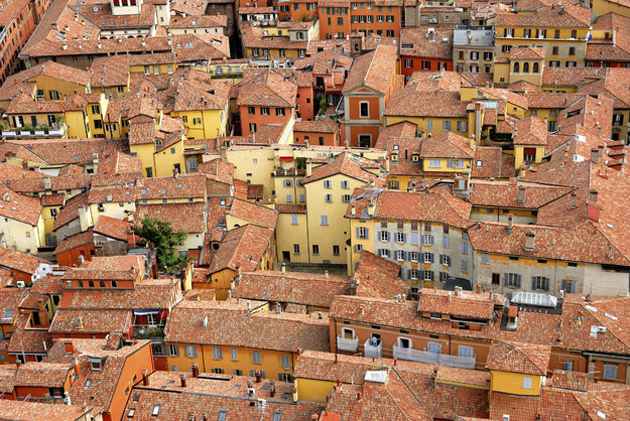
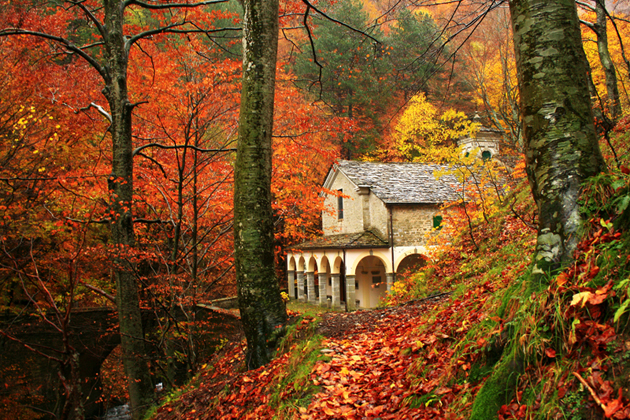
In Via Zamboni, where the students spend almost more time than in their apartments, you see pinned up posters that sing hymns to urban rebellion. The smell of mariijuana is a constant, as the smog in Rome and tacos in Mexico City. Students argue about last revolutions and tomorrow’s exams. In these days, many of them walk around with reflex cameras in their hands: in autumn, Bologna shows the turists and inhabitants its best dress.
If you decide to visit this beautiful city, keep a simple tour plan and move around by foot; it’s the only true way to enjoy the smells and colours of the town. After a must visit in the old town centre, move from Piazza Maggiore to Via del Pratello, “the street of slaves and prostitutes, terrified by change” as the Italian musician Emidio Clementi sings. Go back and take Strada Maggiore or Santo Stefano street, they will lead you to the Margherita Gardens, the main urban park of the city. Here you can taste a real peace of what autumn in Bologna is. For those who love to walk, we recommend wearing the comfortable shoes for an outdoor trip to the hills of Bologna to search inspiration from the lovely hillside villages, and to have a look over the whole city. Another must-see destination especially for those who have a car is the Madonna del Faggio Sanctuary in Castelluccio, 40 miles far from Bologna: here you will find sceneries worthy of a William Turner painting.
The Editorial: Origami Coffee
I don’t know about you, but I am tired. Partly because it’s nearly 4am, partly because it’s October. The slow and agonising build-up to the holiday season has begun (Starbucks has started serving its cosier, fattier, spiced-ier coffee contrivances), which means we’re all negatively charged bundles of stress lately. And so this week, I shall spare the world a wordy diatribe and will instead fold origami while I brew a little coffee.
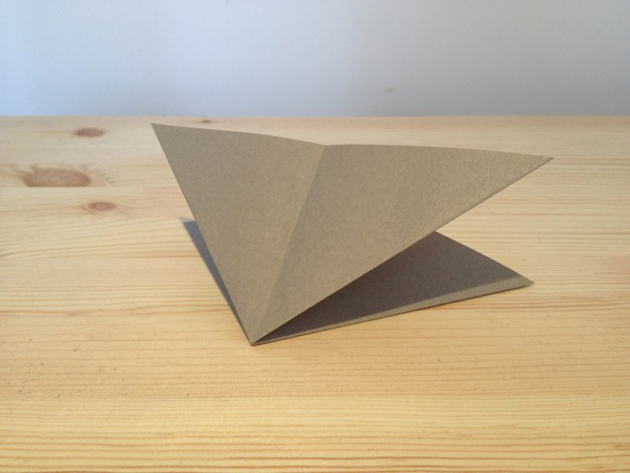
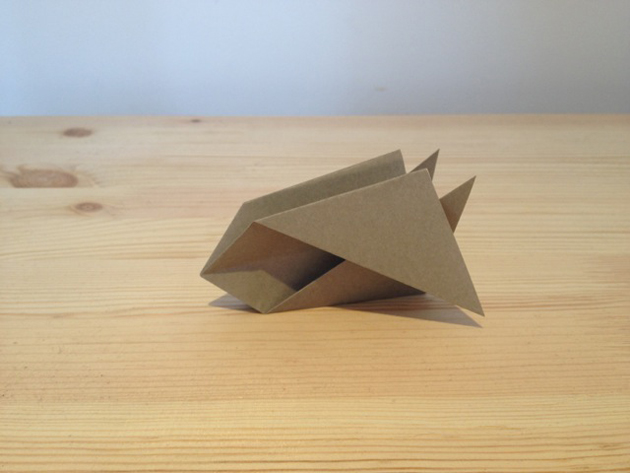
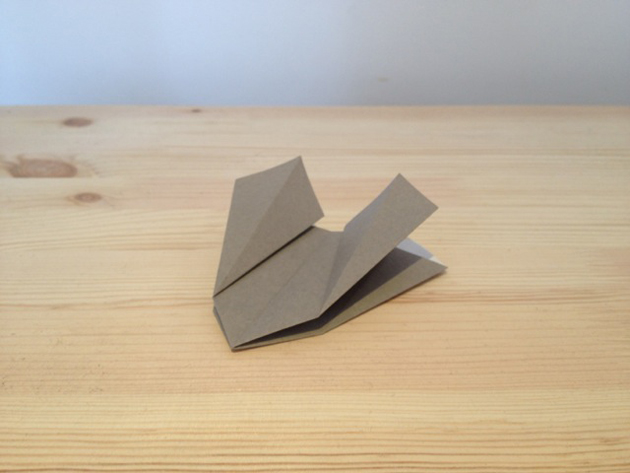
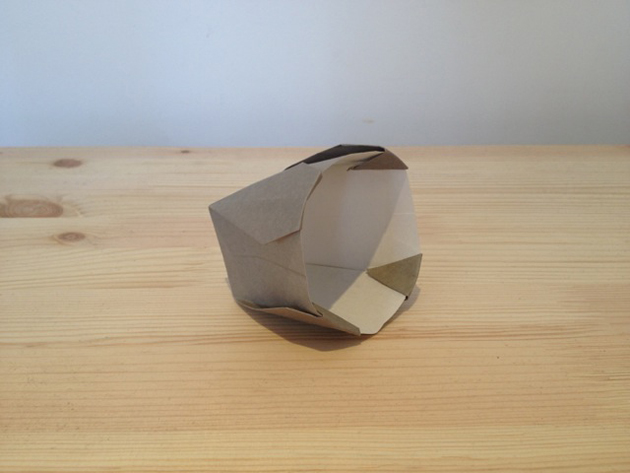
There’s something intensely romantic about getting intimate with a square of paper. You come to know its essence. (Fold.) Its zen. (Crease.) Its materiality. (Tuck.) And ultimately its limits. (Rip. Oops. That stegosaurus is too difficult. On to something else…) But from crane to ninja star to water bomb to flower, that something so utterly straightforward is capable of taking on infinite variations in symbolic form is positively mind-blowing. Koolhaas would be nowhere without origami. And as with everything, it’s all in how you bend it.
(Water’s boiling.) So while I may be tired (especially after sitting through two hours of a droning, predictable US presidential debate), the night is young! It’s raining here in London (shocker), which lends to the already pervasive serenity of 4am. Fold. Crease. Tuck.
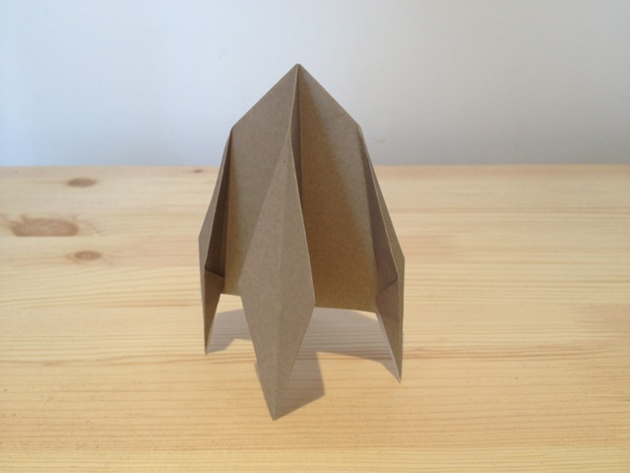
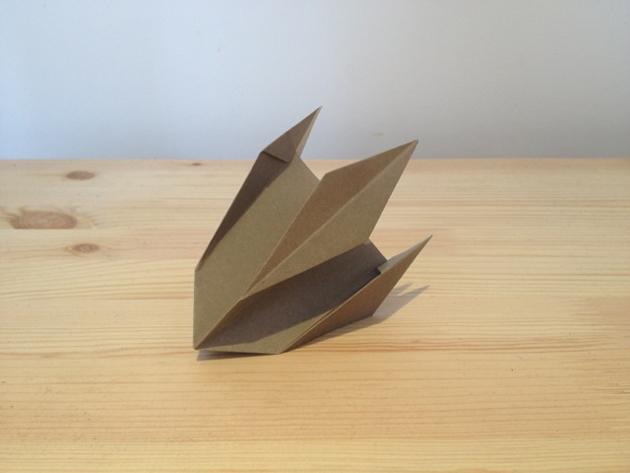
I can make coffee slowly, carefully at 4am. No rush to get out the door and onto the early train. It isn’t for a jolt now, but rather a shameless hedonistic indulgence. And much like the origami, its seeming straightforwardness can give way to great complexity when considered more closely. Consider your coffee well and it, too, becomes craft. Fold. Crease. Tuck.
(It’s ready.) So, slow down this week. It changes everything.
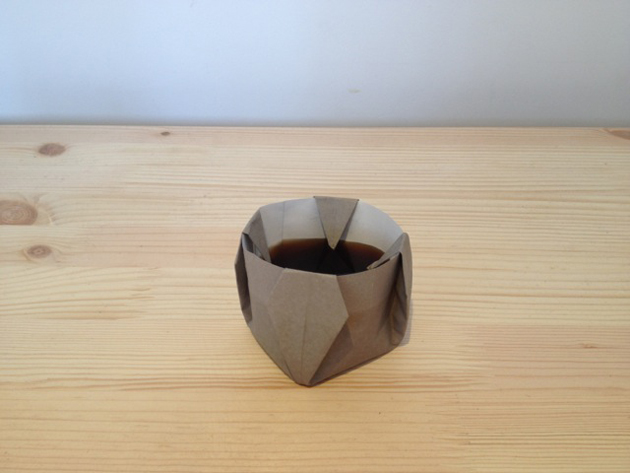
For world-class coffee in the spirit of 4am origami indulgence, check out London’s Prufrock (and sit at the bar while you take it in), Brooklyn’s Blue Bottle Coffee or LA’s extraordinary Demitasse (swoon over the Japanese brewing equipment). And just for the mood’s sake, watch this gorgeous film about brewing in a Chemex.
Tag Christof – film by HufortChanging Design in China
Speaking about design in the West has become an ubiquitous subject. Everyone in some way, more or less passionately, is involved in the discourse. The idea of ‘design’ itself as a discipline has become widespread and commonly shared. The same thing cannot be stated as firmly about design in the Orient, especially China.
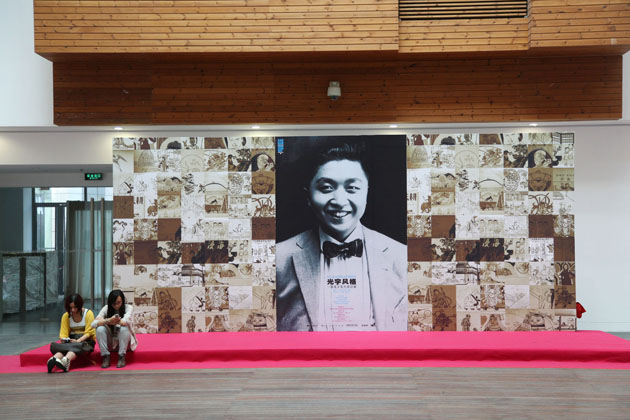
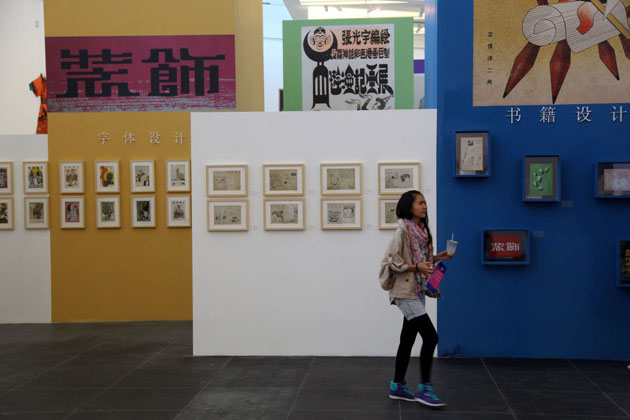
After decades of growth as a productional power-force (with all its good and bad sides that we cannot engage in discussing in this particular context), China is strongly intent in changing its production methods as well as the public image. The recent hustle and bustle of grand design events confirms the country’s determination in shifting from ‘Made in China’ to what should become ‘Designed in China’. Hence, the recent Beijing Design Week tried to focus its activities in promoting and discussing the importance of craft in design process – stressing on the urgent need of both industrials as well as designers in China to engage in producing authentic projects, more than merely copying European or American design pieces.
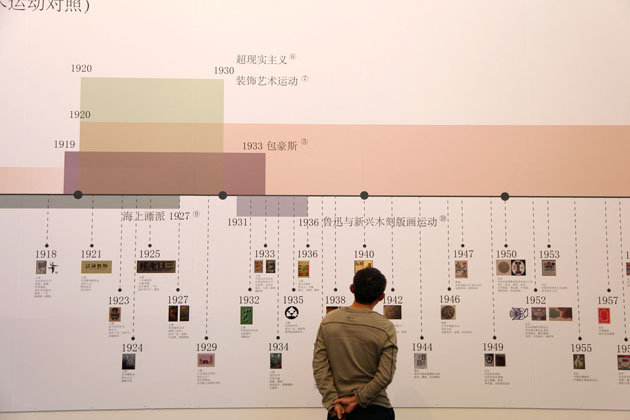
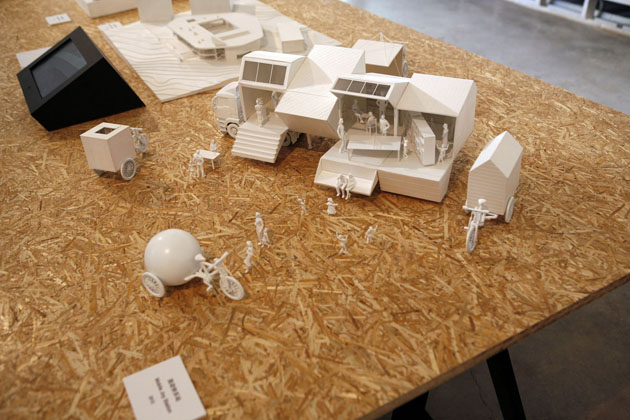
The desired shift is surely a tough task and, as Justin McGuirk swiftly points out, BDW hasn’t quite made it in making a strong statement about what should be done, neither has it shown examples of successful collaborations between young Chinese designers and enlightened Chinese manufacturers. The highly ambitious design week, unfortunately, still seems kind of copycat of European events, without authentic projects that try to put in practice the theoretical goals. Presenting a series of events, exhibitions and talks, together with the main fair, even the ones with a keen eye on Chinese design weren’t able to really find much to be impressed by.
Even though our ‘Western’ design fairs don’t have much to envy, too, a bit of criticism might help passionate Chinese designers to find the right way to embrace the peculiarities of their fascinating culture and both promote an authentic idea of contemporary design.