04/02/2013

Manet: Portraying Life

Manet: Portraying Life

Capturing the Paris of his day and legitimizing ‘modern life’ as an artistic subject, Edouard Manet, with his candid approach and stunningly subversive use of paint and subject matter, is seen as the father of modern painting. So, it’s rather fitting that London’s wonderfully atmospheric Royal Academy of Arts is currently staging its first major Manet exhibition.
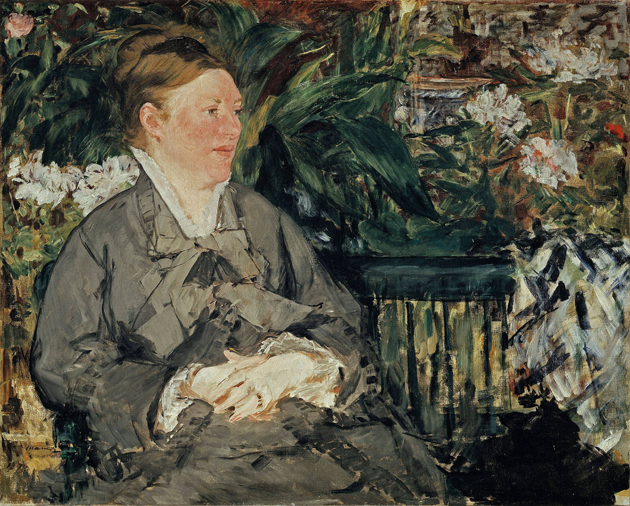
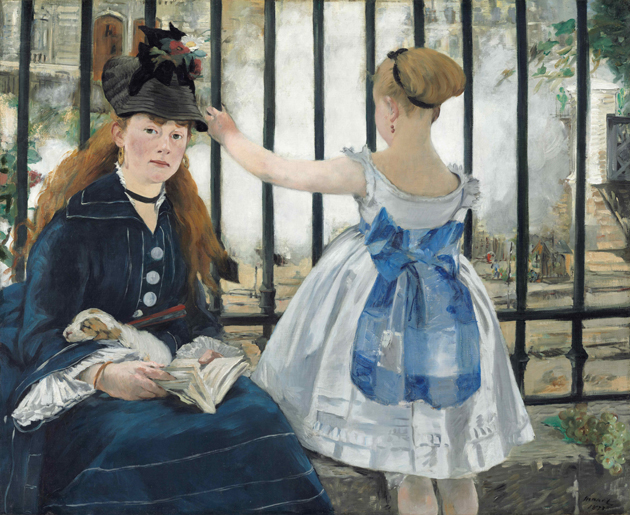
Arranged thematically, ‘Manet: Portraying Life’ explores the lives and loves of Manet’s nineteenth Century Paris through 50 portraits, that themselves redefine traditional ideas of portraiture. Vibrant, intimate and challenging, these works have a unique, photo-like feel and effortlessly blur the line between staged, carefully constructed portraiture and scenes of everyday life. This makes them as captivating now as they were in Salon days gone by.

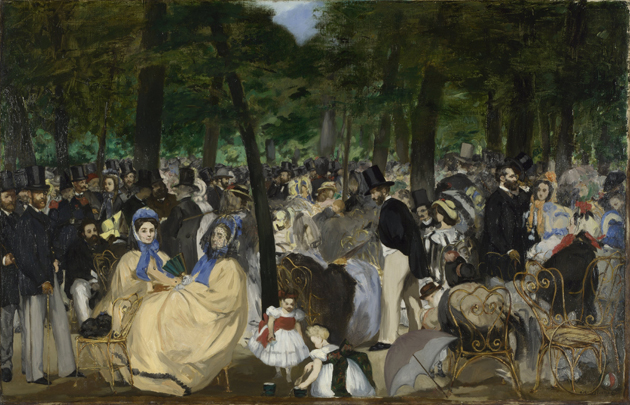
A highlight is ‘Music in the Tuileries Gardens’ (1862). At first it appears to be nothing but a hypnotic and colourful sea of humanity, yet you soon discover that the painting brings together Manet’s cultural world. This artist, theorist and musician-filled piece, considered compositionally daring at the time, was designed to reflect Charles Baudelaire’s definition of modern beauty, and by extension Modernity – something Manet was particularly fascinated by. By showing these elegant Parisians in a blurred, chaotic manner, Manet is able to reflect modern life – a chaos, a constant, overwhelming experience filled with people and ideas, known and unknown, that gradually, when given the appropriate attention, become recognizable. Hanging alone in an Academy room, you find yourself just standing and staring at this piece. It’s busy, beautiful and utterly enthralling.
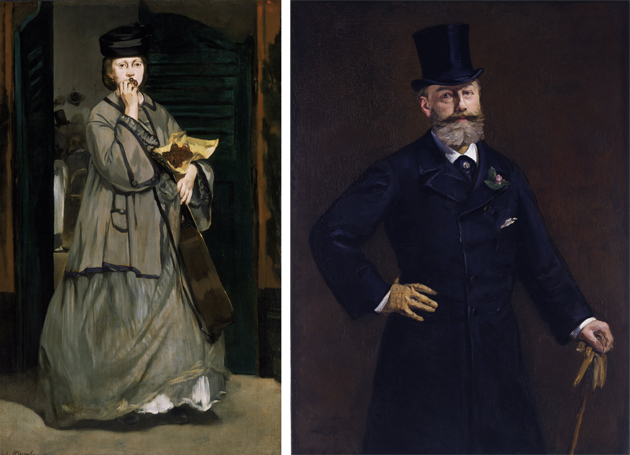
The intimacy of the works is astounding. None of the portraits feel posed. Rather it’s as if you’ve stumbled upon the sitters going about their daily business. ‘Berthe Morisot with a Bouquet of Violets’ stares at you as Manet would have stared at her. Unblinking, unapologetic and genuinely stunning. She seems completely unaware that she has been captured in time – or that she became the poster girl for the exhibition itself. This only seems to make her more alluring. In ‘The Luncheon’, Manet’s young, nonchalant sitter is actively walking out of the painting. Seeing these natural, seemingly spontaneous works you begin to understand Manet’s artistic significance. He captures what most modern artists still strive to – a truthful, seemingly natural image of the sitter and their own unique world.

As his paintings would imply, Manet was a fairly colourful and contradictory character. He once dueled with critic Edmond Duranty over an article (affable relations were quickly reestablished) and refused to be exhibited with the Impressionists; despite considering Degas and Monet close friends and going down in history as a central figure in the transition between Realism and Impressionism. Artists, and art for that matter, were never meant to be simple.
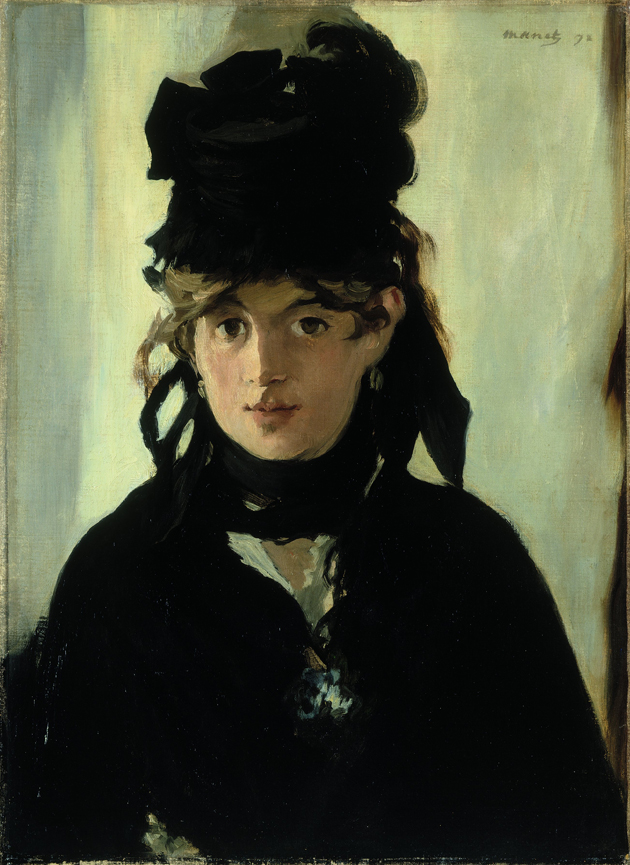
Manet: Portraying Life is on at the Royal Academy of Arts, London, until 14 April 2013. It has previously toured to the Toledo Museum of Art in Ohio.

Liz Schaffer

03/02/2013

Sunday Breakfast by Love For Breakfast

Sunday Breakfast by Love For Breakfast

I get lost in the perfect shape of a circle. I follow the endless curve like hypnotized while having my first meal of the day.

Alessia Bossi from Love For Breakfast

01/02/2013

The Land of Ice and Snow

The Land of Ice and Snow

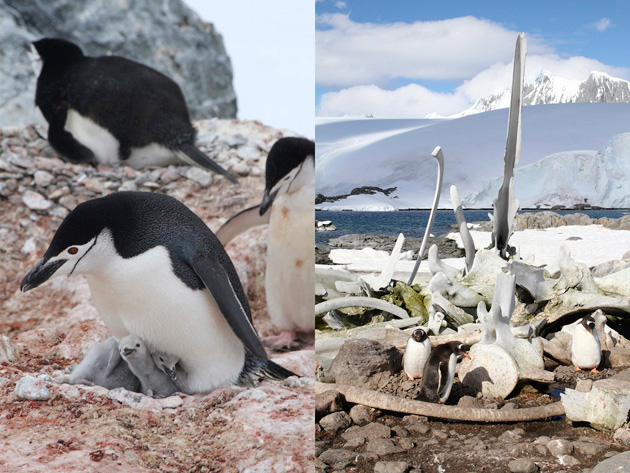
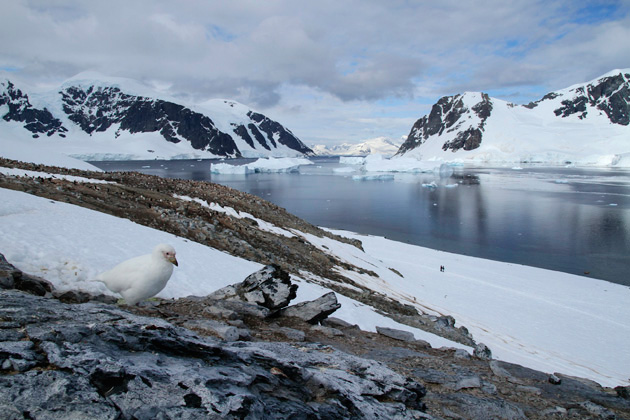
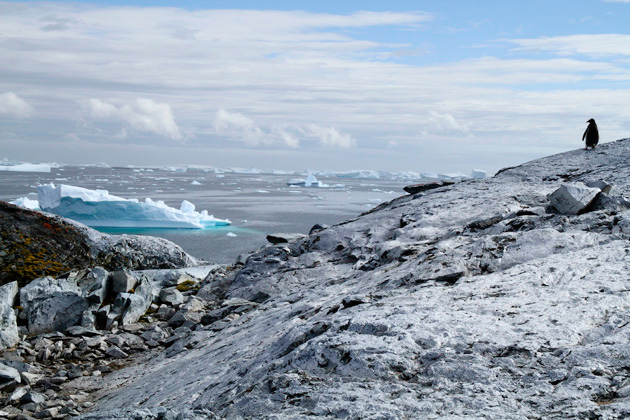
Paradise has been found. But it looks nothing like you’d imagine. Devoid of foliage or warmth, this Shangri-La is a spirit lifting collage of blue, grey, utterly untouched white, snow, penguins and whales. Paradise is Antarctica, and it’s flawless.


Not necessarily on the top of most conventional holiday lists, Antarctica can only be reached by travellers in the fleeting, light-drenched summer months and remains almost completely untouched. Most of the human residents are scientists, who inhabit brightly coloured, eco-friendly research stations, and you’re unlikely to spot another ship, except for the ever-moving National Geographic Explorer. As a result, the wildlife simply assumes humans are larger version of themselves. This explains why penguins (when not doting on their fluff-covered chicks) chose to nibble your gumboots rather than maintain their mandatory five-meter distance.


It’s difficult to describe the beauty that surrounds you here. Even the photos don’t quite do it justice. Expansive snow-covered mountains, breaching humpback whales who find boat-dwellers fascinating, glaciers that roar and crumble into the sea, cacophonous penguin colonies, seemingly endless amounts of sunlight, sleeping seals and icebergs that take on a fluorescent turquoise hue as the day progresses. You feel so small here, so in awe and so full of joy. Looking around everything is simply stark, cold perfection.

But there’s a certain bizarreness to this place too. In the middle of nowhere you’ll stumble upon a British research station/post office, set up during World War 2 to keep an eye on the Germans, that’s now exploring the effect of tourism on penguin colonies (using penguins who refuse to stay within the boarders of their ‘control’ environment). If you’re interested, the station is called Port Lockroy and you can apply at the end of the month for a year-long posting. Miles away are the ruins of an Argentinian station, burnt down by a doctor who refused to spend yet another year alone on the ice. And then there are the bizarrely inspiring creatures you travel with.

In my two weeks I encountered a novel-writing expedition leader, wilderness-seeking doctor, a barman turned zodiac hoon and a superstitious chef with a remarkable ability to avoid parking fines and elections, simply by never being in his home country. Add to this the fact that you’ll most likely be travelling on a Russian ice breaker, that began its life as a Cold War spy vessel, and the Antarctic appeal only grows.

Uniting past and present, the bizarre and the serene, Antarctica is inspiring, incomparable and sure to leave you with ice, snow and future expeditions on your mind.

Liz Schaffer
31/01/2013

MB Fashion Week Stockholm A/W 2013

MB Fashion Week Stockholm A/W 2013

The seasonal Mercedes-Benz Fashion Week Stockholm ended yesterday. Household names such as Whyred and The Local Firm played their usual safe cards, which is quite understandable considering the financial situation which is almost as dreary as the Northern climate.

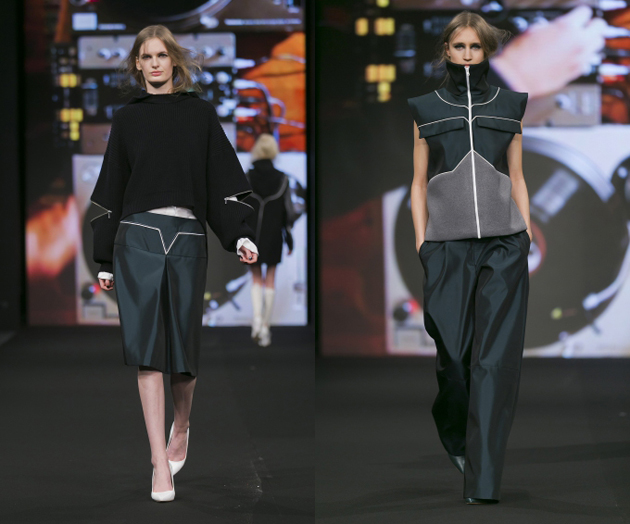
The Swedish fashion scene instead turned its eye towards the young breed of design talents. Malmö-based altewai.saome’s New York-inspired collection was as crowd-pleasing as ever. The question however is if this collection is too contemporary to still be relevant come autumn. The collection’s main element was the cut-out details in the spirit of Alexander Wang S/S 13. The cut-outs were concealed by zippers, much like the sporty pieces from BACK’s A/W 12.

The newest addition to the hectic schedule came in the form of Minna Palmqvist. Palmqvist has during the last seasons been praised for her intellectual avant garde. Garments featuring the intestines and cellulite, embroideries and other undesired human flaws are present in her season-transcending work named “Intimately social.” Her design ideology is heavily inspired by Dame Mary Douglas “Natural symbols”-sociology of the human body in social and intimate contexts. New pieces in her timeless collection were presented through a video installation in renowned auction house “Bukowskis”.

Petter Köhler- Photo Kristian Lövenborg

30/01/2013

Designers As Contemporary Artisans

Designers As Contemporary Artisans

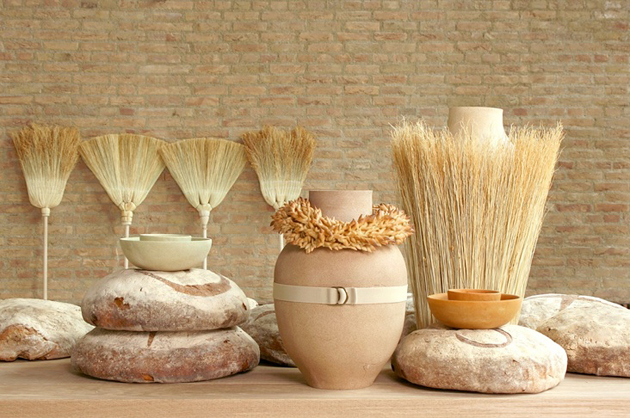
More than 150 years have passed since William Morris, the grand English designer, writer, poet, artist and socialist, has first expressed his repugnancy towards the industry and his praise towards traditional crafts. Since the industrial revolution, designers have often discussed their position towards mass production of industrial goods in opposition to the pleasures and values of transmitted by handcrafted objects. While the period following the end of Second World War has seen designers whole-heartedly embrace technology seen as a means of cultural and social renewal, the period after the digital revolution of the nineties and fascination with everything high-tech has seen designers take a step back in the process.


While re-discussing the issues of computer aided design and digital technologies, contemporary design seems to be currently taking a different shift. Even though many areas of design are strongly engaged with new technologies, the most traditional branches of design, like furniture and industrial design, are becoming more aware of the value of craftsmanship in the design process. As Paola Antonelli states in an article published by the magazine Domus “…here we are talking about designers getting their hands really dirty, which for some also means getting their consciences clean. The loaded history of crafts is once again timely, with its antagonism towards mass production, tinged with ethical implications, coupled with new conditions in the world and in the market—from a general awareness of the environmental crisis, to the attempt to price and sell design differently to appeal to art collectors.”


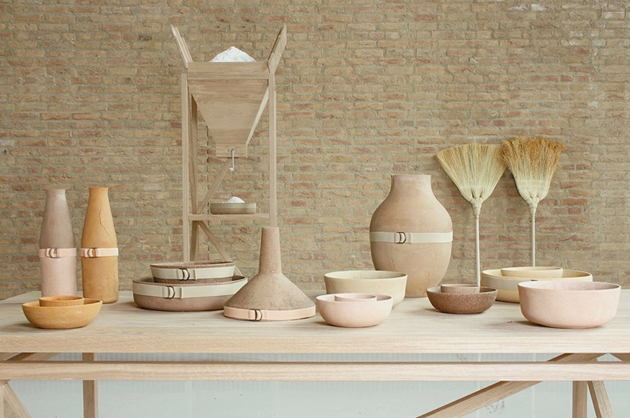
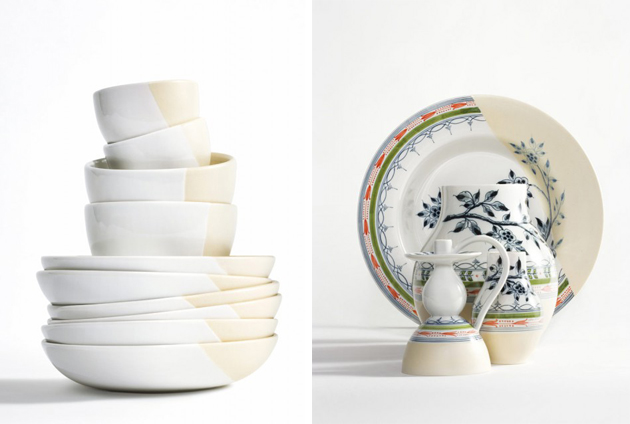
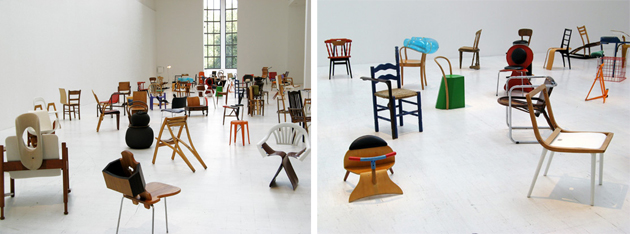
Hence, we are witnessing an actual ‘revival’ of a Morris-onian approach to design. It ranges from practices like the one pursued by Martino Gamper who works almost exclusively on limited edition projects designed with the help of handy artisans and sold in high-end design galleries. A more research-oriented approach like the one of the Italian duo based in The Netherlands, Formafantasma, who use craftsmanship as a method for sourcing new materials and modes of production. To end with the Dutch designer Hella Jongerius, who applies handcrafted details to industrially produced objects and furniture.

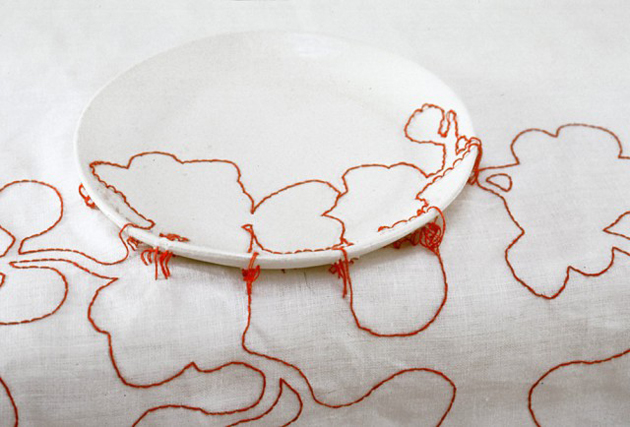
This new generation of contemporary artisans, whether they work inside the industry or in less institutionalized spheres of design practice, use craft as a method in developing projects that reflect both on the design discipline itself, as well as on the society, mass production, economy and the way we relate to the objects we use, in a constant dialogue between past and present, awareness and sensibility.


Rujana Rebernjak

29/01/2013

Guest Interview n°43: Anja Cronberg

Guest Interview n°43: Anja Aronowsky Cronberg

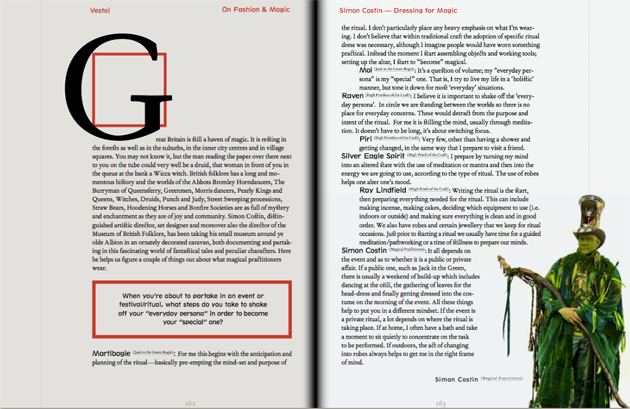
In the last years, there has been a small movement of magazines that are rethinking the way fashion is presented on paper. On the side of ‘image-based’ fashion magazines like Purple or Self Service and ‘word-based’ academic journals like Fashion Theory or The Journal of Fashion, Beauty and Style, a new category has emerged. Examples of this new wave are Vestoj, founded and curated by Anja Aronowsky Cronberg, Fashion Projects, founded and curated by Francesca Granata, or Address, founded and curated by Johannes Reponen. What relates these experiences is the will to create new spaces and new ways to reflect on fashion where image and words constantly dialogue. As Paul Jobling argues in his “Fashion Spreads” (1999), the image and the word are two crucial and inseparable languages of fashion and these new fashion magazines show it clearly. To understand better this new method of thinking fashion, we interviewed Anja Aronowsky Cronberg who talks with us about her project “Vestoj. The Journal of Sartorial Matters”.

How, when and why did you start Vestoj?
Vestoj was started in 2009 in Stockholm. I was editing a magazine called Acne Paper at the time, and I was getting increasingly frustrated that we as a magazine were somehow always justifying the fact that we were a fashion publication (and brand marketing tool) by including material from other creative disciplines, art, architecture, film and whatnot. A lot of fashion publications suffer from this type of inferiority complex. It’s as if a magazine dealing with fashion can’t be taken seriously unless you include a heavy dose of material from the creative disciplines considered superior in the hierarchy of the arts.
At Acne Paper we did interviews with Noam Chomsky, Nan Goldin, Slavoj Zizek, David Lynch and Alejandro Jodorowsky but since we, as editors, were far from experts in politics, linguistics, art, film or philosophy the finished texts were often a rehash of the subjects our interviewees felt comfortable with. We didn’t push many boundaries in other words. I started to feel that the only way to truly make a fashion magazine that knew what it was talking about, was to make a magazine about fashion. So, I quit my job at Acne Paper, moved to Paris and started Vestoj – a journal about dress and fashion that uses the way we wear clothes to study the culture in which we live.

What is its aim and how is this magazine different from other fashion magazines?
The aim of Vestoj is to be simultaneously inside and outside, both fashion academia and the industry. We aren’t strictly speaking an academic journal; Vestoj isn’t peer reviewed, it includes plenty of images, not intended to be merely illustrative but instead to provide an alternative way to deal with our themes, and the publication itself is an object to treasure and preserve. We want text and image to be in constant dialogue with each other and to provide an insightful and scholarly but always approachable way to deal with our discipline. We work with a lot of academic writers and aim to stay abreast of the academic discourse but we also always want to remain relevant for the fashion industry. Just as we don’t conform to the conventional academic journal, we don’t kowtow to fashion industry standards for publishing either. We don’t follow the seasons, choosing instead to publish annually in order to keep a slower pace that allows us to properly reflect and research our themes. We’re not news-based, we have no advertising and we don’t urge our contributors to use or refer to any particular brands.
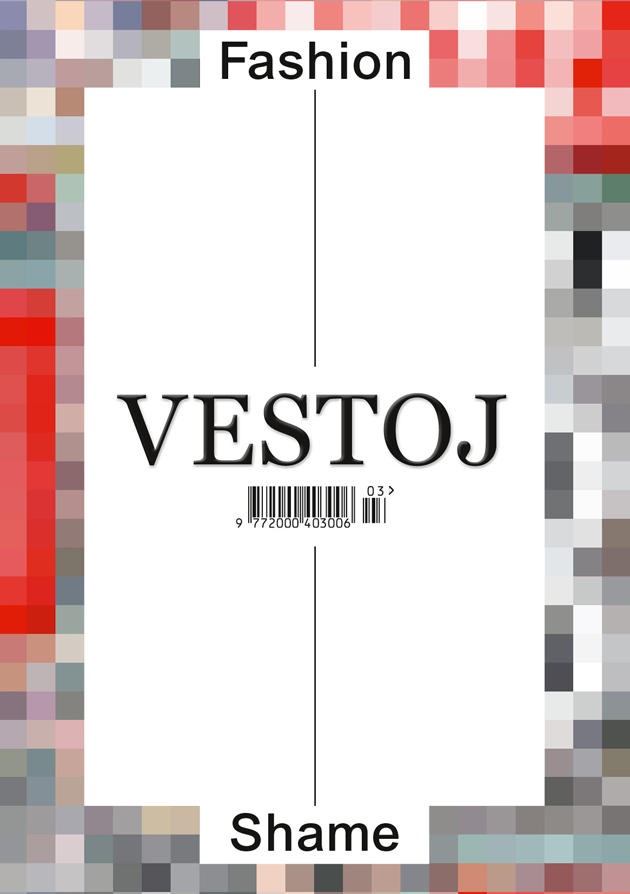
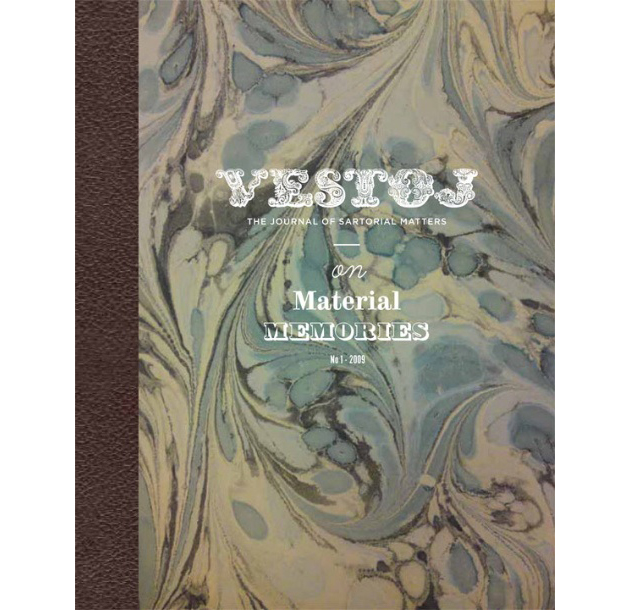
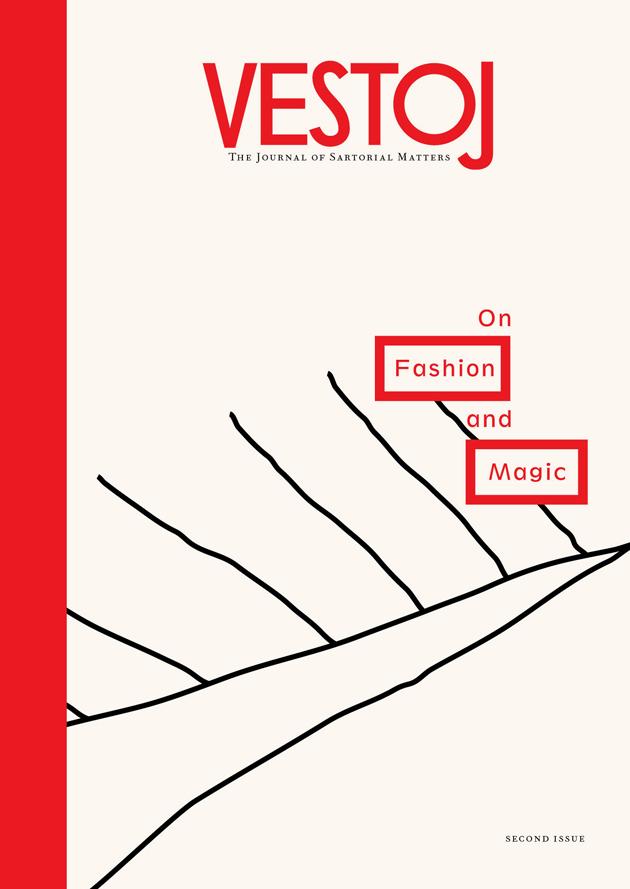
As I mentioned in my earlier answer, it’s very important to us to focus solely on fashion and dress, we’re a fashion publication rather than one about ‘lifestyle’ in general. Were we to speak to Chomsky, Goldin, Zizek, Lynch or Jodorowsky we would ask them about what they wear and why. We’re interested in fashion as a mirror of our culture, and we try to choose themes that are both topical and slightly off-kilter: so far we’ve dealt with fashion and nostalgia for our first issue, fashion and magic for our second and fashion and shame for our third. At the moment we’re working on our fourth issue, on fashion and power.


What are the future plans for Vestoj?
As I mentioned, our fourth issue is our current priority. The idea is that the issue will be a close, investigative look at power and fashion, i.e. what are the rules in fashion and who sets them? We’ll look closer at topics such as money, ideals, politics and ideology and attempt to understand and expose how the politics of fashion allows power relations to be built and maintained. We’ll examine how dress can be a powerful weapon of control and dominance but how it can, at the same time, also be subversive and empowering. In addition, we’ll explore the link between power, social discipline, conformity and fashion, and examine how contemporary norms can be so entrenched as to be beyond our discernment, causing us to regulate and control ourselves without any deliberate coercion from others.

What, then, happens when we step out of line? We’ll also examine how the mechanics of demonstrations of power within the fashion industry are displayed and why so few today appear to challenge them. Is this endemic of a more widespread attitude in society? We’ll look at why it is so hard to be critical in fashion and at who gains from the industry’s rigid and static power structure. And in light of this we will ask whether it is in fact possible to challenge the status quo, and, if so, how?

Marco Pecorari

28/01/2013

Paola Revenioti – Paola

Paola Revenioti – Paola

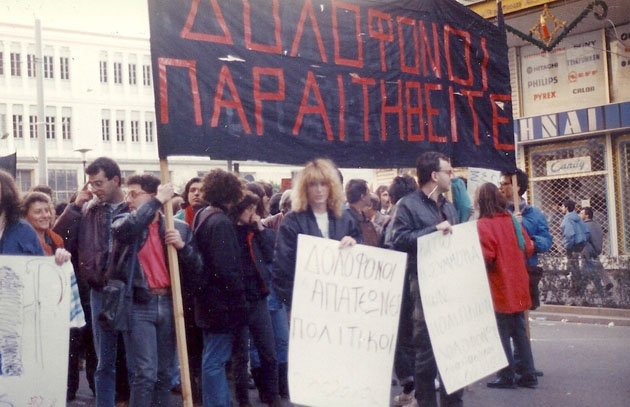
If the antidote to world-wide economic and social crisis is achieved through investigating itself inside the cultural roots of every state, it is interesting to discover that at times these roots are not so distant from present. So happens that in Athens, the symbolic city for economical defeat and the worrisome rise of Nazi-inspired parties, from a closer inspection, the signs and the seeds of a more open and less hostile culture are not relegated to the classical world but also to most recent past.


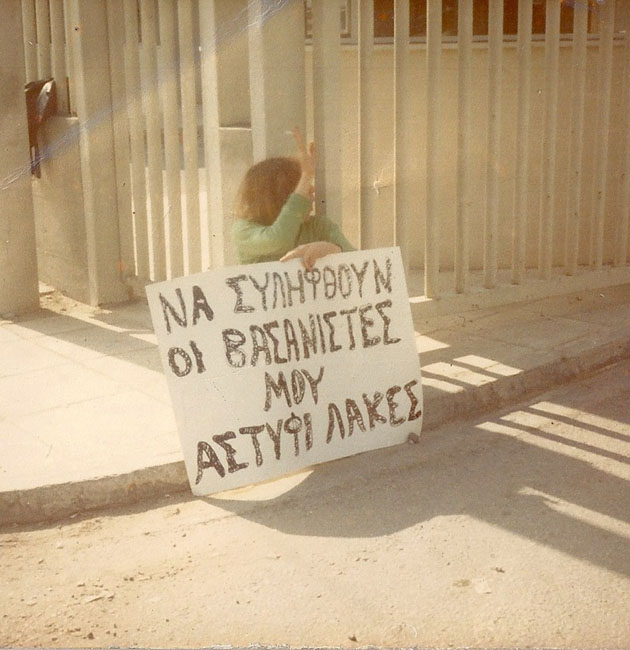
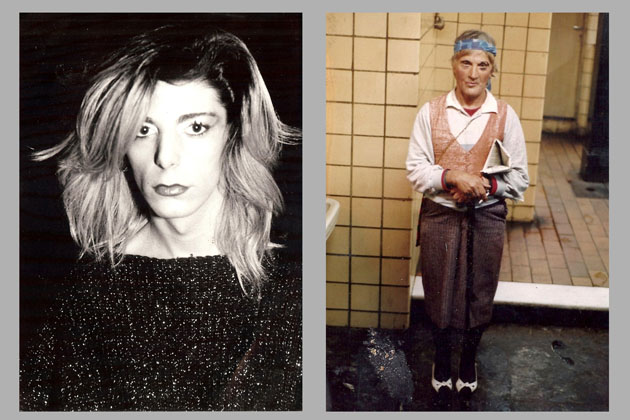
The simple title of the exhibition at Breeder Gallery, Paola, reflects a sense of familiarity and intimacy as addressing to a friend or someone known for a long time. Since Paola Revenioti is not a well-known personality outside national borders, she is actually a central character as well as a cult figure in Greek LGBT scene from the beginning of the 80’s. Paola is one of the most eccentric and revolutionary authors in an undefined territory between personal life and representation: gay rights activist, anarchist, transvestite, prostitute, photographer and film maker, above all creator of the magazine “Kraximo” that first approached with simplicity the environment of prostitution and street life of hustlers including “high” contents as the famous interview to philosopher Felix Guattari.


Kraximo has been a real archetype; free, brave and passionate in order to narrate the desires and the revolutionary spirit of a generation on topics such as politics, trans-gender and transgression through words and images, deeply focused to melt well the issues, clearly that the real social and political “revolution” can not be separated by a sexual revolution.
 The first intense exhibition at Breeder Gallery curated by artist, architect and teacher Andreas Angelidakis, interprets cleverly the versatility of this peculiar figure by right selections and setting.

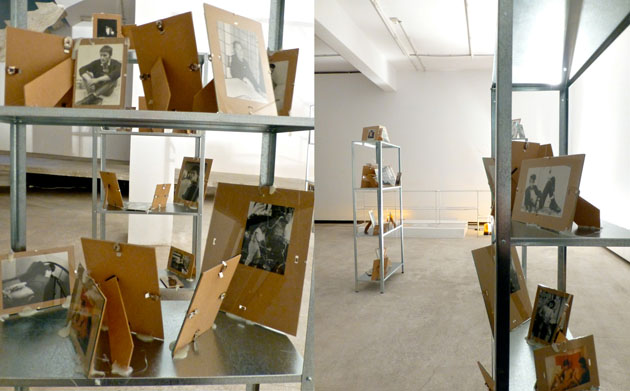
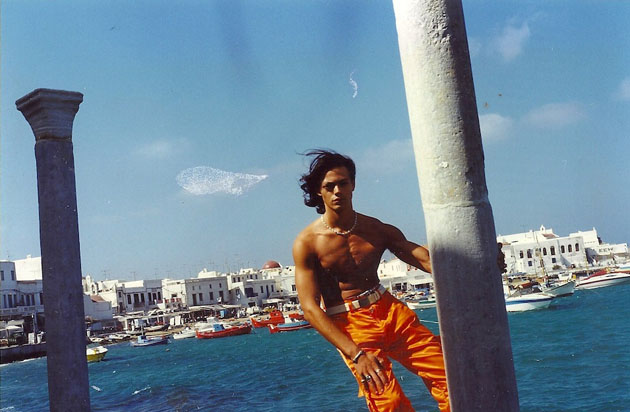
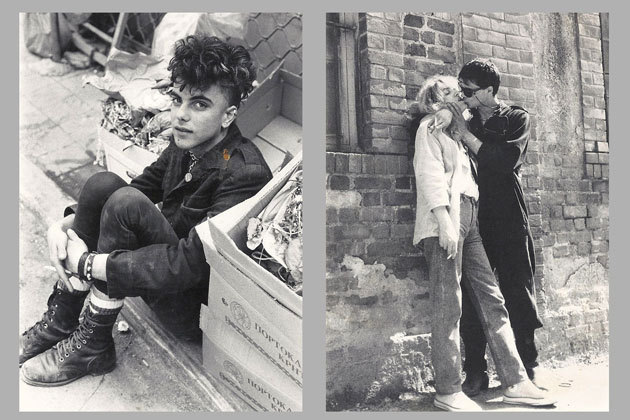
Furthermore, what is exhibited inside the Athenian gallery is not a proper photography exhibition but something even more fascinating: between a historical archive and an intimate diary loaded with feelings, the spectator can be penetrated sliding around from the industrial metal shelving for the simple photo frames emerging pictures and memories of queer environment described by Paola in many years of her “career” as precious relics. Touching photographs loaded with beauty, desire, social emancipation, friendship at the same time a witness of willingness to build an identity and a common lifestyle, marvelously lapped by the Mediterranean light as well as the Aegean Sea.

Besides the photographs, the exhibition features some videos especially adapted from the archive ‘Video in Progress’ that points out the Athenian transsexual environment and underworld in a familiar way, since Paola has been a protagonist in it for three decades and beyond.

Paola will run until 16 February.

Riccardo Conti

27/01/2013

Sunday Breakfast by Love For Breakfast

Sunday Breakfast by Love For Breakfast

Pancakes lover. Pancakes made with love. Pancakes to say I love you.

Alessia Bossi from Love For Breakfast

25/01/2013

Haute Couture Spring 2013

Haute Couture Spring 2013

After the pre-season presentations and before we dive into the month of Autumn & Winter collections, Paris and La Chambre Syndicale de la Haute Couture let us indulge in Spring one last time during the couture shows – the event that only a few of the fashion houses and young designers are invited to attend.

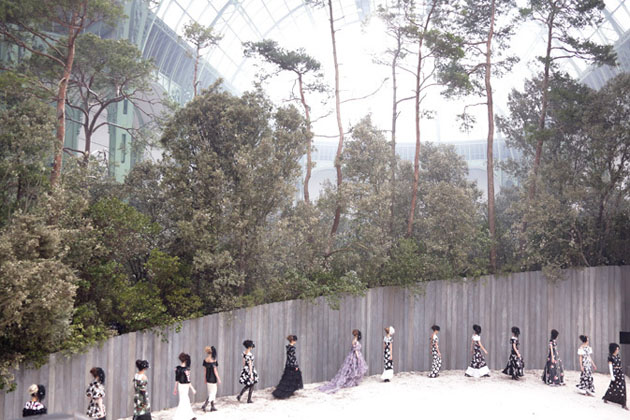
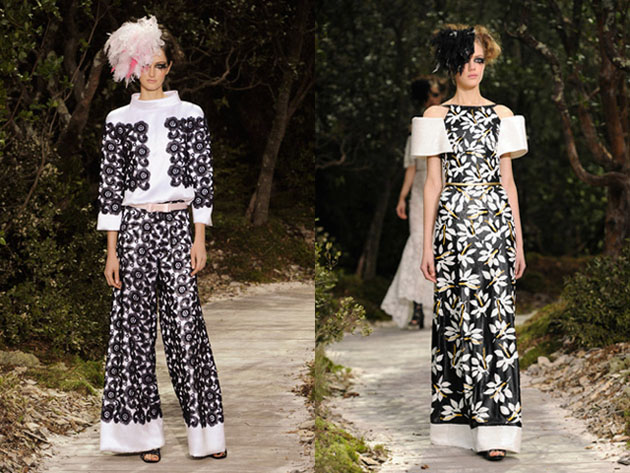
The annual subject for awe and some tittle-tattle is the Chanel show. We have seen icebergs and seaworlds and the anticipation of finding out what Karl Lagerfeld would do next was as usual big: and big it was. A forest had literally been imported into the Grand Palais, where the Spring 2013 couture show was hosted as usual. Out came models in feathery hair and make up, presenting the exquisite tweed suits and what at a quick glance looked like prints, but in fact were embroideries (and hours of work by a couturiers hand). Focus was put on the shoulders, which appeared bare and slim due to large detailing just below. Though, it wasn’t the collection or the magical show venue that got the most attention at the end of the day, but the grand finale where Lagerfeld brought out not one, but two, spring brides, showing his support for same sex marriage.

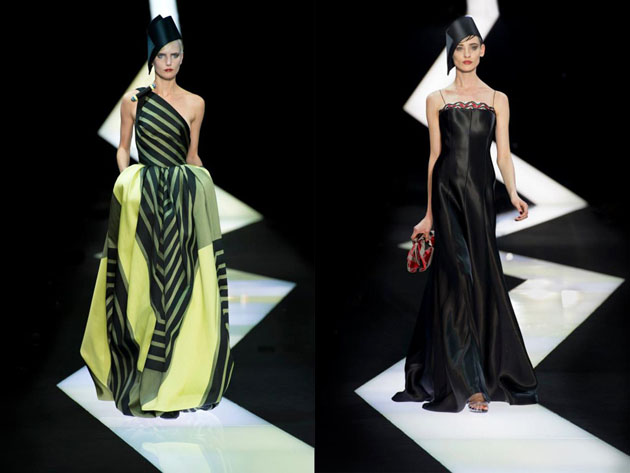
There was of course also other “regulars” on the couture schedule worth talking about. Raf Simons did his second couture collection for Dior, inviting the audience into his spring garden of serenity. The short haired models showed a collection of floating materials, suits and layers. Armani Privé flirted with eastern cultures: from the headpieces to the small gilets and rich colour palettes, and Valentino gave a bit of the significant red and that couture perfection that 500 hours (for one piece of garment) of handwork gives.


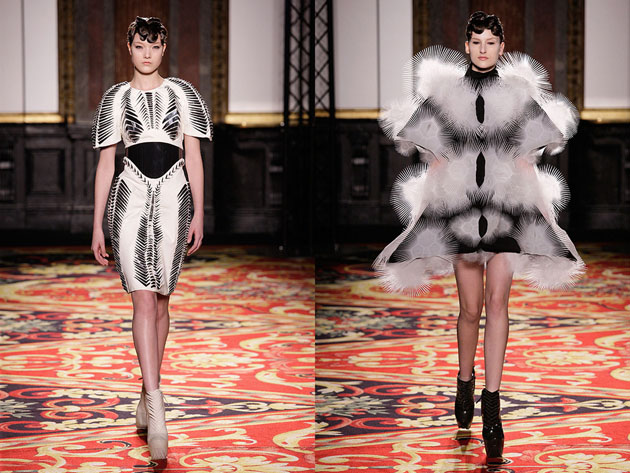
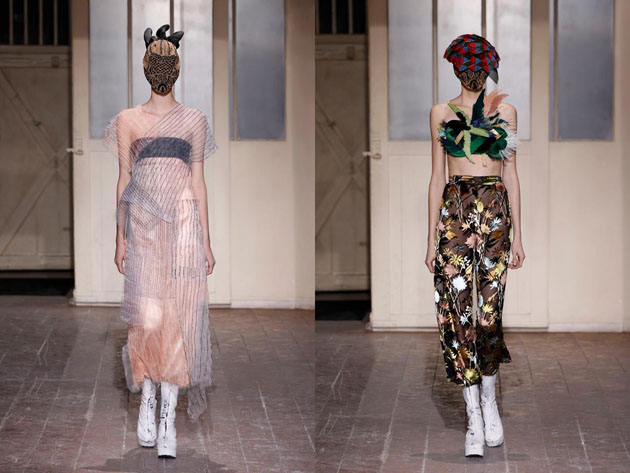
Maison Martin Margiela, together with the young designers who are not yet fixed on the couture calendar, stood for the edge and the new. Margiela brought out a coat made of, what has said to be, thousands of metallic candy wraps and Rad Hourani showed his unisex collection: something only he has done. Iris van Herpen and
Yiqing Yin, other youngsters in the world of couture, showed their visions for Spring. Sculpted dresses and elaborate pleating came down the runway at Yiqing Yin while van Herpen played with 3D effects and electricity in her collection called Voltage.

It rests to see who stays on the schedule for the next selection by La Fédération, but this legally instated label which is held in reserve for those selected few, will keep the audience to pilgrimage to Paris for this art called couture.

Lisa Olsson Hjerpe – Images courtesy to the respective brands

24/01/2013

On The Streets of Copenhagen

On The Streets of Copenhagen

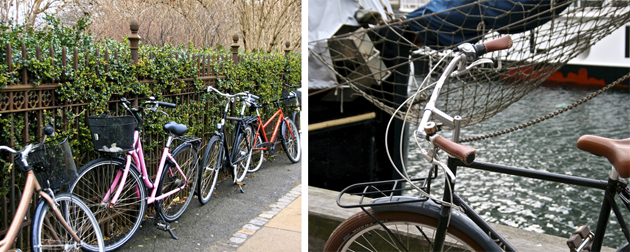
Copenhagen is sure to satisfy you, whatever you are looking for. Let your inner child be enthralled by the Little Mermaid, feel suitably moody at Assistens Cemetery, the final resting place of Hans Christian Anderson, and bike along cobbles and past green-tinged states – after all, in the capital city of cycling, bikes are the swiftest way to travel between some of the Northern Hemisphere’s most delightful culinary haunts. And just relax. After all, you’re in Copenhagen, the Scandinavian home of delectable, traditional and hyggelige (cosy) delights.


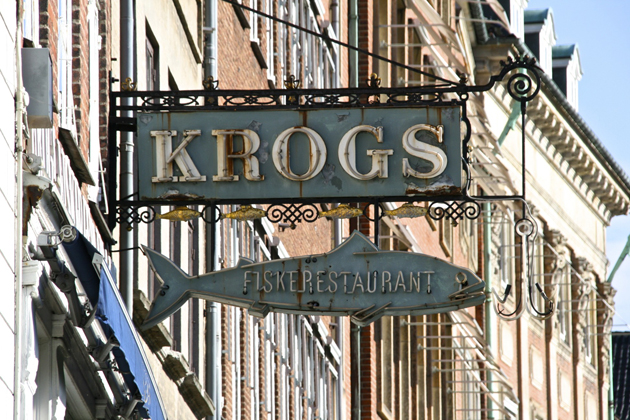
On the food front you have Noma, a two-Michelin-star haunt, housed in an old warehouse by the waterfront in the über artsy, 70s feeling Christianshavn neighbourhood. Lead by chef Rene Redzepi, adored internationally and regularly proclaimed as the best restaurant in the world, Noma takes its name from two Danish words – ‘nordisk’ (Nordic) and ‘mad’ (food). Here culinary insanity rules supreme with diners served with vegetables in their own dirt, wild ants, sea urchin toast, flower salad and raw razor clams. Not for the faint foodie-hearted, you understand why people travel from across the globe to experience a single meal.

While this ‘New Danish revolution’ may be the most famed gastronomic attraction, there are traditional culinary delights aplenty. Along Jargersborggade Street going hungry simply isn’t an option. Porridge is all the rage at Grød, crowds flock to the vege-centric menu at Relæ, you’ll get wired in the most delicious way at Coffee Collective and discover bakery-chic at Meyers Bageri – this is a city that seems to live for pastry.


But Copenhagen serves up more than just food. On every corner, on almost every street (this is especially true once you stumble into the university district) you’ll find either a vintage store, packed with quirk and character, or the new home of Denmark’s next big design thing. If it gets sunny and you’re done on the vintage front, wander to Amager Strandpark, an urban beach where the water is never quite warm, but cyclists and rollerbladers are always keen to entertain themselves in. For the lovers of brave, new architecture, check out the Royal Danish Playhouse. If the building doesn’t entertain you, the happenings within surely do.


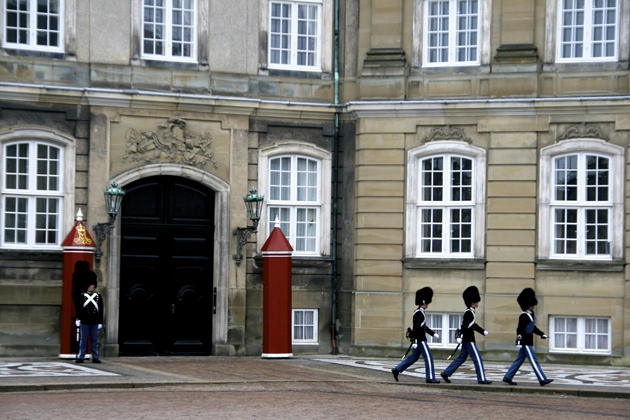
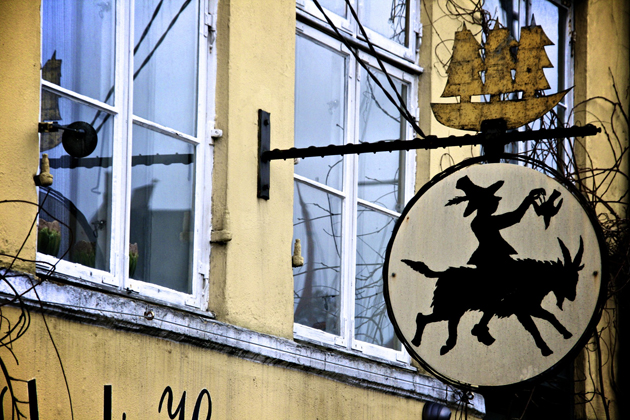
Alternatively, pass a lazy afternoon at Nyhavn, meaning New Haven. Once a bustling commercial port teeming with sailors, alehouses and mysterious ladies of the night, this area is now famed for its titling houses, ancient signs and for the thriving restaurant and bar scene. Do as the locals do, bring a beer (and pastry, of course) and simply dangle your feet – people-spotting here is utterly brilliant. If you’re a fan of formality, catch the Royal Danish Guard patrolling the royal residence Amalienborg Palace. Guard action begins everyday at 11:30 at Rosenborg Castle (built in 1624 and overlooking a rather stunning garden) before concluding at noon with the traditional changing of the guard. Often accompanied by church bells and drum beats, this is a sight to behold.

So much more than just a historic city of canals, cobbled squares, copper spires and royalty, Copenhagen is a European treasure. Just be sure to remember your appetite and wide-eyed sense of wonder when visiting.


Liz Schaffer