13/05/2011

Sean Frank / Alexander McQueen

.

Sean Frank / Alexander McQueen

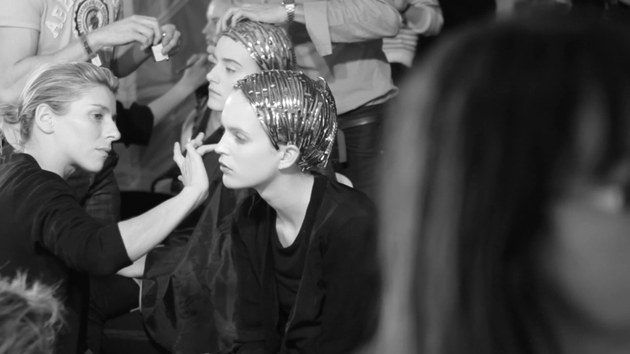
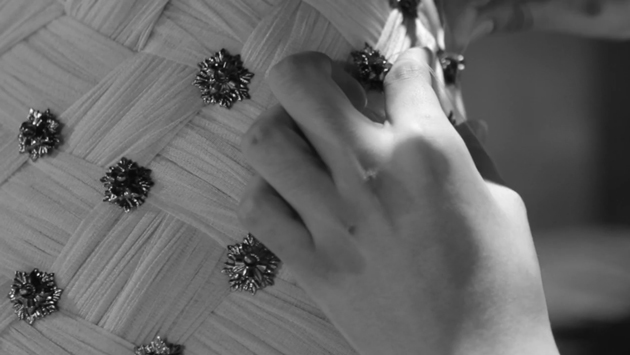
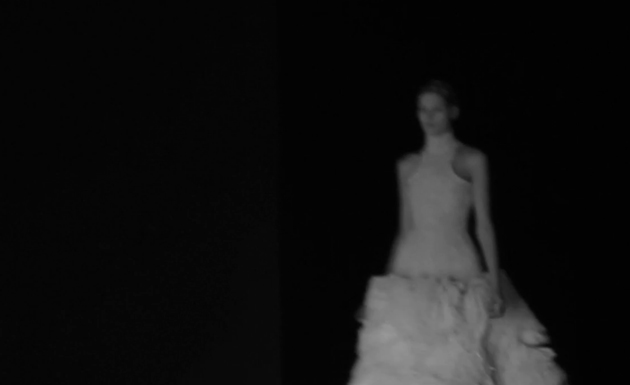
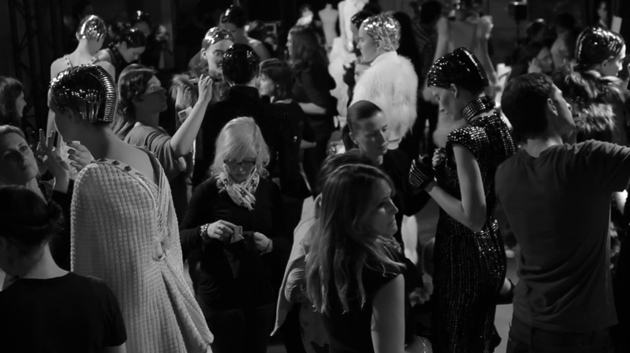
Sean Frank‘s career in filmmaking is just beginning, and already he’s making waves. His fashion work evinces the sensitivity of a much more seasoned artist, and he has quite the knack for crafting cinematic tension. The 22-year-old Londoner got his start in New York, where he shot the short film for 3.1 Phillip Lim to accompany the label’s lookbook shot by 2DM’s Vicky Trombetta. He’s since been at Alexander McQueen, and his newest, a gorgeous, shimmering behind-the-scenes film of the label’s Autumn/Winter 2011 collection has been burning up the blogosphere from its release.

Hot on the heels of the New York Metropolitan Museum of Art’s smash hit Alexander McQueen retrospective, “Savage Beauty,” Sean’s films take on an even greater poignancy. They come at a pivotal time for the Alexander McQueen universe, as its creator passes into legend and the label searches for its voice without him at the head.


Sean studied graphic design at both Goldsmiths and Central Saint Martins, and his sensibility as a visual designer certainly shines through in his films. “I’ve always had a passion for cinema and film, and for how it has the ability to momentarily transport you to another place while giving insight into different worlds and ways of seeing,” he told us in a short conversation yesterday. He draws inspiration from a range of artists, and interestingly, the wabi-sabi of everyday life.

Sean’s young work is extremely promising, and we can’t wait to see what might be up his sleeves over the next few seasons.

Tag Christof – Film and still courtesy Alexander McQueen – Special thanks to Sean Frank

12/05/2011

The Lowrider Coloring Book / Dokument Press

.

The Lowrider Coloring Book / Dokument Press

LA is in the air lately. Our love for that most quintessential of 20th century cities seems to be growing in reaction to a collective disenchantment with the characterless, hyper-global cities we increasingly live in. And as we stand on the precipice of an increasingly uncertain future, the neon boulevards, eternal youth and soaring dreams Los Angeles embodies look even better in retrospect.

Even LA’s lifeblood, the car itself, has become dangerously unsustainable, with traffic now snarling motorways in every major city of the world and atrocities like the Tata Nano mobilising masses who were arguably better off without a car in the first place. And as we look for a simpler time that will never return, LA’s myth alongside the automobile as object of worship is only bound to grow. Especially the lowrider.

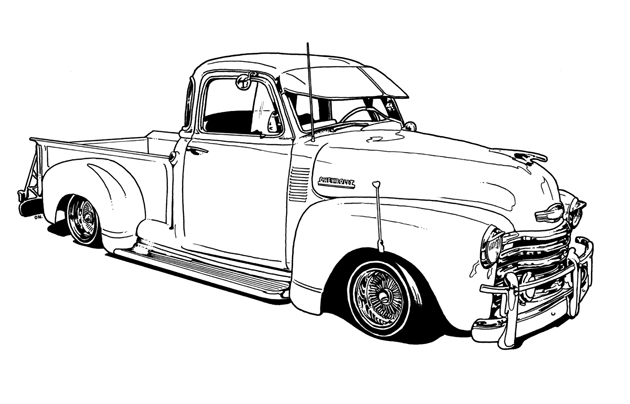
Interestingly, Dokument Press, an independent publishing house in Sweden (where cars have long cost exorbitant amounts to own and whose Volvo vanilla aesthetic isn’t exactly permissive of excess), has released a fun colouring book dedicated entirely to lowriders. Not only does it honour the artform, its playful format is a nice nod to the creative freedom inherent in lowrider culture. The book is illustrated by Stockholm native Oscar Nilsson – who also happens to be a graffiti artist – and features cars from real LA car clubs like Royals, Viejitos, and Klique.


In northern New Mexico – where lowrider culture runs even purer and deeper than in LA – little boys still sketch lowriders in school notebooks, dreaming of the day they’ll have the money to transform a junked out 1960s Impala or Oldsmobile into a shiny, rolling (and bouncing) work of art. To this day, aficionados obsess over their rides – their custom and insanely detailed paint jobs and velvet interiors – with the care and precision of a fine artist.

Few artforms – including grafitti – have maintained the cultural and ideological purity of the lowrider, so it’s excellent to see its influence spread. And since the artform’s very canvas is both finite (there isn’t much traditional 1950s and 1960s Detroit metal left on the road) and changing (fifty years from now, nobody will dream of turning a Nissan Leaf into anything but compost), it is bound to remain encased in its native time and place: 20th century LA. No matter how far its its culture spreads.

p style=”margin-left: 2px; color: #000000;”>Bust out the airbrush paints and make these rides shine, locos! Get your copy from Dokument Press online shop.

Tag Christof

12/05/2011

Radio Off / The Milan Review: Ghost

.

Radio Off / The Milan Review: Ghost

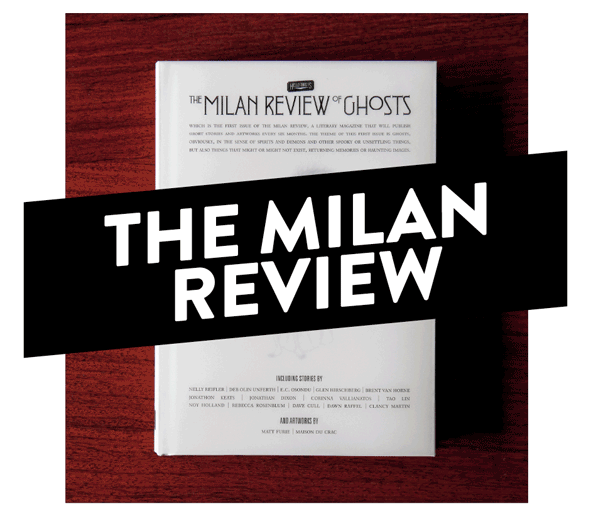
Tonight Radio Off is hosting the release of independent publishing house The Milan Review’s first project, “The Milan Review of Ghosts. The hardback literary review looks to be an genuinely well-curated, unusually interesting collection of short stories. And when’s the last time you read something genuine compelling about ghosts? Never, that’s when. And as icing-on-the-cake, the book is illustrated by Matt Furie (the monster mastermind), as well as Maison du Crac.

GHOST (n.) 1. The spirit of a dead person, especially one believed to appear in bodily likeness to living persons or to haunt former habitats. 2. The centre of spiritual life; the spirit; the soul of man. 3. A demon or spirit. 4. A returning or haunting memory or image. 5. Any faint shadowy semblance; an unsubstantial image; a phantom; a glimmering; as, not a ghost of a chance; the ghost of an idea. A suggestion of some quality.

With Tim Small as editor and Riccardo Trotta as art director, The Milan Review project itself looks to grow into something rather exceptional. Its unrestrained editorial focus will see it bring life to “an unspecified number of narrative books, art books, fanzines, and anything else we feel like publishing.” We certainly look forward to impending pleasant surprises.

Radio Off is curated by the brilliant Marco Klefisch, and The Milan Review of Ghosts will be subsequently presented in both London and New York.

Opening tonight at 19:00 at Via Pestalozzi 4, Milan. Free drinks, and live tunes courtesy of Stargate (alias Lorenzo Senni). See you there!

Tag Christof

11/05/2011

Mathieu Flamini / Tung Walsh for GQ Italia

.

Mathieu Flamini / Tung Walsh for GQ Italia

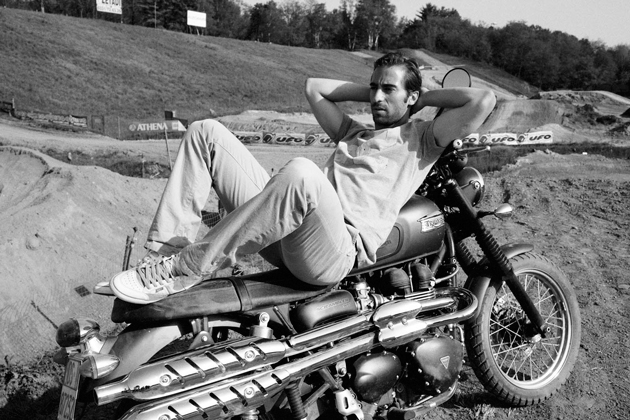
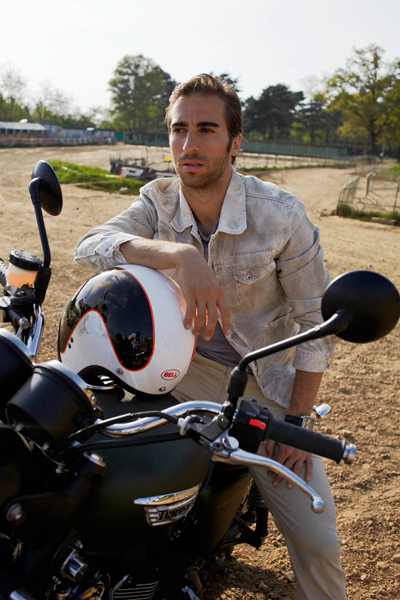
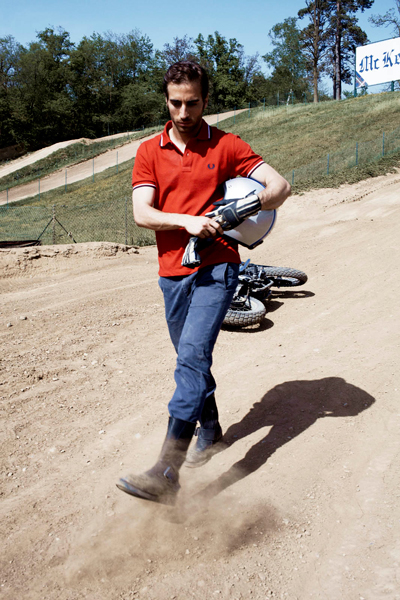
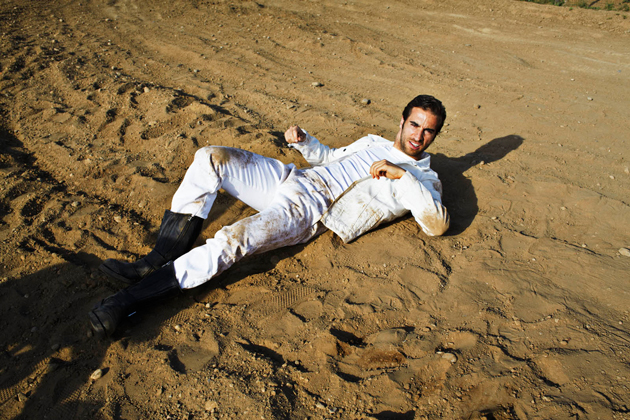
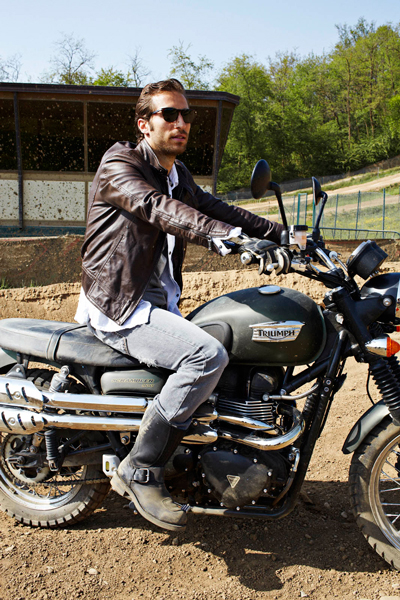
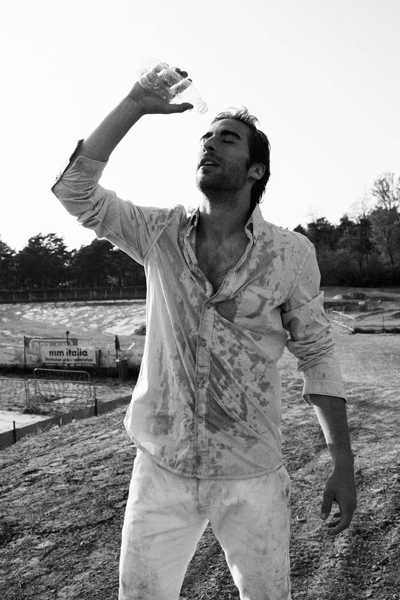
AC Milan’s is fresh off a victory this weekend over the AS Roma. And just in time for the festivities, Milan star forward Mathieu Flamini graces a 10 page spread in as this month’s Uomini di stile feature in GQ Italia. One of 2DM’s London boys, Tung Walsh, shot the the big-time calciatore and native Marseillaise on a gorgeous Triumph scrambler for “Fuori Dal Campo Come Steve McQueen” (Out of the Field Like Steve McQueen).


He even paid us a visit last month while in Italy for the shoot. And as usual, Mr. Walsh’s work shines – and these portraits are an incisive look into the footballer’s highly stylish side. Mathieu is dressed in everything from Woolrich, Closed, Fred Perry, Fred Mello, Tag Heuer and Gant, to Firetrap, Roy Rogers, Dirk Bikkembergs Sport Couture, Dries Van Noten and Yamamay.

The issue’s cover features an army-capped, bare-chested Bar Rafaeli (reason enough to buy the issue), a look look back at Bob Dylan, and a gripping piece on the women of Chernobyl. Of-the-moment and smart, this month’s issue of the Italian version of this most iconic of men’s fashion magazines is as good as ever, and we’re thrilled for Tung’s debut on these pages.


Tag Christof – Images courtesy GQ Italia & 2DM

11/05/2011

Essen: Old Spitalfield Market, London

.

Essen: Old Spitalfield Market, London

In search of the lost market…

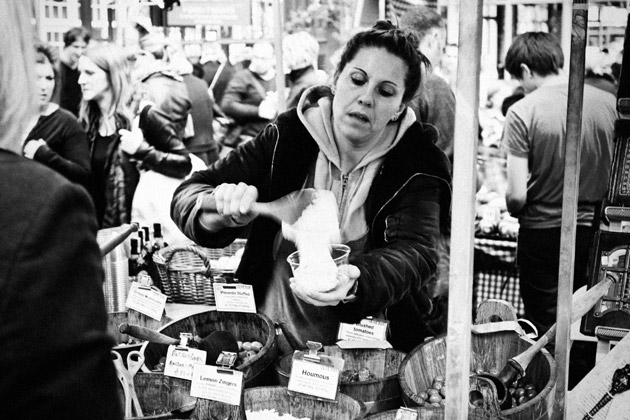
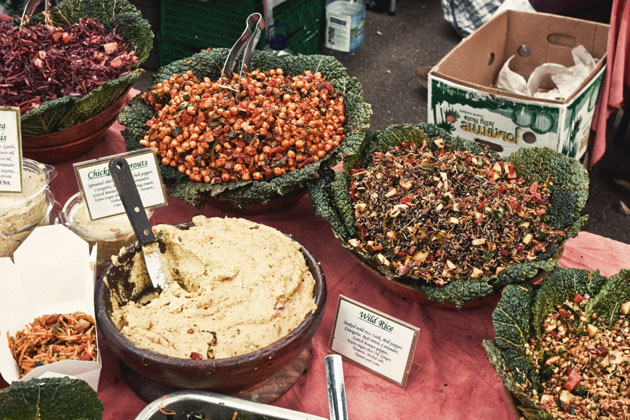
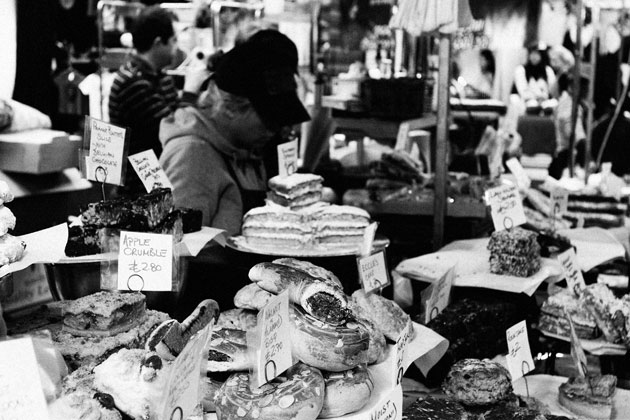
Once upon a time in a Victorian hall in East London there was a jewellery market filled with exceptional and exotic food stands mixed in among pedlars selling every type of merchandise imaginable – especially if one was willing to dust the fleas off their newfound treasures. Once upon a time, there grew a grove of delicacies at discount prices, a place in which to taste an oyster while on an afternoon walk en route to enjoy a rice cake.


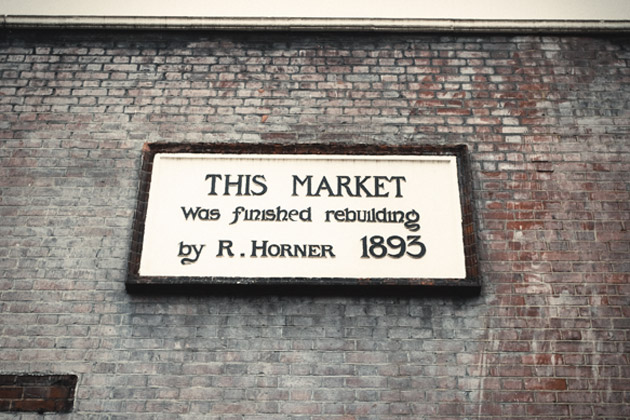
Like in a fairy tale, the curse of the Old Spitalfield Market London seems to have been broken. A market with very old roots (with the first records of it appearing in Roman times), and it was reconstructed in 1893 by Robert Horner in typical Victorian Art Deco, and subsequently sold to the City of London as a place always distinguished by its extraordinary authenticity and independence, which lately seems to have lost some of its lustre. Strolling today among the few remaining merchants can leave a bit of a bitter taste in one’s mouth, considering that the many of the stands formerly serving delicacies have been replaced by clothing shoppes and restaurants.


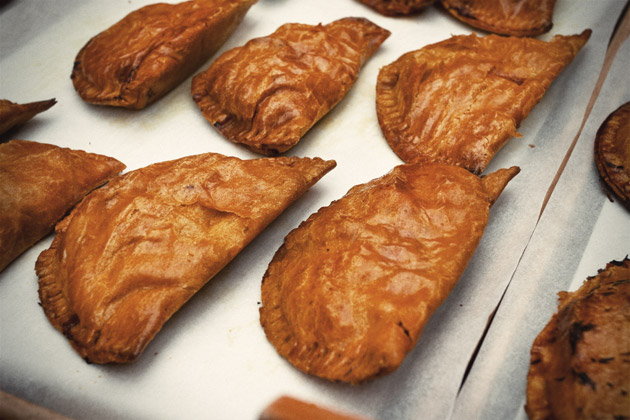
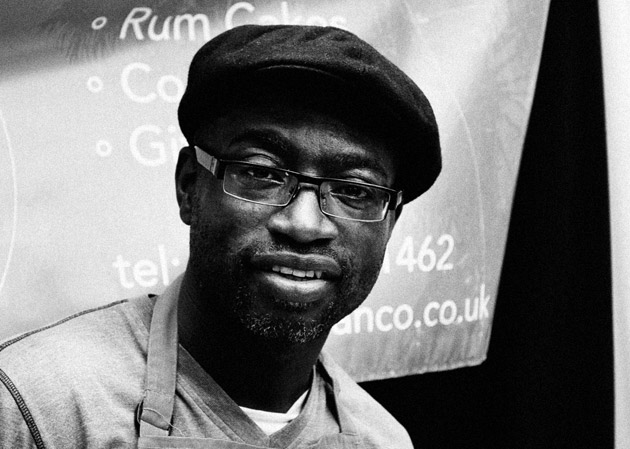
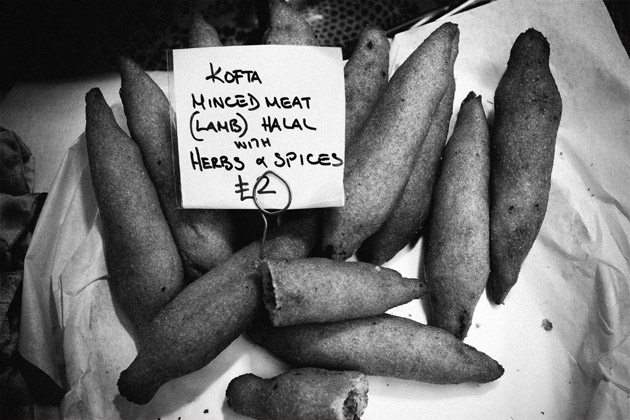
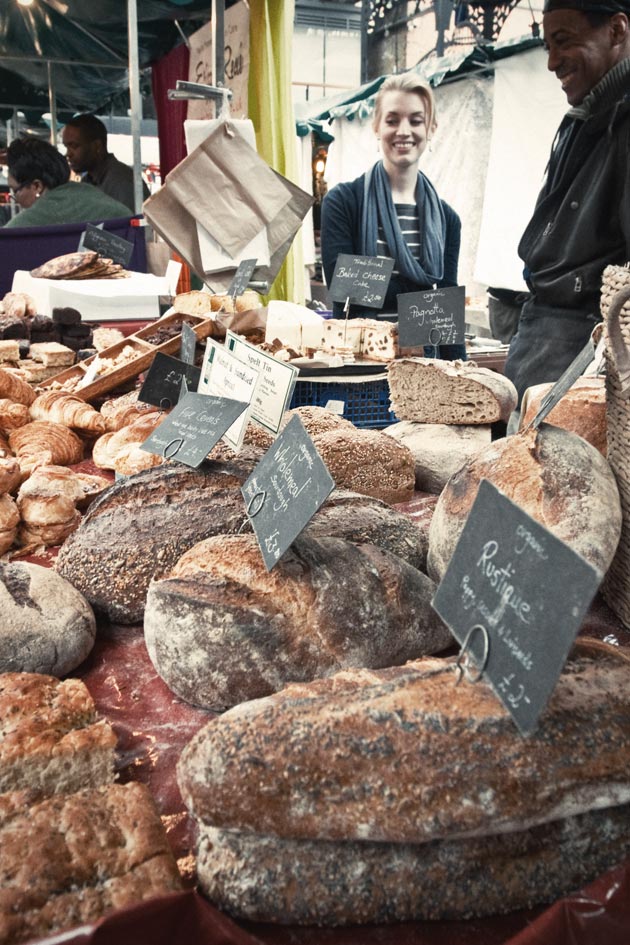
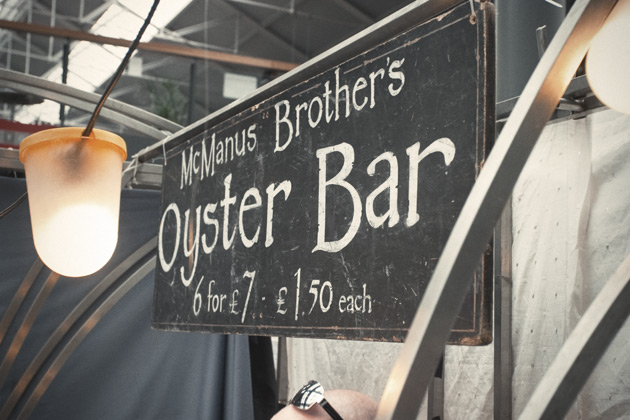
If you look closely, though, a bit of the market’s old splendours remain happily isolated. Place in which to go in search of the lost market. Fragrant black breads made with ginger and poppyseed remain. And there are still the famous McManus Brothers oysters for one pound fifty,. There are still Apple Crumble wagons stocked with delicate little rice cakes. There are still lamb koftas wrapped in paper, ready to be easily devoured.

Nothing has really changed, in the end. The market of 16 Homer Square is not at all lost – the key is finding it.


If you pass by Old Spitalfield Market and you treat yourself to oysters, here’s a lovely little recipe for you:

Oysters allo Zabaglione
Ingredients and measurements for four people.
-16 oysters
-200g of round zucchini (courgette)
-1 yellow onion
-2 cloves of garlic
-4 egg yolks
-50 grammes of butter
-10cl of sparkling Brut wine
-Salt and pepper, to taste

Preparation
Open the oysters and place the flesh in a plate; wash the shells well in running water. Cut the zucchini into thin rounds, then place in salted, boiling water for five minutes, remove most of the boiling water and liquefy them, making sure to leave a bit of the salted water for flavour. Place the sauce over slow heat, and add a spoonful of butter and a pinch of salt. Reserve.

Meanwhile, on to the zabaione: chop the onions finely, and crush the garlic cloves and place them in a skillet. Add the egg yolks and beat them with a whisk, diluting little by little with the spumante. Place the pan into a bain-marie at moderate heat, mixing vigorously, for about ten minutes or until it takes on the consistency of a cream. Be sure to keep it from boiling. Remove from heat, and fold in the remaining butter in little squares. Add a pinch of salt and of pepper.

On a serving platter, garnish eight oyster half-shells, filling them with a small spoonful of the zucchini sauce, and gingerly add an oyster drenched in the zabaglione. Bake in a pre-heated oven at 240 degrees for five minutes.


Visit Essen for more fantastic insight into the world of food.

Cristina Zaga – Images Stefano Secchia

10/05/2011

Karin Kellner / Rolling Stone

.

Karin Kellner / Rolling Stone

We’ve been seeing a lot of 2DM’s Karin Kellner on the presses lately. And in addition to her excellent magazine work, she even brought our Opus Creative collaboration with boutique brand Neroli Cashmere to life. The German-born illustrator, known for her evocative watercolours and ethereal environments, worked her magic this month across the pages of Rolling Stone Italia.

Her works for the issue include three for the Rock & Roll style section in an article called “The Thieves of Wall Street,” as well as the key illustration for a hilarious piece by Gianni Vattimo entitled “The Liver’s Mail.” Finally, she made a lively portrait of economist Oscar Giannino which accopanies his informative editorial “Euro che va, neuro che viene.”

This month’s issue of Rolling Stone, features a bird-flipping Dave Grohl on the cover and an interview with the Foo Fighters frontman entitled “Kurt Was My Friend.” It’s an excellent read. The issue also features interviews with Ben Harper, Ricky Gervais, articles on Johnny Depp and Thin Lizzy, a look at Fondation Cartier exhibition on voodoo objects billed “Vaudou Child,” and an excellent mix of news, happenings and opinion. It even, unfortunately, features an article with photo of a barrel-chested Snooki.

Excellent work, Karin!

Tag Christof – Images courtesy 2DM & Rolling Stone

09/05/2011

The Editorial: Sushi or Spaghetti?

.

The Editorial: Sushi or Spaghetti?

Sometimes it pays to be late to a party: after missing out on the early years of fast food, the now global Slow Food movement is wholly a product of Italy. And after mostly missing out on the dehumanising, smoke-belching factories of the Industrial Revolution which plagued the UK and other countries through the twentieth century, Italy’s fashionably late arrival to industrialisation saw the country become the world’s foremost producer of design goods (illustrated brilliantly in the Triennale’s current exhibition, Dream Factory), and it is one of the few western nations to maintain a solid manufacturing base. Still, at an ever increasing rate, the fads of the northern countries and the USA inevitably make their way here one way or another.

The country’s food culture has been particularly slow to change, with Italians generally sticking steadfastly to their simple, fresh and delicious food. Not coincidentally this inherent locavore attitude once made for one of the most sustainable (and healthy) food ecosystems on the entire planet. But with shifts of population, and shifts of taste (and for fear of being seen as provincial) Italians have begun to demand variety beyond the kebab and occasional dodgy Chinese restaurant. You can now find almost any ethnic food imaginable in some form around Milan, and while nowhere near as cosmopolitan in terms of food as Paris or New York, the food landscape has been altered drastically.

Sushi is among the most visible recent arrivals. While Los Angelenos and New Yorkers were eating the neat little morsels en masse by the mid 1980s, it was impossible to find it in any medium sized Italian cities even five years ago. Slowly but surely, though, sushi has arrived. Very recently, several all-you-can-eat Japanese restaurants have been springing up around Milan (the latest is a tacky black-lacquer affair in Porta Ticinese loudly proclaiming its unlimited sushi to passersby in an 80s kung-fu movie typeface). Sushi has gone mainstream in the Bel Paese, and despite its late arrival, chances are even your nonni have tried it.


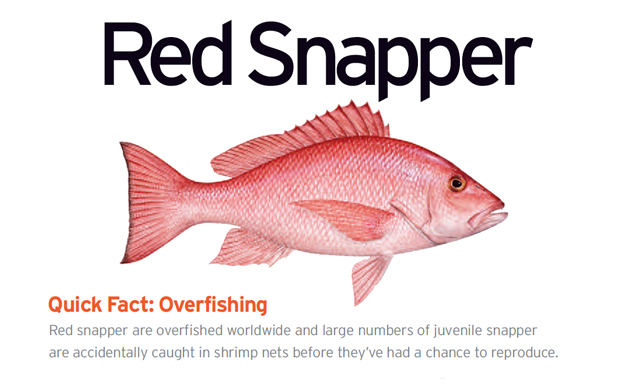
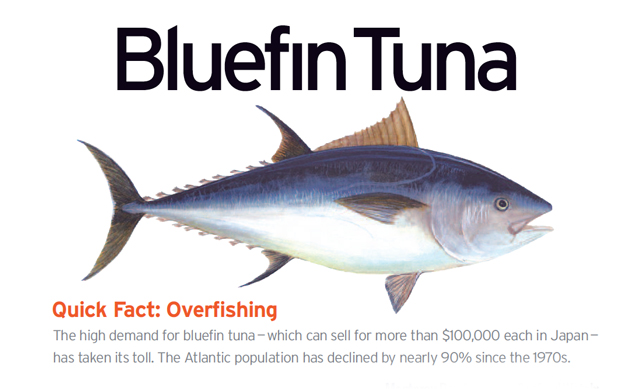
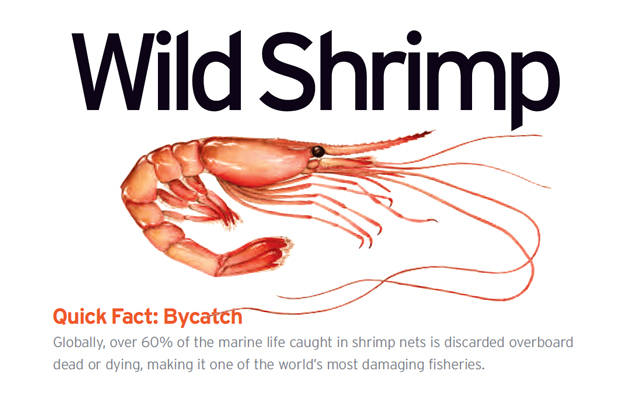
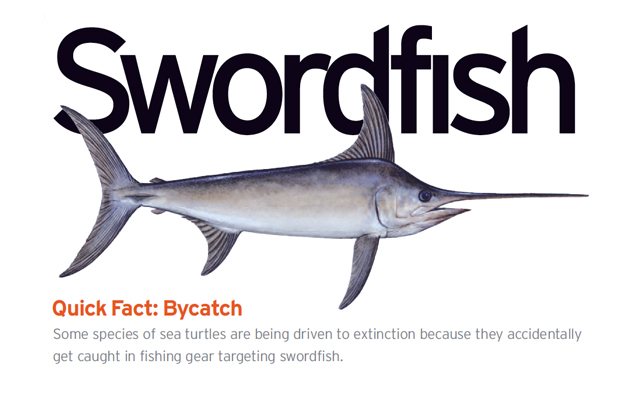
But this fad has far-reaching consequences. The simple fact is, the food (especially the seafood) that is sustainable to eat when you live on an island in the Pacific is not the same food that is sustainable to eat when you live on a peninsula on the Mediterranean. Full stop. And with exponentially increasing demand from industrialising countries on the ocean’s reserve, there is bound to be a massive collapse that will leave millions without any fish unless drastic steps are taken. Fish populations are dwindling – entire species are in danger of extinction – and sushi’s liberal use of shark, snapper, swordfish and all sorts of unsustainable tunas is a major source of the problem. As another country of tens of millions embraces the cuisine, demand will only increase. Not to mention the peripheral damage caused by irresponsible hunting: countless dolphins, sharks, octopi, fish, crabs and others killed as “bycatch,” destruction of coastal habitats and coral reefs and a general loss of equilibrium in the sea.

Fish are the last wild animals we hunt commercially for food, and as we approach the limits of their resiliency we must become much more responsible, lest we find ourselves with ruined oceans and no fish within a generation. Quite simply, the world cannot sustain a planet of several billion sushi eaters. This is by no means only an Italian problem, but with with any luck, the country’s late arrival to the sushi party and exceptional food patrimony can help transform it into a voice of reason.

Call it provincial, but while in Italy, doesn’t it sound much nicer to have a nice branzino al forno caught just off the coast than a frigid piece of tuna flown thousands of kilometers to your plate?

Visit Seafood Watch for a wealth of excellent information regarding responsible seafood and other initiatives for preserving our oceans.

Tag Christof – Images courtesy Seafood Watch

06/05/2011

3° Atto / Opus Creative

.

3° Atto / Opus Creative

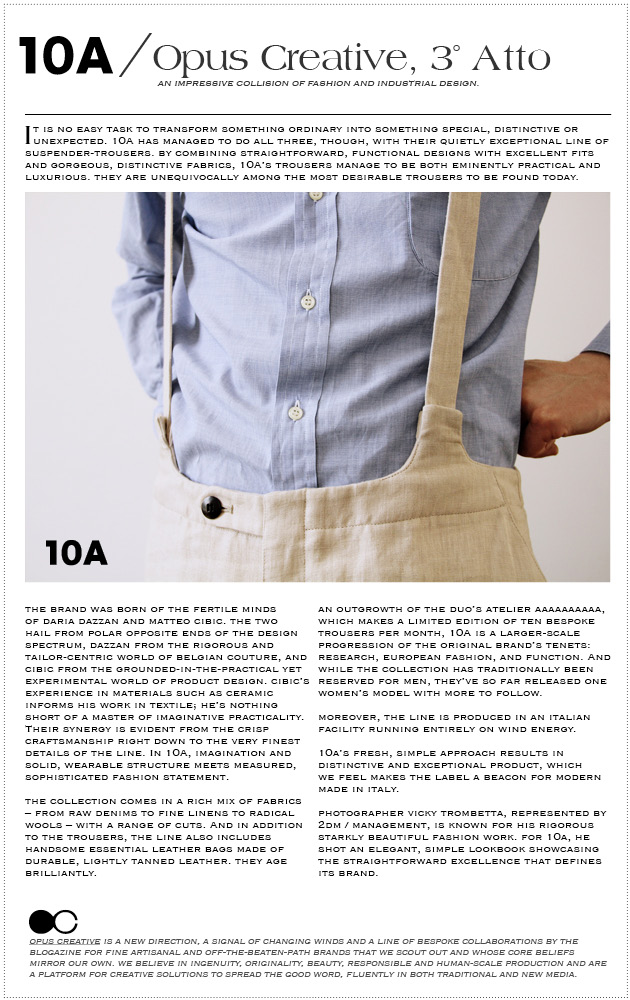
Opus Creative’s third act bows today: 10A Suspender Trousers Company, a new paradigm for Made In Italy.

05/05/2011

Florencia Serrot / Skye Parrott: Visual Diaries / Girls

.

Florencia Serrot / Skye Parrott: Visual Diaries / Girls

I want to be uncontrolled and controlled at the same time. The diary is my form of control over my life. It allows me to obsessively record every detail. It enables me to remember. – Nan Goldin

We’re strong believers in the power of collaboration – and we’re thrilled about the opening this evening of Visual Diaries / Girls at Stephanie Bender in Munich. The show grapples with how the camera, so often sandwiched between the photographer and his or her life, becomes a conduit to reality. Photos, then, when taken as a body of work make up rich, multilayer visual diaries – collective bodies of impression that become the visual narrative of a life. Curated by Argentinian photographer Florencia Serrot, this exhibition brings together eleven female photographers, each quite distinctive in style, but united by their complete involvement in their own work – thereby making their work’s comparison to a diary even stronger. Many not only shoot, they develop, curate independent magazines and actively participate in their work’s exhibition.


In addition to themes of the camera and photograph’s larger role (oh, Sontag!), the curator takes a critical look at changes in the medium itself during this generation of technological, geographical and economic upheaval. Its approach likens this moment in photographic history to that of the “watershed” times of the 1970s, in which Egglestone and others “pioneered a revolutionary representation of everyday reality.” New media, wildly divergent photographic processes, and instant gratification has, indeed, changed our landscape of imagery. And all of this is, of course, set in the context of world in which photographers now have unrestricted spaces online in which to display their work.

2DM’s Skye Parrott, who was the protegée of the extraordinarily influential photographer Nan Goldin in her formative years, is one of the featured photographers. In addition, the curator herself is showing, as well as Sophie van der Perre, Helen Korpak, Manuela de Laborde, and six others. Interestingly, no two in the group are from the same country, which should make the discourse all the richer.


Vernissage is tonight, with exhibition running until the 4th of June at Stephanie Bender, Schleißhiemerstrasse 9 in Munich. It will subsequently show at Temporary Storage Gallery in New York, as well as other galleries to be subsequently announced.

Tag Christof – Images courtesy Skye Parrott / 2DM

04/05/2011

Essen: Il Pane d’Altamura

.

Essen: Il Pane d’Altamura
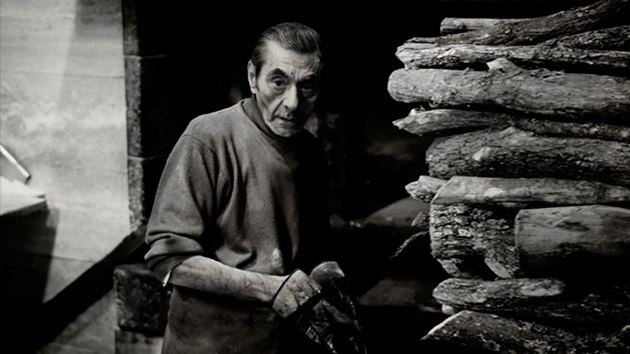
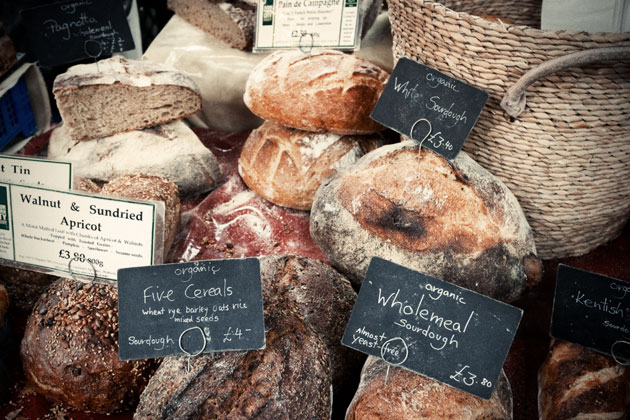
With bread we left our beastly beginnings and conquered, through grinding grain, a civilised state. Even Homer says this, having utilised “eaters of bread” as a metaphor for humankind. And going even further east and reaching back deeper into the centuries we see that even Gilgamesh, the sacred text Mesopotamia, told of man’s escape from the primitive with the discovery of the production of bread. In Puglia on a tract of land in the mountains in Murgia, among a landscape of volcanic rocks, the passage from barbarism to civility was made beautifully possible with the Pane d’Altamura.

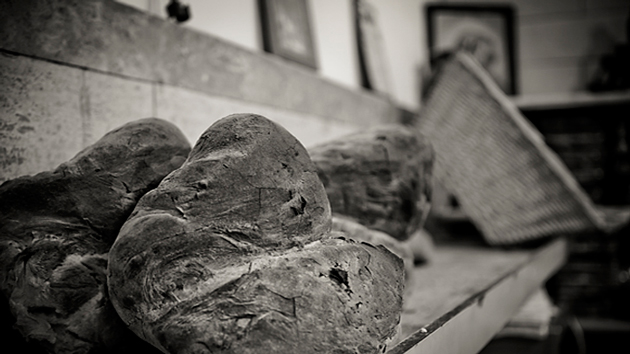
Linked twice over with peasant culture since the end of medieval times, the “u skuanete,” or kneaded bread, is the principal good produced by the inhabitants of Alta Murgia and the centre of Pugliese society. It is the best bread in the world – or, so said the Latin poet Horace – and the clever adventurer always took a loaf away with him.
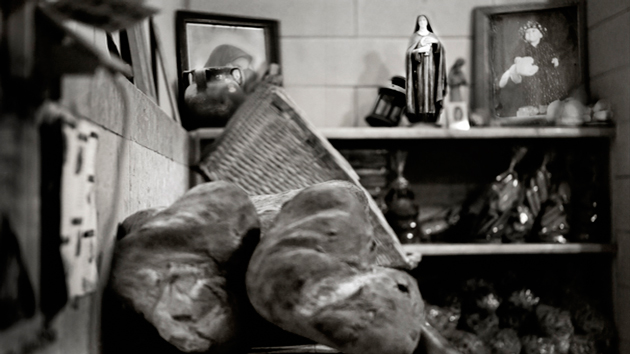
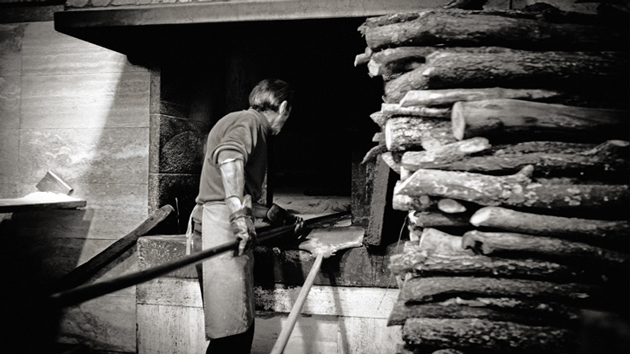
Made from durum wheat semolina, derived from the grains of the varieties “appulo,” “archangelo” “duilio” and “simeto,” water, natural yeast and salt. It is a process carried out in five phases: making of the dough, formation, proofing (the rising of the dough), shaping, and finally baking in a wood oven. These phases give the Pane d’Altamura an exceptional longevity. One loaf can be enjoyed even a few weeks after its baking, with tomatoes and extra virgin olive oil maintaining unaltered the flavour and nutritive properties.

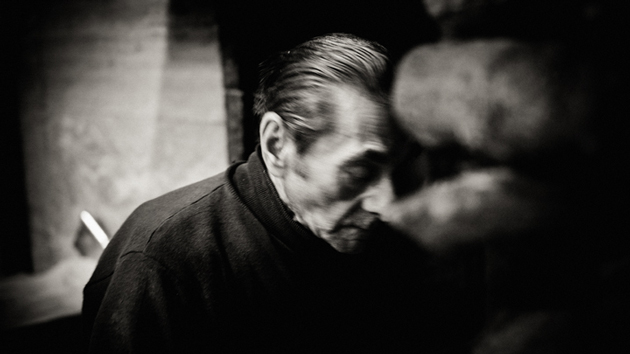
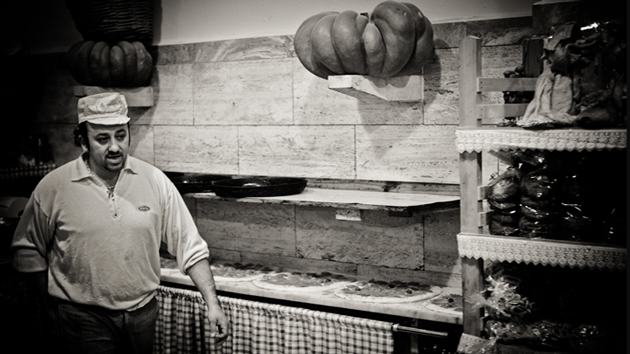
Produced at home, bread was cooked in communal ovens. Bread was brought to the baker and marked in wood with the initials of the head of each family. Then, one waited for a yell from the baker at dawn announcing that the fresh bread was ready. Today, there are very few producers and bread makers who stick to the tradition.
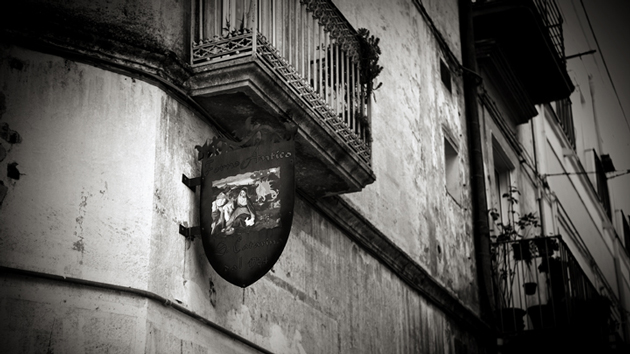
If you would like to have an adventure in the valleys of Murgia, we advise you to always check that its colour is yellow, its crust crunchy and at least 5mm thick, that it has a porous, flakey inside, and that its baking was done in a wood oven. If, instead, you’re of the DIY conviction, here’s an excellent recipe to try out at home:

Recipe:
Making Pane d’Altamura at home is not easy, nor is there a guarantee of success.

The following is a slight variation for the “homemade” version, and is a previous recipe of a finished product. We also remind you that both this version and the original AOC version contain a notable percentage of gluten. Around 15%.
Ingredients:
700 grammes of durum wheat flour
20 grammes of natural yeast
400ml of water
1 handful of salt

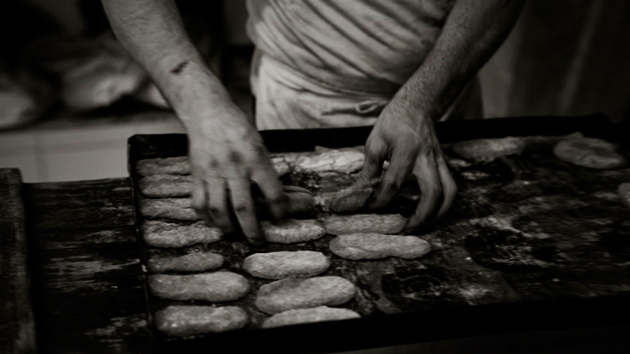
On a cutting board, form the flour into a volcano-like shape, making a nice space at the centre. Add the yeast in the middle, with a glass of lukewarm water. Start forming the dough, adding a handful of salt and continue for at around 30 minutes. Allow to rise under a cotton cloth for at least three hours, then knead thoroughly and let rest for 10 minutes.
At the end of the second rest, make with a rectangular form from the dough and make it round by rolling it on itself. Dust with flour, and mark with a serrated knife with a cross from end to end.

Preheat oven to 250°C (480°F), and after having let the bread rest for a few minutes, bake for 40 minutes.

Pancotto d’Altamura
Pancotto is a typical Pugliese recipe, as simple as it is nutritious. It has been the principal and favourite dish of children in Murgia.

Ingredients for four people:
400 grammes of firm Altamura bread
1 crushed clove of garlic
Bay leaf (laurel)
Salt
Extra virgin olive oil
Pecorino cheese
Water
Preparation:
Paying special attention to the crusts, break the bread into small pieces and place it in a saucepan. Add water until the bread is covered and bring to a boil. Add the garlic, bay leaf, and a pinch of salt and let cook on low heat for around 20 minutes, allowing the water to boil away. Plate the bread and add extra virgin olive oil and the pecorino as desired.
A note to our regular readers: Essen’s Saturday food column has been moved to Wednesdays!” Visit Essen for more fantastic insight into the world of food.

Cristina Zaga – Translated by Tag Christof – Images courtesy Federico Garibaldi