04/05/2012

An Evening With David Sedaris

An Evening With David Sedaris

Those who have read his work know that David Sedaris was many things before he became a best-selling author: a college dropout, a lousy teacher, a struggling house cleaner, a crack addict, conceptual artist, personal assistant, closet homosexual and, most famously, an elf at Macy’s. Readers know this because, like many writers―Bukowski, Vonnegut, and Brautigan jump to mind―his personal failures and professional shortcomings are the subject and scrutiny of nearly all of his writing. His shortcomings, it turns out, are key to his success.
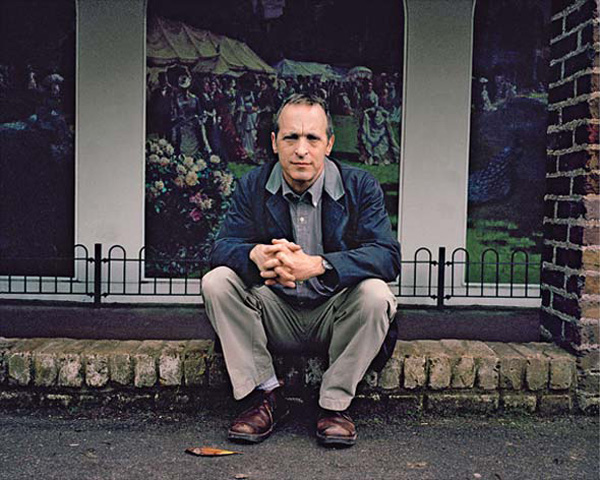
Mr. Sedaris got his start as a writer in Chicago, where Ira Glass spotted him reading from his diary at a nightclub and invited him to do something on his then radio show, The Wild Room. He came to life in the pubic eye as a frequent contributor to This American Life and NPR. He is among the small rank of authors who have managed to transcend the sturdy boundaries of those shows. His 1992 story “The SantaLand Diaries” made him a minor celebrity and painted a picture of himself that’s become emblematic of his work: That of the outsider, the dumb-ass, the frustrated loser. The idiot who has no talent and looks to the other side of the pendulum with a mix of frustration, jealousy, and bitter reserve.

His real talent is that he does this with humor, humbleness, and with a strong sense of humility. Which is a surprise once you realize that all of his books since 1994’s Barrel Fever have hit #1 on the New York Times Best Seller list. (His sister Amy once said that he seriously believes that each book he releases will be his last.) But it’s not surprising to anyone who’s read his work: He’s a fantastic, morally-driven storyteller who’s spent the better part of his career mining embarrassing situations for comedic gold. Family reunions, neighbor’s bathrooms, nudist colonies, his mother with cancer―no scenario is too taboo or off-topic, a characteristic that has sometimes landed him in hot water even within his own family. He’s also self-aware. He once said, after being asked what type of animal he’d likely be, that he’d “probably be a vulture because I pick the flesh off of other people’s experiences. It’s not very flattering, but I have to be honest with myself. I think probably any writer would be a vulture. I don’t think I’m unique in that regard. I think all writers exploit everyone and everything. That’s why you don’t want writers as friends.”
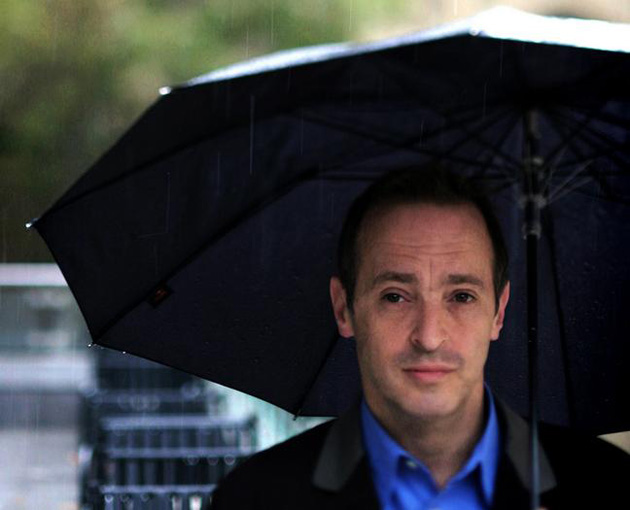
He’s often been asked if his success poses a threat to his work. Everyone wants to hear about a failed drug addict’s problems, but what about a wealthy writer’s? In other words; what does the loser write about if he’s no longer the loser? That doesn’t appear to be a problem for Sedaris, whose most recent book, Squirrel Seeks Chipmunk, deals with animals committing all kinds of social faux pas. And the majority of his non-fiction continues to examine his life in a similar context: living in France with his boyfriend Hugh, giving up smoking, and pissing off his family by exploiting them for his career. So, sure, he’s found success, but he’s still as wildly insecure and hopeless as the rest of us. Best of all, he’s still not happy. Problems come in all shapes and sizes, but it’s often how we deal with them that matters most. Not all of us have the sense to find humor in the drudgery of reality. For that we have David Sedaris, and we are thankful.

An Evening With David Sedaris at at Brooklyn Academy of Music (BAM), May 7th, May 8th.

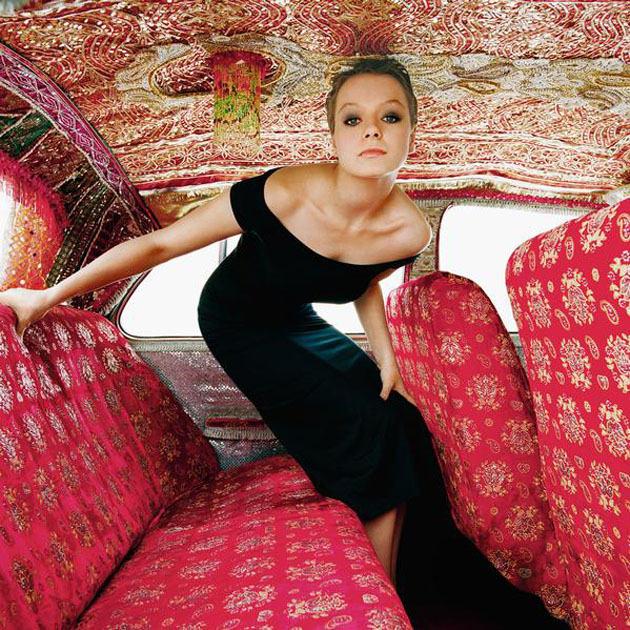
Lane Koivu – image courtesy of CAMERA PRESS/Karen Robinson
03/05/2012

MIA -The Ambiguous Nature of Images

MIA -The Ambiguous Nature of Images

Today photography, with its specific and autonomous language and thanks to its constant technical and stylistic developments, is widely recognized as a legitimate art form. Photography dialogues with its artistic way of expressions, and with the wonders about its own nature and future. Collectors, art lovers and professionals are more and more interested in this medium, which seems to have broken the boundaries of fine art, gaining its own status. The international events devoted to the richness of historical and contemporary photographic creations are increasing day by day.

With 268 exhibitors among galleries, independent photographers, publishers and photo printers coming from 16 countries, MIA, Milan Image Art Fair – the most important fair dedicated to photography in Italy – comes back to Milan for its second edition, which promises to be even more successful than the first one.


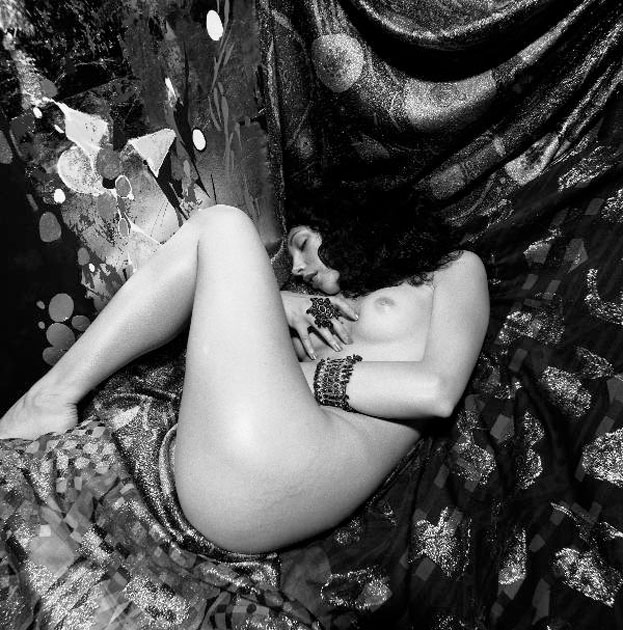
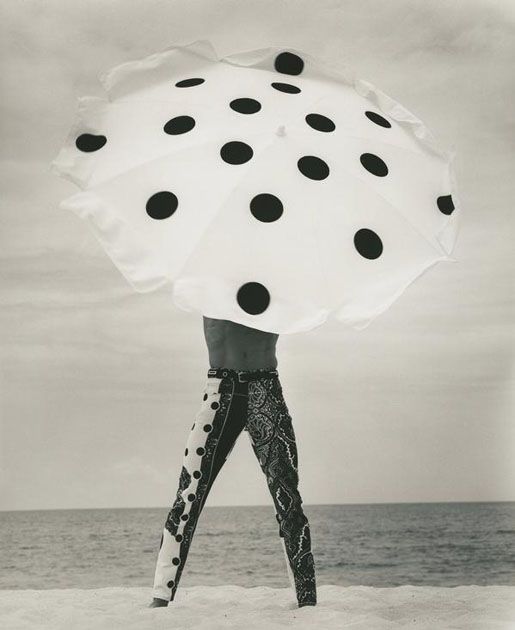
With an unusual and unique educational approach, the fair presents a full programme of exhibitions, workshops and talks, which aim at furthering the knowledge of the different trends that have characterized the language of photography in the last decades. From the researches on topics connected with sociological and philosophical aspects – mainly focused on investigating the individual and collective identity -, to the visionary approaches that highlight the ambiguous nature of reproduced images, MIA covers the wide spectrum of interpretations from the world that photographers have been creating during the years. A special pavilion, dedicated to fashion photography, displays the works by Albert Watson, Michel Comte, Herb Ritts, Malick Sidibè, Uli Weber, Rodney Smith along with the fashion/cultural phenomenon The Sartorialist (just to mention a few).

The icing on the cake, a myriad of collateral events and special projects as “Elliott Erwitt, Fifty kids” or “Hubertus Hamm and BMW” – a collection of images depicting children shot by Elliott Erwitt, and a solo show by the German photographer Hubertus Hamm, director of the main campaigns of the famous car brand -, accompany the fair, which opens today at Superstudio Più (in Tortona district). MIA is taking stock of the current situation of photography in contemporary art market providing an international overview and trying to transform Milan in a centre of photography. We just hope that the fair will be able to maintain the promises and pay the high expectations back, since the city, after the euphoria of the Salone, seems to be fallen back into a deep cultural sleep and constantly need waves of new and strong incentives.

Milan Image Art Fair, MIA, will run until May 6, 2012

Monica Lombardi

03/05/2012

Hyères 2012: Finnish Fashion Spotlight

Hyères 2012: Finnish Fashion Spotlight

Once per year the population in the city Hyères, situated at the Côte d’Azur on the French Riviera, becomes more creative, fashionable and artistic than ever. During four days, in an ambience very different from the normal cliché of glamorous fashion gatherings, the city’s regular number of circa 55 000 habitants adds up with industry people; renowned designers, artists, photographers, gallery owners, buyers, agents and to not forget, the leading lights of the Festival International de Mode et de Photographie; the yet undiscovered designers competing to receive the prestigious Hyères Award.

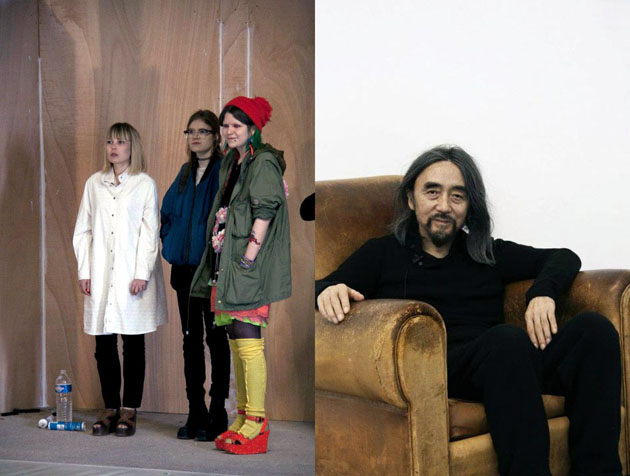
2012’s festival, which finished a couple of days ago, was the 27th edition and like every year a diverse mix of ten designer profiles with as diverse nationalities were presented to the audience at Villa Noaille. Creative cuts, colours, mindfulness and craftsmanship to be judged by a jury this time headed by no one less than Yohji Yamamoto. As true privies of fashion you most likely got that this is a rare opportunity for the lucky few chosen talents to get exposed to and meet industry people who all have a finger in the game of their future (industry darlings like Viktor & Rolf, Gaspard Yurkievich, Matthew Cunnington, Yiqin Yin and Alexandra Verschueren all started off at Hyères), and if you followed the fashion media over the last few days, were one of the lucky to spend a few days in Hyères or if you were part of the audience at Palais de Tokyo in Paris, you also know who the fortunate awardees are.

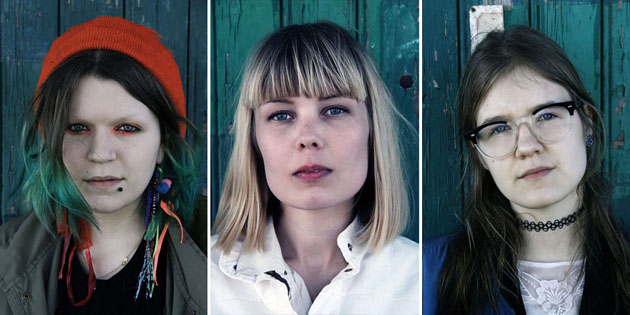
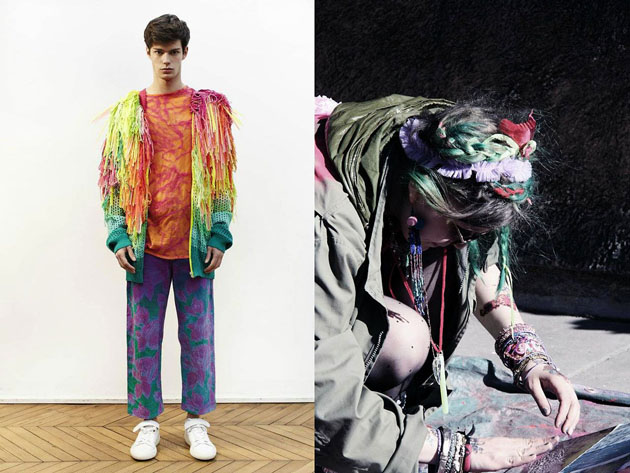
Having mentioned Scandinavian fashion and several of its promising talents over the past months, it was with excitement but with no choc the Blogazine received the news that the Finnish menswear trio Siiri Raasakka, Tiia Siren and Elina Laitinen were the winners of Hyères 2012 “Grand Prix du Jury L’Oréal Professionnel”. The collection presented by these three young designers, who yet haven’t even graduated from their BA’s at Aalto University in Helsinki, was out of the ordinary and described by the words “urban nomads living in a utopian future society”. With incredible craftsmanship in the work of the fabrics and psychedelic prints, neon colours, fringes, glow sticks and the key accessory; Swarovski crystals, the collection takes an unsullied angle to the often rather gloomy, strict and minimalistic Scandinavian menswear scene. Truth told, even though Scandinavian fashion received an increasing amount of attention, Finland as a fashion country never really been in the loop of that attention. On the artistic side the talk would always go towards architecture and design, as Helsinki for example were named World Design Capital 2012, and the country just never fully accomplished to please the selective industry crowd. With a Hyères Award in the backpack and a prominent design trio with the opportunity to showcase their collection during SS13 Paris Fashion Week, we await to see if Finland can widen the fashion landscape and become a solid addition to the Scandinavian fashion family.

Besides the Finnish trio, Belgium women’s wear designer Lucas Sponchiado won the prize voted by the audience of the two venues Palais de Tokyo and Villa Noailles while Ragne Kikas, Estonian knit wear designer, grabbed the official Prix du Public de la Ville D’Hyères (Fashion Public Award of the City of Hyères) as well as the Première Vision Award. Hyères 2012 also presented a new award, Prix Chloé, granted by the fashion house and was received by Central Saint Martin graduate Steven Taï.

Lisa Olsson Hjerpe – Images from www.filepmotwary.com

02/05/2012

The First Note On The Horn – Voice Of Misty Urban Rain

The First Note On The Horn – The Misty Urban Rain

Welcome to the second part of The First Note On The Horn series from the sizzling music scene of Tokyo. Ai Mitsuda takes us to the backstage with Kuni, the talented trumpetist of Sly Mongoose. Read the first part of the story Tokyo Burning here.

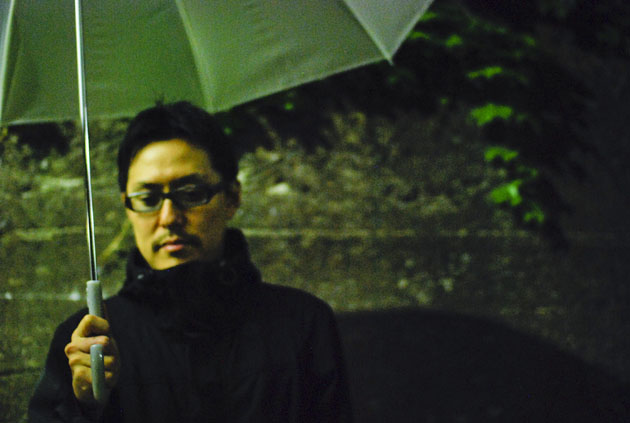
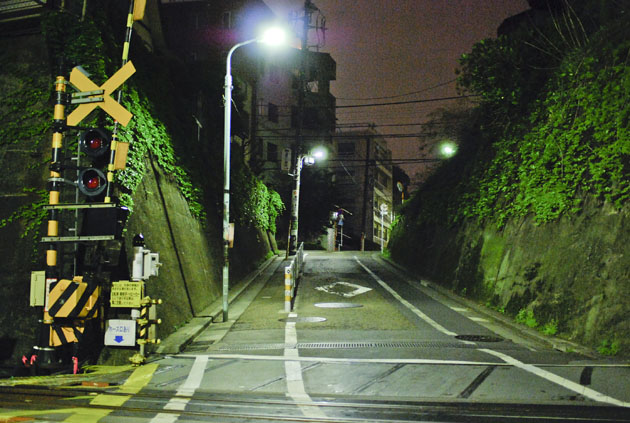
Throwing a glance out the window, a misty rain was falling. We met Kuni again this time in Daikanyama, center of Tokyo, where he has spent most of his life since his childhood. At close range, he played a bit of blues for us. Now, after a long thunderstorm with no end in sight, we feel like to surrender to a misty rain, seeping into the cell, flowing into peripheral vessels through out the body. Our body trembles to the compound time of the misty urban rain that cocoons us in floaty bliss.

Even if you have a beautiful lady horn in front of you, you cannot make a decent sound over night. Being a trumpet player is like being an athlete; the sound cannot be produced correctly until the embouchure (the use of facial muscles and the shaping of the lips to the mouthpiece of the woodwind and brass instruments) is well established. Take a big breath, make your lips buzz, grow images of tone in your brain… be on the road until you discover your own voice.

In 1982, when Art Blakey & The Jazz Messengers came to Tokyo, the 12 years-old boy was literally overwhelmed by the play of Terence Blanchard, which gave him enough courage to meet the celebrated trumpeter at the backstage. “Terence was just amazing… Warm, soulful, with fire yet soft, full of intelligence.”

In the following years, he frequented the backstage when the group came to Tokyo. Once he brought his father’s horn, Mt. Vernon Bach, Terence played that very horn on the stage that night. The excitement made the little boy even bring around his master to his favorite jazz café swing in Shibuya, where they had a large archive of old jazz albums and videos. “I was eager to show Terence the ’61 live of Art Blakey with Lee Morgan, ” Kuni explained. Naturally, the voice of Terence Blanchard seeped into the brain tissue of Kuni. By coincidence or not, later it led to a beautiful surprise to be part of his team. (…to be continued.)

Ai Mitsuda

02/05/2012

The Editorial: Work Well!

The Editorial: Work Well!

This week, much of the western world is observing some version of a worker’s day. While not a usually a cause for festivity, it usually means a much-needed day off to sleep late and give thanks to the world’s workers. And, what a sorry state those poor workers are in today. Wages are in the gutter and not getting any better. In the name of cost cutting, employers and governments are cutting jobs and slashing the pay and benefits of those who get to stick around. All while executives take home salaries thousands of times greater than their struggling dependents. From FIAT’s plans to gut its workforce and shuffle its factory infrastructure as it consolidates itself with its recently bankrupt lovechild, Chrysler, to evil, evil, evil Wal-Mart’s active quashing of unions (and any trace of worker rights along with them).

Anyone with half a mind for business understands the arguments profit-seeking corporations must make to justify their actions. They are legally accountable to their shareholders, afterall. (A hell of a vicious cycle!) But it takes neither a bleeding heart Keynesian activists nor Hans Rosling infographics to make it clear that workers the world over are being progressively made worse off by a system in which the health of institutions is prioritized over the health of the individuals they ostensibly exist to serve. And it’s a point driven home by the American Supreme Court’s terrifying decision to allow corporations to contribute unlimited amounts of money to political campaigns, as well as Republican presidential candidate Mitt Romney’s infamous remark about corporations being people. They’re really not, Mitt. But regular Joes – from young college graduates to life-long factory workers – are getting smacked repeatedly in the face by the short end of a very hard stick.

But, I’ll throw a ray of hope out today in lieu of a real tirade: The slash and burn impetus that has sent countless jobs from union-backed, well-monitored factories in the west to contracted, hellish, anything-goes sweatshops in the east and south seems finally to be reaching a limit. A decade after backlashes against the labor practices of big brands like Nike and The Gap brought a new form of consciousness to consumers, Apple – the sterling darling of our generation – is having to answer some similarly serious questions about its own.

And we’re reacting: small-scale factories for all sorts of goods are springing up in LA, Brooklyn, Milan, Berlin… And while the jobs they create may not bring six-figure salaries, they certainly are going a long way towards creating the impression that we’ve at last had enough. Organizations like SFMade, which is seeing San Francisco become a major hub of small-scale production are setting the tone for all sorts of others that continue to crop up in major cities. The pendulum is swinging back in the right direction. Let’s keep pushing.

Tag Christof

01/05/2012

Kristina Gill: Tomatoes

Kristina Gill: Tomatoes

When I found these perfect tomatoes at the market, from Pachino in Sicily, in a little carton with a toll free customer service number on them to back up their claim “Satisfaction guaranteed or your money back”, I bought them in an instant. They taste every bit as good as they look.

Barring health and palate concerns, I don’t think it’s possible to live in Italy without falling in love with the tomato. Good tomatoes, in my opinion, like good peaches, are one of the simplest and greatest culinary pleasures. I look forward each year to beautiful tomatoes, patiently passing up the lesser offerings in anticipation of the best. Tomatoes this beautiful should never be cooked, but enjoyed as is, even without condiment of any type. However, I rarely resist the temptation to pair tomatoes with the mozzarella from the farm around the corner. It’s our most common Saturday lunch meal when the season is good.

Kristina Gill

01/05/2012

Painting and Jugs

Painting and Jugs

Recently in the contemporary design and applied arts world we have seen quite a few phenomena of massively successful collective productions. By collective in this case we mean a duo, usually a duo of two quite genius people that manage to take photos, design objects or garments, produce books, build stuff with their own hands and much more. On the contrary of the notion of a solitary artist that retreats himself in isolation and self-centered thinking in order to produce art, these new artist/designers/producers, call them as you like, work much better in couples.

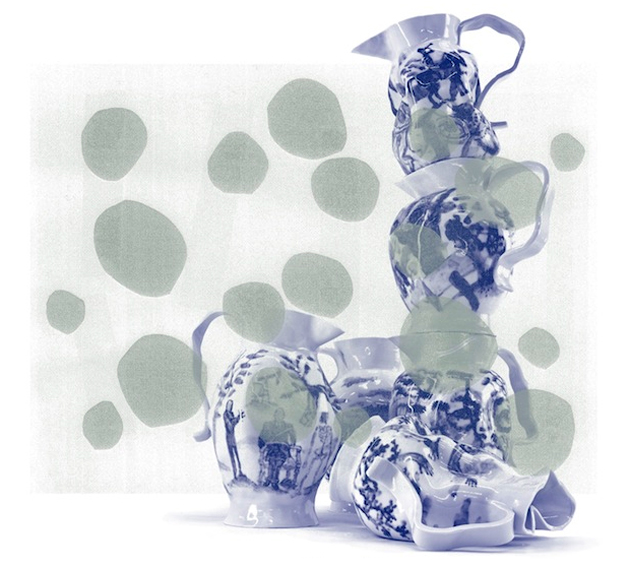
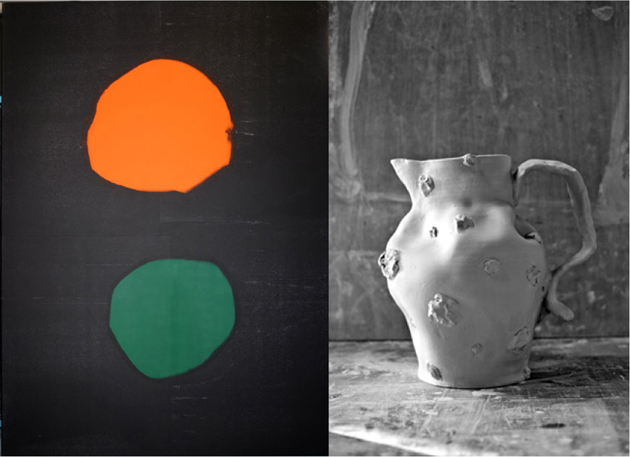
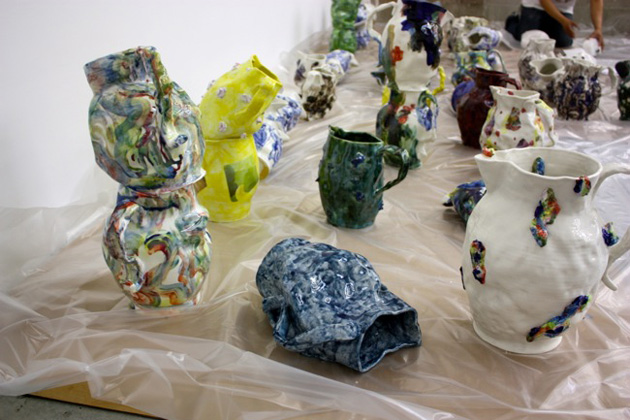
So it’s not just a simple coincidence that the Swiss Institute in New York is dedicating an exhibition to two highly productive young artist couples. “Painting and Jugs” is an exhibition that celebrates the potential of collaborative production, although expressed through two different forms: the painting and ceramics production. The painting couple are Linus Bill and Andrien Horni, while the ceramics are from Bastien Aubry and Dimitri Broquard. The first couple met last year while working on a magazine, irregularly published by Horni, while the second one met ten years ago when they started working as graphic designers, commonly known as FLAG.

The latter couple is the one that seems to arise more curiosity. Not because they are better artists, but because they also belong to that new and extremely particular category of graphic designers that are also artist/illustrators/producers. Although the impressive list of their graphic projects include clients like Kunsthalle St. Gallen, Swiss Institute and Institute Mode Design, Aubry and Broquard- like most contemporary graphic designers- find the world of graphics quite limited and look for escape in pottery making and clay. Apparently with a huge success.

Check the exhibition at Swiss Institute by the 3rd of June.

Rujana Rebernjak – Image courtesy of Swiss Institute and Aubry/Broquard

30/04/2012

Kurdish Stockholm Electro by Zhala

.

Kurdish Stockholm Electro by Zhala

Zhala Rifat is the most recent act to emerge from the Stockholm electro-scene. After having been the back-up girl to Lykke Li during her American and European tour, she’s about to drop her first album during the year. But Zhala isn’t a newcomer in the industry. Already In 1998, at the age of 11, she was nominated for a Swedish Grammis Award along with composer Klas Widén. However, the release date of her album debut is still, after 1,5 years of production, yet to be set.

“I already have many songs recorded, but I’m not sure how I want to put together the album, I’ll take my time. Since you only get to make one debut album I have to make sure I spend enough time on it. Lately, I’ve just been trying to get all the melodies and sounds in my head into songs.”

The Rifat family is of Kurdish-descent, thus; Zhala was raised to the sounds of Kurdistan, a heritage that is very much present in her own tunes.

“Kurdish music has a very repetitive rhythm. I grew up with kurdish music so its a very natural part of me now. I love the feeling kurdish music brings, and the melodies, more than the texture, it feels like techno!”

The other week, her first video was released – “Slippin’ around”. Any efforts of trying to refer the visuals to anything else in popular culture would be somewhat redundant, unless you go for the “Björk circa Volta”-card. The video features Zhala herself as a mix between a surrealistic Middle Eastern-geisha and a Hindu-goddess, and was directed by Makode Linde, the artist which stirred quite a scandal with his anti-racist “Painful cake”-exhibition at Moderna Museet in Stockholm last week during World Art Day.

“I love cake! Makode really understands me and my music, he can express it visually. I try to mirror my experiences with sound, and my experiences are unique. And there’s a reason why he’s the world’s most talked about artist at the moment…”

At the moment, Zhala is busy performing, recording and booking gigs for the summer festivals, and still makes time to organize the lesbian club Donna Scam once in a while. Rumour has it that we haven’t seen the last of this woman.

“The greatest memory I have of performing is at Gagnef-festival in Sweden, performing with my friend Shamoun a couple of years ago. We had a big loving party on stage and I think everyone was peaking at that point. I’ve been practicing music in different ways since forever. The music always takes different forms, that’s just a natural part of my development.”

Petsy von Köhler – photo courtesy of Zhala Zhino Rifat

30/04/2012

Ryan Mrozowski at Pierogi Gallery

Ryan Mrozowski at Pierogi Gallery

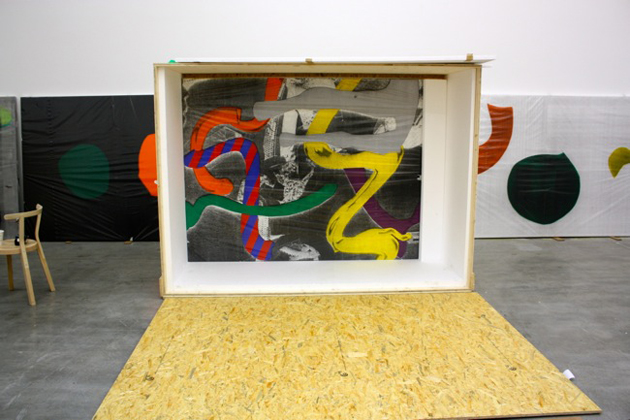
“A Mouth That Might Sing,” Ryan Mrozowski’s third Pierogi exhibit in three years, kicked off at the popular Williamsburg gallery last Friday (April 27th) and runs until the last weekend of May. The title is a fitting one: Quite a bit of Mrozowski’s work features spectators sitting in a theater, waiting in anticipation for some sort of spectacle. Much of the room in his paintings are devoted to the back of people’s heads. Inside they appear to be asking the same question we ask ourselves every day: What is going to happen next?

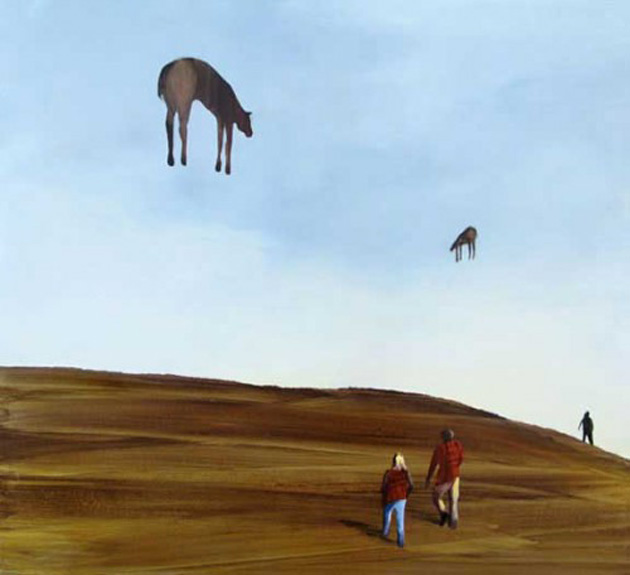
Mrozowski, a Philadelphia native who has been living in Brooklyn since earning his MFA from Pratt in 2005, repeatedly takes familiar objects—baseball cards, book pages, advertisements—and removes the main focal point, leaving a mere shadow of an outline in its place. The viewer can’t help but see themselves somewhere in the void. This makes me anxious for two reasons: (1) Something is happening to me; (2) I don’t know what it is.

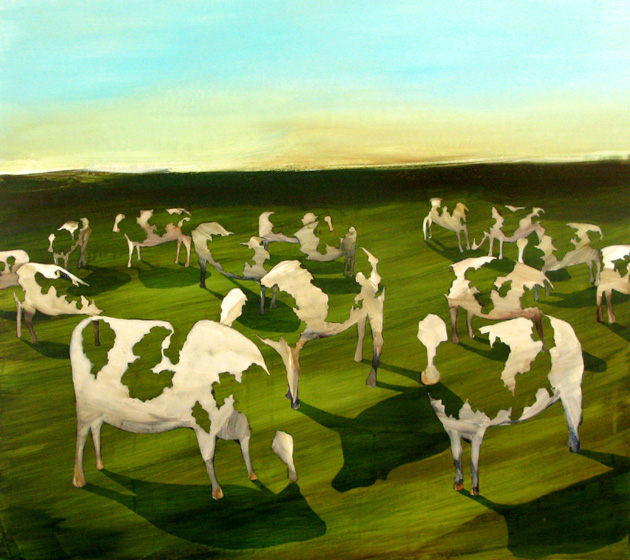
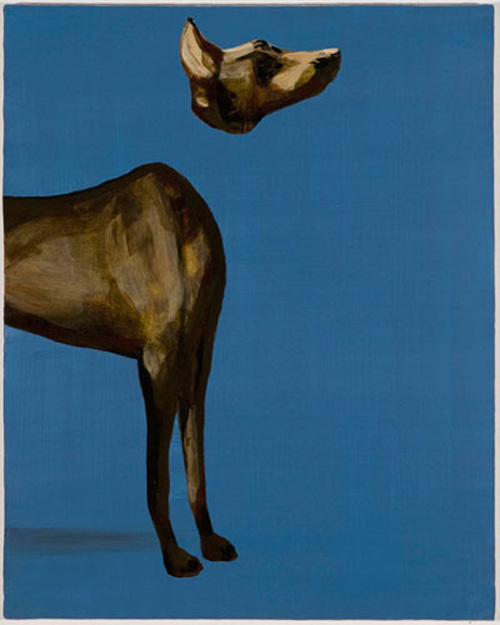
Paintings like “Skirmish” and “Enthusiasts” focus on the audience, not the stage, turning the regular paying folks into the real spectacle in the process. (Isn’t the audience always the real spectacle? Experiment: Try going to the movies in Union Square on a Friday night.) Another, “Molecule”, features a dog with no neck, his head floating aimlessly above his body. Part Helmut Koller, part Francis Bacon, “Molecule” manages to be clean and violent (the dog is alive, but he has no neck) without being over the top or kitschy (the dog looks proud). Like most of the work on display here, it’s simultaneously disturbing and familiar, like a herd of cows floating above their grazing grounds.

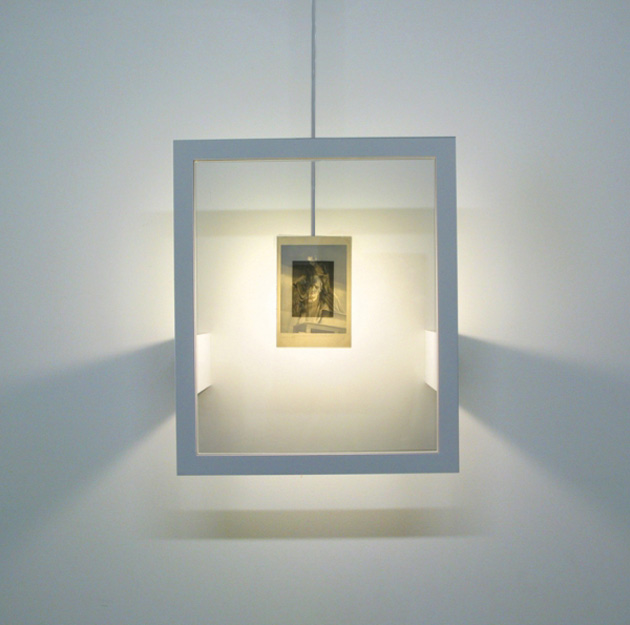
A notable addition to Mrozowski’s oeuvre is his recent “Book Page” series, in which double-sided found book pages are floated over a single light bulb to create a hybrid image (a third image, to be exact, or as the PR people like to call it, a “hidden collage”) that distorts the viewers’ depth perception. Likewise, the short film “Palimpsest” shows a girl lost wandering an apartment doing ordinary things—going to the fridge, navigating furniture, slamming a door in sheer terror—while falling in and out of her own shadow. We may not physically fall out of our own shadows, per se, but we’ve all been here before: confused, rattled, and in the midst of a late-night existential crisis when all we wanted was a drink of warm milk to help us back to sleep.

Ryan Mrozowski at Pierogi Gallery, 177 N. 9th Street, Brooklyn, NY, April 27th—May 27th.

Lane Koivu – Images courtesy of Pierogi Gallery

29/04/2012

Sunday Breakfast by Love For Breakfast

Sunday Breakfast by Love For Breakfast

Purity and simplicity are the words I love the most. A white dish goes perfectly with flaky biscuits, while the bright colors of a decorated porcelain plate embrace the tones of fresh fruits.

Alessia Bossi from Love For Breakfast