11/09/2012

Arefin & Arefin: The Graphic Design of Tony Arefin

Arefin & Arefin: The Graphic Design of Tony Arefin

That graphic design and art often speak the same language has been an obvious point in different stages in history. Since the initial developments of what has now become a socially and culturally affirmed discipline, graphic design has been both used by artists as a tool for conveying their ideas, as well as a mean by which their work was communicated to the public through a concrete form of a poster, a book or other printed matter. As a direct consequence there have been, and still are, some graphic designers that have found their natural habitat working within the realm of the art world.
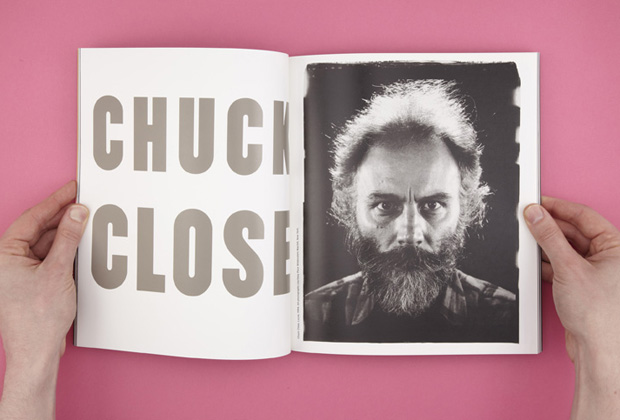
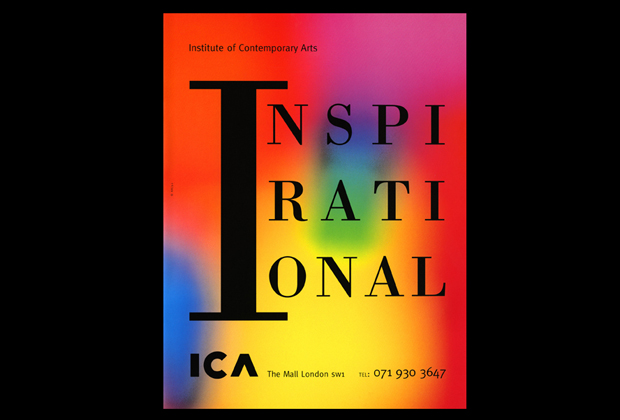
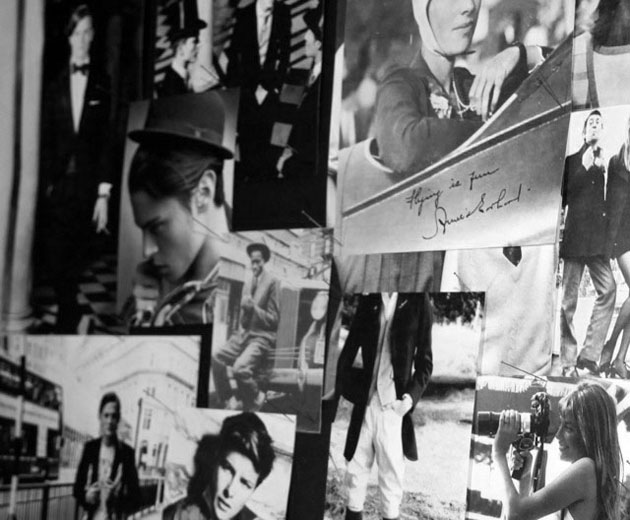
One of those practitioners was surely Tony Arefin (1962-2000), who’s work is at the centre of an exhibition at Ikon Gallery in Birmingham. Inaugurating tomorrow, the 12th of September, the show titled “Arefin & Arefin: The Graphic Design of Tony Arefin”, curated by James Langdon, finally pays homage to one of the most talented and slightly overlooked graphic designers involved with the art world. Tony Arefin, born in Pakistan as Abed Mohhamed Arefi, drew his path into the art domain first by working as photo editor for several magazines, which led him to organize a show of Neville Brody’s work for The Face magazine, and consequently brought him to design different art catalogues. Under the name “Arefin & Arefin”, deliberately playing with the names of huge corporate branding firms, Tony has worked for institutions and artists like Serpentine Gallery, ICA, Damien Hirst, Douglas Gordon, Cornelia Parker, Jasper Morrison and Adrian Piper, among many others, before moving to New York to work as creative director of I.D. Magazine.

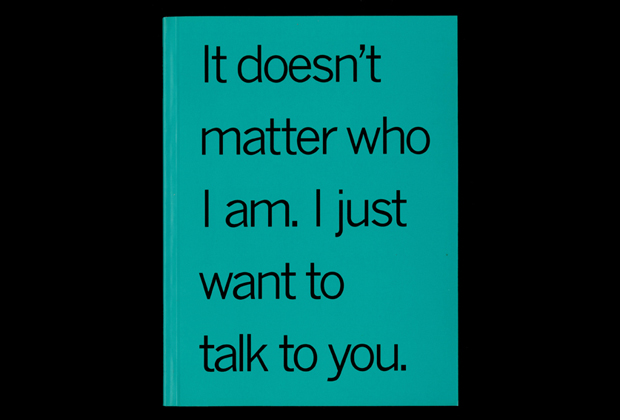
Even though Arefin worked in the United States for large corporate organizations such as IBM or Nike, the widespread idea of his work still remains tightly bound to art publishing, where his ‘bold visual language, irreverent use of photography and striking typography’ act most strongly.
 The exhibition, accompanied by a catalog with essays by some of the most influential design critics and historians, will run until the 4th of November at Ikon Gallery, Birmingham.

Rujana Rebernjak

10/09/2012

Let’s START

Let’s START

Milanese art people are in ferment. For ten days, thanks to StartMilano – the non-profit association that gathers together some of the most important local galleries, museums and institutions – everything in the city will revolve around art. The umbrella event, founded in 2006 to give more dynamism to the Milan contemporary art scene, will run from 13th to 23rd September offering a myriad of exhibitions, talks, projections, parties and so on and so forth.

Our tip to get the most out of it, is to catch a map of the city and the full programme of openings and cultural activities to pinpoint the places of interest. This way you’ll be ready to set up your tour avoiding wasting time and energy being on the trot. But don’t forget that if you are not an “openings’ addict” and your interest is all focused on visiting good art shows, you could choose to concentrate all the visits during the last weekend, enjoying the extended opening time and the extra Sunday openings. No stress.

The ‘dances’ will begin on Tuesday at around 6pm, and for those who don’t know which way to turn, here we give you some glimpses (chosen according to the date of inauguration). From the first day of the festival, Camera 16 will propose a joint exhibition entitled Fashionality that displays, among the others, the talented photographers Màrton Perlaki and Brea Sauders; the same evening in the Navigli district, Le Casa d’Arte will present Rosemarie Trockel’s solo show Prisoners of Yourself, while Saturday 15th all eyes will be locked on the great artist Anselm Kiefer at Lia Rumma.


Just a small break to warm up for the following week that will start at Museo Pecci Milano with a selection of videos from China: Moving Image in China 1988 – 2011; then the exhibition by Rob Pruitt Faces: People and Pandas at Massimo De Carlo on the 19th; and the gallery evening which will take place on Thursday 20th all around the city. During the official opening day it would be worthwhile going to Porta Venezia – an area that gathers a high concentration of contemporary art galleries – and take a look at the historical gallery Studio d’Arte Cannaviello for Bernd Zimmer’s exhibition and to the experimental space of Galleria Zero for Michael E. Smith (or if you like it more, for Riccardo Beretta’s finissage).

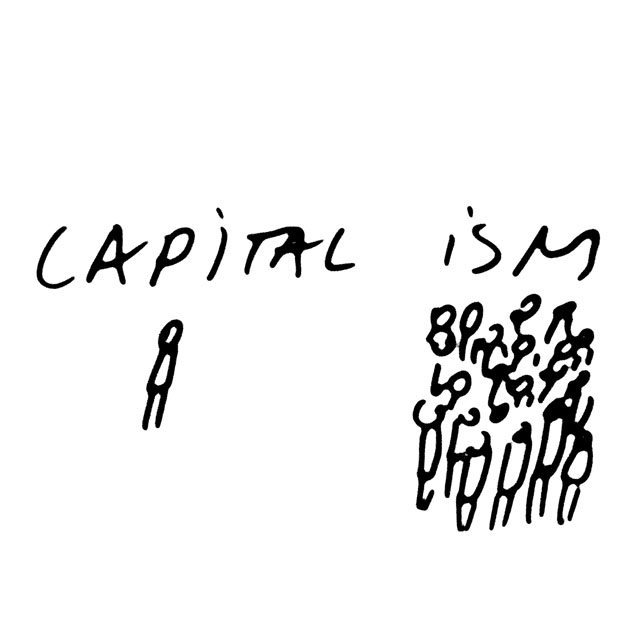
We don’t want to keep this tour overlong, so let’s add just two more suggestions: Dan Perjovschi at Kaufmann Repetto Gallery and Paolo Chiasera at Francesca Minini, before getting to the usual closing party, which will be hosted, as in the last few years, at the Swiss Institute.

The full program of the event is available online, while an info point will be at visitors’ disposal at Villa Reale (Via Palestro) along with a special section devoted to independent publishers and a shuttle service, which will drive art lovers around the Milan galleries circuit.

Monica Lombardi – Many thanks to ch2

09/09/2012

Sunday Breakfast by Love For Breakfast

Sunday Breakfast by Love For Breakfast

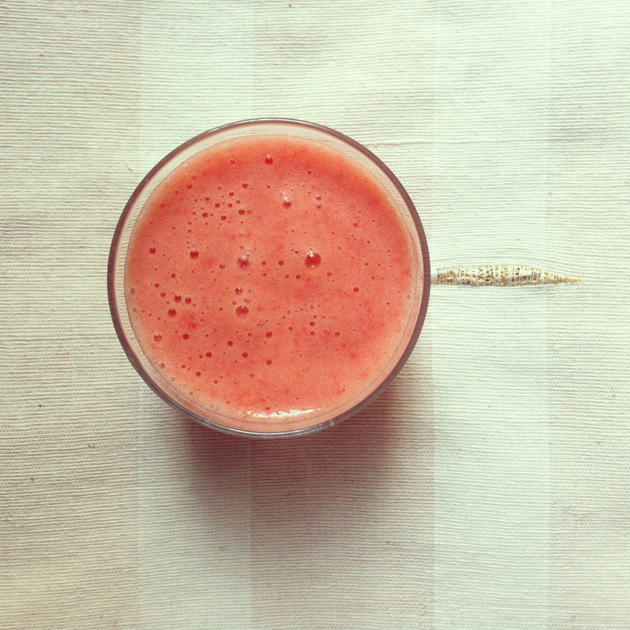
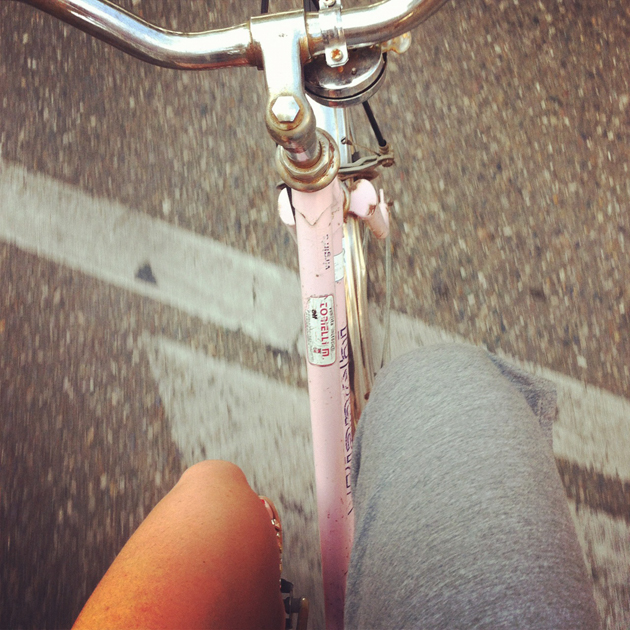
The air rustles my hair and ruffles my thoughts while I’m riding fast. In my mouth the sweet taste of a fresh fruit smoothie wakes up my senses.

Alessia Bossi from Love For Breakfast

07/09/2012

Eating Stone Age Style

Eating Stone Age Style

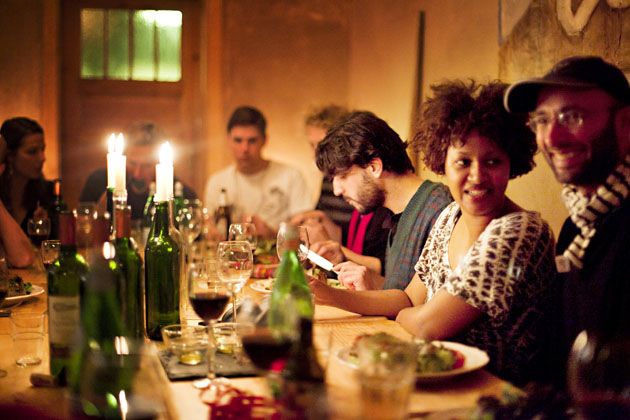
It is said to be the first Paleolithic restaurant on the Eurasian continent, if not the entire world: Berlin based restaurant Sauvage.

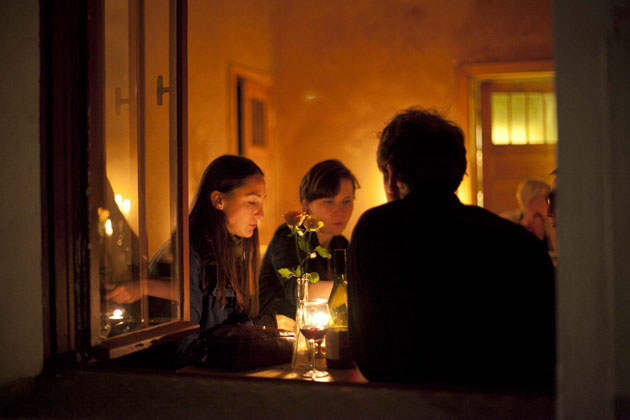
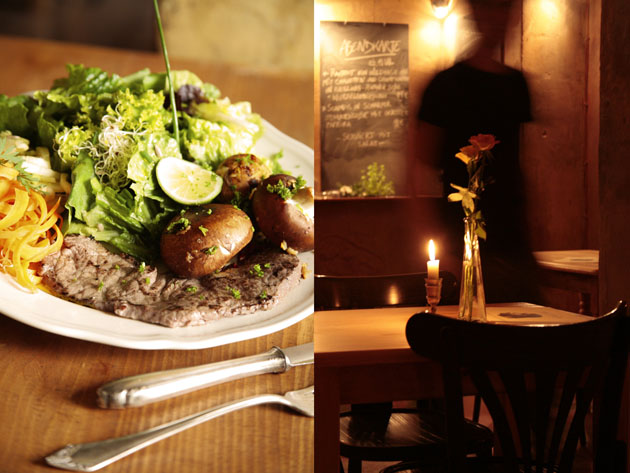
This former brothel in the Kreuzköllner area, offers an all-organic diet of wild legumes, nuts and seeds, sustainably raised fish, grass-fed pasture-raised meat and above all, no processed grains, dairies or sugars. Or more simply put: everything the ancient pre-agricultural hunter-gatherer ancestors ate 200,000 years before us. Yes, it is an all-prehistoric Stone Age cuisine that is bestowed here.

The founders of the restaurant, Boris and Rodrigo had become fond adherents of this dietary lifestyle and felt like spreading the word through opening their own eatery. And so they have. The cave man theme is consistently worked through the interior, as the cozy place –it can only seat up to 40 people- is dimly lit by candle lights and environed by sturdy stonewalls.

But restaurant Sauvage is not just about mimicking how prehistoric men ate. In fact, it combines ancestral cooking methods and evolutionary science with contemporary cuisine and is as such a modern off-shoot to the paleo diet. According to the owners’ philosophy, it is about feeding the body the way nature primordially intended it.

Our prehistoric ancestors were quite ahead of their time when it came to maintaining a vigorous diet. The health results are said to be quite impressive: energy levels are prognosticated to be higher and steadier throughout the day, skin, hair and teeth will look better and even one’s sex drive is anticipated to increase substantially. And not in the least, the taste is delicieux. It surely explains why the restaurant is fully booked just about every night.

The nutritional concept isn’t entirely new though. Neanderthal eating was already promoted and adapted in several books and academic journals around the mid-1970s. In spite of it though, it remained a marginal phenomenon. With the excessive load on quite colossal crises human kind is currently facing, there is irrefutably a growing re-appreciation for the past. In fact, one could go even so far as stating that through the use of old artifacts or in this instance, by restoring an old cooking method, the discomfort with the present and future is channelized.

If anything, its manifestations have become increasingly diverse. Whether it is the accrued interest in traditional handcrafts, the perpetual love for all things “vintage” or the fascination with prehistoric foods, there is a latent longing to go back to our human roots. In the case of Sauvage however, the appreciation for the ‘old’ and our homo sapien roots, go back just a tiny bit further in time.

Claire van den Berg

06/09/2012

Slow Trends

Slow Trends

The expression of slow fashion, like sustainability or eco fashion, is nothing new to anyone. Making precious collections of fine quality that will last more than a season has become important for large fashion houses as well as young brands building their whole identity on the concept. The care for sustainable fashion is up for constant discussion, in the same time as fast fashion moves as rapidly. Two concepts working in separate ends of the industry where the essence of time is central within them both.

Time might be today’s essential luxury “item” – taking that extra space away from the everyday hassle, but also looking at it from another angle: what time gives back through craftsmanship and production that favour long lasting quality. In an industry where the time carousel spins so fast that some stores even present new partial collections every week, do people have time to wait? And further, are they ready to pay more? Truth is that time is often a pricey story, and when people say they can’t afford the high quality fashion, should the coin just be turned around saying it’s all about buying less cheap and easily consumed products in favour of the slow ones? If one believes forecasters that are what the trends are pointing to. “It is our desire to make more use of styles that we are already familiar with, and instead add a new and surprising twist to those things,” said trend specialist Ulla Skjødt prior to the passed season. So, is the industry ready to let the trend cycle run longer?

Skjødt talks about a period in which trends are pointing towards a slowdown, and on the site slowfashionhouse.com the slow concept includes not only fashion but also living and – what they say is the Italian “foremother” – slow food. If forecasters are right, maybe the new luxury is not only a window of time every now and then, or luxurious quality that you will value for not only one season, but forever. Maybe the endeavour should be about the luxury of being able to live slowly, from fashion to food.

Lisa Olsson Hjerpe – Image courtesy of RFF/Ruediger Glatz & ELLA

05/09/2012

The Editorial: Spontaneous Interventions

The Editorial: Spontaneous Interventions

The pavilions at the Biennale d’Architettura have traditionally been exercises in identity construction: Belgium is ______. India is ______. Japan is ______. Just fill in the blank with some specific material rendered in some perhaps novel way and wrapped up in packages designed to please cultural ministers and magazine editors and voilà. Archicrap. Mostly irrelevant branding exercises whose potential for innovation is all but lost in a wild goose chase to make the most memorable statement.

This year is mostly no different. Some pavilions are gorgeous: Serbia’s monumental white table, Taiwan’s nifty use of cardboard and Poland’s stark emptiness come to mind. Some reinforce stereotypes: Russia’s QR code-laden mess is pretty in theory, but is the architectural equivalent of a bejewelled frying pan. (Do you really want to cook your greasy bacon in that?) Israel’s rather depressing critique is effective enough, but its message has too much to do with dirty geopolitics and to little to do with innovation in the built environment.

We say leave the subversive bitching to the Biennale D’Arte. Design, and especially architecture, should be about well-considered solutions.

So it’s pleasing to report that one pavilion in particular has managed to transcend the overtones … . And for once, the most refreshing and innovative entry isn’t from Holland, a Scandinavian country or any other soft-power stronghold: it is the brilliant, well-timed Spontaneous Interventions from the Institute for Urban Design in the the stereotypically fat, rude and outclassed old US of A.

While few western countries are in need of a PR shot-in-the-arm like The States, the works and ideas showcased in the project should go a long way towards proving that there is at least a serious will towards positive change. And despite the country’s farcical, cartoonish politics, widening income gap, and bewildering, biased media, it looks like grassroots good can still prevail. Neither villainy, gluttony nor sheer stupidity can kill determined communities, clever citizenry or good design.


Among the too-many-to-mention projects included in the initiative are Fritz Haeg’s Edible Estates, which turns unused lawns into fountains of sustainability, New Public Sites, which gives names to ignored spaces in a city thereby giving them greater value, and The Better Block, which inexpensively transforms neighbourhoods by lending a sense of ownership through customisation. (Better Block will also be staging an intervention to coincide with the Detroit Design Festival later this month.)

With Spontaneous Interventions it is becoming abundantly clear that much is profoundly, genuinely changing inside the belly and brains of the beast. And one can already sense it on the street, from the impressive rejuvenations of the creaky, stark old downtowns of Great Plains cities like Lincoln, Nebraska to the patchwork of urban farms around Detroit’s Corktown (not to mention the world-class delicacies, bespoke craftwork and resurgent manufacturing from cities like Brooklyn, San Francisco and Chicago). And if the still rather dismal American gridiron can originate this kind of widespread enthusiasm, the effects of well-executed urban initiatives of this sort could potentially be even greater when applied elsewhere. The world just might be on the verge of a great–albeit atomised–urban renaissance.

Imagine pragmatically managed, hyperlocal yet hawkishly global, lean, prosperous towns imbued strongly with unequivocal sense of place. I want to live there.

Text and Images Tag Christof

04/09/2012

Carlo Scarpa at Le Stanze del Vetro

Carlo Scarpa at Le Stanze del Vetro

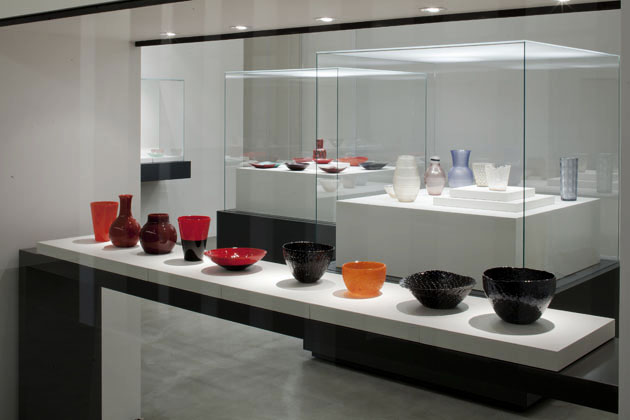
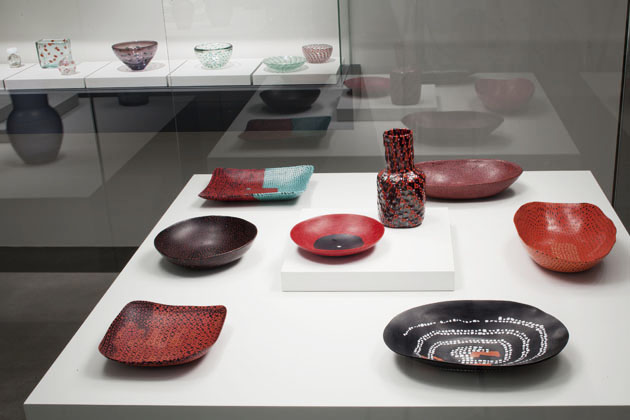
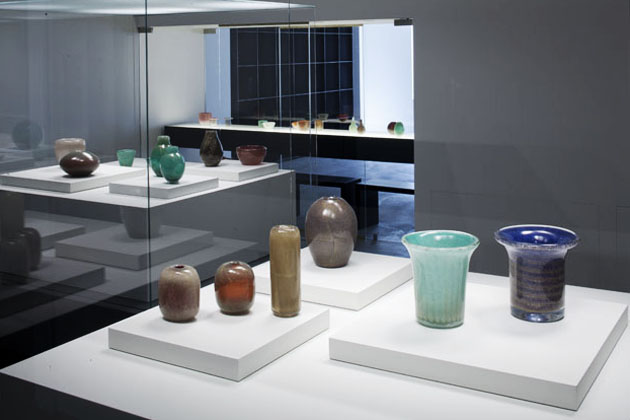
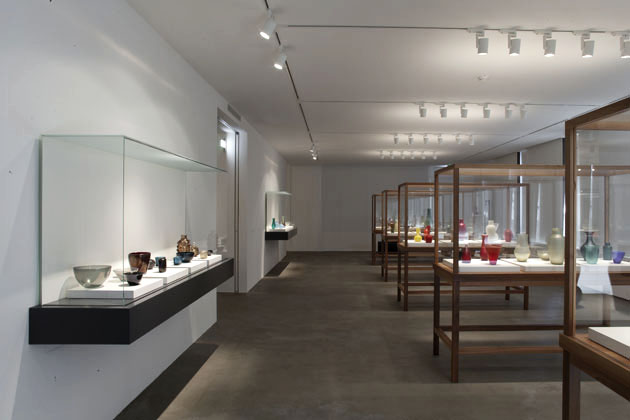
Carlo Scarpa’s work has been widely praised in all of its forms in Venetian area and its surroundings. The famous architect’s legacy is firmly tied to the city and its cultural history and traditions, as it can be seen in the latest show about his work. Titled “Carlo Scarpa. Venini 1932-1947.”, the exhibition is being hosted at Le Stanze del Vetro, a new exhibition space dedicated entirely to the Venetian glass mastery, founded as a joint effort between Fondazione Giorgio Cini and Pentagram Stiftung, with the idea of bringing this (almost forgotten) craft at the centre of contemporary cultural discussion.

The first exhibition that inaugurated the project space, tries to tell the story of the incredible experimental work developed by the grand master Carlo Scarpa during the years he spent as artistic director of Venini, one of the most famous Muranese manufacturers. That Scarpa wasn’t just a normal designer is a well known fact that this show only reconfirms. Through more than 300 objects on display, it is possible to see Scarpa’s curiosity and depth of his research, that involved not only formal experimentation, but an inquiry into the glass blowing production processes and its possible developments.

Besides showing around 30 beautiful series of vases and glass objects (plates, glasses, containers, perfume bottles) roughly organized according to different production methods – sommersi, murrine, corrosi – the show includes a series of technical drawings that were believed lost in a fire at Venini’s archives a few decades ago. Thus, the exhibition shows both the professional and technical mastery, as well as the incredible creativity of one of the most important Venetian modern masters. “Carlo Scarpa. Venini 1932-1947” is on display until the 29th of November at Le Stanze del Vetro, Isola di San Giorgio Maggiore, Venice.


Rujana Rebernjak

03/09/2012

Moving Images in Venice

Moving Images in Venice

There are no doubts: the powerful French patron François Pinault, tycoon of the international fashion system, is one of the most influential – thus controversial – figure of the contemporary art world of the last decade. Some years ago Mr. Pinault, giving way to the lagoon city’s charm, set up home for his art pieces at the neoclassical Palazzo Grassi in Venice and opened the doors of an extraordinary collection that put together works of all the greatest artists of the 20th and 21st century. The exhibition space has since become an artistic hub, hosting thematic temporary shows arranged by international renowned curators, such as the latest exhibition La voce delle immagini (The voice of the images), curated by Caroline Bourgeois, opened simultaneously with the 13th international Architecture Biennale (29th August – 25th November 2012) and the 69th Venice International Film Festival (29th August – 8th September 2012).


In the current shows everything talks about and around moving images – the strict connection to movies seems to be a constant of this city. The works of twenty-five artists, on display in the hall and on the first floor of the building, investigate the relationship between visual plasticity of human body and its fragile existence, between documentation and the mystery of unknown facts, all through the exploitation of different media (film, installation, audio/video art).

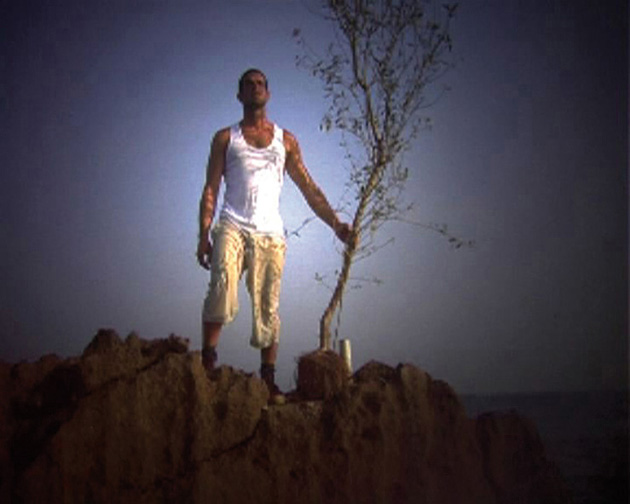
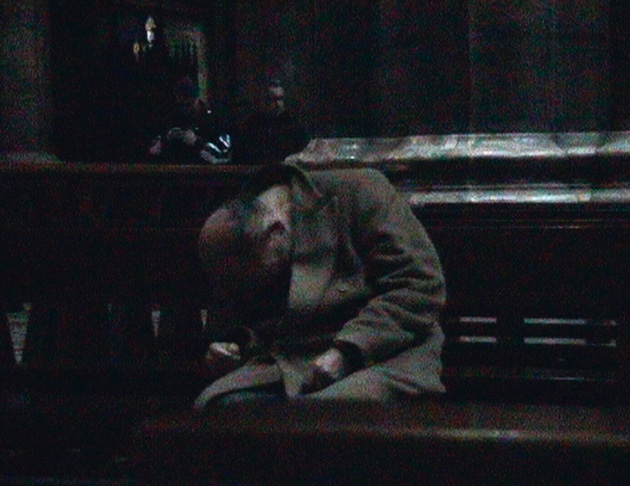
This is the case of the video/sound installation Hall of Whispers (1995) by Bill Viola: ten B/W close-ups of men and women surrounded by a darkness and uncertain atmosphere from which only whispers come. In Uomoduomo (2000), the video projection presented by Anri Sala, an old and weak man (perhaps a homeless one) sleeps on a bench of the Duomo in Milano among Cathedral’s indifferent visitors; while the Man depicted by the Israeli artist Yael Bartana in A Declaration (2006) is a sort of pioneer of the reconciliation armed with an olive tree, which will replace an Israel flag waving on an Andromeda’s rock, which immediately reminds a poetic reflection on national symbols and the conflict between Israel and Palestine.

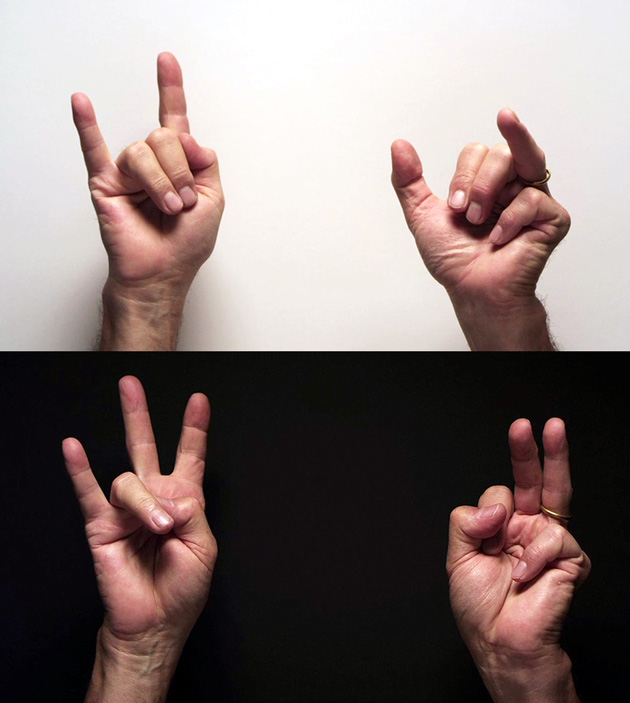
Beyond giving an excursus of the contemporary video art, the exhibition is the occasion to present, for the first time in Europe, the remarkable work by the American physicist/mathematician/artist Bruce Nauman entitled For Beginners (all the combinations of the thumb and fingers), purchased by François Pinault in 2011.

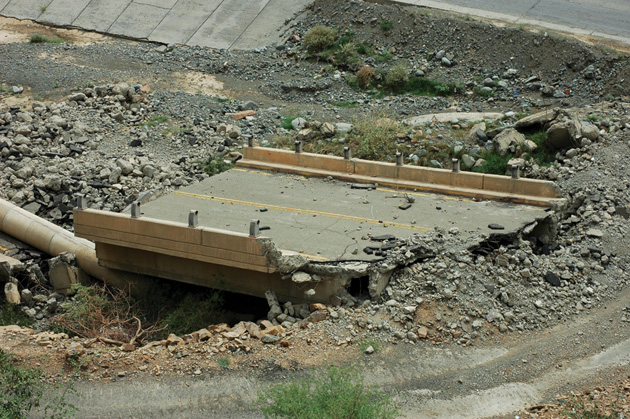
Among the other artists on view: Adel Abdessemed, Peter Aerschmann, Mohamed Bourouissa, Paul Chan, Liu Da Hong, Yang Fudong, Cao Fei, Peter Fischli e David Weiss, Michel François, Abdulnasser Gharem, Johan Grimonprez, Hassan Khan, Taro Izumi, Cameron Jamie, Zoe Leonard, Shirin Neshat, William Pope L., Javier Tellez and Mark Wallinger.

La voce delle immagini will run until 13th January 2013 at Palazzo Grassi, while at Punta della Dogana the show Elogio del dubbio (In praise of doubt) will be on view until 31st December 2012.

Monica Lombardi – Special thanks to Paola C. Manfredi Studio

02/09/2012

Sunday Breakfast by Love For Breakfast

Sunday Breakfast by Love For Breakfast

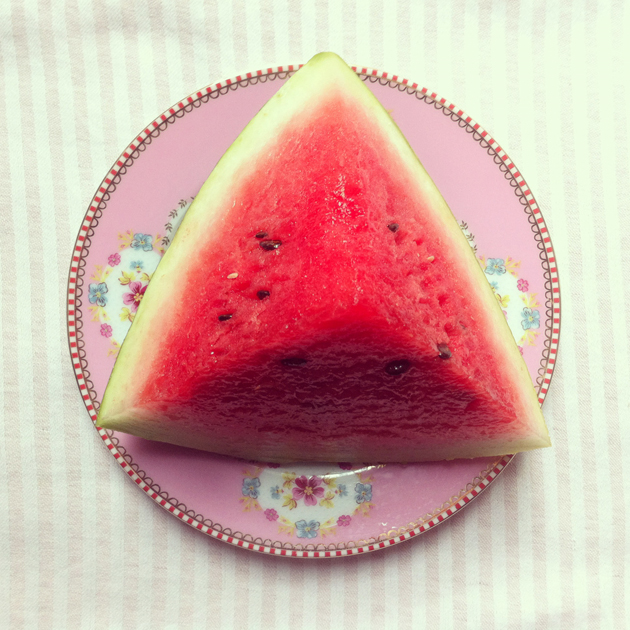
Nothing represents summer better than the color and the fresh taste of watermelon. Wake up early, and find the similarities that confirm that this fruit of the earth has the same colors created by the rising sun.

Alessia Bossi from Love For Breakfast

31/08/2012

Well-dressed in Stockholm

Well-dressed in Stockholm

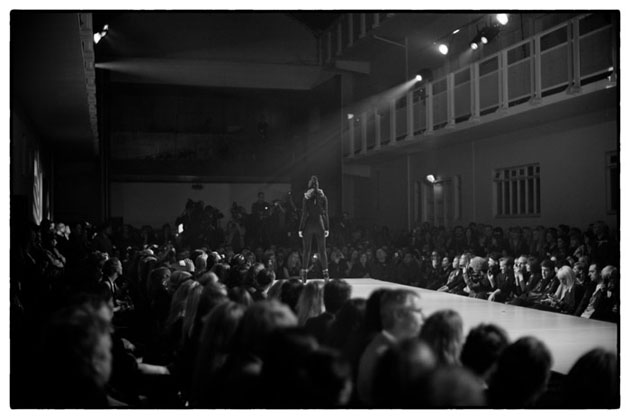
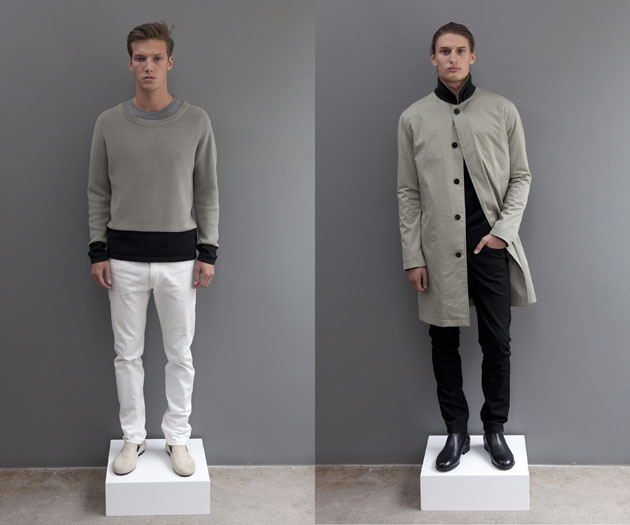
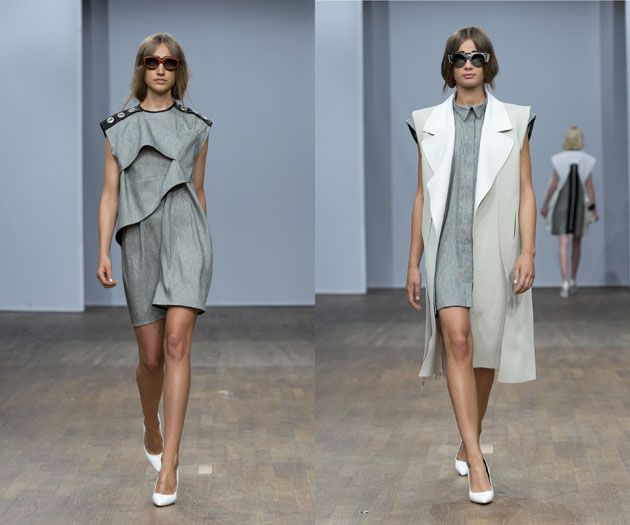
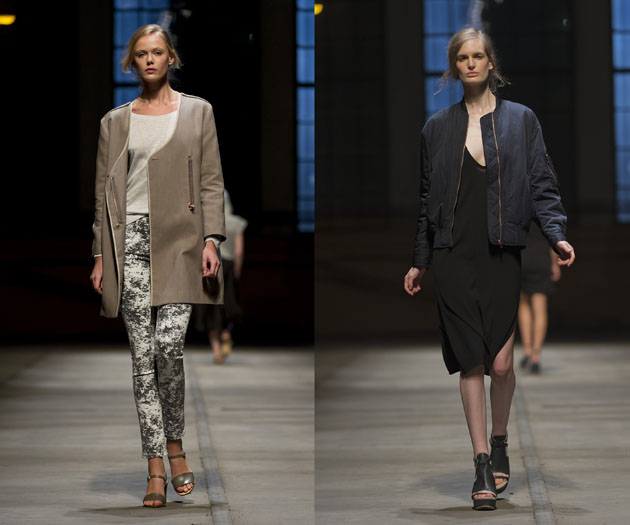
Inaugurated by H.R.H. Swedish Crown Princess Victoria and with a larger than ever presence by both Swedish and international press, Mercedes-Benz Fashion Week captured Stockholm for three days with its Swedish minimalism, tailoring and style. Giants and well-rooted designers like Filippa K, Whyred, J.Lindeberg, Cheap Monday, Hope, Dagmar and Tiger of Sweden shared the runway with couture design by Fadi el Khoury and international hopes like ALTEWAISAOME (and about 20 other designers). The Blogazine followed MBFW Stockholm to see the Swedish fashion scene’s contribution to the S/S 2013 collection.


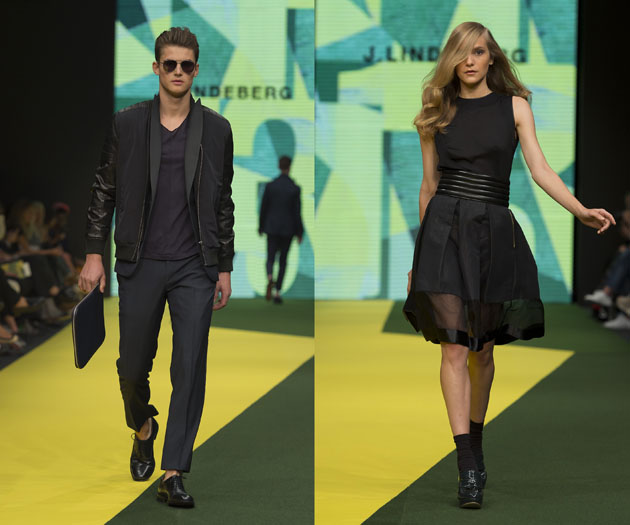
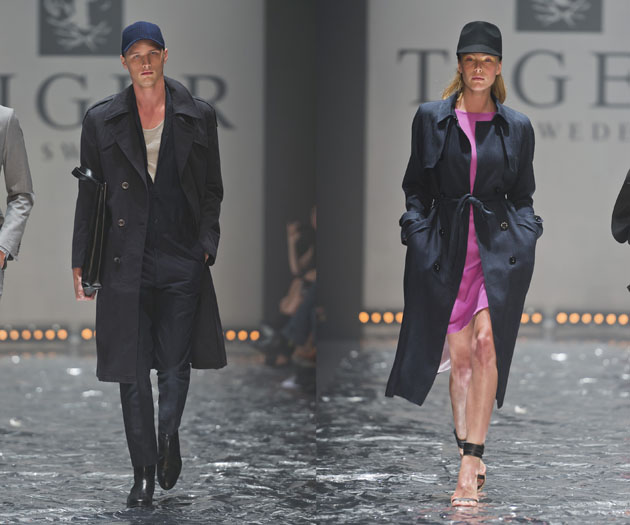
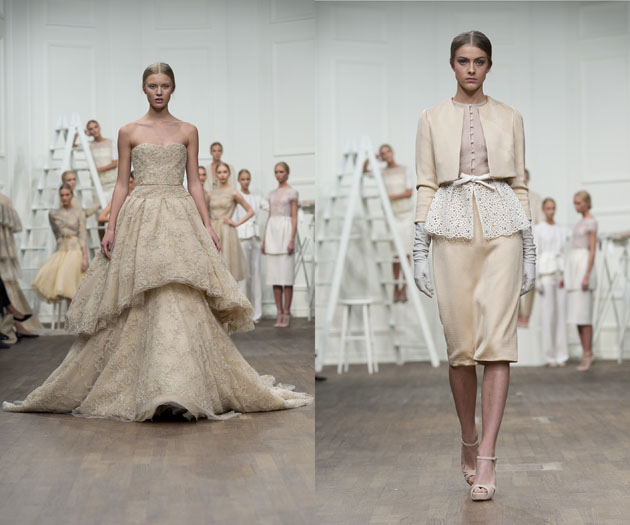
The official opening show was honoured to the name of Fadi el Khoury, one of Sweden’s few couture artists. If you have ever visited Château de Versailles, you recognize the soft tones of ivory and golden details that he brought to the collection. Less couture but always as safe and precise were the well-made collections from Filippa K. With quality and accuracy of fit the brand’s Nordic minimalism leaves every women as well as man well-attired. Tiger of Sweden brought up the baseball cap matched with a trench coat or slim fitted jacket and J.Lindeberg worked the short length trouser suits for men, and what will become a must-have leather jacket from the women’s collection. Whyred showed a few it-items, Hope continues to attract both the forty something woman as well as the young it-girls and The Local Firm brought top model Emma Wiklund back to the runway.


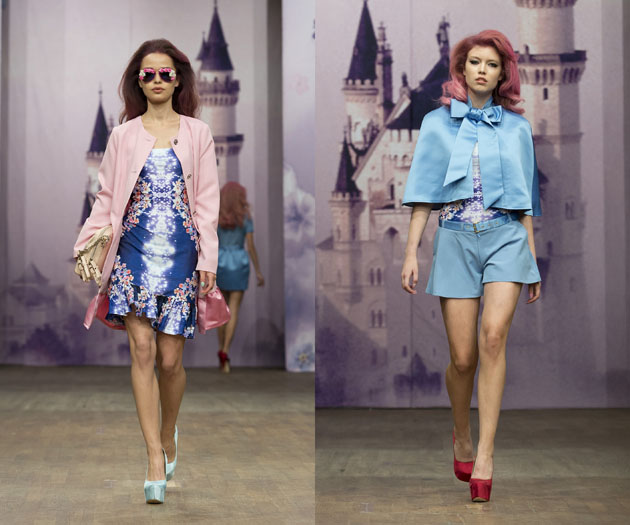
Cheap Monday showed out in the open, and gave all of their fans the opportunity to partake, a democratic choice by the brand that flirts with every young Swede. Instagram got to be part of the mood board when the photo application got its filters on the show by Ida Sjöstedt, who created a dreamy S/S13 runway under a rainbow. Two designers coming from Italian fashion houses and now showing their fourth collection in Stockholm are the girls behind ALTEWAISAOME. Mixing Scandinavian simplicity with international high fashion, they might be one of the young brands with most expectations from international visitors.

No matter how many or how few brands one mentions after a few days in Stockholm, the sum of impressions will end up about the same; a minimalistic take on each season with the style, class and prestige in doing things well always present. In the same time, the Swedish fashion scene makes sure that there is just a leap between office chic and street cool.


Lisa Olsson Hjerpe – Image courtesy of Mercedes-Benz Fashion Week Stockholm