24/08/2012

Summer 2012: Pasman by Rujana Rebernjak

Summer 2012: Pasman by Rujana Rebernjak

When you go to Pasman Island in northern Dalmatia, by the size of the ferry that hardly fits more then 15 cars, you can easily figure out you are heading for a lonely and relaxing vacation. Pasman is a small island where time seems to have stopped. Besides a few houses and five or six fishermen’s boats, the only thing you can see is the sea, some rocks and the olive trees. But the beauty of the sea makes up for everything, being one of the cleanest Croatian islands.

That’s why these images show only small bays and the nature surrounding them, a green and blue collage. Get ready for tough roads and lots of walking, maybe on sunrise or sunset, seeing the beautiful light on one of the most incredible Dalmatian islands.

One thing you have to remember if you ever visit Pasman – be sure to make friends with someone who has a boat, that’s the only right way of experiencing it.


Rujana Rebernjak

Share: Facebook,  Twitter  
17/07/2012

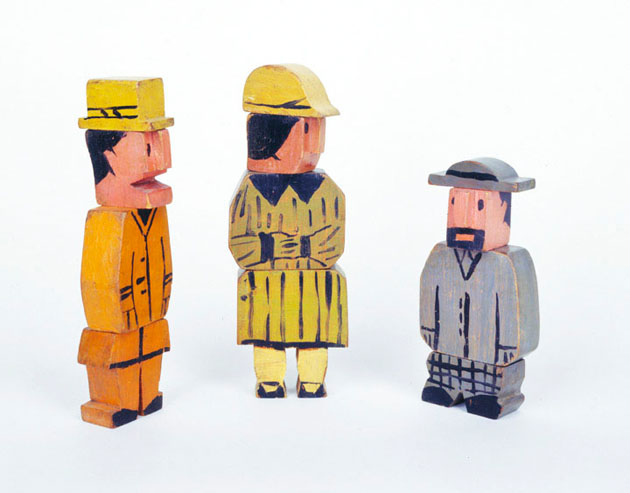
Century of the Child: Growing by Design at MoMA

Century of the Child: Growing by Design at MoMA

“Children are the future and our most valuable resource,” is an overly heard saying whose meaning we don’t take quite seriously. That is why a soon opening exhibition at MoMA, taking design as its maginfying glass, should open our eyes to the infamous saying and make us reconsider the position of a child in our society. 
Titled “Century of the Child: Growing by Design, 1900-200”, curated by Juliet Kinchin and Aidan O’Connor. The exhibition departs from Swedish design reformer and social theorist Ellen Key’s book “Century of the Child”. The book, written in the 1900, tries to emphasize the importance of children’s well-being as an interest of utmost importance to all society.

The paradigm of children’s prosperity was taken throughout the 20th century as a paradigm for progressive thinking and the renewal of the modern society. As a consequence, designers and artists have produced work that often involved childhood, but as such, has even more often been disregared in design cycles. Hence, many of the objects (around 500) exhibited in the show, even though created by famous figures of design and architecture history, have remained almost unknown. For their authors, the design projects have functioned as a sort of escape, particularly during the avant-garde, from the roughness and routine of everyday life.

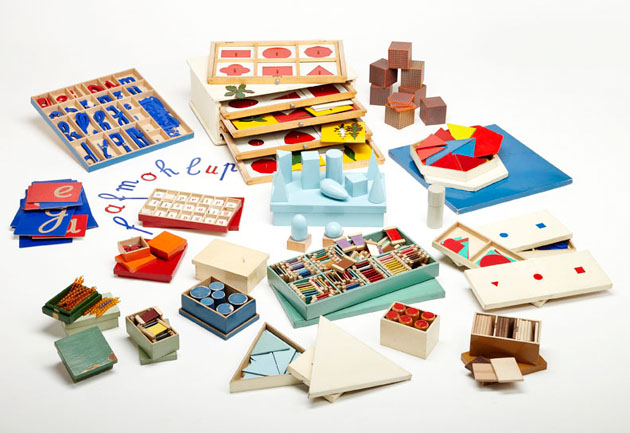
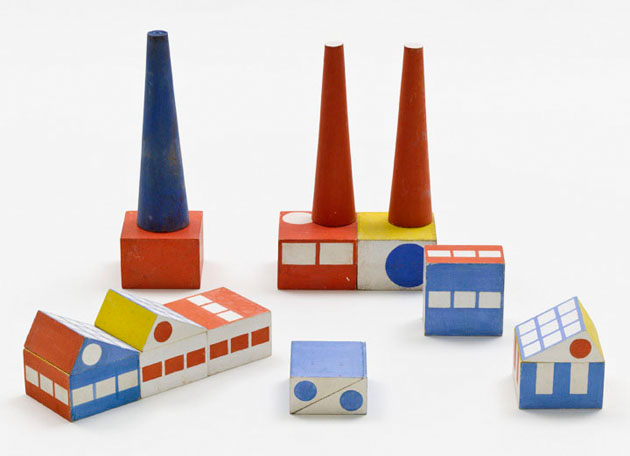
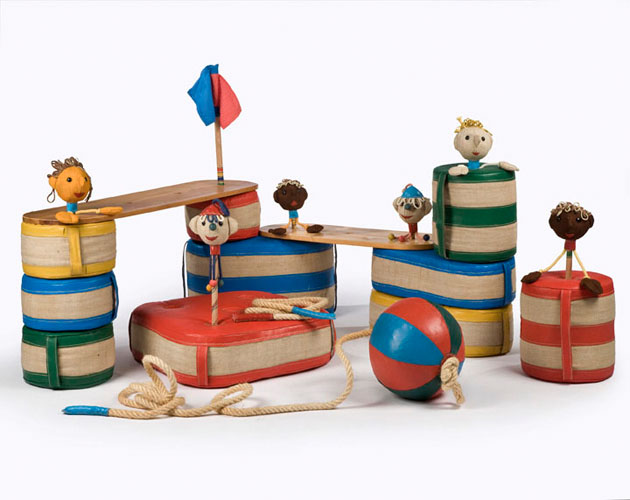
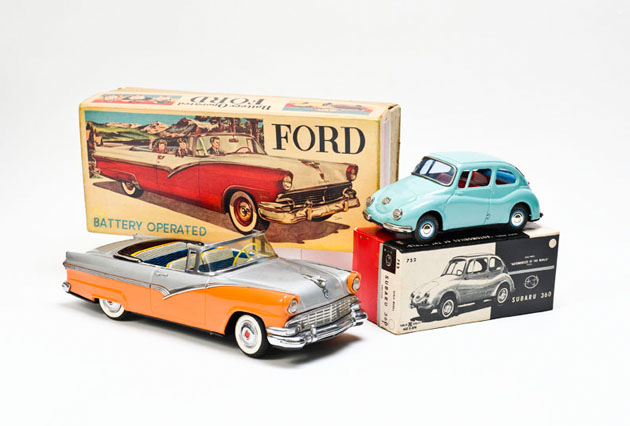
The exhibited works include Jean Prouve’s School Desk, a glass desk designed by Gio Ponti, children’s chairs by Marcel Breuer, Alvar Aalto, and Kit Nicholson, LEGO building blocks and the Slinky, Charles and Ray Eames’ projects, Aleksandr Rodchenko’s photograph Pioneer Girl, Roald Dahl’s The Gremlins, to name but a few.

If we are fond of believing that design has a fundamental role in our society, and that children are its future, then this exhibition showing years of prolific designers’ work on the theme can only confirm it.

“Century of the Child: Growing by Design, 1900 -2000” will be on show from July 29 – November 5, 2012 at MoMA.

Rujana Rebernjak

Share: Facebook,  Twitter  
09/07/2012

“The Small Utopia. Ars Multiplicata”

“The Small Utopia. Ars Multiplicata”

When recently an article published the list of most influential art collectors in the world, unsurprisingly only one name was Italian. Miuccia Prada and Patrizio Bertelli have created an empire both in fashion and art industry. So when last year Ca’ Corner della Regina, a historical palace on the Grand Canal in Venice, became a new temporary home for Fondazione Prada, the announcement came almost as a relief.
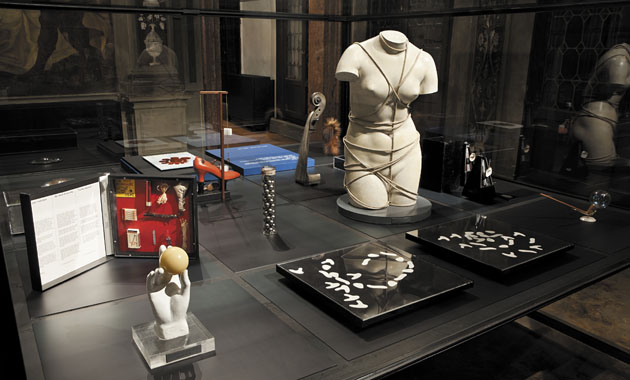
Fondazione Prada, under the artistic direction of the superstar curator Germano Celant, has successfully opened its second exhibition in the Venetian venue last thursday. Titled “The Small Utopia. Ars Multiplicata”, the show is one of the most beautiful ones Venice has offered in a long time. The title of the exhibition refers to the idea, born at the beginning of the 20th century and pursued until the 1970s, that art should pervade the society through ‘the multiplication of objects, experimenting with unprecedented aesthetic and social uses for them’.
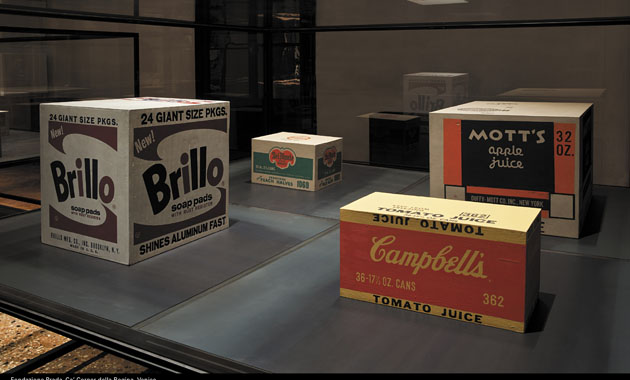
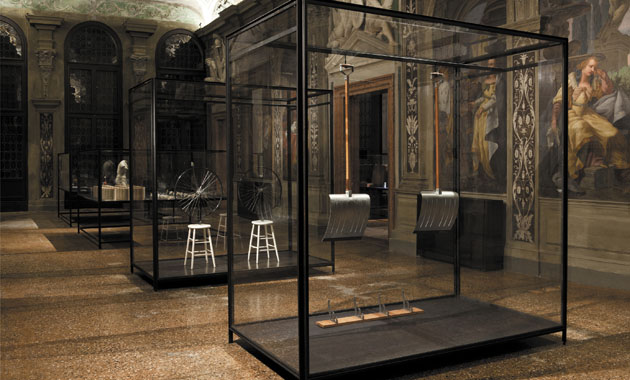
Thus, the exhibition, spread throughout the 2 floors of the beautiful Venetian palazzo, presented over six hundred editions – objects familiar across cultures – that ideally should have enabled the artist in creating connections with the society through industry, technology and systems of popular distribution. The exhibition traces the transformation of the idea of uniqueness in art starting from the early 20th century Avant-Gardes – Italian Futurism, Russian Constructivism, Dutch Neoplasticism and German Bauhaus, through pop and optical art, ending with contemporary ‘dematerialization’ of art in the works by Sol LeWitt, Laurence Weiner, Ed Rucha, Dieter Roth.

This language of art, involving the common, banal and everyday, both as medium as well as way of expression, far from being a small utopia, has surely touched the way we perceive both art as well as our daily routine.
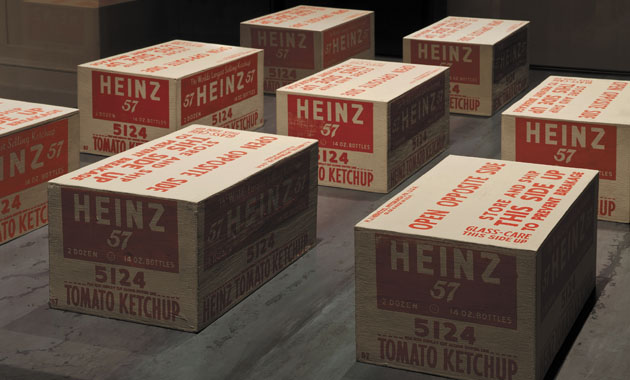
“The Small Utopia. Ars Multiplicata” runs until the 25th of November at Ca’ Corner della Regina, Venice.

Rujana Rebernjak – Images courtesy of Fondazone Prada. 

Share: Facebook,  Twitter  
18/06/2012

Art Basel – Design Miami/Basel

Art Basel – Design Miami/Basel

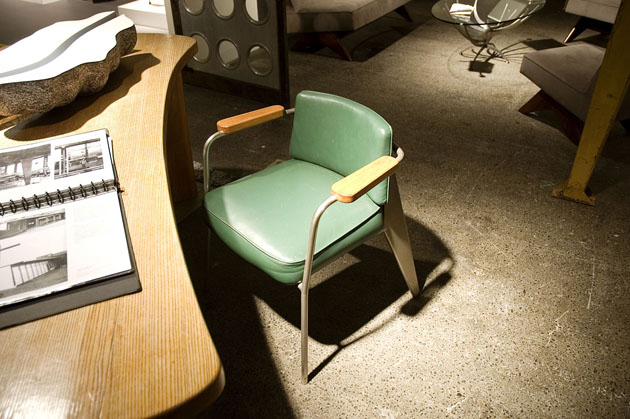
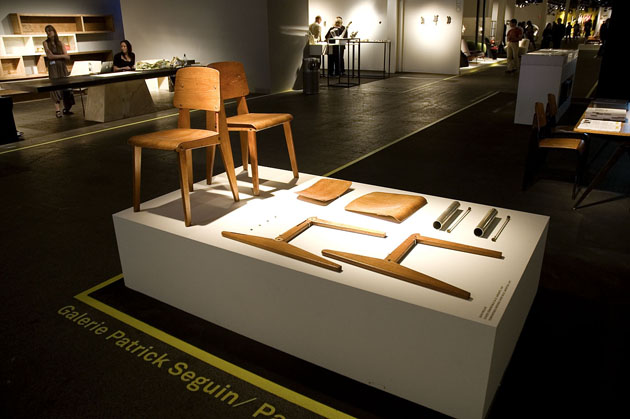
Speaking about collectible design is almost a contradiction in terms. The idea of design we might have inherited from modernist ideology, differs significantly from the one seen at Design Miami/Basel. Even though the space offered by design galleries, a reality from complexities of industrial production, is surely an incredible platform for inquiry and experimentation, Design Miami/Basel doesn’t exactly leave you with your mouth open.

The line-up of this year’s fair was a mix between European and American galleries, extremely different in nature and attitude. The exhibitiors ranged from Gallerie Kreo, the ‘institution’ that raised to glory many of today’s most important designers, commercial giants such as Fendi or Italian jewels, like Milanese Nilufar, showing both modernist Italian furniture as well as pieces of contemporary designers, among whom the incredible Martino Gamper.
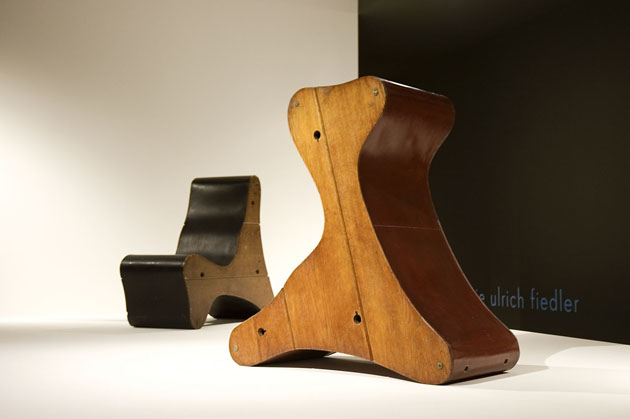
In a long list of exhibitors there were a few that stood out. The British Gallery Libby Sellers has shown a chess set project, insipired by a 1944 exhibition titled “The Imagery of Chess”. While Gallerie Kreo has dedicated its stand to lighting projects, one of the true highlights of the show was Galerie Ulrich Fiedler showing two Frederick Kiesler pieces designed for Peggy Guggenheim.

Among a very shy selection of contemporary pieces, two projects have to be mentioned. The first, and most obvious one, was Formafantasma’s performance Craftica, showcasing a collection of objects made with leather. The second one was Matali Crasset’s “Cutting” project exhibited by the Parisian Granville Gallery. “Cutting” is a collection of glass vases which take their shape from pieces of a tree personally chosen by the designer.

If collectible design, as much as a contradiction in terms, must also be an inevitable reality, maybe our culture might gain a bit more if the idea of design promoted by events like Design Miami/Basel would shift from a burgeois attitude towards the idea of design as a democratic place of research and critique.

Rujana Rebernjak 

Share: Facebook,  Twitter