13/06/2012

Eyeglass Connoisseur

Eyeglass Connoisseur

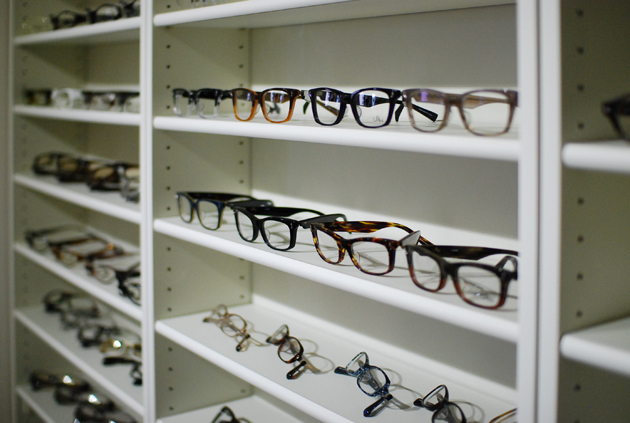
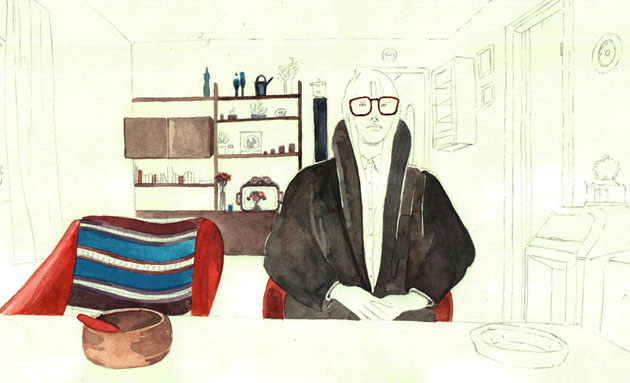
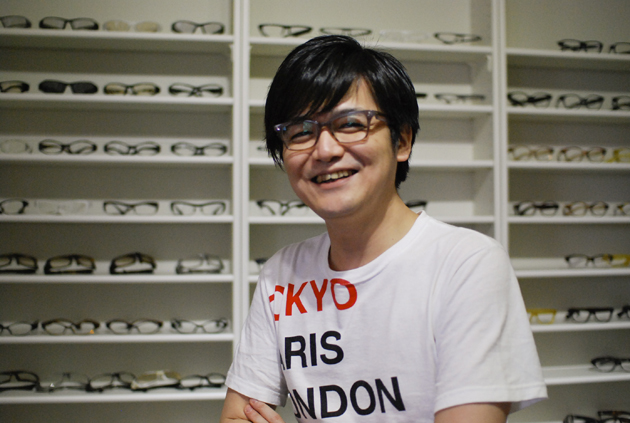
‘Eyeglass Fitter’? This term, that Issei Mori is using for branding his new career with, may seem rather alien to us. He gave us a guide on it at his office in Aoyama, the fashionista shopping heaven crammed with well-known fashion maisons.

Issei Mori, born in Kyoto, learned the eyeglasses business through his uncle, a visionary in the field, who was among the first to offer the high-end European brands in Japan from early 80’s, and expanded his business to Tokyo by opening one of the most recognized shops called Abalo, where Issei was in charge of its operation.

“I must say that only with a proper fitting eyeglasses appear beautiful on your face. Even wearing the plano glasses, the design should be completed within the harmony between the glasses and each individual face,” Issei explained. Today, eyeglasses have gained a status of a hip item. That may be much better rather than to be a symbol of Ugly Betty. As glasses are an item to set directly on your face, people ought to pay as much attention to the perfect fit as they pay attention to their hair or make-up.

Originally born as medical equipment, eyeglasses have become more like mobile miniature architecture, to be fitted on the landscape of your face. From the measurement of visual acuity to choosing the best selection of suited shapes, colours and materials in the harmony with your face, all the way to the fitting, adjustment and repair… Yes, it may be very reassuring to have a personal consultant like Issei who combines the best properties of technical and aesthetic characteristics.

“Eyeglasses talk about your personality. Before I was more into the eyeglasses themselves, and was more inspired by their beauty and perfection as an object. Now I am more interested in the ‘conversation’ between eyeglasses and the face, the person, the way of living, the total coordination.”

Rather than his understated naming ‘Eyeglass Fitter’, we felt like to call him as ‘Eyeglass Connoisseur’.

Ai Mitsuda

13/06/2012

The Editorial: Pretence. Plastic.

The Editorial: Pretence. Plastic.

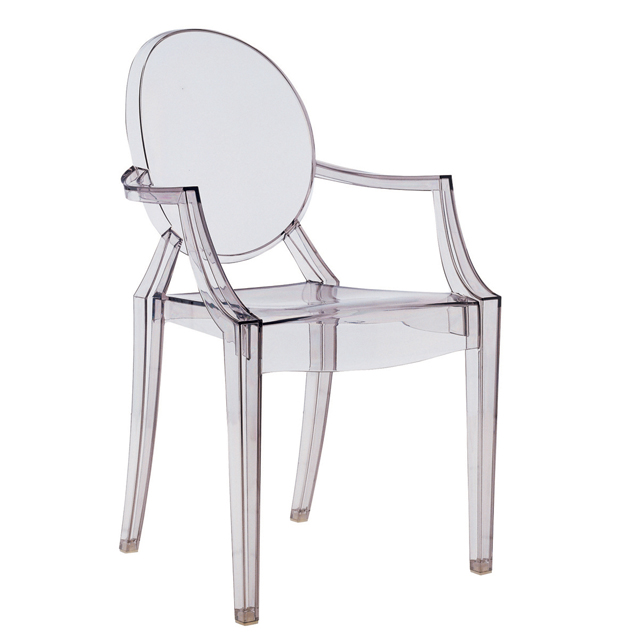
It’s likely that we’ve all sat in a Louis Ghost chair. Every fighetto and fighetta in Milan has one or two ironically hanging around their “design” apartment. For me, the first time was a few years back at a beach house in Tuscany adorned with iridescent shells and pastel pictures of boats that seemed to exist only to forcibly remind everyone inside that “you’re on holiday, AT THE BEACH, goddamnit”. Two Louis Ghost chairs sat, noses upturned, at either end of a long table flanked by another six, less stately (but also clear plastic) Kartell chairs. “This place is POSH, goddamnit,” they said, hollowly.

For a piece of iconic “design” (an irksome classification, since everything man-made is designed, and is therefore design), the Louis Chair is incredibly derivative. It is an old, established form rendered in new material. It is invisible, yet its symbolic intentions are crystal clear. It was the perfect companion to the literal gaudiness of shells and pastel boats, as it is the perfect companion to a kitschy nail salon decorated with tropical plants and smelling of acetone, as it is the perfect companion to the generic posters and bad brochures of a second-rate travel agency. The Ghost chair is pretence in plastic. Nothing more.

And although the chair has lost must of the ooh-aah, genius gee-whiz novelty it once had, it has unequivocally become an instantly recognisable classic. An icon not only for Kartell and Starck, but for the 2000s and for contemporary Italian design. And it will be the first ugly thing your kids sell for 50¢ at a garage sale when you die.

So, to honour this extraordinary object, artist Simon Martin this week opened an exhibition at Collective Gallery in Edinburgh focusing squarely on it. And while Scotland may not be the design powerhouse Italy is (was?), its artists are positively on fire. Plus, a hearty mix of whisky and bluntness might be just what the doctor ordered to knock some sense back into Italian design.

The exhibition is brilliantly critical. Although we’ve all probably given the Ghost at least some thought –certainly most designers have– but what an enigma it is! Deliberate, shamelessly appropriated, trapped in the present and yet thoroughly a relic of the past. Ugly. Stunningly gorgeous. Packed with history. Meaningless. In a short documentary, Martin juxtaposes the Ghost with plastic (ceramic?) lawn gnomes and their accompanying tree-trunk tables, African headrests, and a work by Donald Judd. Plastic wood. Wooden box. Box as symbol. Symbol as chair. And what it all does is call into question the very reasons for which we’d value such an object in the first place. It is the purest, clearest expression of our obsessive yet unthinking attachment to symbol. Perhaps ever. Why this objectively ugly chair has any value at all is pure sociological, anthropological, psychological magic.

While he may be a massive sellout (good businessman?), Philippe Starck is nothing if not an excellent designer. A designer who is extremely easy to hate for unleashing loads of ugly things on the world, but a very, very clever one, indeed. Maybe his snarky materialism–his oft-repeated mantra, after all, is “everything I make is absolutely unnecessary”–has actually been about coming to grips with the ills of materialism. Just maybe.

Tag Christof

12/06/2012

Heatherwick Studio at V&A

Heatherwick Studio at V&A

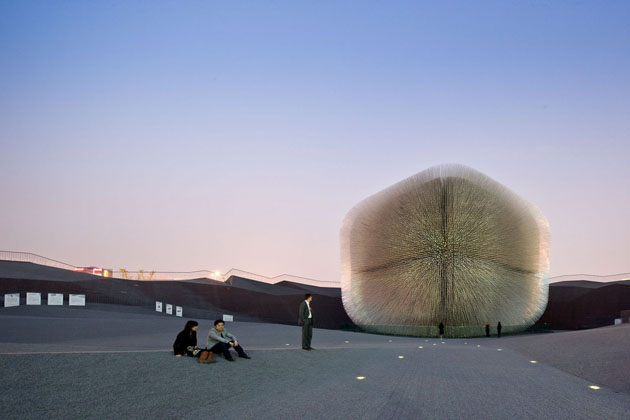
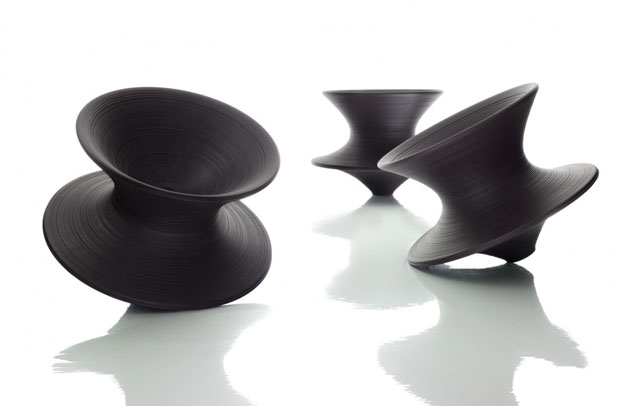
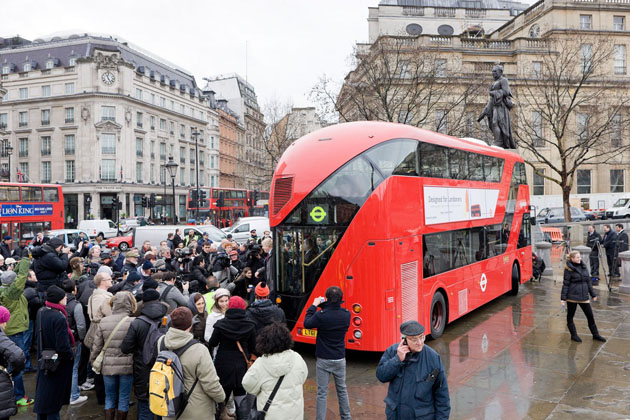
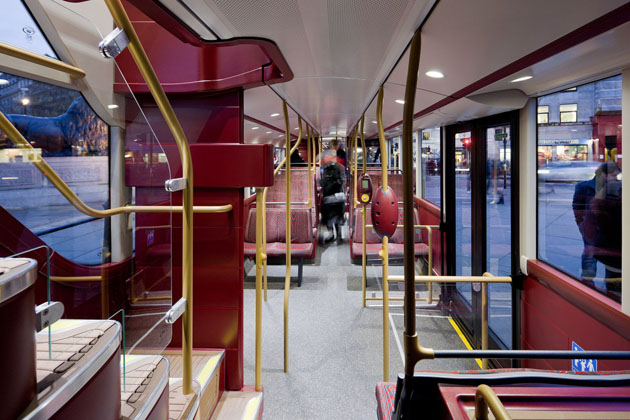
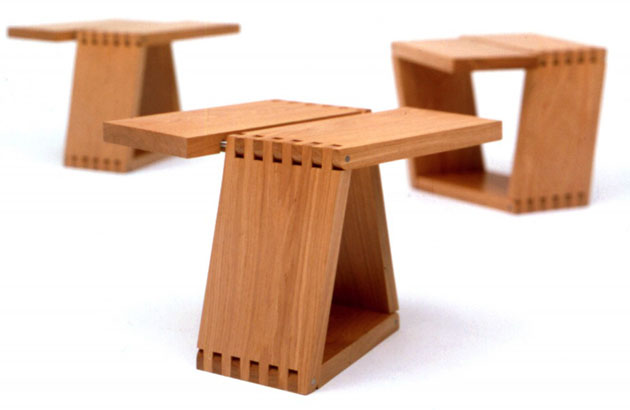
Thomas Heatherwick is one of those creatives that you can’t actually fit in any precise category. He became quite famous in design-ish circles with his Spun chair produced by the Italian manufacturer Magis. When it comes to a wider acclaim, it only came about when he was charged with designing the British pavilion for the 2010 Shanghai Expo, and earlier this year with the re-design of the London bus. Not that designers ever become superstars outside of their closed world, but that says a lot about the knowledge wider public has of the discipline.


Fortunately there are some institutions that recognize the quality and importance of people that shape our visual and material world. Hence, when Victoria and Albert Museum announced a grand retrospective of Heatherwick’s work, it really came as a relief.

Entitled “Designing the Extraordinary”, the exhibition runs through almost twenty years of professional career that started with a small studio Thomas, opened in 1994, after graduating at Royal College of Art. The exhibition has been set up using primarily models and objects the designer has accumulated in his studio in all these years, spanning from small scale object to architectural models.


Heatherwick is extremely difficult to classify under the limited boundaries of a single profession, since he has given shape to almost every kind of tridimensional objects. Gaining himself some lament coming from the architectural community, he has successfully designed both buildings, pavilions, shops, busses, chairs, benches and tables, giving each object unique quality and a distinctive signature. In a moment when disciplines collapse and design is an over-abused word applied to describe almost anything, a wider public can finally confront itself with a design excellence.

Rujana Rebernjak – Images courtesy of Heatherwick Studio

11/06/2012

Antwerp SHOW2012

Antwerp SHOW2012

Founded in 1663, the oldest of its kind in Europe and the starting point for Martin Margiela, Haider Ackermann, Peter Pilotto, Dries van Noten and Ann Demeulemeester (the two last-mentioned also being part of the far-famed Antwerp Six) among others, the Antwerp Royal Academy of Fine Arts is a school with a resourceful fashion department where creativity comes first. 7 – 9th of June it was time for SHOW2012, the final runway for the eleven Master Students about to graduate.


Outside of the trend hub where eventful glamour is represented in addition to the actual fashion, Antwerp is a city with its own profile. Fashion people are seen as individuals interested in the society and ethical issues aside from the aesthetics, and fashion is to be seen in the largest of senses. Maureen De Clercq, teacher in fashion design at the Academy, says that “the atmosphere is creative, dynamic and has a lot of energy”. The industry people come to the city to see the final runway shows, to be surrounded by and to be a part of that feeling.


As a school, the Academy focuses a lot on experimentation, improvisation and innovation, as well as on the creative talent and the students’ ability to express themselves through their drawings. As the viewer has to be kept interested and the media pushes out new trends, these focal points are to foster future designers to see above previous horizons and turn well-known concepts in their heads. Located near the industry but somehow isolated from the fashion hysteria, Antwerp and the Royal Academy with its students seem to have found their own rhythm within the industry, mediating a pragmatic calm where the explosive details are within the arts – which are blooming.


The SHOW2012 collections had extravagant details, often leaving conventional to the side. Through the presentations the collections called to evoke emotions and express something outside the garments. The graduates showcased their work by presenting the abilities of creativity, detailing and innovative techniques, before being thrown into the “real world”. With Antwerp’s resume and history in mind one can expect to come across the graduate names again – behind the name of a fashion house, scaled down or in their full blossom of extremity.

See a complete runway video from SHOW2012 here.


Lisa Olsson Hjerpe

11/06/2012

Gerhard Richter | Panorama

Gerhard Richter | Panorama

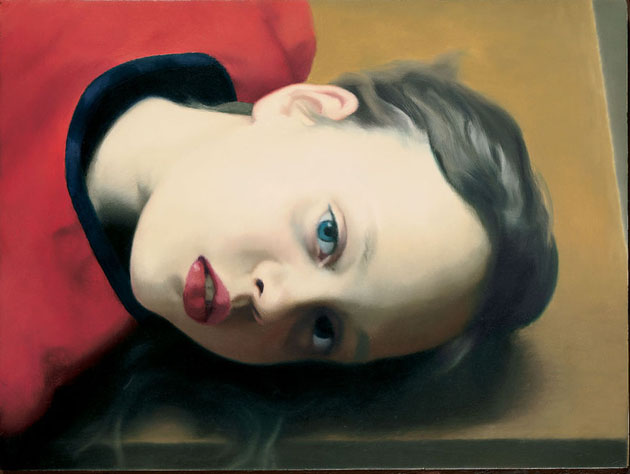
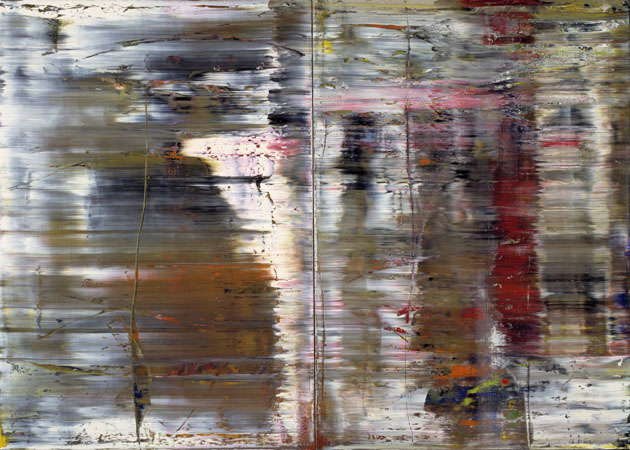
Panorama is much more than an exhibition. It is the first chronological and comprehensive retrospective arranged, thanks to the collaboration between three of the main European art institutions, to retrace Gerhard Richter‘s entire career and celebrate his 80th birthday.

After Tate Modern in London and Nationalgalerie, Staatliche Museen zu Berlin, the traveling show covering fifty years of Richter’s oeuvre – accompanied by an unmissable book with essays and interviews of international critics and curators -, is now on view at Centre Pompidou in Paris and will run until the 24th September.

The versatile artist, born in Dresden in the former East Germany in 1932 and moved to the West during the 60′s, is widely regarded as one of the most important painters at work today. Well known for his ability to reinvent and transform his art, Richter has worked with traditional and new media. With sculptures, drawings, photographs and by painting over photographs, he is still – and unconventionally – remaining loyal to painting as a timeless way of expression: «painting is one of the most basic human capacities, like dancing and singing, that make sense, that stay with us, as something human».


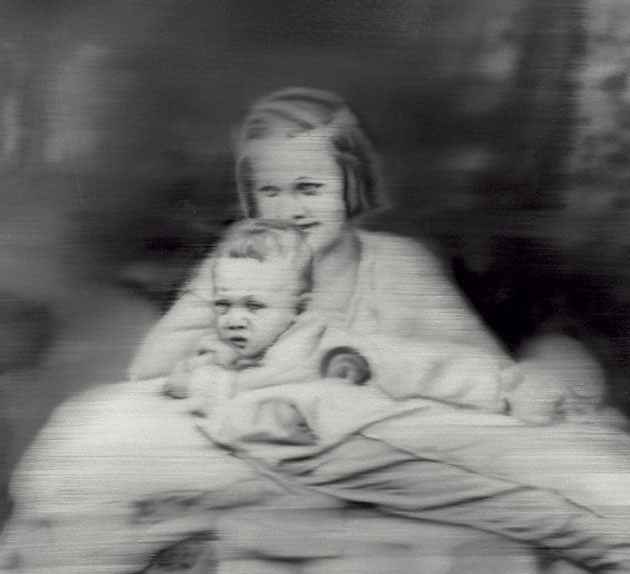
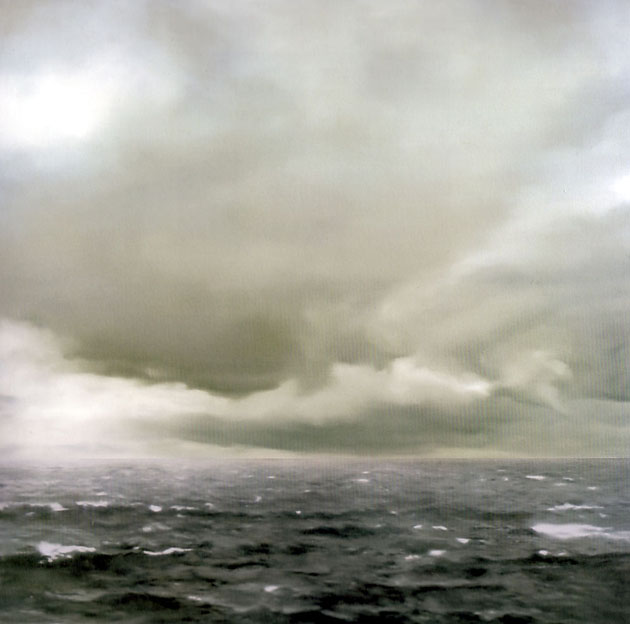
Many previous exhibitions have been devoted to the German Master until today with the aim of plumbing the depths of his work and focusing on different aspects of his research, but, as stated by the title in itself, this show wants to go beyond. Including the so-called Photo-paintings, figurative and abstract works, land and seascapes, glass sculptures and mirror works, drawings and photographs, portraits, Greys and Colour Charths, Panorama encompasses the whole archive of Richter’s achievements.

Gerhard Richter’s retrospective helps to underline his artistic transitions: producing paintings through the use of an episcope on the basis of his own photographs, erasing figurative paintings by covering them with a layer of gray paint or using painting as a way of inheriting a tradition and revealing his own intimacy and historical experiences. From the 60’s to today the artist has been placed in the camps of minimalism, conceptual and political art, passing through the emergence of abstraction, always following his idea of letting a thing come, rather than creating it.

Gerhard Richter: Panorama at Centre Pompidou is curated by Alfred Pacquement, Camille Morineau and Lucia Pesatane, with colleagues in London (Nicholas Serota and Mark Godfrey from Tate) and Berlin (Udo Kittelmann and Dorothee Brill at Staatliche Museen zu Berlin)

Monica Lombardi

10/06/2012

Sunday Breakfast by Love For Breakfast

Sunday Breakfast by Love For Breakfast

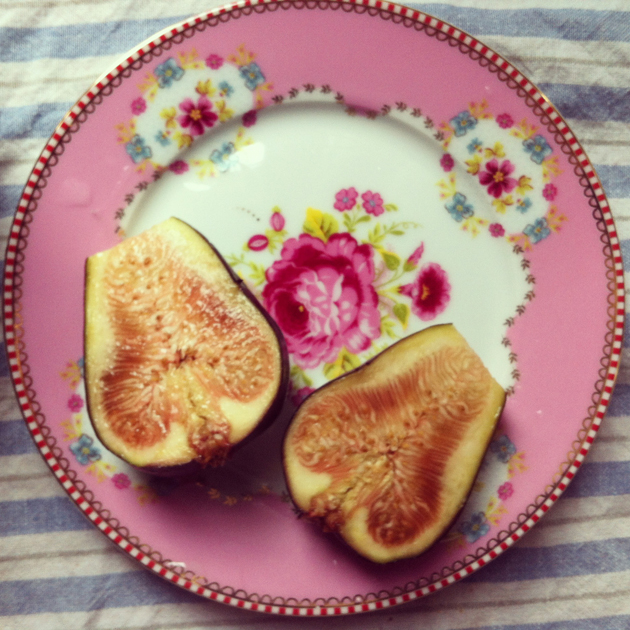
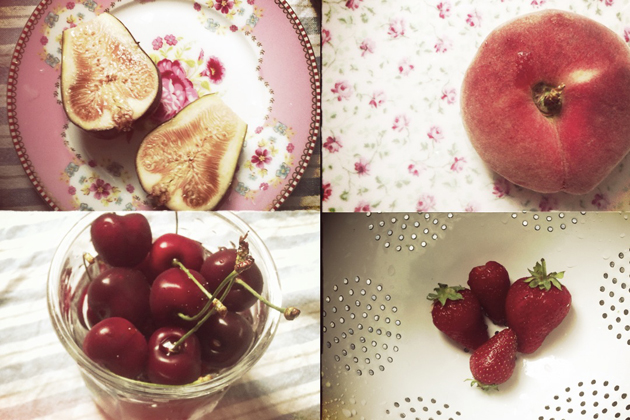
It’s the time of perfumes and sweetness. It’s the time for summer fruits. It’s the time to warm yourself in the sun to start a new day.

Alessia Bossi from Love For Breakfast

08/06/2012

Eyebrows – A Trending Detail

Eyebrows – A Trending Detail

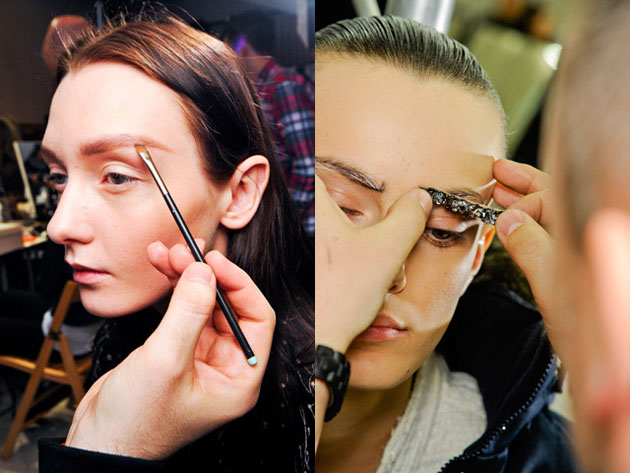
Every season the major trends are presented on the runway, and as most trends, quickly trickled down, adapted and redefined to garments sold to the big masses through department stores. Together with these, there is the staging of the minor ones – the details making the look. These trends are for sure carried out to all levels of the market as well, but might claim a bit more work than a simple buy, and at least momentarily they tend to be a permanent change in a person’s everyday look. This season and even more so for Fall 2012 it’s the eyebrows calling for attention, or, if one is gifted with large, dark and rather rough ones – no attention at all.

Just like the dip-dye and bi-coloured hair trend, eyebrows have been trending and growing over the past seasons. From the thin, super shaped “Kevyn Aucoin 90’s eyebrows” all the way to fuller and less well defined ones. Looks rarely come out of the blue – they are a logical evolution from a forerunner, a way to express a cultural drift or a response to changes in the society.

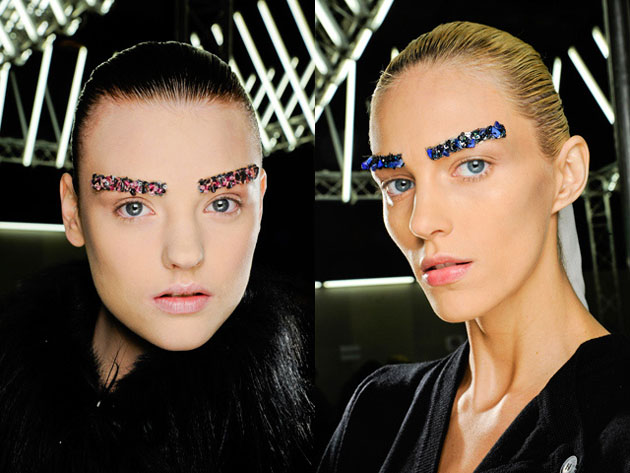
Eyebrows might seem like an insignificant thing in the whole trend discussion but the fact is that they often do a lot for the total look, answering to the demand of change. The non-perfect, thick arches are often associated with a feeling of youth, as well as they contribute to a carefree, “wake-up-and-walk” look. In opposite, we have throughout previous seasons also seen the bleached out eyebrows creating a much more dramatic act and referencing to a different type of appearance. For Fall 2012, several fashion houses presented magnified eyebrows. Brushed up at Chloé, deep dark and enlarged at Missoni to the striking, Maison Lésage crystal and pearl embroidered stripes used at Chanel, among others.

Micro-trends and the different ways of “carrying” the eyebrows are presented, and the magazine editorials add other aspects to the trend as it develops. With quite radical changes occurring every ten years, the current eyebrows might pave the way back for the fine, concealed and penned-out ones, which have already been seen on a few runways. Every trend needs the appeal of “newness” and with a few more rounds on the large scale, extreme or natural, it wouldn’t be more than expected that someone steps out and takes it back to the minimal.

Lisa Olsson Hjerpe

08/06/2012

The Obsolescence of Magazines

The Obsolescence of Magazines

Recently a young, but soon to be important, curator declared that he didn’t like magazines. He backed the statement explaining that an article in a magazine is not long enough to engage in a profound discourse nor relaxingly short. He prefers reading books when it comes to knowledge and 50-word blog posts when it comes to news and trends. 
If he was the one predicting trends involving printed ephemera, the statement would clearly be that magazines are long dead. At least the printed ones.


On the contrary, a recent article published on The Guardian’s website states differently. The article reports about a survey whose final results indubitably show that people still prefer reading printed magazines than their digital versions. Should we be surprised?

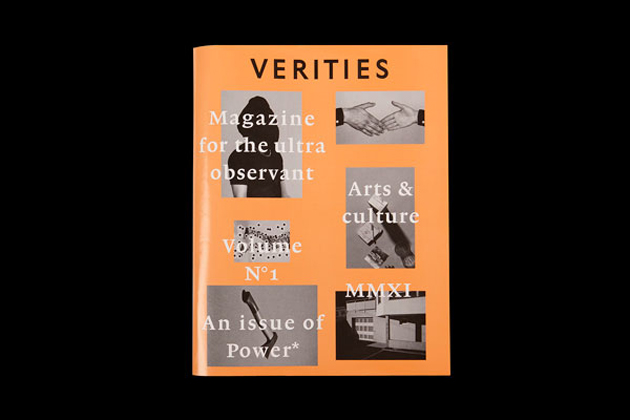
Even if the young curator won’t maybe ever waste his time reading one of them, some excellent magazines have been coming about lately. One of the newest on the list, currently presenting its second issue, is Verities – a magazine about art and culture. The bi-annual magazine has, since its foundation, stated it was a publication “of thought, observation and reflection giving equal focus to visual arts and literature”. The second issue of the magazine, entitled “The Muse Issue”, happily mixes literature, art, critique and theory in chapters titled “Observations”, “Inquiry” or “Studies”.

Verities isn’t the only one treating their readers with esteem and intelligence. The trend among independent publishers who started as ‘producing lovely magazines’ is gradually shifting towards ‘making culture’. Even though the trend part may still be included in the package, the shift in content is highly appreciated. Hopefully not only by magazine geeks.

Rujana Rebernjak

07/06/2012

The Greek Fashion Crisis – An Introduction

The Greek Fashion Crisis – An Introduction

We’ve all read the papers, Greece is a country on the verge of a financial breakdown. Naturally the effects on the national fashion industry have been dire and many designers have been forced to shut down their business. In a short article series on Greek Fashion, we will investigate the recession’s effect on fashion through interviews with industry insiders.
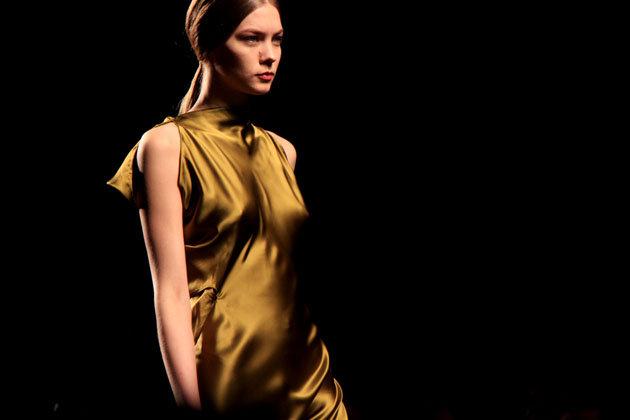
Greece was one of the countries that experienced a hard time recuperating from the international financial crisis a few years back. In early 2010 the Greek government was exposed for having had one too many fingers in the budgetary cookie jar. Soon after, Greece and its fashion industry were depending on loans, credits and the goodwill of the struggling couturiers for survival.

Greece as a fashion nation has within the last decade produced a handful of designers who have been influential on an international scale. Among them, Sofia Kokosalaki who designed ceremonial costumes for The Summer Olympic Games in 2004, Angelos Bratis who became Vogue Italia’s “Who Is On Next”-talent in 2011, and an accessory brand Persephoni who have been recognized by magazines such as Vogue.

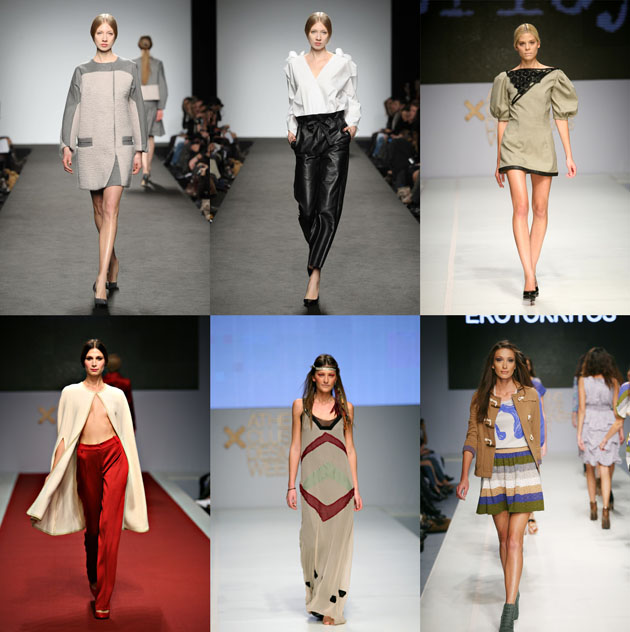
Tonia Fouseki, head of the organizing committee of AXDW – Athens Xclusive Design Week, believes that the Greek designers need Governmental support in order to overcome, but insists that there is enough talent within the nation to constitute a competitive force on the international fashion scene.
So Tonia, how would you describe Greek fashion? In what ways does the Greek fashion aesthetics differ from let’s say French and Italian Fashion?
Greek fashion is represented by dynamic and creative designers and has already exported great talents abroad that have managed to stand equal to international fashion houses. Some of the characteristics that make Greek Fashion aesthetics different are the rich color palette, the ethereal textiles and lines and the patterns inspired from ancient Greece.

The fashion industry worldwide has exploded during these last ten years, how has the Greek fashion industry progressed?
Greek Fashion industry has been progressing along with international fashion industry, but has not developed that much due to the small size of the local market and the financial difficulties. Another problem that Greek designers face is the lack of governmental mechanisms that can contribute to the transition from a small atelier to a massive production label and to the export of their work abroad.

Does the Greece fashion community mainly consist of traditional fashion houses, or are newcomers given a chance to show their capability?
At this point, many traditional fashion houses are shrinking in the local fashion community, and on the other hand flexible newcomers with new, modern ideas that offer another point of view to fashion by using innovative materials and forms have gained lots of followers in media, buyers and consumers.
What happened to the Greek fashion industry when the economy started to collapse?
The Greek fashion industry was one of the fields of economy that was damaged the most from the financial crisis. The whole industry faced delays in payments, many shops and boutiques closed down and collections still remain unsold. Designers started to restrict their expenses by moving to smaller venues, by producing smaller collections and by cutting off the most of their promotional activity. Also pricelists have been reconsidered due to the new reality.

In what ways does the fashion industry work in times of financial difficulties?
Cash flow reduced greatly and the whole market works with loans and credits. Many Greek designers are trying to work with stores abroad and collection prices have been reduced in order to be competitive. Consumers are more demanding and asking for value-for-money solutions.

What do you think about the future for Greek Fashion?
Although as a country we are facing a deep financial crisis and recession that has affected fashion industry, I think that if the creativity of our designers will be combined with the support of governmental institutions of the fashion field, Greek fashion industry will develop and follow the standards of the international fashion industry. Our organisation, at the international fashion week in Greece aims to continue to offer to Greek designers a platform through which they can showcase in their country and export and promote their work abroad.
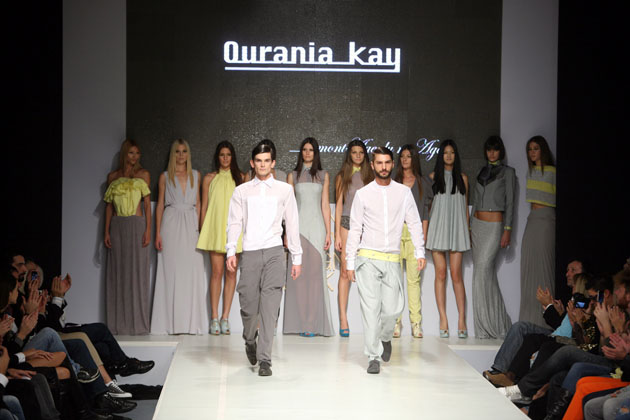
Petsy von Köhler – Photo courtesy of AXDW, The Moodit and Luca Sorrentin 
06/06/2012

Awakening Of The Rainbow Dragon

Awakening Of The Rainbow Dragon

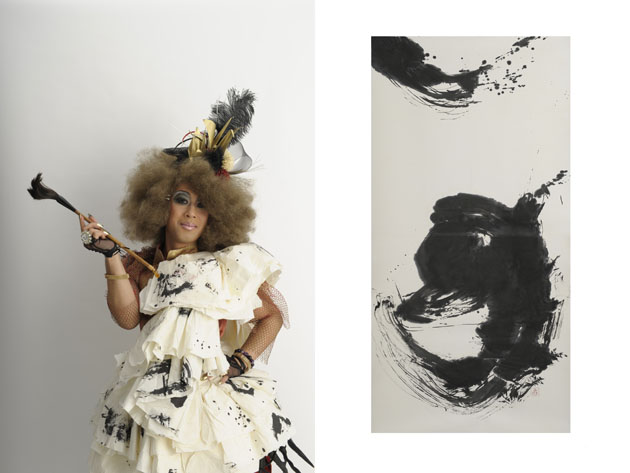
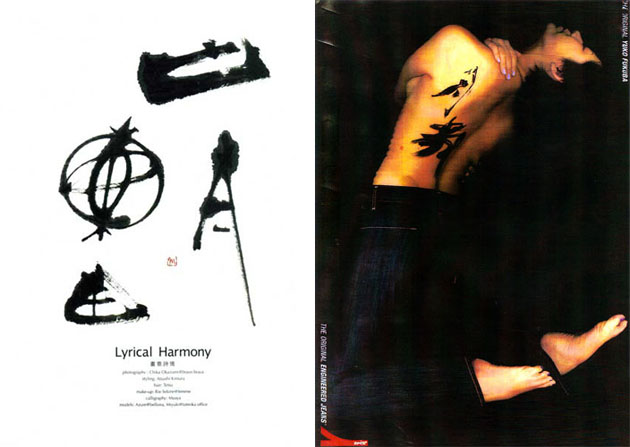
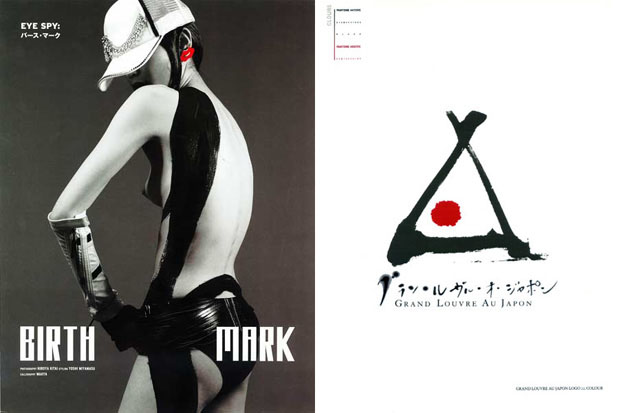
MAAYA SHO started calligraphy at the age of 6, and has ever since been developing his distinctive approach towards ancient script, originally carved on strange materials such as tortoise shells or a piece of bull scapula as a method of fortune telling more than three thousand and a couple of hundred years ago in China. The unique and beautiful shapes of the script embody the very origin of its meaning, later evolved into Kanji [Chinese character], which inspires us to imagine the ancient people’s way of living and their interpretations of the world.

His works are in Thai Royal Family Collection and his handwriting can also been found as one of the official logos of the Louvre Museum and as collaborations for example with fashion maisons and restaurant designing. His unique style ‘Queen of the art of calligraphy’ was fully demonstrated in his outstanding exhibition and performance in Tokyo last April, in which he showed his latest work Ten-Ryu Ji-Ryu I (Heaven Dragon Earth Dragon I).

The Dragon is revered and considered as the eminent spirit in Oriental culture. In his exhibition, two Dragons – Ji-Ryu is considered as a symbol of anxiety or frustration in the modern society while Ten-Ryu is a symbol of purifying and extrication – inspired us to meditate on ‘liberation of the mind’ in our age, especially after the 3.11 earthquake, which was a critical turning point in his creative life.

“After the earthquake, I couldn’t take up my ink brush for a certain while. An intense feeling was deeply engraved in my mind: ‘Tomorrow is promised to no man, it’s as uncertain as the wind.’ It was then when I decided to change my name from MAAYA to MAAYA SHO. ‘SHO’ is the term placed after your name as your signature in calligraphy. Including it as my name itself meant that I was then determined to live with calligraphy forever.”

Since then, one of his intriguing approaches came to fruition in the form of the opening of his workshop on each new moon and full moon.

“Through my workshop, I would love people to know the power that words and Kanji have, also to feel the joy of the art of calligraphy. The workshop takes place twice a month, on the day of the new moon – a powerful day to make your wishes come true – and on the day of full moon when the creative energy grows highly. In my workshop, I help people to choose one word, which could be their favourite, part of their name or my suggestion based on Kyusei Kigaku (an ancient method of Chinese fortune telling). You write the word in ancient script, which is very graphic, and the word could be seen as your lucky symbol. The process will help you meditate on people’s communication, caring mind and the purposes of life at each stage. The most potent way is to do it with positive affirmation messages. Always, in present tense.”

Every form of life starts from the present. For MAAYA SHO himself, the one word that embodies his feelings now in the Year of Dragon 2012 is ‘明’ which literally means ‘light’. In ancient script, it describes the moonlight coming through the open window.

“You know, I love happy endings.” he smiled.

Ai Mitsuda – Images courtesy of MAAYA SHO