23/11/2015

Can Design find Happiness? Sagmeister at MAK

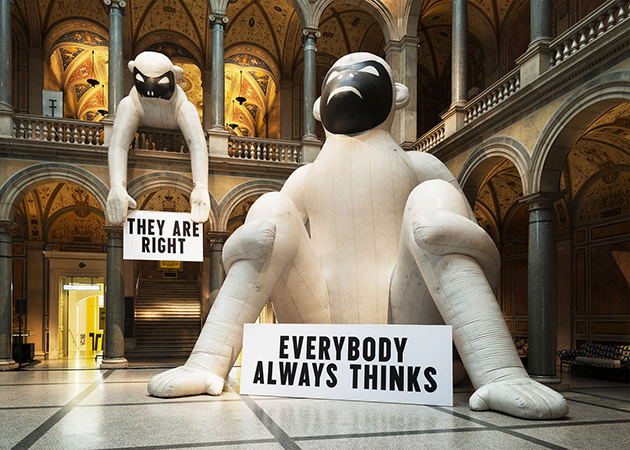
What makes us happy or at least happier? Stefan Sagmeister, the “grand master of graphic design,” embarked on intensive research into personal happiness, omitting no possible means in the process. Meditation, cognitive therapy, mood-altering drugs — Sagmeister tested everything that promised happiness on his own body and then translated his experiments into the exhibition The Happy Show, which has now arrived at MAK in Vienna after previously being on display in North America and Paris. Running until 28 March 2016, STEFAN SAGMEISTER: The Happy Show pervades the MAK with the designer’s captivating search for happiness.
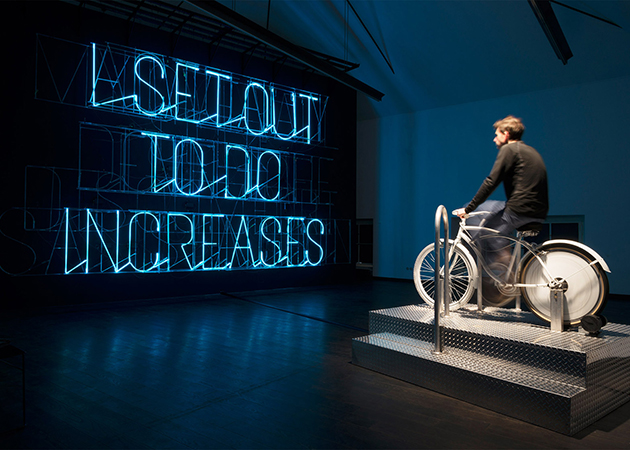
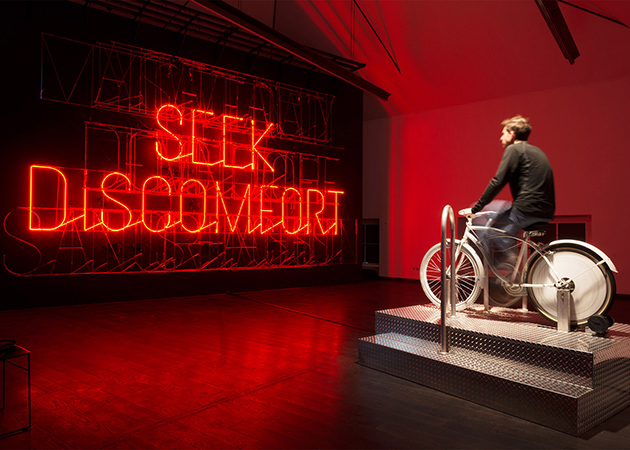
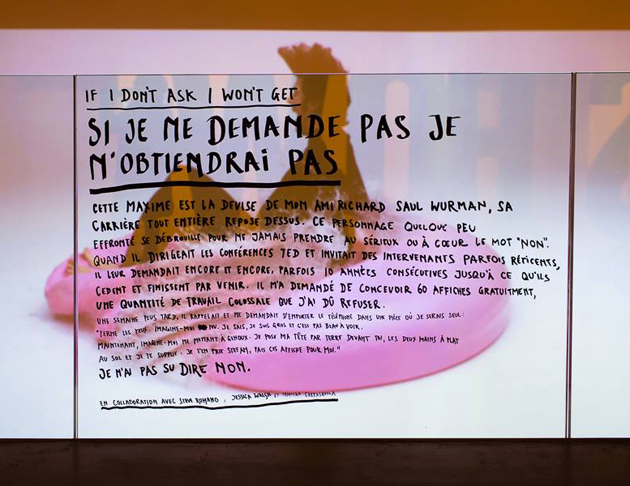
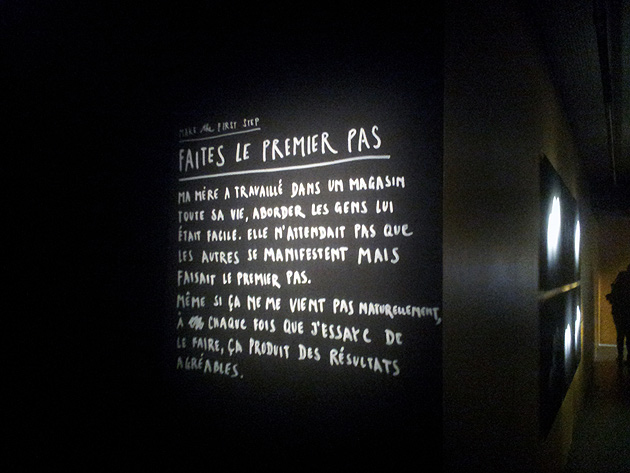
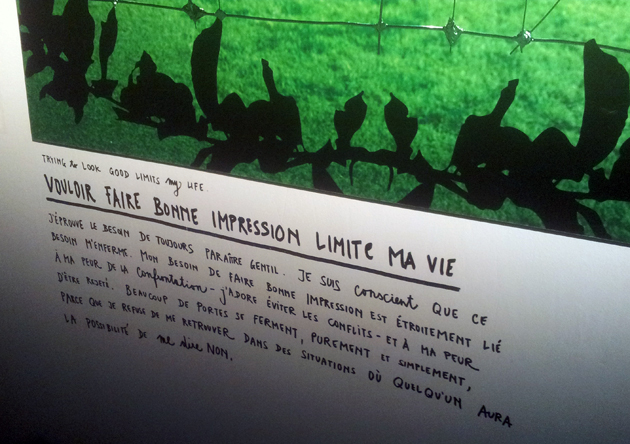
Is it possible to train the mind to be happy? Or at least happier? Can the mind be trained in the same way as the body? These are only some of the core questions in the show, which can be answered with an unequivocal “yes.” The Happy Show demonstrates quite clearly that there are things we can do that will make us happier. It all depends on our attitude, our habits, and our behavior, according to one of Sagmeister’s messages. However, what we expect will make us happier will not always do so. “I normally find definitions rather boring. But happiness is such a huge topic that it is perhaps worth a try,” is Sagmeister’s comment on his own happiness research. In handwritten commentaries on walls, railings, and in the bathrooms of the museum, he explains his ideas and reasons for the projects on display. Social scientific data by the psychologists Daniel Gilbert, Steven Pinker, and Jonathan Haidt, the anthropologist Donald Symons, and important historians, who position his experiments in a broader context, supplement his personal notes. Sagmeister addresses a colorful panoply of parameters for happiness, such as religion, money, marriage, sex, activities like surfing on the internet or reading the newspaper, as well as the relation between the number of sexual partners and levels of satisfaction.
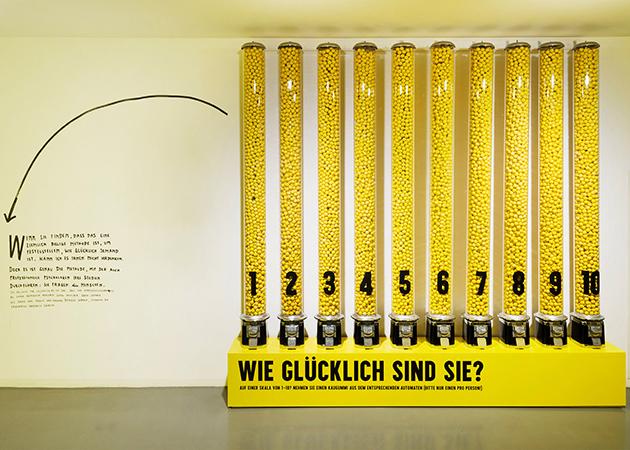
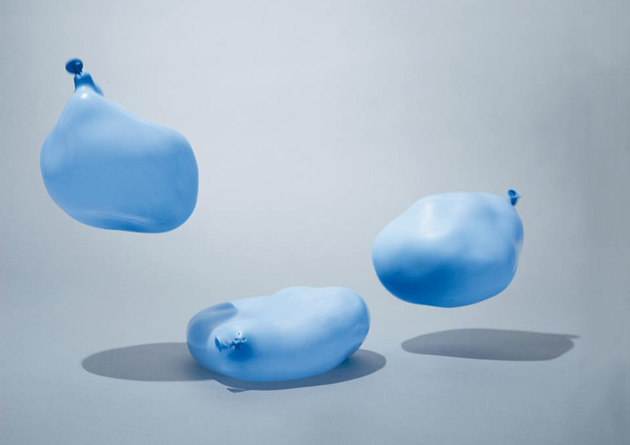
The search for a symbol for happiness will be a collective affair: visitors can push buttons, draw lucky symbols on small strips of paper, draw cards with tasks, and are invited to withdraw money from an ATM while donating 20 cents. A display with silver plates offers visitors Sagmeister’s favorite candies. At the installation How happy are you? visitors can answer with their own “level of happiness” on a scale from 1 to 10 by taking a piece of chewing gum from the respective place. In turn, this action will visualize the collective happiness level of the visitors to the exhibition.
The Blogazine 
Share: Facebook,  Twitter  
16/01/2014

Stefan Sagmeister, la recherche du bonheur

On a Parisian Saturday afternoon, a bunch of kids is patiently standing in line to enter the exhibition which has unleashed the most intense word of mouth of the French capital. What is attracting them? For sure, they are expecting The Happy Show, on view at The Gaîté Lyrique until March 6th, to answer some of the existential questions that every teenager is wondering about: what makes us happy? Is there a definition for happiness? Is being happier something I can learn? Nevertheless, they are probably unaware that they are about to discover the work of one of the most provocative creative directors of all time: Stefan Sagmeister, Austrian-born NYC’s graphic designer, who built his fame with his astonishing CD covers for the Rolling Stones, Lou Reed, and David Byrne – he is now the absolute protagonist of this carte blanche exhibit.


Sagmeister loves to follow unconventional approaches for his productions, pushing his clients into unexplored territories. In fact, his digital creations are often the result of handcrafted pieces of art, which are later on photographed and transformed into digital images and fonts. However, Sagmeister’s originality is not confined to his method: to be inspired by new ideas and experiences, he is used to taking sabbatical years to find the time to experiment with new languages, without dealing with clients’ needs and deadlines, but also to do further research, wherever it may bring him.


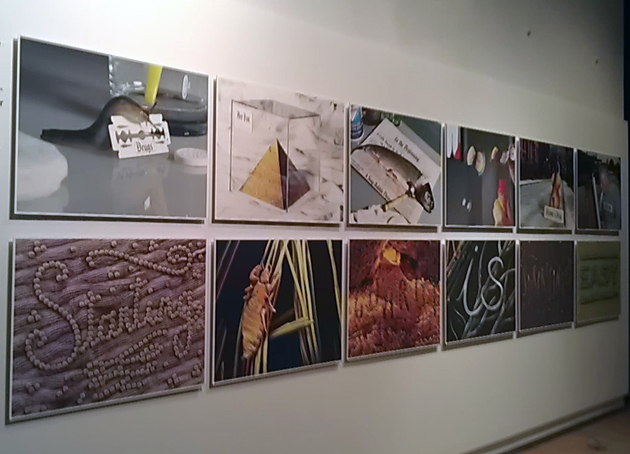
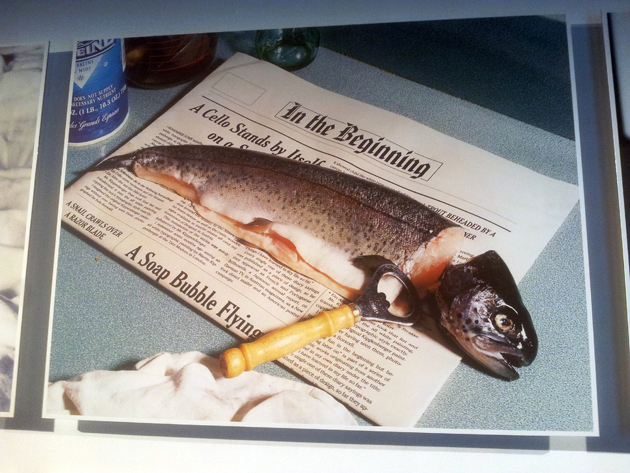
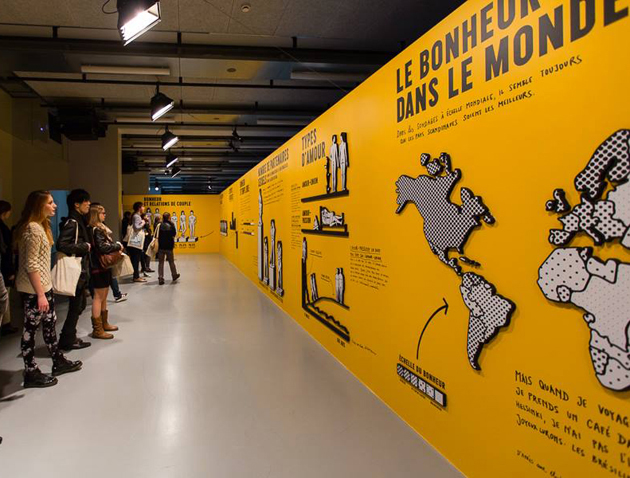
With this spirit, the production of The Happy Show begins as the artist’s personal journey into the world of meditation, drugs use and cognitive therapy: Sagmeister experiences them all and translates his insights and states of mind into a sort of journal in which he reports, through prints and images, his discoveries –the most politically correct one, at least from the point of view of the public institution hosting the exhibition, is that sex and love are a better antidote to sadness than drugs. In addition to that, Sagmeister deepens the most up-to-date studies about happiness -from psychologists such as Daniel Gilbert and Steven Pinker, Jonathan Haidt, to the anthropologist Donald Symons, just to mention a few ones- reporting their research into compelling infographics. The overall balance, at the end of the visit, is reassuring indeed: a way for happiness does exist, and even if everyone needs to develop a personal recipe, bliss is at our fingertips. It just needs to be desired and pursued.


However, this sweet build-up can’t but recall the visitor a sort of “Pollyanna syndrome”: an unrealistic, excessive optimism based on the assumption that all things will have positive outcomes, no matter the worldwide crisis or the contingent problems we are facing. Is there too much happiness out there, at least in theory? Or maybe can we get comfort from the awareness that it is not so easy to put it into practice? For those who prefer Sagmeister’s dry wit, this evidence -real or presumed- is probably reassuring.


Giulia Zappa 
Share: Facebook,  Twitter