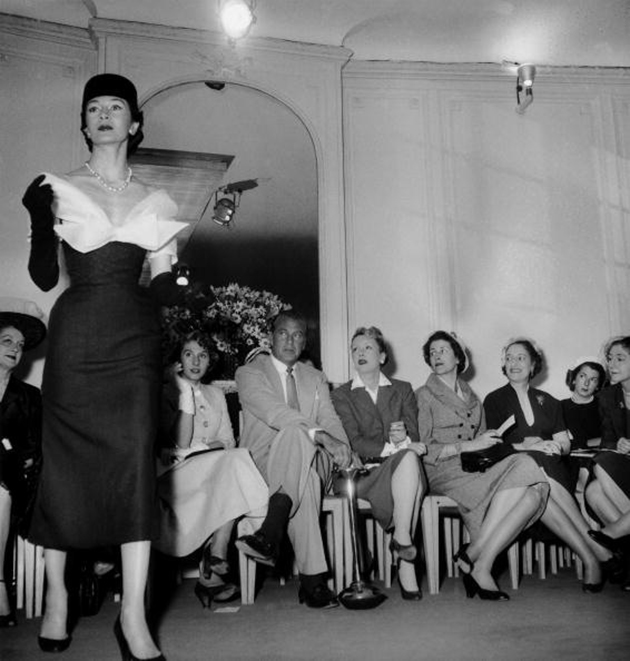
There are many words that define the moment in which fashion is publicly presented: fashion show, catwalk, runway. Between all the semantic possibilities, which involve nuances and references both to history, to the kind of movement performed – it is difficult to chose the one which is able to define what actually goes on, every six months – or, I rather say, more and more often – on the stages that fashion colonises. To pin down the term that can actually gather all the different expressions, I’d go for fashion show, which holds together the idea of an exposition, be it still or in movement, of clothes which represent a flair, a style.
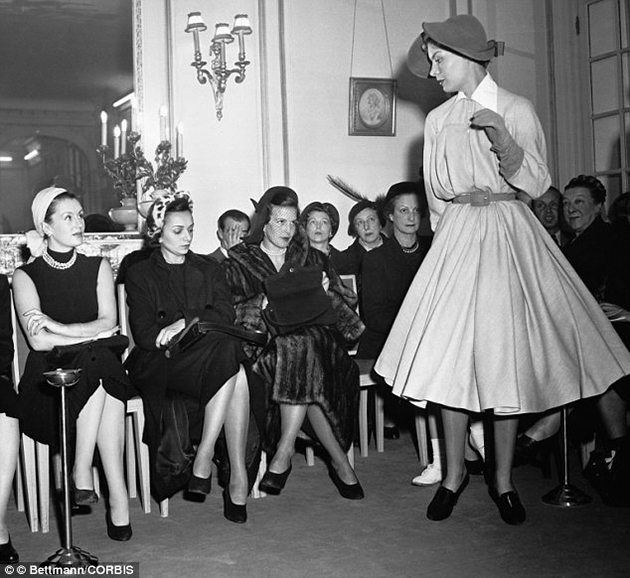
Fashion shows were actually not as ‘narrative’ as we consider them today. They were born to gather buyers and journalists and inform them of what a fashion house was producing. They are the tri-dimensional evolution of the circulation of plates and aimed mostly at enlarging the area of commercial influence. Fashion shows, for some countries – as Italy in 1951 – came up as a moment to showcase national identity; and that’s how they are seen today by the so-called upcoming fashion cities. The story behind fashion shows is complex and layered, but just stopping at the surface – that is, at their appearance as spectacle – is interesting to get some clues about the directions of design today.
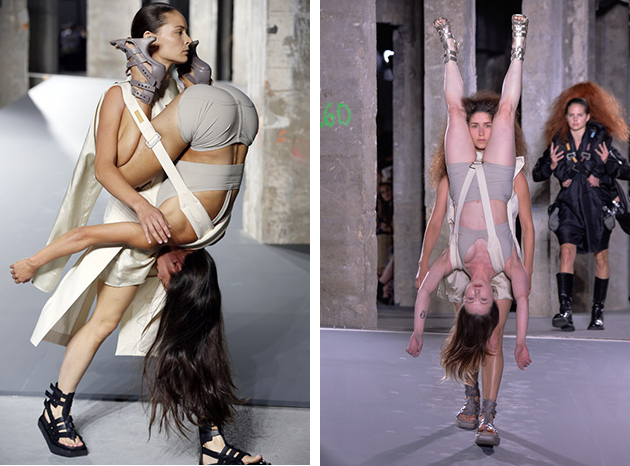
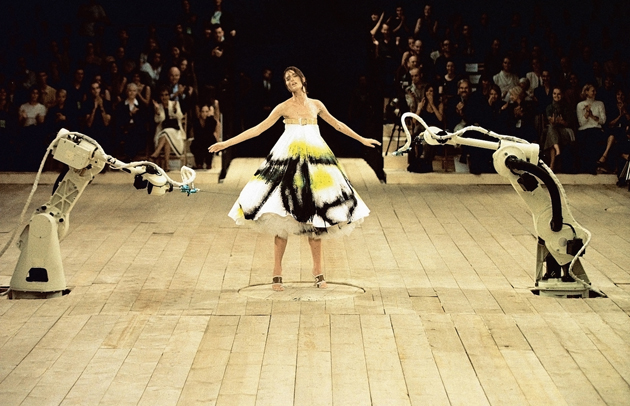
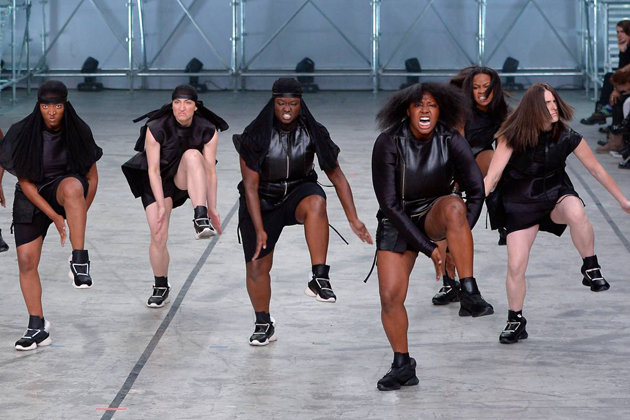
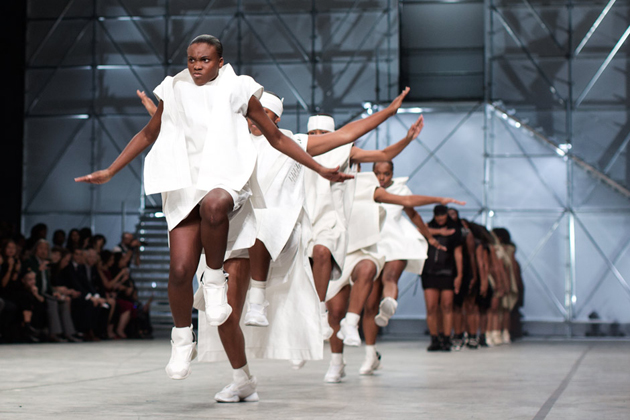
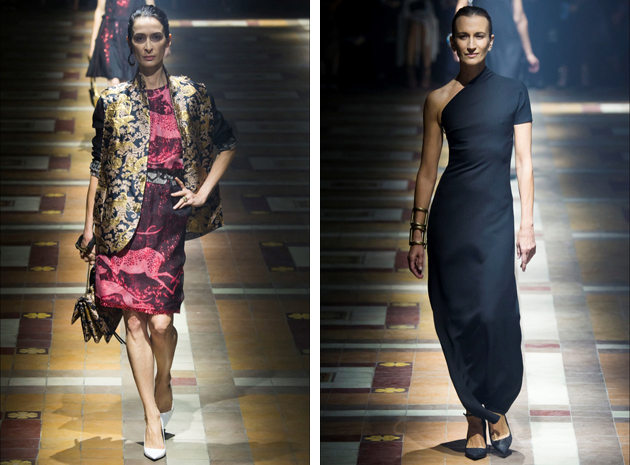
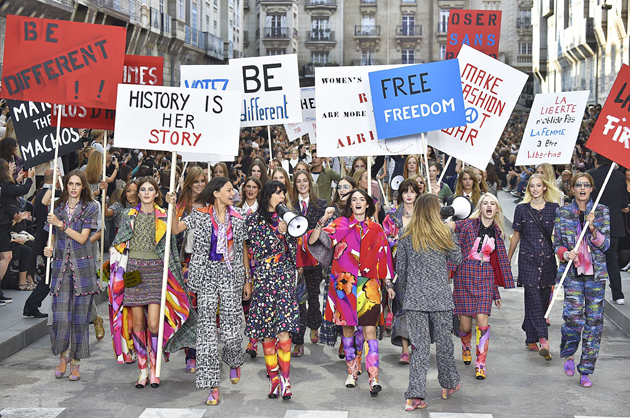
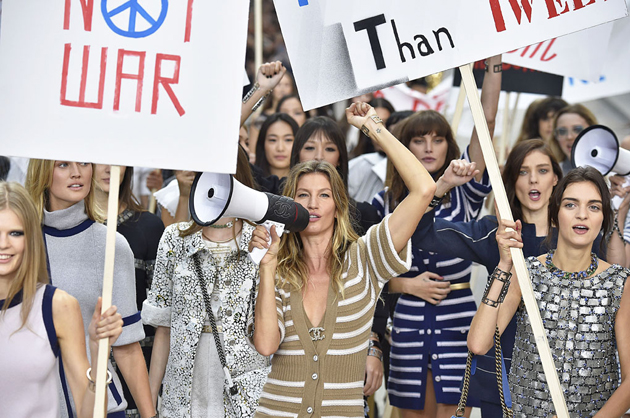
What emerged as an economic tool has rapidly become advertorial, and then opened up to the myriad of possibilities that the stage offers; and what kind of ‘animal’ are fashion shows becoming now? The question arises after the latest fashion month – and, most of all, the Parisian spot – which has pushed the boundaries between fashion show and performance art, blurring the lines more and more. While most of the shows followed the ‘regular’ format of the catwalk, just reflecting upon the space in which models had to move, some designers have exploited the potential of the fashion show as a moment highly regarded by the press and the public. Rick Owens sent out couples of models-performers bounded up, one actually ‘wearing’ the other; they were not professional models though, and their bodies were informed of their profession, and far from the typical fashion silhouette. What Hussein Chalayan did was not even a catwalk: two models standing still in the middle of a crowded room were literally showered with water, which acted like a solvent on the clothes they were wearing, revealing other clothes underneath the first layer. I don’t know if the world ‘performance’ suits these kind of events, though. It is not just a matter of ‘like or hate’ anymore: fashion shows seem to be trying to become a meta-narrative operation, which waits for the reception and above all for the participation of the public to be complete. Nevertheless, they still portray something that is neither replicable nor empathic, and they present a reality that is true just within the border of fashion experimentalism. The participation of the public is surely central, above all considering the impact of social media not only on fashion as a show, but also on fashion as a product, but the positions and hierarchies are still very defined.
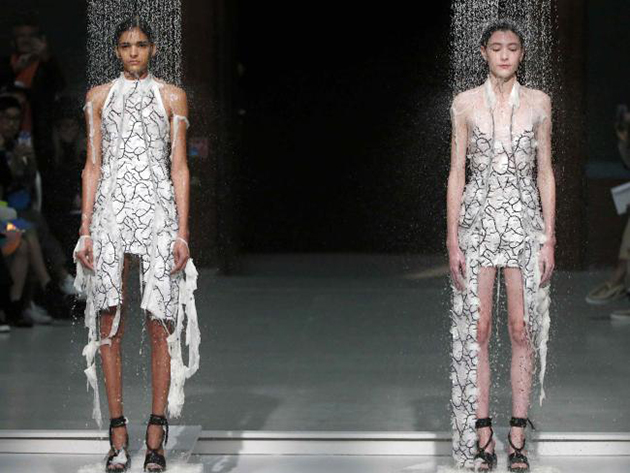
What is negated by these very actions that fashion practitioners are staging is indeed the materiality of fashion; it is not an economic matter anymore: fashion is a pretext to produce actions that surely do not want to be a mere showcase, nor they are meant to be just for a public of professionals; but also, they are not just highly ‘instagrammable’ moments, which get their value by the number of thumbs-up they receive on social networks. Even if, in the Chalayan show, clothes are actually the centre, we are not looking at them as a product, but as part of a process, a metaphor for the intricate relationship between instability, change and authenticity. The core problem is, then, what role do clothes have in this evolution of the runway? Does their design match with the shape of their presentation? Does it come before or after the idea of the show? What is clear is that these operations are re-defining the meaning of fashion itself as a wide platform in which clothes are just one of the elements that define design as a practice, and design as a spectacle.
Marta Franceschini