14/01/2013

Francis Alÿs | REEL-UNREEL

Francis Alÿs | REEL-UNREEL

It was more than one year ago since we first met Francis Alÿs’ work. We were at Kirschgarten Haus in Basel and the Belgian artist (b. 1959 Antwerp) – who moved to Mexico City in 1986 where he chose to become a visual artist – dressed the part of collector and art curator showing his unusual, fetishist, somehow obsessive, but absolutely unique and amazing collection of amateur and professional reproductions of Jean-Jacques Henner’s 1885 portrait of Saint Fabiola.
After travelling around the world with the retrospective Francis Alÿs: A Story of Deception, which was displayed at Tate Modern in London, Wiels Centre d’Art Contemporain in Brussels, The Museum of Modern Art in New York, and MoMA PS1 in Long Island City, New York; and after been featured at dOCUMENTA 13, the works by the international artist are now on view at David Zwirner Gallery in New York with his solo show REEL-UNREEL (title from the video of the same name presented in Kassel).

Francis Alÿs’ projects come from his daily observations of events and situations taken from the street. Using different media – photograph, video, installation, drawing and painting – the versatile artist depicts the surrounding reality in different perspectives, sometimes apparently insignificant, but always connected with economic, political and social issues emerging in urban dimensions and analysed with a personal and poetic approach. Through the repetition of ordinary actions, such as children’s games (to which he dedicated a long series of movie), the artist focuses on anthropological themes related to immigration, urban development, modernisation and cultural preservation, conformism and human failures.
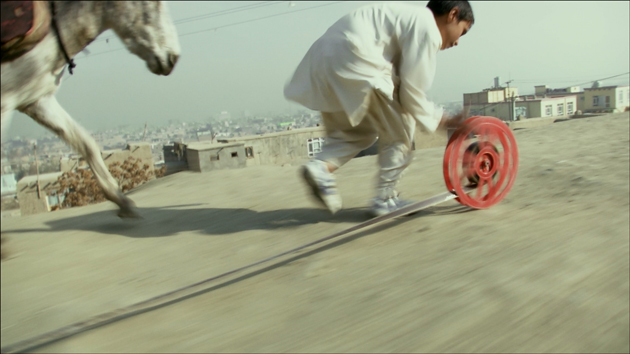
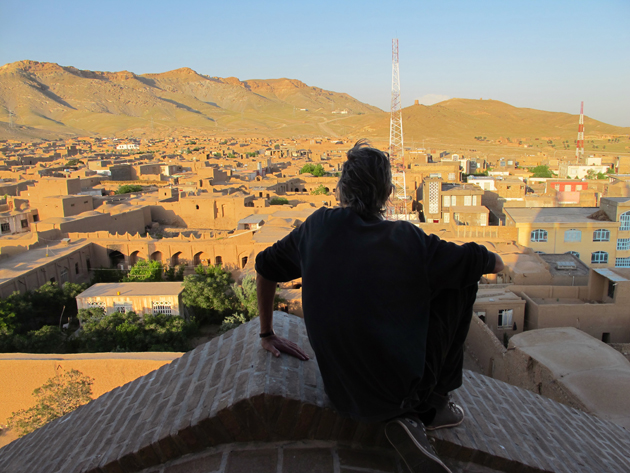
In REEL-UNREEL, Kabul, Afghanistan (2011), the twenty-minute video created in collaboration with Julien Devaux and Ajmal Maiwandi, Alÿs shows two Afghan children, who keep a film reel – instead of the classical hoop – in continuous motion from the hills, through the old city and the downtown market area of Kabul to the opposite hills, one boy running and unwinding the strip of film, while the other follows him, rewinding it. The game repeatedly goes on until the film turns up in a small fire on the street that breaks it and the reel falls over a cliff, which overlooks the city. The movie, giving a symbolic value to small and simple gestures, refers to the Kabuli fire of 5th September 2001, when Taliban set fire to the Afghan reel archive and it has mostly to do with the lack of respect for heritage and cultural places, which needs to be preserved.

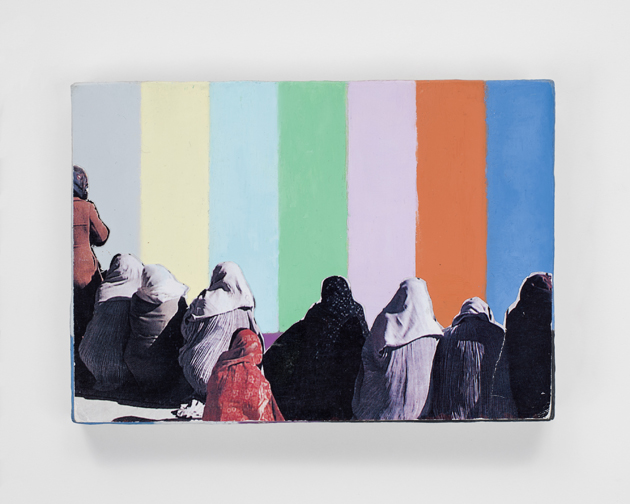
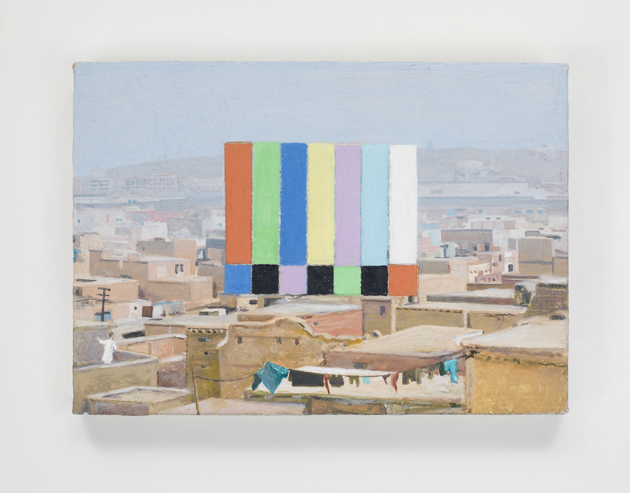
The exhibition presents also a series of canvases of colour bars, painted during the preparation of the video in Afghanistan, which are characterised by bright strips reminding TV test patterns that cover part of the represented daily scenes and help the artist to take some distance from that heavy experience. “I needed to step out of it (…) I cannot paint violence” said the artist, who constantly turns his attention to contexts in which he is both stranger and active player.

REEL-UNREEL show will run at David Zwirner’s 525 West 19th Street spaces in New York until 9th February 2013. Many thanks to the gallery staff for its availability and kindness.

Monica Lombardi

13/01/2013

Sunday Breakfast by Love For Breakfast

Sunday Breakfast by Love For Breakfast

As children we learn that we are not allowed to play with food. As adults we forget about that.

Alessia Bossi from Love For Breakfast

11/01/2013

Rem Koolhaas For Venice Architecture Biennale

Rem Koolhaas For Venice Architecture Biennale

The rumours had it for quite some time now that Rem Koolhaas would have been appointed as the director of the next Venice Architecture Biennale, to be held in 2014. Well, finally, Paolo Baratta, the Biennale’s president has confirmed it. On a press conference this Tuesday he finally announced that this architecture superstar will be, hopefully, taking one of the most important events in contemporary architecture somewhere really interesting.

While everyone is copy-pasting the press release that announces Koolhaas saying “We want to take a fresh look at the fundamental elements of architecture – used by any architect, anywhere, anytime – to see if we can discover something new about architecture.”, we cannot but dive in the work he has done in more than 40 years of his practice, and imagine what he might surprise us with.

Rem Koolhaas became widely known, and critically acclaimed, with his book “Delirious New York”, which traced his future path in considering architecture as a means of critical reflection not only on design as a profession, but also on the society as a whole. Hence, besides his architectural practice OMA (founded in 1975 together with architects Elia Zenghelis, Zoe Zenghelis and Madelon Vriesendorp in London), he also opened AMO, an off-spin of his studio involved in research and investigation. Published works like S, M, L, XL or “Project on the City” have clearly countersigned Koolhaas as one of the most influential thinkers of our century.


That is why after Sejima’s inspiring but yet a bit cryptic Biennale in 2010 and Chipperfield’s 2012 Biennale dealing almost exclusively with architecture as professional practice, next year’s edition might actually manage to connect different areas of our society that intersect in architecture. Hopefully it will manage to bring the Biennale to a new level, out of the grasp of professional practitioners, theorists and critics, offering to the wider public the possibility to understand why and how architecture impacts our lives.

Rujana Rebernjak

10/01/2013

At the Going Down of the Sun

At the Going Down of the Sun

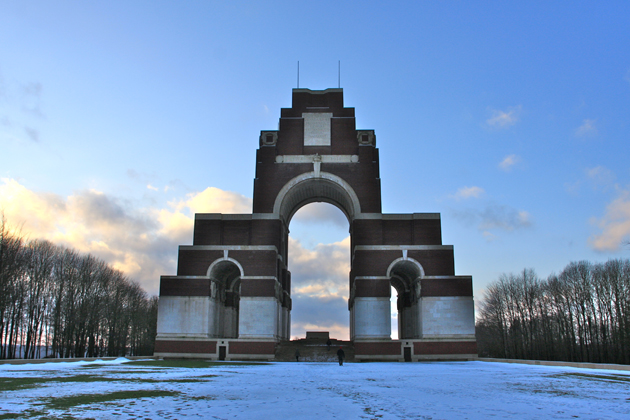
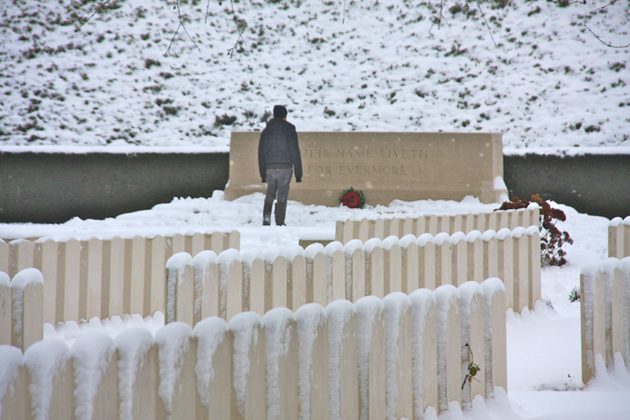
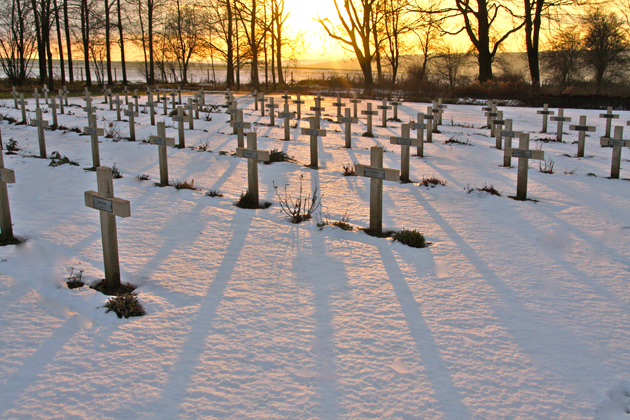
The one thing you don’t expect, that takes you completely by surprise, is the beauty. As your heart pounds and your vision is distorted by misty eyes, you find yourself just standing and staring, silently, at gravestone after gravestone; white monuments against a brilliant white ground. And it’s stunning.

Encased in snow during winter, the battlefields of Belgium and France need to be experienced. Almost every family has a story from the Great War – a relative, a memory – and coming here gives those stories meaning, gives history some context. The Menin Gate, Hill 60, Polygon Wood, each memorial has its own significance and whether you travel by car, bike or foot, being here really helps you comprehend the enormity of it all.


From Tyne Cot Cemetery you can see where the 1917 Battle of Passchendaele began and ended. Once a mess of quicksand, the sloped ground now holds thousands of immaculate graves, each engraved with an epitaph that’s simultaneously poetic, incensed and tender. “Would some thoughtful hand in this distant land please scatter some flowers for me”. “He is not dead for such as my noble husband lives for ever”. “Another life lost, hearts broken, for what”. Beyond the graves is a wall covered in 33,000 names belonging to soldiers missing in action. Never found, never buried, but remembered.

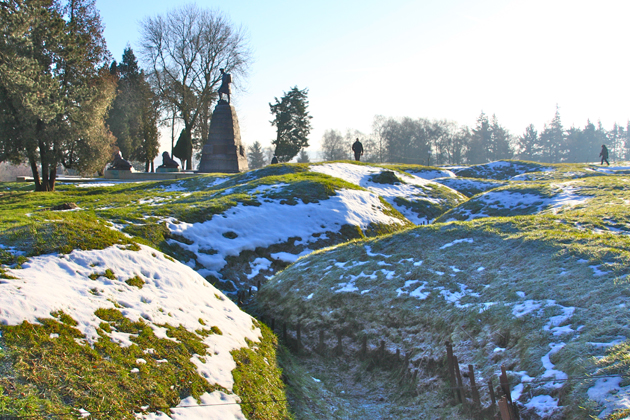
Even the smallest sites prove meaningful. At Fromelles Australian troops had their first and most disastrous encounter on the Western Front. Understandably, the memorial here is simple. 410 Australian soldiers sharing two gravesites, marked by a large paved cross. Each soldier has a rose bush growing around the outside of the plot. On a larger scare there’s Newfoundland Memorial Park, a Canadian memorial filled with grass-covered trenches. Wandering through these you come across a small cemetery where many graves are shared, Private and Corporal buried together. Reading the stones certain things strike you – the ages of those fallen and the fact that so many simply state “A soldier of the Great War Known Unto God”.


At Lochnager Crater, the site of an explosive-packed mine that was detonated on July 1st 1916, the first day of the Battle of the Somme, a lone bench overlooks the surrounding snow-covered fields. Flat, seemingly barren and freezing, looking at this land, it’s almost possible to imagine the bleakness of a wartime winter. Beside this bench stands a poppy-covered cross, made with wood from Tynesdie in the UK, symbolically honouring the British who fought here.

Among these battlefields, history is very much alive. But it’s not necessarily just the cemeteries or memorials that remind you of this. Instead you realise when you walk past a freshly plowed field and inevitably spot the smallest piece of aged shrapnel. As locals are quick to point out, you don’t need to dig very far to find something.


Liz Schaffer – Photos Liz Schaffer & Angela Terrell

09/01/2013

It’s All About Knit, Match And Fix

It’s All About Knit, Match And Fix

Ex Central Saint Martins student, the talented Shao Yen has worked alongside names such as Hussein Chalayan and Alexander McQueen. Taiwanese of birth, he does not betray his good asiatic traditions in being able to work and assemble disparate fabrics and materials: nylon, cashmere, lycra and copper. Urban knitwear that mixes in a convincing potpourri sporty attitude and whispered eroticism. In short, there are not many young designers who can say they’ve created a bespoke suit for the legendary Björk.


Tell us something about your life in Yilan. What do you bring with you around the world and which suggestions do you impress in your creations?
Yilan is a very simple and friendly city. I grew up there, so whenever I return, I feel at ease. I think I have gained the love of nature and a kind of relaxing attitude towards life from my time there, which I think I carry within me wherever I go and when I create.

You did some interesting internships at Alexander McQueen and Hussein Chalayan. In which way their kind of touch, their poetry and style have influenced your fashion approach?
Apart from their influential work, I was most impressed with their passion and attitude for work. My experiences at their studios also made me realize how hard this industry could get even for notable designers like them.


What is your idea of Woman?
Fashion is about the exterior, but a woman has to have the confidence and wisdom to manage what she’s wearing. I hope my designs will offer more imagination for a woman to re-create herself.

Knitwear and embroidery, mixing materials and matching surfaces: when practice becomes an integral part of garments. What does it mean for you?
Although they might be labour and time consuming, these techniques allow designers to have more room for innovation. The experimentation with fabric or textile is something I always want to keep in my designs.

Just a curiosity: what a stunning and mind blowing honor has it been designing a dress for Björk?
She is such an inspirational artist and she always keeps pushing the boundaries of art and music. I’ve been a big fan. So having this opportunity is like a dream come true for me.

Antonio Moscogiuri Dinoi

08/01/2013

Can Design Affect Education?

Can Design Affect Education?

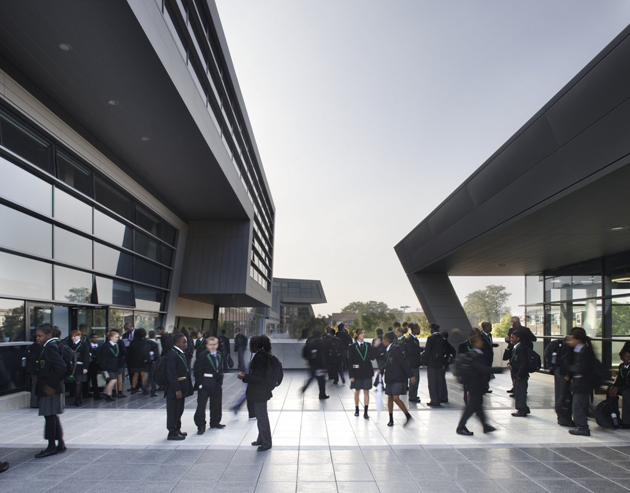
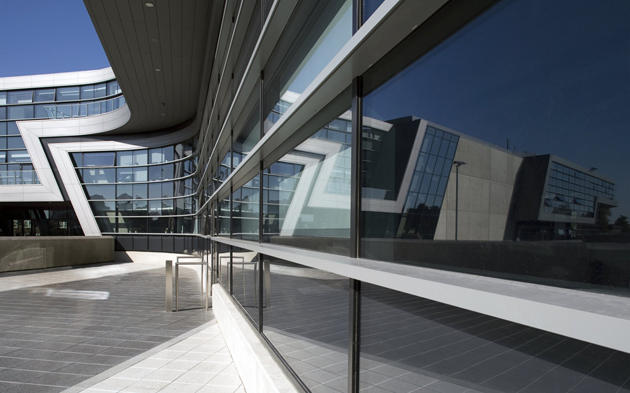
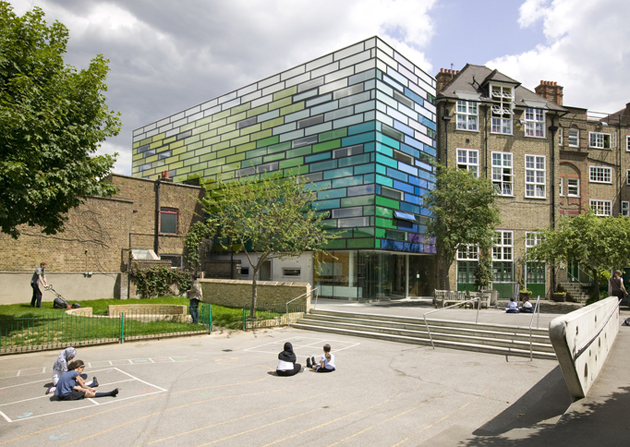
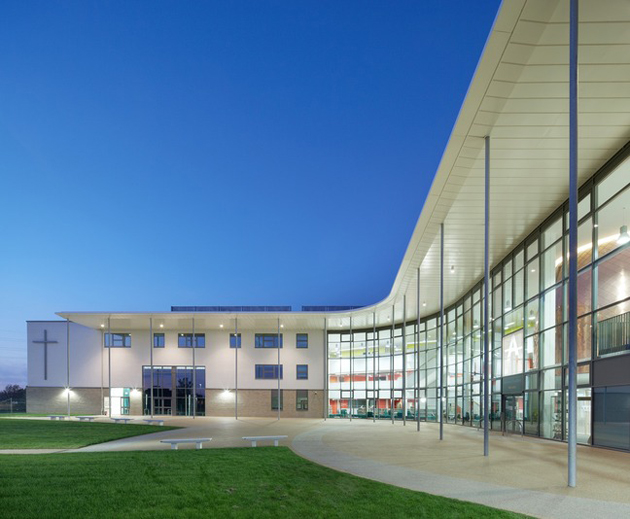
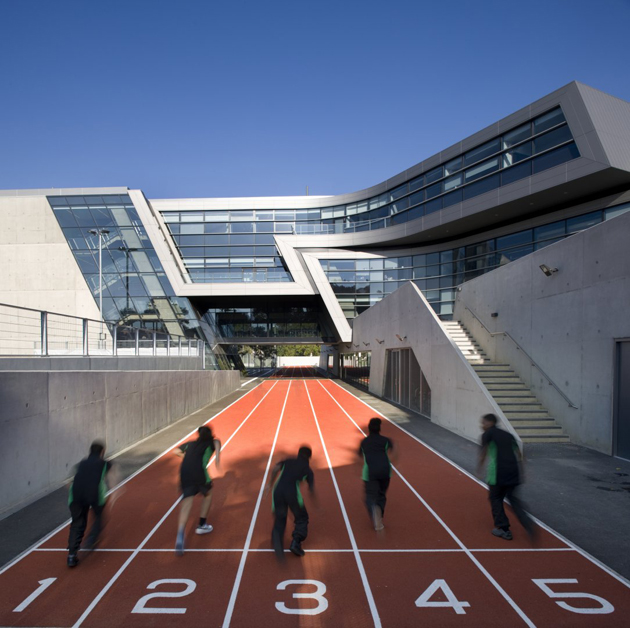
A few months ago UK government’s education secretary Michael Gove has announced new guidelines for educational architecture. The guidelines state that there should be “no curves or ‘faceted’ curves, corners should be square, ceilings should be left bare and buildings should be clad in nothing more expensive than render or metal panels above head height, as much repetition as possible should be used” with the obvious goal of diminishing the government spending on school building costs. While we can all agree that no government’s money should be spent on architectural extravaganza, we should take a step back in the process and try to understand what design is, or should be, all about.


Despite the fact that it has become commonly associated with all sorts of stylish products and luxury buildings, architecture and design do have a strong social and cultural purpose at their base and, if used well as an instrument, can help our lives become a great deal better than we could even imagine. Even though we might not get that far and state that “the simplified design guidelines are the architectural equivalent of feeding children McDonald’s every day”, as one of the architects protesting about the proposal has stated, there still seems to be plenty of space to offer a re-evaluation of the significance of architecture in our lives.


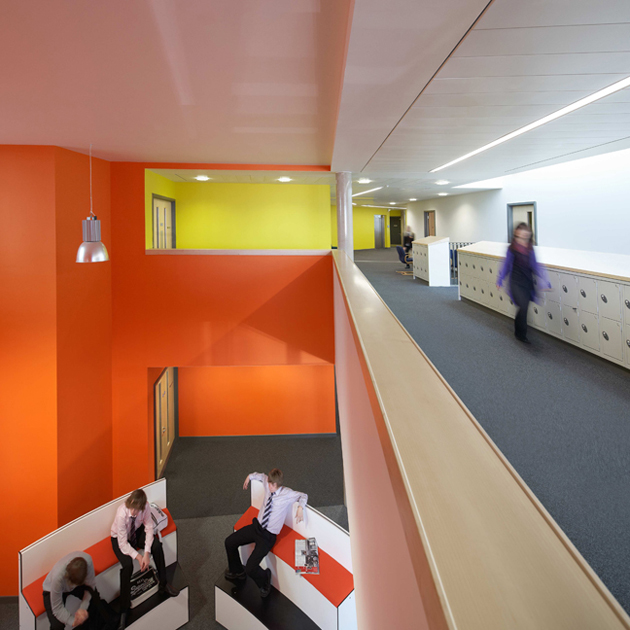
In fact, a recent study has found that “well-designed classrooms could improve pupils’ progress in lessons by as much as 25%”. Besides the practical implications of narrow corridors and small classrooms that might make both students’ and their professors’ environment a bit less pleasant and more difficult to manage, there seems to be some obvious evidence of the relation between educational environment and learning progression. The Salford study has found that the following principles affect most the brain functions: how “natural” it felt to be in the room, the extent to which the room felt individual to its occupants, and whether it stimulated them. It might not seem much or very revolutionary, but it is clear that a well-designed school does make a difference, and not only from an aesthetical point of view. While anyone might argue that design equals more money, we must strongly disagree. Good design actually implies that maximum result could be obtained even on a tight budget while also having “a truly positive effect on the way children learn”. Some reasons for Mr. Gove to maybe seriously reconsider what design is all about.

Rujana Rebernjak

07/01/2013

DAVID CLAERBOUT | Finissage

DAVID CLAERBOUT | Finissage

This is the last week to see the first solo show in Italy by David Claerbout (b. 1969, Kortrijk, Belgium) arranged at Mart, The Contemporary and Modern Art Museum of Trento and Rovereto, which will run until 13th January 2013. The exhibition, overseen by Saretto Cincinelli, — showing once again the non-expected research activity carried on by the renowned Italian institution — presents an overview of the international Belgian artist, who might still be less recognised in our country but, for sure, deserves to be discovered and appreciated for his unique and personal approach to contemporary art. 
After abandoning painting to work with film, starting from collecting photography, Claerbout focuses on time, and more precisely, on the three aspects of past, present and future, suspending and unifying them in one surface to evidence the different associations and interpretations of one, single image.


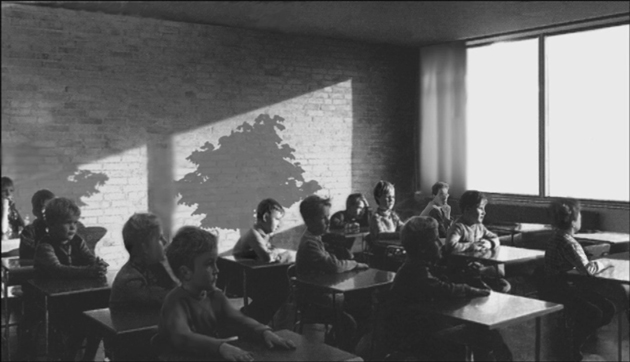
One of the first, and significant works by the artist is Untitled (Single Channel View) (1998-2000), which is the projection on a wide screen of an old b/w picture representing a classroom seen in diagonal, where all the students except one are looking out of the big window, towards a blinding sun; the light coming from outside reflects the shadows of two trees on the background wall. Everything seems to be calm, the guys are totally still and nothing moves as it should be in a picture but, watching closely, it is possible to see the leaves fluctuate slowly, almost imperceptibly, returning the spatio-temporal lag between motion and immobility, and creating a combination of photography and cinema. The proposed image is plausible, but something artificial floors the viewers, who find themselves within a sort of both present and past tense.

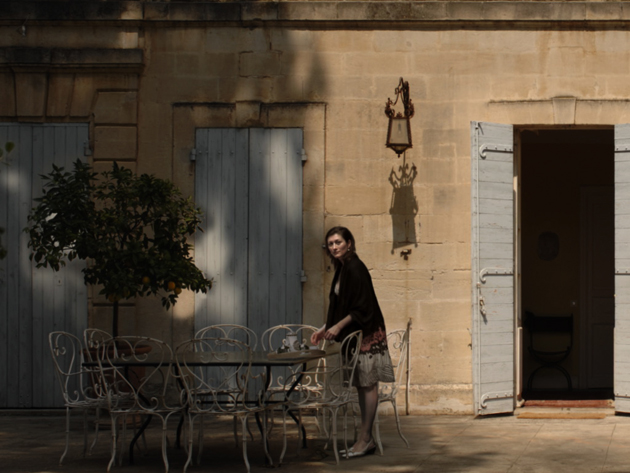
Making use of digital techniques, Claerbout goes beyond the codified distinction according to which photography captures an instant, while cinema tells the flows of time. In Long Goodbye (2007), the artist, once again, shows a sole picture, projected without sound, yet here the image is in colour and the movement is more evident. A woman with a tray gets closer, she places the tray on the table and turns her head toward the camera (to us), while the camera distances itself and time dilates. The flow of time is characterised by an incongruous play of lights and shadows – on the house walls –, which generate a sort of accelerated sunset. Here is the paradox between speeding up the time of the surrounded space and slowing down the woman’s gestures. Time-slice draws the attention to something we don’t know, because we cannot see anything more, and nevertheless the details abound, we aren’t able to totally understand what we are looking at.


Opposed dichotomies – movement/stillness, slowdown/acceleration, reality/assemblage of fictitious images – compose imaginaries apparently uninterrupted, which are actually hold through technical artifices. The show, dialoguing with the museum space arranged by the architect Pedro Sousa, sets up a non-narration where everybody looks at something and everyone are observed, but where nothing really seems to happen, a non-event.

Until 6th October 2013, along with David Claerbout, Mart will also present La Magnifica Ossessione (The Magnificent Obsession), an exhibition displaying 2.784 objects of its collection – defined by Cristina Collu, the director: “Self-taught, water-diviner, auto-da-fé of works. Victim or protagonist, recomposed collection, disturbing and provocative, maniacal and fetishist. Obscure object of desire. Secret, sharing, intoxication, celebration. Giddiness of blending” – to celebrate the first ten years of ‘well done’ activity.


Monica Lombardi
06/01/2013

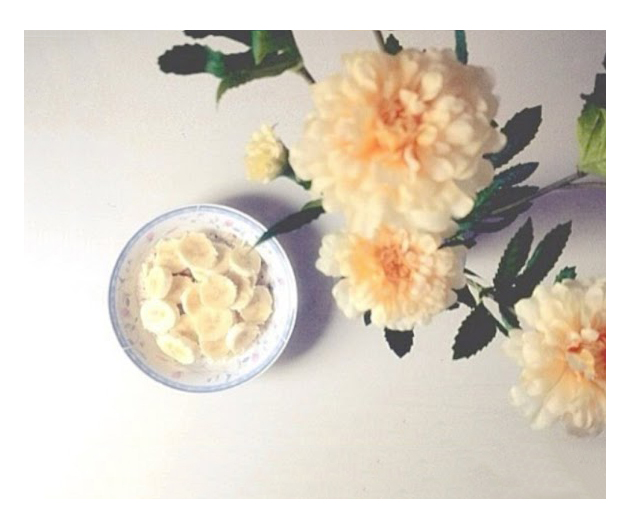
Sunday Breakfast by Love For Breakfast

Sunday Breakfast by Love For Breakfast

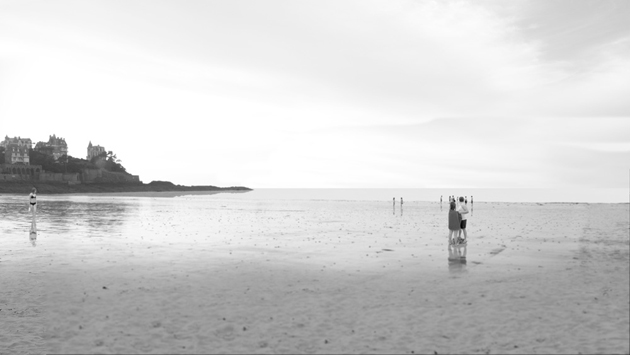
Gentleness that enhances the sight and taste. The simplicity of a true awakening.

Alessia Bossi from Love For Breakfast
04/01/2013

Varigotti, A Slice Of Morocco In Italy

Varigotti, A Slice Of Morocco In Italy

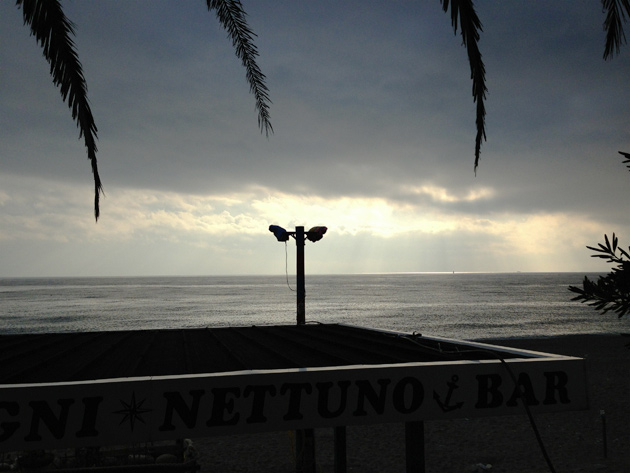
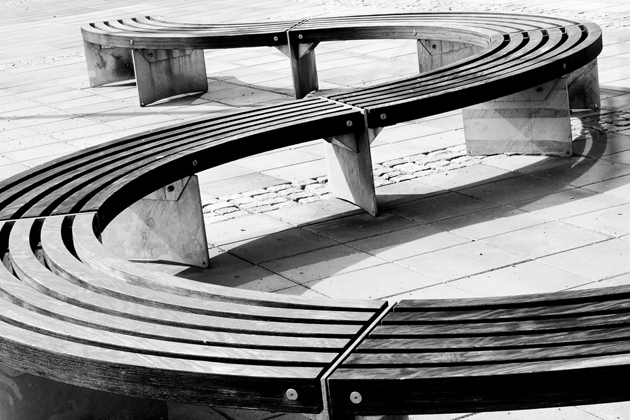
In some places time passes more slowly than others. In these places the people who were grannies and grandpas already when you were a kid haven’t changed a lot even after twenty years, they just have few wrinkles more. Crumbling houses are still there and cars that are not produced since long keep on frolicking in the town alleys. People who love big cities and their chaos, or just can’t stand living away from them, won’t resist more than two days in such small, lonely places. But it can happen that the sight of the fresh fish in a wicker basket and the old lady sitting with a cat on his lap, together, make some usually silent inner chords resonate even in a metropolis-addicted person. Have you ever heard about Varigotti?


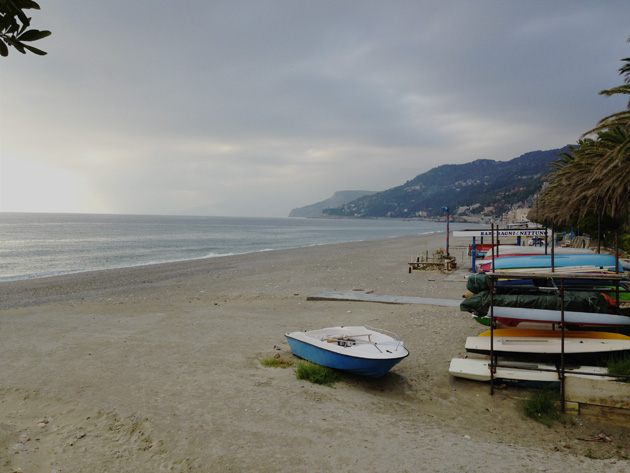
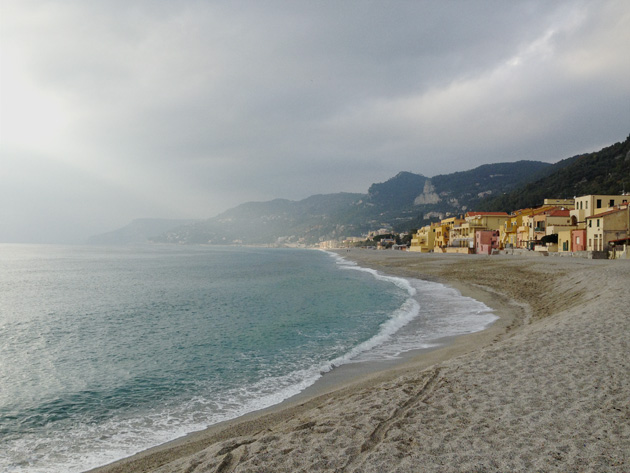
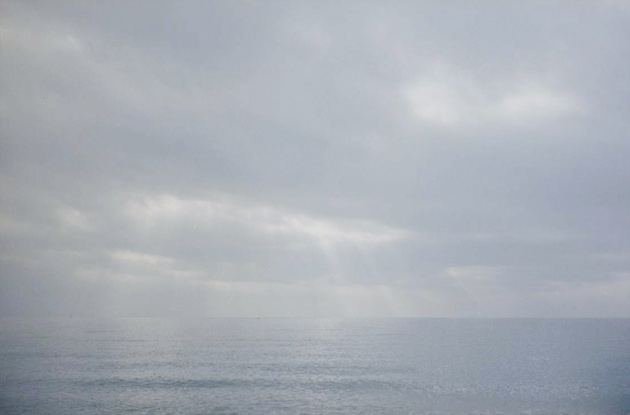
Italy has hundreds, thousands of small villages unchanged after the second world war, when the so-called economic miracle began that transformed Italy from rural to an industrialized country. Varigotti is one of them: a niche seafaring venue, part of the small commune of Finale Ligure with a beautiful, enigmatic seafront. The colored little cottages on the shore, so near to the sea that water almost touches the stair-steps, call to mind the bright Moroccan casbahs. Nevermind if the hot nights in Tangeri here are just lukewarm and anonymous. You are here for rest, aren’t you?


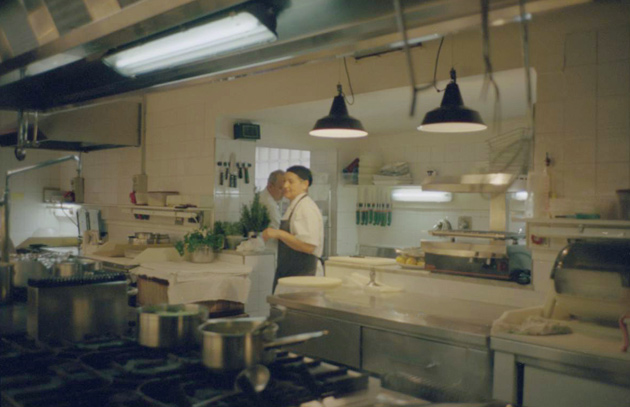
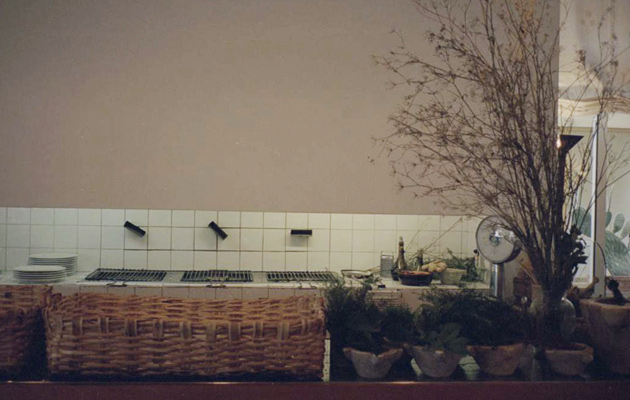
A November weekend in Varigotti didn’t cost a lot: 70 euros per head a day. Forgetting thai massages and spicy mud baths, to relax we chose the Inn and Restaurant Muraglia-Conchiglia D’oro (Via Aurelia 133), one of the best in the area. The restaurant shows an ingenuous and retro look, but the real treasure lies in the details: fresh fish lay on wicker baskets, waiting for being cooked on embers. You can choose between a variety of sea recipes such as mullet sauce or a whitebait fritter. Let’s not forget the Inn. Rooms overlook on a garden of trees full of oranges ripe and ready to be picked by anyone. On the shore, especially during winter, you probably won’t be finding many tourists. Small and colored, overturned boats just wait to be photographed. Not far away, on a curved alley, an Ape-car takes supplies to the restaurant.


Antonio Leggieri

03/01/2013

The Fashion Schools

The Fashion Schools

They’re the history of the creatives we admire and the cradle of the industry itself. They’re the institutions shaping the minds and skills of future designers, couturiers, writers, cool hunters and PR mavens. They’re the home of the students who are certain, even though curious, of the world they want to work, live and breathe in. Over the coming months, The Blogazine will take you on a tour in the world of the European fashion schools.


To say that you ‘study fashion’ is about as general as saying that you study the society as a whole. The subject itself is as wide as it is large and carries a whole bunch of professions. As many aspiring designers there are, as many (if not more) young professionals are aspiring, and needed, to work with and around those designers.

Most professions fit into the profile of a regular University – a well-known educational system where the engineer students share the hallways, or at least the seal on their diplomas, with the philosophy students. There are fashion studies programs and courses that appear on the list in between other subjects, but still you will find most of the students allocated over high profiled schools in cities like London, Paris, Milan and Antwerp.


Some say fashion students become limited, other say they become experts. In any matter, it is a fact that something is alluring enough to make them move over-seas only to attend that one particular school. From where comes the ‘need’ to educate yourself at a fashion school, and, is it a ‘must’ to acquire as much knowledge about the business as about your specific profession? Do fashion students in fact become fashion experts? Follow our series on fashion education and get the answers from the people who know.

Lisa Olsson Hjerpe – Image courtesy of Rhisiart Hincks & Jakob Hürner