14/10/2014

Glitch | Interference Between Art And Cinema

On the occasion of the 10th edition of “The Day Of Contemporary Art” – the annual appointment introduced by the Association of Italian Museums of Contemporary Art to allow a larger audience to visit art venues for free –, PAC opened its latest show with the evocative title “Glitch. Interference between art and cinema”. It was Saturday evening and the area surrounding the art space was teeming with families and groups of people of different generations (mostly men), decorously queuing to see a joint exhibition, which bodes to examine the actual overlapping among disparate languages and expressive mediums, putting in contact contemporary art and cinema. The crowd in and outside the museum is striking and cheerful – certainly the free entrance, the eye-catching design of the event and the summer spirit help to attract visitors –, but the situation doesn’t really allow to enjoy the exhibited works, especially the videos, so we opt for returning to the venue the day after.
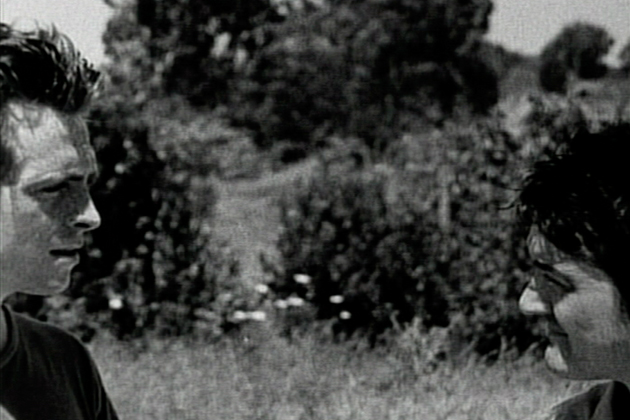
As expected, Sunday morning is calm as it is clearly autumn and the number of people seeing the show is much more reasonable. Following a structure based on three levels – cinematographic, installative and performative – the exhibition presents three projection rooms arranged with red curtains, black walls and aligned chairs, while long corridors in front of the garden and first floor are devoted to installations, prints, sculptures, pictures and books developed by numerous participating artists (mostly Italian or living in Italy) invited by the curator Davide Giannella. The list of more or less well-known names is extremely long; sixty-two artists were asked to share their peculiar research, which redefines the increasingly undefined boundaries between different expressive languages, united by a common passing of established classifications.
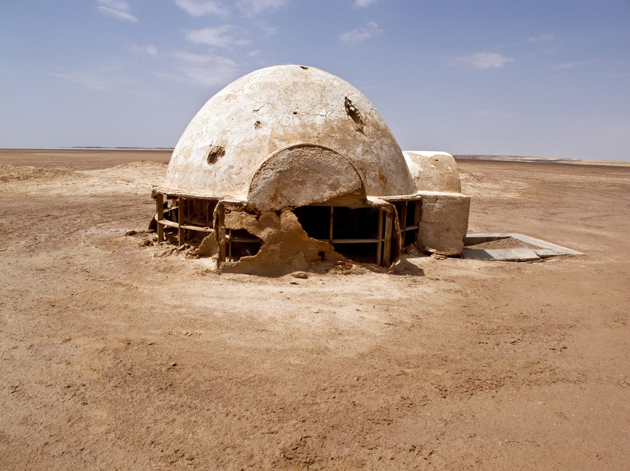
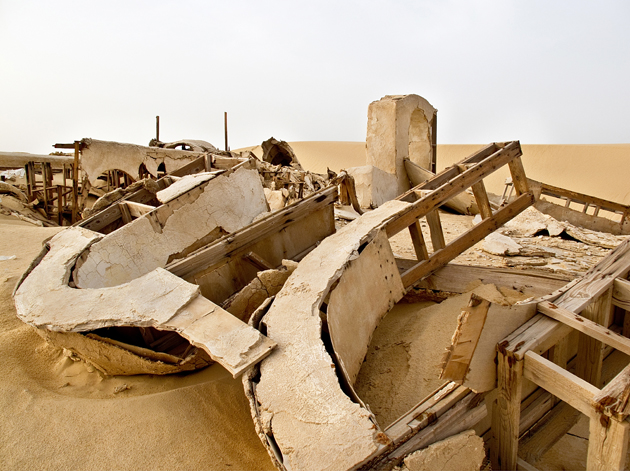
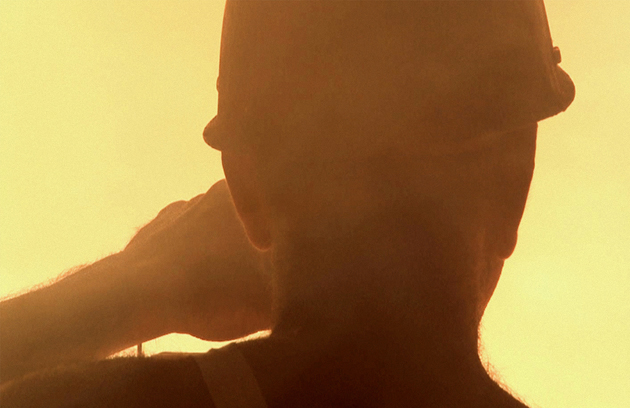
Among these artists we want to point out: Yuri Ancarani (b. 1972, Ravenna), who presents his trilogy devoted to extreme jobs including “Il capo” (2010), “Piattaforma luna” (2011) and “Da Vinci” (2012); Meris Angioletti (b. 1977, Bergamo) and her multidisciplinary approach; Rosa Barba (b. 1972, Sicily, lives and works in Berlin) with her moving sculptures made of light; Rossella Biscotti (b. 1978, Molfetta, Bari), who displays a video, an installation and a set of pictures based on the figure of “Donnie Brasco”, and Adrian Paci (b. 1969, Scuturi, Albania, lives and works in Milan) with his “Electric blue” (2010), a video we already talked about a year ago in occasion of his show, also held at PAC.
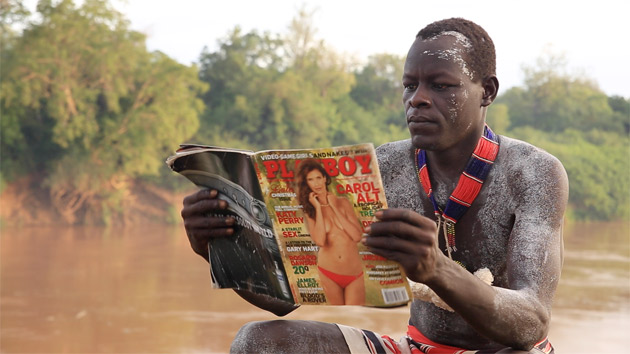
It’s hard to mention all the artists that are worth being mentioned, even because it would take a full day to see nearly half of the videos that are projected at alternate days, thus the experience has to be repeated at least twice (there is a season ticket that gives the opportunity to visit the show several times until its end). Even though the set-up is clear and captivating, maybe decreasing the number of artists would have made the exhibition more fulfilling (“and to think that usually we complain about the lack of content…”). “Glitch” will run until 6th January 2015 at PAC in Milan and it definitely deserves a visit.
Monica Lombardi 
Share: Facebook,  Twitter  
31/03/2014

Regina José Galindo | Estoy Viva

Politics, Woman, Violence, Organic and Death, these are the five keywords and macro themes that guide the path of Estoy Viva, the exhibition with which PAC – Padiglione d’Arte Contemporanea in Milan – and Civita celebrate the work of the extraordinary art performer Regina José Galindo (b. 1974 Guatemala city).

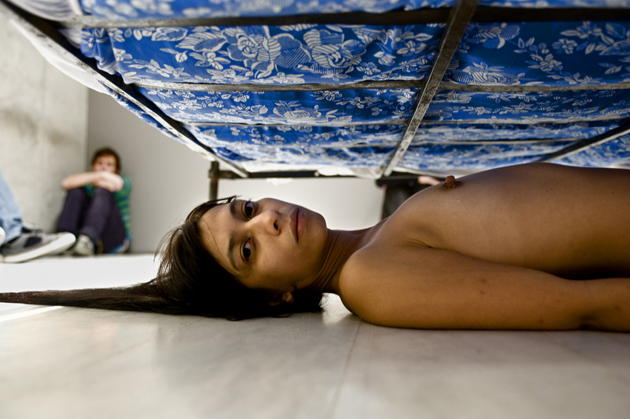
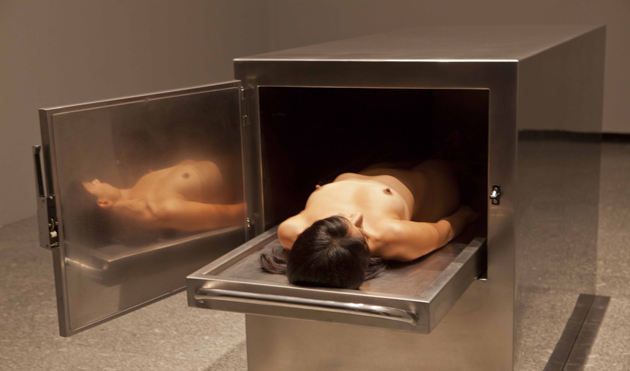
Someone once said that art doesn’t have to be pretty, it has to be meaningful, feeling and returning the reality through the poetics of the artist, sometimes in direct and unpleasant ways. The work of Galindo definitely falls within this category, representing the power of a politically active art, involved with thorny social issues, without being merely rhetoric. Using her apparently fragile body as an expressive medium and forcing it to both mentally and physically arduous tests, the Guatemalan artist examines and denounces racial and sexual discriminations, cultural injustices and abuses of power that keep on distressing contemporary societies. Making reference to the violence of her country, Galindo creates images characterized by a strong intensity and a universal language depicting, most of the time, nasty situations aimed at breaking collective indifference.

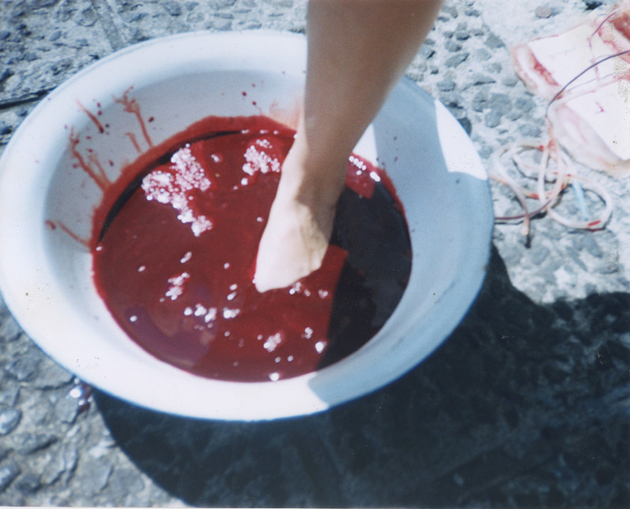
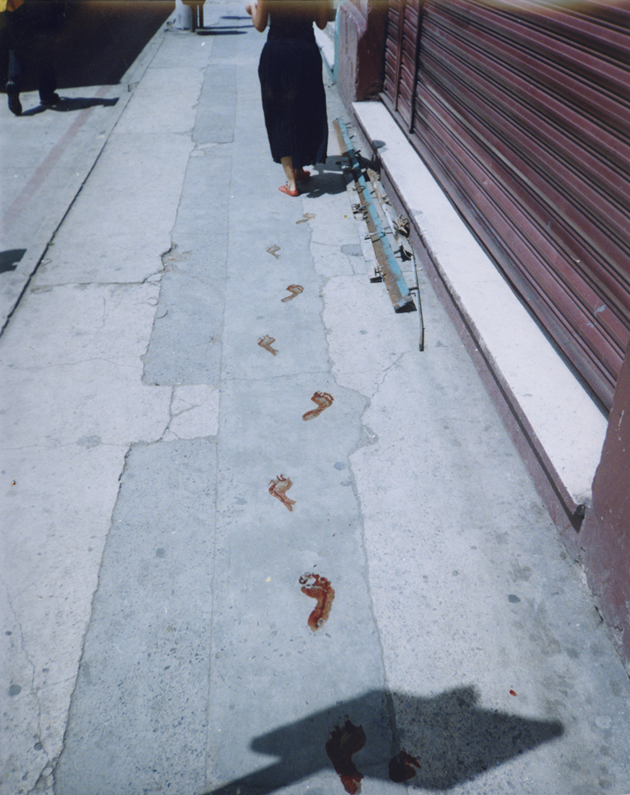
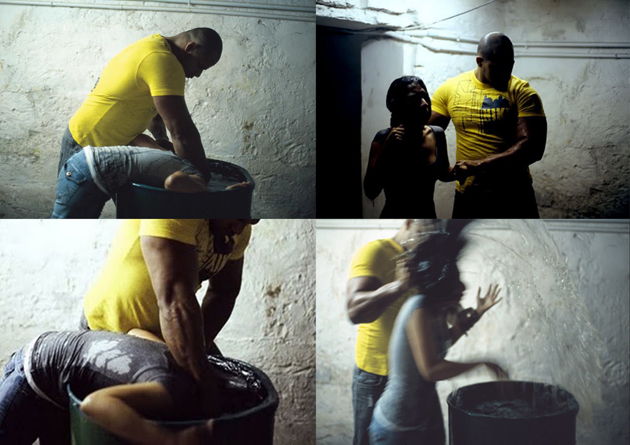
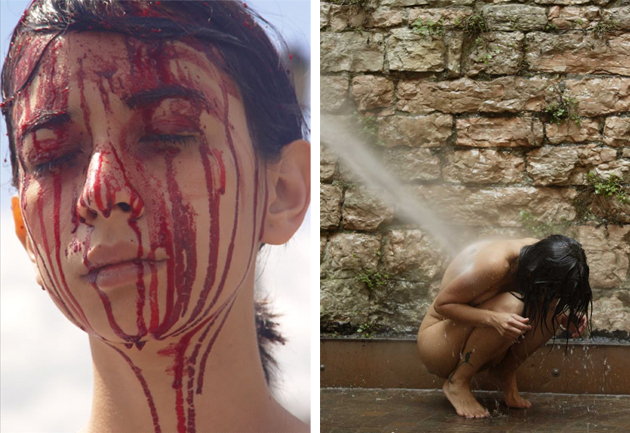
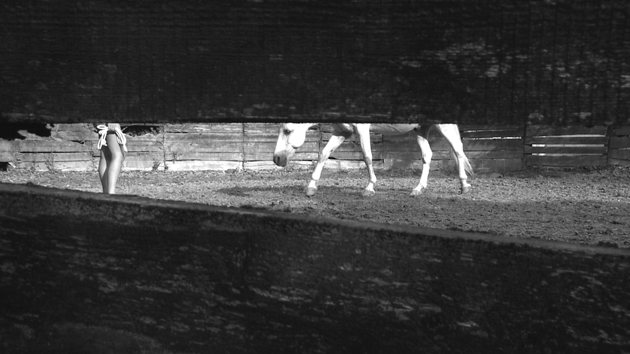
Estoy viva presents a significant selection of works that encompass a unique research, which cannot help but arouse deep emotions: in Confesión (2007) the artist is dragged in a wretched room by a brute, who pushes her head in a can full of water while she cries and wiggles, without being able of break free; in ¿Quién puede borrar las Huellas (2003) a grieving Galindo, dressed in black, walks from Guatemala’s building of Congress to the National Palace holding a washbowl full of human blood where she dips her feet leaving prints on the streets as a protest against the presidential candidacy of Guatemala’s former dictator José Efraín Ríos.

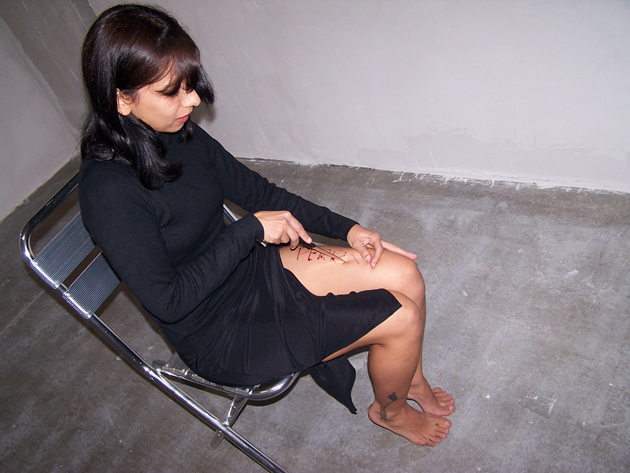
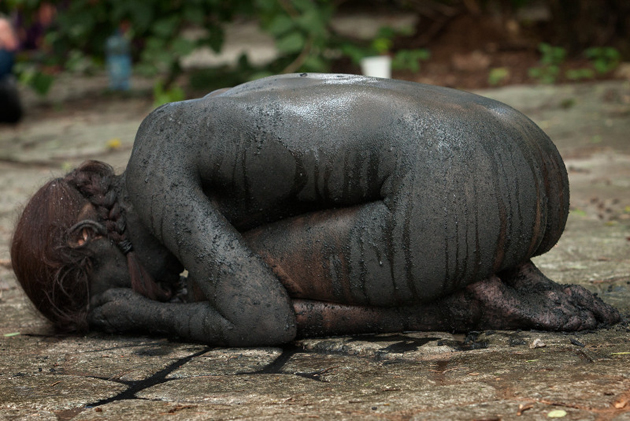
In a dramatic performance focused on violence against women entitled Perra (2005) Galindo injured her body carving the word “bitch” on her leg, while in Himenoplastia (2004) she subjects herself to surgical reconstruction of her hymen, and in Piedra (2013) the artist turns herself into a stone-like lump while a man and a woman urinate on her. The comprehensive show also displays the latest part of Galindo’s research devoted to natural elements, which gets her close to the work of Ana Mendieta, another emblematic artist, who uses body as main art conductor.

Galindo’s sacrifices don’t give any answer, but raise questions that wake up the audience’s ethic and moral sensibility. Everybody is involved; no one can withdraw from the experience.
Estoy viva will run until June 8th 2014 at PAC in Milan.

Monica Lombardi 
Share: Facebook,  Twitter  
14/10/2013

Adrian Paci | Lives In Transit

The anthological exhibition that PAC – Contemporary Art Pavilion in Milan -, dedicated to Adrian Paci (born in 1969 in Scutari, Albania), curated by Paola Nicolin and Alessandro Rabottini, is a show that leaves its mark. It is an emotionally touching experience, which retraces the different stages of the Albanian artist’s work, from the ‘90s, when he came to Italy, to the present day, reflecting his main subjects and his personal poetic vision.


Videos, photographs, drawings, paintings and sculptures are all artistic devices through which Paci creates narrations full of suggestions and social reflections, they are vehicles to explore the issues of politic transformation, wait, loss, nostalgia, memory, displacement, and above all, the strenuous research of a reference point; that cultural identity-seeking, which goes beyond the boundary lines and the physical movement by humans from one territory to another.

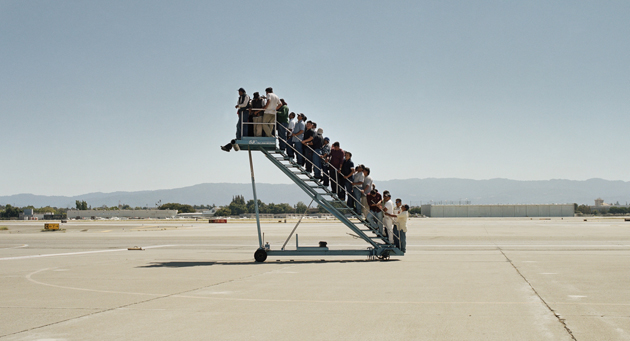
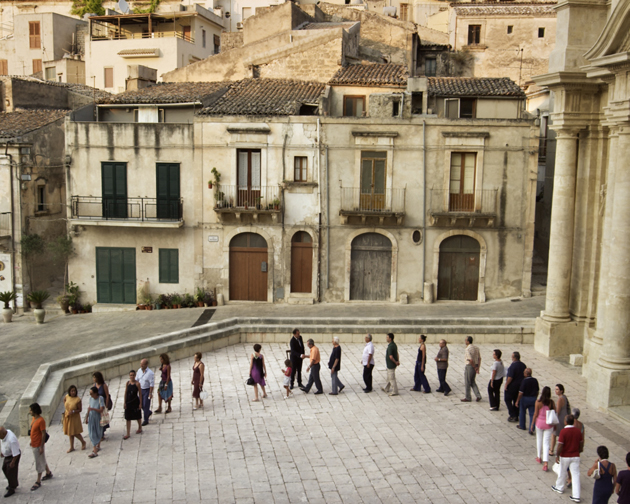
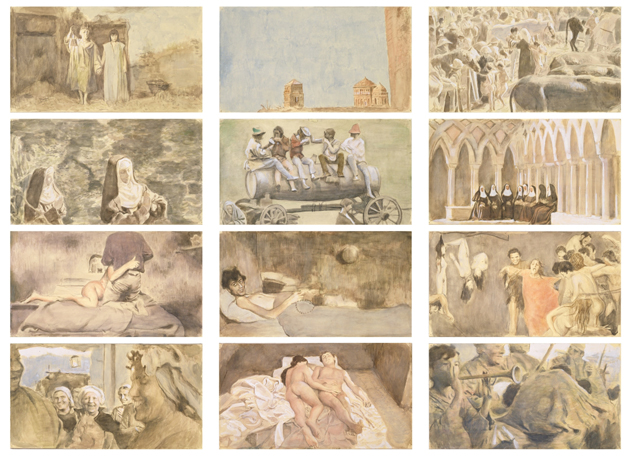
The exhibition path opens with Secondo Pasolini, I Racconti di Canterbury (2010), a huge wooden reel, depicted with scenes inspired by The Canterbury Tales directed by Pasolini – a homage to the relationship between painting and film in the works by the Italian intellectual – and goes on with Secondo Pasolini (Decameron, 2007) and Passages, a series of gauches, acrylics and watercolours on paper, board and clay all characterized by the close affinity and interconnection with the film. Paci’s acquaintance with painting pervades also his videos and photographs such as Centro di Permanenza Temporanea (2007), where he amazingly portrayed men walking to a flight ready to take off (one of his well-known pieces); The Encounter (2010), where the artist gets in contact directly with his audience shaking the hands of a long row of people gathered in an old square; and the powerful Electric Blue (2010): a 15 minutes videos telling the story of an Albanian filmmaker secretly providing tapes to a porn theatre to get money for his family, who decided, after the outbreak of the Kosovo war, to overwrite the sex tapes with scenes of slaughters and bombardments. It gives someone pause for thought when later, replaying one of the tapes, the young man discovers that fragments of pornography persist between war sequences.


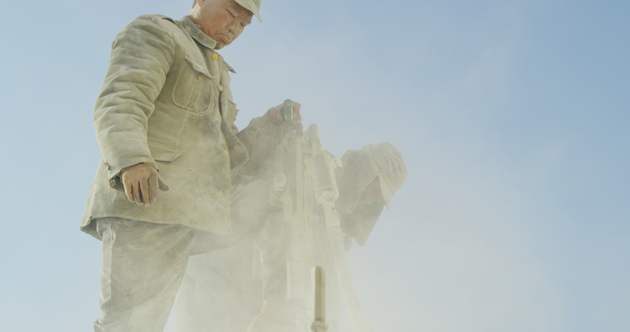
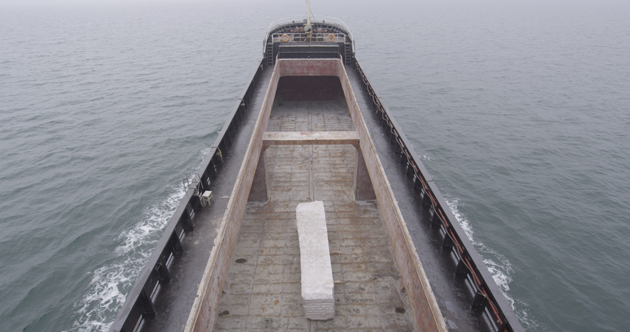
The exhibition features also The Column (2013), a video installation that talks about the mining of a marble block from a Chinese quarry and its further manufacturing within a boat on a trip towards Europe for the production of a classical Western column by a group of Asian workers: a strong metaphor of the current transformation of traditions and cultures.

Lives In Transit is an emblematic example of the synthesis of the arts; an exhibition that, thanks to the direct, authentic (maybe due to its autobiographical part), symbolic, simply reliable artist’s approach, makes a lasting impression.


Monica Lombardi 
Share: Facebook,  Twitter