18/02/2013

Capote, Revised

Capote, Revised

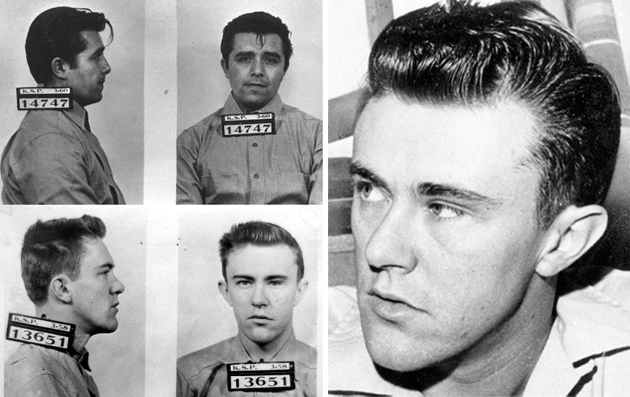
If he were alive today Truman Capote would be thrilled to know that his true crime novel In Cold Blood is still making headlines. First came the news that Florida prosecutors were exhuming the bodies of Perry Smith and Dick Hickock — the novel’s killers who were convicted and hanged for murdering the Clutter family in Holcomb, Kansas in 1959 — for new DNA testing in connection to a similar murder that happened in Florida barely a month after the Clutter massacre. And now The Wall Street Journal has dug up an old legal document from the Kansas Bureau of Investigation that reveals what many of the book’s most vocal critics have suspected for years: that Capote altered facts and fabricated crucial elements in his story, in part to cast the novel’s protagonist, detective Alvin Dewey, in a more heroic light.
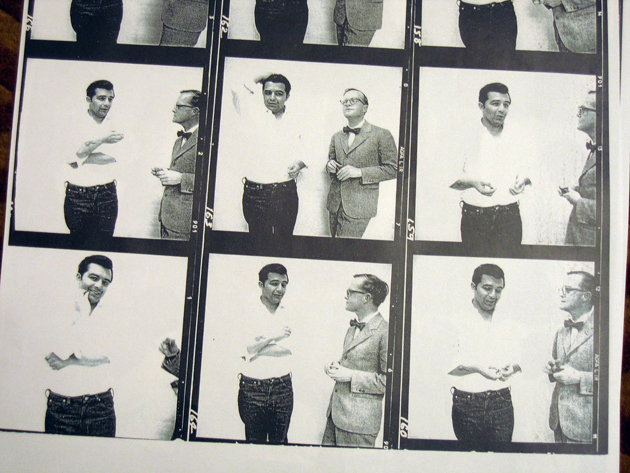
Along with the likes of Tom Wolfe, Gay Talese, and Norman Mailer, Truman Capote is often credited with the rise of New Journalism, a literary movement that boomed in the late 60s and gave birth to the idea that you could incorporate fictional techniques into fact-based journalism. “I got this idea of doing a really serious work,” Capote has said of In Cold Blood. “It would precisely be like a novel, with a single difference: every word of it would be true from beginning to end.”

With help from childhood friend Harper Lee, Capote spent five years meticulously researching and writing In Cold Blood, accumulating some 8,000 pages of notes in the process. During that time he and Lee struck up an unusually intimate friendship with Alvin Dewey, the lead detective on the Clutter case. Dewey gave Capote unprecedented access to the investigation, allowing him to frequently visit the murderers, view confidential documents, and even take a look at the contents of 16-year-old Nancy Clutter’s diaries. Dewey and his wife also persuaded many hesitant Garden City residents to talk to the famed author.
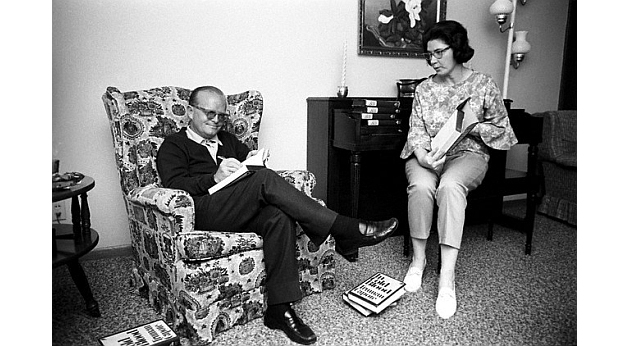
In return, Capote massaged a few key facts, one of which makes Dewey and the KBI appear more competent than they actually were. After nineteen days on the cold trail, Dewey and his men received a tip from Floyd Wells, a former cellmate of Dick Hickock, that eventually led to the murderers’ capture. In Capote’s version of events, Dewey acts immediately on the tip by sending a dispatch to Dick’s farmhouse that very night. In reality, according to the KBI document and Duane West, a former prosecutor in the case, Dewey initially dismissed the tip and waited five days before changing his mind and acting on it. “Alvin Dewey pooh-poohed the Wells tip,” West told the Journal. “He said Wells was a no-good criminal who made the whole thing up.”

Capote’s smudge is mostly inconsequential in that it didn’t change the outcome of the case. Dick and Perry were caught within six weeks, convicted in five months, and hanged in 1965. But the discovery makes fresh the central accusation that’s trailed In Cold Blood since it was published in 1965: that Capote changed the facts to suit his story. What’s more damaging is that the KBI continue to stand by Capote’s version of events, even though it’s now clear that his version contradicts their own department’s official records.
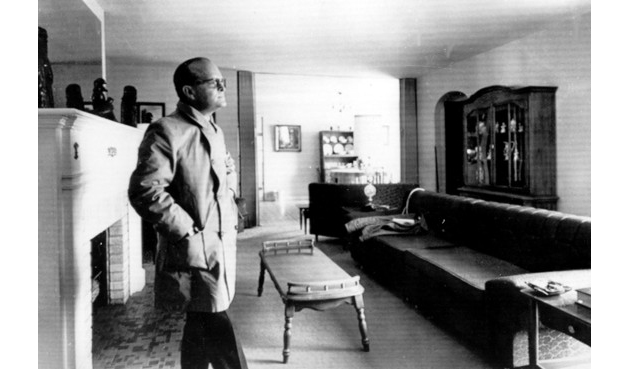
Dewey always maintained that he gave Capote the same treatment as every other journalist. “As far as showing him any favoritism or giving him any information, absolutely not,” Dewey said in an interview before his death in 1987. “He went out on his own and dug it up.” That’s not true. In their correspondence Capote frequently addresses Dewey as “Foxy”, expresses gratitude for being given Nancy Clutter’s diary entries, and even arranges for Dewey’s wife to be a consultant to the 1967 film version of the novel, which earned her $10,000. To say that their professional relationship was ethical is something of an understatement.

But Dewey did admit, in an interview with The Garden City Telegram, that the treatment people received in the novel largely depended on whether or not Truman liked them. Of those people, Dewey told the reporter, “I was the luckiest.”
Lane Koivu

18/02/2013

Don’t Mind The Gap

Don’t Mind The Gap

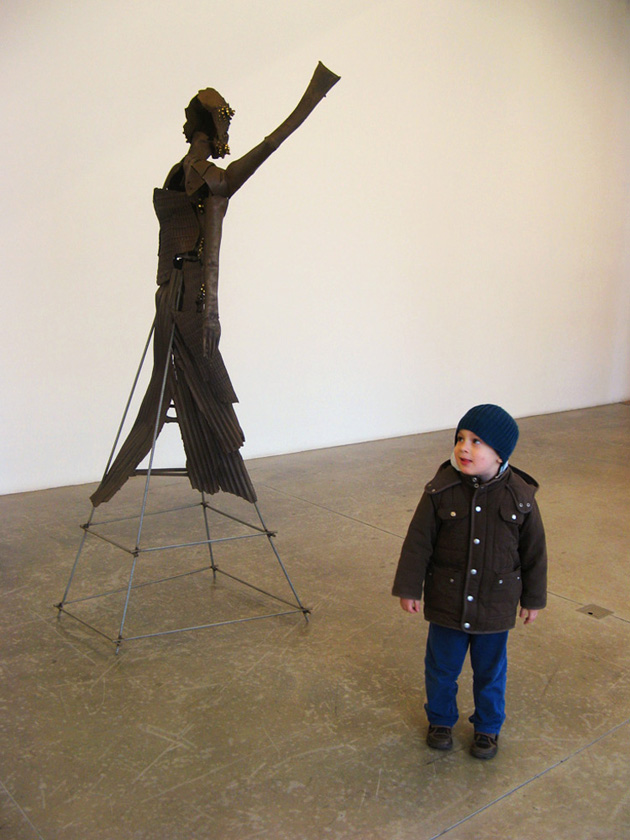
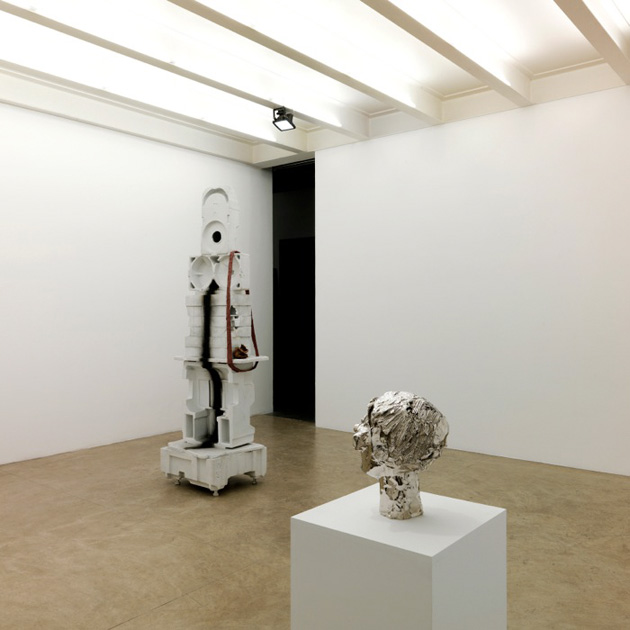
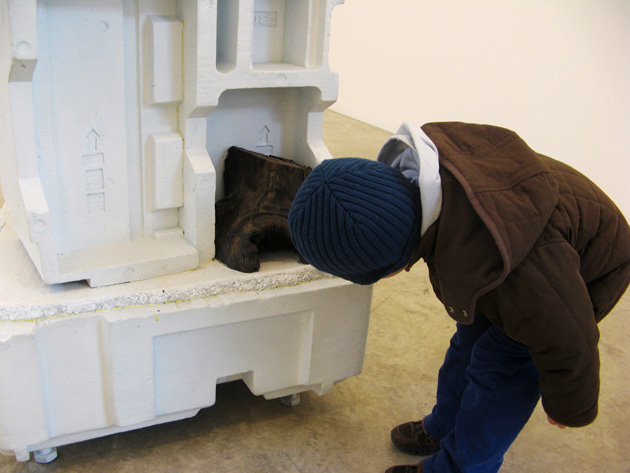
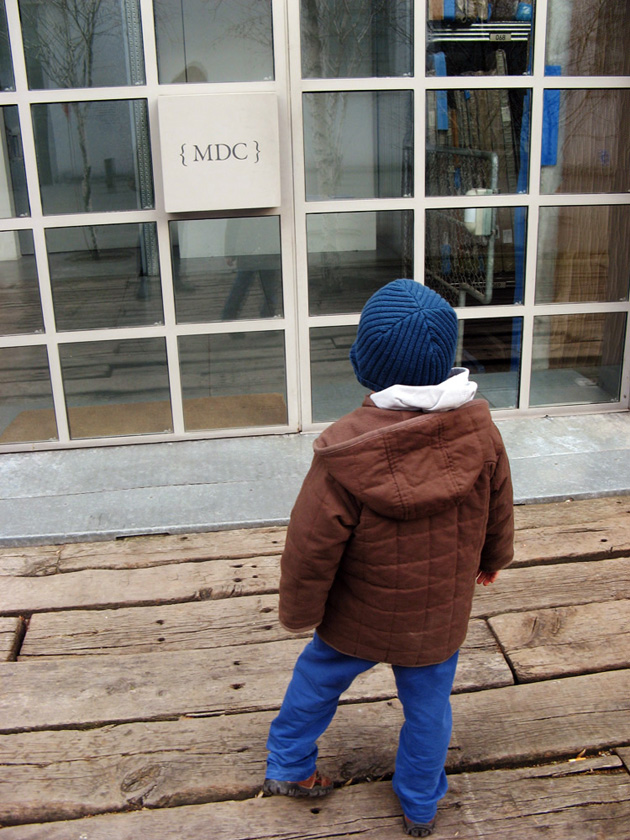
Do you know what a ‘aedo’ is? In the ancient Greek, it was a professional singer, a bard, considered as a prophet who, thanks to his blindness, was able to sharpen his attention and sensibility, without getting sidetracked by anything and anyone around. And “a contemporary aedo, interested in history, with force spells”, is the self-definition of our unusual guest: a little storyteller and mythology lover – so short that he needs to be carried to get closer to the artworks –, thrilled about the idea of visiting and freely reviewing an art show for us, unconsciously turning himself into its added value. We are at Massimo De Carlo gallery in Milan and Rodrigo B. (b. Milan, 2008) tells us something fresh and original about The Bronze Age, an exhibition that, at first glance, didn’t seem to have so much to say.


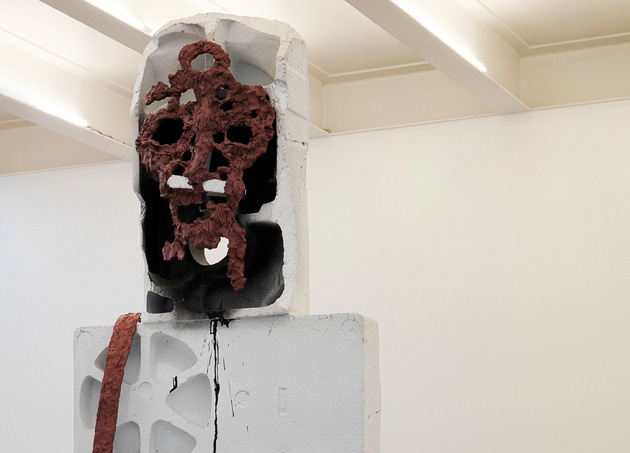
The gap between the size of the works and the child’s height influences his first impressions, but the point of view is undoubtedly fun, imaginative and genuine. The Ghost of Human Kindness by Huma Bhabha reminds Rodrigo of a bogeyman “the monster’s body is made of white stones, while one of his foot is of wood. He has a scary face, and the stones have pockets where he can hide arms. He is a giant, or maybe it’s me, I’m too little. Do you think he’s a friend of Gulliver’s? (…) I think the monster is a ghost, he is white as usually ghosts are”.

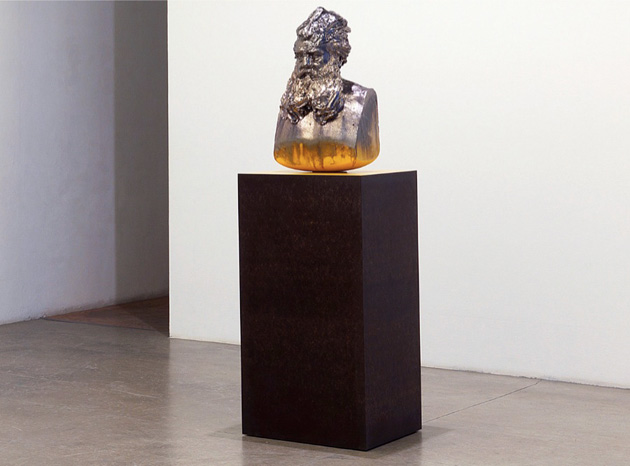
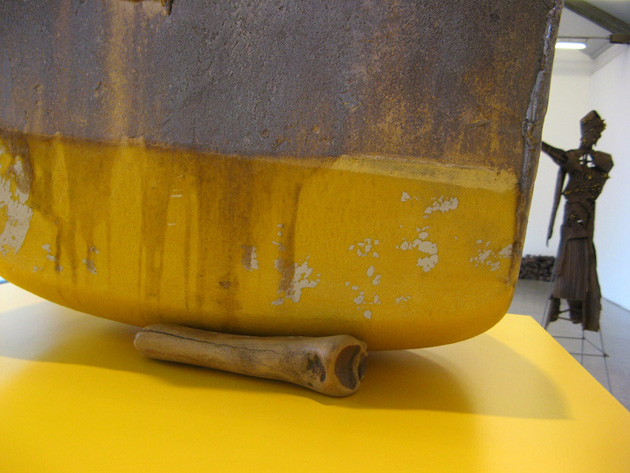
The sculptures seem to come alive, and from the “stubborn head” exhibited by George Condo we move to Steven Claydon’s A Corrupted Alloy: “This man is looking at me. He is made of silver and has a long beard. It is a blurred sculpture. Yes, I’m pretty sure he is Ulysses. I can recognise him from his beard, which grew while travelling ten years to go back home. He has a bulky head, enlarged to host the memories of all the events he lived. If you look at him from behind, you see two colours, dark yellow and black. It seems that his hair moves. Then, I cannot see it, but behind the sculpture there is a bone, I’m wondering why, maybe it is a magic arm that Ulysses will use when in need. You know, he is so smart”.


The Ibo created by the ironic, conceptual/pop French artist Bertrand Lavier attracts Rodrigo’s attention “he looks like a baby, a silver, super smooth baby with a belly full of ice cream. He is a baby coming from a tribe, here’s why he is undressed; he doesn’t need clothes where he lives. Isn’t he afraid of living among such strange sculptures?”

“Look, what a beautiful sculpture – Untitled, 2008 by Thomas Houseago. It has only an eye; the other one is closed. Astute face. It’s all black and it makes me feel the need to bite it like a piece of chocolate. I would ask Santa Claus to bring it to me, is it for sale? Where could I buy it?”
Time goes by so fast, and in a flash the visit comes to its end, we make the point of the situation: “This exhibition is for brave guys like me. It is a show for men, or for women, who are not afraid. I like the sculptures, and also the wood on the corner (Ed. Note, Bartolini Massimo, Deposito 2013); is it a sculpture too, right? This gallery doesn’t have the flooring. The works of art displayed are not so much; I think that’s good because you don’t get tired. Maybe we need some music and pillows to sit down comfortable while chatting about our impressions. The works are set too high for children like me. I’d like to touch the sculptures, why isn’t it possible? I’ll be careful; I won’t break them, I promise!”
/p>


Rodrigo B. & Monica Lombardi, special thanks to Emanuela Torri at Doremilab

17/02/2013

Sunday Breakfast by Love For Breakfast

Sunday Breakfast by Love For Breakfast

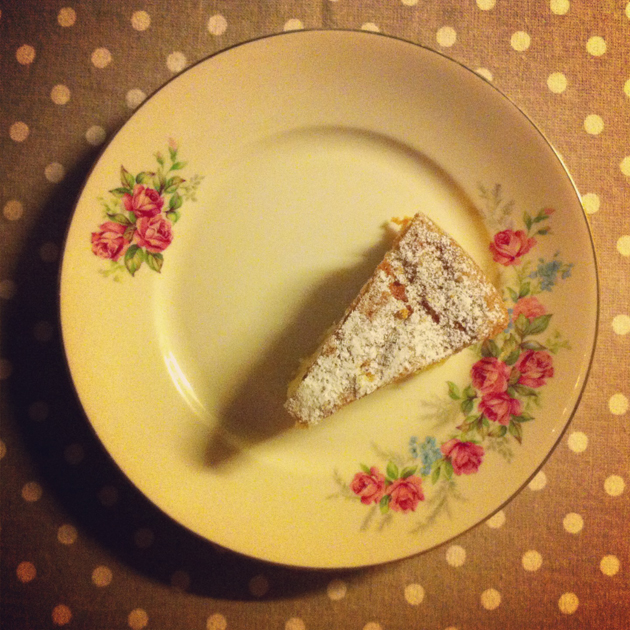
I thrust the cloth of dreams in an apple pie prepared for the weekend. It brings the flavors of moments of peace.

Alessia Bossi from Love For Breakfast

15/02/2013

Belgrade: I’m Just Like You

Belgrade: I’m Just Like You

The motto of Belgrade is “nema problema”, “no problem”. To make you understand the sense of it, here’s an example of a conversation with my guide: “You’re late for your date? Don’t bother!” “Do you want to leave already?” (after a three-hour lunch in the bohemian district of Skadarlija where, maybe, the concept of slowness has even artistic implications)”. “Antonio, there’s no hurry… here’s some grappa. What was I talking about?”


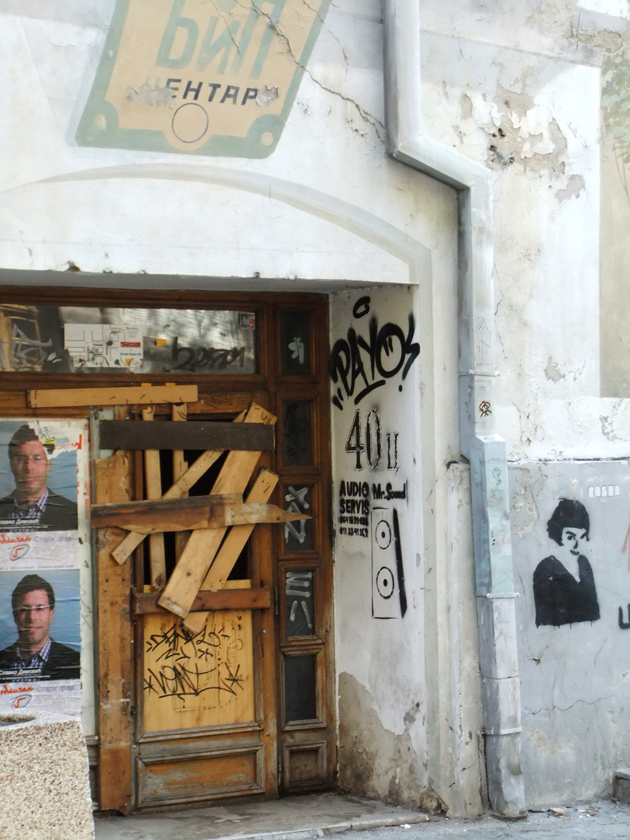
Even if you wouldn’t be so lucky to be accompanied by a guide who speaks well (and a lot) your language, sooner or later you will understand the motto of Belgrade by yourself. Doesn’t matter if it’s a matter of sipping a coffee in a bar or deciding a budget for a national event, the Belgradians are animated by a background of gentle lazyness that infects you (almost) without an escape. The meaning of this behavior isn’t clear to me, even if I get the sense in it. This city has a sad past, marked by wars and poverty. Maybe after years of sufferance these people are just breathing easy and, quite simply, what to you sounds like a problem or a difficulty, for them is just an ordinary setback.

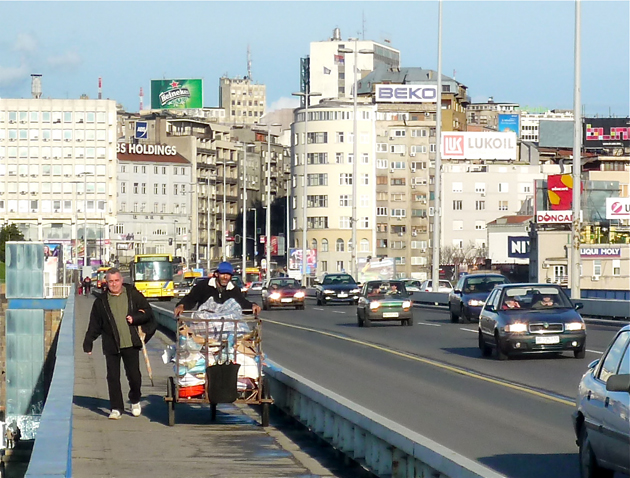
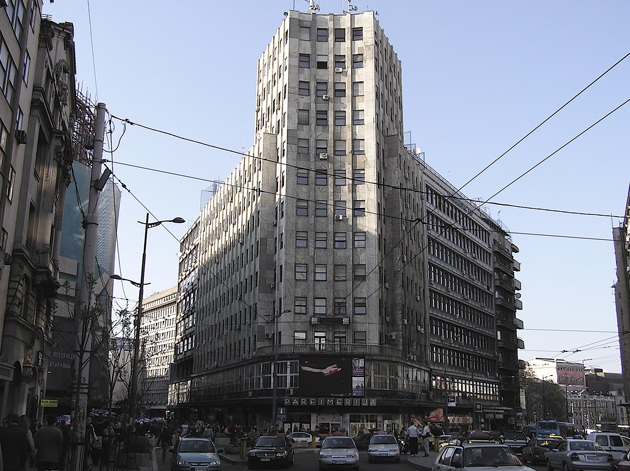
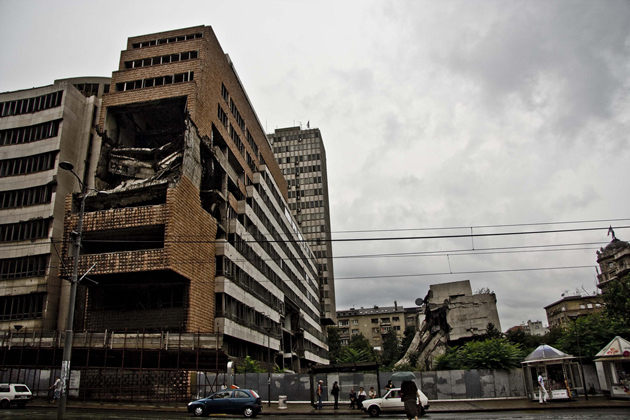
The district of Terazije is the emblem of the troubled history of this city. After the Second World War it was stripped of its fountains and flowerbeds and turned into a grey jumble of squared tower blocks with a Sovietic look, which all the years made even uglier. At the end of the 90’s they didn’t manage to put in action all the good intentions for urban redevelopment, when Nato bombardments on Belgrade during the Kosovo war obligated local administration to use the few available funds for the reconstruction of the damaged buildings.

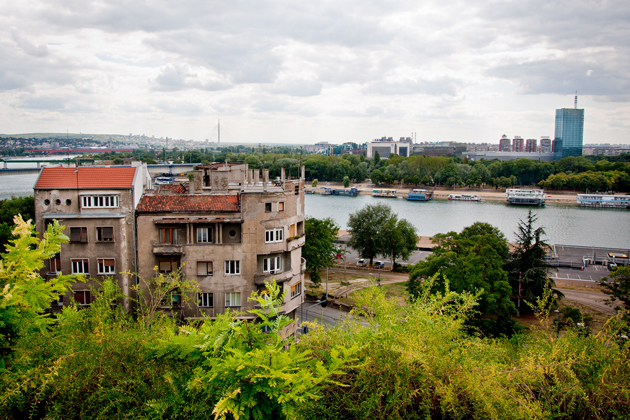
Many of them are still there today: old monsters of cement and rusty iron, in the middle of the city, between bazar-looking coffee bars and Ikea-style shops. The best way to get a sense of these brutal architectural contrasts – of the melting-pot between the ottoman heredity, the modernization and the socialist mark – is to walk up on Kalemegdan, the hill of Belgrade’s ancient fortress. Today you will find here the most important park of the city, from which you can also watch the confluence between Sava and Danube, the two rivers that flow through Belgrade. You can’t really appreciate this city if you don’t come here.

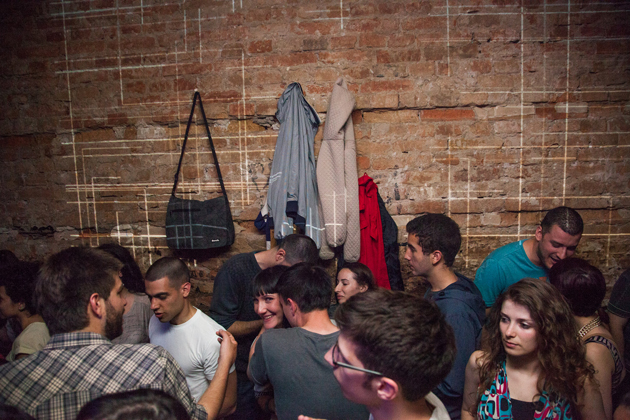
The restaurants that overlook on Danube are favored by the Belgradians, especially at evening time, for a happy hour or a dinner. The style of the youngsters of the city, generally sneakers and tracksuits for men, skinny jeans and high heels for women, can turn up some tourists’ nose (especially the Italians’, who arrive with matching belt and loafers), but that is also a nice thing. Finally, the beauty of this city is, in spite of all its problems, the effort of leaving home the Ugly Duckling clothing and looking normal, forgetting the past and, sometimes, the hard present too. This happens every year in Novi Sad, 90 km away from Belgrade, where is being organized the Exit Festival, one of the most important summer events throughout Europe. Tens of thousands of young people come from Serbia and all the world for five days of fun. In these days problems are forgotten and only music wins.


Antonio Leggieri – Images courtesy of Christof Autengruber, Xevi V, Daniele Pasci, Paradasos, Pearl Roig

14/02/2013

Confezione Italiana

Confezione Italiana

There was a time when Italian fashion was not such a world-known and celebrated industry. On the contrary, it was a young and still local phenomenon. From the beginning, though, it had shown great promise of becoming one of the leading Italian trades.

This all was happening when Fascism ruled Italy and fashion had been posed under the institutional control of an association, the AIIA (Associazione Italiana Industriali dell’Abbigliamento). Its role was to study, execute and promote clothing production, nationally and then abroad. To do that, a committee board was created: the Comitato Moda, which was in charge of trend research and the task of spreading the results to the industry and manufacture. It was necessary to keep up with Paris’ fashion status, and to be able to propose a valid alternative to it with the Italian trademark.

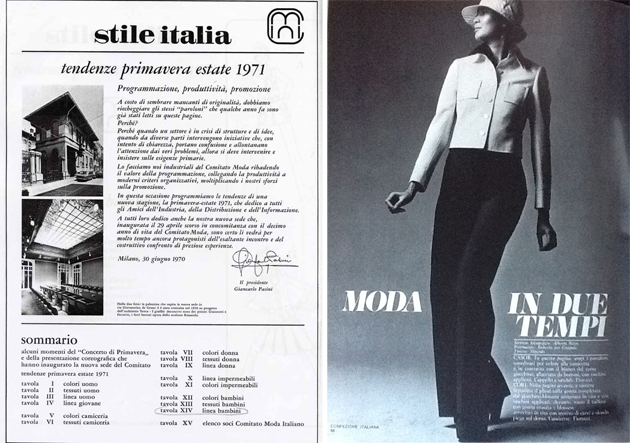
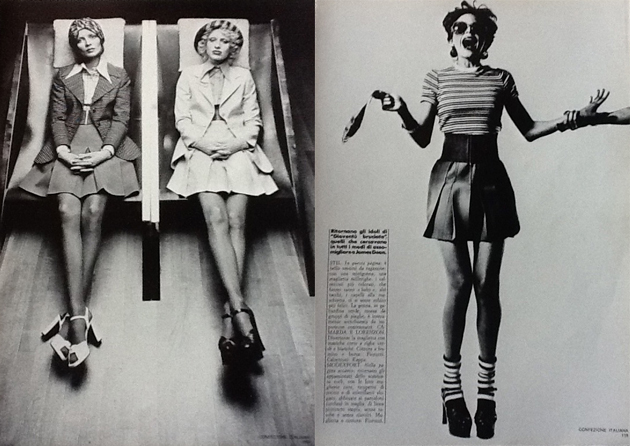
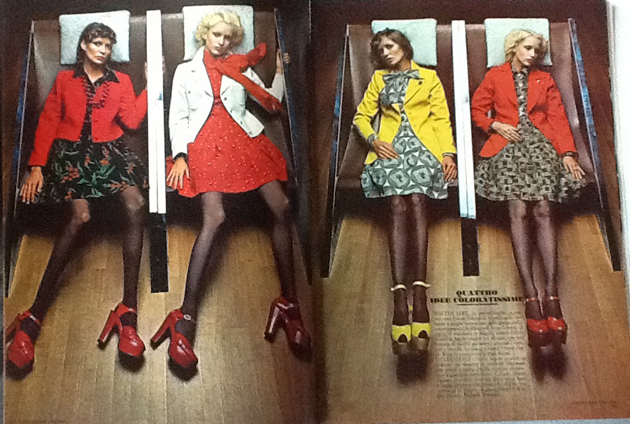
One of the aims of Comitato Moda was the publishing of its official magazine, Confezione Italiana in 1969. The idea was to create a publication addressed to the industry and the designers, as well as consumers, in order to always state one and only trend throughout the nation. From the first issues it featured at least a hundred of the major Italian productors and designers such as Biki, Iole Veneziani and Marucelli.


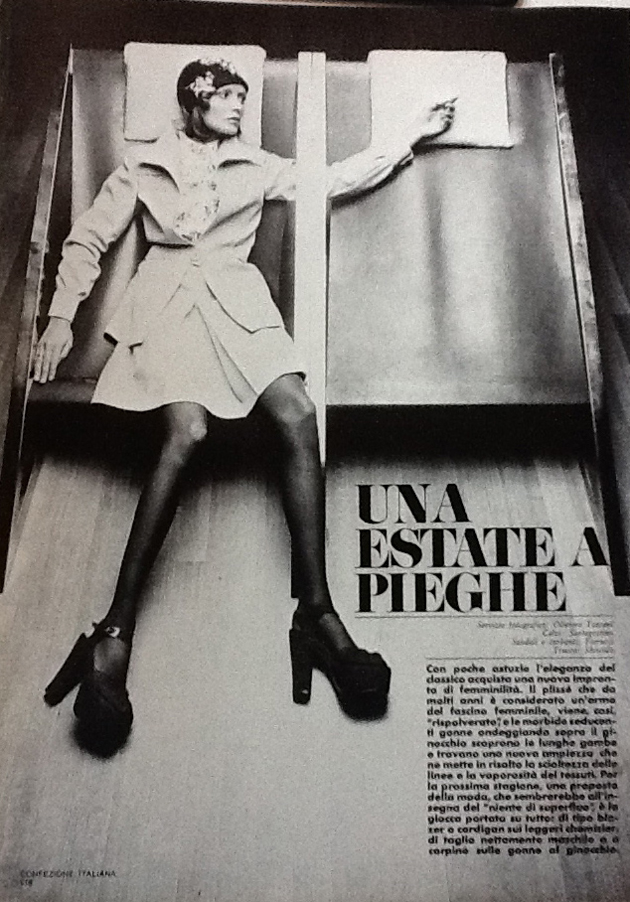
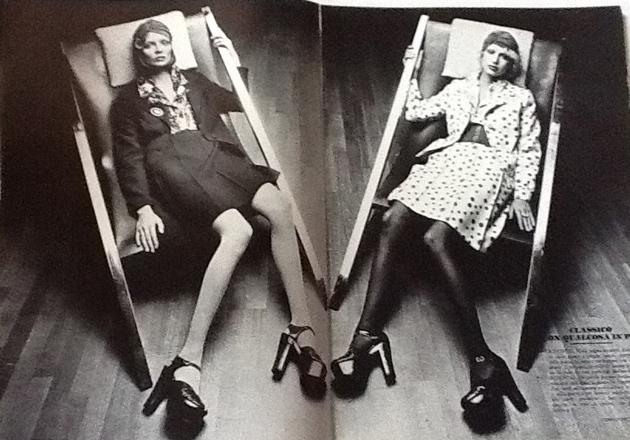
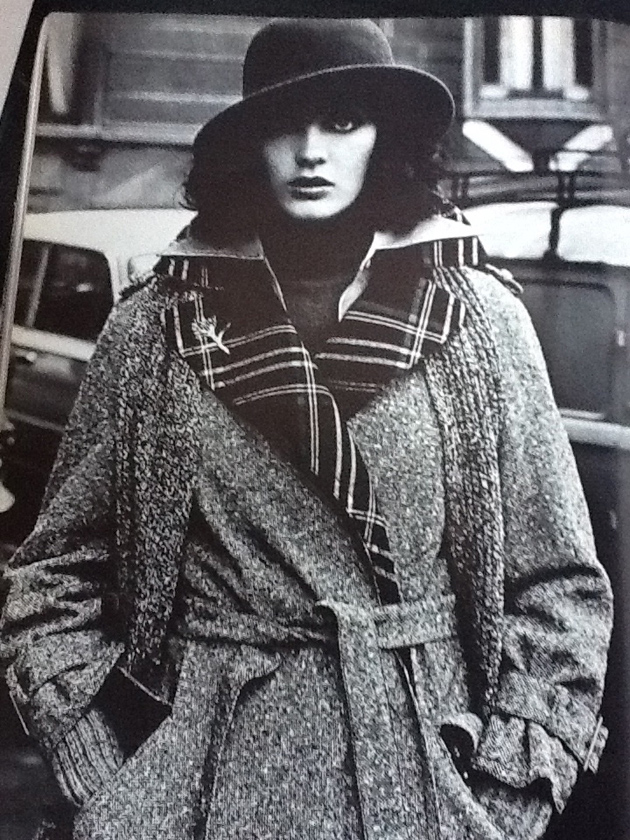
Fashion photography was central in every issue. Themes and locations were chosen according to the trend they should promote: ‘Weekend in the mountains’ for skiing garments, ‘Autodrome’ for leather jackets, ‘Sunday at the stadium’ for casualwear, and so on. What sounds predictable and without potential of making any change, turns out to be the exact opposite if seen live. The spreads are really hard to believe coming from the Italian 70s, as the suggestions they gave and the atmospheres they created were extremely contemporary, so much that they recall the magazines spreads we see nowadays. It is not easy to tell if they were avant-garde at the time, or simply so strong that they are still inspirational today. What is certain is that the atmospheres – playful, careless and unserious, but elegant and refined too – are the same we can find even now.

This was when and how Italian fashion developed its main features, so antithetical from the French fashion: being fun but desirable, suitable for everyone, anytime.


Sara Golfetto

14/02/2013

Pour Homme Pour Femme

Pour Homme Pour Femme

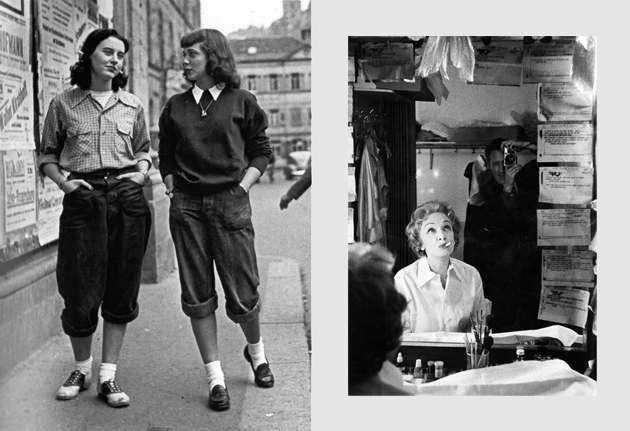
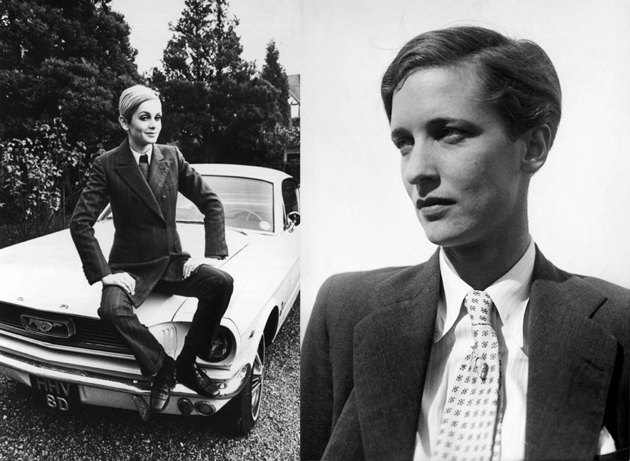
A blazer, a trenchcoat, a tuxedo, a pair of jeans and a bowler hat. Are these items you would find in a man’s closet or in a woman’s? The answer is: both. The trend of women wearing menswear has been for decades considered chic for several seasons, and can still be seen on the runways. Balenciaga, Balmain and Marni are just a few examples of fashion houses giving their take on the menswear trend 2013. How has this trend evolved through time?

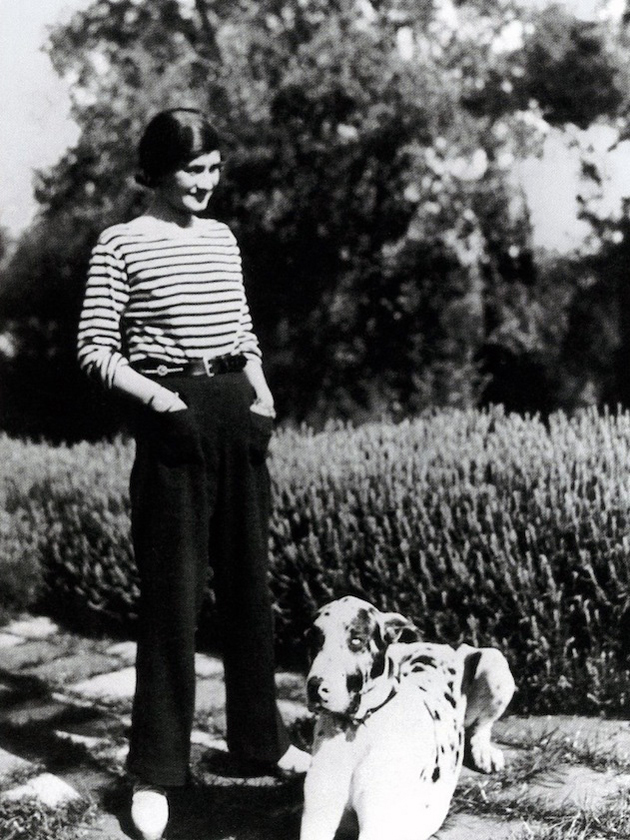
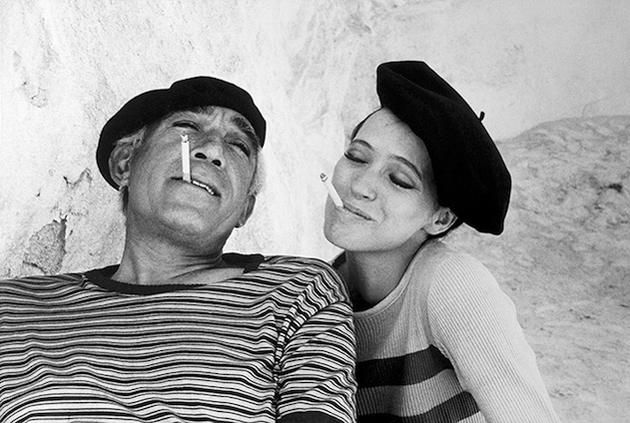
During World War I many women were forced to step in and do “men’s jobs”. That was something that changed the way women dressed, since the female wardrobe at that time wasn’t as practical as it needed to be. It was only natural to glance inside the male closet for inspiration. Some women openly wore both pants and blazers as well as cut their hair short and even smoke cigarettes, just like men. The novel La Garçonne (The Tomboy) was released in 1923 and became a big hit among women fighting for their freedom to live as they pleased, which came to increase the popularity of dressing androgynously.

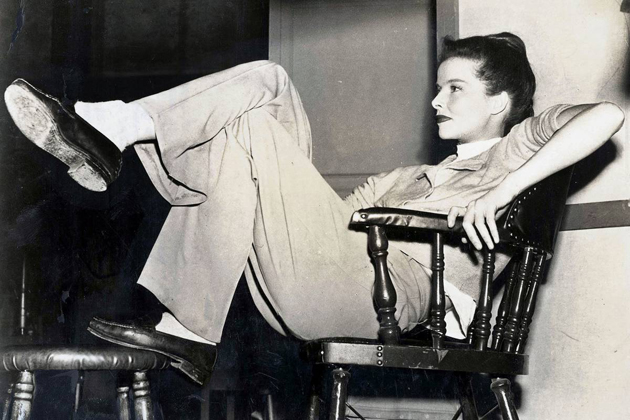
In the 1930s the trend was spotted even in Hollywood with names such as Marlene Dietrich and Katherine Hepburn sporting the look. It was through this that the male wardrobe became more accepted to be worn by a woman. Still it was to be adapted into a feminine take.


After World War II the feminine silhouette was brought back, mainly by Christian Dior who introduced “the New Look”. It supposedly reached all the approval it gained due to the fact that using a lot of fabric helped keeping the mind off the troubled years Europe had just left behind; something that menswear couldn’t compete with. However it didn’t take long for androgyny to re-enter the runways and the mindset of the fashionistas all over the world. During the 1960s, 70s, 80s and 90s it was interpreted in many ways; the hippie, the punk rocker, the popper and the grunger are just a few examples of styles created during these times.

In the 21st Century the ”Tomboy” is even more free to dress how she likes, not forced to stay within one specific genre. You can choose to add a feminine touch whenever you borrow something from a man’s closet, like adding a crystal cuff or mixing a preppy blazer with an oversized shirt. Why this trend works so well, is always an individual perception.


Victoria Edman

13/02/2013

New York Fashion Week

New York Fashion Week

It’s around again, New York fashion week is under way with next winter 13-14 collections being shown. Despite the heavy snow storms, models, designers and buyers are continuing business as usual, apart form the Marc Jacobs show which is delayed until early next week.

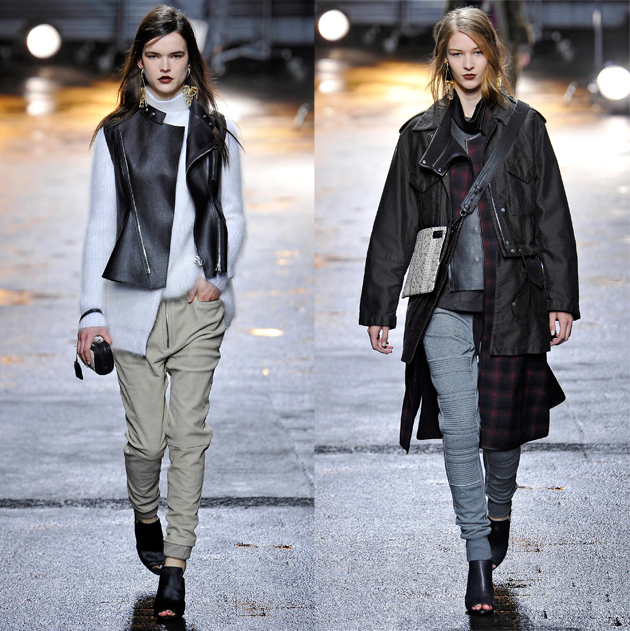
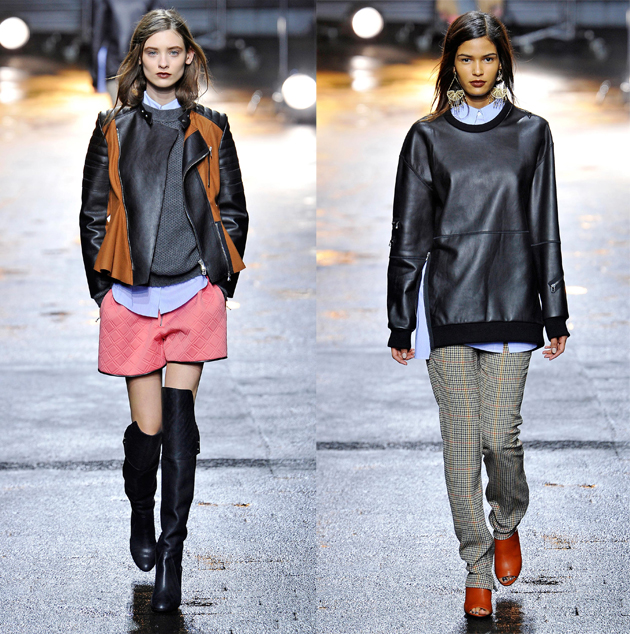
So whilst there are many key trends which we could point out, we felt that it has been particularly interesting to note how the silhouette and proportions have evolved over the last few seasons. Whilst sportswear and grunge were very key messages during the SS13 runway shows, the continuation of these trends is clear for AW13-14 but with a move on. Fabrics are becoming more sophisticated, silhouettes are moulded from neoprene fabrics creating a wide – either boxy or rounded and sculptured – upper part of the female body, which is then tapered in at the leg with either pencil fit skirts or pleated tapered pants.

We have also seen the crew neck sweatshirt for the last few seasons making a strong comeback, AW sees this basic item transformed into luxury leather, again with the rounded shoulders at Phillip Lim. Embellished and embroidered with gold metallic yarns, all-over sequins and brocade styles are all the new lean on luxury sportswear.

Camouflage, military and utilitarian influences have also moved on from the SS13 lines. Fur camouflage blocking on jackets and bold geometric camouflage patterns freshen up and make modern this military trend. Tangerine and coral are fresh bold colours which compliment the khaki and grey shades which are very dominant.

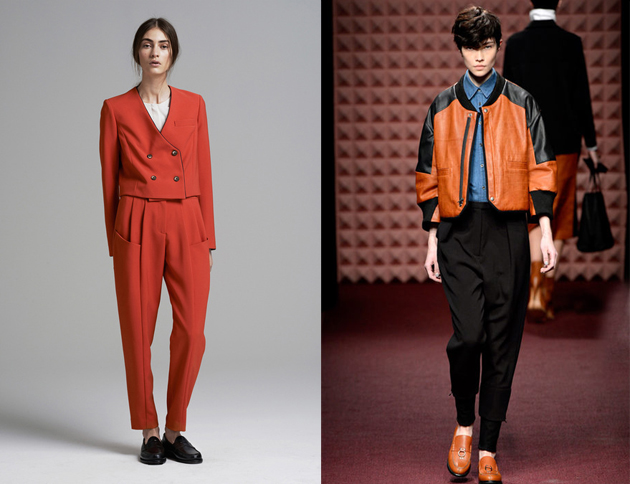
Biker jackets are still very much here to stay in many shapes, colours and forms. Shrunken proportions with bomber and biker styles worn with high-waisted front pleated tailored trousers give a new masculine edge to womenswear at Rachel Comey.

Tamsin Cook

13/02/2013

We Bandits

We Bandits

“Broadly speaking, one may say that the use of this subordinate, but by no means unimportant art is to enliven with beauty and incident what would otherwise be a blank space, wheresoever or whatsoever it may be.” 
William Morris, The History of Pattern Designing

We Bandits know how to play with patterns. Beginning as a pop-up clothing store in different spaces in Vienna, any space they curated excited the eye with forms and colours. The products were always high quality clothes, shoes, bags and accessories, imprinted with enlivening patterns, colours and textures. From diamonds, stripes and triangles to goldfish, leopard and sharks, We Bandits was not so much a shop as a form of curation, gathering clothes according to theme, pattern, geometry and silhouette.

Since the shop design was inviting like a children’s playspace, but mature enough to be made of the best, it follows that men and women were encouraged to be playful with their choices, whether they are for patterned stockings or handmade printed bow ties. Perhaps this is why the quote above from William Morris is relevant, a writer and a pattern designer who promoted the arts and crafts movement of the late 19th century which exalted decorative, playful and folk styles. Indeed many items on display in We Bandits store are one of a kind works from local or European designers, such as the bow ties from Denmark, which require more than 15 hours of labour each. More endearing than efficient, but that is what a play of patterns is all about.


We Bandits began life as a pop-up. When they sold out of products they bought more pieces and launched again. And again. Right now, in fact, they are selling out of menswear. When the clothes were sold their organisers gathered a new collection from their sources of local artisans, Scandinavian and Korean designers. Now it is still likely to pop-up in diverse spaces. In a more permanent site at Theobaldgasse 14, We Bandits maintains the same unique curation style, while the location may be permanent, customers and friends are constantly surprised with new themes based on ornament and personal taste rather than trends. 
Handmade one of a kind items are sourced from local designers alongside backpacks from Sweden and printed stockings from Seoul, or else a pleated cashmere silk top by Ingrid, matched with a Sandqvist Hans red backpack, as well a scarf by Henrik Vibskov from Denmark. Other brands include Hansen and Libertine-Libertin from Denmark and Our Legacy and Uniforms for the Dedicated from Sweden.

Visiting a We Bandits shop is like looking inside a kaleidoscope. You never know what amazing patterns will emerge, and that you will be invited to be a part of.

Philippa Nicole Barr
 - Images Daniel Gebhart de Koekkoek & Mato Johannik 

12/02/2013

Book Machine at Centre Pompidou

Book Machine at Centre Pompidou

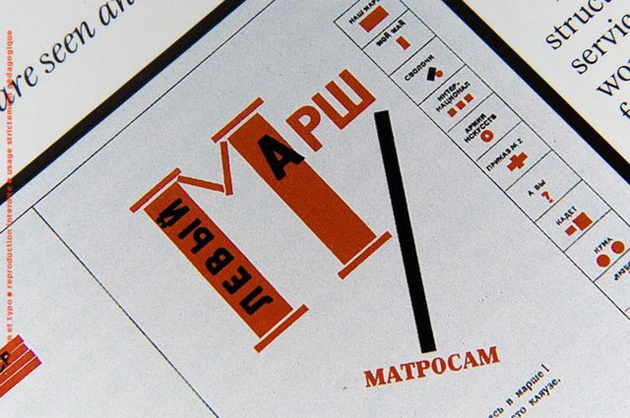
The idea of artists producing books isn’t that new or that special. Since the turn of the last century, modern and contemporary artists, lacking other – maybe more expensive, maybe more difficult or maybe less adequate – means, have delved with the production of books and printed matter. If we speak about Kurt Schwitters, Rodchenko, William Morris or even Dieter Roth, we aren’t surely discovering a brand new world, yet it somehow still appears to be an strangely unexplored and unfamiliar to many.


Hence, even if for those immersed head-to-toes in the world of books and independent publishing this might come as a bore, we feel obliged to speak about a new initiative that will take place at Centre Pompidou. Starting from the 20th of February, as a part of the fourth edition of “Un Nouveau festival”, Centre Pompidou will open a new platform for contemporary art publishing: Book Machine. The Book Machine was conceived as an event dedicated to book production in the largest sense. In essence, the commitment of the artist to the realization of their book or catalog is an extension of their body of work, and this results in the creation of what we call the artist’s book. The structure of the event will try to engage the public with the process of production of books, the ideas, theories and methods behind the production process through a series of conferences, events, lectures, discussions, screenings and performances organized and proposed by the publishing house Onestar Press.


Christophe Boutin and Mélanie Scarciglia, co-founders of Onestar Press and Three Star Books state: “At the heart of this engagement and from the depths of the Forum -1 at Centre Pompidou, there will be an atelier and office of book production open to the public, where visitors will witness a daily array of visual artists, writers and designers creating their books.” Besides the artists creating their books, the public will be offered the chance to actively engage in the production of books at the specially created “Book Machine Press”.
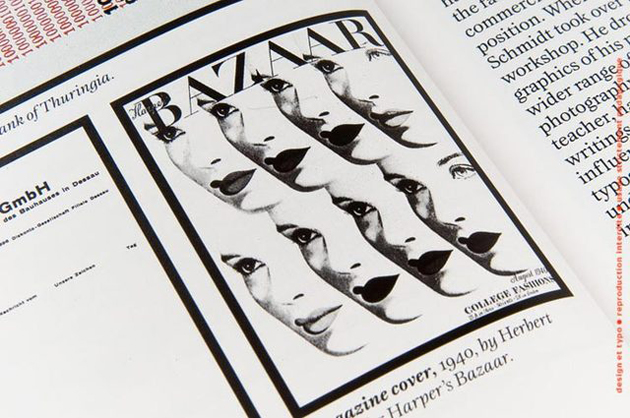
It seems that the Book Machine will be the perfect occasion to grasp a hint of that elusive and ever-evolving wondrous world printed paper and artist’s books.


Book Machine, 
Centre Pompidou, 
20 February 2013 – 11 March 2013, 
from 11 to 21.

Rujana Rebernjak

11/02/2013

Ettore Spalletti, Sol LeWitt

Ettore Spalletti, Sol LeWitt

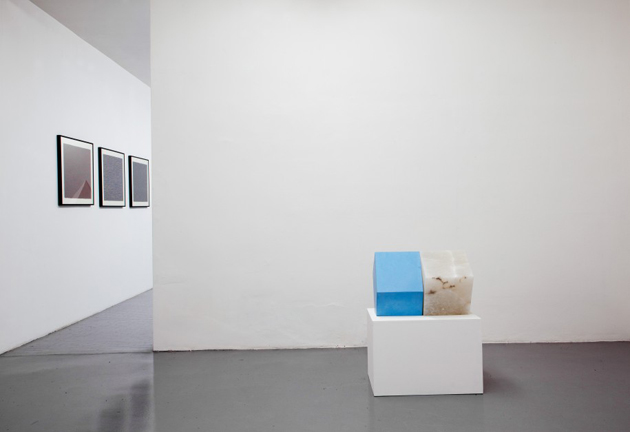
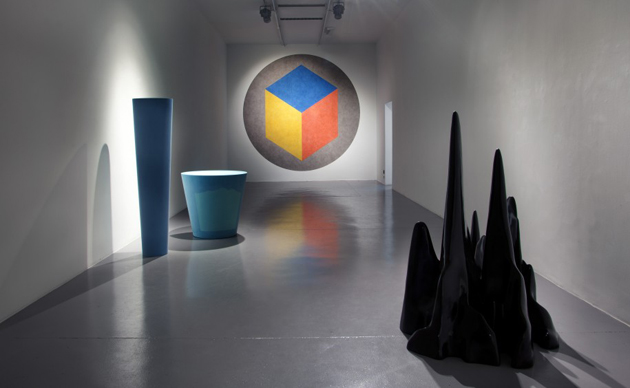
The works of artists Sol LeWitt (b.1928 Harford, Connecticut-2007 New York) and Ettore Spalletti (b. 1940, Cappelle sul Tavo) have never before been engaged in direct, exclusive dialogue at the Massimo Minini’s gallery in Brescia. At first sight, this juxtaposition of the two oeuvres certainly comes as a friendly reunion. LeWitt and Spalletti are among the most widely influential and most important artists of their generation. From the 70s their works have been included in numerous international collections and are exhibited in renowned museums and institutions.

LeWitt’s objects are marked by a reduction to simplest geometrical shapes and surfaces in neat colours. With his large sculptures and wall paitings he belongs to the group of artists who, in mid-60s America, started developing the basis of the american Minimal Art inspired by the aesthetics and culture of the early 60s. That was the era when he coined the term “Conceptual Art” in his pivotal essay “Paragraphs on Conceptual Art” published on Artforum, in June 1967. From that day on, the influence of this great master can be found in great many series of artistic expressions: from the younger generation of artists as well as in architects and designers who took inspiration from Lewitt’s work.
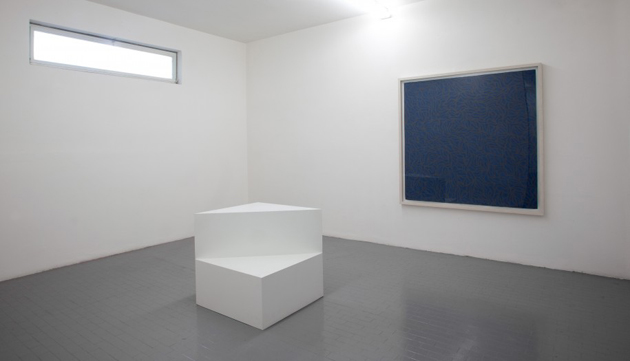
 The art displayed in this exhibition includes his “structures” and paintings in a close and intense dialogue with Spalletti’s works.

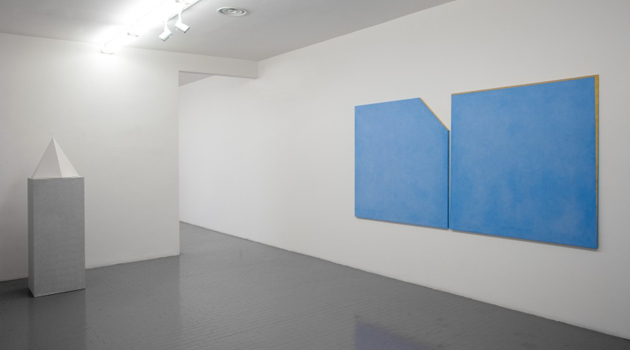
Since the mid-70s, Ettore Spalletti has created a language that is suspended between painting and sculpture, focusing on light and space, an approach which is reminiscent of both Minimal Art and the geometry of the purest tradition of the Italian history of art: from Giotto until the present day. 
His chromatic backgrounds cover essential forms which, through the apparent containment within their geometric outlines, become evocative due to the quality of the painting they are imbued with. 
The forms are drawn, then transferred to wood, paper or stone, and finally painted. The drawing is therefore simply the support for the work, which only comes into being when the paint materializes. 
The thickness of the paint is obtained by applying successive layers of mixtures of plaster and pigments, a slow process which takes account the varying times required for the paint to dry. The colour is only revealed in the final moment of this long process when abrasion causes the decomposition of the pigments, making the surfaces powdery, like velvety skin, with an infinite range of shades and slight 
variations.

In both artists there is no “painting” in the traditional sense of the term, but identification between paint and support, between colors and pure structure; there is no “sculpture” in the sense of shaping, because everything here seems to be a projection of one idea or concept more than a result of artists’ gestures or attempts. 
Both Spalletti’s and LeWitt’s works are painted in delicate and precise colours that cancel all signs of emotivity: the result is a visual ambient of purity and contemplation, oscillating from an open relation to a definitive structure, 
giving each surface a breadth that alludes to life and its figurativeness without figures.

The exhibition will run until the end of March 2013.

Riccardo Conti